 01
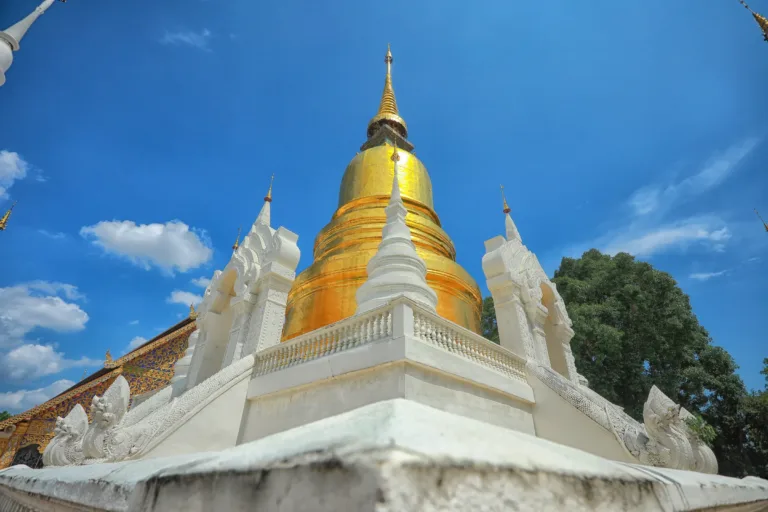
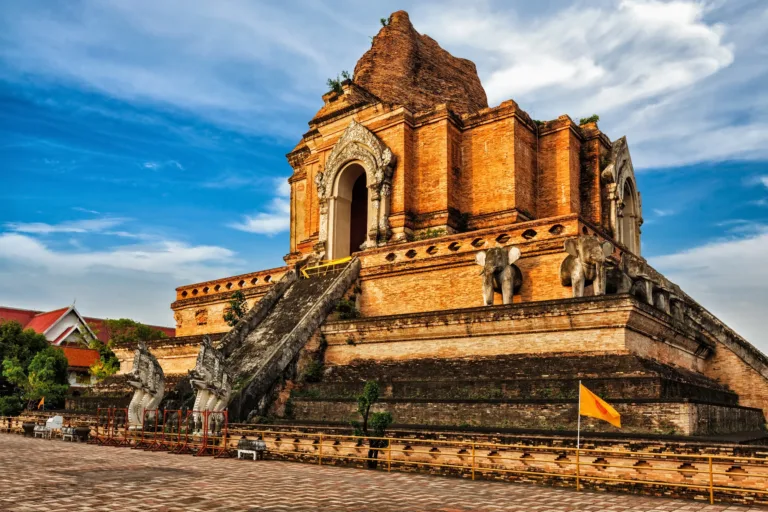
Sri Lankan-style chediA golden chedi about 48 m tall, said to hold a Buddha relic
Royal temple · Suthep Road, Chiang Mai
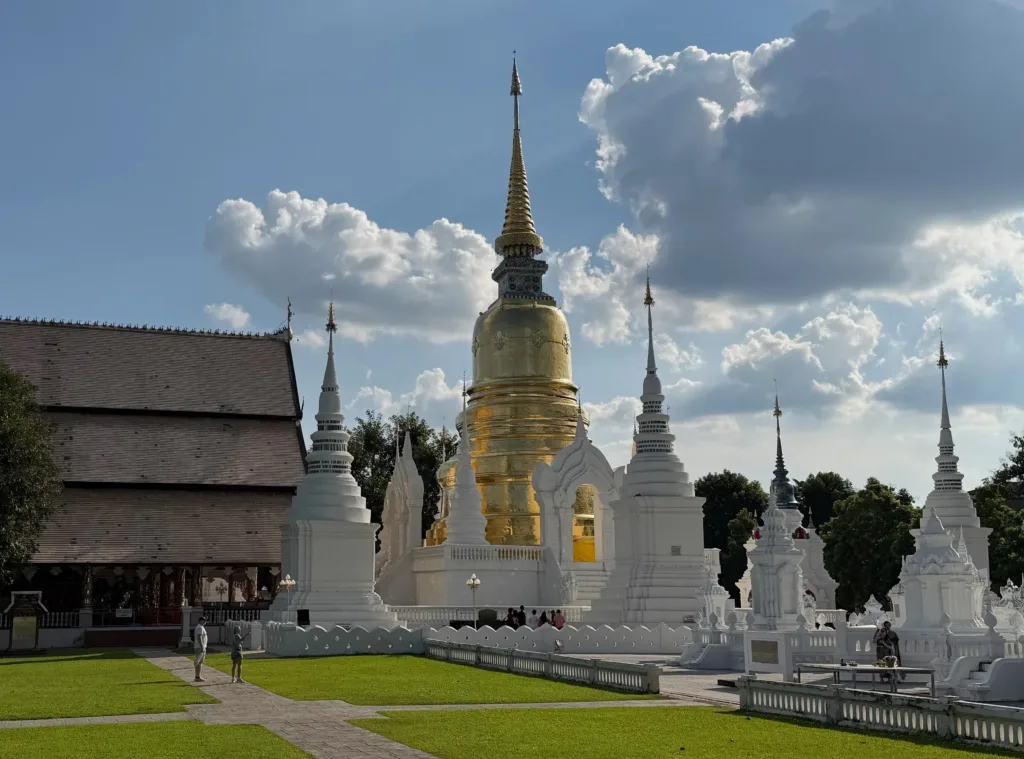
A royal temple on Suthep Road founded by King Kue Na in 1371 for the monk Sumana. Known for its golden Sri Lankan-style chedi, rows of white royal tombs and the great bronze Phra Chao Kao Tue.
Good weather, little rain
Dress modestly, covering shoulders and knees · Remove shoes before entering the viharn and ordination hall · Be respectful around the royal tombs · Don't climb on the tombs or chedi
Daily, about 06:00–18:00
Late afternoon, when soft light hits the white tombs
01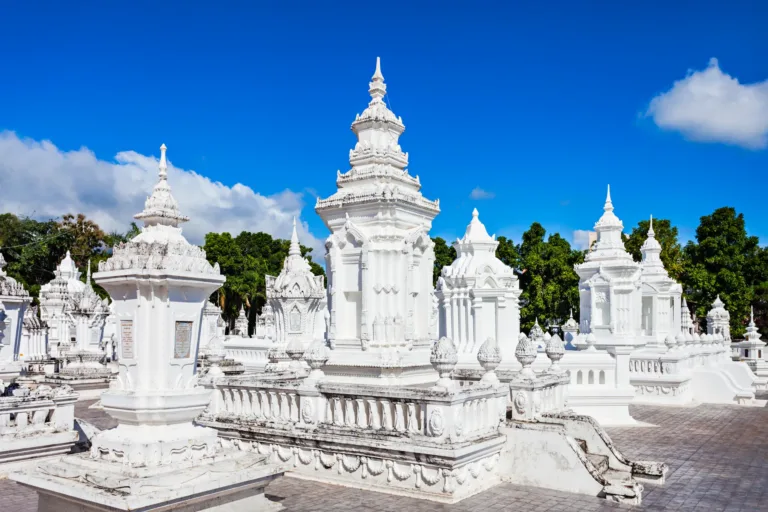 02
 03
 04
Tap a day card to see that day’s weather, rain, haze and hourly forecast
Best time to go Daytime is over · see tomorrow
No warnings today — normal road and weather conditions
Green band = hours used for the score
Best time to go Fine all day little rain through the day
No warnings today — normal road and weather conditions
Green band = hours used for the score
Best time to go Fine all day little rain through the day
No warnings today — normal road and weather conditions
Green band = hours used for the score
Best time to go Fine all day little rain through the day
No warnings today — normal road and weather conditions
Green band = hours used for the score
Best time to go Fine all day little rain through the day
No warnings today — normal road and weather conditions
Green band = hours used for the score
Best time to go Fine all day little rain through the day
No warnings today — normal road and weather conditions
Green band = hours used for the score
Best time to go Fine all day little rain through the day
No warnings today — normal road and weather conditions
Green band = hours used for the score
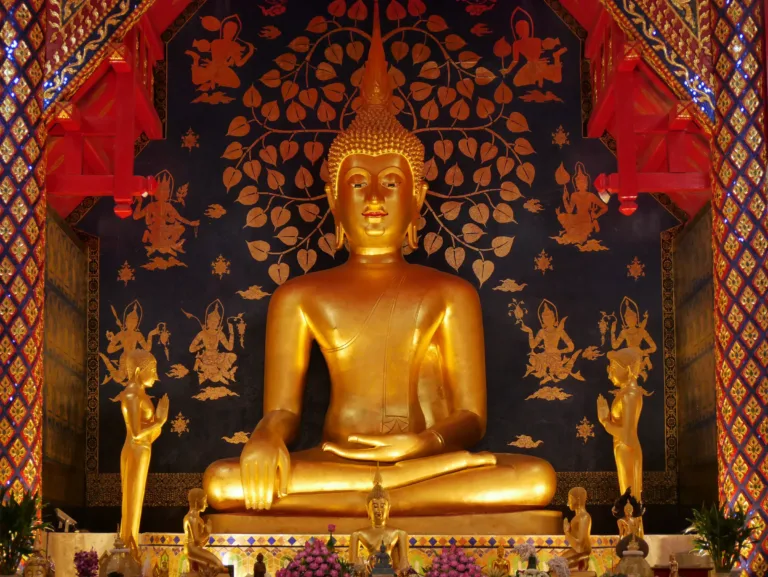
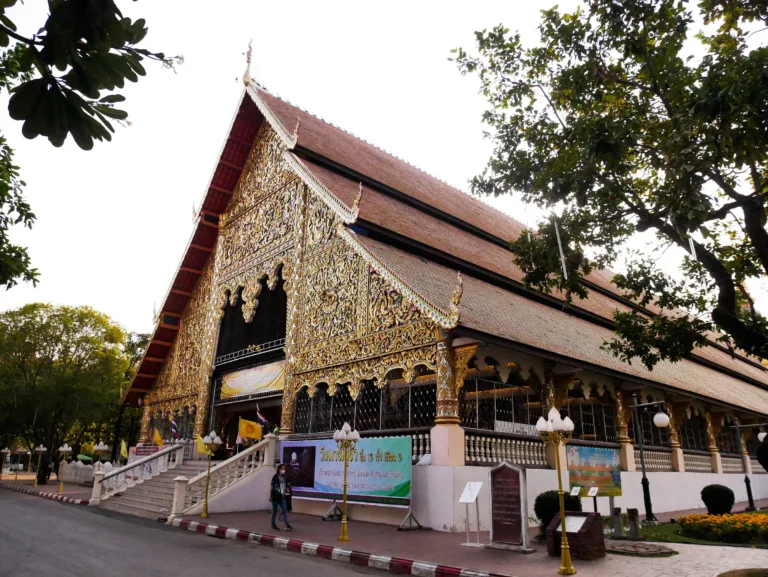
Wat Suan Dok, formally Wat Buppharam, stands at 139 Suthep Road, about 1 km west of Suan Dok Gate. The name means "flower garden temple": the land was once a pleasure garden of the Mangrai dynasty, and King Kue Na turned it into a royal temple in 1371 for Maha Sumana Thera, a monk from Sukhothai who had brought a Buddha relic to Chiang Mai.Its centrepiece is a golden, bell-shaped chedi in Sri Lankan style, about 48 metres tall, said to hold that relic. Legend has it the relic split in two: one part stayed here, while the other was placed on a white elephant whose climb up the mountain led to the founding of Wat Phrathat Doi Suthep.Beside the chedi is a field of white tombs holding the ashes of Chiang Mai's ruling family, gathered here by Princess Dara Rasmi around 1907–09. The ordination hall houses Phra Chao Kao Tue, a large bronze Buddha cast in 1504 under King Mueang Kaeo, and the main viharn enshrines the bronze Phra Chao Kha King.The grounds also host the Chiang Mai campus of Mahachulalongkornrajavidyalaya University, where monks hold English-language Monk Chat sessions in the evening. Come late in the day, when soft light falls on the white tombs and golden chedi, and dress modestly.
Arrive Late afternoon, when soft light hits the white tombs
It's a working monastery and a monks' university
They hold royal ashes, so be respectful and don't climb on them
No data yet check before you go · Time needed 45–90 minutes
Late afternoon and weekends
Wat Suan Dok, officially Wat Buppharam, is a royal temple on Suthep Road, about a kilometre west of Chiang Mai's old city wall. King Kue Na of the Mangrai dynasty built it in his royal garden around 1370–71 for Maha Sumana Thera, a monk from Sukhothai. It became the birthplace of the "Suan Dok order", which rooted Sri Lankan-lineage Buddhism in Lanna, and the starting point of the legend of Doi Suthep's relic. The great bell-shaped chedi, the great Phra Chao Kao Tue Buddha and the rows of royal tombs you see today all trace more than 650 years of history.
Before it was a temple, this was a flower garden of the Mangrai royal family, known as the "Phayom flower garden" for the many phayom trees growing here. Some sources say it lay inside "Wiang Suan Dok", a walled settlement older than Chiang Mai itself. When King Kue Na gave the garden to the Sangha he named it Buppharam, "the monastery of the flower garden", but locals simply called it Wat Suan Dok after its origins.
The monk who made the temple important was Maha Sumana Thera, a Sukhothai monk who had re-ordained in the Sri Lankan tradition at Martaban in the Mon country. He reached Lanna around 1369 and, at King Kue Na's invitation, spent about two rainy seasons at Wat Phra Yuen in Lamphun while the temple was being built. When it was finished he became its first abbot, and the Buddhism he brought grew into a monastic order known as the Suan Dok or Pupphavasi order.
Legend says Sumana saw a vision of a Buddha relic and dug it up in the Sukhothai kingdom; some sources say at Si Satchanalai. When King Kue Na heard of it, he invited the monk and the relic north to Lanna. As the relic was about to be enshrined it split in two; some versions place this in Chiang Mai, others in Lamphun. One part was sealed inside the chedi at Wat Suan Dok. The other was placed on an auspicious elephant, which climbed Doi Suthep, trumpeted three times and collapsed, and King Kue Na built Wat Phra That Doi Suthep on that spot.
Sources do not agree on the founding year. Most English sources give 1370 or 1371, while many Thai sources give 1371 (B.E. 1914), citing the Jinakalamali chronicle. Others date the great viharn to 1372 and the chedi and relic enshrinement to 1373 or 1374. Most of the gap comes from counting different stages, from the year Sumana arrived to the year the building work was finished.
In the following decades Wat Suan Dok led the "Suan" faction of monks, patronised by King Sam Fang Kaen. When the monk Dhammagambhira refused to accept the validity of Suan Dok ordinations, he and his followers left to found Wat Pa Daeng at the foot of Doi Suthep, and in 1423 they travelled to Sri Lanka to re-ordain. From then on Lanna had three groups of monks side by side: Suan Dok, Pa Daeng and the older local order. Although King Tilokarat mainly supported Pa Daeng, the rulers still let both sides coexist.
Wat Suan Dok was also a centre of scholarship. The Wat Suan Dok version of the Mulasasana chronicle was written between the reigns of King Tilokarat and King Mueang Kaeo. Some scholars suggest its author was Phra Buddharakkhita, the eighth abbot, though other sources name different authors. The chronicle lists 14 abbots and records that the temple's ordination boundary was consecrated six times.
The temple's golden age shows clearly in Phra Chao Kao Tue, a bronze Buddha in the earth-touching posture commissioned by King Mueang Kaeo. One source citing the Jinakalamali says work began in 1504, casting was finished in 1505 and the image was installed at Wat Suan Dok in 1509. It measures about 3 metres across the lap and 4.70 metres high and was cast in nine sections. Legend says it was meant for Wat Phra Sing but proved too large to move, so it stayed here.
When Chiang Mai fell under Burmese rule from about 1558 to 1774, many of the city's temples were abandoned, Wat Suan Dok among them. After the city was retaken, the temple was restored under King Kawila and the Chet Ton dynasty. In 1826 the ruler Phutthawong raised a new parasol on the main chedi, before the temple declined again for lack of care.
In the north-west corner stand rows of white tombs known as the "Ku of the Northern Royals". Princess Dara Rasmi, daughter of King Inthawichayanon and a consort of King Chulalongkorn, had the ashes of Chiang Mai's rulers and their relatives gathered here. Some sources give 1907, others 1908–09. The tombs, the main chedi and Phra Chao Kao Tue were registered as national historic sites in 1936.
The largest modern restoration took place in 1931–32, when Chao Kaeo Nawarat, the ruler of Chiang Mai, and Princess Dara Rasmi invited Khruba Srivichai to lead it. A main viharn 66 metres long and 25 metres wide was built, the chedi was restored and a new parasol was raised at the end of that year. Khruba Srivichai also built the temple gate and a preaching pulpit. After his death his ashes were divided into seven parts, one of which rests in his own tomb here, built in 1947.
In modern times the temple was named a model development temple in 1966 and raised to a third-class royal temple in 1990. It is also home to the Chiang Mai campus of Mahachulalongkornrajavidyalaya University, which began as the Lanna monastic college and held its first classes here in 1984. Its student monks have run Monk Chat for foreign visitors since 2000. In 2012 cracks were found in the chedi, and the government approved funding to strengthen the structure.
Arrived? Check in, collect a stamp and tell others what it is like right now
Check your location first, so you do not fill in the form for nothing
Location must be on and within 0.6 km · One check-in per place per day · come back on other days to check in again
Post photos from anywhere — no need to be here · Up to 20 photos at a time · JPG / PNG / WebP · GPS location data is removed automatically
The temple is at 139 Suthep Road, Su Thep, west of the old city moat.
Along Suthep Road, about 1 km from Suan Dok Gate · Fuel
From anywhere in town to the temple
About 1 km from Suan Dok Gate
City streets (Suthep Road)
Daily, about 06:00–18:00
about 1 km from Suan Dok Gate
Wat Suan Dok
Answers travellers want before they go — a one-minute read
139 Suthep Road, Su Thep, Mueang Chiang Mai, about 1 km west of Suan Dok Gate
Wat Buppharam, after the royal flower garden it was built in
Tombs holding the ashes of Chiang Mai's rulers and their relatives
In the ordination hall; it was cast in 1504
Informal English conversations with student monks on weekday evenings; days and times change, so check first
About 45–90 minutes
Best day this week: Saturday 28 Nov · Check in when you arrive to collect a stamp
 Ristr8to
 Wat Phra Singh Woramahawihan
 Wat Umong Suan Phutthatham
 Wat Chedi Luang Varavihara