What to know before visiting the temple
Dress modestly: sleeves, long trousers or skirts · Remove shoes before entering the hall · Don't make noise in the meditation areas
Daily, around 07:00–18:00
Morning, for good light and cooler air
7 days ahead
When to go
this week
Tap a day card to see that day’s weather, rain, haze and hourly forecast
Best time to go Daytime is over · see tomorrow
Holiday — traffic on the way up and parking fills fast; leave early
Hour by hour
Green band = hours used for the score
Best time to go Fine all day little rain through the day
Holiday — traffic on the way up and parking fills fast; leave early
Hour by hour
Green band = hours used for the score
Best time to go Fine all day little rain through the day
No warnings today — normal road and weather conditions
Hour by hour
Green band = hours used for the score
Best time to go Fine all day little rain through the day
No warnings today — normal road and weather conditions
Hour by hour
Green band = hours used for the score
Best time to go Fine all day little rain through the day
No warnings today — normal road and weather conditions
Hour by hour
Green band = hours used for the score
Best time to go Fine all day little rain through the day
No warnings today — normal road and weather conditions
Hour by hour
Green band = hours used for the score
Best time to go Fine all day little rain through the day
No warnings today — normal road and weather conditions
Hour by hour
Green band = hours used for the score
Wat Santi Wanaram (Wat Pa Dong Rai)
Wat Santi Wanaram, also called Wat Pa Dong Rai, is at Moo 11, Ban Chiang, Nong Han District, Udon Thani, just north of Ban Chiang village. It's about 3 km from the Ban Chiang National Museum and about 64 km from Udon city.The highlight is the white ordination hall shaped like a 24-petal lotus, about 19 metres tall, rising from a pond locals call Nong Nam Isan Khiao. A white footbridge leads out to it, two naga guard the front, and inside are a principal Buddha image and murals of the Buddha's life.The temple covers about 1,350 rai, mostly natural forest, and is an active meditation centre, so dress modestly and keep your voice down.
- Good light, cool
- Strong sun
- Softer light
Arrive Morning, for good light and cooler air
- Pond's edgeThe lotus hall reflected in the waterMorning
- FootbridgeA leading line to the hallMorning
Good to know here
Dress modestly and keep quiet
- Come in the morning to photograph the hall reflected in the water
- Combine it with the Ban Chiang National Museum in one trip
- Dress modestly
No data yet check before you go · Time needed 1 hour
Weekends and Buddhist holidays
- Kids Fine to explore; watch kids near the water
- Seniors Level paths and an easy bridge walk
- Dress modestly: sleeves, long trousers or skirts
- Remove shoes before entering the hall
- Don't make noise in the meditation areas
- Strong midday sun; bring a hat and water
The story of this place
Wat Santi Wanaram, known locally as Wat Pa Dong Rai, is a forest temple that grew out of the protection of an old forest just north of Ban Chiang village in Nong Han District, Udon Thani. Its story begins in 1970, when the wandering monk Luang Pu Rai (Phra Khru Phisan Thammaphani) set up his umbrella tent in the Dong Rai forest and, with local villagers, protected the woods and founded a temple. Decades later the temple became famous for its white, 24-petal lotus-shaped ordination hall standing in the middle of a pond, begun in 2001 and taking almost two decades to finish. Its history ties together the forest, the faith of the community and the land of Ban Chiang, where people have lived since prehistoric times.
Read more 10 more paragraphs
The land around the temple is home to the Ban Chiang archaeological site, only about 3 km away. In August 1966 an American Harvard student walking along a village path tripped over the root of a kapok tree and found pottery jars sticking out of the ground. That find led to decades of study. The site's age is still debated: some sources put the oldest evidence at around 5,000 years, while newer dating places the first settlement around 1500 BCE and the latest graves around 200 CE.
On 20 March 1972 King Bhumibol Adulyadej and Queen Sirikit visited the excavation at Ban Chiang, and that same year the Fine Arts Department began a systematic survey of Ban Chiang culture sites. In 1974–1975 the Fine Arts Department and the University of Pennsylvania Museum carried out a major joint excavation that uncovered at least 142 burials. The Fine Arts Department set up the Ban Chiang National Museum in 1981, and in 1992 UNESCO inscribed the Ban Chiang archaeological site as a World Heritage Site.
Most of today's Ban Chiang villagers are Tai Phuan, whose ancestors crossed the Mekong from the Lao side. Sources disagree on when they arrived: a document from the Udon Thani provincial culture office gives 1772, some sources give 1784, and others give around 1817, saying they came from Xieng Khouang. The first settlement stood in a forest called Dong Phaeng, and community accounts say it began with just four families before relatives followed.
North of the village lay a forest the locals called Dong Rai, said to be the last old-growth forest in Nong Han District. The name Wat Pa Dong Rai, still used locally, comes straight from that forest, while the official name Santi Wanaram literally means "the peaceful forest monastery". Some sources also call the grounds the Ban Chiang Buddhist Park (Phuttha Utthayan).
In 1970 Luang Pu Rai arrived in the Dong Rai forest on a dhutanga journey and judged it a fitting place for meditation. He camped there and rallied the villagers to protect the forest from encroachment, and the camp grew into a temple. Its stated aims are forest conservation, a place for meditation, a refuge for wildlife and a place to learn about plants and herbal medicine.
Today the temple covers about 1,350 rai: around 1,000 rai of natural forest, about 100 rai of pond and about 130 rai of buildings and open grounds. A concrete wall runs along the front and seven strands of barbed wire on concrete posts enclose the rest. The provincial tourism and sports office says the forest holds deer, bears and many bird species, and the pond, which villagers call Nong Nam Isan Khiao, is a fish sanctuary. Local schools also bring students here for dhamma camps.
The idea for a lotus-shaped hall came from a pilgrimage of more than ten days in India, made together with Phra Ajarn Maha Bang Khemanando. On that trip they saw the Lotus Temple in New Delhi, a Bahá'í house of worship, and this inspired the wish to bring the lotus back as a Buddhist symbol. According to the provincial tourism and sports office, construction began in 2001, though some sources say work on the site started in 2003.
Luang Pu Rai died of coronary artery disease on 24 September 2011 at Srinagarind Hospital in Khon Kaen, before the hall was finished. His successor as abbot, Phra Ajarn Dr. Maha Bang Khemanando, carried the work through to completion. A likeness of Luang Pu Rai is enshrined inside the hall for people to pay respect.
The exterior of the hall was completed in early 2019, after about 16 years of building according to several sources, funded mainly by public donations. The hall has 24 lotus petals and is about 19 metres tall. Most sources give its width as about 19 metres, though one gives a diameter of 40 metres. A bridge of about 50 metres leads out from the shore, two naga guard the front, and inside are a white principal Buddha image and murals of the Buddha's life on the walls and ceiling.
The design is full of Buddhist meaning. The lotus stands for awakening; in the Buddha's life story, lotuses rose to support his feet when he was born and took seven steps. White stands for the purity of the Dhamma-Vinaya, and the surrounding water recalls the great ocean around Mount Sumeru. The Udon Thani tourism and sports office now calls it "the only lotus-shaped ordination hall in the water in Siam". The temple is both a working meditation centre that still guards the Dong Rai forest and a key stop for anyone visiting Ban Chiang.
- 1772–1817Tai Phuan migrants from the Lao side settle at Dong Phaeng, the start of Ban Chiang village (sources give different years)
- 1966Aug — an American student finds pottery jars in the ground in Ban Chiang village
- 1970Luang Pu Rai (Phra Khru Phisan Thammaphani) camps in the Dong Rai forest, protects it with villagers and founds the temple
- 197220 Mar — King Bhumibol and Queen Sirikit visit the Ban Chiang excavation; the Fine Arts Department begins its survey
- 1974–1975Major Fine Arts Department–University of Pennsylvania excavation uncovers at least 142 burials
- 1981The Fine Arts Department sets up the Ban Chiang National Museum, about 3 km from the temple
- 1992UNESCO inscribes the Ban Chiang archaeological site as a World Heritage Site
See 4 events
- 2001Work begins on the lotus-shaped ordination hall in the pond, inspired by the Lotus Temple in India
- 2003Some sources date the start of work on the site to this year
- 201124 Sep — Luang Pu Rai dies; Phra Ajarn Dr. Maha Bang Khemanando carries on the construction
- 2019Early in the year — the 24-petal lotus hall is completed and opened to visitors
Check-ins & visitor photos
Arrived? Check in, collect a stamp and tell others what it is like right now
Check your location first, so you do not fill in the form for nothing
Location must be on and within 1 km · One check-in per place per day · come back on other days to check in again
Post photos from anywhere — no need to be here · Up to 20 photos at a time · JPG / PNG / WebP · GPS location data is removed automatically
How to get there
The temple is at Moo 11, Ban Chiang, Nong Han District, about 64 km from Udon Thani city.
Highway 22 (Udon–Sakon Nakhon), then to Ban Chiang · Fuel
Highway 22 (Udon Thani–Sakon Nakhon), then the road to Ban Chiang
Daily, around 07:00–18:00
about 64 km from Udon Thani city
Wat Santi Wanaram (Wat Pa Dong Rai)
FAQ
Before you go: Wat Santi Wanaram (Wat Pa Dong Rai)
Answers travellers want before they go — a one-minute read
Where is Wat Santi Wanaram?
Moo 11, Ban Chiang, Nong Han District, Udon Thani, about 64 km from the city
What's the highlight?
The white 24-petal lotus-shaped ordination hall in the middle of a pond
Why is it called Wat Pa Dong Rai?
The land was the Dong Rai forest, Nong Han's last patch of old-growth jungle
Who founded it?
Luang Pu Rai (Phra Khru Phisan Thammaphani) with local villagers, from 1970
Is it open every day?
Yes, it's open to visitors daily
What's nearby?
The Ban Chiang National Museum, about 3 km away
Nearby places
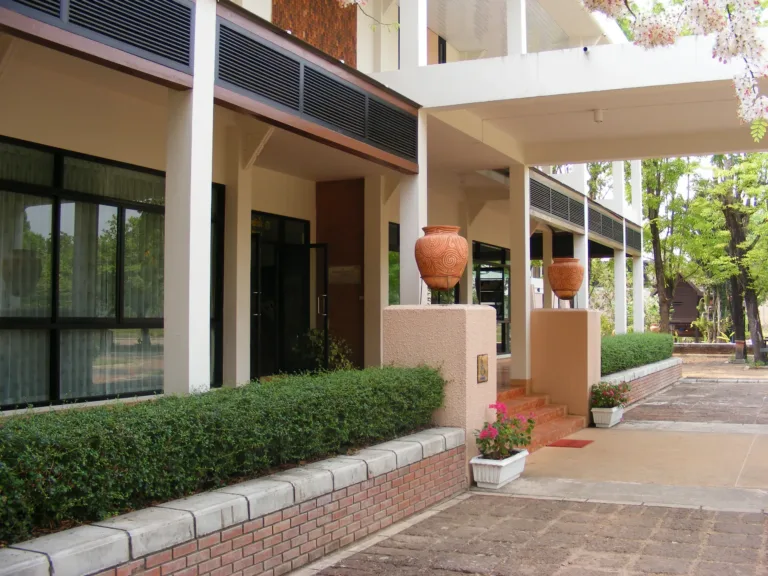 Ban Chiang World Heritage Site
 Red Lotus Sea (Nong Han Kumphawapi)
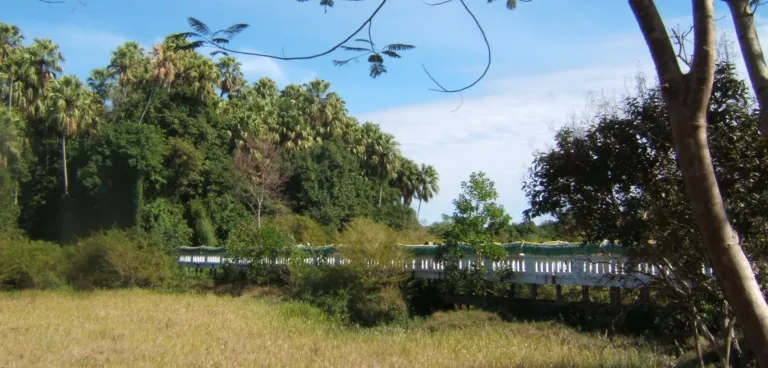 Kham Chanot
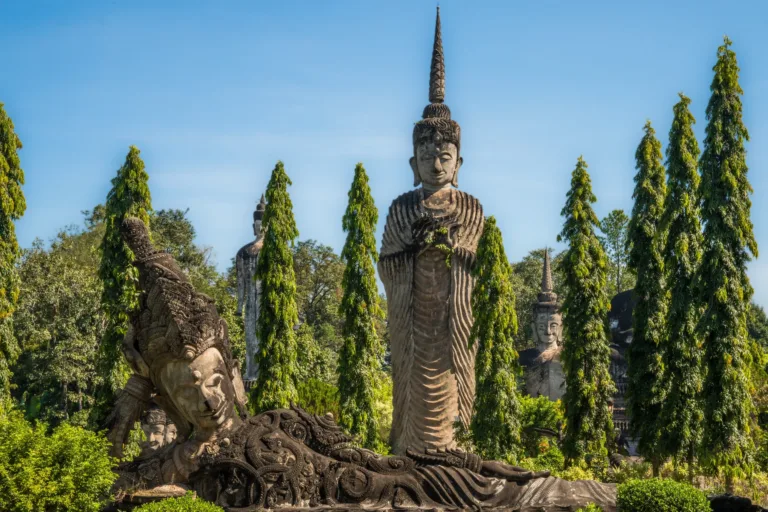 Sala Kaew Ku
Ready to go to Wat Santi Wanaram (Wat Pa Dong Rai)?
Best day this week: Monday 30 Nov · Check in when you arrive to collect a stamp