 01
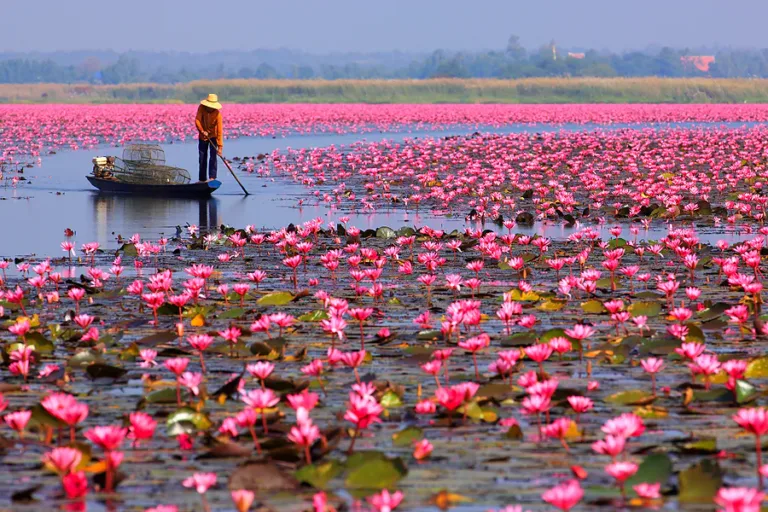
Pink-red water lily fieldsFlowers across the lake in the cool season
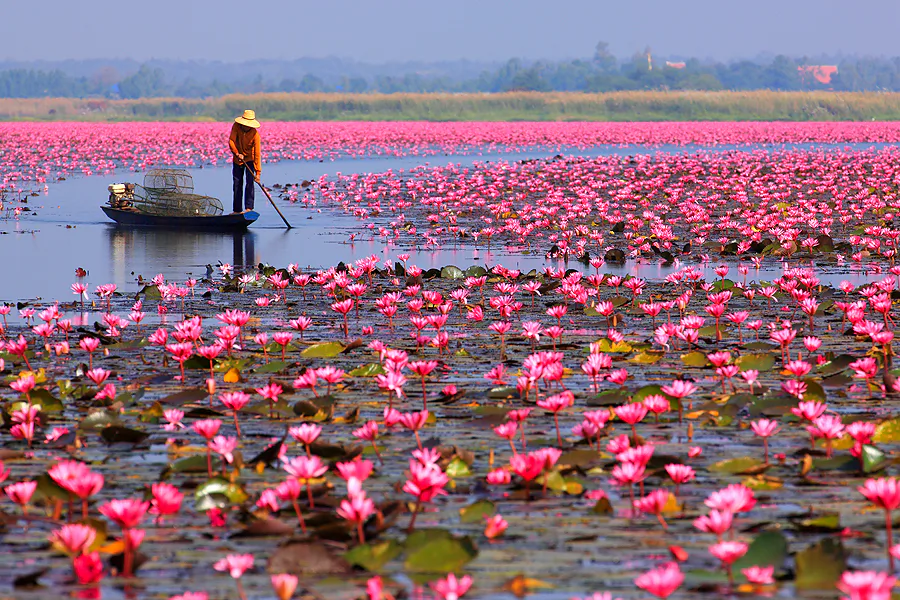
A lake full of water lilies · Udon Thani
A large freshwater lake in Udon Thani where pink-red water lilies carpet the surface in the cool season; tour by village boat in the early morning.
Holiday / event — crowded · Outside this place's best season · Hot (Afternoon) feels like 39°C
May – Sep
Wear a life jacket; do not pick the flowers; strong midday sun
1–2 hours
4G available
0102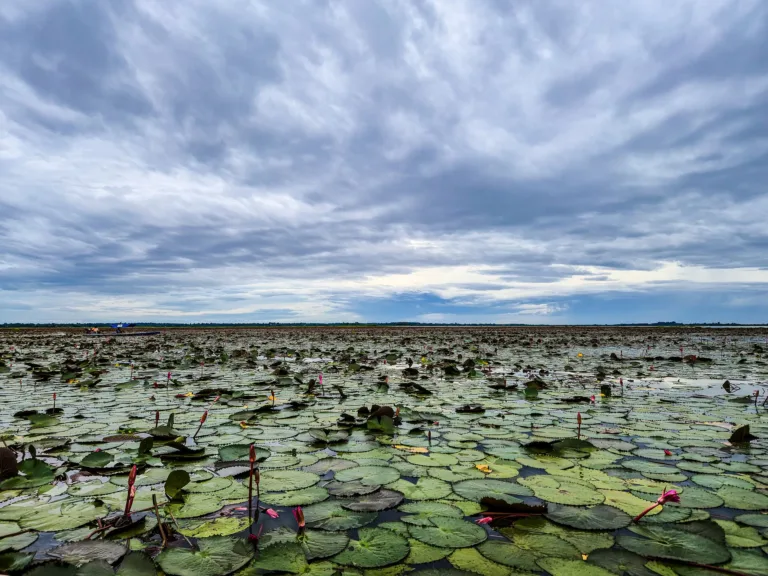 03
 04
Tap a day card to see that day’s weather, rain, haze and hourly forecast
Best time to go Fine all day little rain through the day
Holiday — traffic on the way up and parking fills fast; leave early
Green band = hours used for the score
Best time to go Fine all day little rain through the day
Holiday — traffic on the way up and parking fills fast; leave early
Green band = hours used for the score
Best time to go Fine all day little rain through the day
Holiday — traffic on the way up and parking fills fast; leave early
Green band = hours used for the score
Best time to go Fine all day little rain through the day · light drizzle possible at times
No warnings today — normal road and weather conditions
Green band = hours used for the score
Best time to go Best window 06:00–14:00 Little rain
No warnings today — normal road and weather conditions
Green band = hours used for the score
Best time to go Fine all day little rain through the day
No warnings today — normal road and weather conditions
Green band = hours used for the score
Best time to go Fine all day little rain through the day
No warnings today — normal road and weather conditions
Green band = hours used for the score
Scored from cloud cover at every level and tonight’s moonlight — the darker the sky, the clearer the Milky Way · tap another night below for the next 7 nights
The Red Lotus Sea, Nong Han Kumphawapi in Udon Thani, is a large freshwater wetland where pink-red water lilies bloom across the surface from December to February, best seen by village boat in the morning.
Arrive Before 07:00 for full blooms and morning light
Light mist on the water on cool-season mornings
Photos from Wikimedia Commons and contributors · full credits inClassic page
Adults 0 THB · Car 0 THB · Time needed 1–2 hours
Long holidays late December–January, in the mornings
| Small boat (up to 2 people) | 300 ฿/boat |
| Large boat (up to 6 people) optional | 500 ฿/boat |
| Parking (estimate) optional | Pay as you like |
Cash and QR transfer at the pier · Prices may change by season — check with the venue
Red Lotus Sea season-opening ceremony, around mid-November–December
Kumphawapi Hospital · Tourist Police 1155 · Emergency 1669
Tap a month on the wheel to see weather, rain, haze and crowds from 10 years of records
Best time · Dec–Feb: full bloom; visit 06:00–11:00 before the flowers close
Watch out · Mar–Oct: outside the bloom, mostly leaves and open water
Oct by the records 23–30°C · avg rain 141 mm (15 rainy days) · clear 7 days · avg PM2.5 10
The Red Lotus Sea is Nong Han Kumphawapi in Kumphawapi district, Udon Thani, about 40–50 km from the city, with the most popular viewing from Ban Diam pier in Chiang Waeo subdistrict. Thansettakij (December 2022) says Nong Han covers about 22,500 rai, is the second-largest freshwater lake in Isan, borders four districts (Nong Han, Kumphawapi, Prachak Sinlapakhom and Ku Kaeo) and is registered as a wetland of national importance.
The main pier is at Ban Diam, Moo 5 and 10, Chiang Waeo. The Sirindhorn Anthropology Centre's community wiki (January 2026) explains that villagers once lived around a temple called "Wat Ban Doem" (old village temple), which became "Ban Diam". Tradition holds that the first settlers came from elsewhere in Isan by cart and small boat; one night an elder dreamed of light rising from a termite mound, and next morning villagers dug up ancient bricks and a small Buddha image, built a shrine and then a chedi, later part of Wat Mahathat Thep Chinda. The wiki also gives the lake as about 13 km long, up to 5 km wide and under 1 m deep, with two large islands, Don Kaeo and Don Pa, as the source of the Lam Pao flowing to Kalasin, and ringed by about 32 villages over 100 years old.
Area figures depend on how they are counted. English Wikipedia gives about 1.7 km² of open water surrounded by about 4.1 km² of wetland including paddy fields, a maximum length of 7 km and width of 3 km, mostly no deeper than 1 m, fed mainly by Huai Phai Chan Yai and draining to the Lam Pao. Thai media use about 36 km² (22,500 rai), which likely includes surrounding floodplain.
Nong Han Kumphawapi is different from the larger Nong Han in Sakon Nakhon, which has a similar bloom, and guides often warn of the confusion. Thai media call the flowers "bua sai", water lilies whose flowers open in the morning and close when the sun gets strong, not the sacred lotus.
The community wiki explains that the "red lotus" of Nong Han belongs to the water lily family (Nymphaeaceae), called bua sai in Thai, with food-storing rhizomes underwater, finely hairy leaf stalks and round to oval toothed leaves floating on the surface. Flowers peak from December to February, turning the lake pink-red as far as the eye can see, hence the name "Red Lotus Sea".
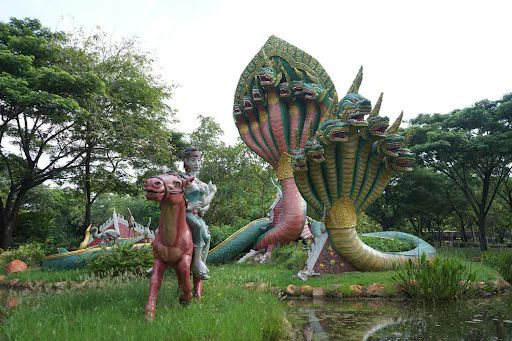
Isan folklore links Nong Han to the tale of Phadaeng and Nang Ai. English Wikipedia, drawing on Tossa's 1990 translation, relates that Nang Ai, daughter of King Khom of Chathida, had many suitors; the naga prince Phangkhi was killed after spying on her (popular versions say he took the form of a white squirrel), and his flesh multiplied into vast amounts of meat the townspeople ate. The naga king then attacked and turned the land into a great swamp, of which Nong Han is said to be a remnant. The same legend is also tied to Nong Han in Sakon Nakhon.
An ancient stupa stands by the lake at Ban Diam. The community wiki says the date of Phra Mahathat Thep Chinda is unclear, with archaeologists suggesting the 6th–8th centuries CE. Construction of the stupa began under King Chulalongkorn (Rama V), modelled on Phra That Phanom, encasing an old stupa and two ancient Buddha images in place. In 1962 the old stupa collapsed but the images were unharmed, and a new one was finished in 1967. Atop it two Buddha images sit back to back, one of laterite facing east and the other facing west; beside it is a laterite ordination-hall base 10 by 20 m, and the "Hong Hot", a ritual site for bathing monks, has a Magadhi inscription on a Buddha base dated CS 7 (645 CE).
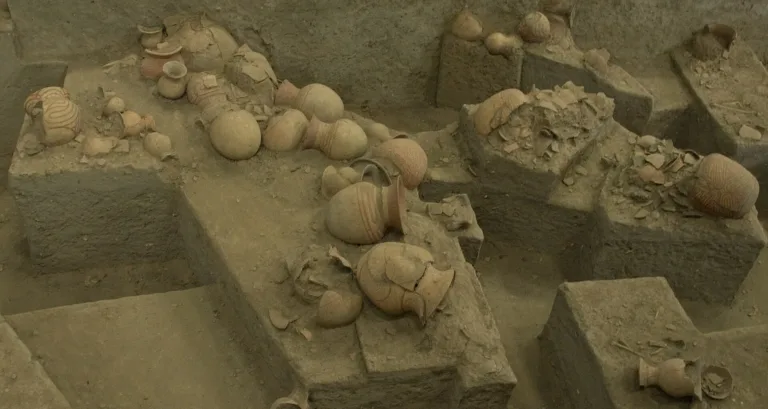
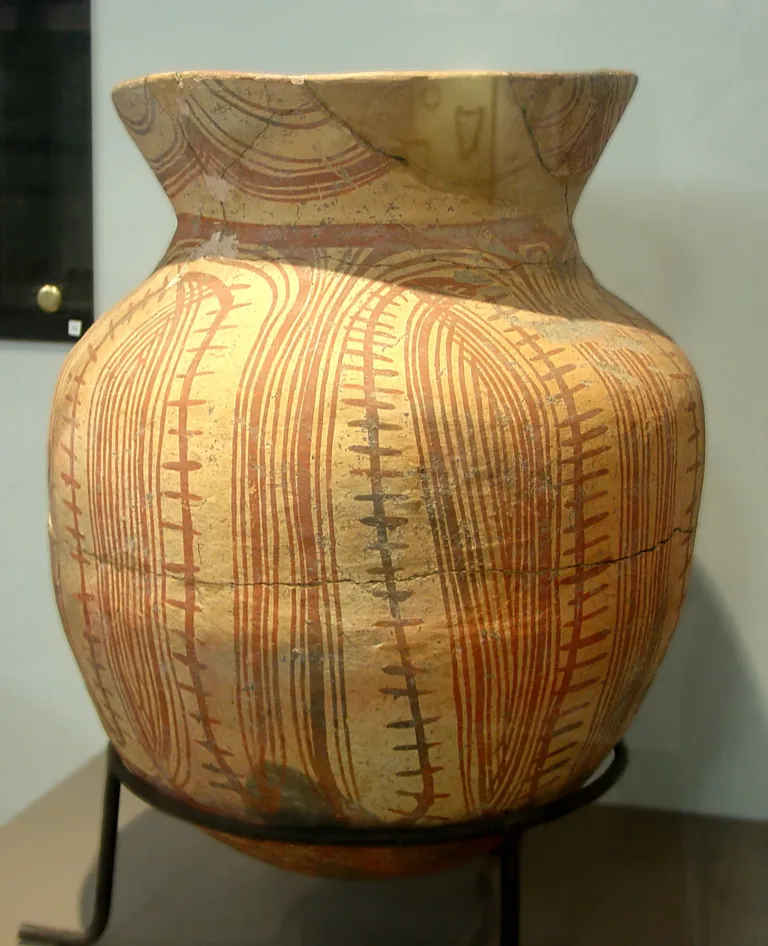
Scientifically, Nong Han Kumphawapi is a key record of Isan's environmental history. Penny, Grindrod and Bishop (Asian Perspectives, 1996) analysed pollen, phytoliths and charcoal in sediment cores and found permanent swamp or lake conditions established about 6,500 years ago, alongside a decline in regional trees, with burning episodes from the late Pleistocene, which they suggested might reflect human use of fire.
The Penn Museum's Expedition magazine relates that Dr Dan Penny of Monash University began collecting about 15 cores from swamps and lakes in Udon Thani and Sakon Nakhon in 1993, Kumphawapi being the largest. The results suggest pine and oak forest 20,000–40,000 years ago, drought around 18,000 years ago that dried many lakes, and refilling about 10,000 years ago. The forest decline around 6,500 years ago predates settlement at Ban Chiang, about 30 km away, by at least 1,000 years.
Reading those fires as Neolithic farming clearance remains debated. Wikipedia cites Higham and colleagues (2011), who argue the region's dry dipterocarp forest burns naturally and hunter-gatherers also used fire; the pollen record shows no clear evidence of rice cultivation or Neolithic settlement.
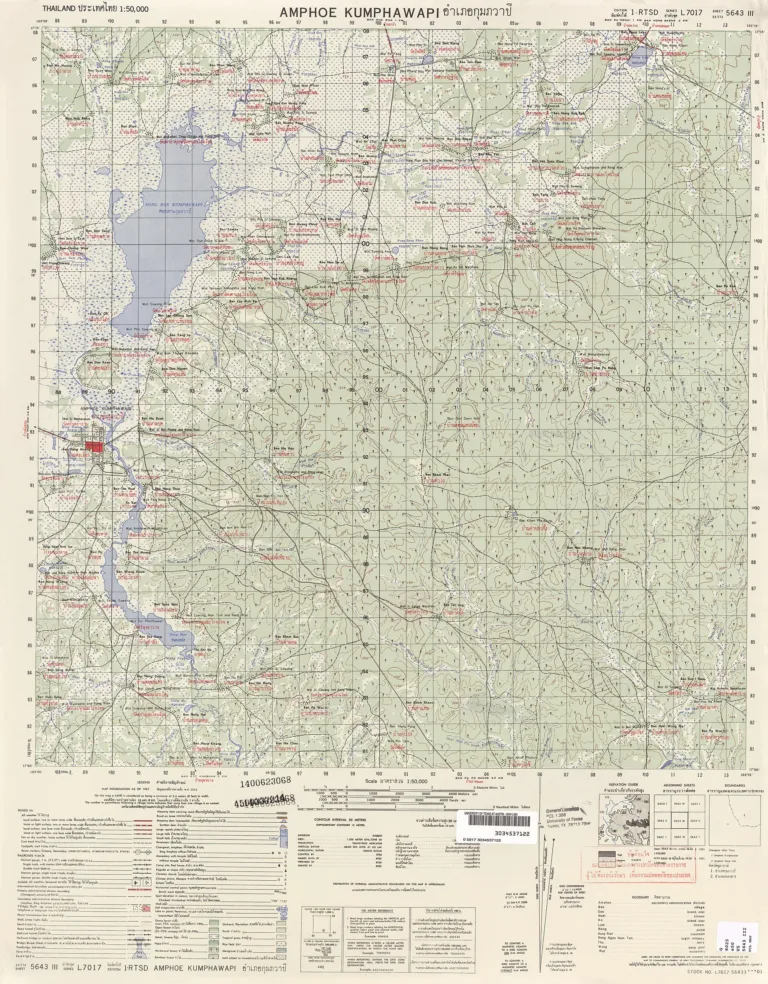
In modern times, a public-domain 1959 US Army Map Service sheet recorded Kumphawapi district and its wetlands. English Wikipedia says that in 2001 the Thai government proposed Nong Han Kumphawapi as a wetland of international importance, without stating it has been listed as a Ramsar site.
Red Lotus Sea tourism began with villagers. The community wiki says that in 2005 Phraisit Sukrom set up the Ban Diam Red Lotus Sea tourism community enterprise after a request for boat-group funding was refused and the district agriculture office advised registering one. It began with 36 members and now has 176 households from three districts, one boat per family. Chiang Waeo municipality supported it in 2007–2010, and from 2011 the province and agencies developed the site: the Marine Department built a pavilion and improved the pier, public works built a lakeside road, toilets and parking, and the provincial administration and TAT promoted it. Boats come in two types: small longtails for 2 (about an hour) and large flat-bottomed boats for 6 (about 1.5 hours).
The Red Lotus Sea became globally famous in the late 2010s. The Telegraph (December 2017) reported the pink lake drawing tourists, and Thansettakij says CNN named it one of the world's 15 strangest lakes. Visitors grew from about 50,000 in 2021 to an expected 200,000 in 2022, and Thansettakij reported in December 2023 over 500,000 visitors a year spending nearly 10 million baht.
Popularity brought ecological problems. Thansettakij reports that in the 2022 season water hyacinth spread over part of the lily area, closing two of five piers, prompting clearance and a BCG tourism model. The season opened on 18 November 2022 with a ceremony honouring the lake's guardian spirits at Ban Diam pier; around the lake live 32 communities, with over 100 boats, more than 40 fish species and over 70 resident and migratory bird species.
On infrastructure, Thansettakij reports that on 4 December 2023 Deputy Transport Minister Manaporn Charoensri inspected a pier under construction, due in 2024, while Chiang Waeo municipality requested two more at about 7 million baht each. PPTV lists six viewing piers: Ban Diam, Chiang Waeo, Chae Lae, Ban Non Nam Yoi, Ban Don Khong (Prachak Sinlapakhom) and Ban Khon Sai (Ku Kaeo).
For the latest season, Khaosod English (January 2026) reports that TAT officially opened it on 15 December, with lilies blooming close to shore this year so boat rides are shorter. Small boats (2 people) cost 300 baht and large boats (6 people) 500 baht, running 06:00–17:00, with 06:00–11:00 recommended before the flowers close in strong sun.
In early 2026 the Red Lotus Sea trended again. Thairath Online (23 January 2026) reported that photos of Lisa (Lalisa Manobal), as TAT's Amazing Thailand Ambassador, promoting the Red Lotus Sea were widely shared on social media.
Arrived? Check in, collect a stamp and tell others what it is like right now
Check your location first, so you do not fill in the form for nothing
Location must be on and within 3 km · One check-in per place per day · come back on other days to check in again
Post photos from anywhere — no need to be here · Up to 20 photos at a time · JPG / PNG / WebP · GPS location data is removed automatically
From Udon Thani take Highway 2 towards Khon Kaen, then Highw…
Udon Thani–Kumphawapi–Ban Diam · Fuel
Bangkok–Udon Thani, then by road · Per airline
Udon Thani–Kumphawapi, then hire a vehicle · Ask at the terminal
Paved road to Ban Diam pier
Parking at Ban Diam pier
Petrol stations in Kumphawapi town
4G available
Boats 06:00–17:00 (best 06:00–11:00)
around 45 km fromUdon Thani city
Red Lotus Sea
0 THB
Approx. nightly price for 2 adults (next week) · final price depends on your dates
Answers travellers want before they go — a one-minute read
Dec–Feb; flowers open in the morning and close in strong sun
Small boat for 2: 300 baht; large boat for 6: 500 baht (2025–2026 season)
No, they are different lakes
No, they are water lilies (bua sai) that bloom above the water
Best day this week: Thursday 29 Oct · Check in when you arrive to collect a stamp