 01
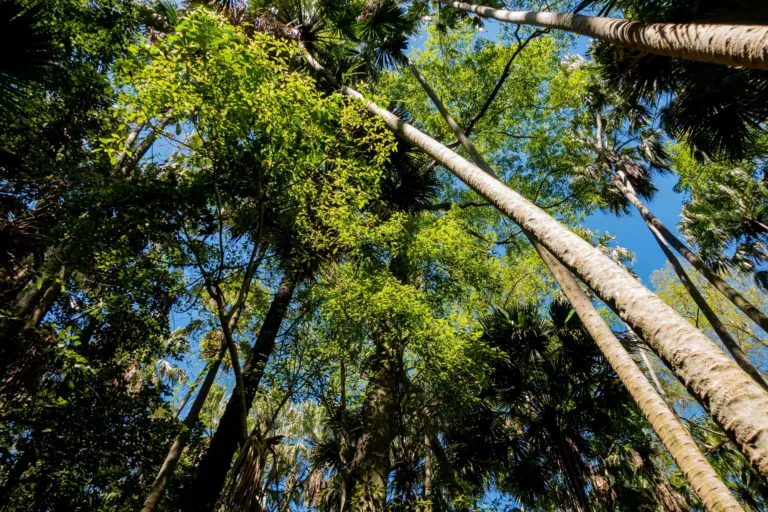
Chanot palm forestWild palms about 30 m tall cover the island
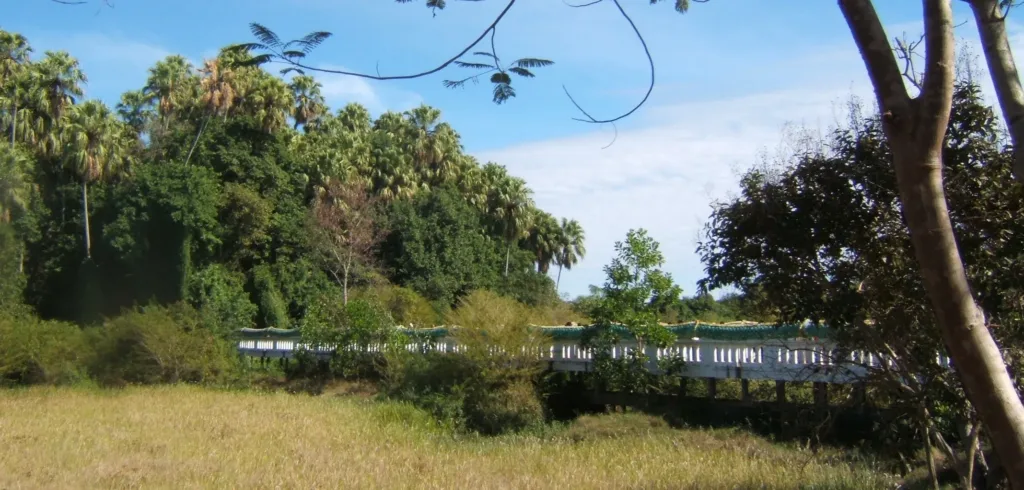
Sacred forest · Ban Dung
A sacred forest island in the wetlands of Ban Dung, Udon Thani, thick with chanot palms and bound up with naga legend, where pilgrims honour Pu Si Suttho and Ya Si Pathumma. Open daily 06:00–18:00.
Holiday / event — crowded
Dress modestly and remove hats in the shrine area · Speak softly and don't jump queues · No incense or candles in the forest · No coins in the pool
Daily 06:00–18:00
Before 09:00, when it's quieter
01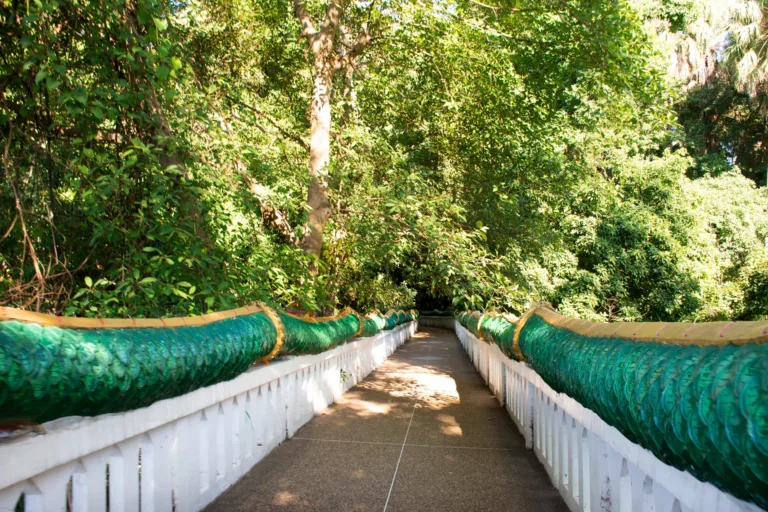 02
Tap a day card to see that day’s weather, rain, haze and hourly forecast
Best time to go Daytime is over · see tomorrow
Holiday — traffic on the way up and parking fills fast; leave early
Green band = hours used for the score
Best time to go Fine all day little rain through the day
Holiday — traffic on the way up and parking fills fast; leave early
Green band = hours used for the score
Best time to go Fine all day little rain through the day
No warnings today — normal road and weather conditions
Green band = hours used for the score
Best time to go Fine all day little rain through the day
No warnings today — normal road and weather conditions
Green band = hours used for the score
Best time to go Fine all day little rain through the day
No warnings today — normal road and weather conditions
Green band = hours used for the score
Best time to go Fine all day little rain through the day
No warnings today — normal road and weather conditions
Green band = hours used for the score
Best time to go Fine all day little rain through the day
No warnings today — normal road and weather conditions
Green band = hours used for the score
Kham Chanot is a forested island of about 20 rai in the wetlands of Ban Non Mueang, Ban Muang, Ban Dung District, Udon Thani, linked to the mainland by a bridge. It's named after the chanot palm, a wild fan palm that reaches about 30 m and is uncommon in Thailand, which grows densely across the island.Isan belief holds that Kham Chanot is a gateway between the human world and the underwater realm of the naga. People come from all over Thailand to pay respects to Pu Si Suttho and Ya Si Pathumma and ask for blessings; there's also a sacred pool and Wat Kham Chanot.It's open daily 06:00–18:00. Dress modestly, remove hats, don't light incense or candles in the forest or throw coins in the pool, and take your offering trays back out with you.
Arrive Before 09:00, when it's quieter
And no throwing coins into the sacred pool
Carry your trays and food offerings out with you
No releasing fish, tying seven-colour cloth or rubbing powder on trees
No data yet check before you go · Time needed 1–2 hours
Long weekends, Buddhist holy days and before lottery draws
Kham Chanot is a sacred forest island of about 20 rai set among the marshes and wetlands of Ban Dung district, Udon Thani, covered by more than a thousand chanot palms. People in Isan believe it is a gateway between the human world and the underwater kingdom of the naga lord Chao Pu Si Suttho and his consort Chao Ya Si Pathumma. Once a grove where local villagers fed their guardian spirit, it has grown over the past few decades, through ghost stories, the media and tourism, into a national pilgrimage site and one of the most visited places of prayer in the Northeast.
In the Isan language, "kham" means a spring that never runs dry, while "chanot" is the wild palm (Livistona saribus) that grows thickly across the island. A landscape architecture study from Chulalongkorn University describes Kham Chanot as a small freshwater swamp forest with an island-like form, a type of place locals call "sanom", and notes that the chanot palms do not spread beyond it. Another study counted around 1,865 palms. Villagers observe that in the flood season the island seems to rise with the water and stays in place when it recedes, which in local belief is the power of the naga.
An Isan legend tells that the naga kings Si Suttho and Suwanna Nakha raced to dig rivers. Si Suttho dug fast and made the winding Mekong, while Suwanna Nakha, slower, made the Nan. The legend adds that there are three passages between the underwater world and the human one: That Luang and Nong Khan Thae in Vientiane, and Kham Chanot. Scholars point out that the idea of nagas creating the Mekong also appears in older texts such as the Phra That Phanom chronicle, though the nagas there bear different names.
The communities around Kham Chanot are fairly young. A Naresuan University study traces the pioneers to Ban Dung Yai, founded around 1877–1887. Ban Wang Thong, about 2 km from the island, was settled in roughly 1937–1946, and people from several other Isan provinces later joined. At first Chao Pu Si Suttho was revered as an ancestral spirit guarding the marshland. Villagers asked his permission before gathering forest produce, fishing or boiling salt, held a feeding rite for him on the third waxing day of the third lunar month before the rice season, and kept taboos such as not wearing red, not making loud noise and not eating snakes.
Wang Thong became a subdistrict in 1978, and around 1980 a little over ten households settled beside the forest. The village, originally called Kham Chanot, was renamed Ban Non Mueang on 7 June 1995. Sources differ on which subdistrict the site belongs to, some giving Ban Muang and others Wang Thong, as the two adjoin. Research also records the story that Phraya Phahon Phonphayuhasena visited after the 1932 revolution, carrying tales of Kham Chanot's miracles back to Bangkok.
National recognition grew in 1987, when water from the island's sacred well was used in the royal ceremony marking King Rama IX's 60th birthday on 5 December. In 2019 water from the same well served as Udon Thani's consecration water for the coronation of King Rama X.
Kham Chanot's most famous tale, the "ghost film screening", dates from 1988–1989: Thairath gives 20 December 1988, while some studies say 1989. The story goes that a travelling cinema crew was hired to show a film in the forest to a silent audience that vanished before dawn. Later media investigations found that the client had hired the screening as merit-making for his late mother, with a real contract and payment, and said it took place in Ban Wang Thong rather than the forest. Even so, thousands of people a day began to visit, hiring outdoor film screenings became a popular votive offering, and the story was turned into a horror film in 2007.
The forest was also the setting of a fraud. Around April to May 2000, a video claiming to show ghosts in the forest aired on television and caused a sensation. Police found it had been staged by a cult leader to swindle a follower, and arrested him on 24 May 2000.
The site changed physically from around 1990, when the area around the island was dredged into a pond and a concrete bridge, a new shrine and a ring road were built, after which some chanot palms withered and died. The Chulalongkorn study notes that between 1987 and 2003 irrigation works disrupted the water flow that keeps the island moist. On the management side, the Ban Muang Subdistrict Administrative Organization ran the site in 1999, until in 2002 the Ban Dung district chief issued rules letting villagers elect a five-member committee to manage it themselves.
In 2004 the Tourism Authority of Thailand promoted Kham Chanot as an "Unseen Thailand" attraction, and the same year the present cruciform Thai-style shrine was built at the centre of the island, though another study dates a new shrine to around 1990. Scholars note that in this period naga belief blended further with Buddhism: Si Suttho came to be revered as a bodhisattva, and rituals once tied to village life began to turn into tourism products.
Visitor numbers peaked in 2016–2017, at roughly 4,000–15,000 people a day. In February 2017 the province held a major clean-up, and in March it set up working groups to reorganise the site, counting about 489 shops and stalls. In mid-2017 floods reached inside the island, and visitor numbers fell afterwards. During COVID-19 the site closed from 23 March 2020 and again late that year, reopening on 3 March 2021. Meanwhile local researchers have been propagating the chanot palm since 2011 and planted about 700 seedlings in 2020.
Arrived? Check in, collect a stamp and tell others what it is like right now
Check your location first, so you do not fill in the form for nothing
Location must be on and within 1 km · One check-in per place per day · come back on other days to check in again
Post photos from anywhere — no need to be here · Up to 20 photos at a time · JPG / PNG / WebP · GPS location data is removed automatically
Kham Chanot is at Ban Non Mueang, Moo 11, Ban Muang, Ban Dung, about 1.5–2 hours from Udon Thani town.
Udon Thani–Highway 2255 or Sakon Nakhon road–Ban Dung–Kham Chanot · Fuel
From Udon Thani town · As agreed
Paved, via Highway 2255 or the Sakon Nakhon road into Ban Dung
Daily 06:00–18:00
Kham Chanot
Answers travellers want before they go — a one-minute read
Daily 06:00–18:00
Ban Non Mueang, Ban Muang, Ban Dung District, Udon Thani
About 1.5–2 hours by car
Incense or candles in the forest, coins in the pool, releasing fish, tying cloth or powdering trees
Modest clothes; remove hats in the shrine area
Carry your trays and food back out with you
Best day this week: Monday 30 Nov · Check in when you arrive to collect a stamp
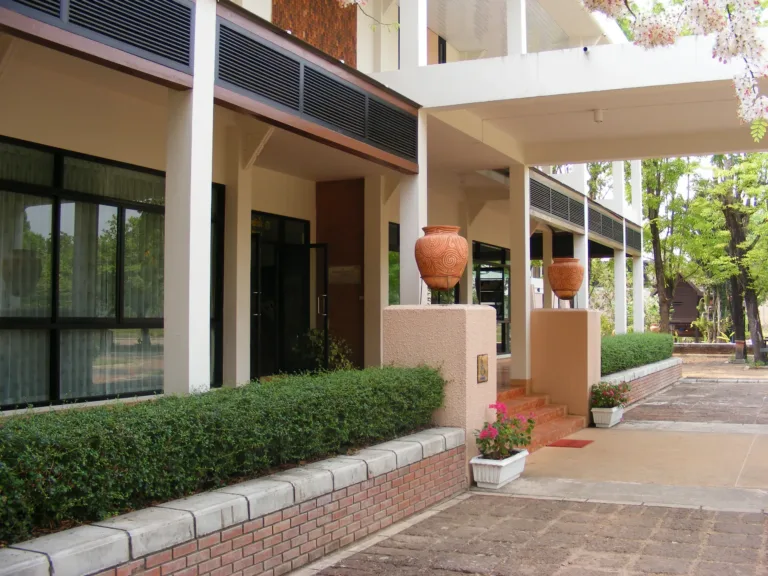 Ban Chiang World Heritage Site
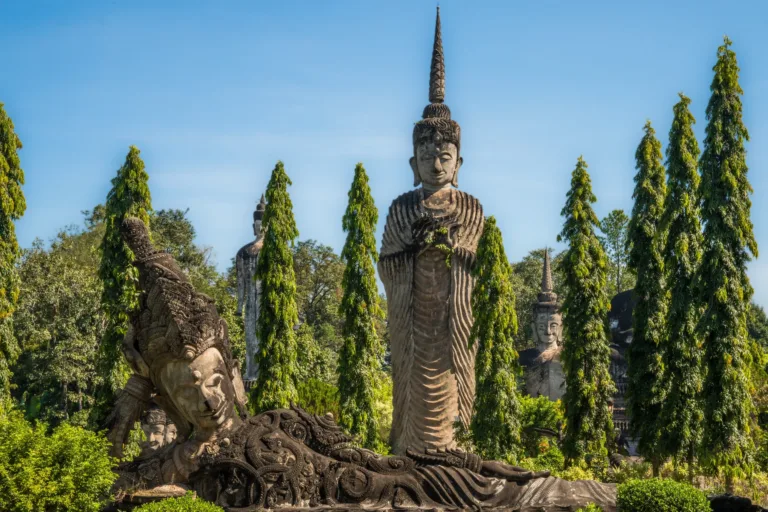 Sala Kaew Ku
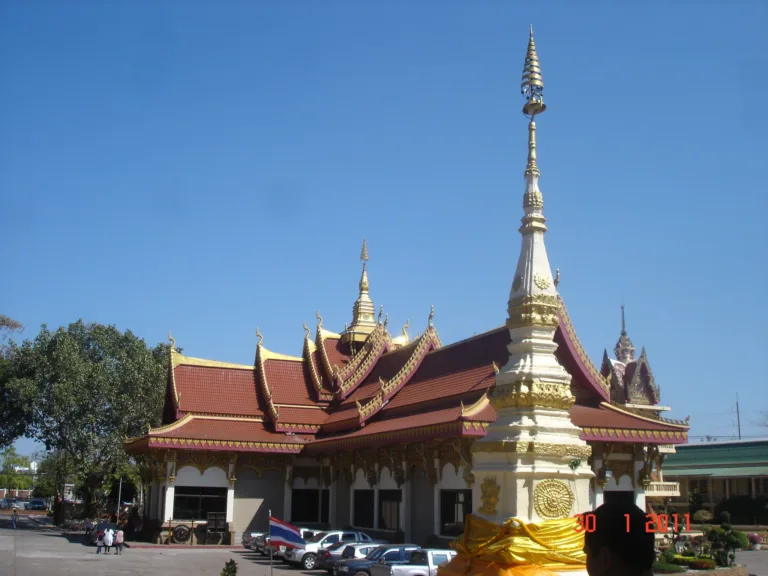 Wat Pho Chai (Luang Pho Phra Sai)