 01
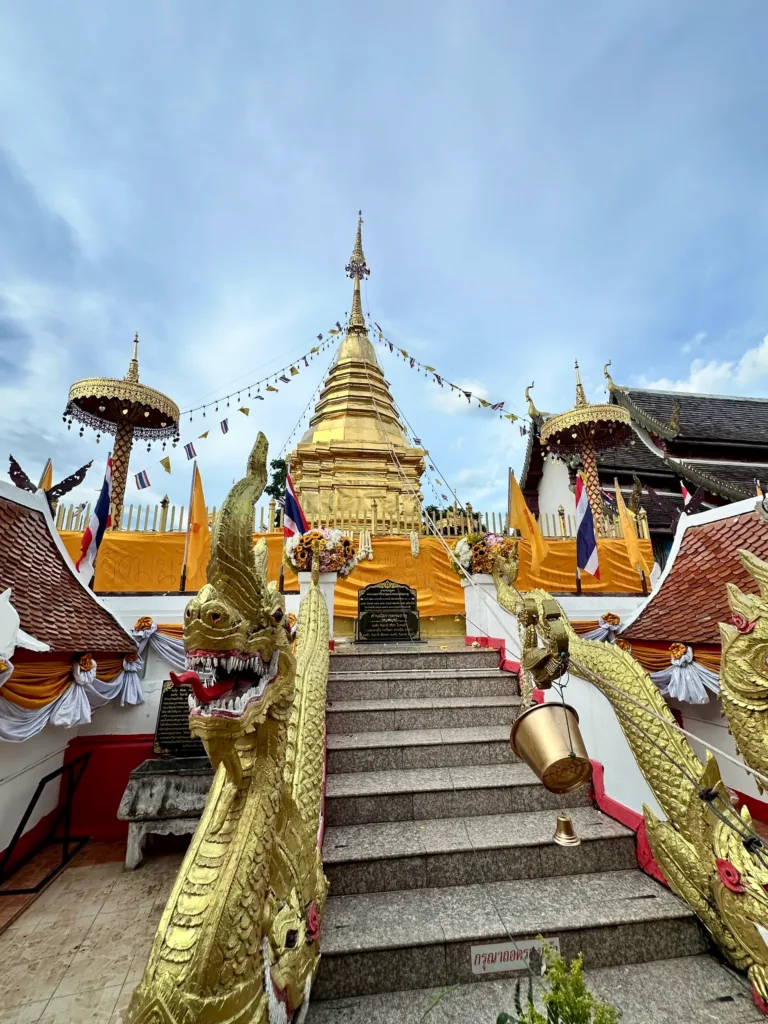
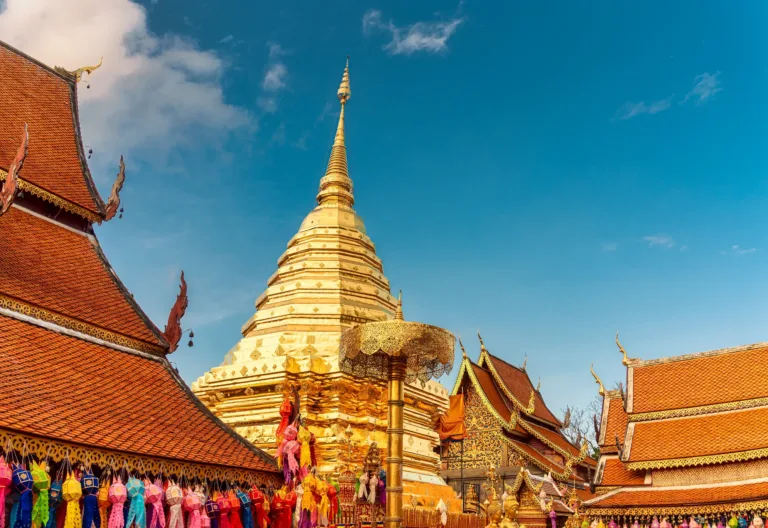
Phra That Doi KhamThe golden Lanna-style chedi said to hold a hair relic of the Buddha
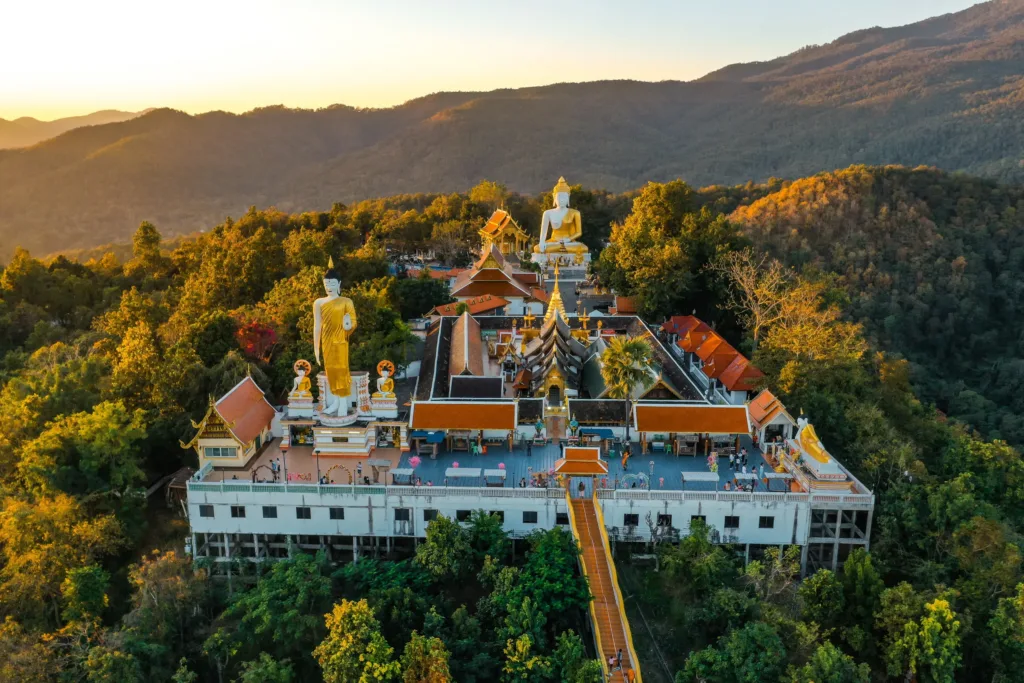
Hilltop relic temple · Mae Hia, Chiang Mai
A hilltop temple behind Royal Park Rajapruek, said by legend to date from 687 under Queen Chamadevi, famous for Luang Pho Than Jai and its jasmine-garland offerings, with views over Chiang Mai.
Holiday / event — crowded
Dress modestly, covering shoulders and knees (sarongs can be borrowed at the entrance) · Remove shoes before entering the viharn · If your wish comes true, come back and repay the vow as promised · Don't make noise where people are praying
Daily, about 06:00–18:00 (sources vary)
Before 09:00 on a weekday, ahead of tour buses and traffic
Relic-bathing ceremony on the 7th–8th waning days after Visakha Bucha · Pu Sae–Ya Sae spirit ritual at the foot of the hill, 14th waxing day of the 9th northern month (around June)
01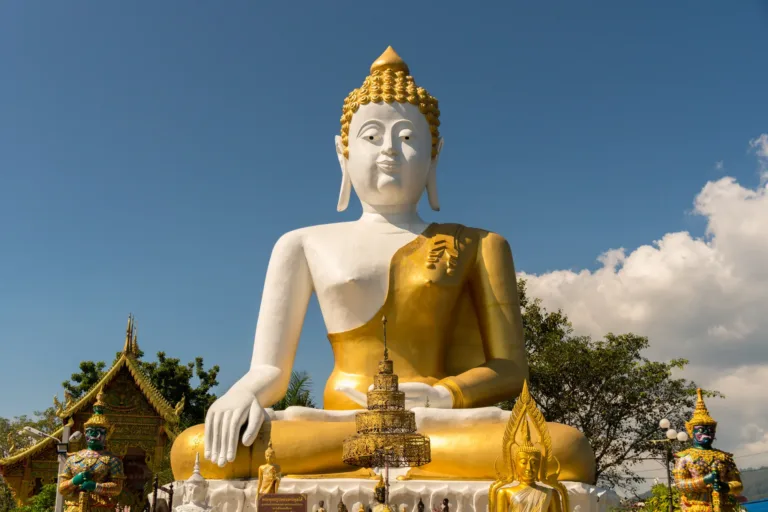 02
 03
 04
Tap a day card to see that day’s weather, rain, haze and hourly forecast
Best time to go Daytime is over · see tomorrow
Holiday — traffic on the way up and parking fills fast; leave early
Green band = hours used for the score
Best time to go Fine all day little rain through the day
Holiday — traffic on the way up and parking fills fast; leave early
Green band = hours used for the score
Best time to go Fine all day little rain through the day
No warnings today — normal road and weather conditions
Green band = hours used for the score
Best time to go Fine all day little rain through the day
No warnings today — normal road and weather conditions
Green band = hours used for the score
Best time to go Fine all day little rain through the day
No warnings today — normal road and weather conditions
Green band = hours used for the score
Best time to go Fine all day little rain through the day
No warnings today — normal road and weather conditions
Green band = hours used for the score
Best time to go Fine all day little rain through the day
No warnings today — normal road and weather conditions
Green band = hours used for the score
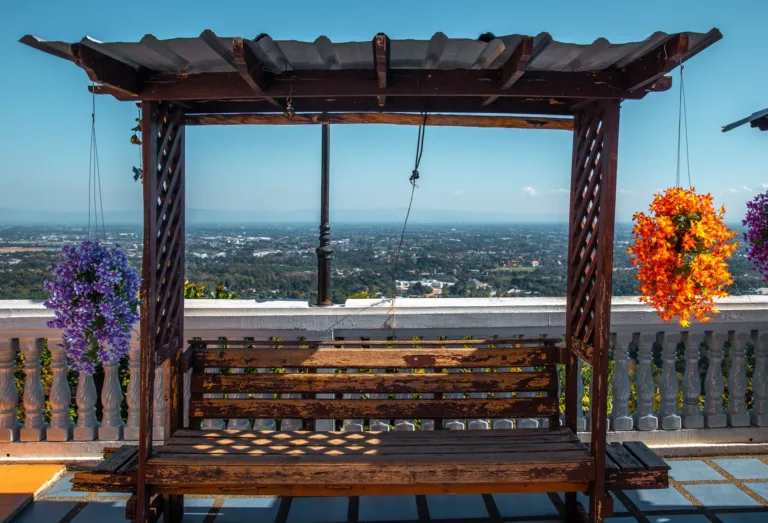
Wat Phra That Doi Kham sits on top of Doi Kham hill in Mae Hia, about 10 km south-west of central Chiang Mai, just behind Royal Park Rajapruek. According to the temple's legend, the twin sons of Queen Chamadevi built a chedi here in 687 to enshrine a hair relic of the Buddha. Originally called Wat Suwannabanphot, it was abandoned several times and revived after villagers found ancient artefacts on the hill in 1966.Most people come today to pray to Luang Pho Than Jai, an old stucco Buddha believed to grant wishes quickly. Those whose prayers are answered come back with jasmine garlands — at least 50 of them — so the altar is always piled high, and garland stalls line the road up the hill.Up top you'll find a golden Lanna-style chedi, a white-and-gold seated Buddha about 17 m tall and a terrace looking out over Chiang Mai and Doi Suthep. The hill is also tied to the legend of Pu Sae and Ya Sae, ancestral spirits of the Lua people, who are still honoured with a ritual at its foot around June each year.You can drive right up to a car park near the summit, though the last stretch is winding. Weekends bring crowds and traffic, so come before 9 am if you can. There is little shade on the terraces, and visitors should cover shoulders and knees.
Arrive Before 09:00 on a weekday, ahead of tour buses and traffic
Custom says anyone whose wish comes true offers at least 50 jasmine garlands, so think before you promise
Drive slowly, especially at weekends when traffic is heavy
The hilltop terraces are exposed, so bring a hat and water
No data yet check before you go · Time needed 1–2 hours
Weekends and long holidays, late morning to afternoon
Relic-bathing ceremony on the 7th–8th waning days after Visakha Bucha · Pu Sae–Ya Sae spirit ritual at the foot of the hill, 14th waxing day of the 9th northern month (around June)
Wat Phra That Doi Kham crowns Doi Kham, a small hill on the south-western edge of Chiang Mai in Mae Hia subdistrict, just behind Royal Park Rajapruek. The temple's own legend dates it to 687 CE (BE 1230), in the Hariphunchai period, as a shrine for a hair relic of the Buddha. It was abandoned several times over the centuries and only came back to life after 1966; in the past decade or so it has become one of the busiest temples in Chiang Mai, thanks to devotion to the Buddha image "Luang Pho Than Jai" and the custom of repaying answered prayers with jasmine garlands. Doi Kham is also home to the legend of Pu Sae and Ya Sae, ancestral spirits of the Lua people, who are still honoured with a ritual at the foot of the hill every year.
The temple was originally called Wat Suwannabanphot, "Golden Mountain Temple", but locals simply called it Wat Doi Kham — kham means gold in the northern Thai language. Legend says that rain once fell for three days and three nights and turned into gold that flowed into a cave on the hill, which became known as Tham Kham, the Golden Cave, and gave the hill its name. The cave mouth is now sealed because of rockfall and for conservation.
In the version of the Doi Kham chronicle cited by scholars, the Buddha came to the hill during his lifetime and met three giants named Jikham, Taokhiao and Suthep. They meant to eat him and his arahants, but his loving-kindness subdued them and they took the Five Precepts. The Buddha gave them a lock of his hair and foretold that the place would flourish after his passing; the giants placed it in an emerald reliquary and worshipped it. Some online accounts tell it differently — that celestial beings brought the relic and asked the giants to bury it — so the story of the relic exists in more than one version.
In another strand of the story, the giant couple of Doi Kham are Pu Sae and Ya Sae, former man-eaters who, after submitting to the Buddha and taking the precepts, asked to eat meat once a year — the origin of the buffalo offering. Their son was the hermit Suthep, or Vasudeva, after whom Doi Suthep is named. The researcher Asa Kumpha explains that Pu Sae and Ya Sae are regarded as ancestors of the Lua and as guardian spirits of Chiang Mai. They appear in old texts such as the Chiang Mai Pang Doem chronicle, which counts them among the city's 43 spirits, and the Wat Nantaram chronicle, thought to date from around King Tilokarat's reign. The Chinakalamali, by contrast, condemns the sacrifice of cattle and buffalo to spirits without naming the couple.
Every year on the 14th waxing day of the 9th northern month, around June, people in Mae Hia still hold the "Liang Dong" ritual at the foot of Doi Kham. A spirit medium possessed by Pu Sae and Ya Sae eats buffalo meat, while a painted cloth of the Buddha hangs over the ceremony. Scholars read this as a compromise between Buddhism and deeply rooted spirit beliefs.
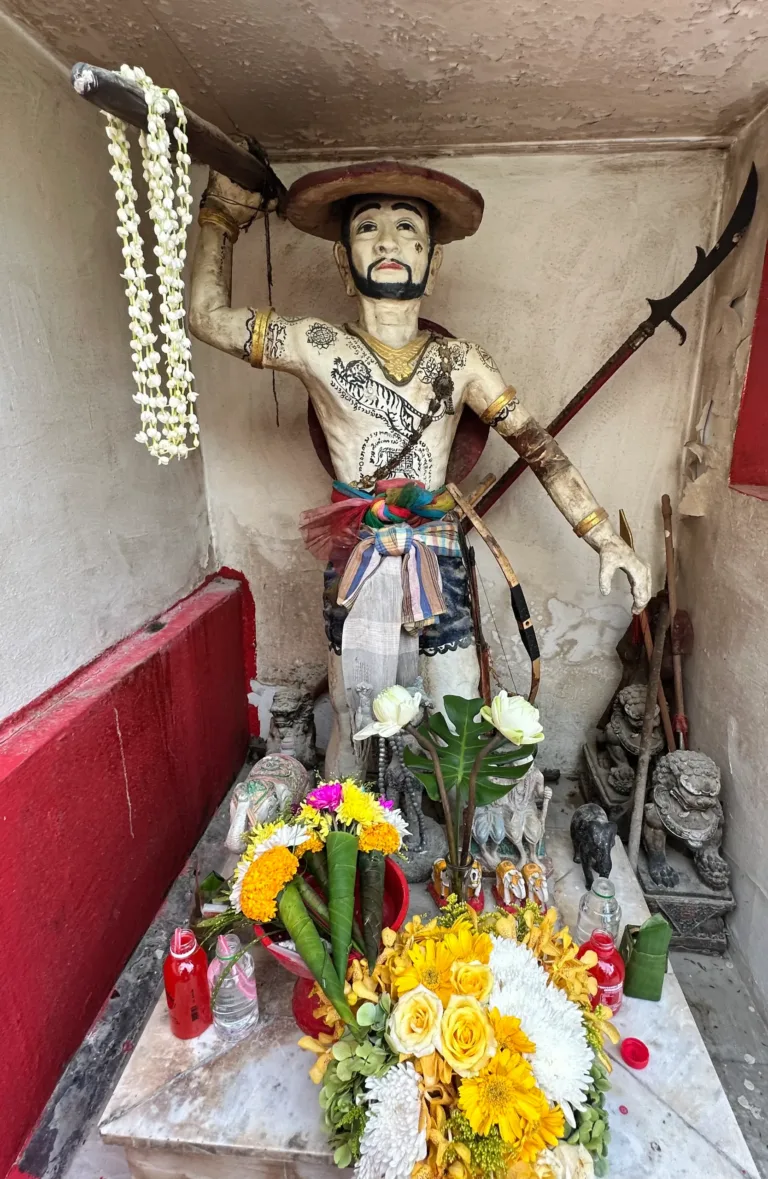
The legend goes on that after the giants died, Queen Chamadevi, adopted daughter of the hermit Vasudeva, became guardian of the relic. Once she ruled Hariphunchai, in BE 1230 she had her twin sons, Prince Mahantayot and Prince Anantayot, build a small chedi on Doi Kham to enshrine it. She also wished that no one should build a temple here until the relic's time to flourish had come — a story later used to explain why the temple was abandoned again and again. These dates and figures come from legend rather than inscriptions. Today the temple has a monument to Queen Chamadevi and a statue of Khun Luang Wilangka, the Lua leader of the Chamadevi chronicle.
The temple's best-known image is Luang Pho Than Jai, a stucco Buddha in the subduing-Mara posture. Under Lanna custom, a "Than Jai" image had to be finished within a single day, with a "heart" and sacred objects placed inside while monks chanted through the night. Its age is uncertain: some sources place it in the reign of King Kuena, others put it at about 511 years old, and researchers note that no one knows when it first appeared. Local reports say Khruba Sriwichai once built a shelter over the image so people could worship it, and a monk's hut he built around 1924 still stood when the temple was later revived.
With no monks living there for long periods, the chedi was dug into by treasure hunters many times. Accounts of 1966 differ — some say the ancient chedi collapsed after heavy rain, others that its relic chamber was found broken open — but villagers recovered many artefacts, including Phra Rod Luang amulets, a large gilded sandstone Buddha and Phra Sam Hom images. A deep shaft beneath the chedi was sealed and a new chedi built on top. Today's chedi is a round Lanna form with squared upper tiers, and its gold can be seen from far away; it is said to have served as a landmark for Thai Airways pilots approaching Chiang Mai airport.
The serious revival began around 1980–1981; the research records the year inconsistently. In 1981 Khruba Phin, later Phra Khru Sunthorn Chetiyarak, who had been ordained in 1971, was appointed abbot. He lived there alone, finding only Khruba Sriwichai's abandoned hut. There was no road, electricity or running water, and he walked more than 10 km a day on his alms round until villagers began making Lanna candles to sell for the restoration. Temple lore adds that Queen Chamadevi's spirit asked him to care for the temple, and that in 1987 a yellow light was seen rising from the chedi and drifting north-east.
Luang Pho Than Jai's fame is recent. The image was unpainted and little known until Khruba Boonchum gilded it in 1997. In 2012 Khruba Phin said he had a vision in which the image promised to help people in trouble, on condition that those whose wishes came true offered fragrant white flowers — jasmine garlands, at least 50 of them. The story of a businessman who recovered money lost to fraud within seven days spread through the media and social networks, and visitors from Thailand and abroad began pouring in. During COVID-19 people even made and repaid vows online, and garland stalls now line the road up to the temple.
In 2013 the temple held a robe-offering (Kathin) ceremony to raise money for a 16-metre standing Buddha, and at the 2014 Kathin tens of thousands came, causing tailbacks of more than 5 km, as the temple handed out 100,000 amulets made from donated jasmine garlands. The hill also carries a large white-and-gold seated Buddha, about 17 m tall, visible from afar. In August 2024 the temple began installing the feet of a 19-metre Thao Wessuwan (Vaisravana) statue budgeted at about 17 million baht, which drew criticism for overshadowing the relic chedi and for commercialism. Later that month the temple announced it was halting the project, but after Mae Hia Municipality issued a building permit on 13 December 2024, work resumed in January 2025; no report of its completion has been found.
Arrived? Check in, collect a stamp and tell others what it is like right now
Check your location first, so you do not fill in the form for nothing
Location must be on and within 0.7 km · One check-in per place per day · come back on other days to check in again
Post photos from anywhere — no need to be here · Up to 20 photos at a time · JPG / PNG / WebP · GPS location data is removed automatically
The temple is on Doi Kham hill in Mae Hia, behind Royal Park Rajapruek, about 10 km from central Chiang Mai.
About 10 km from town via the Canal Road, then up the hill · Fuel
Use the Navigate button to show the driver the location
Hire one in town and agree the fare first; there is no direct bus
Paved; the last stretch climbs the hill with several bends
Car park near the summit; busy at weekends and during festivals
Daily, about 06:00–18:00 (sources vary)
about 10 km from Central Chiang Mai
Wat Phra That Doi Kham
Answers travellers want before they go — a one-minute read
On Doi Kham hill in Mae Hia, Mueang Chiang Mai, behind Royal Park Rajapruek, about 10 km from town
Light three incense sticks, chant Namo three times and the prayer, then state your name and your wish; if it comes true, return with jasmine garlands
By custom at least 50, or the number you promised
Yes, cars and motorbikes can reach the car park near the summit; the last stretch is winding
Legend dates it to 687 under Queen Chamadevi, but most of what stands today was rebuilt after 1966
About 1–2 hours
Best day this week: Monday 30 Nov · Check in when you arrive to collect a stamp
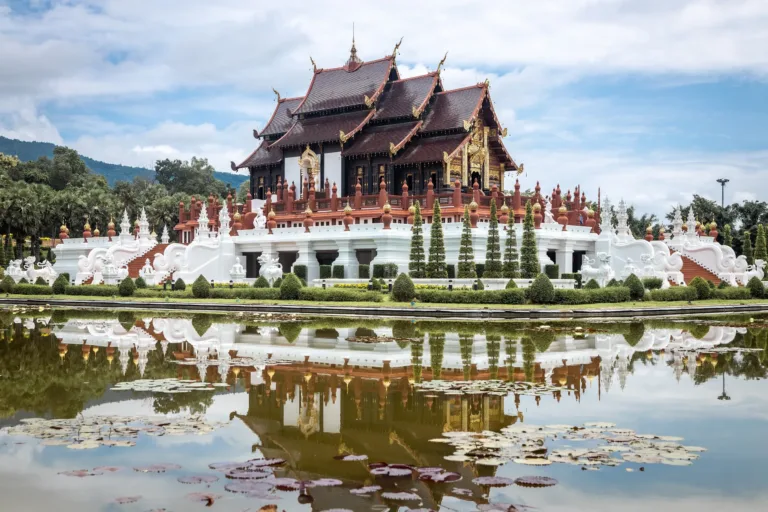 Royal Park Rajapruek
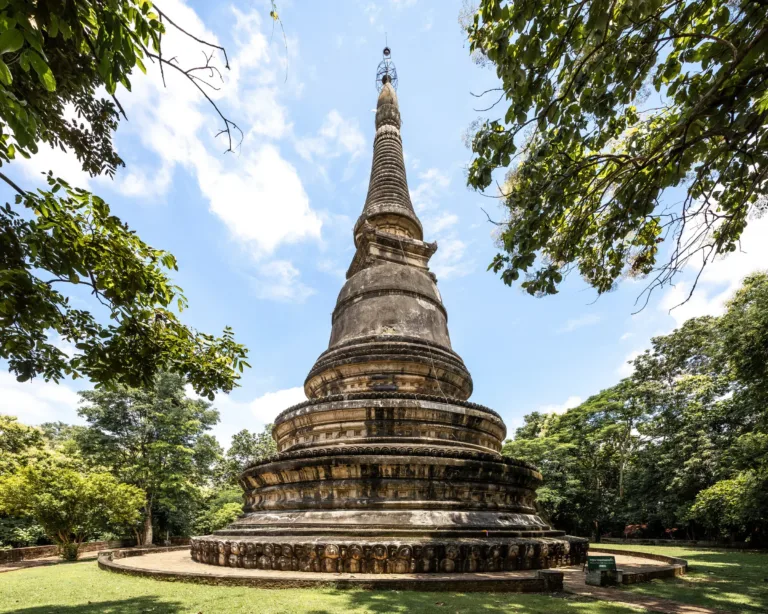 Wat Umong Suan Phutthatham
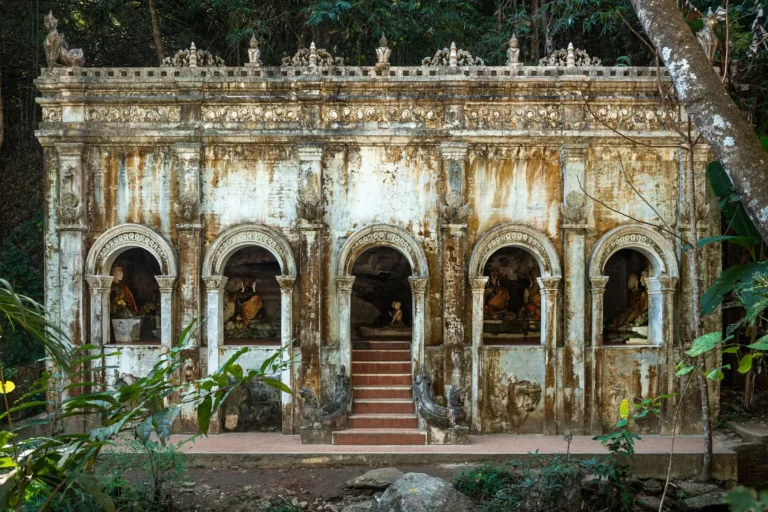 Wat Pha Lat
 Wat Phra That Doi Suthep