Wat Phra That Doi Suthep
Chiang Mai's guardian temple on the summit of Doi Suthep, enshrining a relic of the Buddha in a golden chedi. Climb more than 300 naga steps to the relic terrace and a sweeping viewpoint over the city.
Before you goWhich of the next 7 days is best Best dayThursday 15- Severe weatherNone
- EarthquakesNone in 48 h
- Major disastersNone
- Site noticesNone
About
Overview · highlights · who it suits
Wat Phra That Doi Suthep Ratchaworawihan sits on Doi Suthep, the mountain west of Chiang Mai's old city, about 1,050 metres above sea level. It is a royal temple and one of the most revered places in northern Thailand, home to a relic of the Buddha enshrined in a gilded Lanna-style chedi that can be seen from many corners of the city.
The way up to the relic terrace is a naga staircase of about 306 steps; if you'd rather not climb, a funicular tram runs to the top. On the terrace you can walk clockwise around the chedi, see the Lanna-style viharns and cloister, and step out to the viewpoint for a wide view over Chiang Mai — clearest in the cool season.
Don't-miss highlights
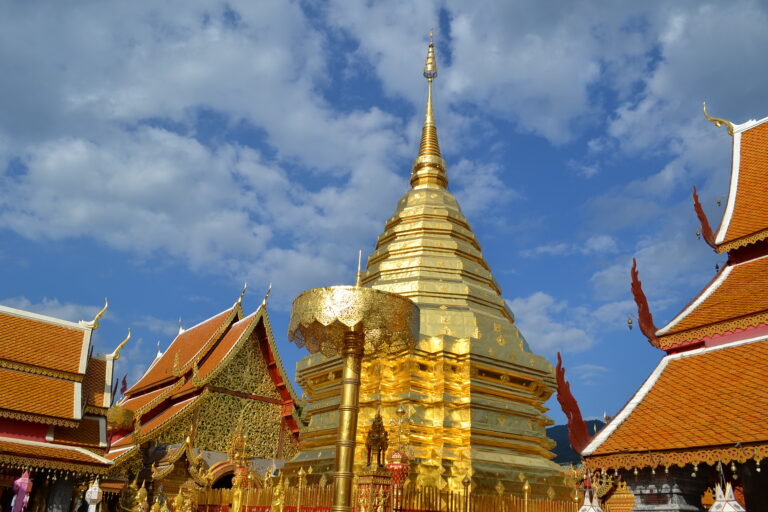
Golden relic chedi
A Lanna-style chedi clad in gilded copper plates, enshrining a relic of the Buddha — walk around it clockwise three times
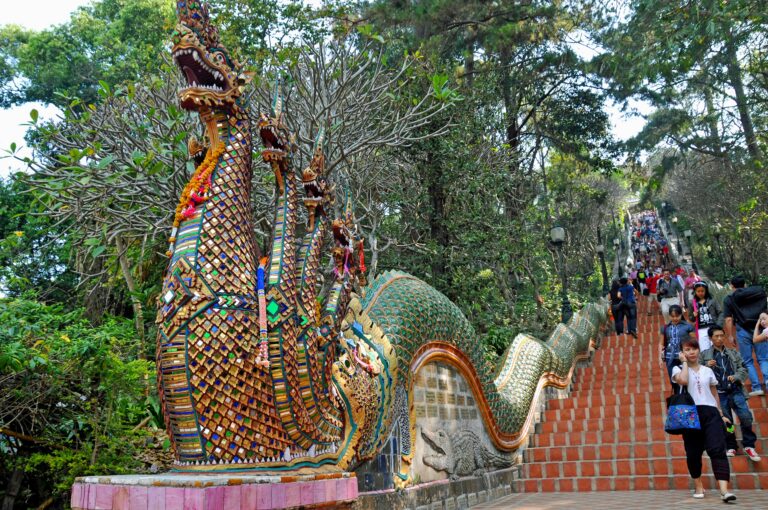
Naga staircase
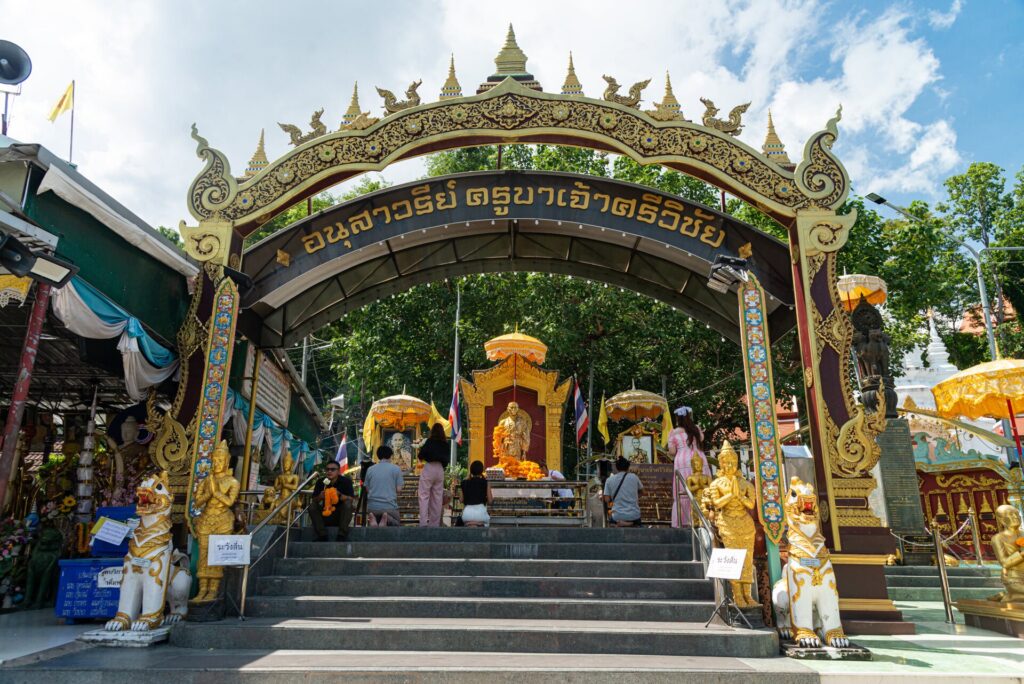
About 306 steps, first built in 1547, with seven-headed naga serpents as the handrails
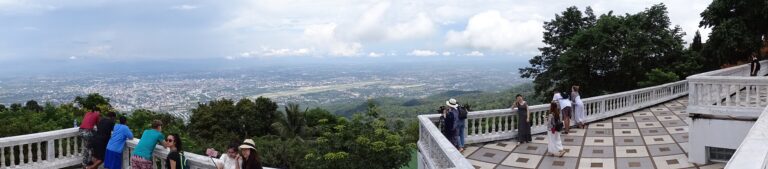
Chiang Mai viewpoint
See the city, the old moat and the airport from about a thousand metres up
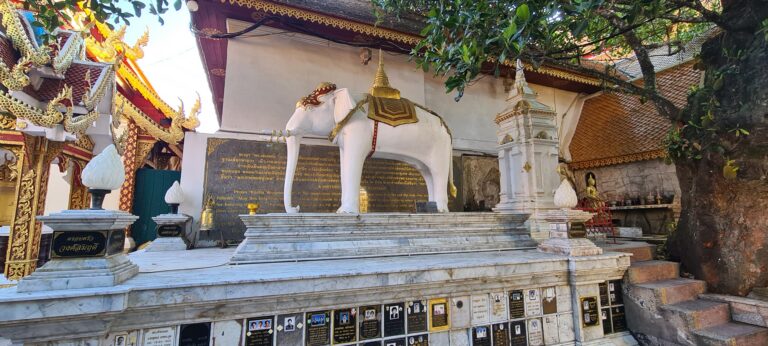
White Elephant monument
Honours the auspicious elephant from the temple's founding legend
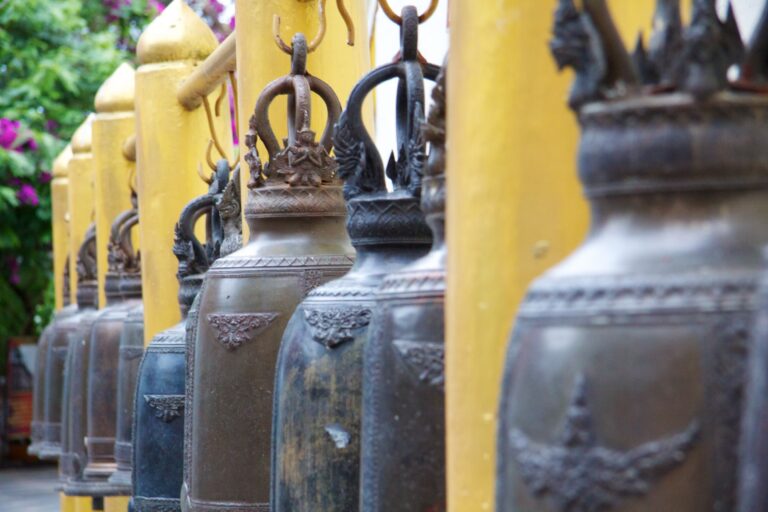
Cloister bells
Rows of bells that visitors strike for good fortune
Before you go
Gallery
Get a feel for the place · tap a photo to enlarge
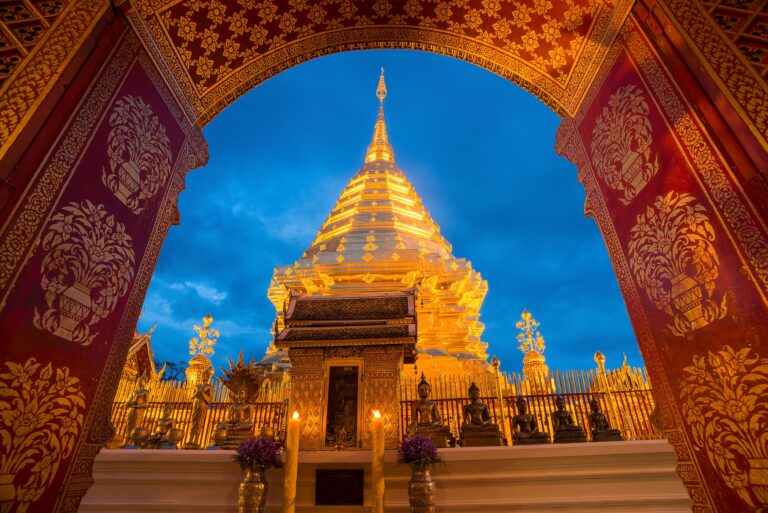 The chedi through the gatewayThe golden relic chedi and its parasols · Photo: Tewaprapas Makklai (CC BY 3.0)Chedi and golden parasolsThe naga staircase · Photo: Dennis G. Jarvis (CC BY-SA 2.0)Naga staircaseChiang Mai city lights at night · Photo: Alongkot Sumritjearapol (CC BY-SA 4.0)
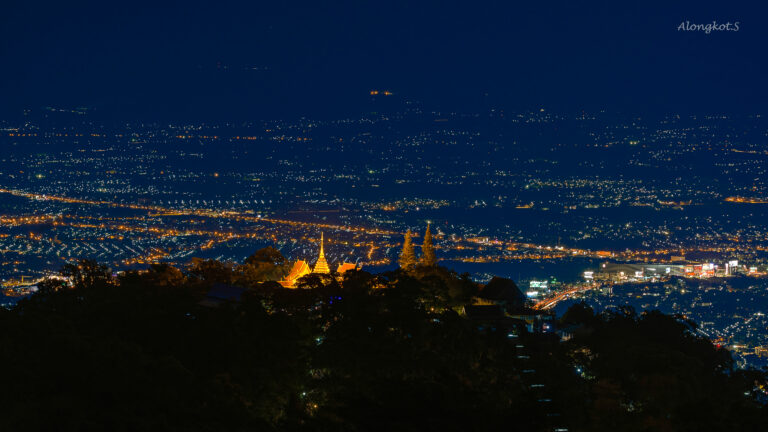 City lights at nightBells around the relic terrace · Photo: cesar.ruiz (CC BY-SA 3.0)Bells around the terraceLanna-style viharn · Photo: CEphoto, Uwe Aranas (CC BY-SA 4.0)
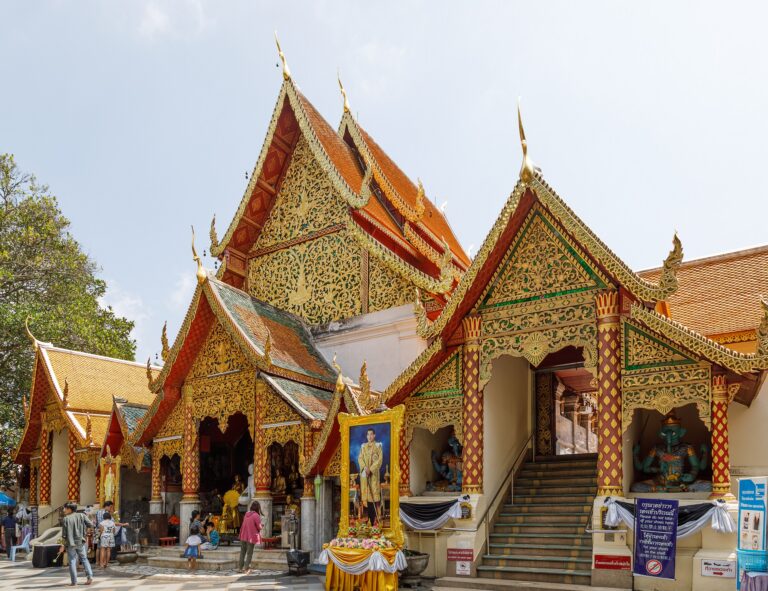 Lanna-style viharnView over Chiang Mai · Photo: Adam Jones from Kelowna, BC, Canada (CC BY-SA 2.0)View over Chiang MaiRelief of the white elephant legend · Photo: Photo Dharma from Sadao, Thailand (CC BY 2.0)
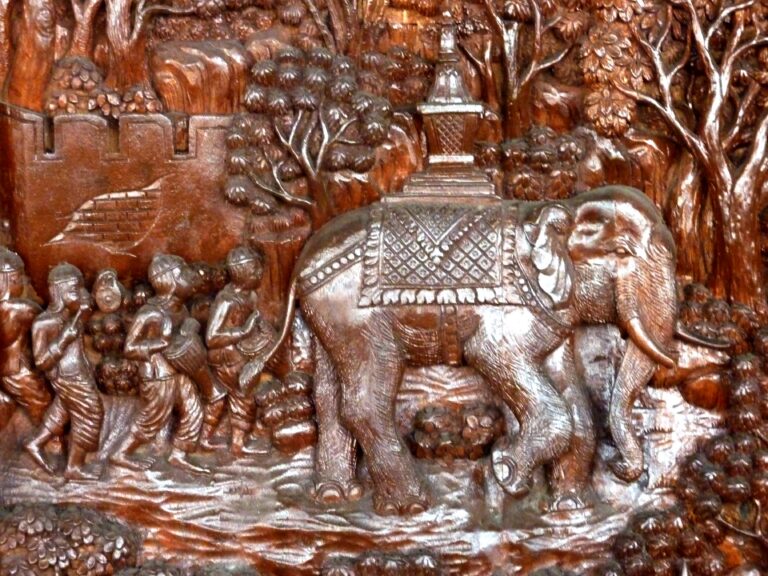 Legend of the white elephantWhite Elephant monument · Photo: Bienvenue en Thaïlande (CC BY-SA 4.0)White Elephant monument
Photo credits9 photos from Wikimedia Commons
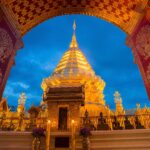 The chedi seen through the gatewayPhoto: Korkiat Jumpa CC BY-SA 4.0
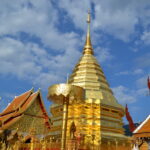 The golden relic chedi and its parasolsPhoto: Tewaprapas Makklai CC BY 3.0
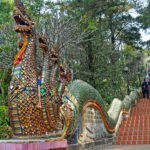 The naga staircasePhoto: Dennis G. Jarvis CC BY-SA 2.0
 Chiang Mai city lights at nightPhoto: Alongkot Sumritjearapol CC BY-SA 4.0
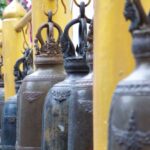 Bells around the relic terracePhoto: cesar.ruiz CC BY-SA 3.0
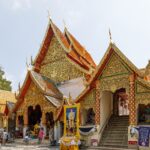 Lanna-style viharnPhoto: CEphoto, Uwe Aranas CC BY-SA 4.0
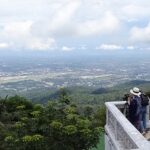 View over Chiang MaiPhoto: Adam Jones from Kelowna, BC, Canada CC BY-SA 2.0
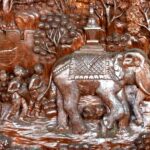 Relief of the white elephant legendPhoto: Photo Dharma from Sadao, Thailand CC BY 2.0
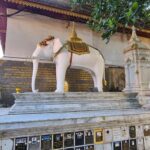 White Elephant monumentPhoto: Bienvenue en Thaïlande CC BY-SA 4.0
Before you go
Weather, haze and crowds before you set off
Best time of day — hourly
MoreWhat to bring · costs · crowds · travel warnings · detailed weather
What to bring —
Estimated costs
Crowds — estimate
Travel warnings
Best months
Tap a month to see weather, rain, haze and crowds
Cool-season skies are clear and the mountain air is fresh. From the viewpoint you can see the city and the airport most clearly — especially early in the morning and at dusk as the city lights come on.
Late Feb – Apr often brings smoke haze from forest fires (PM2.5) that hides the city view. In the rainy season (Jul – Sep) the mountain road is slippery and rain mist often blocks the view. Long weekends and major Buddhist holy days are very crowded.
- Weather
- Rain
- Haze
- Crowds
See 10 years of real weather dataMonthly temperature, rainy days, clear days and haze
Past weather records
Check-ins & visitor photos
Location must be on and within 2 km · you can check in on every visit
History & stories
Legend · history · architecture
Before Buddhism arrived, Doi Suthep was a sacred mountain of the Lua, the original people of the Chiang Mai basin. The name "Suthep" comes from the legend of the hermit Vasuthep, who once meditated on the mountain. Building a relic shrine on the summit later wove that belief in a holy mountain into Buddhism.
Around 1369, King Kue Na, the sixth ruler of the Mangrai dynasty, invited the monk Sumana Thera from Sukhothai to spread Buddhism in Chiang Mai. Sumana brought with him a relic of the Buddha discovered at Pang Cha. When Wat Suan Dok was finished and the relic was about to be enshrined, legend says it split in two; one part was placed in the chedi at Wat Suan Dok.
The other relic was placed on the back of an auspicious white elephant, which was set free to choose where the new shrine should stand. The elephant left through the Hua Wiang gate and climbed Doi Suthep, resting on Doi Mak Noen and crossing the plain later known as Sam Yot. On the summit it trumpeted three times, walked three times around the spot clockwise, knelt — and collapsed after the relic was lifted from its back. King Kue Na had a pit dug about three cubits deep, laid a stone casket to hold the relic and built a chedi about five wa (10 m) tall over it. Some versions of the chronicle date the enshrinement to 1384. This story is why visitors still take off their shoes on the relic terrace today.
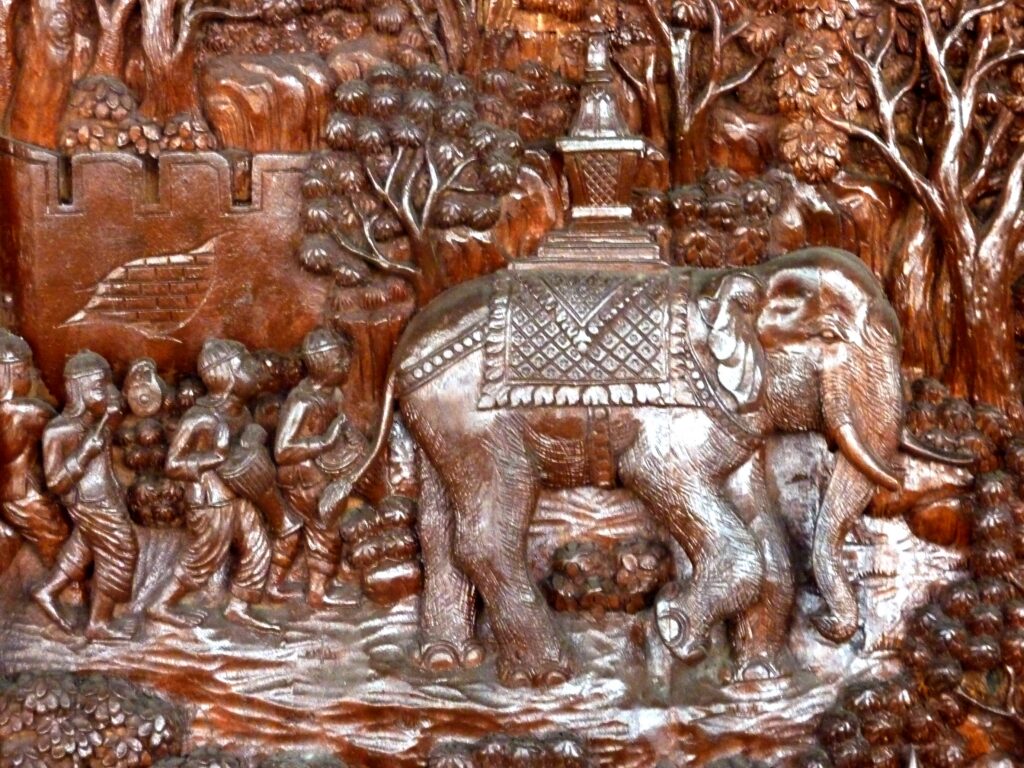 Carved relief of the legend of the white elephant carrying the relic up Doi Suthep · Photo: Photo Dharma from Sadao, Thailand
Read more history 8 more paragraphs
The chedi you see now is the result of many enlargements. Around 1538, King Mueang Ket Klao had the monk Phra Maha Yanamongkhonphot from Lamphun enlarge and raise the chedi and crown it with a golden lotus; it was later clad in gilded copper plates. The same monk built the east and west viharns and the cloister around the relic, and in 1547 added the naga staircases on both sides so people could climb up to worship more easily.
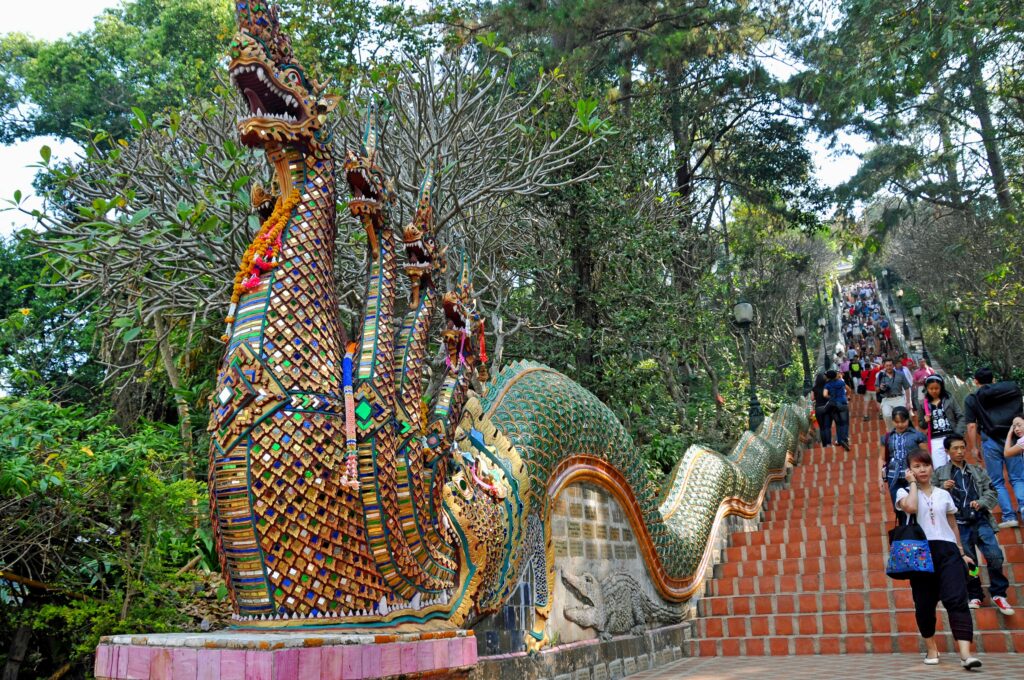 The naga staircase built by Phra Maha Yanamongkhonphot in 1547 · Photo: Dennis G. Jarvis
After Chiang Mai recovered under King Kawila, the chedi's parasol was raised anew in 1788 and both viharns were rebuilt around 1805–1806. Later rulers of Chiang Mai kept supporting the temple: King Kawilorot Suriyawong donated the great bell (Deng Luang) around 1860, and King Inthawichayanon rebuilt the main viharn in 1873. In 1894 the temple became the seat of the seven Sangharajas of Lanna.
For centuries, reaching the temple meant hours of walking up steep forest paths. Khruba Srivichai began restoring the temple around 1920, and when Khruba Thoem became abbot in 1932 he had to build bamboo pipes to bring water down from Doi Pui.
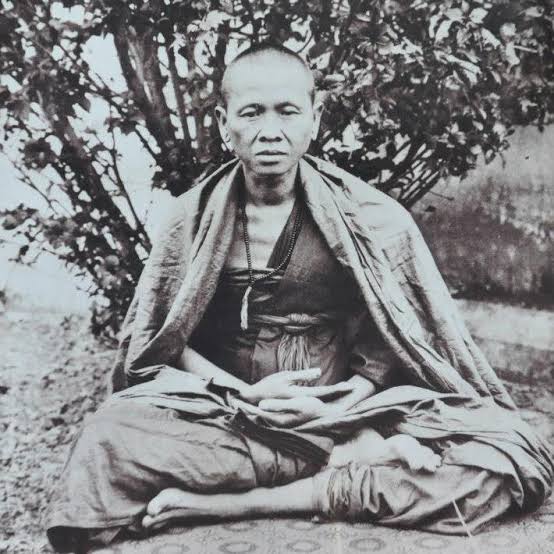 Khruba Srivichai, the saint of Lanna, who led the building of the road up Doi Suthep · Photo: Unknown photographer (archival)
On 9 November 1934, Chao Kaew Nawarat broke ground for a road up the mountain. Khruba Srivichai acted as the spiritual centre of the project, receiving donations, while Khruba Thoem oversaw the work coming down from the temple side. More than 100,000 people volunteered — up to 5,000 on some days — and the road was finished in just over five months, opening for trial use on 30 April 1935. Originally called Doi Suthep Road, it was later renamed Srivichai Road in the monk's honour and is now part of Highway 1004.
 The Khruba Srivichai monument at the foot of the mountain, where ground was broken in 1934 · Photo: Kimtuy
That same year (1935) the temple was registered as a national historic site. Between 2004 and 2010 the temple and the Fine Arts Department carried out a major restoration of the chedi and its grounds. Today Wat Phra That Doi Suthep Ratchaworawihan is a second-class royal temple.
Even with the road, walking up the mountain remains a Chiang Mai tradition. On the eve of Visakha Bucha, tens of thousands of people climb to pay respect to the relic and sleep on the temple terrace. And since 1964, Chiang Mai University's first year, when 291 founding students walked about 14 km up the mountain at the suggestion of Prof. Dr Boonsom Martin, the university's "Rap Nong Khuen Doi" freshman climb has been held every year.
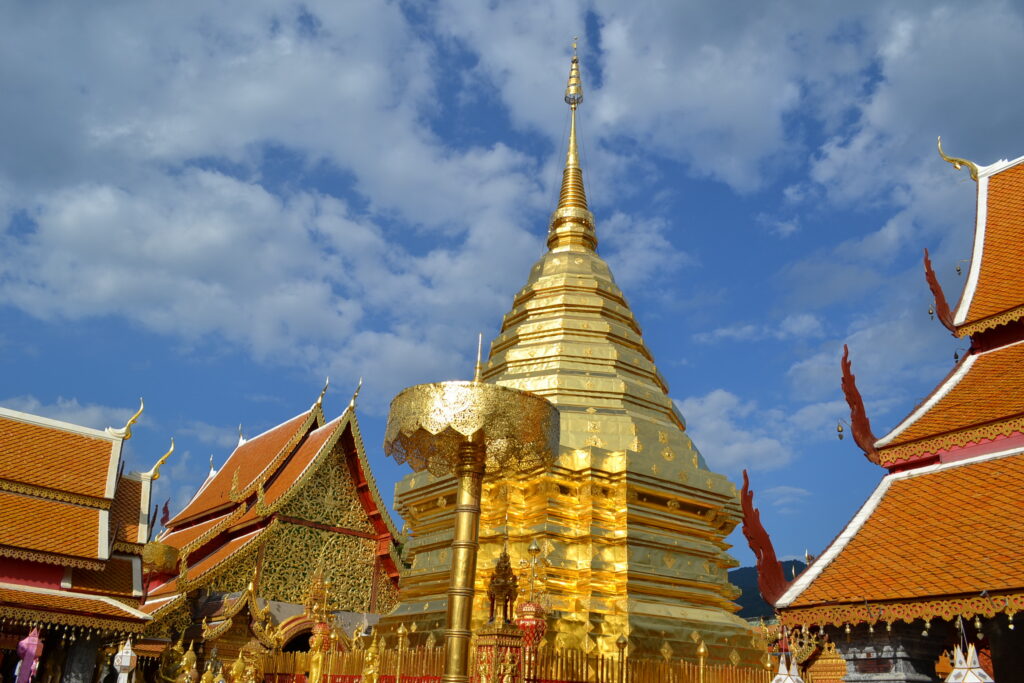 The Lanna-style relic chedi clad in gilded copper, with golden parasols · Photo: Tewaprapas Makklai
The city's attachment to Doi Suthep shows in the cable-car story. When a cable car up the mountain was proposed in 1969, and again in 1986, both plans were fiercely opposed by Chiang Mai people and eventually dropped: many felt it would disrespect the relic and bring "khued" (misfortune) on the city, while pylons and cables would cut through Doi Suthep–Pui National Park. When the idea was studied again around 2014, it met the same opposition.
The chedi is classic Lanna art: a raised square base, tiers of lotus mouldings stepping up to a twelve-sided bell, and a ringed spire topped by a finial, all clad in gilded copper, with golden parasols at the corners. In local belief it is the birth-year relic shrine for people born in the Year of the Goat — a link to King Kawilorot Suriyawong, the Chiang Mai ruler born in a Goat year.
Location & getting there
Map · how to get there · costs
Directions use live traffic to estimate travel time
- Travel timeAbout 30–40 min by car
- RoadWell-paved, winding mountain road
- ParkingCar park and roadside parking at the foot of the naga staircase; fills up fast on holidays
- FuelFuel stations in town before the foot of the mountain (Huay Kaew Rd)
Suggested route
From the city take Huay Kaew Road past Chiang Mai University and Chiang Mai Zoo to the Khruba Srivichai monument at the foot of the mountain, then follow the winding Srivichai Road for about 11 km to the car park below the naga staircase.
Red trucks (songthaew) up the mountain wait for passengers in front of Chiang Mai University and leave when full; the more people, the cheaper per head.
Hiking route: the Monk's Trail starts at the end of a lane behind CMU, passes Wat Pha Lat and continues up to the temple — about 2–3 hours on foot.
5 ways to get there
Take Huay Kaew Rd past CMU and the zoo, then Srivichai Rd up the mountain; park at the lot below the naga staircase or by the road
Steep with many bends — for confident riders; slippery in the rainy season. Wear a helmet and carry your licence
Board in front of CMU near the zoo or at Chang Phueak market; leaves when about 10 passengers fill it, or charter one to wait for you
Easy going up, but cars can be hard to get coming down in the evening — arrange a pickup time
The monks' path starts at the end of a lane behind CMU and passes Wat Pha Lat; steep and slippery when wet — start early and bring water
Prices and times are estimates and vary with season and traffic
Food nearby
Popular places within 5–10 km
Nearby next stops
Stops on the same route