 01
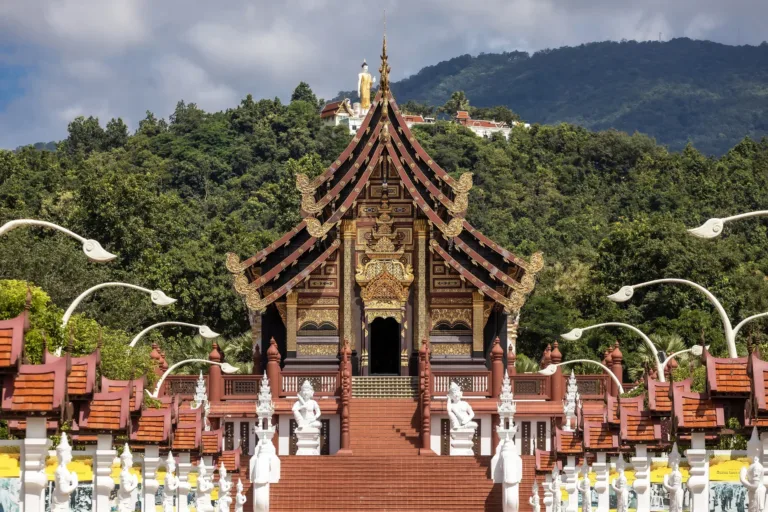
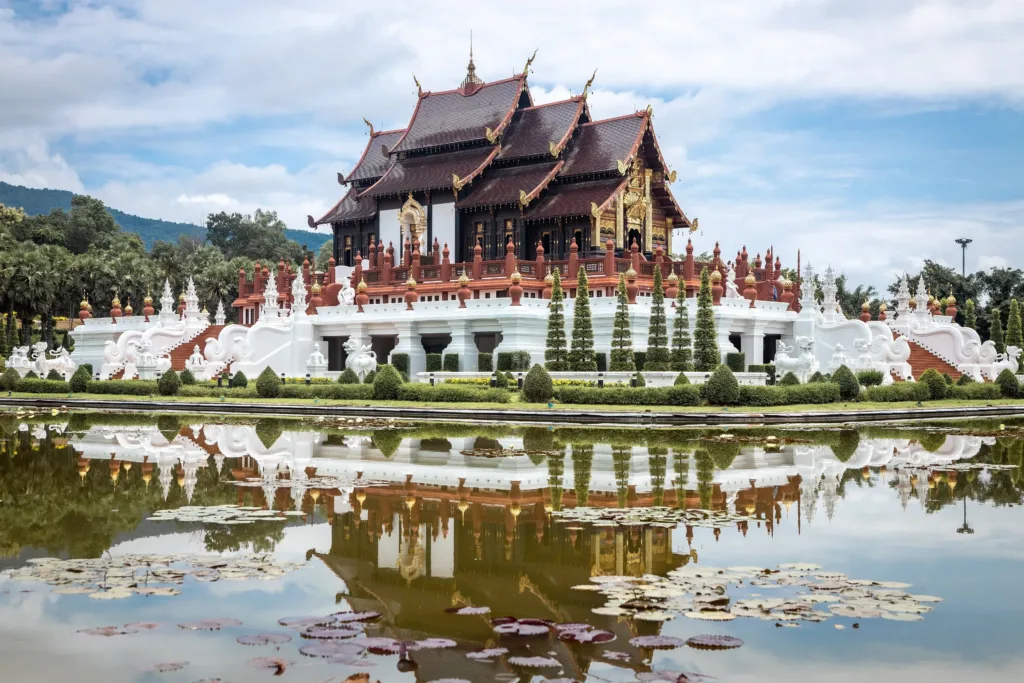
Ho Kham LuangA Lanna-style pavilion reflected in the pond in front
Botanical park · Royal Flora Expo site
A 468-rai botanical park in Mae Hia, Chiang Mai, built for the 2006 and 2011 Royal Flora Expos, known for the Lanna-style Ho Kham Luang, international gardens and a cool-season flower festival.
Holiday / event — crowded
Daily 08:00–18:00 (last tickets 17:00)
Thais 100 THB · Foreigners 200 THB
2–4 hours
10:00–14:00 on weekends and during the flower festival
01 02
 03
Tap a day card to see that day’s weather, rain, haze and hourly forecast
Best time to go Daytime is over · see tomorrow
Holiday — traffic on the way up and parking fills fast; leave early
Green band = hours used for the score
Best time to go Fine all day little rain through the day
Holiday — traffic on the way up and parking fills fast; leave early
Green band = hours used for the score
Best time to go Fine all day little rain through the day
No warnings today — normal road and weather conditions
Green band = hours used for the score
Best time to go Fine all day little rain through the day
No warnings today — normal road and weather conditions
Green band = hours used for the score
Best time to go Fine all day little rain through the day
No warnings today — normal road and weather conditions
Green band = hours used for the score
Best time to go Fine all day little rain through the day
No warnings today — normal road and weather conditions
Green band = hours used for the score
Best time to go Fine all day little rain through the day
No warnings today — normal road and weather conditions
Green band = hours used for the score
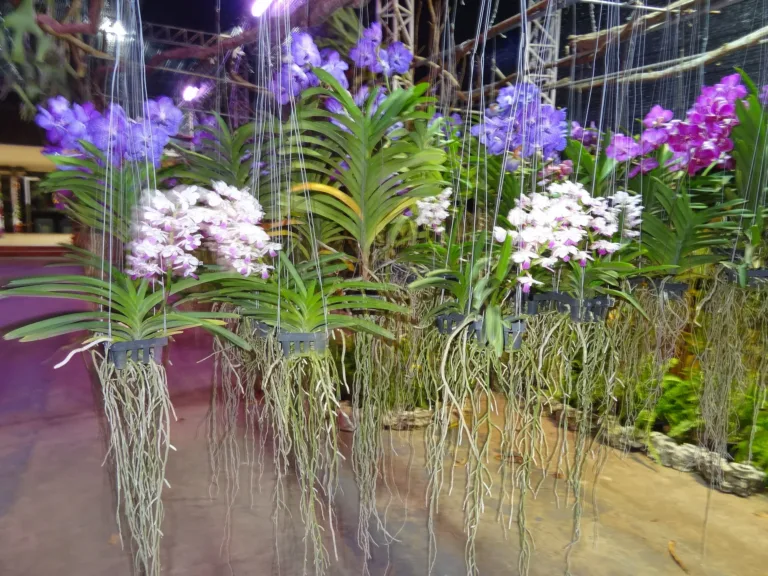
Royal Park Rajapruek is in Mae Hia, on the south-west side of Chiang Mai. It hosted the Royal Flora Expo in 2006 and again in 2011, and is now run by the Highland Research and Development Institute (HRDI).The park is split into a Royal Projects zone, a biodiversity zone with orchids, lotus, cacti, herbs and bonsai, and a culture zone with traditional Thai regional houses and international gardens. The star attraction is Ho Kham Luang, a Lanna-style pavilion mirrored in the pond in front.A flower festival usually runs through the cool season, around November to February. Trams and rental bikes make it easy to get around, so it suits families and photographers alike.
Arrive 09:00, before the tour buses
Long open-air paths, so bring a hat, umbrella and water
At 468 rai it's tiring on foot; use the tram or rent a bike
Thais 100 THB · Foreigners 200 THB · Time needed 2–4 hours
10:00–14:00 on weekends and during the flower festival
| Entry, Thai adult | 100 ฿/person |
| Entry, Thai child optional | 70 ฿/person |
| Entry, foreign adult | 200 ฿/person |
| Entry, foreign child optional | 150 ฿/person |
| Entry, Thai seniors 60+ / students optional | 70 ฿/person |
| Tram, adult optional | 20 ฿/person |
| Tram, child optional | 10 ฿/person |
Prices may change by season — check with the venue
Rajapruek Flora Festival, around Nov–Feb
Royal Park Rajapruek in Mae Hia, south-west of Chiang Mai city, is not an ancient garden. It is the legacy of two world horticultural expos, Ratchaphruek 2006 and Ratchaphruek 2011, both held to honour King Bhumibol Adulyadej (Rama IX). Some 468 rai of land, once part of the Chiang Mai Royal Agricultural Research Centre, was turned into a botanical park centred on the Lanna-style Ho Kham Luang and ringed by international gardens built by other countries. It received its royal name in 2010 and has since become a year-round place to learn about plants.
It all began with a Cabinet resolution on 24 June 2003, which asked the Ministry of Agriculture and Cooperatives to host a world horticultural expo marking the King's 60 years on the throne in 2006 and his 80th birthday on 5 December 2007. The chosen site was the Chiang Mai Royal Agricultural Research Centre in Mae Hia, covering 468 rai, 3 ngan and 10 square wah. The event took its name from the ratchaphruek, the yellow golden shower flower that is Thailand's national flower; yellow is also the colour of Monday, the King's day of birth.
The Royal Flora Ratchaphruek 2006 ran from 1 November 2006 to 31 January 2007, 92 days in all, under the theme "To Express Love for Humanity". It was recognised by the Bureau International des Expositions (BIE) and given A1 status, the highest level, by the International Association of Horticultural Producers (AIPH), making it Thailand's first AIPH-approved international horticultural expo. Around 2.5 million plants of more than 2,000 species were on show, with about 30 countries taking part (some reports say 32). Besides the international gardens there was a Thai tropical garden of about 100,000 square metres and cultural shows throughout.
The response exceeded expectations. Organisers had forecast 2–3 million visitors, but by the close about 3.78 million had come, though some sources give about 3.85 million; around 200,000 were foreigners as of mid-January 2007. Estimates of the money it brought into the economy range from about 24 to 27 billion baht, depending on who did the sums.
At the heart of the expo stood Ho Kham Luang, a wooden pavilion in Lanna style in the middle of the royal plaza, built by a group of local Lanna craftsmen to mark the King's 60-year reign and 80th birthday. During the expo it housed an exhibition on the King's agricultural work, and today it remains a place to learn about Lanna architecture, mural painting and the royal projects.
After the expo there was debate over how to use the roughly 470-rai site. Tourism leaders wanted more than an academic centre, pushing for a visitor attraction and meetings venue, and the Cabinet asked the agriculture ministry to study its future as a conservation-minded attraction and horticultural learning centre. The participating countries donated their gardens to the park. By October 2008 the ministry had opened the grounds to tourists, drawing around 1,000 a day, and from 1 to 10 December 2008 it held the "Ratchaphruek Ruam Jai Phak Rak Por Luang" celebration.
On 3 June 2008 the Cabinet assigned the site to the Highland Research and Development Institute (HRDI), a public organisation. On 15 September 2009 the ministry transferred the work, assets, rights and budget to the institute, and the park was formally handed over on 10 December 2009. From 30 November to 10 December 2009 another free celebration was held, seen as a dress rehearsal for the second expo.
As for the name, a letter from Mom Chao Bhisadej Rajani dated 12 October 2009 proposed "Suan Luang Ratchaphruek". On 23 January 2010 King Rama IX granted the name "Utthayan Luang Ratchaphruek", and on 22 March 2010 the Office of the Royal Secretariat gave the English name Royal Park Rajapruek.
The second expo, Royal Flora Ratchaphruek 2011, honoured three royal occasions: King Rama IX's 84th birthday, Queen Sirikit's 80th birthday and the Crown Prince's 60th birthday. It was due to start on 9 November 2011 but was postponed because of that year's great floods and delays in coordinating with participating countries, so ticket holders were let in informally until a flag-raising ceremony opened it officially on 14 December 2011. More than 30 countries took part, and new attractions included a sky gondola and a solar-powered light garden, although AIPH ranked it a grade below the A1 status of 2006.
The expo closed on 14 March 2012 after 92 days, having drawn about 2.2 million visitors and an estimated 10 billion baht or more in spending across Chiang Mai and nearby provinces. The park then closed from 15 March to 5 April 2012 while the gondola, light garden and temporary shows were removed, and reopened on 6 April 2012 under HRDI as an agricultural learning centre and tourist attraction.
In recent years the park has leaned into its role as a botanical garden. It began cataloguing its plant collection in 2015 and has studied carbon storage in its trees since 2019. It now has international gardens from 22 countries, is a member of Botanic Gardens Conservation International (BGCI) and has been inducted into the Thailand Tourism Awards Hall of Fame. In 2024 it became the first venue in Chiang Mai certified under the Thailand Convention and Exhibition Bureau's venue standard. HRDI's guidebook sets a net-zero greenhouse gas target for 2030, while some sources say 2027, and the park still holds a flower festival nearly every cool season.
Arrived? Check in, collect a stamp and tell others what it is like right now
Check your location first, so you do not fill in the form for nothing
Location must be on and within 0.7 km · One check-in per place per day · come back on other days to check in again
Post photos from anywhere — no need to be here · Up to 20 photos at a time · JPG / PNG / WebP · GPS location data is removed automatically
The park lies south-west of Chiang Mai city in Mae Hia, an easy drive or taxi/ride-hailing trip.
Drive from the city towards Mae Hia · Fuel
Easy to book from the city · Meter / app fare
Paved city roads
Several car parks, free with an entry ticket
In Chiang Mai city
Good (within the city)
Daily 08:00–18:00 (last tickets 17:00)
about 15 km from Chiang Mai Old City
Royal Park Rajapruek
200 THB
Answers travellers want before they go — a one-minute read
In Mae Hia, Mueang Chiang Mai, south-west of the city
Yes, 20 THB for adults and 10 THB for children, looping the park
Yes, free with an entry ticket
People with disabilities, monks and children under 100 cm
Usually around Nov–Feb; dates change each year, so check the park's announcements
Best day this week: Monday 30 Nov · Check in when you arrive to collect a stamp
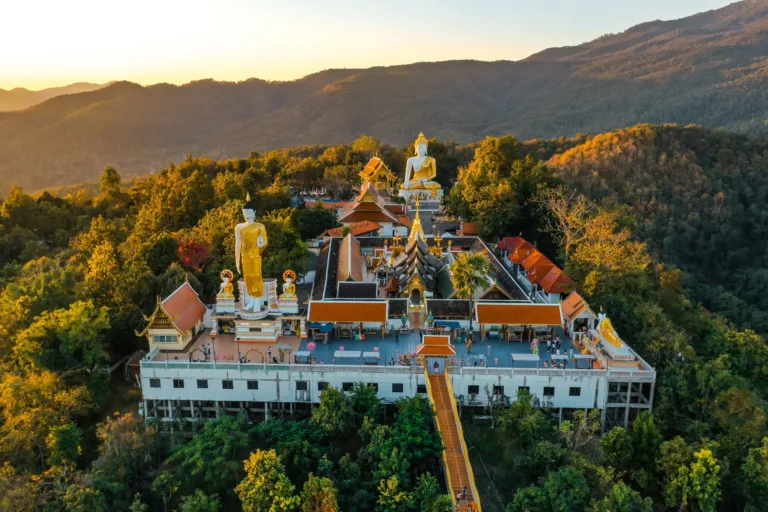 Wat Phra That Doi Kham
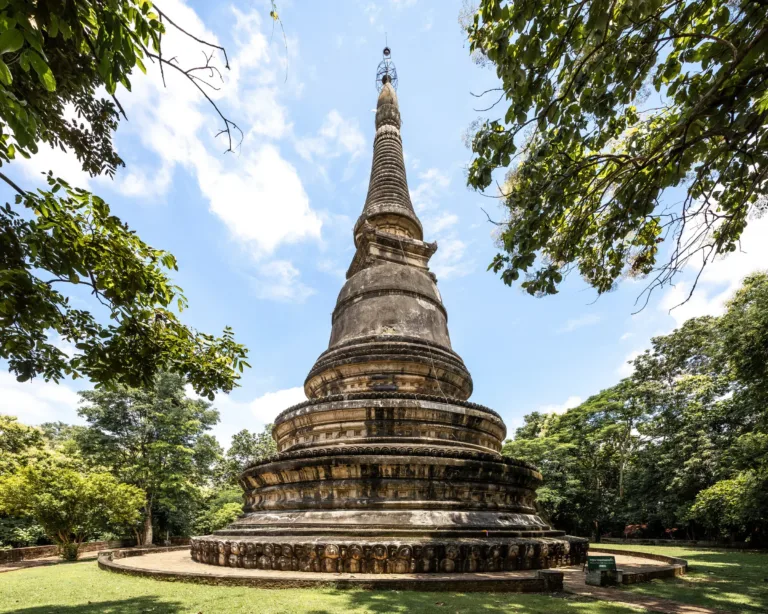 Wat Umong Suan Phutthatham
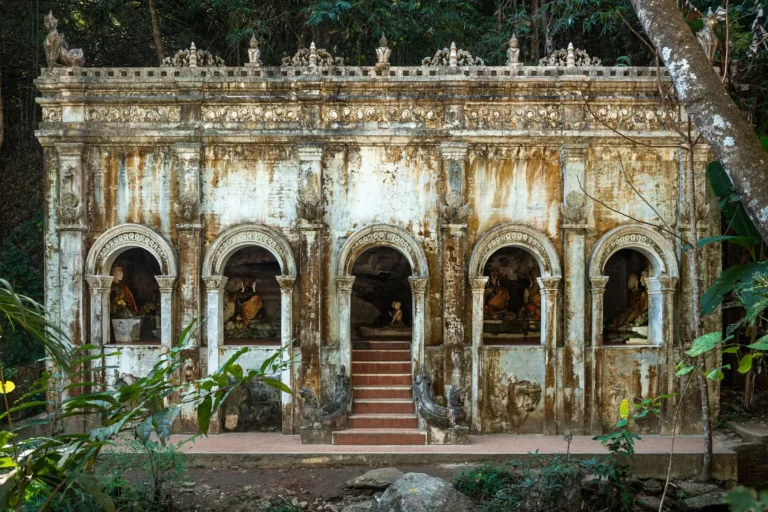 Wat Pha Lat
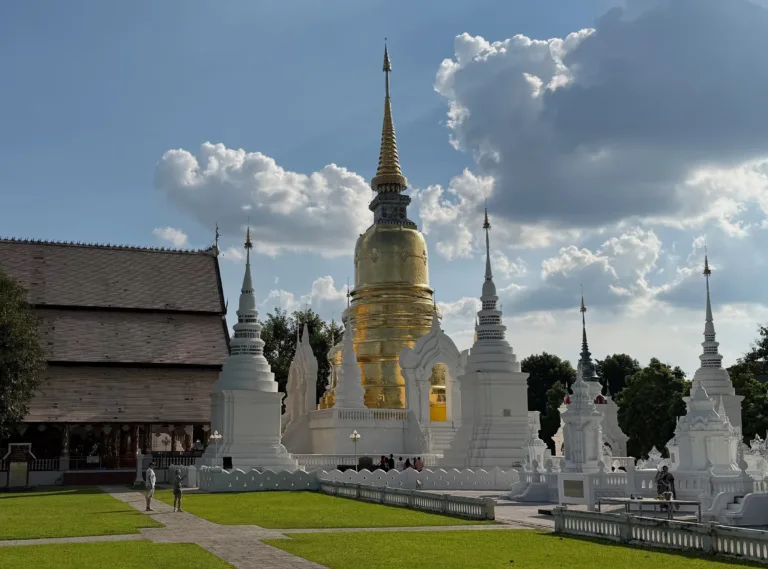 Wat Suan Dok