What to know before visiting the temple
Dress modestly · Remove shoes before entering the viharn · Keep noise down
Daily 06:00–18:00
Morning, when it's cooler and quieter
7 days ahead
When to go
this week
Tap a day card to see that day’s weather, rain, haze and hourly forecast
Best time to go Daytime is over · see tomorrow
No warnings today — normal road and weather conditions
Hour by hour
Green band = hours used for the score
Best time to go Fine all day little rain through the day
No warnings today — normal road and weather conditions
Hour by hour
Green band = hours used for the score
Best time to go Fine all day little rain through the day
No warnings today — normal road and weather conditions
Hour by hour
Green band = hours used for the score
Best time to go Fine all day little rain through the day
No warnings today — normal road and weather conditions
Hour by hour
Green band = hours used for the score
Best time to go Fine all day little rain through the day
No warnings today — normal road and weather conditions
Hour by hour
Green band = hours used for the score
Best time to go Fine all day little rain through the day
No warnings today — normal road and weather conditions
Hour by hour
Green band = hours used for the score
Best time to go Fine all day little rain through the day
No warnings today — normal road and weather conditions
Hour by hour
Green band = hours used for the score
Wat Mahawan
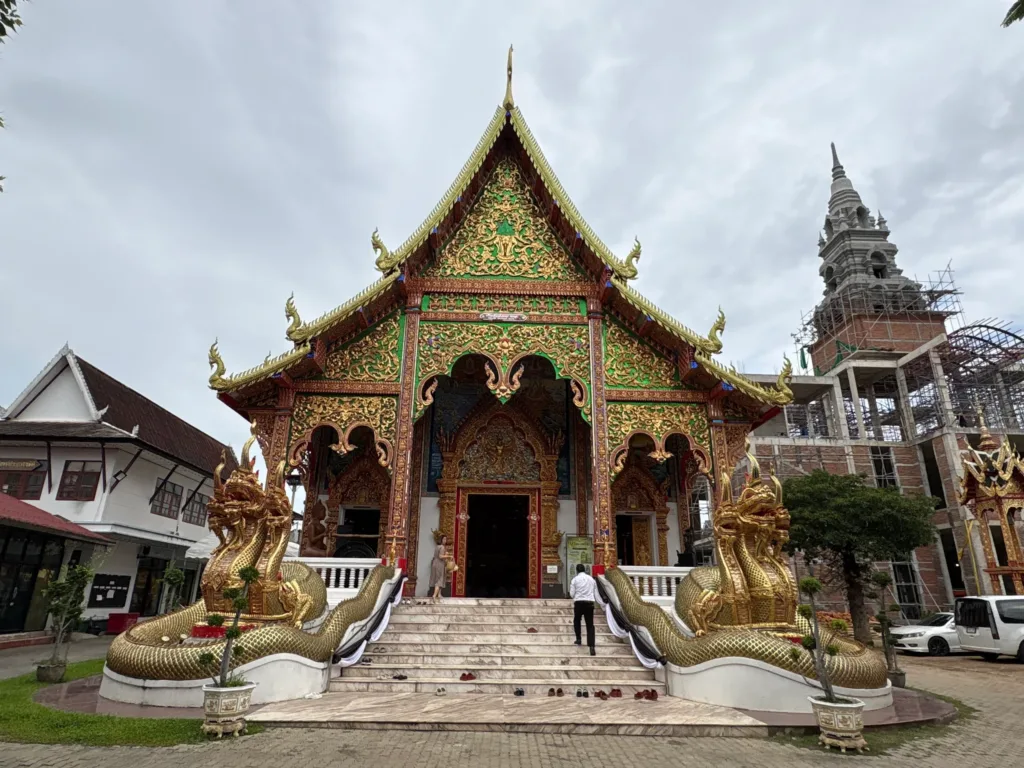
Wat Mahawan stands on Chamthewi Road beside Lamphun's old city moat, about 500 m from the Provincial Hall. It was founded in the reign of Queen Chamadevi of Hariphunchai, around the 7th century, and was originally called Wat Mahawanaram.The focus of worship is Phra Phuttha Sikkhi, a black stone Buddha locals call Phra Rod Luang. Legend says Queen Chamadevi brought it from Lavo, and it's believed to be the model for the Phra Rod Mahawan amulet, an ancient votive tablet found at this temple.The grounds include a chedi, viharn, ordination hall and scripture hall, and it's still an active monastery. Dress modestly when you visit.
- Cool and quiet
- Strong sun
- Softer light
Arrive Morning, when it's cooler and quieter
- In front of the chediThe chedi against the skyMorning
Good to know here
It's an active monastery
- Combine it with Wat Phra That Hariphunchai and Wat Chamadevi in one day
- Allow 45–90 minutes
- Dress modestly and remove shoes before entering the viharn
Free · Time needed 45–90 minutes
Weekends and Buddhist holy days
- Kids Open grounds to walk around
- Seniors A flat, in-town temple
- Dress modestly
- Remove shoes before entering the viharn
- Keep noise down
- The courtyard gets hot at midday
Tourism Office
The story of this place
Wat Mahawan, originally Wat Mahawanaram, stands just outside the western wall of old Lamphun, about 50 m from the Mahawan Gate, facing east towards the moat. Tradition says it was founded around 1200 BE (c. 657 CE) in the reign of Queen Chamadevi as the western spiritual bastion of Hariphunchai. It enshrines Phra Rod Luang, the stone Buddha Lamphun reveres as its guardian image, and it is the only known source of the Phra Rod amulet, a fired-clay votive tablet counted among Thailand's five great amulets. Its story ties together Hariphunchai's golden age, long years of abandonment after war, and the amulet finds of the last century and more.
Read more 10 more paragraphs
Legend says the hermit Vasuthep founded Hariphunchai and invited Princess Chamadevi of Lavo to rule it. She had major temples built around the city. Most sources name four: Wat Don Kaeo, Wat Phra Khong, Wat Pratu Li and Wat Mahawan on the west. Some list five, using old names: Arannikarammaram, Mulakaram, Aphattharam, Mahaladaram and Mahawanaram, the last being today's Wat Mahawan.
The temple's most sacred object is Phra Phuttha Sikkhi, a black stone Buddha that legend says Queen Chamadevi brought from Lavo. Locals call it Phra Rod Luang or Phra Rod Lamphun. Some accounts say she brought two important images, Phra Kaew Khao and the black stone Buddha; King Mangrai later took Phra Kaew Khao to Wat Chiang Man in Chiang Mai, while Phra Rod Luang stayed here. It now sits on a glass pedestal in front of the principal Buddha in the viharn.
The Mulasasana chronicle says King Sapphasit of Hariphunchai ordered the Mahawan and its chedi built, followed by a celebration and almsgiving. Scholars read this as a restoration, since the temple already existed under Chamadevi. Lamphun Province adds that Sapphasit was ordained as a novice here and led the restoration of the war-abandoned temple, which then flourished again.
Around 1281, King Mangrai took Hariphunchai into his Lanna kingdom. When Lanna fell under Burmese rule for nearly two centuries, the old city lay deserted until King Taksin and Chao Kawila drove the Burmese out. Lamphun was revived under its own princely rulers, with Chao Luang Sethi Khamfan governing from 1805. By then Wat Mahawan was little more than a chedi with a broken top, overgrown with trees, its Phra Rod and other votive tablets scattered across the grounds.
There are several legends about the making of Phra Rod. One says the hermit Narada, or Narot, who looked after Wat Mahawan, made the tablets and the great chedi and sealed many tablets inside it. Another tells of 108 hermits led by Sukkadanta and Vasuthep mixing clay with a thousand kinds of herbs and pollen to make Phra Rod and Phra Khong to protect the city. The name may come from Narot, from the belief that wearers "survive" (rod) danger, or from the stone Phra Rod Luang, which locals named long before the amulets were found.
Accounts of the modern finds differ. One source says the first came in 1782, when the chedi collapsed and tens of thousands of tablets spilled out, then were put back. Most say that in 1892 the chedi, whose top had fallen (some say from a lightning strike), was restored under Chao Luang Hemaphinthu Phaichit, and many tablets were found, mostly on the west side where a well now stands. Some went back into the chedi and some were kept for worship. That same year the temple was revived as a monastery.
Around 1908, under Chao Luang Inthayongyot, bodhi roots had cracked the chedi's base, and repairs turned up about an alms bowl of Phra Rod, which were given to relatives and officials. One source says a new chedi was built over the old one around this time, crediting Chao Hemaphinthu Phaichit. Afterwards locals dug for amulets around the temple every dry season, between the fourth and sixth lunar months, until the grounds were full of pits and the temple banned digging.
Later finds came from the temple's own building work. In 1955 some 200 to nearly 300 tablets were found at the front of the temple and under a monk's residence, and in 1963 relaying the ordination hall floor revealed hundreds more, the last major find. Many reached the Bangkok amulet market, and Phra Rod's fame as a protector from danger grew from then on. The temple has also yielded almost every type of Hariphunchai votive tablet, including Phra Khong and Phra Klip Bua.
Phra Rod is a fine fired-clay tablet showing the Buddha in the subduing-Mara posture framed by bodhi leaves, in five moulds: large, medium, small, squat and shallow. Popular belief holds it to be over 1,300 years old, like the temple, but some researchers place its style in the Hariphunchai school of around the 12th century CE. Amulet experts agree it has been found only here.
Today Wat Mahawan is a royal temple and a working monastery, with a viharn whose stairs are guarded by three-headed nagas, a scripture hall with an intertwined-naga gable, and a gilded chedi behind the viharn. It was registered as an artistic heritage site of Lamphun Province on 19 February 2013, and remains a focus of local faith, as in the Phra Rod Luang procession held on 30 January 2026.
- 657Traditional date: Queen Chamadevi founds Wat Mahawanaram as Hariphunchai's western bastion
- 1281King Mangrai takes Hariphunchai into the Lanna kingdom
- 1782One source says the chedi collapses, revealing many Phra Rod, which are put back
- 1805Chao Luang Sethi Khamfan governs Lamphun as the city revives after the Burmese era
- 1888–1895Under Chao Luang Hemaphinthu Phaichit the broken chedi is restored; Phra Rod found on the west side
- 1892The chedi partly collapses (some say from lightning) and the temple is revived as a monastery
- 1908Chao Luang Inthayongyot repairs the chedi base cracked by bodhi roots; about an alms bowl of Phra Rod found
See 5 events
- 1943Chao Chakkham Khachonsak, Lamphun's last ruling prince, dies
- 1955About 200–300 Phra Rod found at the temple front and under a monk's residence
- 1963Hundreds more found when the ordination hall floor is relaid, the last major find
- 201319 Feb — registered as an artistic heritage site of Lamphun Province
- 202630 Jan — the Phra Rod Luang city procession is held
Check-ins & visitor photos
Arrived? Check in, collect a stamp and tell others what it is like right now
Check your location first, so you do not fill in the form for nothing
Location must be on and within 0.2 km · One check-in per place per day · come back on other days to check in again
Post photos from anywhere — no need to be here · Up to 20 photos at a time · JPG / PNG / WebP · GPS location data is removed automatically
How to get there
The temple is at 52 Chamthewi Road, Nai Mueang, beside Lamphun's old moat.
In Lamphun town on Chamthewi Road · Fuel
About 500 m from the Provincial Hall
City streets
Daily 06:00–18:00
about 0.5 km from Lamphun Provincial Hall
Wat Mahawan
FAQ
Before you go: Wat Mahawan
Answers travellers want before they go — a one-minute read
Where is Wat Mahawan?
52 Chamthewi Road, Nai Mueang, Mueang Lamphun, by the old moat, about 500 m from the Provincial Hall
What are the hours?
Daily 06:00–18:00
Is there an entry fee?
No, it's free
What is Phra Rod Luang?
Phra Phuttha Sikkhi, a black stone Buddha believed to be the model for the Phra Rod Mahawan amulet
Who founded it?
It dates to Queen Chamadevi's reign, around the 7th century
How long should I allow?
About 45–90 minutes
Nearby places
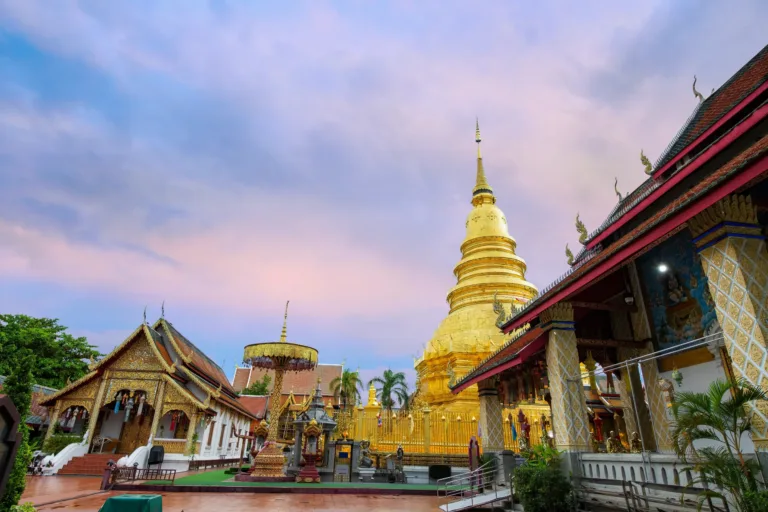 Wat Phra That Hariphunchai Woramahawihan
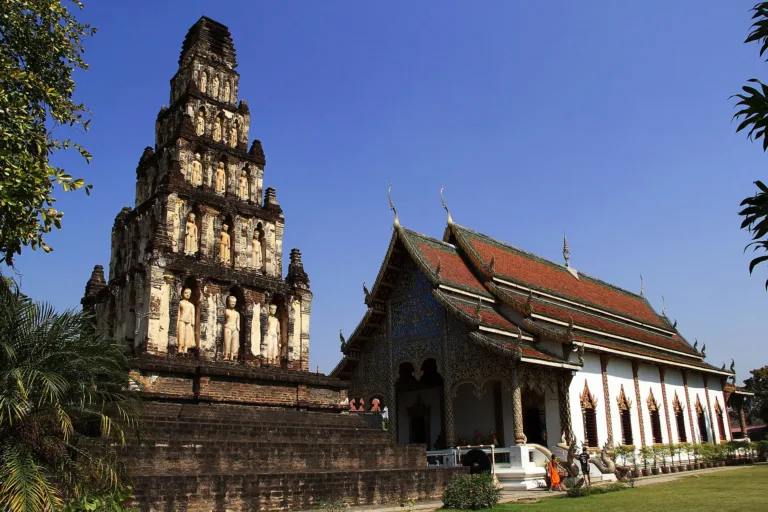 Wat Chamadevi (Wat Ku Kut)
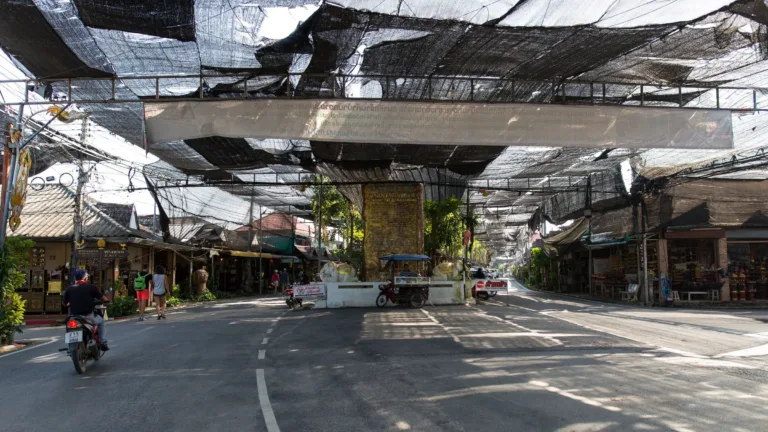 Baan Tawai Handicraft Village
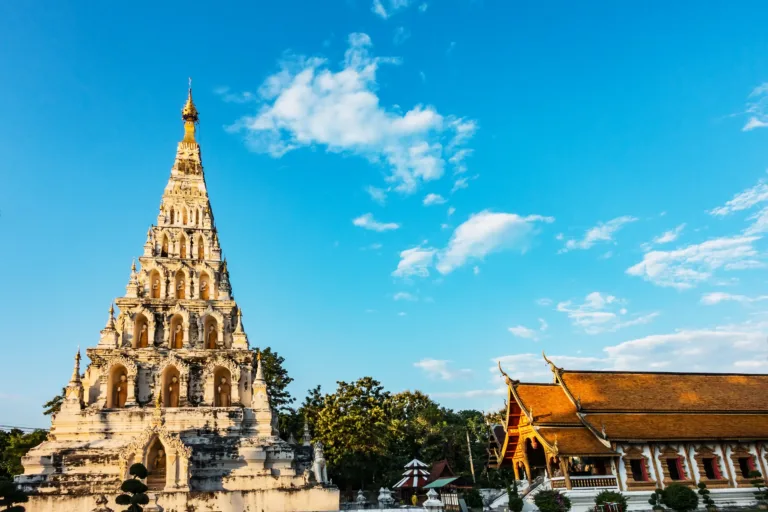 Wiang Kum Kam
Ready to go to Wat Mahawan?
Best day this week: Saturday 28 Nov · Check in when you arrive to collect a stamp