Quiet times, time needed and photo spots
Afternoons and weekends
1–2 hours (half a day for serious shopping)
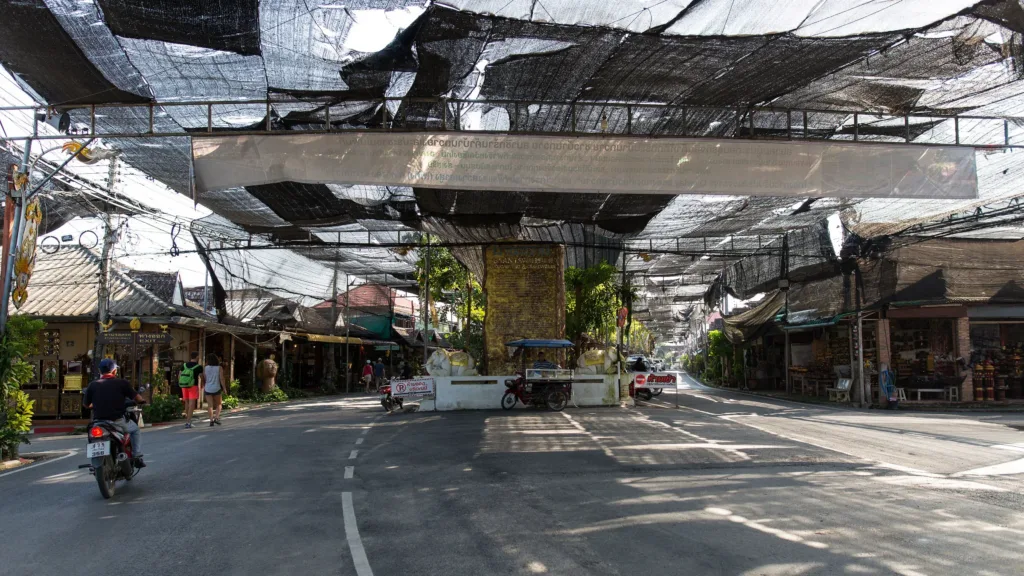
Canal-side market — Rows of shops along both banks with carvings out front
Daily, most shops around 09:00–17:00 (varies by shop)
Free
7 days ahead
When to go
this week
Tap a day card to see that day’s weather, rain, haze and hourly forecast
Best time to go Daytime is over · see tomorrow
Thick morning fog with visibility under 1 km — use headlights and drive slowly
Hour by hour
Green band = hours used for the score
Best time to go Fine all day little rain through the day
No warnings today — normal road and weather conditions
Hour by hour
Green band = hours used for the score
Best time to go Fine all day little rain through the day
No warnings today — normal road and weather conditions
Hour by hour
Green band = hours used for the score
Best time to go Fine all day little rain through the day
No warnings today — normal road and weather conditions
Hour by hour
Green band = hours used for the score
Best time to go Fine all day little rain through the day
No warnings today — normal road and weather conditions
Hour by hour
Green band = hours used for the score
Best time to go Fine all day little rain through the day
No warnings today — normal road and weather conditions
Hour by hour
Green band = hours used for the score
Best time to go Fine all day little rain through the day
No warnings today — normal road and weather conditions
Hour by hour
Green band = hours used for the score
Baan Tawai Handicraft Village
Baan Tawai sits in Khun Khong Subdistrict, Hang Dong, about 15–19 km south of Chiang Mai city. Villagers took up wood carving seriously around 1957–1962, and over time it became the whole village's livelihood. In 2004 Baan Tawai was chosen as Thailand's first model OTOP village.The heart of the village is the market along both banks of the irrigation canal, where shops sell everything from wooden elephants, angels and mythical Himmaphan creatures to Buddha images, furniture and home decor. The craft centre near the entrance is laid out in lanes, each with its own focus, and many shops take custom orders and ship large pieces.Between the two zones stands Wat Tawai, with carved doors and windows and a gilded teak ordination hall. Nearby, Baan Tipmanee displays a huge teak Ganesha. Many shops closed after COVID-19, but most of those still running open daily, and the community has started offering lacquer and gold-leaf workshops.
- Shops start opening; quiet and still cool, good for browsing
- Most shops open; stop by Wat Tawai and Baan Tipmanee
- Midday heat makes walking tiring; break for lunch
- Busier in the afternoon, with a livelier feel
- Most shops start closing
- Canal-side marketRows of shops along both banks with carvings out frontMorning
- Wat TawaiCarved doors and windows and the gilded ordination hallLate morning
- WorkshopsCarvers shaping elephants from logs (ask first)Late morning–afternoon
Good to know here
Ask the carvers before taking close-up photos while they work
Get a written quote covering packing, insurance and shipping before paying
Ask about the wood, check whether it is one piece or assembled, look at joints, carving depth and how the wood was dried
- Come on a weekday morning, when it is quieter and cooler
- Wear comfortable shoes and carry water; the shops are spread out and you will walk more than you expect
- Many shops can pack and ship large pieces to Bangkok and other provinces
- Bargaining is fine, especially when buying several items
- Look for the OTOP label on products
- Combine the visit with Wat Ton Kwen or Royal Park Rajapruek on the same day
Free · Time needed 1–2 hours (half a day for serious shopping)
Afternoons and weekends
- Kids Easy to walk around, with plenty of carved animals to look at, but watch that kids don't knock over displays
- Seniors Flat ground, and you can drive and park near each zone, though walking the whole village is a long way
- Northern Thai restaurants in the villageKhanom jeen and khao soi
- Mae Hia Community MarketLocal food and fresh produce, open 06:00–19:00
- Dress modestly when visiting Wat Tawai
- Ask carvers before taking close-up photos while they work
- Ask about price and type of wood before buying
- Don't touch or move large pieces without asking the shop
- Don't enter workshops or carvers' homes without permission
- Many shops closed for good after COVID-19, so places in older reviews may no longer be open
- Large pieces are very heavy; check size and weight before buying
- Cars use the village roads; take care crossing between zones
Baan Tawai Wood Carving Fair, held every year (34th edition: 23–26 Jan 2025)
The story of this place
Baan Tawai is Moo 2 of Khun Khong Subdistrict in Hang Dong District, south of Chiang Mai city. Most villagers are Tai Yuan people who once lived mainly from rice farming, but from around the late 1950s wood carving slowly grew from a side job into the whole village's main trade. Baan Tawai became a large handicraft market and was picked as Thailand's first model OTOP village.
Read more 10 more paragraphs
Village elders say the community is more than 300 years old, though another account says just over 100 years, and no founding date is recorded. Local belief holds that the area was once part of Wiang Lavo, a frontier town of Haripunchai more than a thousand years ago that faded after King Mangrai took Haripunchai. Ruined temple remains at Wat Tawai and Wat Ton Kaeo in Khun Khong are pointed to as traces of that era.
There are several stories behind the name. The best-known legend says villagers heard that Queen Chamadevi would travel from Lamphun to build Wat Lavo, so they brought fruit and offerings on wooden trays to present to her, and "thawai" means "to offer". Other explanations say rattan (wai) once grew here, so the area was called "Ta Wai"; that it comes from a wealthy man named Wai who built and restored temples; or, from an old book on Chiang Mai temples, that a temple named "Thawai" was spelled slightly differently. The community was once split into Inner and Outer Tawai before merging into one village.
Rice fields fed by rain made harvests unreliable. In 1969 the Royal Irrigation Department dug a canal through the village, improving the water supply, and after the rice season people grew soybeans, vegetables and maize. That canal later became the spine of the craft market.
The turning point came in 1957–1962, when drought and hard times pushed some villagers to look for work in the city. Three men remembered as the pioneers, Por Nan Daeng Phanthusa, Por Jai Ma Inkaew and Por Huean Phanthusat, worked at the Nom Sin shop in the Wua Lai area near Chiang Mai Gate, learned carving and antique repair there, and brought the skill home. A Chulalongkorn University study dates the start of carving in the village to around 1962.
Over the following decades the first carvers took work home and taught relatives, neighbours and friends. Buyers began dealing with village carvers directly instead of through city middlemen, and some families turned the fronts of their roadside houses into display space. Women joined in painting, decorating and gilding. Baan Tawai's signature finish is lacquer and gold leaf: a base coat, painted patterns, a layer of lacquer, gold leaf, and finally coloured glass inlay.
Around 1988–1989, villagers led by headman Por Luang Khamun Butchai worked with district agencies to hold the first Baan Tawai Wood Carving Fair outside the village (sources give different starting years). The fair later moved to an open lot in the village centre. Around 1992 a craft centre was set up on land donated by villagers, with matching state funds (the Chulalongkorn study links the funding to Prime Minister Chatichai Choonhavan's government), and the market spread to both banks of the irrigation canal. The Irrigation Department at first refused use of the land but later allowed it. Early shops were temporary stalls, about 20–30 of them. The Chulalongkorn study says the canal-side market was built in 1993 and that rent collected by villagers went into village projects.
After the Khun Khong Subdistrict Administrative Organization was set up in 1997, the annual fair got steady funding. In 2000 local carvers formed the Baan Tawai Handicraft Group for Export. A Revenue Department report for 2001 counted 430 shops along the Hang Dong–Baan Tawai road and in the village. In 2004 Baan Tawai was chosen as the first model OTOP village, and it later won a community tourism award in 2007 and the Ministry of Commerce's top commercial district award in 2011.
Growth brought change. Many shops near the entrance belong to outside business owners, and a 2006 news report said their prices and rents were several times higher than those of village-owned shops. Researchers also found that experienced carvers were getting older and few young people were learning the craft.
During COVID-19, sales and exports nearly stopped. When the prime minister and cabinet visited on 7 June 2024, shop owners said the number of shops had fallen from about 1,000 to about 500. A 2025 report said more than half had closed, as travel habits changed and products moved online.
The community keeps working on a revival. The 34th Baan Tawai Wood Carving Fair ran on 23–26 January 2025. In September that year the Department of Tourism ran a pilot trip with wood-carving and gilded-tray workshops, alongside a landscape plan designed with help from Chulalongkorn University's Faculty of Architecture. A local guide updated in October 2026 still says most shops open daily.
- 1957–1962Drought: three villagers work at the Nom Sin shop in Wua Lai, learn carving and bring it home
- 1962Research dates the start of wood carving in Baan Tawai to around this year
- 1969The Royal Irrigation Department digs an irrigation canal through the village
- 1988–1989The first Baan Tawai Wood Carving Fair is held outside the village (sources differ on the year)
- 1991The annual fair moves to an open lot in the village centre
- 1992The Baan Tawai craft centre is set up and the market spreads to both banks of the canal
- 1993The canal-side market is built and becomes the fair's home (per Chulalongkorn research)
See 13 events
- 1997Khun Khong Subdistrict Administrative Organization is set up and starts funding the fair
- 2000Carvers form the Baan Tawai Handicraft Group for Export
- 2001A Revenue Department report counts 430 shops along the Hang Dong–Baan Tawai road and in the village
- 2004Chosen as Thailand's first model OTOP village
- 2006Media report a price and rent gap between village-owned shops and outside-owned shops
- 2007Wins an outstanding tourism community award (Thailand Tourism Awards)
- 2010Selected as a creative commercial district
- 2011Wins the Ministry of Commerce's top Thai commercial district award
- 2018The 9th "Baan Tawai Creative Craft Village" event is held
- 20247 Jun: the prime minister and cabinet visit; shop owners say shops fell from about 1,000 to about 500
- 202523–26 Jan: the 34th Baan Tawai Wood Carving Fair
- 2025Aug: assessed for the Mom Ngamchit Burachat outstanding craft village award
- 202518 Sep: the Department of Tourism runs a pilot craft-tourism trip with gilded-tray workshops
Check-ins & visitor photos
Arrived? Check in, collect a stamp and tell others what it is like right now
Check your location first, so you do not fill in the form for nothing
Location must be on and within 2 km · One check-in per place per day · come back on other days to check in again
Post photos from anywhere — no need to be here · Up to 20 photos at a time · JPG / PNG / WebP · GPS location data is removed automatically
How to get there
From Chiang Mai city, take Route 108 (Chiang Mai–Hot) south toward Hang Dong, then turn off following the Baan Tawai signs
Route 108 south toward Hang Dong, then follow the Baan Tawai signs · Fuel
Easiest if you are not driving; book both ways · By distance
No fixed route; charter a round trip so it can carry your purchases · Agree on the fare first
Flat roads; take Route 108 and follow the Baan Tawai signs
Most showrooms have parking; allow extra time on weekends and during festivals
Daily, most shops around 09:00–17:00 (varies by shop)
about 15–19 km from Chiang Mai city
Baan Tawai
FAQ
Before you go: Baan Tawai Handicraft Village
Answers travellers want before they go — a one-minute read
Where is Baan Tawai?
Moo 2, Khun Khong, Hang Dong, Chiang Mai, about 15–19 km south of the city, roughly 30 minutes by car
Is there an entry fee?
No, walking around is free; you only pay for what you buy
What time do shops open?
Most shops open daily around 09:00–17:00, though hours vary
Can I ship large items home?
Many shops pack and ship; ask for a quote that includes packing, insurance and delivery before paying
Are many shops still open?
Shop numbers dropped sharply after COVID-19; owners said about half remained in 2024, but the market still trades every day
Are there hands-on activities?
The community has started wood-carving and gilded-tray workshops; ask ahead
Nearby places
 Royal Park Rajapruek
 Wiang Kum Kam
 Wat Phra That Doi Kham
 Wat Umong Suan Phutthatham
Ready to go to Baan Tawai Handicraft Village?
Best day this week: Saturday 28 Nov · Check in when you arrive to collect a stamp