 01
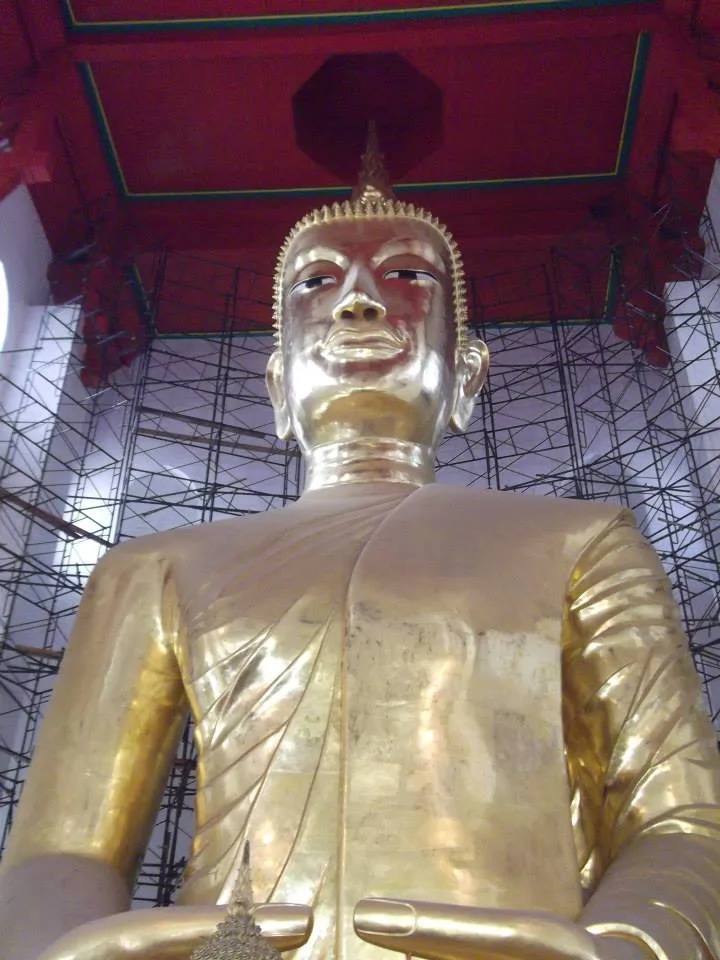
Luang Pho ToThe giant Phra Maha Phutthaphim
ANG THONG · CHAIYO
A royal riverside temple in Ang Thong housing Phra Maha Phutthaphim, the giant Luang Pho To built by King Rama V to replace Somdet To’s collapsed image.
Holiday / event — crowded
Dress modestly, covering shoulders and knees · Remove shoes before entering buildings · Do not point your feet at Buddha images · Keep quiet while people are praying
Daily, about 07:00–17:00 (some sources say from 06:00)
Come in the morning, before tour buses arrive around midday
Annual Luang Pho To festivals around the 11th lunar month (Oct) and mid-5th lunar month (Apr)
01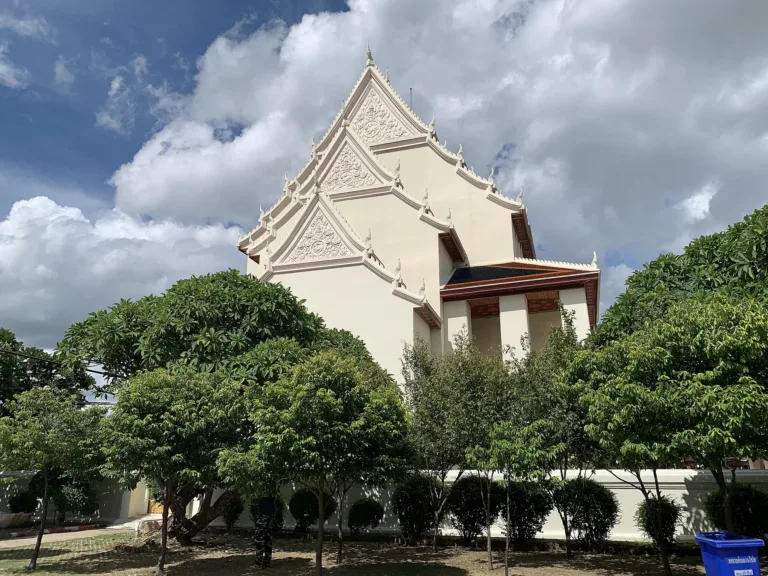 02
 03
 04
Tap a day card to see that day’s weather, rain, haze and hourly forecast
Best time to go Daytime is over · see tomorrow
Holiday — traffic on the way up and parking fills fast; leave early
Green band = hours used for the score
Best time to go Fine all day little rain through the day
Holiday — traffic on the way up and parking fills fast; leave early
Green band = hours used for the score
Best time to go Fine all day little rain through the day
No warnings today — normal road and weather conditions
Green band = hours used for the score
Best time to go Fine all day little rain through the day
No warnings today — normal road and weather conditions
Green band = hours used for the score
Best time to go Fine all day little rain through the day
No warnings today — normal road and weather conditions
Green band = hours used for the score
Best time to go Fine all day little rain through the day
No warnings today — normal road and weather conditions
Green band = hours used for the score
Best time to go Fine all day little rain through the day
No warnings today — normal road and weather conditions
Green band = hours used for the score
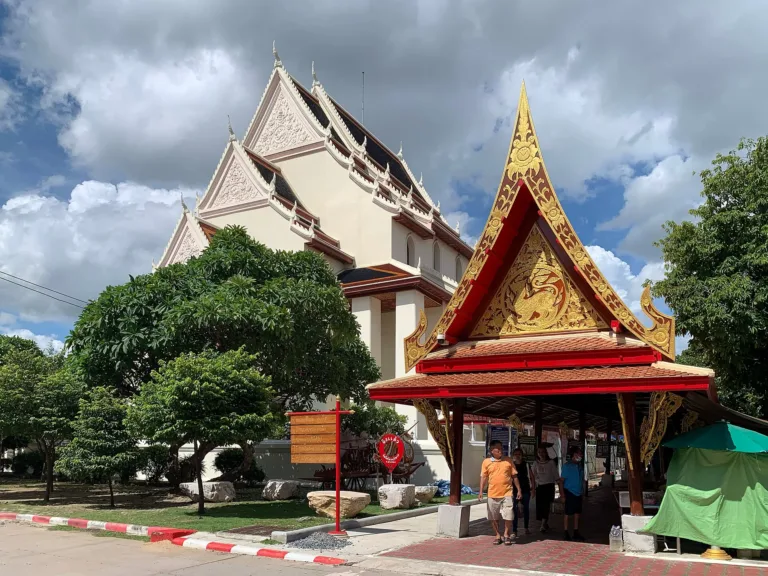
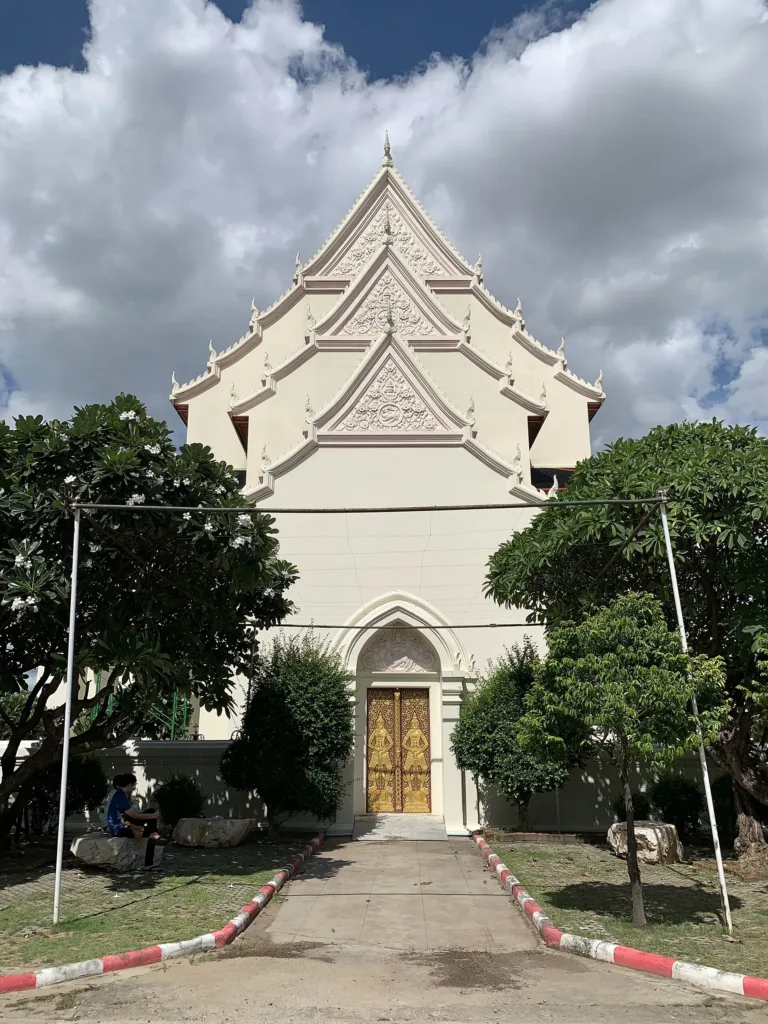
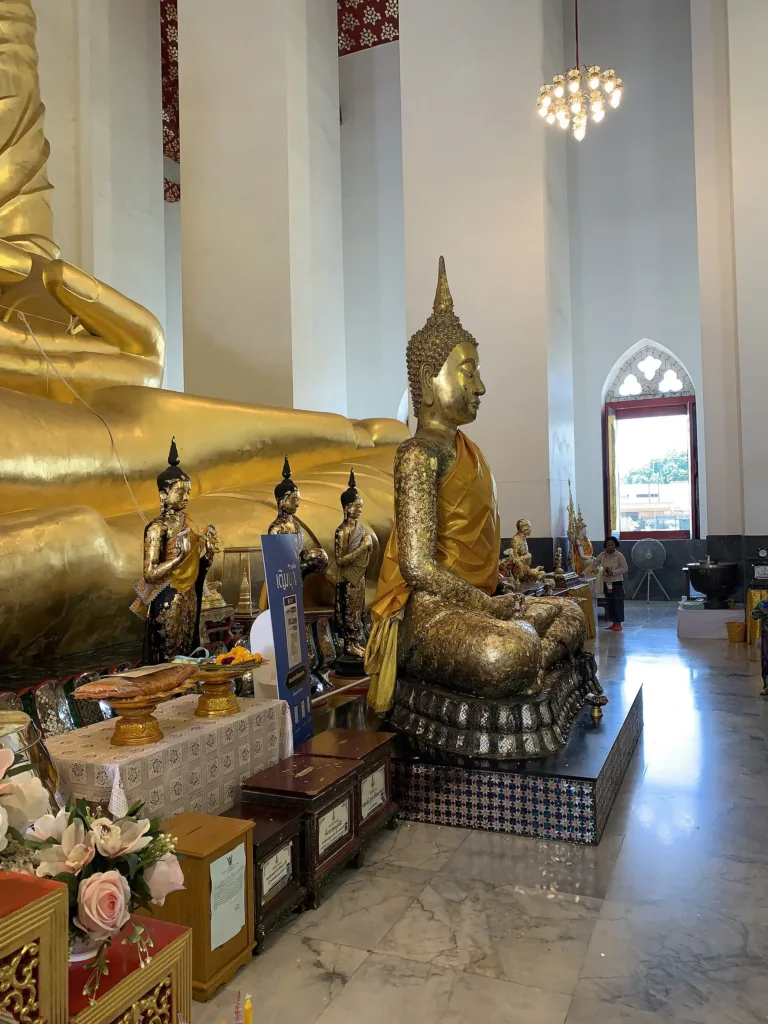
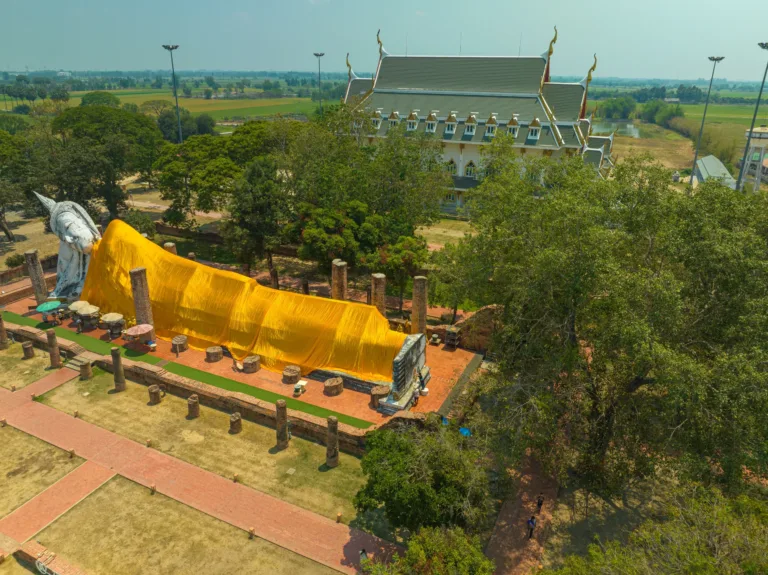
Wat Chaiyo Worawihan is a royal temple on the Chao Phraya in Ang Thong, home to Phra Maha Phutthaphim (Luang Pho To), a giant seated Buddha that King Rama V had built after Somdet To’s earlier image collapsed. The temple is also famous as the source of the Phra Somdet Ket Chaiyo amulets.
Arrive Come in the morning, before tour buses arrive around midday
Photos from Wikimedia Commons and contributors · tap a photo to see its credit
Cover shoulders and knees; wraps may not be available at the gate
Remove shoes before entering the image hall and ordination hall
Watch children near the Chao Phraya bank
Free · Time needed 45 minutes – 1.5 hours
Weekend late mornings to afternoons and festival days
| Temple entry | Free |
| Flowers, incense and gold leaf optional | 20 ฿/set |
Cash · Prices may change by season — check with the venue
Annual Luang Pho To festivals around the 11th lunar month (Oct) and mid-5th lunar month (Apr)
Tap a month on the wheel to see weather, rain, haze and crowds from 10 years of records
Best time · Nov – Feb is cool and pleasant for strolling by the river; temple festivals fall around the 11th and 5th lunar months
Watch out · Mar – May is very hot; tour buses crowd weekend middays
Nov by the records 23–32°C · avg rain 58 mm (8 rainy days) · clear 8 days · avg PM2.5 14
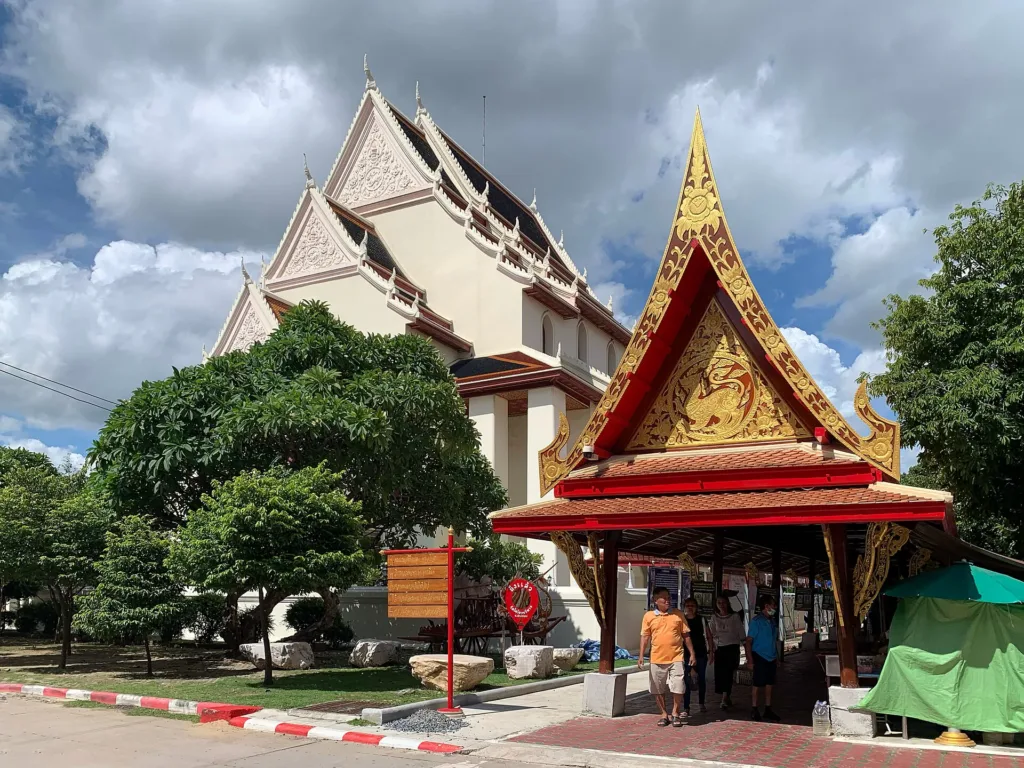
Wat Chaiyo Worawihan stands in Chaiyo subdistrict, Chaiyo district, Ang Thong, on the west bank of the Chao Phraya beside the old Ang Thong–Sing Buri road, about 15 km north of Ang Thong town. A royal temple of the worawihan class, it houses Phra Maha Phutthaphim, or “Luang Pho To”, a huge seated Buddha deeply revered in Ang Thong and neighbouring provinces.
The temple began as a commoners’ temple in the Ayutthaya period; who founded it is unknown. Originally called simply Wat Chaiyo, it was an ordinary riverside community temple until Somdet Phra Phutthachan (To Phrommarangsi) built a giant Buddha here in the reign of King Rama IV.
The name “Chaiyo” is tied to Ayutthaya-era warfare. A Sripatum University study cites a letter from Phraya Boran Rajathanin to King Rama VI saying that in 1585 King Naresuan and Prince Ekathotsarot routed a Chiang Mai army camped near Ban Sa Ket. When the district was set up around 1898 locals called it Ban Makham, but officials chose “Chaiyo”, meaning victory, as an auspicious name.
Somdet Phra Phutthachan (To Phrommarangsi), abbot of Wat Rakhang Khositaram, is one of the most revered monks in Thai history. Silpa Wattanatham says Chaiyo was his maternal grandparents’ home. His bond with Chaiyo was a key reason he came to build a giant Buddha here.
Khaosod’s amulet column summarises his life: Somdet To was born on Thursday, 17 April 1788, in the reign of Rama I, at Ban Kai Chan, Tha Ruea district, Ayutthaya. His father’s name is unclear; his mother was Ket and his grandfather Chai. His mother moved to Chaiyo before taking the family to Bang Khun Phrom in Bangkok. He became a novice in 1800 at age 12 and was fully ordained at Wat Phra Si Rattana Satsadaram in 1807, a rare honour for a commoner. Under Rama IV he became Phra Thammakitti (1852), Phra Thep Kawi (1854) and Somdet Phra Phutthachan on 8 September 1864. He died on 22 June 1872 at Wat Intharawihan while overseeing a giant standing Buddha there, aged 84.
The same source says he built a giant Buddha at each place linked to his childhood. A widely told version names a reclining Buddha at Wat Sadue in Ayutthaya near his birthplace, the seated image at Wat Chaiyo, and the standing image at Wat Intharawihan in Bangkok. Silpa Wattanatham notes that the standing alms-bowl Buddha at Wat Intharawihan was begun under Rama IV and completed under Rama VII.
In Rama IV’s reign Somdet To built a great outdoor seated Buddha at Wat Chaiyo, but it collapsed more than once. Prachum Kanchanawat, author of Sam Somdet (1980), says the first was built around 1857–62 of clay mixed with rice husks and soon fell because its base was weak; the second, around 1863–64, collapsed 3–4 years after completion; and a third was built around 1867. Some sources say there were only two. Silpa Wattanatham says the later one used brick, clay and lime, was smaller and was never gilded.
Inside the image Somdet To placed votive tablets later called “Phra Somdet Ket Chaiyo”, one of the famed “Three Somdet” amulets alongside those of Wat Rakhang and Wat Bang Khun Phrom, in 5-, 6- and 7-tier designs. He is said to have aimed to make 84,000 of them, matching the number of the Buddha’s teachings, dedicated to his mother, though exactly where they were enshrined, in the image, in stupas or elsewhere, remains unclear.
The amulets’ fame led many people to call the temple “Wat Ket Chaiyo” after them. Silpa Wattanatham points out that this is a misnomer; the temple’s real name is Wat Chaiyo Worawihan.
In 1878 King Chulalongkorn (Rama V) passed Wat Chaiyo and wrote of Somdet To’s giant Buddha that its “shape and face are not at all beautiful”.
In 1887 the king appointed Chao Phraya Rattanabodin (Bunrot Kanlayanamit), Minister of the Interior, to rebuild the entire temple, which was made a royal temple from the first year. While the foundations of the image hall were being dug, the vibrations brought the old Buddha down yet again. Its amulets were scattered; some were placed in a stupa at Wat Pho Kriap in Pho Thong district, which thieves later dug into.
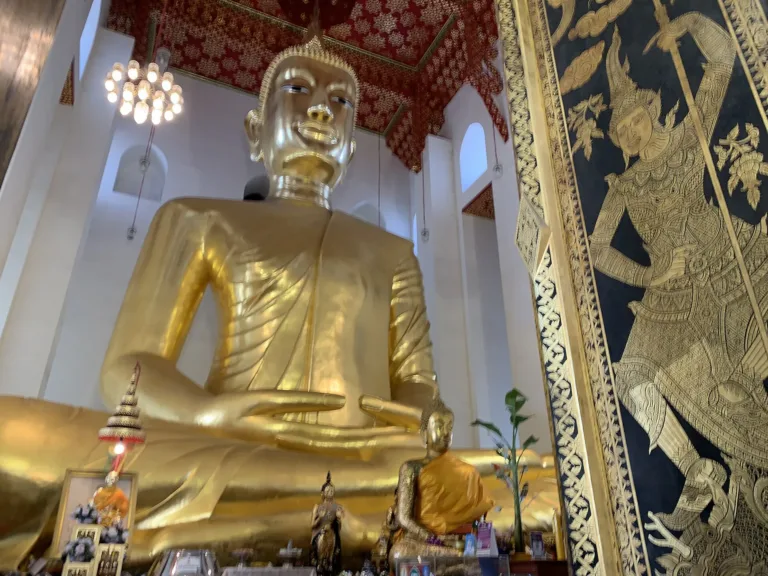
The king ordered a new image modelled on Luang Pho To of Wat Kanlayanamit, with an iron frame set inside the mortar, in the meditation posture with legs crossed flat, and named it Phra Maha Phutthaphim. Its lap measures 8 wa 6 nio (some sources say 8 wa 7 nio) and it stands 11 wa 1 sok 7 nio to the tip of the flame finial; travel sources convert this to about 16.10 m across the lap and about 22.65 m high.
Choosing Luang Pho To of Wat Kanlayanamit as the model was probably linked to the man in charge: Chao Phraya Rattanabodin belonged to the Kanlayanamit family, the same family as Chao Phraya Nikorabodin (To), founder of Wat Kanlayanamit. That temple’s great Buddha had itself been built under Rama III after the image at Wat Phanan Choeng in Ayutthaya.
“Luang Pho To” is a respectful name for any very large Buddha image, found in almost every province. Silpa Wattanatham gives comparisons: Luang Pho To at Wat Kanlayanamit measures 11.75 m across the lap and 15.44 m high, and the Wat Phanan Choeng image 14.20 m and 19.20 m. By travel-source figures, Wat Chaiyo’s Phra Maha Phutthaphim is therefore larger than its model. Ang Thong’s biggest Buddha is Luang Pho Yai at Wat Muang, 63 m across the lap and 93 m high.
A Khon Kaen University study says the restoration began in the Year of the Pig, 1887, and finished in the Year of the Horse, 1894, taking about eight years; other sources give 1895. Travel sources say a three-day consecration on 5–7 October 1895 was the grandest celebration Ang Thong had then seen.
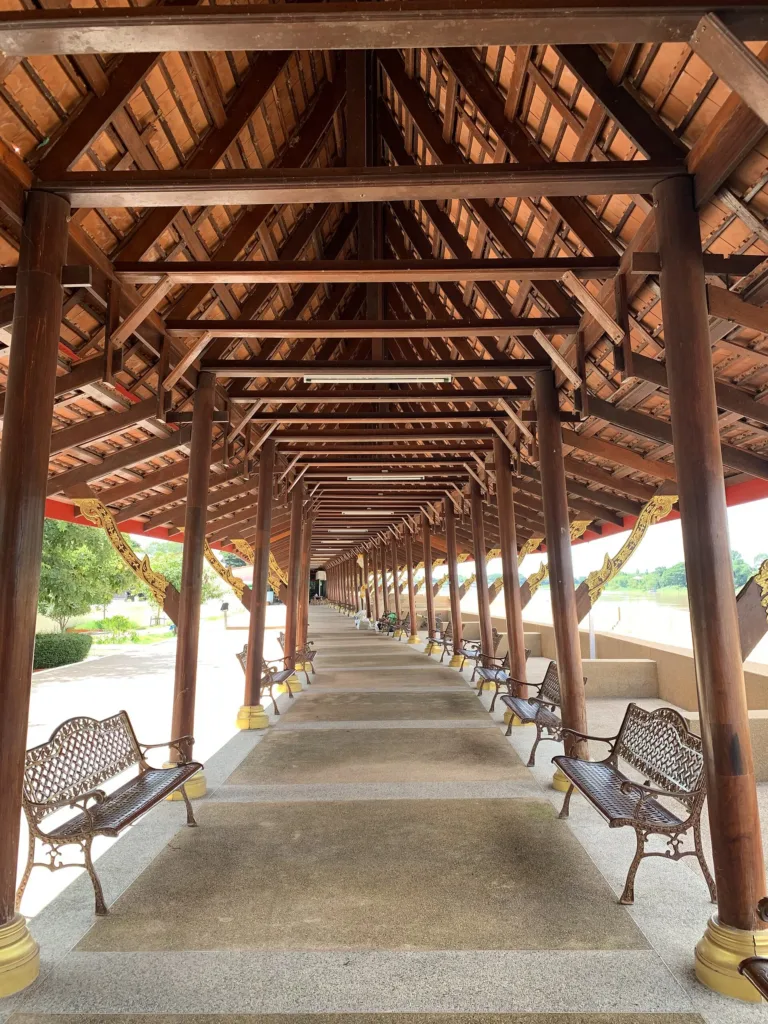
The rebuilding produced a tall image hall enclosing the Buddha, about one sen high (around 40 m), described in one study as Gothic-influenced; an ordination hall with a stepped projecting front porch; four pavilions around the image hall; a boundary wall; monks’ quarters; a sermon hall; a chanting hall; a bell tower; a central pavilion; and a river landing.
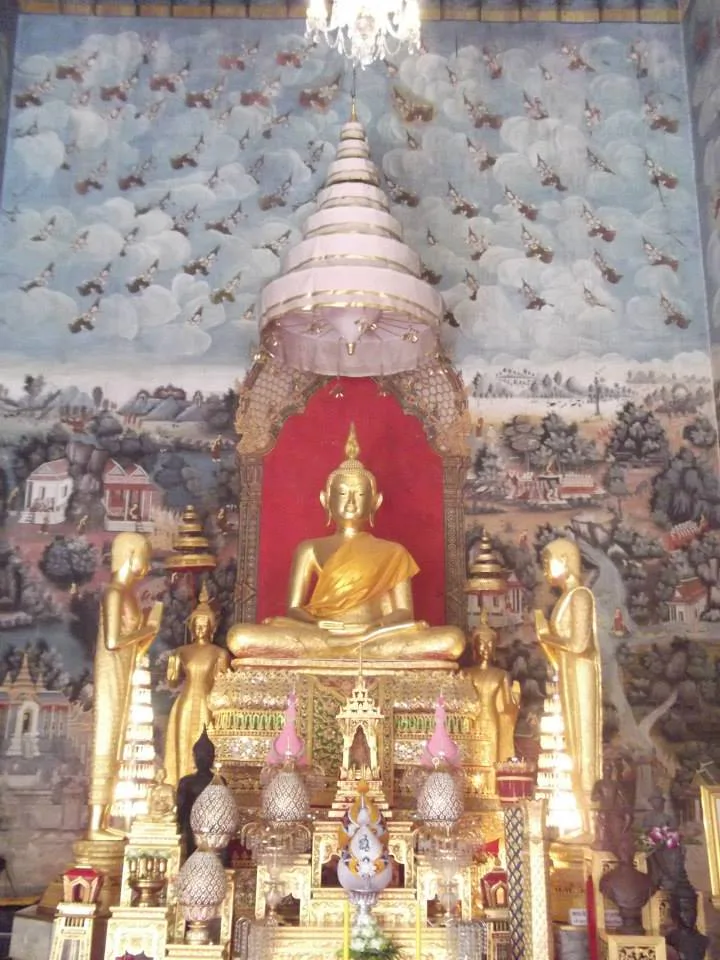
Inside the ordination hall, murals by Rama V-era artisans depict the life of the Buddha and assemblies of deities and remain in good condition, with finely carved doors.
The image hall also holds a cast likeness of Somdet To. One study gives its lap width as 40.2 cm and says it was cast before 1901, exact year unknown; some travel sources say a likeness of Somdet To in the hall was completed in 1894.
From 1988 Phra Maha Phutthaphim was fully re-lacquered and gilded under Fine Arts Department supervision, giving it the gleaming gold seen today.
A local belief holds that wrongdoers dare not approach Luang Pho To because the image seems about to topple onto them, a feeling probably created by the huge statue in a relatively narrow hall.
The temple holds two annual festivals by the lunar calendar, in the 11th month (around October) and mid-5th month (around April), with worship and gold-leaf offerings to Luang Pho To, bathing of Buddha images, water blessings for elders, sand-stupa building, nightly likay and performances, free food tents and community product stalls.
A 2022 Sripatum University study identified three strong identities for Chaiyo district: the history of the Ban Sa Ket battle, devotion to Luang Pho To at Wat Chaiyo, and food-preservation know-how such as Chaiyo pounded beef and pork and candied kaffir lime by the Dong Phikun housewives’ group, and recommended setting up a tourist information centre at the temple.
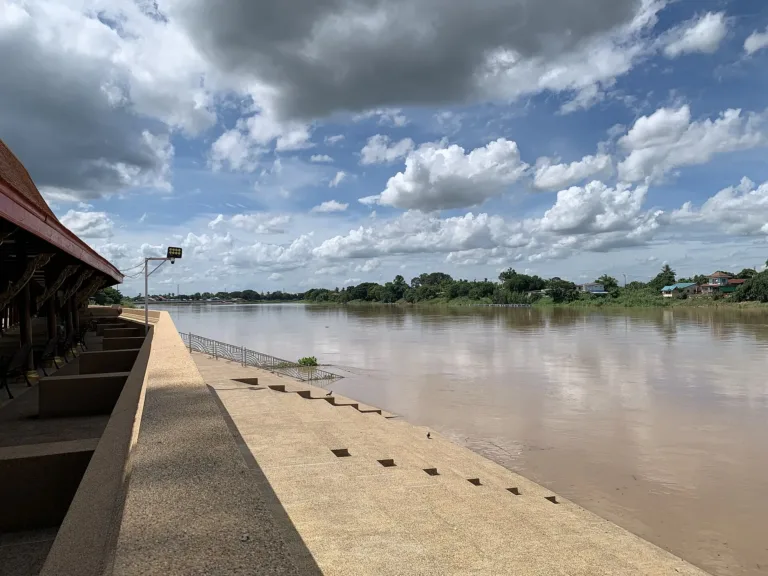
Nearby sites make an easy route: Wat Pa Mok Worawihan about 17 km away, Wat Sa Ket linked to Naresuan’s battle, Wat Khun Inthapramun and Wat Muang. Behind the temple the Chao Phraya River makes for a pleasant stroll.
Its riverside setting means the Chaiyo community faces floods from time to time. On 12 October 2016, for example, the Chao Phraya backed up through an old drainage pipe and flooded 10–20 riverside homes in Ratchasathit subdistrict, Chaiyo district, to a depth of 30–40 cm. Late-rainy-season visitors should check water-level notices before walking along the bank.
Wat Chaiyo Worawihan is free to visit every day. Dress modestly with shoulders and knees covered, remove shoes before entering the image hall and ordination hall, and keep quiet while people are praying.
Arrived? Check in, collect a stamp and tell others what it is like right now
Check your location first, so you do not fill in the form for nothing
Location must be on and within 1 km · One check-in per place per day · come back on other days to check in again
Post photos from anywhere — no need to be here · Up to 20 photos at a time · JPG / PNG / WebP · GPS location data is removed automatically
From Bangkok take Highway 32 (Asian Highway) to Ang Thong.
Highway 32, then the old Ang Thong–Sing Buri road · Fuel
To Ang Thong town, then on to Chaiyo · Varies
From Ang Thong town follow the old Ang Thong–Sing Buri road north for about 15 km; the temple is beside the road on the Chao Phraya side.
Car park inside the temple
Petrol stations in Ang Thong town and on the highway
Good mobile signal
Daily, about 07:00–17:00 (some sources say from 06:00)
about 15 km from Ang Thong town
Wat Chaiyo Worawihan
Approx. nightly price for 2 adults (next week) · final price depends on your dates
Answers travellers want before they go — a one-minute read
Yes; the real name is Wat Chaiyo Worawihan, and “Ket Chaiyo” comes from the Phra Somdet Ket Chaiyo amulets
Lap 8 wa 6 nio and 11 wa 1 sok 7 nio to the tip (about 16 x 22.6 m)
King Rama V, to replace Somdet To’s image, which collapsed in 1887
Open daily about 07:00–17:00, free entry
Twice a year, around the 11th lunar month (Oct) and mid-5th lunar month (Apr)
Best day this week: Monday 30 Nov · Check in when you arrive to collect a stamp
 Wat Phikun Thong
 Wat Khun Inthapramun