What to know before visiting the temple
Dress modestly · Ask before entering the museum · Don't touch exhibits
Grounds daily; buildings by appointment
16:00
Phuan Kam Fa rite, Jan–Feb
7 days ahead
When to go
this week
Tap a day card to see that day’s weather, rain, haze and hourly forecast
Best time to go Daytime is over · see tomorrow
No warnings today — normal road and weather conditions
Hour by hour
Green band = hours used for the score
Best time to go Fine all day little rain through the day
No warnings today — normal road and weather conditions
Hour by hour
Green band = hours used for the score
Best time to go Fine all day little rain through the day
No warnings today — normal road and weather conditions
Hour by hour
Green band = hours used for the score
Best time to go Fine all day little rain through the day
No warnings today — normal road and weather conditions
Hour by hour
Green band = hours used for the score
Best time to go Fine all day little rain through the day
No warnings today — normal road and weather conditions
Hour by hour
Green band = hours used for the score
Best time to go Fine all day little rain through the day
No warnings today — normal road and weather conditions
Hour by hour
Green band = hours used for the score
Best time to go Fine all day little rain through the day
No warnings today — normal road and weather conditions
Hour by hour
Green band = hours used for the score
Wat Kudi Thong
Wat Kudi Thong, Moo 3, Bang Nam Chiao, Phrom Buri, Sing Buri.
- Cool
- Hot
- Buildings closing
Arrive 16:00
- Twelve-cornered mondopThe mondopMorning
Good to know here
Often locked on weekdays
Thai only
- Call ahead for the museum
- Come in the morning
- Pair with Wat Amphawan
Free · Time needed 45 min–1 hour
Major Buddhist days
- Kids Good; educational museum
- Seniors Flat and quiet
- Wheelchair No information
- Pets Keep pets out of the temple
- Phrom Buri townRestaurants
- Asian Highway stopsMae La snakehead
- Dress modestly
- Ask before entering the museum
- Don't touch exhibits
- Buildings may be locked
- No English signs
Phuan Kam Fa rite, Jan–Feb
Best months
Tap a month on the wheel to see weather, rain, haze and crowds from 10 years of records
Best time · Nov–Feb for cool weather · Jan–Feb Kam Fa rite
Watch out · Buildings often locked on weekdays; book ahead
21°Jan
23°Feb
25°Mar
26°Apr
26°May
26°Jun
26°Jul
25°Aug
25°Sep
24°Oct
23°Nov
22°Dec
Nov by the records 23–32°C · avg rain 56 mm (8 rainy days) · clear 8 days · avg PM2.5 14
The story of this place
Wat Kudi Thong is the village temple of the Thai Phuan community of Bang Nam Chiao in Phrom Buri district, Sing Buri. The Phuan here descend from people of Xieng Khouang in upper Laos who settled in the Chao Phraya basin roughly two hundred years ago. This small temple holds a twelve-cornered mondop built in 1900, a century-old school building that now houses a Thai Phuan folk culture centre, and the story of Luang Pho Metta, who led the temple for more than fifty years. It reads like a memory book of the Phuan of the central plains (not to be confused with the Wat Kudi Thong temples in Ayutthaya and Suphan Buri).
Read more 11 more paragraphs
Scholars agree that the Phuan homeland was Mueang Phuan, today's Xieng Khouang province in Laos. The Phuan came to Siam in several waves; some studies date the first to around 1778 in the Thonburi period, with movements continuing into the reign of King Chulalongkorn (Rama V). Some were forcibly moved in wartime, others came of their own accord to seek the Siamese king's protection. Architectural research notes that moving from the Xieng Khouang highlands to a river plain flooded for months forced the Phuan to adapt their houses and farming, while keeping their traditional house plan.
After 1893, when the Phuan lands came under French rule, more Phuan who could not accept the new rulers moved into Siam. A study of the Phuan in Lopburi records that under Rama V the state designated settlement areas for them in several provinces, Sing Buri among them. No document yet found says exactly when, or in which wave, the Bang Nam Chiao Phuan arrived.
A list compiled by Sukhothai Thammathirat Open University names several Thai Phuan communities in Phrom Buri: Sao Thong Thong, Kudi Thong, Pho En, Uttamaphichai and Bang Nam Chiao. Many of these names are also temple names, a sign that each temple was the heart of its village. A study of the Phuan language published in 1983 also recorded the Nam Chiao area of Phrom Buri as a place where Phuan was still spoken.
No official record of the temple's founding has been found. One travel source says it began around 1832 as Wat Pho Chai, locally called Wat Ban Sai, on the riverbank, and was rebuilt on its present site under the name Wat Kudi Thong after the bank collapsed. No other source confirms this, and no date is given for the move. Old brickwork and boundary stones still lie under the bodhi trees, traces of earlier buildings.
The best-dated structure is the chedi-like mondop with twelve indented corners, built in 1900, late in the reign of Rama V, by former abbot Luang Pho Panya Uttamaphichai. Buddha relics are enshrined at its top, and inside is a metal replica of the Buddha's footprint for worshippers. Because of its shape, some sources call it a twelve-sided chedi.
Besides being a place of merit-making, the temple was the village's centre of learning. Its grounds hold the old Wat Kudi Thong school building, more than a hundred years old, and in anthropological research the village around it is simply called Ban Wat Kudi Thong.
The key figure of the modern era is Luang Pho Metta. Born Bunchuai Nonthri on 23 February 1930 in Bang Nam Chiao, he was ordained at Wat Uttamaphichai on 21 July 1950 with the monastic name Chittapanyo, and became abbot of Wat Kudi Thong in 1967. He later received the ecclesiastical title Phra Phawana Phromkhun; some sources call him Phra Khru Phawana Phromkhun.
Luang Pho Metta was a preacher and meditation teacher. In 1986 he launched the "Making People Human" project, sending monk-teachers each year to train students and lay people in several provinces and holding meditation retreats. He also founded a Buddhist radio station in Sing Buri, became Phrom Buri's district monk-head in 2002 and its adviser in 2010.
In the same years the village drew researchers. Between January 1992 and May 1993, Chulalongkorn University anthropology student Ubolthip Chantranet recorded the lullabies of the Lao Phuan of Ban Wat Kudi Thong and found Thai words steadily replacing Lao ones — in songs about work, food, custom and family — a sign of a worldview changing with urbanisation. The thesis was completed in 1994.
In 1997 the temple and the Bang Nam Chiao Phuan community opened the Thai Phuan Folk Arts and Culture Centre in the old school building. It shows a model Phuan house, clothing, jewellery, farming, fishing and trapping tools, ox-carts and old boats, many labelled in the Phuan language. It also explains Kam Fa, a sky-worship rite asking for rain and fertility, the Sat Phuan or Ho Khao merit festival, and the stirring of khao thip, a sacred rice dish.
Luang Pho Metta died peacefully at Wat Kudi Thong on 25 October 2021, aged 92 with 71 years as a monk, then the most senior monk in Sing Buri. Chanting was held for 100 days and the royally sponsored cremation was set for 6 February 2022. The Phuan of Bang Nam Chiao still keep their traditions: a 2013 study documented the Kam Fa, Sat Phuan and rice rites of nearby Ban Phokhaphiwat, and in December 2024 the community stirred khao thip at Wat Phokhaphiwat using milk royally granted from the Suan Chitralada project.
- c. 1778Phuan from Xieng Khouang begin settling in Siam in the Thonburi period (per some studies)
- c. 1832Wat Pho Chai (Wat Ban Sai) founded by the river, later moved and renamed Wat Kudi Thong (unconfirmed)
- 1893Phuan lands come under French rule; more Phuan migrate to Siam
- 1900Luang Pho Panya Uttamaphichai builds the twelve-cornered mondop enshrining Buddha relics
- 193023 Feb — Luang Pho Metta born in Bang Nam Chiao
- 195021 Jul — Luang Pho Metta ordained at Wat Uttamaphichai
- 1967Luang Pho Metta becomes abbot of Wat Kudi Thong
See 10 events
- 1983A Phuan language study records Nam Chiao, Phrom Buri, as Phuan-speaking
- 1986The "Making People Human" project begins
- 1992–1993A Chulalongkorn researcher records Lao Phuan lullabies in Ban Wat Kudi Thong
- 1997Thai Phuan Folk Arts and Culture Centre opens in the old school building
- 2002Luang Pho Metta becomes Phrom Buri district monk-head
- 2010Luang Pho Metta becomes adviser to the district monk-head
- 2013A study documents the farming culture of the Phuan of Ban Phokhaphiwat, Bang Nam Chiao
- 202125 Oct — Luang Pho Metta dies, aged 92
- 20226 Feb — royally sponsored cremation of Luang Pho Metta scheduled
- 2024The Bang Nam Chiao Phuan community stirs khao thip at Wat Phokhaphiwat
Check-ins & visitor photos
Arrived? Check in, collect a stamp and tell others what it is like right now
Check your location first, so you do not fill in the form for nothing
Location must be on and within 1 km · One check-in per place per day · come back on other days to check in again
Post photos from anywhere — no need to be here · Up to 20 photos at a time · JPG / PNG / WebP · GPS location data is removed automatically
How to get there
Paved village road
Highway 32 and SH 4014 · Fuel
Highway 32 km 125–126, then SH 4014
In the grounds
Phrom Buri district
Good
Grounds daily; buildings by appointment
about 15 km from Sing Buri town
Wat Kudi Thong Sing Buri
Stays near Wat Kudi Thong
Approx. nightly price for 2 adults (next week) · final price depends on your dates
FAQ
Before you go: Wat Kudi Thong
Answers travellers want before they go — a one-minute read
What is the twelve-cornered mondop?
A 1900 shrine holding Buddha relics
Who are the Thai Phuan?
A group whose ancestors came from Xieng Khouang, Laos
Can I visit the museum?
Yes, by appointment
Who was Luang Pho Metta?
Abbot 1967–2021 and meditation teacher
Is it the Wat Kudi Thong in Ayutthaya?
No
Are there murals?
None recorded
Nearby places
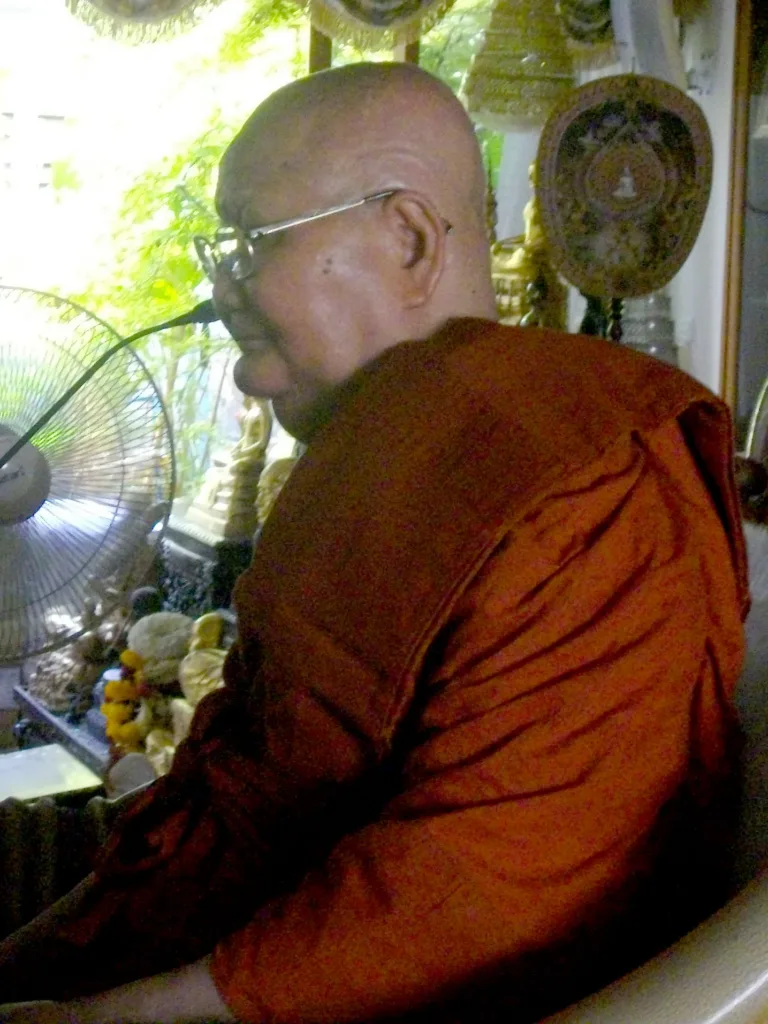 Wat Amphawan
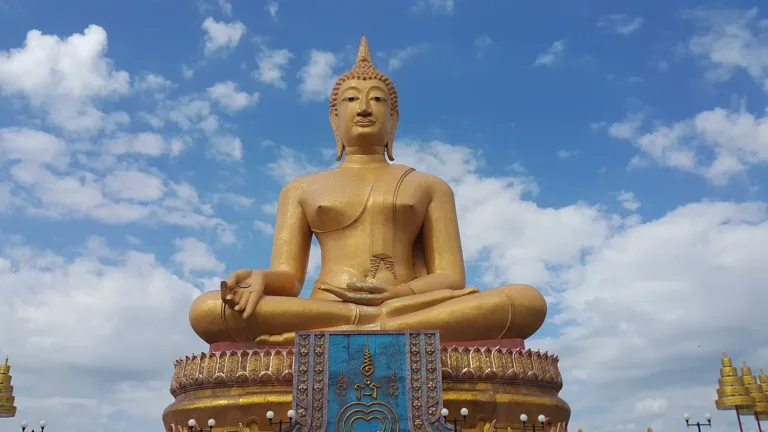 Wat Phikun Thong
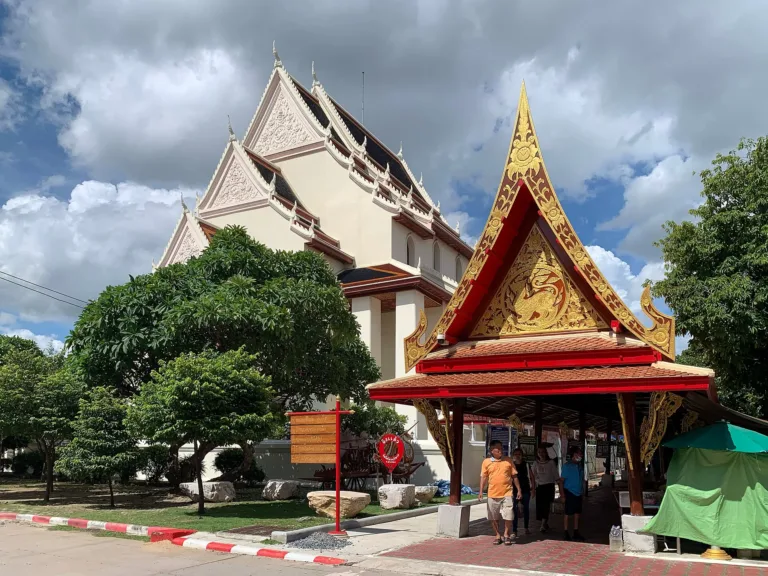 Wat Chaiyo Worawihan
Ready to go to Wat Kudi Thong?
Best day this week: Saturday 28 Nov · Check in when you arrive to collect a stamp