 01
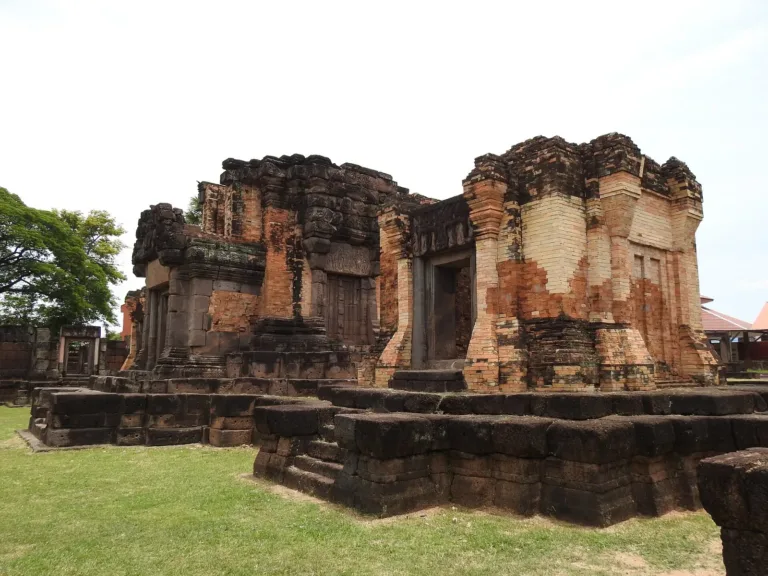
Three towers on one baseA sandstone main tower flanked by two brick towers
Khmer sanctuary · Uthumphon Phisai
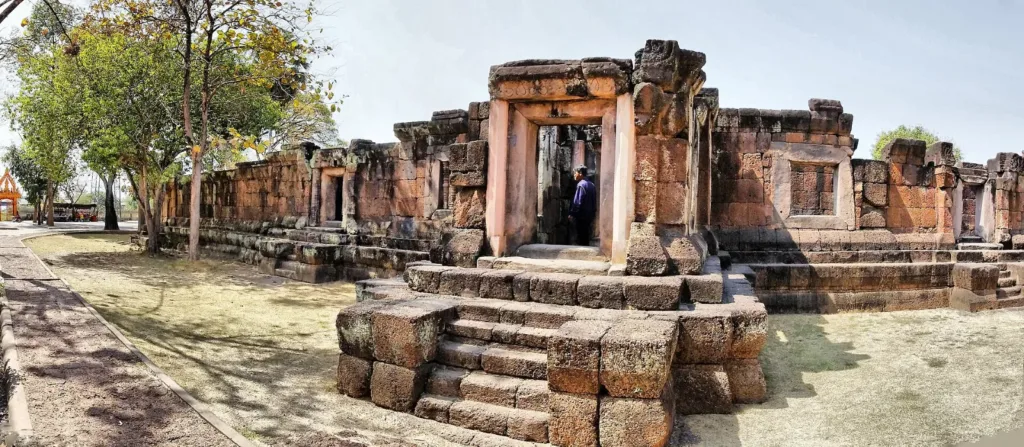
An 11th-century Baphuon-style Khmer sanctuary inside Wat Sa Kamphaeng Yai, Uthumphon Phisai, Sisaket, with three towers on one base, a laterite gallery and a lintel of Indra on Airavata.
Good weather, little rain
Daily 08:30–16:30
About 1 hour
Front of the main tower — Shoot from the east to frame all three towers
01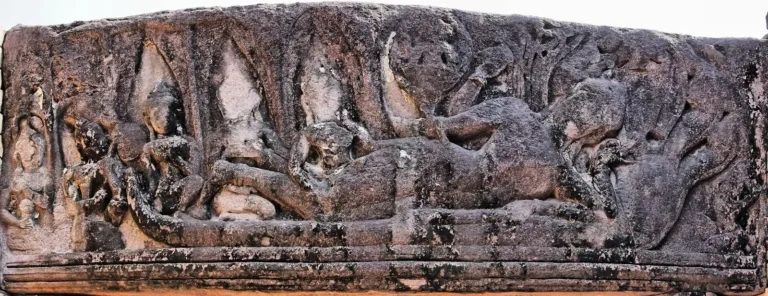 02
 03
Tap a day card to see that day’s weather, rain, haze and hourly forecast
Best time to go Daytime is over · see tomorrow
No warnings today — normal road and weather conditions
Green band = hours used for the score
Best time to go Fine all day little rain through the day
No warnings today — normal road and weather conditions
Green band = hours used for the score
Best time to go Fine all day little rain through the day
No warnings today — normal road and weather conditions
Green band = hours used for the score
Best time to go Fine all day little rain through the day
No warnings today — normal road and weather conditions
Green band = hours used for the score
Best time to go Fine all day little rain through the day
No official warnings, but watch for: Hot (Afternoon) feels like 38°C
Green band = hours used for the score
Best time to go Fine all day little rain through the day
No warnings today — normal road and weather conditions
Green band = hours used for the score
Best time to go Fine all day little rain through the day
No warnings today — normal road and weather conditions
Green band = hours used for the score
Prasat Sa Kamphaeng Yai sits in the grounds of Wat Sa Kamphaeng Yai in Uthumphon Phisai District, about 26 km from Sisaket town. It's a Khmer sanctuary in the Baphuon style, built around the 11th century and first dedicated to Shiva.Three towers share a single base facing east, wrapped by a laterite and sandstone gallery with gopuras on all four sides. Look out for the lintel of Indra riding the elephant Airavata over the main tower.It's open daily 08:30–16:30 and an hour is enough to walk around, so it's an easy stop on the Sisaket–Surin road.
Arrive Before 10:00, ahead of the strong sun
Dress modestly and don't climb on the ruins
There's almost no shade; bring a hat and water
Prasat Sa Kamphaeng Yai, in the grounds of Wat Sa Kamphaeng Yai in Uthumphon Phisai District, is the largest and most complete Khmer sanctuary in Sisaket Province. It was built in the Baphuon style around the 11th century as a temple to Shiva under the name "Sri Vrddhesvara", which is why it is also called Prasat Si Phruetthesuan. Around the 13th century it became a Mahayana Buddhist shrine, and today it stands beside the village's Theravada temple. An inscription on a doorframe still kept at the temple and a near life-size bronze figure dug up in 1989 make it one of the key sites for understanding the ancient Khmer world of the Mun River basin.
The name "Sa Kamphaeng" comes from a large square ancient reservoir about 400 metres from the sanctuary, linked to it by a laterite road. The temple's inscription also names a settlement called "Sruk Stuk Ampil", which some scholars identify with the ancient town here and link to salt making.
The layout is unusual. Three towers stand in a north–south row on a single laterite base, all facing east. The central tower is sandstone mixed with brick, while the two side towers are brick, with sandstone used only for doorframes, pediments and lintels. Two brick libraries stand in front, and behind the southern tower is one more brick tower whose purpose is still unclear. Everything is enclosed by a gallery with a gopura, or gateway, on each side, the eastern one being the main entrance.
The most important evidence is a Khmer inscription on the sandstone doorframe of the eastern gopura, dated to the equivalent of 1042. It records that Kamraten An Sivadasa and several other dignitaries jointly bought land and goods for Kamraten An Sri Vrddhesvara, assigned servants to work at the shrine in fortnightly shifts, and listed what was paid, such as cattle, gold and various vessels. The inscription confirms the temple was founded as a Shaivite Hindu sanctuary, and the inscribed doorframe is still displayed at the temple.
Exactly who built it, and when, is still debated. Some guides to Khmer temples place it in the reign of King Udayadityavarman II. A study published by the Phimai National Museum, however, points to an inscription at Preah Vihear dated to 1037 that already mentions officials of King Suryavarman I building walls for Sri Vrddhesvara, suggesting the sanctuary was nearly complete late in that reign.
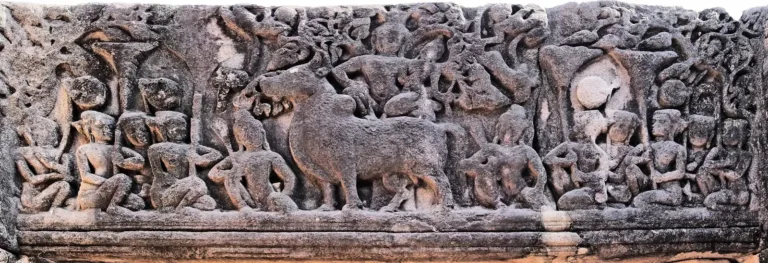
The carvings are a big part of the appeal. The lintel of the main tower shows Indra riding the elephant Airavata above a kala face. The northern library has a lintel of Vishnu reclining on the serpent Ananta with women seated at his feet, and the southern library shows Shiva and Uma seated on the bull Nandi. Other carvings include a dancing Shiva, Krishna lifting Mount Govardhana and Ramayana scenes such as Hanuman presenting the ring.
Around the 13th century the sanctuary was adapted for Mahayana Buddhism. Traces of this phase include Naga-protected Buddha images, meditating Buddhas and terracotta votive tablets found during excavation. It matches the period when a hospital chapel of King Jayavarman VII was built at nearby Prasat Sa Kamphaeng Noi. Centuries later, the present Wat Sa Kamphaeng Yai was founded here around 1825. The temple received its royal boundary grant on 10 July 1984 and was much developed under former abbot Luang Pu Khrueang Suphatto.
The state took notice early in the modern era. On 28 January 1930 Prince Damrong Rajanubhab inspected the ruins and photographs were taken. The Fine Arts Department then registered the site as a national monument in the Royal Gazette of 8 March 1936, and on 17 March 1937 the American scientist Dr. Robert L. Pendleton photographed it again. On 29 November 2002 its protected boundary was set at about 53 rai (some 8.6 hectares).
Serious scholarship took off when Amphai Khamtho read and translated the inscription in Silpakorn magazine in 1983, the same year a thesis was written on the sanctuary, before it was reprinted in Inscriptions in Thailand, Volume 3, in 1986. The Fine Arts Department's Unit 6 then excavated and restored the site, and on 17 May 1989 found a standing bronze male figure buried about 10 cm deep in sand near the southern gopura. Later excavation around 1992 also turned up a sandstone Naga-protected Buddha, Khmer ceramics and many terracotta moulds.
The bronze is a rare survivor. The body measures about 140 cm from head to foot, and about 184 cm including its base and tenon, with traces of gilding still visible. The French Khmer-art specialist Jean Boisselier saw it as a door guardian, possibly Nandikesvara, while a 2024 study suggests it may be a portrait image of King Suryavarman I. It is now displayed at the Phimai National Museum, although some older sources say it is kept at the National Museum in Bangkok.
Today Prasat Sa Kamphaeng Yai is both a protected monument and part of a living temple. Visitors and art students come for the three towers, the lintels and an inscription nearly a thousand years old, and often continue to Prasat Sa Kamphaeng Noi close by.
Arrived? Check in, collect a stamp and tell others what it is like right now
Check your location first, so you do not fill in the form for nothing
Location must be on and within 1.5 km · One check-in per place per day · come back on other days to check in again
Post photos from anywhere — no need to be here · Up to 20 photos at a time · JPG / PNG / WebP · GPS location data is removed automatically
The temple is next to Uthumphon Phisai town, about 26 km from Sisaket town.
Sisaket town–Highway 226–Uthumphon Phisai · Fuel
Get off at Uthumphon Phisai station, then hire a ride · Varies
Paved highways 226 and 2083
Daily 08:30–16:30
about 26 km from Sisaket town
Prasat Hin Wat Sa Kamphaeng Yai
Answers travellers want before they go — a one-minute read
Inside Wat Sa Kamphaeng Yai, Uthumphon Phisai District, Sisaket
Around the 11th century, in the Khmer Baphuon style
Shiva; it later became a Mahayana Buddhist shrine
Indra riding Airavata on the main tower
About an hour
Best day this week: Saturday 28 Nov · Check in when you arrive to collect a stamp
 Prasat Sikhoraphum
 Wat Pa Maha Chedi Kaew (Wat Lan Khuat)
 Ban Ta Klang Elephant Village
 That Kong Khao Noi