What to know before visiting the temple
Dress modestly with long sleeves and legs · Remove shoes where required · Don't walk in front of or single out worshippers in photos
Daily 08:00–17:00
Morning or late afternoon, avoiding prayer times
7 days ahead
When to go
this week
Tap a day card to see that day’s weather, rain, haze and hourly forecast
Best time to go Daytime is over · see tomorrow
Thick morning fog with visibility under 1 km — use headlights and drive slowly
Holiday — traffic on the way up and parking fills fast; leave early
Hour by hour
Green band = hours used for the score
Best time to go Best window 06:00–11:00 Little rain · light drizzle possible at times
Holiday — traffic on the way up and parking fills fast; leave early
Hour by hour
Green band = hours used for the score
Best time to go Best window 06:00–14:00 Little rain · light drizzle possible at times
No official warnings, but watch for: Possible thunder 14:00–17:00
Hour by hour
Green band = hours used for the score
Best time to go Best window 07:00–13:00 Little rain · light drizzle possible at times
No official warnings, but watch for: Thunderstorm risk 13:00–19:00
Hour by hour
Green band = hours used for the score
Best time to go Best window 06:00–11:00 Little rain
No official warnings, but watch for: Evening (16:00–19:00): rain ~59% · Possible thunder 11:00–12:00
Hour by hour
Green band = hours used for the score
Best time to go Best window 07:00–09:00 Little rain · light drizzle possible at times
No official warnings, but watch for: Evening (16:00–19:00): rain ~44%
Hour by hour
Green band = hours used for the score
Best time to go Best window 06:00–14:00 Little rain · light drizzle possible at times
Rain at times — slippery roads, allow extra travel time
Hour by hour
Green band = hours used for the score
Pattani Central Mosque
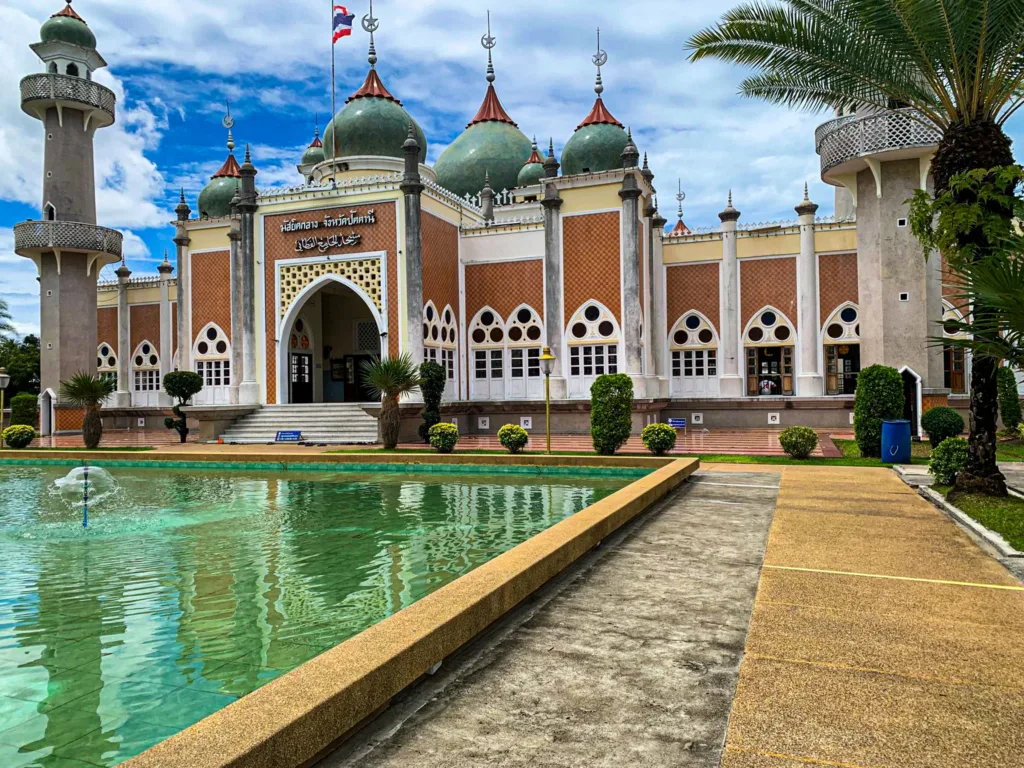
Pattani Central Mosque stands at 249 Yarang Road, Anoru subdistrict, on the Pattani–Yala road. Work began in 1954, took about nine years, and the mosque was officially opened on 25 May 1963 by Field Marshal Sarit Thanarat, then Prime Minister.The two-storey concrete building has a large green central dome ringed by smaller domes, with tall minarets on either side. A rectangular pool in front mirrors the whole building, which is why it's called the Taj Mahal of the South. Inside, a lofty marble hall holds about 1,200 worshippers.It's an active mosque used every day. Visitors of any faith are welcome if they dress modestly, remove shoes where required and avoid Friday midday prayers.
- Morning light, still pool
- Prayer time, especially Fridays
- Late-afternoon light on the dome
Arrive Morning or late afternoon, avoiding prayer times
- Far end of the poolFull reflection of the mosquemorning
Good to know here
Men in long trousers; women with sleeves and a long skirt or trousers, nothing sheer or tight
Don't walk in front of or single out people praying for photos
- Shoot from the far end of the pool for the full reflection
- Bring a shawl or headscarf just in case
- Ask the caretaker before going inside or photographing near the prayer area
- Avoid Friday around midday
No data yet check before you go · Time needed 30 minutes–1 hour
Friday midday prayers
- Kids Fine; keep them calm in the sacred area
- Seniors Good; wide, flat grounds
- Wheelchair The grounds are flat, but the building has steps
- Pets A place of worship; don't bring pets
- Restaurants in Pattani townHalal and local dishes
- Dress modestly with long sleeves and legs
- Remove shoes where required
- Don't walk in front of or single out worshippers in photos
- Respect prayer times
- Dress appropriately
The story of this place
Pattani Central Mosque on Yarang Road in Anoru is the province's main mosque, built by the government between 1954 and 1963 in the Mughal style, with a great green dome, minarets and a reflecting pool in front that earned it the name "Taj Mahal of the South". For more than six decades it has been the centre of prayer and religious life for Pattani's Muslims, a witness to key moments in the history of Thailand's Deep South, and the model for the domed mosques now seen across the region.
Read more 10 more paragraphs
Islam has deep roots in Pattani. The best-known old mosque is Krue Se, which architectural studies date to around the Srivangsa dynasty: a brick building with pointed arches and domes in the Persian-influenced manner, later copied by mosques of its era. One thing has not changed in centuries: Pattani's mosques lie on an east–west axis with the front facing east, so worshippers face the qibla to the west when they pray.
The Central Mosque was born at a time of strained relations between the state and the Muslims of the Deep South. Architectural scholarship notes that it was built after Haji Sulong Abdul Kadir Tohmeena, Pattani's leading religious figure, disappeared in August 1954 after going to meet police in Songkhla. The state wanted a large, dignified mosque for the region's Muslims, and some sources add that the government chose the site to promote peace and develop the area.
In 1954 the government approved a budget to build on about three rai of land beside the Pattani–Yala road in Anoru. The building was designed by an architect from the Department of Religious Affairs, inspired by the Taj Mahal in India. On 6 July 1957 Police General Phao Sriyanon, then Minister of the Interior, laid the foundation stone, and building and decoration took about nine years in all.
On 25 May 1963 Field Marshal Sarit Thanarat, then Prime Minister, officially opened the mosque, named it the Central Mosque of Pattani Province and handed it to the local Muslim community for worship. The Department of Religious Affairs still owns the building today.
The original building is a two-storey reinforced concrete structure with a large green central dome ringed by smaller ones, two minarets on either side and a rectangular pool in front. Inside is an open, lofty prayer hall with upper galleries on both sides and a tall, narrow marble mimbar from which the khatib delivers the Friday khutbah. The hall holds about 1,200 worshippers.
What set the Central Mosque apart was its Mughal onion dome, clearly different from earlier mosques in the four southern border provinces. Studies find that its dome became so iconic that people came to see the onion dome as the very sign of a mosque, and many mosques built later in Pattani and neighbouring provinces followed its example. Across the border in Malaysia, a replica of the mosque stands in the Islamic Civilisation Park in Kuala Terengganu.
The mosque is also part of the region's political history. In late 1975 Muslim villagers began a protest outside the provincial hall on 11 December, demanding justice after villagers were killed at Kor Tor Bridge in Bacho district, Narathiwat. On the evening of 13 December, during Eid al-Adha, a bomb exploded in the crowd, killing and injuring many. The protesters then moved to the Central Mosque about 500 metres away, where tens of thousands joined them. The protest ended on 24 January 1976 with a joint statement with the government of M.R. Kukrit Pramoj after about 45 days (some sources say 47). Scholars see it as the prototype for later grassroots movements in the region.
On 21 October 1993 King Bhumibol Adulyadej the Great and Queen Sirikit visited the mosque, and the King asked Education Minister Samphan Thongsamak to restore it (some sources say the request came from the Queen). The Ministry of Education made it a project honouring the King's Golden Jubilee in 1996: both sides of the building were extended, two more minarets were added for a total of four, and the front pool was enlarged.
Through the years of unrest in the Deep South, the mosque has kept its doors open for worship, and some studies describe it as a place where people of differing religious outlooks pray together peacefully. On the evening of 3 July 2016, near the end of Ramadan, a bomb went off on Yarang Road a few dozen metres from the mosque, killing a police officer who was guarding worshippers, and security was tightened ahead of Hari Raya.
On 9 October 2022 King Vajiralongkorn and Queen Suthida visited the mosque to present awards for the 15th national Quran recitation contest, along with shields for the provincial Islamic committee and outstanding imams. Today the mosque still hosts the five daily prayers, Friday prayers and the major religious festivals, and welcomes visitors of other faiths to admire its architecture and its reflection in the pool with respect.
- 1530–1564Period to which scholars date Krue Se Mosque, the early model for Pattani's brick, domed mosques
- 195413 Aug — Haji Sulong Abdul Kadir Tohmeena, Pattani's religious leader, disappears after meeting police in Songkhla
- 1954The government approves a budget and building begins beside the Pattani–Yala road in Anoru
- 19576 Jul — Interior Minister Police General Phao Sriyanon lays the foundation stone
- 196325 May — Field Marshal Sarit Thanarat officially opens the mosque and hands it to the Muslim community
- 197511 Dec — Villagers begin a protest at the provincial hall seeking justice over the Kor Tor Bridge killings
- 197513 Dec — A bomb explodes in the crowd; the protesters move to the Central Mosque
See 7 events
- 197621 Jan — Government envoys and protesters agree on five points
- 197624 Jan — The protest of about 45 days ends with a joint statement
- 199321 Oct — King Bhumibol and Queen Sirikit visit and ask for the mosque to be restored
- 1996Golden Jubilee restoration: the building is extended, minarets rise to four and the pool is enlarged
- 20163 Jul — A bomb explodes near the mosque at the end of Ramadan; security is tightened
- 2020Soldiers, police, religious leaders and volunteers clean the mosque against COVID-19
- 20229 Oct — King Vajiralongkorn and Queen Suthida present awards for the 15th national Quran recitation contest
Check-ins & visitor photos
Arrived? Check in, collect a stamp and tell others what it is like right now
Check your location first, so you do not fill in the form for nothing
Location must be on and within 0.6 km · One check-in per place per day · come back on other days to check in again
Post photos from anywhere — no need to be here · Up to 20 photos at a time · JPG / PNG / WebP · GPS location data is removed automatically
How to get there
The mosque is at 249 Yarang Road, Anoru, Mueang Pattani.
Yarang Road (Route 410), Pattani town · Fuel
From anywhere in Pattani town · By distance
Yarang Road (Route 410) in town
Car park in the mosque grounds
In Pattani town
Good
Daily 08:00–17:00
Pattani Central Mosque
FAQ
Before you go: Pattani Central Mosque
Answers travellers want before they go — a one-minute read
Where is Pattani Central Mosque?
249 Yarang Road, Anoru, Mueang Pattani
Can non-Muslims visit?
Yes, with modest dress and respect for the prayer area
What are the visiting hours?
Daily, roughly 08:00–17:00
When was it built?
Work began in 1954; it opened officially on 25 May 1963
Why the 'Taj Mahal of the South'?
Its dome, twin minarets and reflecting pool recall the Taj Mahal
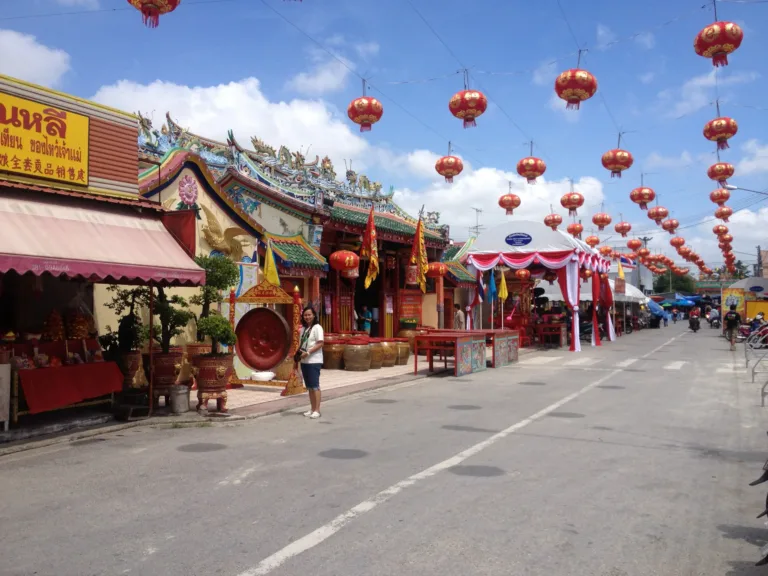 Leng Chu Kiang Shrine (Chao Mae Lim Ko Niao Shrine)
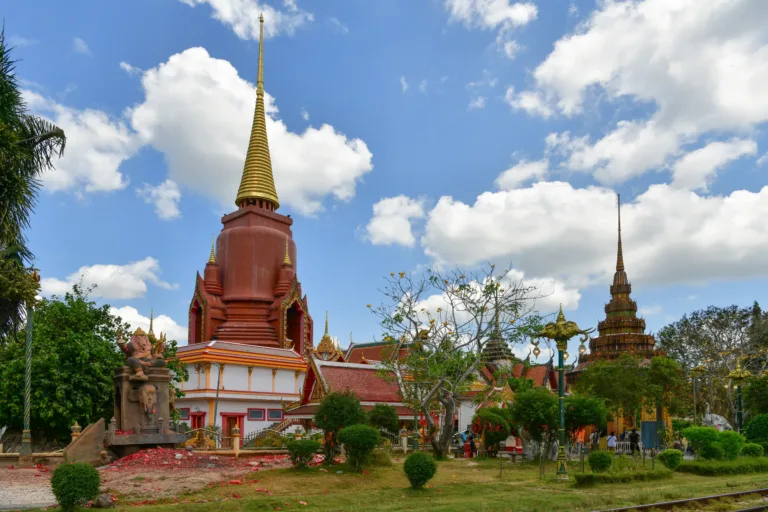 Wat Chang Hai
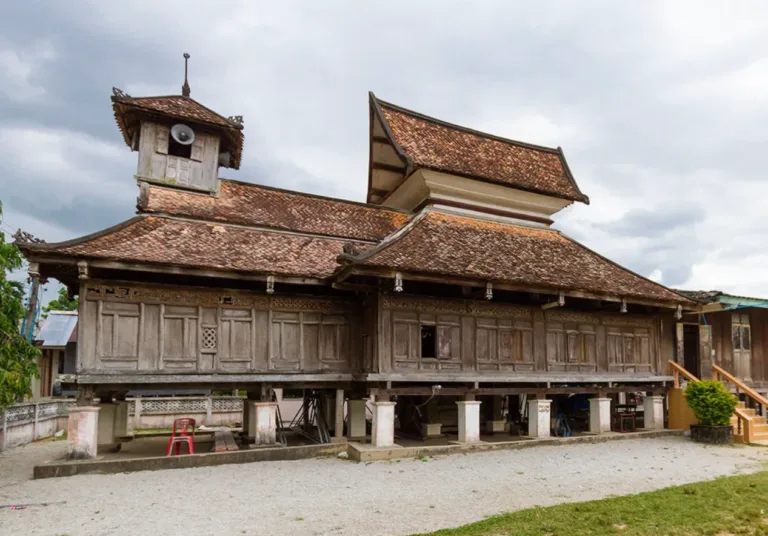 Talo Mano Mosque (300 Years Mosque)
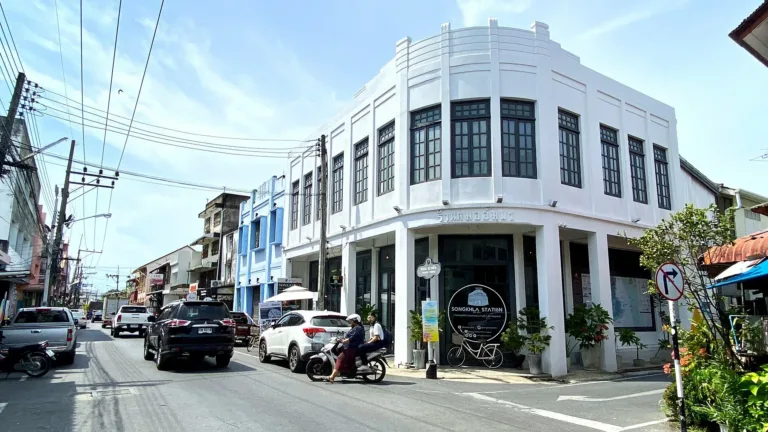 Songkhla Old Town
Ready to go to Pattani Central Mosque?
Best day this week: Monday 30 Nov · Check in when you arrive to collect a stamp