What to know before visiting the temple
Dress modestly · Speak softly and give worshippers room · Don't touch the deities or offerings
Daily 08:00–20:00
Chinese New Year and the goddess's festival
Chao Mae Lim Ko Niao festival (after Chinese New Year, on the 15th lunar day)
7 days ahead
When to go
this week
Tap a day card to see that day’s weather, rain, haze and hourly forecast
Best time to go Daytime is over · see tomorrow
Thick morning fog with visibility under 1 km — use headlights and drive slowly
Holiday — traffic on the way up and parking fills fast; leave early
Hour by hour
Green band = hours used for the score
Best time to go Best window 06:00–11:00 Little rain · light drizzle possible at times
Holiday — traffic on the way up and parking fills fast; leave early
Hour by hour
Green band = hours used for the score
Best time to go Best window 06:00–14:00 Little rain · light drizzle possible at times
No official warnings, but watch for: Possible thunder 14:00–17:00
Hour by hour
Green band = hours used for the score
Best time to go Best window 07:00–13:00 Little rain · light drizzle possible at times
No official warnings, but watch for: Thunderstorm risk 13:00–19:00
Hour by hour
Green band = hours used for the score
Best time to go Best window 06:00–11:00 Little rain
No official warnings, but watch for: Evening (16:00–19:00): rain ~59% · Possible thunder 11:00–12:00
Hour by hour
Green band = hours used for the score
Best time to go Best window 07:00–09:00 Little rain · light drizzle possible at times
No official warnings, but watch for: Evening (16:00–19:00): rain ~44%
Hour by hour
Green band = hours used for the score
Best time to go Best window 06:00–14:00 Little rain · light drizzle possible at times
Rain at times — slippery roads, allow extra travel time
Hour by hour
Green band = hours used for the score
Leng Chu Kiang Shrine (Chao Mae Lim Ko Niao Shrine)
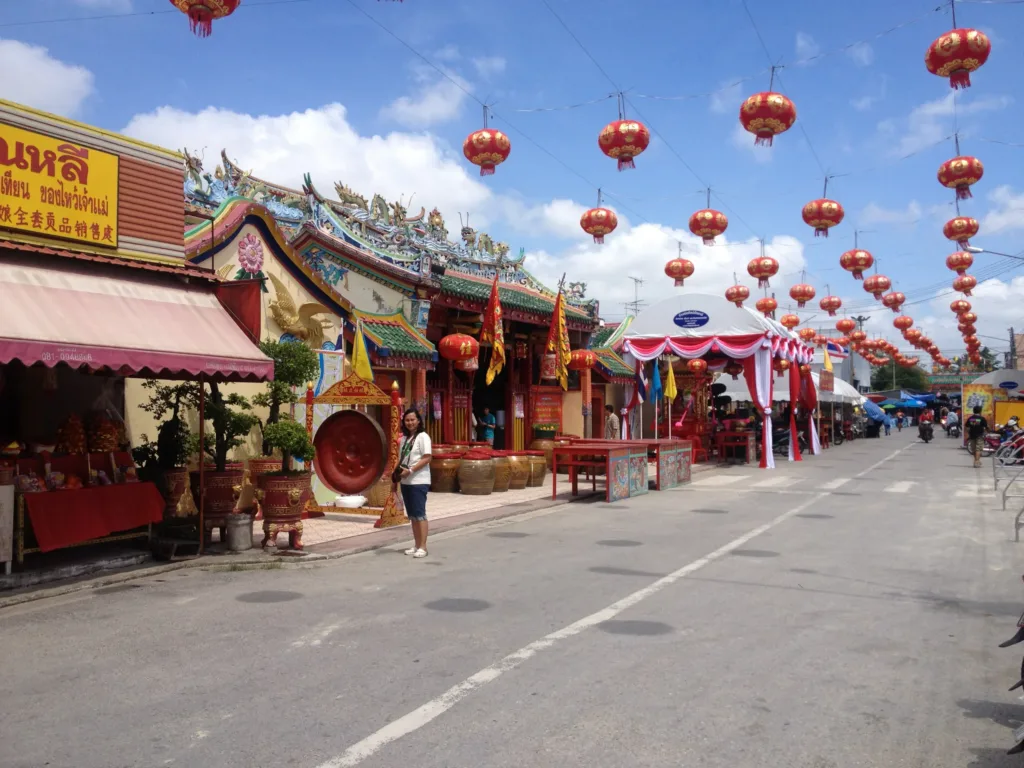
Leng Chu Kiang Shrine is at 63 Anoru Road, Anoru, Mueang Pattani, in the old town near Dechanuchit Bridge, an area settled by Chinese families since the Ayutthaya period. Most people call it the Chao Mae Lim Ko Niao Shrine after the goddess enshrined here.Legend says Lim Ko Niao sailed from China to bring her brother, Lim To Khiam, home, but he had married the ruler's daughter and converted to Islam. She died beneath a cashew tree. The Chinese community carved her image from cashew wood, and it was later brought to this shrine.Each year after Chinese New Year, her festival sees palanquins paraded through the streets, carried across the Pattani River at Dechanuchit Bridge and through a fire walk in front of the shrine. A small museum beside it tells the story of Pattani's Chinese.
- Few worshippers, not yet hot
- Hot
- Lanterns lit, calm atmosphere
- Shrine frontChinese gateway and rooflinemorning
Good to know here
Dress modestly, speak softly and give worshippers space
Crowds by the river and in front of the shrine; mind valuables and incense smoke
- For the big rituals, come during the post–Chinese New Year festival and book early
- Visit the museum beside the shrine to understand the legend
- Carry on along Anoru Road for the old town
- Dress modestly inside the shrine
No data yet check before you go · Time needed 30 minutes–1 hour
Chinese New Year and the goddess's festival
- Kids Fine; keep them calm inside the shrine
- Seniors Good; in town on flat streets
- Wheelchair The entrance has a raised threshold and steps
- Pets A place of worship; don't bring pets
- Pattani old townChinese and local restaurants
- Dress modestly
- Speak softly and give worshippers room
- Don't touch the deities or offerings
- Festival days are packed; mind your valuables
- Heavy incense smoke on festival days
Chao Mae Lim Ko Niao festival (after Chinese New Year, on the 15th lunar day)
The story of this place
Leng Chu Kiang Shrine, on Anoru Road in the heart of Pattani's old town, is a Chinese shrine that has been bound up with the Chinese of Thailand's far south for generations. It was first a shrine to Cho Su Kong (Master Qingshui), a god of healing, before it became the home of Chao Mae Lim Ko Niao, the young woman of legend who sailed from China to find her brother. Its story ties together 16th-century sea trade, a tale of filial devotion, Chinese settlement along the Pattani River and a procession through water and fire that is still held every year.
Read more 10 more paragraphs
Pattani was once a major port on the maritime trade routes, and Chinese settlers arrived as early as the Ayutthaya period. Scholars citing a Chinese temple record say a Cho Su Kong shrine already stood in the Pattani area around 1547, the oldest known temple to Master Qingshui in Southeast Asia, which is why some sources trace this shrine's roots back to the 16th century.
Legend says Lim To Khiam was a Chinese man who settled in Pattani, married the ruler's daughter, converted to Islam and helped build Krue Se Mosque. When their mother in China fell ill and longed to see her son, his younger sister Lim Ko Niao sailed across the sea to bring him home. He would not leave his new family, and in her grief she hanged herself from a cashew tree near the mosque. Some versions say she first cursed the mosque so that it could never be finished; another says she died fighting at her brother's side.
Historians believe Lim To Khiam was based on Lin Daoqian, a fleet leader whom Ming records call a pirate, though local tales call him a merchant. Around 1566 Ming forces drove him from the Chinese coast; in 1573 Chinese records say he fled abroad, and by about 1578 he had a base in Pattani with some 2,000 followers. The Pattani chronicle says he cast cannons for the ruler and was killed test-firing the largest. Whether Lim Ko Niao herself was a real person has never been confirmed.
Her gravestone beside Krue Se Mosque bears a date equivalent to 1574, but historians think the stone may have been made in the early 20th century. She was first believed to be buried near a harbour later flooded by the sea, and the grave was moved beside the mosque around 1919. The mosque's own age is also debated: some sources date it to the reign of King Naresuan, while local Muslims hold that it was built before Lim Ko Niao arrived, or under Sultan Muzaffar Shah, around 1500–1530. The Fine Arts Department registered Krue Se Mosque as a historic site in 1935.
After her death, villagers built a small shrine beneath the cashew tree, later carved her image from a branch of that same tree, and kept it in a small shrine near Krue Se Mosque in Ban Krue Se, about 7 km from town.
The riverside town of Pattani seen today took shape between 1845 and 1856, when the town was moved and rebuilt at Chabang Tiko, and Chinese families settled around it. Hokkien migrants had come in through Songkhla in the reign of King Rama III, and after Tan Pui fought in an internal conflict in Pattani and was made leader of the Chinese, he asked for land near the head of the market by the river for them to settle, giving rise to the trading quarter on Anoru, Pattani Phirom and Ruedi roads.
Around 1879, Phra Chin Khananurak, a leader of Pattani's Chinese community, restored the Cho Su Kong shrine on Anoru Road and brought the image of Chao Mae Lim Ko Niao there, and the shrine took the name Leng Chu Kiang. Some sources call him Luang Chin Khananurak, some say he built the shrine anew that year, and some date the move from Ban Krue Se to 1884. The shrine was partly rebuilt again in 1912 and 1969, and today houses about 18 deities, among them Mazu (Chao Mae Thapthim), Pae Kong, Guanyin and Guan Yu.
According to a shrine committee member, about a century ago a cholera outbreak led residents to carry Cho Su Kong on a red palanquin through the community; when the disease eased, the procession became an annual event. Today the festival is held around the 15th day of the waxing moon of the third lunar month, after Chinese New Year. It begins with divination at midnight; some 25 palanquins from the shrine and from participating homes are carried to houses around town, through the Pattani River at Dechanuchit Bridge, and finally over fire in front of the shrine, an area reserved for men.
Devotion to Chao Mae is thought to have spread beyond Pattani in the 1950s, and there are now shrines to her in Songkhla, Yala and other towns of the upper South and Central Thailand. The Pattani shrine has drawn pilgrims from Malaysia and Singapore since the 1960s, and in 1987, Visit Thailand Year, the province promoted the festival, bringing more visitors from abroad. A study of the Lim Ko Niao tomb notes that although the legend was raised at times of disagreement over the mosque, Pattani's Chinese and Muslim communities have continued to live side by side without serious violent conflict between them.
In recent decades the festival has grown into a major provincial event. In 2013 it was titled "Katanyu Khu Fa" and featured a palanquin described as the largest in Thailand. On 10 February 2015 the Cabinet approved the declaration of Pattani Old Town, about 2.35 sq km, including the shrine area and the Chinese-Malay community on Anoru Road. Beside the shrine, a museum displays the story of Chao Mae, scenes of her life and old palanquins once used in the rites, and recent festivals have added a lion dance competition, Chinese opera and nora dance, reflecting the town's mix of cultures.
- 1547A Chinese temple record places a Cho Su Kong shrine in the Pattani area
- 1566Ming forces drive Lin Daoqian's fleet from the Chinese coast
- 1573Ming records say Lin Daoqian has fled abroad
- 1574Date inscribed on Lim Ko Niao's gravestone beside Krue Se Mosque (the stone may be later)
- 1578Lin Daoqian, the likely model for Lim To Khiam, has a base in Pattani with about 2,000 followers
- 1845–1856Pattani town is moved and rebuilt at Chabang Tiko; Chinese families settle around it
- 1879Phra Chin Khananurak restores the shrine on Anoru Road and brings Chao Mae's image there
See 9 events
- 1884Year some sources give for the move from Ban Krue Se to the present site
- 1912Shrine partly rebuilt
- 1919Chao Mae's grave moved beside Krue Se Mosque (approximate)
- 1935Fine Arts Department registers Krue Se Mosque as a historic site
- 1950–1959Devotion to Chao Mae is thought to spread beyond Pattani
- 1969Shrine rebuilt again
- 1987Visit Thailand Year; the province promotes the Chao Mae festival
- 2013The "Katanyu Khu Fa" festival features a palanquin described as Thailand's largest
- 201510 Feb — the Cabinet approves the declaration of Pattani Old Town
Check-ins & visitor photos
Arrived? Check in, collect a stamp and tell others what it is like right now
Check your location first, so you do not fill in the form for nothing
Location must be on and within 0.6 km · One check-in per place per day · come back on other days to check in again
Post photos from anywhere — no need to be here · Up to 20 photos at a time · JPG / PNG / WebP · GPS location data is removed automatically
How to get there
The shrine is at 63 Anoru Road in Pattani's old town, near Dechanuchit Bridge.
To Anoru Road in Pattani old town · Fuel
From anywhere in Pattani town · By distance
Old-town streets
Street parking in the old town
In Pattani town
Good
Daily 08:00–20:00
Leng Chu Kiang Shrine
FAQ
Before you go: Leng Chu Kiang Shrine (Chao Mae Lim Ko Niao Shrine)
Answers travellers want before they go — a one-minute read
Where is Leng Chu Kiang Shrine?
63 Anoru Road, Anoru, Mueang Pattani, near Dechanuchit Bridge
Who is Chao Mae Lim Ko Niao?
A legendary Chinese woman who followed her brother Lim To Khiam to Pattani
When is the festival?
Every year after Chinese New Year, with a procession, river crossing and fire walk
What are the opening hours?
Daily, roughly 08:00–20:00
Is there a museum?
Yes, a building beside the shrine on Pattani's Chinese history
Nearby places
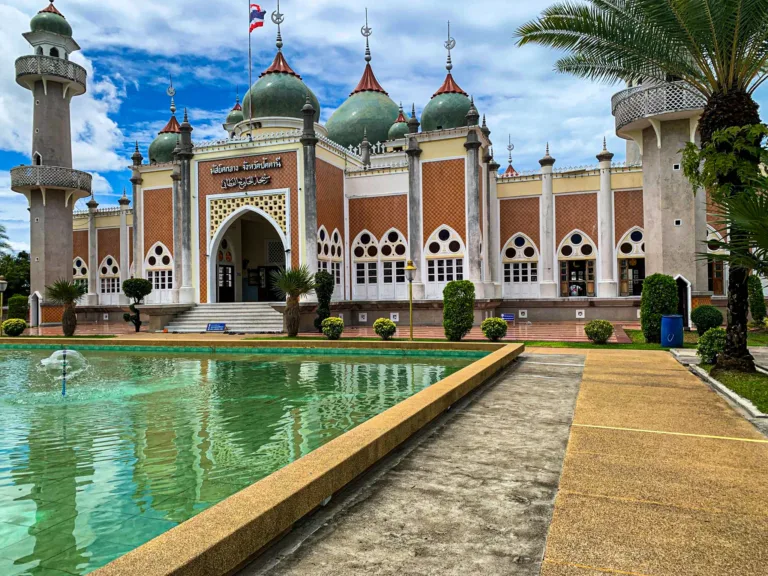 Pattani Central Mosque
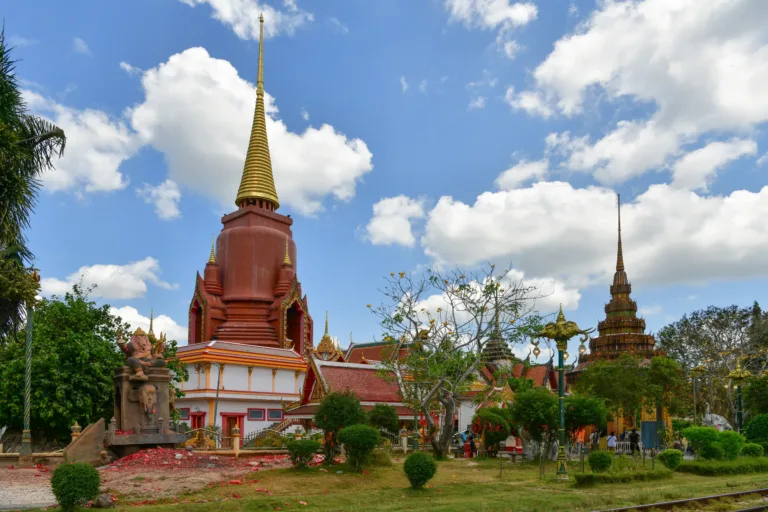 Wat Chang Hai
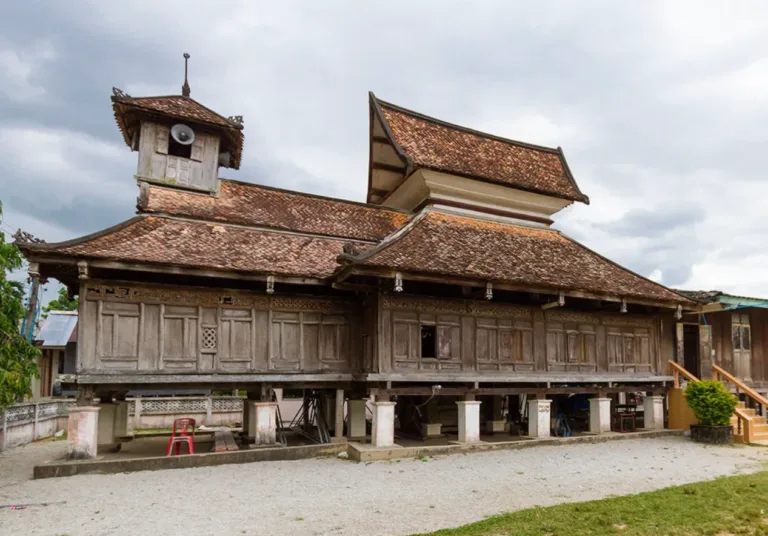 Talo Mano Mosque (300 Years Mosque)
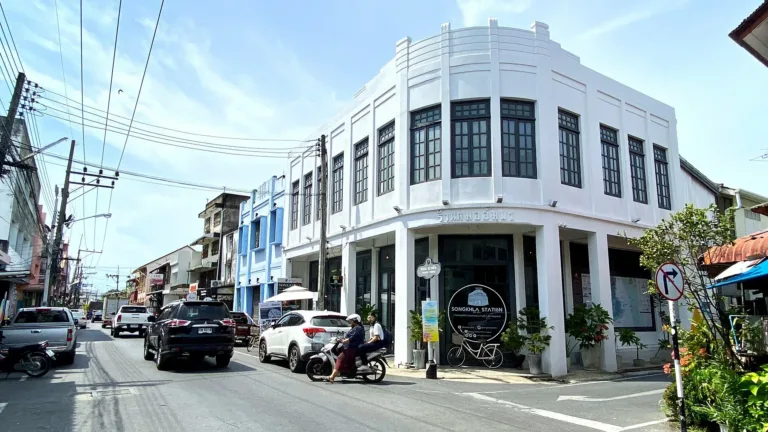 Songkhla Old Town
Ready to go to Leng Chu Kiang Shrine (Chao Mae Lim Ko Niao Shrine)?
Best day this week: Monday 30 Nov · Check in when you arrive to collect a stamp