Opening hours, time needed and photo spots
Daily, around 08:00–18:00 (exterior only; ask the imam before going inside and avoid prayer times)
30 minutes–1 hour
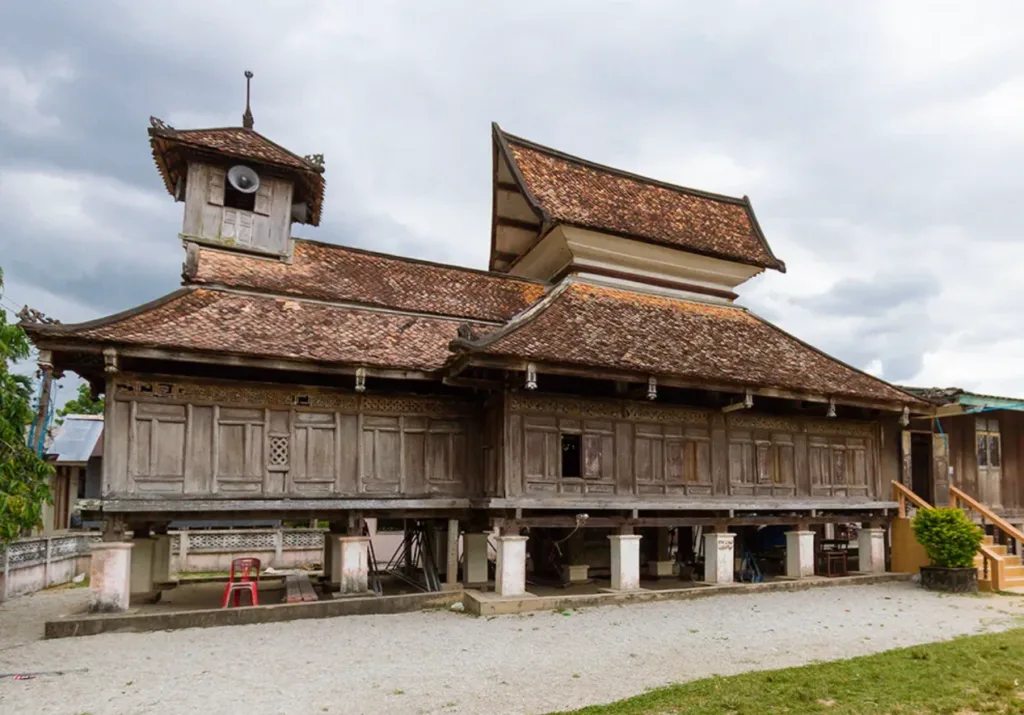
Front of the mosque — Timber hall with its Chinese-style dome
7 days ahead
When to go
this week
Tap a day card to see that day’s weather, rain, haze and hourly forecast
Best time to go Daytime is over · see tomorrow
No official warnings, but watch for: Evening (16:00–19:00): rain ~35%
Hour by hour
Green band = hours used for the score
Best time to go Best window 06:00–12:00 Little rain · light drizzle possible at times
Rain at times — slippery roads, allow extra travel time
Thick morning fog with visibility under 1 km — use headlights and drive slowly
Hour by hour
Green band = hours used for the score
Best time to go Best window 06:00–14:00 Little rain · light drizzle possible at times
Thick morning fog with visibility under 1 km — use headlights and drive slowly
Hour by hour
Green band = hours used for the score
Best time to go Best window 08:00–14:00 Little rain · light drizzle possible at times
No official warnings, but watch for: Late morning (09:00–12:00): rain ~17%
Hour by hour
Green band = hours used for the score
Best time to go Best window 06:00–14:00 Little rain · light drizzle possible at times
Thick morning fog with visibility under 1 km — use headlights and drive slowly
Hour by hour
Green band = hours used for the score
Best time to go Best window 08:00–11:00 Little rain · light drizzle possible at times
Rain at times — slippery roads, allow extra travel time
Thick morning fog with visibility under 1 km — use headlights and drive slowly
Hour by hour
Green band = hours used for the score
Best time to go Best window 06:00–14:00 Little rain · light drizzle possible at times
Rain at times — slippery roads, allow extra travel time
Thick morning fog with visibility under 1 km — use headlights and drive slowly
Hour by hour
Green band = hours used for the score
Talo Mano Mosque (300 Years Mosque)
Talo Mano Mosque, also called Wadi Al-Husein Mosque, stands in Moo 1, Ban Talo Mano, Lubo Sawo subdistrict, Bacho, Narathiwat, at the foot of the Budo range. Locals call it the 300 Years Mosque, though by tradition it dates from around 1624, built by Wan Husein As-Sanawi, its first imam.It's built of takhian wood from the Budo forest, held together with wooden pegs instead of nails. The roof was once thatched with palm leaves before clay tiles replaced it. The craftsmanship mixes local Thai, Chinese and Malay styles, from pillars carved with bullet-wood flowers to a Chinese pavilion-style dome once used as a minaret.It's still the community's working mosque. Visitors can look around the outside; to go in, ask the village imam's permission first.
- Morning light, cool air
- Midday prayers
- Afternoon light on the timber
- Front of the mosqueTimber hall with its Chinese-style domemorning
Good to know here
View from outside; ask the imam's permission to go in
Modest, long sleeves and legs; women should cover their hair
- Dress modestly and bring a headscarf
- Avoid prayer times and Fridays
- Ask before photographing people in the village
- Buy something from village shops to support the community
No data yet check before you go · Time needed 30 minutes–1 hour
Friday prayers
- Kids Fine; keep them calm
- Seniors Good; view from the grounds outside
- Wheelchair The grounds are manageable, but the building has steps
- Pets A place of worship; don't bring pets
- Bacho townLocal halal food
- Dress modestly; women cover their hair
- Ask before going inside or photographing people
- Don't walk in front of people praying
- Respect prayer times and village rules
The story of this place
Talo Mano Mosque, also called Wadi Al-Husein Mosque and known around Bacho as the "300 Years Mosque", stands at the foot of the Budo range in Ban Talo Mano, Lubo Sawo subdistrict, Bacho, Narathiwat. Local tradition says Wan Husein As-Sanawi built it around 1624, when Patani was still a Malay sultanate, so it is closer to 400 years old than its nickname suggests. The whole building is timber, joined with wooden pegs instead of nails, and it combines local Thai, Chinese and Malay craftsmanship under one roof. It is counted among the oldest wooden mosques in Thailand and is still the village's place of prayer today.
Read more 10 more paragraphs
The village name comes from Malay. "Talo" derives from the word for a bay or cove, while "mano" is explained in different ways: some say it is a local plant, others an old Malay word for bird or chicken. Malay writers therefore call it the Telok Manok mosque after the village, while the name Wadi Al-Husein honours its builder.
According to tradition, Wan Husein As-Sanawi was a religious scholar who moved from Ban Sanoyanya in the Pattani area, settled at Talo Mano and became the mosque's first imam. The year 1624 falls at the start of the reign of Raja Ungu, who ruled Patani until 1635; historians regard the era of Patani's queens as one of the kingdom's most prosperous.
Several stories surround its founding. Legend says that during a war between Siam and Patani, a young woman fled with the village's Quran and fell into a ravine. Villagers rescued her and found her still clutching the book, so they agreed to build a mosque once the war was over. Another story says Muslim and Buddhist villagers built it together, while a study published in Malaysia describes Wan Husein and the villagers first raising a simple wooden building.
The exact date is still debated. Besides 1624, some sources say the mosque was completed in 1634, while an international database of Islamic architecture suggests it was more likely built around 1769, near the end of the Patani Sultanate, and notes a possible rebuilding or major repair in the 1960s. The "300 Years" name is best read as a long-standing nickname rather than a precise age.
Thai sources say it was built of takhian wood from the Budo forest; the Malaysian study calls the timber chengal. Villagers say there were no saws, planes or nails at the time, so builders split logs with wedges, cut them with axes and smoothed them with an adze. An axe-like tool called a "chueta" is still kept in the village. The roof was first thatched with palm leaves and later covered with Patani-style clay tiles.
The mosque is made of two connected buildings raised on posts, as is usual in this rainy region. The first has a three-tiered roof topped by a Chinese pavilion-like crown that once served as the minaret for the call to prayer. The second has a two-tiered roof with a Thai-style gable. A raised wooden walkway leads in, and inside are a mihrab room to the west, the men's prayer hall in the centre and a women's hall to the east, added later.
Its woodwork is the main attraction. A Thai academic study describes square takhian posts on tall bases, tightly laid floorboards, takhian stairs and a roof mixing hipped and gabled forms. Foreign surveys record carved panels, pierced windows with leaf, flower and Chinese motifs, carved brackets, decorated eave ends and a mihrab screen carved with Arabic calligraphy alongside Chinese patterns.
The surroundings keep traces of the old community. The Malaysian study notes a hill on the qibla side, a clear stream beside the mosque used for ablutions, and old graves across the stream of roughly the same age as the building. Ban Talo Mano was once known for hand-copied Qurans: Wan Husein is said to have written dozens of copies to give out, since printed editions were unavailable, and his handwritten Quran is still kept at the mosque.
The mosque has drawn steady scholarly interest. Saudi Aramco World magazine wrote about it in 1988, the National University of Malaysia's press published a book-length study in 2001, a 2007 Thaksin University conference paper studied it as one of four ancient mosques in Narathiwat, and Kyoto University's Maritime Asia Heritage Survey has recorded it as a 3D model.
In early 2014 the government allocated about 200 million baht through the Southern Border Provinces Administrative Centre to develop the mosque and its grounds as a cultural learning centre and tourist site. In 2017 local religious leaders asked for the restoration approach to be reviewed so the community could take part and conservation specialists be involved. Counting from 1624, the mosque turned 400 in 2024, and it remains a centre of faith for local Muslims. Visitors can view it from outside; to enter, ask the village imam for permission first.
- 1624By tradition, Wan Husein As-Sanawi builds the mosque and becomes its first imam
- 1634Some sources give this as the year the mosque was completed
- 1769An Islamic architecture database suggests the mosque dates from around this time (an alternative view)
- 1988Saudi Aramco World magazine describes the mosque in an article
- 2001The National University of Malaysia's press publishes a book-length study of the mosque
- 2007A Thaksin University conference paper studies the mosque's architecture
- 2014Government allocates about 200 million baht via SBPAC to develop the mosque as a learning centre
See 2 events
- 2017Local religious leaders ask for the restoration approach to be reviewed with community input
- 2024The mosque turns 400, counting from its traditional founding year
Check-ins & visitor photos
Arrived? Check in, collect a stamp and tell others what it is like right now
Check your location first, so you do not fill in the form for nothing
Location must be on and within 1.5 km · One check-in per place per day · come back on other days to check in again
Post photos from anywhere — no need to be here · Up to 20 photos at a time · JPG / PNG / WebP · GPS location data is removed automatically
How to get there
The mosque is in Moo 1, Ban Talo Mano, Lubo Sawo, Bacho, Narathiwat.
To Bacho, then Ban Talo Mano · Fuel
Paved village road
Car park by the mosque
Bacho town
Daily, around 08:00–18:00 (exterior only; ask the imam before going inside and avoid prayer times)
Talo Mano Mosque
FAQ
Before you go: Talo Mano Mosque (300 Years Mosque)
Answers travellers want before they go — a one-minute read
Where is Talo Mano Mosque?
Moo 1, Ban Talo Mano, Lubo Sawo, Bacho, Narathiwat, at the foot of Budo
When was it built?
By tradition around 1624, by Wan Husein As-Sanawi
Why the '300 Years Mosque'?
It's the long-standing local name, though it's nearly 400 years old
Can I go inside?
Ask the village imam first; visitors usually view it from outside
What makes it special?
Takhian wood with no nails, mixing Thai, Chinese and Malay styles
Nearby places
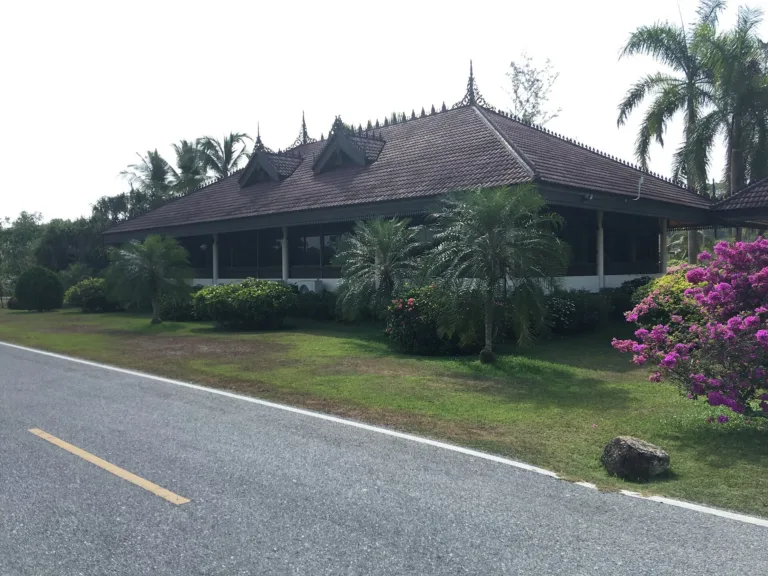 Thaksin Ratchaniwet Palace
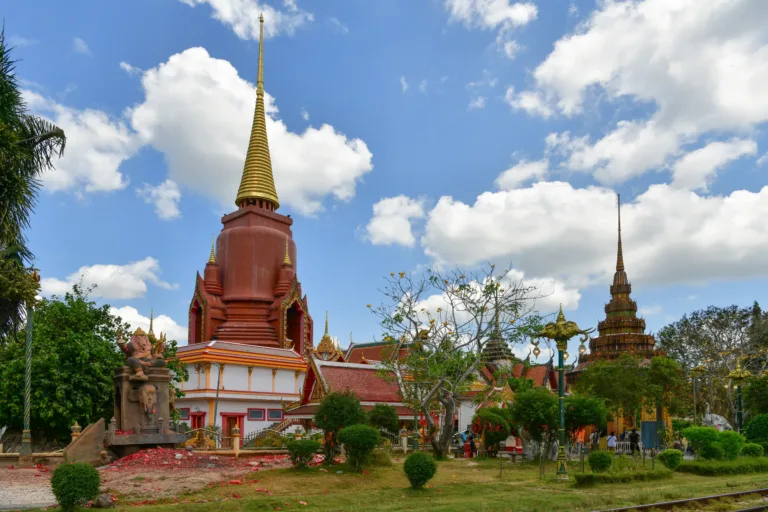 Wat Chang Hai
Ready to go to Talo Mano Mosque (300 Years Mosque)?
Best day this week: Saturday 28 Nov · Check in when you arrive to collect a stamp