 01
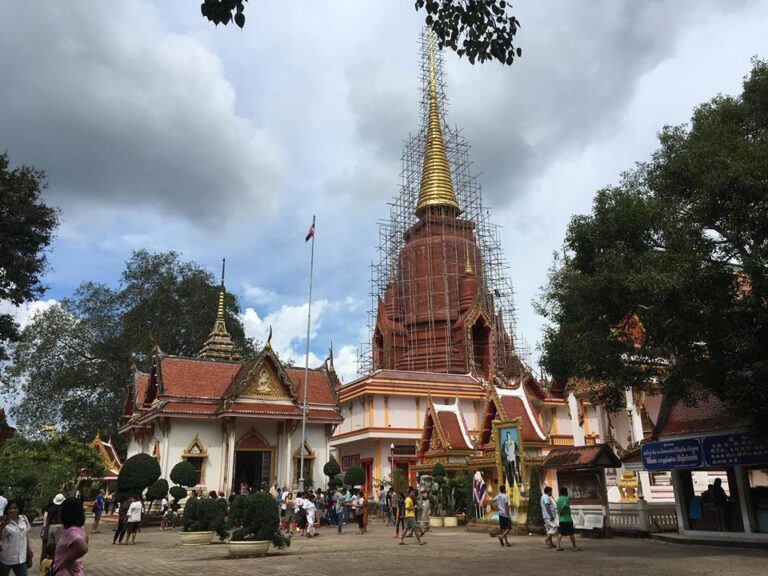
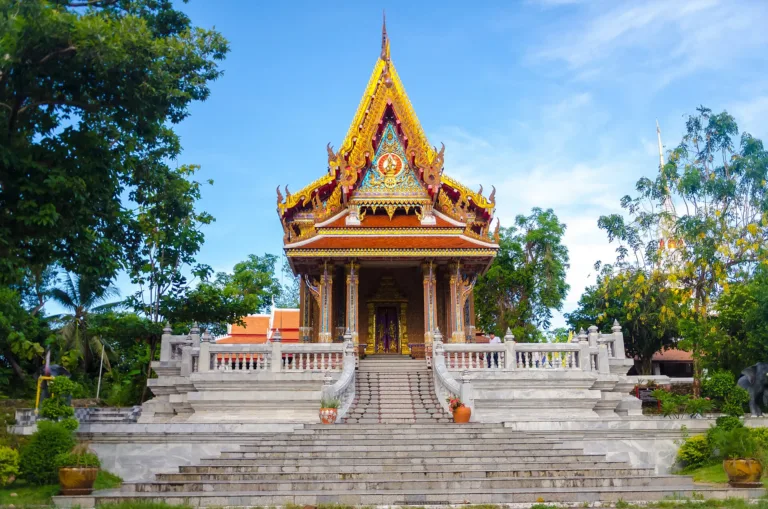
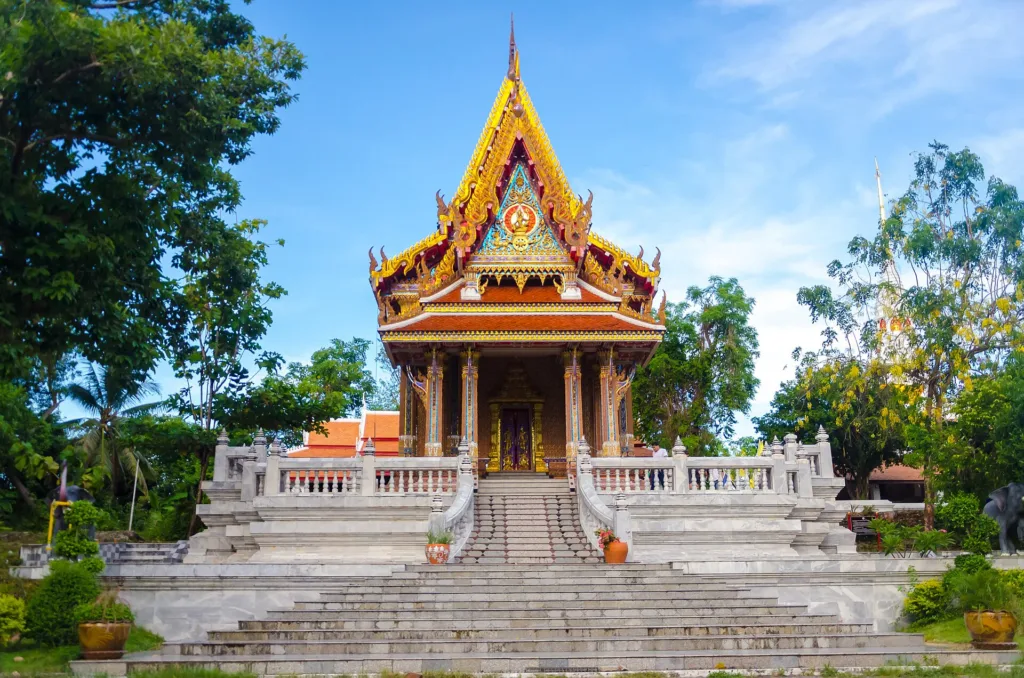
Luang Pu Thuat viharnLife-size image of Luang Pu Thuat, the first stop for worshippers
Home of Luang Pu Thuat · Khok Pho, Pattani
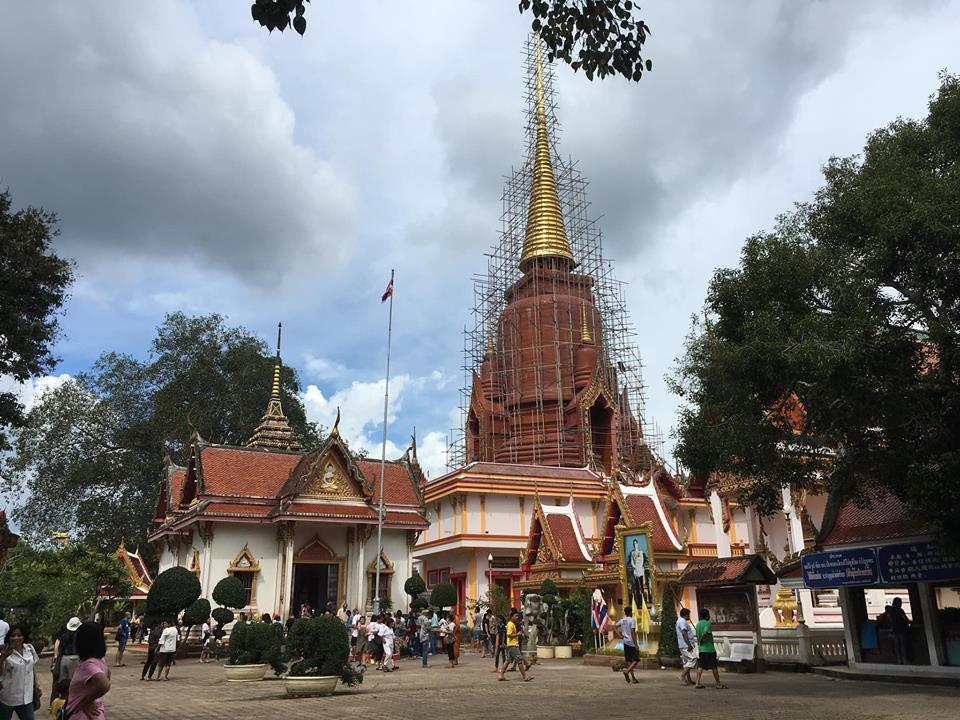
Luang Pu Thuat's temple in Khok Pho, Pattani, with the stupa holding his relics and the birthplace of the famous 1954 Luang Pu Thuat amulets; free entry.
Holiday / event — crowded · Thunderstorm risk 12:00–17:00 · Heavy rain over the day (~19 mm): wet roads, flooding
Dress modestly, covering shoulders and knees · Remove shoes before entering the viharn · Do not be loud in the temple grounds · Do not climb the stupa or chedi
08:00–17:00
Before 10:00 for fewer people
Luang Pu Thuat relic bathing, first waning day of the 5th lunar month (around April)
01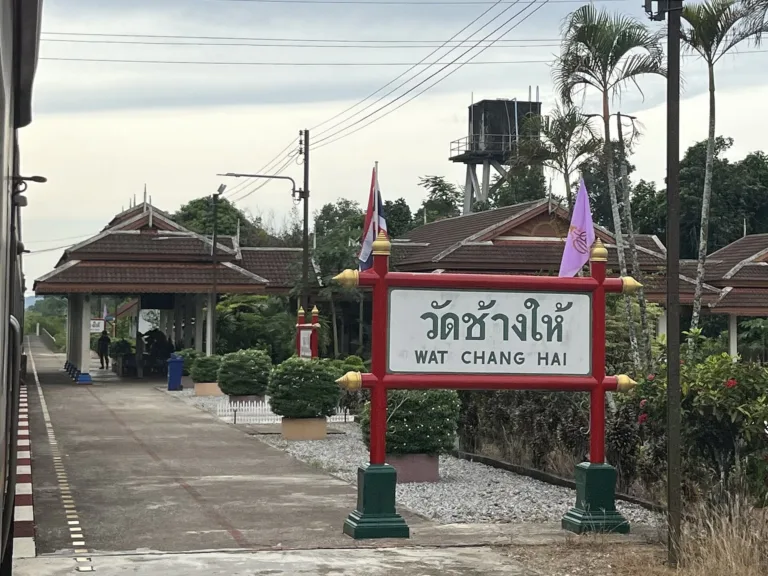 02
 0304
Tap a day card to see that day’s weather, rain, haze and hourly forecast
Best time to go Best window 06:00–12:00 Little rain · light drizzle possible at times
Rain at times — slippery roads, allow extra travel time
Holiday — traffic on the way up and parking fills fast; leave early
Green band = hours used for the score
Best time to go Best window 06:00–14:00 Little rain · light drizzle possible at times
Rain at times — slippery roads, allow extra travel time
Holiday — traffic on the way up and parking fills fast; leave early
Green band = hours used for the score
Best time to go Best window 06:00–13:00 Little rain · light drizzle possible at times
Holiday — traffic on the way up and parking fills fast; leave early
Green band = hours used for the score
Best time to go Best window 06:00–13:00 Little rain · light drizzle possible at times
Thunderstorms — heavy bursts, lightning and gusts possible
Rain at times — slippery roads, allow extra travel time
Green band = hours used for the score
Best time to go Best window 06:00–14:00 Little rain · light drizzle possible at times
Thick morning fog with visibility under 1 km — use headlights and drive slowly
Green band = hours used for the score
Best time to go Best window 06:00–11:00 Little rain
No warnings today — normal road and weather conditions
Green band = hours used for the score
Best time to go Best window 06:00–08:00 Little rain · light drizzle possible at times
Rain at times — slippery roads, allow extra travel time
Green band = hours used for the score
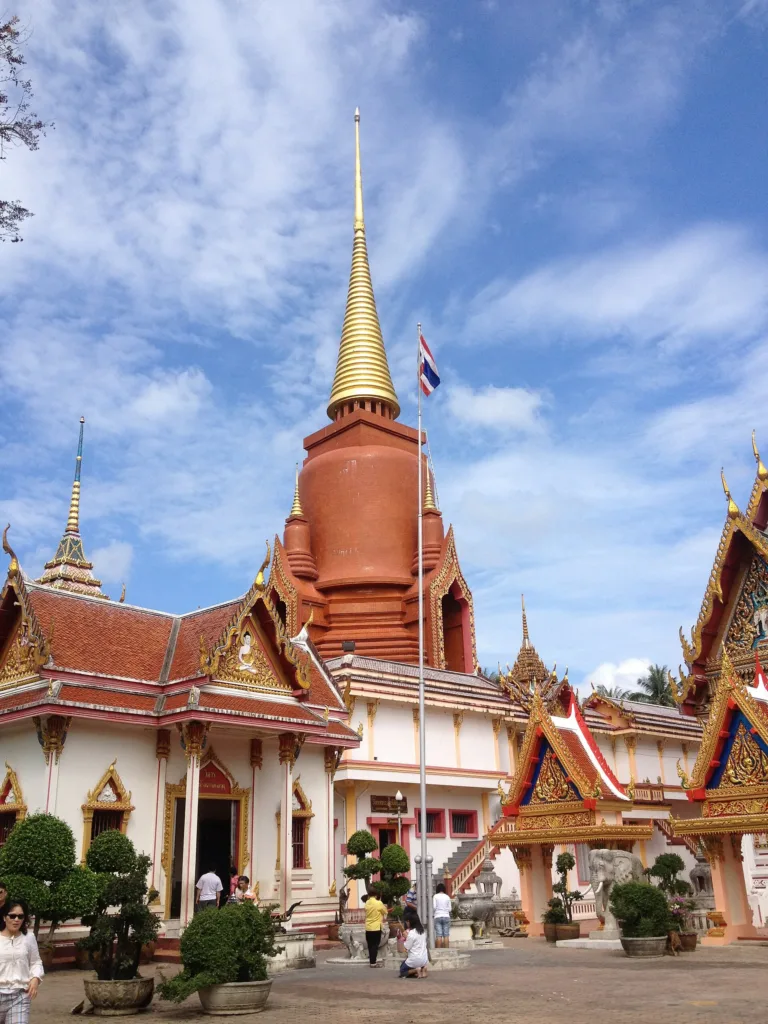
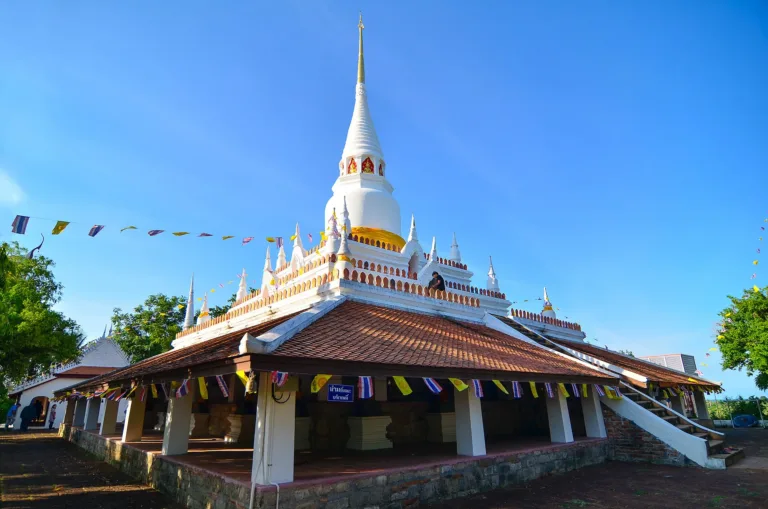
Wat Chang Hai in Khok Pho, Pattani, is revered as the temple of Luang Pu Thuat, holding a stupa with his relics, and is where the first Luang Pu Thuat amulets were made in 1954.
Arrive Before 10:00 for fewer people
Photos from Wikimedia Commons and contributors · full credits inClassic page
Adults 0 THB · Car 0 THB · Time needed 1–2 hours
Relic-bathing festival around April, long holidays and weekends
| Temple entry | Free |
| Flowers, incense and candles (estimate) optional | 20 ฿/set |
| Train Hat Yai–Wat Chang Hai, 3rd class (estimate) optional | 20 ฿/person |
Cash is easiest; some temple stalls take transfers · Prices may change by season — check with the venue
Luang Pu Thuat relic bathing, first waning day of the 5th lunar month (around April)
Khok Pho Hospital · Tourist Police 1155 · Emergency 1669
Tap a month on the wheel to see weather, rain, haze and crowds from 10 years of records
Best time · Feb–Aug: less rain, easy travel; the relic-bathing festival falls around April
Watch out · Nov–Dec: northeast monsoon, heavy rain, roads flood in some years
Oct by the records 23–30°C · avg rain 324 mm (28 rainy days) · clear 0 days · avg PM2.5 6
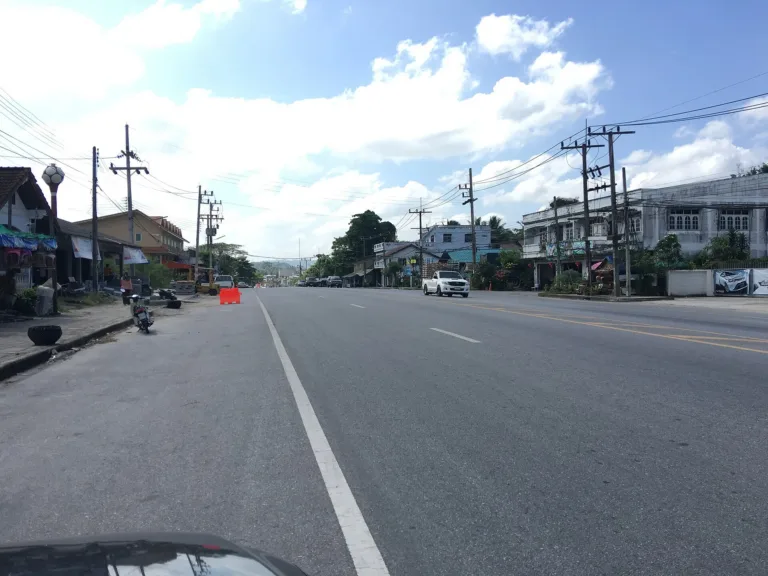
Wat Chang Hai Rat Buranaram, usually called Wat Chang Hai, is at Moo 2, Khuan Nori subdistrict, Khok Pho district, Pattani, about 31 km from Pattani town. It sits beside the southern railway (Hat Yai–Sungai Kolok) between Na Pradu and Pa Rai stations, with a station named "Wat Chang Hai" only about 200 m away. It is known nationwide as Luang Pu Thuat's temple and the birthplace of Luang Pu Thuat amulets.
Love Thailand says the temple is over 300 years old but no clear record shows who built it. Legend tells that Phraya Kaem Dam, ruler of Sai Buri (Kedah), sought a site for a new city for his younger sister and let an elephant wander into the forest; it circled, stopped where the temple stands and trumpeted three times, a good omen. His sister disliked the place and the city was built elsewhere, so the cleared land became a temple. "Chang Hai" thus means "the elephant gave", and "Rat Burana" refers to later restoration by villagers and monks.
A GotoKnow blog post, citing Phraya Rattanaphakdi's book on the Thai–Malay boundary, suggests the legend reflects an era when Malays on the peninsula were still Buddhist before converting to Islam, and concludes the temple is at least 300 years old. This is the author's interpretation rather than direct archaeological evidence.
By tradition the temple's first abbot was the monk known as "Than Lanka", "Somdet Chao Phako" and "Luang Pu Thuat". Khaosod relates that he made seawater fresh by stepping on it, the origin of the epithet "Luang Pu Thuat who stepped on the sea and made it fresh", and the GotoKnow post says he travelled regularly between Wat Chang Hai and Kedah.
Most of Luang Pu Thuat's life comes from legend and temple records. Born "Pu" at Ban Liap, Di Luang subdistrict, Sathing Phra, Songkhla, his birth year is disputed: many Thai sources give 3 March 1582, while English Wikipedia lists other proposals such as 1547, 1581 and 1588. Legend says a great snake coiled around his cradle as a baby and left a crystal bead, later a sacred object of Wat Phako.
Tradition continues that he studied at Wat Kut Luang (Wat Di Luang), became a novice at 15, studied further at Wat Si Yang and Wat Sema Mueang in Nakhon Si Thammarat, received a title from the Ayutthaya court (Wikipedia says under King Ekathotsarot), and returned to Wat Phako in Songkhla, instructing that on his death his body be taken to Khok Pho in Pattani.
An academic article by Channarong Kongchim (MCU Humanities Review, 2020) summarises the two most famous legends. On a voyage the drinking water ran out and the crew blamed him, so he dipped his foot in the sea and it turned fresh; some versions say pirates had seized him, others that he was on a merchant junk. At Wat Ratchanuwat in Ayutthaya he solved a dharma riddle sent by the king of Ceylon with 84,000 golden letters based on the Abhidhamma, and King Ekathotsarot granted him a title. The article also notes differing birth years, such as 1582 and 1588.
His Songkhla homeland has its own sites. Thai Post (August 2018) quotes the Sathing Phra district chief saying his placenta was buried under the liap tree at Wat Ton Liap, he became a novice at Wat Di Luang, and after returning from Ayutthaya he restored Wat Phako with King Ekathotsarot's support; the chief also proposed a "Following Luang Pu Thuat" trail linking the temples. These are statements in a news report, without historical evidence cited.
He died around 1682 in Sai Buri (Kedah, now in Malaysia, per the MCU document); sources differ on whether he was 99 or 100. Research by Phra Palat Raphin Phutthisaro of Mahachulalongkornrajavidyalaya University says his body was brought back to Wat Chang Hai for funeral rites as instructed, with memorial stupas built at stopping points on the way. Love Thailand says the temple's stupa holding part of his ashes stands beside the railway.
The MCU research notes that a stupa of heartwood pillars in front of the temple was revered as that of the first abbot. Former abbot Phra Khru Wisai Sophon (Tim Thammatharo) studied documents at Wat Phako and concluded that the "Somdet Chao Phako" of old records was Luang Pu Thuat, the same monk as the Wat Chang Hai stupa's, linking the two temples as the twin centres of his veneration.
Ajahn Tim was born on 21 August 1912 at Ban Na Pradu, Khok Pho. Khaosod says he was ordained at 20 at Wat Na Pradu and studied Pali at Wat Mucalinthawapiwihan in Nong Chik. In 1941 he became acting abbot of Wat Chang Hai, then run down and nearly deserted, and began restoring the ash stupa for worship. Thairath says he became full abbot in 1950 and a preceptor in 1966.
The year he arrived, World War II reached the south. Khaosod relates that after Japanese troops landed in Pattani, southern trains passing the temple carried troops and supplies several times a day, frightening villagers, while Ajahn Tim gave food and lodging to travellers who stopped at the temple.
The turning point came in 1954. Wanting to build an ordination hall, Ajahn Tim worked with Anan Khananurak to make Luang Pu Thuat amulets, Khaosod says. Thairath says the first batch was of herbal powder with 108 sacred herbs. Donations from devotees paid for the ordination hall and temple improvements, and this batch, later called "Luang Pu Thuat stepping on the sea", became one of Thailand's most famous amulets.
Channarong Kongchim says the first 1954 batch was herbal powder, aiming for 84,000 pieces to match the 84,000 teachings of the Dhamma, but 65,000 were actually made. Khaosod says Phra Thammasitthimongkhon ("Pho Than Chin"), former abbot of Wat Mueang Yala and a disciple and fellow practitioner of Ajahn Tim, helped make this batch. Sources differ on the first biography: the MCU document says 1958, Channarong says 1962.
Posttoday (November 2019) says Ajahn Tim received the rank of third-class Phra Khru with the title "Phra Khru Wisai Sophon" in 1956 and was promoted to second class in the meditation branch in 1965, when the temple issued a commemorative Luang Pu Thuat medal. The writer estimates fewer than 20 gold pieces, hundreds in silver and tens of thousands in alpaca and nickel-plated alpaca.
The MCU document says the first book on Luang Pu Thuat's life was printed in 1958 during Wat Chang Hai's boundary-consecration ceremony, with another in 1961. Khaosod says that in 1965 Ajahn Tim made about 5,000 seated Luang Pu Thuat figurines to fund a school building at Benchamarachuthit School in Pattani.
Ajahn Tim fell ill with oesophageal cancer in 1967 and died on 30 November 1969. Khaosod credits him with the ordination hall, the viharn housing Luang Pu Thuat's image, the ash stupa, monks' quarters, the sermon hall, a two-storey school building and the great chedi at the centre of the grounds.
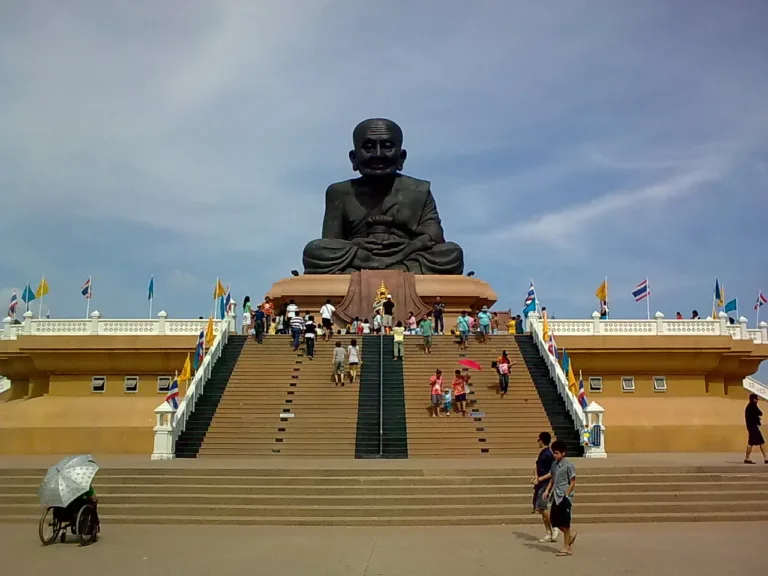
Luang Pu Thuat amulets spread nationwide into a large amulet economy; a 2014 Chulalongkorn University economics thesis by Wasawat Teunkham studied how their meaning and value are built. Many temples have Luang Pu Thuat images, such as the giant one at Wat Huai Mongkol in Prachuap Khiri Khan, but Wat Chang Hai remains the source, and each year a ceremony bathing his relics on the first waning day of the fifth lunar month draws large crowds.
Channarong Kongchim argues that amulet designs reproduce the legend in four ways: Luang Pu Thuat seated on a lotus as a saint, magical objects such as the crystal and staff, animals from the story such as the snake and elephant, and scenes such as him on a junk. Special issues mark occasions, such as one for an abbot's promotion in 2010, which sold above its intrinsic value because buyers linked its name with career advancement. These beliefs keep Wat Chang Hai a centre of devotion today.
Arrived? Check in, collect a stamp and tell others what it is like right now
Check your location first, so you do not fill in the form for nothing
Location must be on and within 1 km · One check-in per place per day · come back on other days to check in again
Post photos from anywhere — no need to be here · Up to 20 photos at a time · JPG / PNG / WebP · GPS location data is removed automatically
From Pattani take Highway 42 to Sam Yaek Na Ket, then Highwa…
Pattani–Wat Chang Hai via Highways 42/409 · Fuel
Hat Yai–Wat Chang Hai station (local train) · 20–40 baht (estimate)
Hat Yai–Khok Pho, then local transport · Ask at the terminal
Highways 42 and 409, paved throughout
Free parking in the temple
Petrol stations in Khok Pho and Na Pradu
4G available
08:00–17:00
around 31 km fromPattani town
Wat Chang Hai
0 THB
Approx. nightly price for 2 adults (next week) · final price depends on your dates
Answers travellers want before they go — a one-minute read
No, open daily 08:00–17:00
The first waning day of the 5th lunar month each year, around April
Yes, get off at Wat Chang Hai station, about 200 m from the temple
In 1954, by Ajahn Tim Thammatharo
Best day this week: Tuesday 27 Oct · Check in when you arrive to collect a stamp