7 days ahead
When to go
this week
Tap a day card to see that day’s weather, rain, haze and hourly forecast
Best time to go Daytime is over · see tomorrow
No warnings today — normal road and weather conditions
Hour by hour
Green band = hours used for the score
Best time to go Fine all day little rain through the day
No warnings today — normal road and weather conditions
Hour by hour
Green band = hours used for the score
Best time to go Fine all day little rain through the day
No warnings today — normal road and weather conditions
Hour by hour
Green band = hours used for the score
Best time to go Fine all day little rain through the day
No warnings today — normal road and weather conditions
Hour by hour
Green band = hours used for the score
Best time to go Fine all day little rain through the day
No warnings today — normal road and weather conditions
Hour by hour
Green band = hours used for the score
Best time to go Fine all day little rain through the day
No warnings today — normal road and weather conditions
Hour by hour
Green band = hours used for the score
Best time to go Fine all day little rain through the day
No warnings today — normal road and weather conditions
Hour by hour
Green band = hours used for the score
Lam Phaya Floating Market
Lam Phaya Floating Market, Wat Lam Phaya, Lam Phaya, Bang Len, Nakhon Pathom.
- All the food is out, cool air
- Hot; food selling out
- Many stalls packing up
Arrive 09:00
- Six-door ordination hallFrom the pierMorning
- Food boatsLoaded with dishesMorning
- Fish feedingTemple stepsLate morning
Good to know here
Sway and can be slippery
Steep
- Arrive before 10:00; popular stalls sell out before noon
- It opens only on weekends and holidays
- Raft walkways sway — keep small children close
- Bring a cloth bag for produce
Free · Time needed 2–3 hours
Weekend late mornings
| Boat trip (Wat Bang Phra / Wat Suk Watthanaram) | 60–80 ฿/person |
| Local vegetables | 5–10 ฿/bundle |
Cash / bank transfer · Prices may change by season — check with the venue
- Kids Good: fish feeding and boat rides
- Seniors OK; a slope and swaying rafts
- Wheelchair Limited: slope and rafts
- Pets No rule found; not advised in crowds
- Por Pui old-style curriesCrab and fish lon
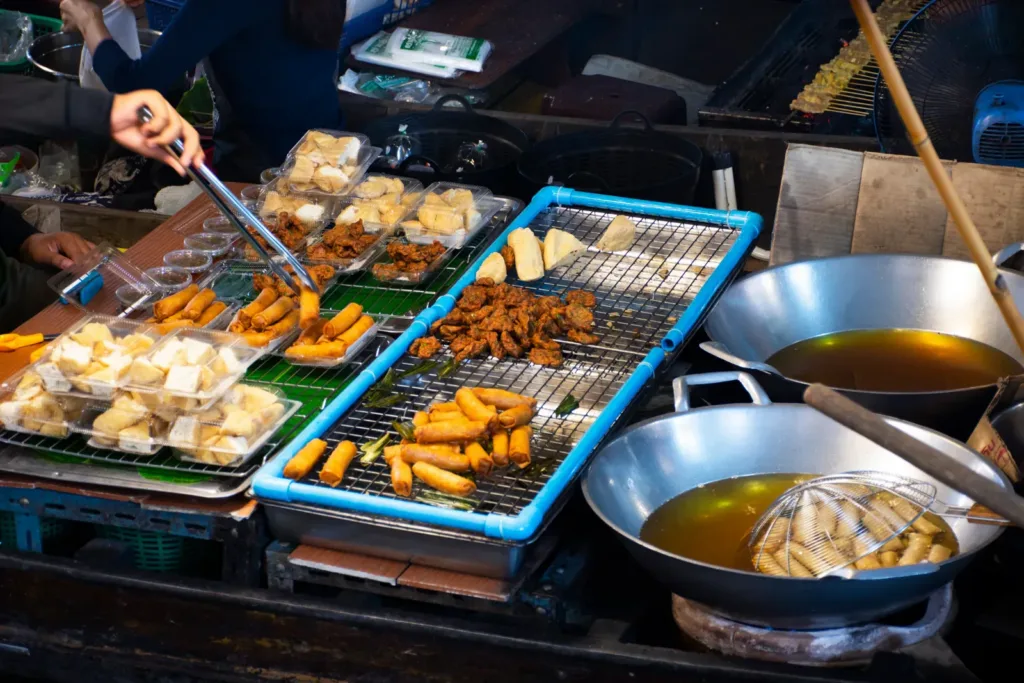
- Grilled fish and prawns, fried mussels, boat noodlesIn the market
- Old Thai sweets and coconut ice creamIn the market
- Dress modestly in the temple area
- Wear a life jacket on boats
- Do not litter in the river
- Do not block the raft walkways
- Open on weekends and holidays only
- Raft walkways sway; watch small children near the water
- In high-water years the river runs high in Sep–Nov
Best months
Tap a month on the wheel to see weather, rain, haze and crowds from 10 years of records
Best time · Nov–Feb for cool weather · come on a weekend 07:00–10:00 while all the food is out; much sells out before noon
Watch out · Closed Monday–Friday except public holidays · Sep–Nov in high-water years the river runs high
22°Jan
23°Feb
25°Mar
26°Apr
26°May
26°Jun
25°Jul
25°Aug
25°Sep
24°Oct
24°Nov
22°Dec
Nov by the records 24–31°C · avg rain 78 mm (11 rainy days) · clear 5 days · avg PM2.5 26
The story of this place
Lam Phaya Floating Market is a community raft market in front of Wat Lam Phaya on the Nakhon Chai Si (Tha Chin) River, Moo 5, Lam Phaya, Bang Len, Nakhon Pathom, about 50 km from Bangkok. It first opened on Sunday 5 September 1999 through a partnership of Wat Lam Phaya, the Lam Phaya Subdistrict Cultural Council and villagers, to raise income for local farmers. Its roots, however, go back to the Mon and Chinese families who settled this river from late in Rama III's reign, and to a riverside trading quarter that has served the community for more than a century.
Read more 10 more paragraphs
The river in front of the temple changes its name along its course. It branches off the Chao Phraya in Chai Nat as Khlong Makham Thao, flows through Suphan Buri as the Suphan Buri River and through Nakhon Pathom as the Nakhon Chai Si River, then reaches the sea at Samut Sakhon as the Tha Chin, some 325 km in all. When boats were the main and fastest way to travel, villages lined the riverbanks, much as houses line the roads today.
According to the history compiled by researchers and local media, late in Rama III's reign Mon families from Sam Khok moved here and farmed the west bank, while Chinese settlers took the east bank and lived by trade. Under Rama V, Phraya Krom Tha dug a canal behind today's market so villagers could claim land for rice, and the two banks grew into a farming and trading community side by side.
Wat Lam Phaya was founded under Rama IV; some sources say around 1857, others around 1861, and it has stood with the community for more than 100 years. The village was once written "Lam Phraya", its name when it belonged to Bang Pla district in Monthon Nakhon Chai Si, before the modern spelling "Lam Phaya". Bang Pla district itself was created in 1896 as Bang Phai Nat, and was later renamed Bang Pla and then Bang Len.
Two local stories explain the name "Lam Phraya". One says a boatload of noblemen of phraya rank came down the river together to be ordained at the temple; the other says a phraya dredged the waterway (lam) here. Both are oral traditions with no firm written evidence.
The temple's concrete ordination hall has six doors and faces along the river rather than to the east like most halls, a reminder of the era when riverside temples faced the water so passing boats could see them. Inside sits Luang Pho Mongkhon Mala Nimit, a laterite Buddha in the subduing-Mara posture, plastered and gilded and much revered by villagers and visitors. The landing in front of the temple is also a sanctuary where people feed and release fish to make merit.
The waterfront in front of the temple had long been the community's trading place. When the temple, the cultural council and villagers set up the floating market in 1999, it began with only about 40 stalls and opened on Sundays alone. The aim was to create work and income for local people and to showcase the subdistrict's farm produce, handicrafts and local goods.
The following year, 2000, the Wat Lam Phaya Floating Market Folk Museum opened to visitors in a raised Thai house beside the river within the temple grounds (the Sirindhorn Anthropology Centre's museum database records its founding year as 2003). The ground floor shows boats and rice-farming tools; the upper floor holds household items such as ceramics, glassware and old electrical appliances. Most pieces were donated by villagers, who receive a certificate from the cultural council.
The market gradually grew from a single Sunday to every Saturday, Sunday and public holiday. A study that collected data in 2018 counted more than 300 stalls, from bankside stands to boats and large rafts. About 80% of vendors come from Lam Phaya and neighbouring subdistricts, drawn from the subdistrict's 11 villages, and about 80% of Lam Phaya residents farm, so most goods are local vegetables, fruit and food made from local produce.
Besides eating, visitors can take rowing-boat and raft trips to see riverside life, boat trips to riverside temples and a route to the Chao Mae Thapthim shrine. In 2019 the Lam Phaya Subdistrict Administrative Organisation estimated about 3,000 visitors a day, or roughly 288,000–336,000 a year, while a 2025 study cites the Nakhon Pathom Tourism and Sports Office at about 100,000 a year. The two figures are counted differently, so treat them as a rough guide.
Today Lam Phaya is held up as an example of village-life cultural tourism run jointly by the temple, the community and local bodies, and it has been the subject of several tourism and marketing studies. Its charm lies not only in cheap, tasty food but in seeing a century-old riverside community put its temple and river back at the centre of daily life.
- Before 1851Late in Rama III's reign, Mon settlers from Sam Khok farm the west bank while Chinese traders settle the east bank
- c. 1857–1861Wat Lam Phaya is built under Rama IV (sources give different years)
- 1868–1910Under Rama V, Phraya Krom Tha digs the canal behind the market to open rice land
- 1896Bang Phai Nat district is created, later renamed Bang Pla (home of Lam Phraya village) and today's Bang Len
- 1999On 5 September the floating market opens with about 40 stalls, on Sundays only
- 2000The Wat Lam Phaya Floating Market Folk Museum opens to visitors
- 2018A research survey counts more than 300 stalls, open Saturdays, Sundays and public holidays
See 2 events
- 2019The Lam Phaya subdistrict estimates about 3,000 visitors a day
- 2025A study cites provincial figures of about 100,000 visitors a year and calls the market a model of village-life tourism
Check-ins & visitor photos
Arrived? Check in, collect a stamp and tell others what it is like right now
Check your location first, so you do not fill in the form for nothing
Location must be on and within 2 km · One check-in per place per day · come back on other days to check in again
Post photos from anywhere — no need to be here · Up to 20 photos at a time · JPG / PNG / WebP · GPS location data is removed automatically
How to get there
Paved
Borommaratchachonnani–Phutthamonthon–Bang Len · Fuel
From Salaya · About 19 THB
To Nakhon Pathom, then a local ride · By distance
Borommaratchachonnani or the Pinklao–Nakhon Chai Si road to Phutthamonthon/Salaya, then toward Bang Len; the temple is on the left about 24 km past the Phutthamonthon police station
Upper car park by the temple and a roadside lawn; walk down to the river
Salaya / Bang Len
Good
Sat–Sun and public holidays, about 08:00–17:00 (best in the morning)
about 50 km from Bangkok (Salaya)
Lam Phaya Floating Market
Stays near Lam Phaya Floating Market
Approx. nightly price for 2 adults (next week) · final price depends on your dates
FAQ
Before you go: Lam Phaya Floating Market
Answers travellers want before they go — a one-minute read
When is Lam Phaya open?
Saturdays, Sundays and public holidays, about 08:00–17:00; food is best before noon
When did it start?
It first opened on Sunday 5 September 1999, started by Wat Lam Phaya, the Lam Phaya cultural council and villagers
Is there a fee?
No; boat trips are about 60–80 THB (2023), children free
What is special about the temple?
Its ordination hall has six doors and faces the river rather than the east
How far from Bangkok?
About 50 km, about 45 minutes by car
Can I use public transport?
Take a songthaew from Salaya (about 19 THB), or go to Nakhon Pathom and take a local ride
Nearby places
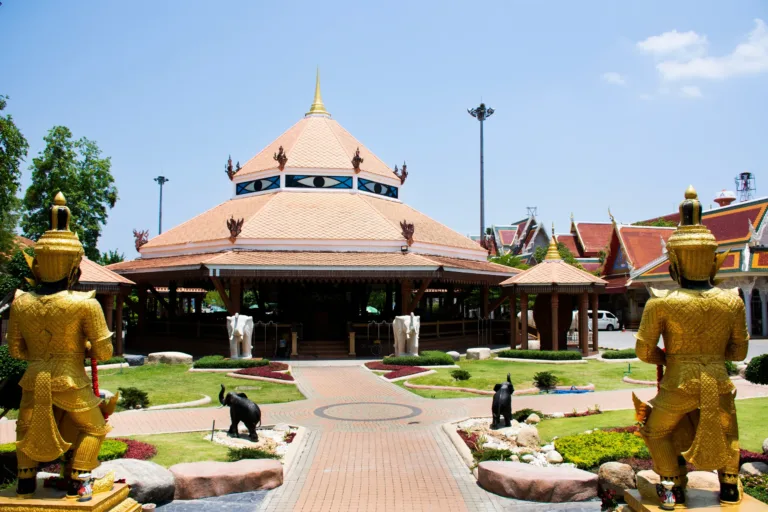 Wat Sisa Thong
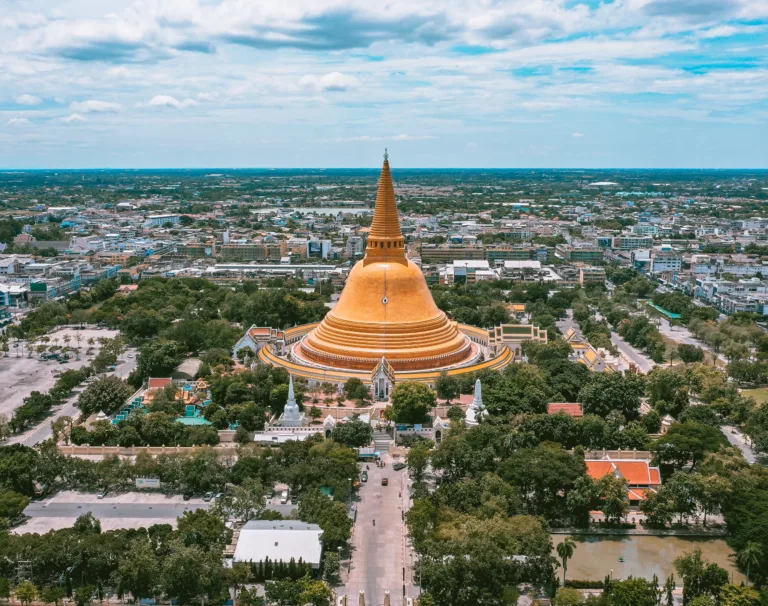 Phra Pathommachedi
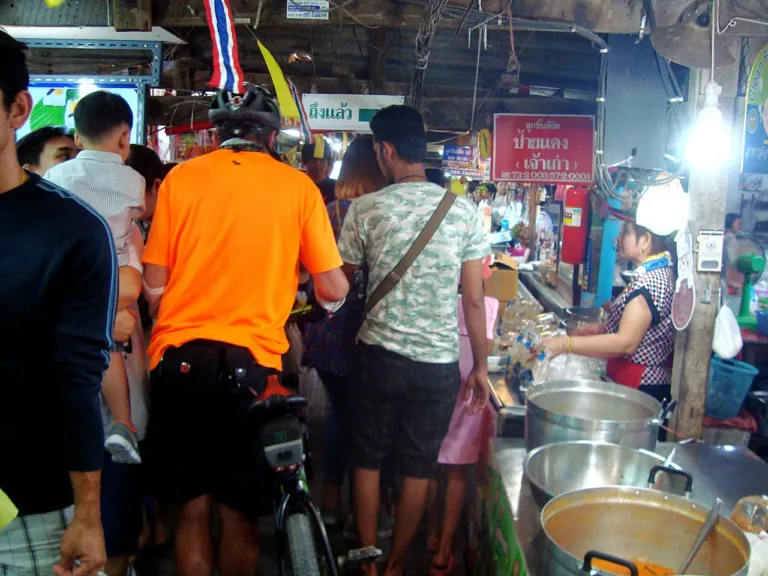 Don Wai Floating Market
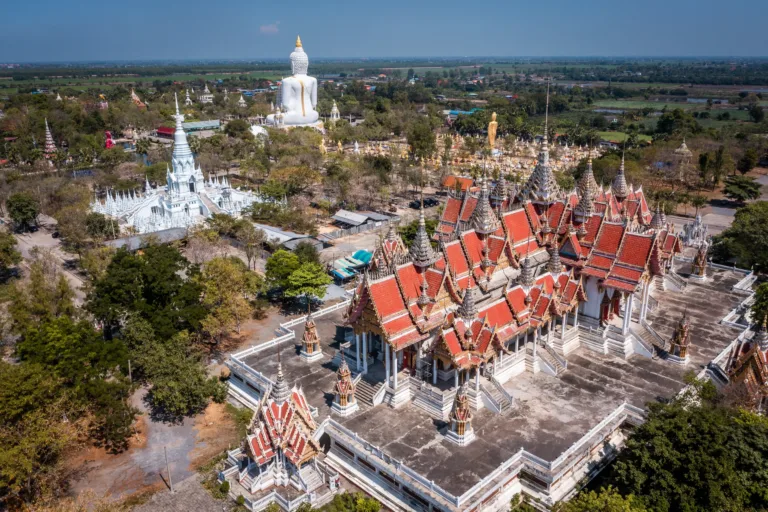 Wat Phai Rong Wua
Ready to go to Lam Phaya Floating Market?
Best day this week: Saturday 28 Nov · Check in when you arrive to collect a stamp