7 days ahead
When to go
this week
Tap a day card to see that day’s weather, rain, haze and hourly forecast
Best time to go Daytime is over · see tomorrow
Holiday — traffic on the way up and parking fills fast; leave early
Hour by hour
Green band = hours used for the score
Best time to go Fine all day little rain through the day
Holiday — traffic on the way up and parking fills fast; leave early
Hour by hour
Green band = hours used for the score
Best time to go Fine all day little rain through the day
No warnings today — normal road and weather conditions
Hour by hour
Green band = hours used for the score
Best time to go Fine all day little rain through the day
No warnings today — normal road and weather conditions
Hour by hour
Green band = hours used for the score
Best time to go Fine all day little rain through the day
No official warnings, but watch for: PM2.5 dust 26
Hour by hour
Green band = hours used for the score
Best time to go Fine all day little rain through the day · light drizzle possible at times
No warnings today — normal road and weather conditions
Hour by hour
Green band = hours used for the score
Best time to go Fine all day little rain through the day · light drizzle possible at times
No warnings today — normal road and weather conditions
Hour by hour
Green band = hours used for the score
Don Wai Floating Market
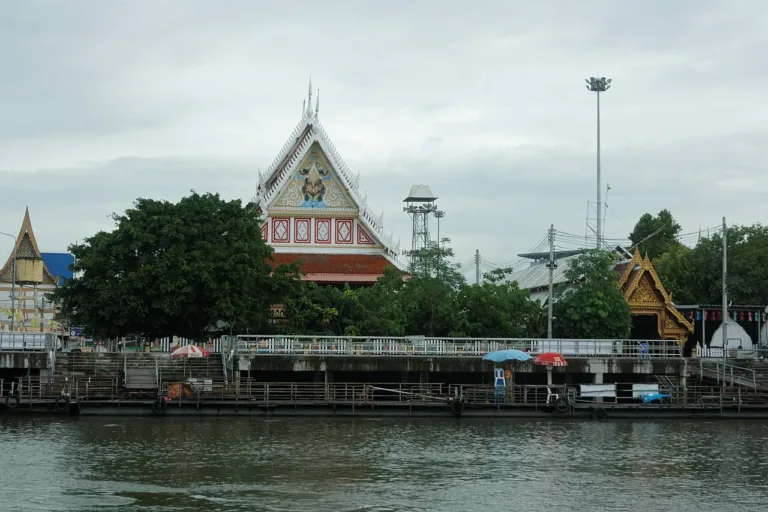
Don Wai Floating Market, Wat Khongkharam (Don Wai), Bang Krathuek, Sam Phran, Nakhon Pathom.
- Shops open, still quiet
- Weekend peak crowds
- Thinning out; some stalls close
Arrive 15:00
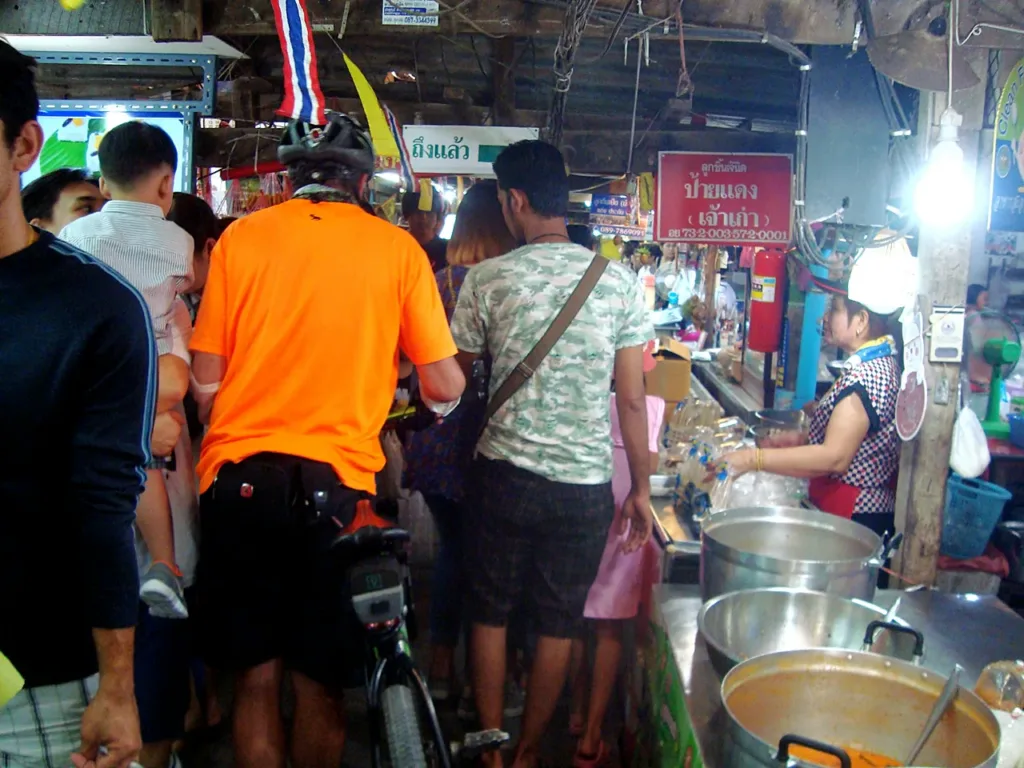
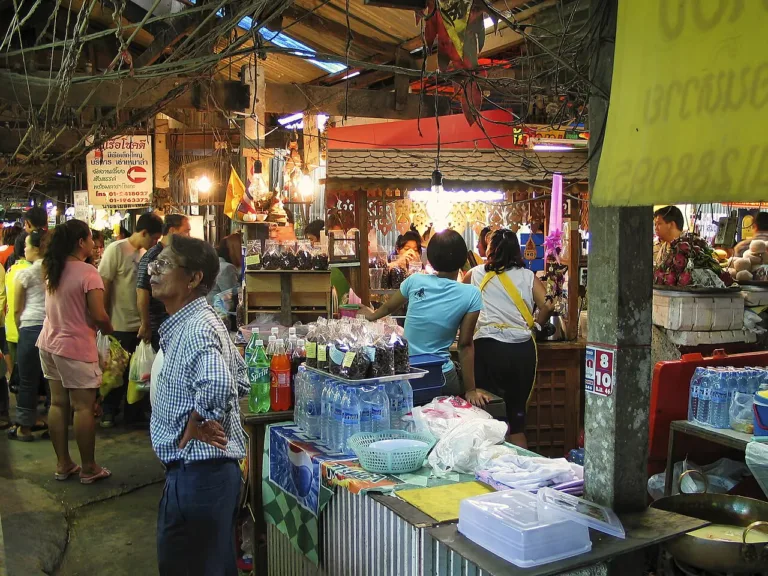
- Wooden shophouse laneThe old marketMorning
- Raft restaurantsRiver lifeMidday
- Boat pierBoats in evening lightEvening
Gallery
Photos from Wikimedia Commons and contributors · tap a photo to see its credit
Good to know here
High water at the end of the rains
Narrow and packed at weekend lunchtimes
- Come on a weekday or before 10:00 at weekends
- Boat tours run often at weekends; weekdays may have few or none
- The 60 THB round-trip boat to Wat Rai Khing makes an easy combined day
- Bring a cloth bag for snacks and souvenirs
Free · Time needed 2–3 hours
Weekend lunchtimes
| Boat to Wat Rai Khing, round trip | 60 ฿/person |
| River cruise, 1–2 h | 80–120 ฿/person |
Cash / bank transfer · Prices may change by season — check with the venue
- Kids Good: food and boat rides; supervise closely
- Seniors OK; crowded with some uneven ground
- Wheelchair Difficult: narrow lanes, steps to rafts and boats
- Pets No rule found; not advised in crowds
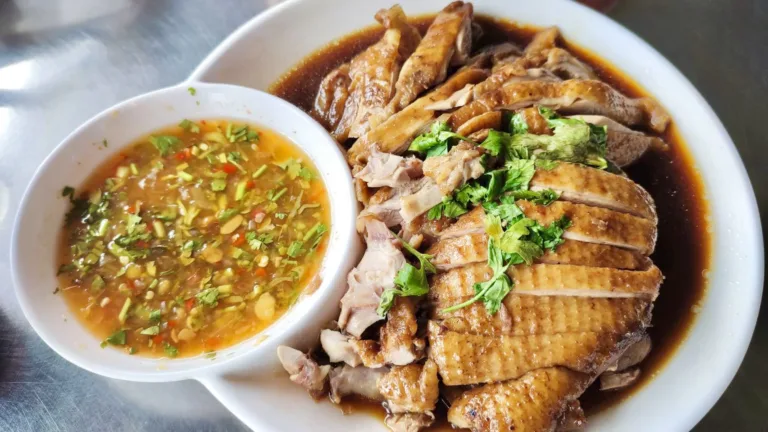
- Nai Nub / Nai O pot-stewed duckIn the market
- Pa Khai palm cakeIn the market
- Salted mackerel, snakehead hor mok, fish cakesMarket stalls
- Ban Bang Krathuek restaurantNear the market, closed Mon
- Dress modestly in the temple area
- Wear a life jacket on boats
- Do not litter in the river
- Do not block the narrow lanes
- In high-water years the market can flood in late Oct–Nov
- Narrow, crowded lanes at weekends — watch children and bags
- Wear a life jacket on boats
Best months
Tap a month on the wheel to see weather, rain, haze and crowds from 10 years of records
Best time · Nov–Feb for cool strolling · weekday mornings are quiet · on weekends arrive before 10:00 to beat the lunch crush
Watch out · Late Oct–Nov in high-water years the market can flood (it closed in 2011) · weekend lunchtimes are packed
21°Jan
23°Feb
25°Mar
26°Apr
26°May
26°Jun
25°Jul
25°Aug
25°Sep
24°Oct
23°Nov
22°Dec
Nov by the records 23–31°C · avg rain 89 mm (10 rainy days) · clear 5 days · avg PM2.5 28
The story of this place
Don Wai Floating Market is an old market on the Tha Chin River, known locally as the Nakhon Chai Si River, beside Wat Khongkharam (Don Wai) in Bang Krathuek, Sam Phran, Nakhon Pathom. Its heart is two facing rows of wooden shophouses built around the reign of King Rama VI, roughly a century old. The market thrived when people travelled by boat, faded when roads took over, and came back to life from 1997, when the community, the temple and the school revived it as a tourist market. Today it is a weekend favourite of Bangkok day-trippers for stewed duck, Thai sweets and riverside food.
Read more 11 more paragraphs
The community has deep roots in the Nakhon Chai Si basin. A Chulalongkorn University study cites chronicles that mention "Mueang Nakhon Chai Si" as early as 1549, under King Maha Chakkraphat of Ayutthaya, and more people settled along the river after Ayutthaya fell in 1767. Villagers got around by rowing boat and grew pomelo, betel nut and coconut on both banks.
In the early Bangkok period, especially under Rama III, trade with China boomed and more Chinese settled here. Gardeners built homes on the west bank, while some traders lived on the east bank, where Thai landowners farmed rice. By around 1855 the area was an important sugar producer, and many Chinese came to work in the cane mills and fields.
Wat Don Wai grew out of this sugar era. A Chinese-owned cane mill once stood on the east bank, and when it closed, the Chinese landowner donated the land for a temple. The Nakhon Pathom Provincial Administrative Organisation says the temple was built around 1851, late in Rama III's reign, on about 9 rai, conceived by Somdet Phra Phutthachan (Phuk), a senior monk born in Nakhon Chai Si; some sources give 1806 instead. Chao Khun Thammarachanuwat (At) later completed it.
The temple was first called "Wat Khok Wai" because it stood on a raised mound covered in rattan (wai). The name was later felt to be inauspicious, so it became "Wat Khongkharam Don Wai", adding "Khongkha" (river) because the temple stands on the bank. The market that grew beside it took the temple's name.
Inside, the ordination hall houses Luang Pho Wilailoet, an early Bangkok-period Buddha in the Maravijaya posture, and beside it stands the Luang Pho Wisahan vihara from Rama III's reign. The gable finials follow Rama III style and the roof Rama IV style. The temple's present look comes from restoration begun in 1986, which gave the hall its three-tiered roof, and the first golden chedi was built in 1999. Buddha relics are kept in a pavilion by the market entrance.
Under Rama V many canals were dug around Nakhon Chai Si, and the area belonged to Talat Mai district in Monthon Nakhon Chai Si. As the sugar mills declined late in that reign, many Chinese moved to live and trade beside the temple. In 1915, under Rama VI, Sam Phran district was created and more Teochew from Guangdong arrived. The market grew into three adjoining markets, including Talat Khajonboon to the south, and Overseas Chinese built the Chao Mae Seng Nia shrine in the same era.
Research notes that the first market buildings were thatched; after a fire they were rebuilt as two rows of wooden houses with a central walkway, tiled roofs and removable plank shopfronts. Because the bank was eroding, more than half of the buildings came to stand out over the water. Thai and Chinese residents lived closely together: at Chinese New Year and the Chinese ghost festival, Chinese families shared food with Thai neighbours, who returned the favour at Thai festivals, and intermarriage gave the market both Thai and Chinese dishes.
The market peaked around 1942, during World War II, when mail boats from Suphan Buri passed daily and Don Wai was a key point for transferring cargo; riverside warehouses from that time still stand. Workers from Suphan Buri, Kanchanaburi and Ratchaburi gathered here, and it became known as the "labour market". From about 1957 roads replaced river travel, fewer people stopped, shops moved away until, by one account, fewer than ten were left, and the market was almost deserted.
The turning point came around 1987, when a road was built through the market to Wat Rai Khing, where an institute for education administrators ran training courses for school leaders from across the country. The market was chosen to cater for them, and word of its food spread. In 1997 Kamnan Bancha Wutthisangkha, headman of Bang Krathuek, together with the abbot of Wat Don Wai and the director of Wat Don Wai School, set up the Don Wai Riverside Market committee, with about 18 members and 10 advisers, split into publicity, site care, safety and product-quality teams.
In 1998 Thai Rath newspaper's "Thiao Pai Kin Pai" (travel and eat) column featured the market's stewed duck and Thai sweets, and crowds poured in from the middle of that year. In 1999–2000, when prices were high, the market's affordable goods made it even better known. A 2001 study recorded a market area of about 74 rai and 349 operators of shops, rafts and tour boats, and in 2002 it drew about 100,000–176,000 visitors a month. Today it is run by a committee working with the temple, local government and a community enterprise, in old and new market zones.
In late October 2011 the Great Flood forced the market to close temporarily. Tour boats stopped on 26 October, the market closed on 28 October, and the Sam Phran district chief put the water at about 80–100 cm. One long-time sweet seller said that in more than 40 years she had never had to close for a flood. The market reopened after the water receded and is now open every day.
- 1851Wat Khongkharam (Don Wai) is built on a former sugar-mill site, late in Rama III's reign (some sources say 1806)
- 1855The area is a sugar-producing centre; Chinese migrants come to work the mills and cane fields
- 1915Sam Phran district is created; Teochew traders arrive and Don Wai market grows
- c. 1942During World War II, mail boats from Suphan Buri pass daily and the market is at its busiest
- 1957Roads replace river travel and the market begins to decline
- 1986Restoration of Wat Don Wai's ordination hall begins, giving it a three-tiered roof
- c. 1987A road through the market to Wat Rai Khing; the market caters for training courses there
See 6 events
- 1997The subdistrict headman, temple and school set up the Don Wai Riverside Market committee
- 1998Thai Rath's "Thiao Pai Kin Pai" column makes the market famous nationwide
- 1999The low-priced market becomes better known; the temple builds its first golden chedi
- 2001A study records a market area of about 74 rai and 349 operators
- 2002About 100,000–176,000 visitors a month
- 2011The Great Flood closes the market temporarily from 28 October, with water 80–100 cm deep
Check-ins & visitor photos
Arrived? Check in, collect a stamp and tell others what it is like right now
Check your location first, so you do not fill in the form for nothing
Location must be on and within 2 km · One check-in per place per day · come back on other days to check in again
Post photos from anywhere — no need to be here · Up to 20 photos at a time · JPG / PNG / WebP · GPS location data is removed automatically
How to get there
Paved; park at the temple
Borommaratchachonnani or Phetkasem Rd, follow Wat Don Wai signs · Fuel
From central Bangkok · About 400 THB
From the Wat Rai Khing pier · About 60 THB round trip
Borommaratchachonnani Rd toward Nakhon Pathom, then follow signs to Wat Don Wai / Wat Rai Khing, or from Phetkasem Rd via Rt 3316
Car park in the Wat Don Wai grounds
Borommaratchachonnani / Phetkasem Rd
Good
Mon–Fri 08:00–17:00 · Sat–Sun 07:00–18:30 (TAT)
about 35 km from Bangkok
Don Wai Floating Market
Stays near Don Wai Floating Market
Approx. nightly price for 2 adults (next week) · final price depends on your dates
FAQ
Before you go: Don Wai Floating Market
Answers travellers want before they go — a one-minute read
Is Don Wai open on weekdays?
Yes, daily: TAT lists Mon–Fri 08:00–17:00 and Sat–Sun 07:00–18:30, but most boat tours run at weekends
Is it a real floating market?
Mostly a riverside land market of old wooden shophouses, with raft restaurants and boat trips on the Tha Chin
What should I eat?
Pot-stewed duck from Nai Nub or Nai O, salted mackerel stew, snakehead hor mok, palm cake and Thai sweets
How much is the boat to Wat Rai Khing?
About 60 THB round trip (2022); 1–2 h river cruises about 80–120 THB
How old is the market?
The shophouses date from the Rama VI era; it was revived for tourism from 1997
Does it flood?
It can — it closed from 28 October 2011 in the great flood
Nearby places
 Phutthamonthon
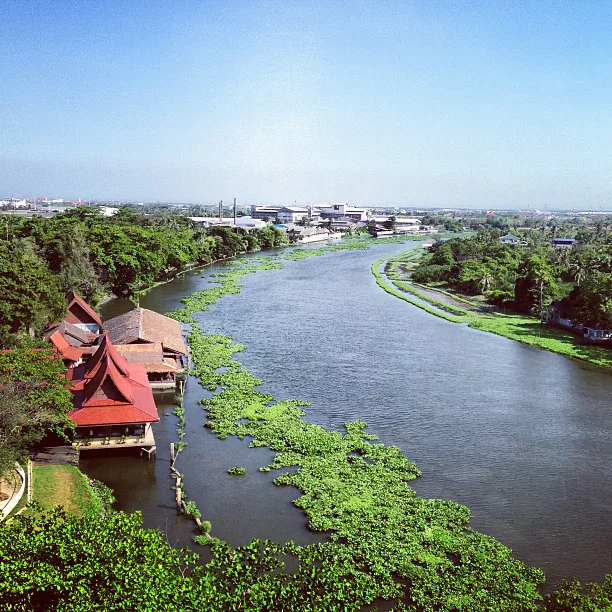
 Wat Rai Khing
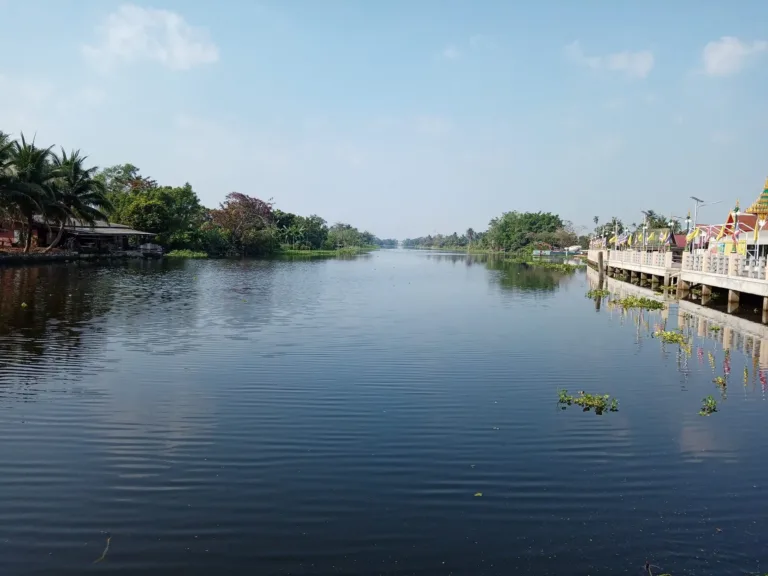
 Suan Sampran
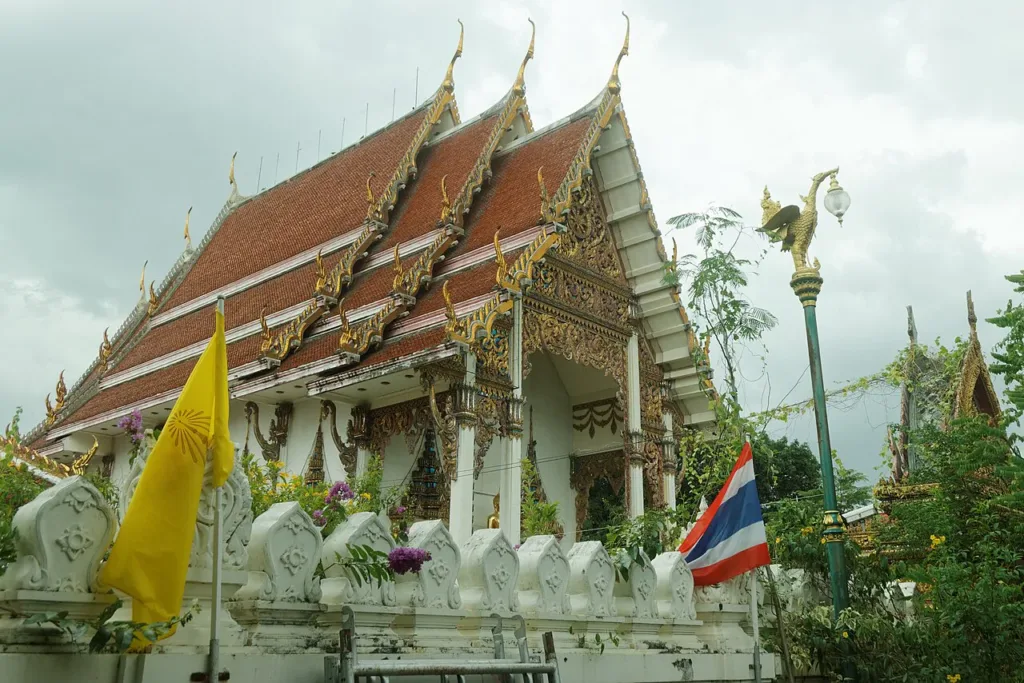
 Wat Tha Mai
Ready to go to Don Wai Floating Market?
Best day this week: Monday 30 Nov · Check in when you arrive to collect a stamp