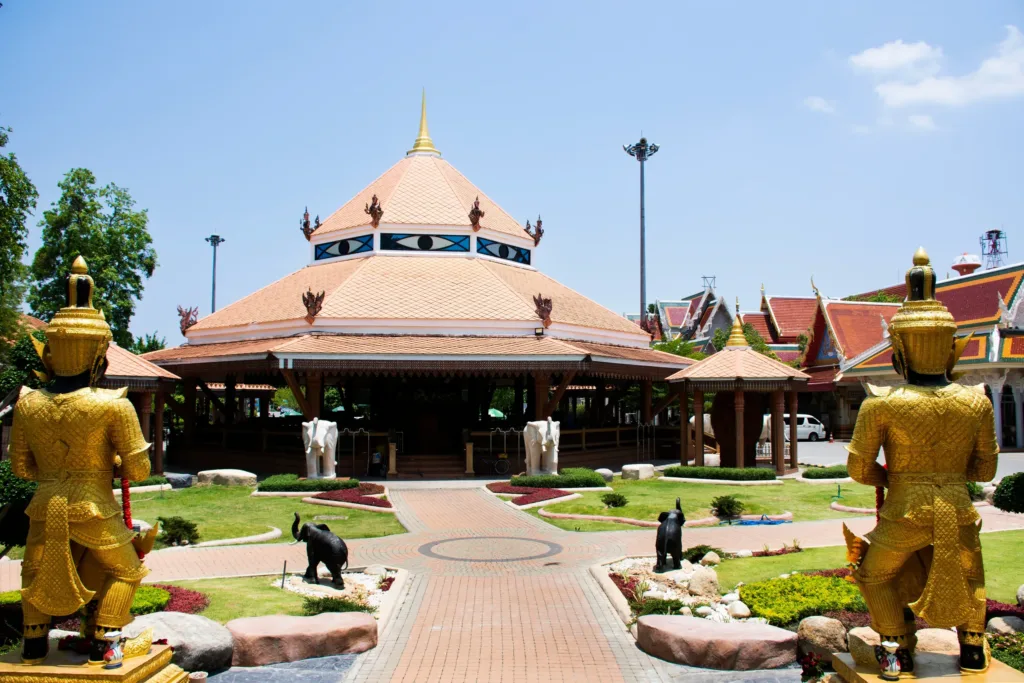
What to know before visiting the temple
Dress modestly · Follow the temple's Rahu worship steps · Keep noise down in the temple · Do not leave offerings outside the marked tables
Daily about 07:00–17:00 (some sources 08:30–17:00)
16:00
7 days ahead
When to go
this week
Tap a day card to see that day’s weather, rain, haze and hourly forecast
Best time to go Daytime is over · see tomorrow
Holiday — traffic on the way up and parking fills fast; leave early
Hour by hour
Green band = hours used for the score
Best time to go Fine all day little rain through the day
Holiday — traffic on the way up and parking fills fast; leave early
Hour by hour
Green band = hours used for the score
Best time to go Fine all day little rain through the day
No warnings today — normal road and weather conditions
Hour by hour
Green band = hours used for the score
Best time to go Fine all day little rain through the day
No warnings today — normal road and weather conditions
Hour by hour
Green band = hours used for the score
Best time to go Fine all day little rain through the day
No official warnings, but watch for: Hot (Afternoon) feels like 38°C
Hour by hour
Green band = hours used for the score
Best time to go Fine all day little rain through the day · light drizzle possible at times
No official warnings, but watch for: Hot (Afternoon) feels like 38°C
Hour by hour
Green band = hours used for the score
Best time to go Fine all day little rain through the day · light drizzle possible at times
No warnings today — normal road and weather conditions
Hour by hour
Green band = hours used for the score
Wat Sisa Thong
Wat Sisa Thong, 22 Moo 1, Sisa Thong, Nakhon Chai Si, Nakhon Pathom.
- Quiet and cool
- Hot
- Near closing, thinning out
Arrive 16:00
- Giant RahuWith the black-offering tablesDaytime
- Ordination hallDecorative detailsMorning
- Chedi Bucha canalCommunity scenesEvening
Gallery
Photos from Wikimedia Commons and contributors · tap a photo to see its credit
Good to know here
Cross with care
Fills fast on Wednesdays and Sundays
- There is no Rahu worship on Buddhist holy days — check the calendar
- Offering sets are sold at the temple; leave them at the tables or take them home as marked
- Dress modestly
- The access road crosses a railway — drive carefully
Free · Time needed About 1 hour
Wednesdays, Sundays and Rahu-move periods
| Set of eight black offerings for Rahu | 399 ฿/set |
No entry fee · Prices may change by season — check with the venue
- Kids OK
- Seniors Good: flat
- Wheelchair Temple grounds partly suitable
- Pets Not advised in the temple
- Restaurants in Nakhon Chai Si and along Phetkasem Rd
- Wat Lam Phaya floating marketAbout 25–30 km by road (weekends)
- Dress modestly
- Follow the temple's Rahu worship steps
- Keep noise down in the temple
- Do not leave offerings outside the marked tables
- Wednesdays, Sundays and Rahu-move days bring crowds, traffic and too little parking
- No Rahu worship on Buddhist holy days
- The access road crosses a railway
Best months
Tap a month on the wheel to see weather, rain, haze and crowds from 10 years of records
Best time · Nov–Feb for cooler weather · weekdays other than Wednesday are quiet · Wednesday has the liveliest Rahu atmosphere (the temple closes about 17:00, so go in the daytime)
Watch out · No Rahu worship on Buddhist holy days · Wednesdays, Sundays and Rahu-move periods are crowded with full car parks
22°Jan
23°Feb
25°Mar
26°Apr
26°May
26°Jun
25°Jul
25°Aug
25°Sep
24°Oct
24°Nov
22°Dec
Nov by the records 24–31°C · avg rain 84 mm (11 rainy days) · clear 5 days · avg PM2.5 20
The story of this place
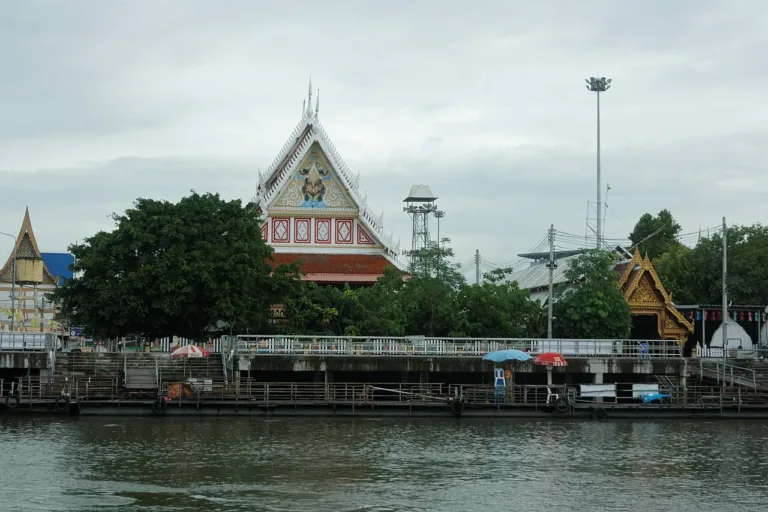
Wat Sisa Thong is an old temple of the Lao Wiang community on the Chedi Bucha canal in Nakhon Chai Si, Nakhon Pathom. It was founded by Lao settlers from Vientiane in the early Rattanakosin period, takes its name from the story of a golden Buddha head dug from the ground, and became famous across Thailand as the home of Luang Pho Noi Khanthachoto's Rahu-swallowing-the-moon amulets carved from one-eyed coconut shells. Today it is one of the most visited Rahu temples in the country.
Read more 11 more paragraphs
Most people in Ban Sisa Thong descend from Lao Wiang whose ancestors were forcibly moved from Vientiane in the early Rattanakosin period and settled along the Nakhon Chai Si River. Some sources place the settlement as early as the reign of Rama I. The area was then thick forest; the settlers cleared it for rice fields and orchards and together built a temple as the spiritual heart of the community.
Legend says that while levelling the ground for the temple, villagers found a golden Buddha head buried in the soil. Taking it as a good omen, they named the temple Wat Hua Thong, "Golden Head Temple". Many sources date this to about 1815, though some say the temple's history goes back to the reign of Rama I. The first abbot remembered locally was Luang Pho Trai (also written Luang Pho Tai), a Lao monk from Vientiane, and the temple's Wua Thanu and Rahu crafts are believed to have been handed down from his time.
The big change came with the Chedi Bucha canal. After the restoration of Phra Pathom Chedi, King Mongkut (Rama IV) ordered a canal dug from the Nakhon Chai Si River near Ban Tha Na straight to the great chedi, about 18 km long, so that pilgrims and traders could travel easily. Work began around 1853–1855 and stalled when Somdet Chao Phraya Prayurawong died; Chao Phraya Thiphakorawong then finished it with Chinese labour, paid for from the king's own purse, around 1862.
With the new canal, villagers moved their homes to its banks for easier travel, and the temple followed the community to the Chedi Bucha canal. It was later renamed from Hua Thong to Sisa Thong, using the polite word for "head", a name that later passed to the village and the subdistrict. No record has been found of the exact year of the move or the renaming.
The temple's most important figure is Luang Pho Noi Khanthachoto, born Noi Nawarat in Ban Sisa Thong on 14 February 1892, the youngest of five children. His father, Ma Nawarat, was a herbal doctor known locally as "Pho Mo" and versed in magical lore. As a young layman Noi helped on the family farm and learned sacred scripts, mantras and herbal formulas from his father.
On 14 April 1913, aged 21, he was ordained with Phra Athikan Yio, abbot of Wat Khae, as his preceptor and given the name Khanthachoto. After a time at Wat Khae he moved to Wat Sisa Thong under abbot Luang Pho Li and studied the Wua Thanu and Rahu crafts passed down since Luang Pho Trai. When Phra Athikan Choi left the monkhood, villagers invited him to become abbot. He developed both the temple and the village and ended his career as subdistrict head monk.
Luang Pho Noi's Rahu amulets were carved from coconut shells with only one eye, rare because a coconut normally has two eyes and one mouth. By tradition they could be made only on the day of a lunar or solar eclipse, with the Chanthraprapha or Suriyaprapha yantra, and some years have none. Offerings to the teachers and ritual purification came first. Luang Pho Noi wrote the central heart mantra himself, while monk and lay disciples carved and inscribed the rest, so each piece differs in craftsmanship.
His other famous craft was the Wua Thanu bull, moulded from lac mixed with jujube powder on a wire frame, with an inscribed takrut inside. The method is said to come from Somdet Phra Wanrat of Wat Pa Kaeo in the Ayutthaya period. The bulls had to be made in the ordination hall by men only, dressed in white and keeping the precepts for seven days, and consecrated on Makha Bucha or Visakha Bucha day.
Luang Pho Noi had two close disciples: Phra Som, whom he sent to study at Wat Mahathat, where he passed the highest Pali grade and was hoped to become the next abbot, and Phra Kring from Kanchanaburi, the only disciple initiated into the Rahu craft, who helped inscribe the shells throughout. In 1944 villagers invited Phra Kring to Wat Pho Liao in Kanchanaburi, where he became known as Luang Pho Kring. Luang Pho Noi died peacefully on 10 December 1945, aged 53.
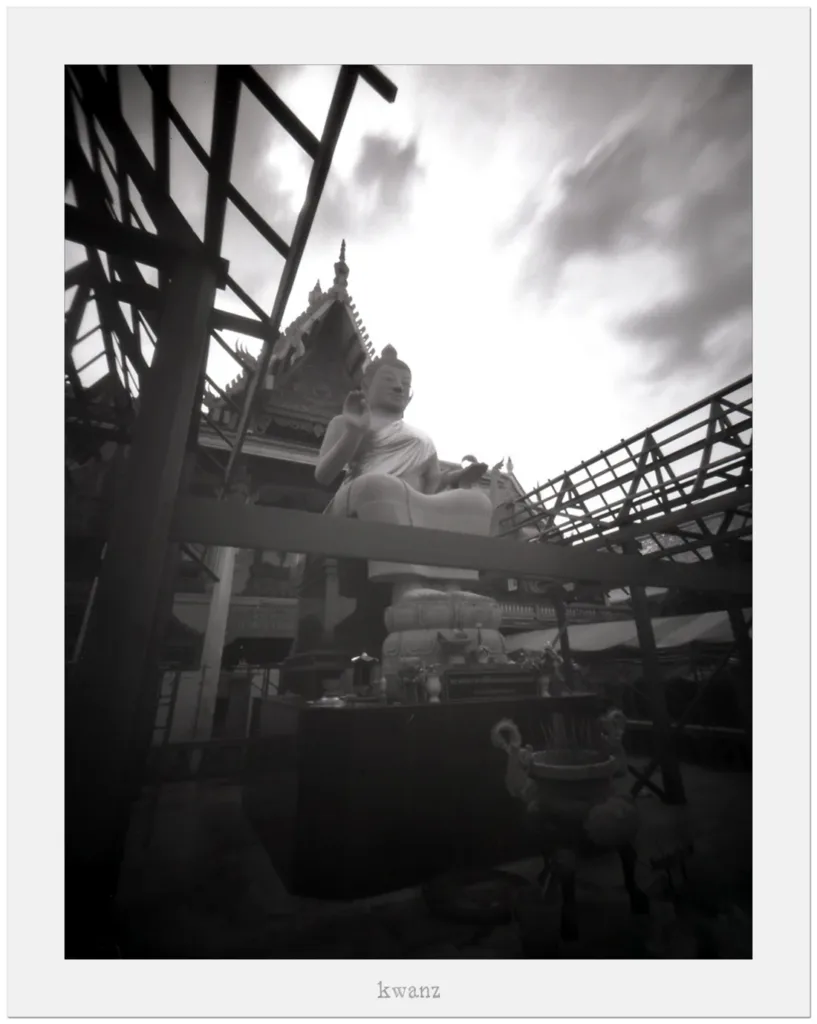
In 1960 the temple received its royally granted consecrated boundary. In the three decades or so before 2020 its Rahu fame grew enormously, and it is often called the original home of Rahu worship. A large Rahu swallowing the moon and sun stands in an octagonal pavilion where visitors offer eight black items and gold leaf. A 2022 study found that the belief was inherited from Lao Wiang ancestors and spread further as rapid social change left people feeling insecure; the temple remains the centre of community life, from merit-making festivals to support for the local school.
In late 2017, after a Central Region Sangha order on temple supervision and a ban on selling amulets in ordination halls, the provincial Sangha asked the temple to pause Rahu worship for a while; it reopened by November. Today worship is open daily except Buddhist holy days, and it is busiest on Wednesdays, Sundays and when Rahu changes sign, about every 18 months.
- 1782–1809Reign of Rama I, when some sources say Lao settlers from Vientiane arrived on the Nakhon Chai Si River
- 1815A golden Buddha head is dug up and the temple is named Wat Hua Thong; Luang Pho Trai is the first abbot
- 1853–1855Digging of the Chedi Bucha canal begins on the order of King Mongkut (Rama IV)
- 1862The 18 km Chedi Bucha canal is finished; the village and temple move to its bank
- 189214 Feb — Luang Pho Noi (born Noi Nawarat) is born in Ban Sisa Thong
- 191314 Apr — Luang Pho Noi is ordained with the monastic name Khanthachoto
- 191730 Mar — Phra Kring, the disciple later initiated into the Rahu craft, is born in Kanchanaburi
See 8 events
- 194024 Apr — Phra Kring is ordained and later studies under Luang Pho Noi
- 1944Villagers invite Phra Kring from Wat Sisa Thong to Wat Pho Liao
- 194510 Dec — Luang Pho Noi dies, aged 53
- 1960The temple receives its royally granted consecrated boundary
- 1990Around this time Rahu worship at the temple becomes widely popular
- 2017Jul–Aug — huge crowds during the Rahu move bring traffic jams and full car parks
- 2017Oct–Nov — Rahu worship is briefly closed at the Sangha's request, then reopens
- 2022An academic study examines the temple as the centre of the Lao Wiang community
Check-ins & visitor photos
Arrived? Check in, collect a stamp and tell others what it is like right now
Check your location first, so you do not fill in the form for nothing
Location must be on and within 1 km · One check-in per place per day · come back on other days to check in again
Post photos from anywhere — no need to be here · Up to 20 photos at a time · JPG / PNG / WebP · GPS location data is removed automatically
How to get there
Paved village road with a railway crossing
Phetkasem Rd to the Tha Na junction, Nakhon Chai Si · Fuel
To Nakhon Chai Si, then a local ride · By distance
Phetkasem Rd (Rt 4) toward Nakhon Pathom; pass the Tha Na junction lights, U-turn into the road on the right, go about 1 km, turn left before a concrete bridge, cross the railway, and the temple is ahead
Temple car park; fills fast on Wednesdays, Sundays and Rahu-move days
Phetkasem Rd
Good
Daily about 07:00–17:00 (some sources 08:30–17:00)
about 45 km from Bangkok
Wat Sisa Thong
Stays near Wat Sisa Thong
Approx. nightly price for 2 adults (next week) · final price depends on your dates
FAQ
Before you go: Wat Sisa Thong
Answers travellers want before they go — a one-minute read
Why is Wat Sisa Thong famous?
It is one of Thailand's best-known Rahu temples; former abbot Luang Pho Noi (1892–1945) created the one-eyed coconut-shell Rahu
What do I offer Rahu?
Eight black items such as black grapes, black coffee, century eggs and black sticky rice; sets are sold at the temple (about 399 THB in 2025)
When can I worship?
Daily, about 07:00–17:00, except Buddhist holy days
Where does the name come from?
A golden Buddha head was found when the temple was built, so it was first called Wat Hua Thong, later Wat Sisa Thong
Who founded it?
Lao settlers from Vientiane in the early Rattanakosin period; the first abbot was Luang Pho Trai
How do I get there?
Phetkasem Rd to the Tha Na junction in Nakhon Chai Si, U-turn and follow the road over the railway, about 1–2 km
Nearby places
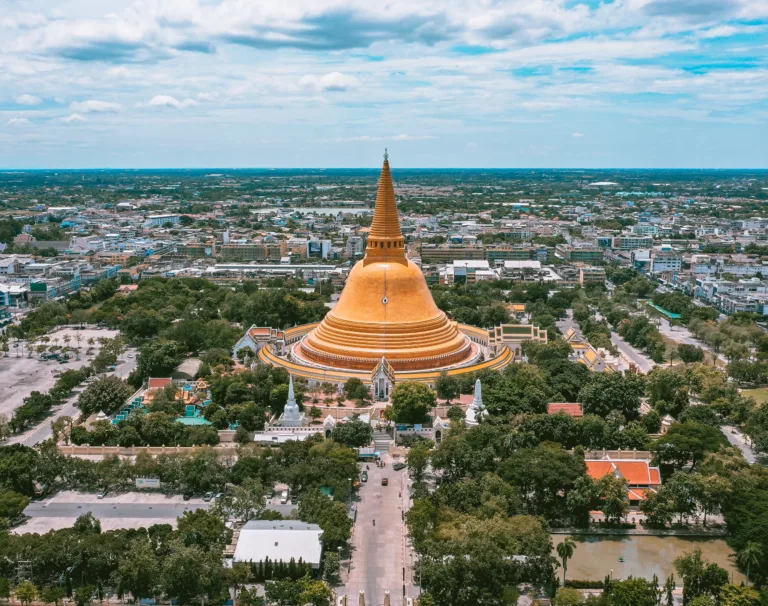 Phra Pathommachedi
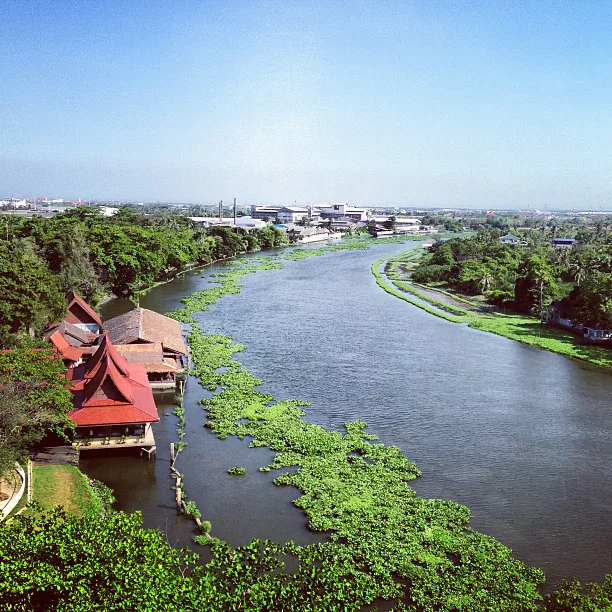 Suan Sampran
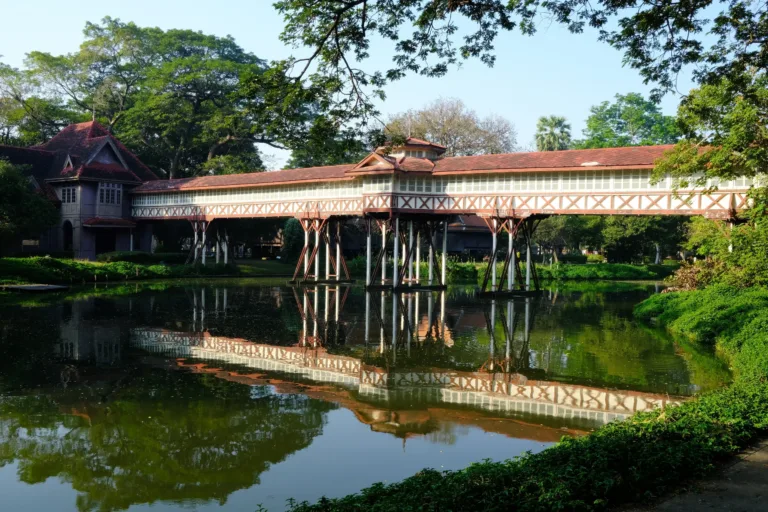 Sanam Chandra Palace
 Wat Rai Khing
Ready to go to Wat Sisa Thong?
Best day this week: Monday 30 Nov · Check in when you arrive to collect a stamp