 01
The great chedi120.45-m Sri Lankan-style stupa
NAKHON PATHOM · MUEANG
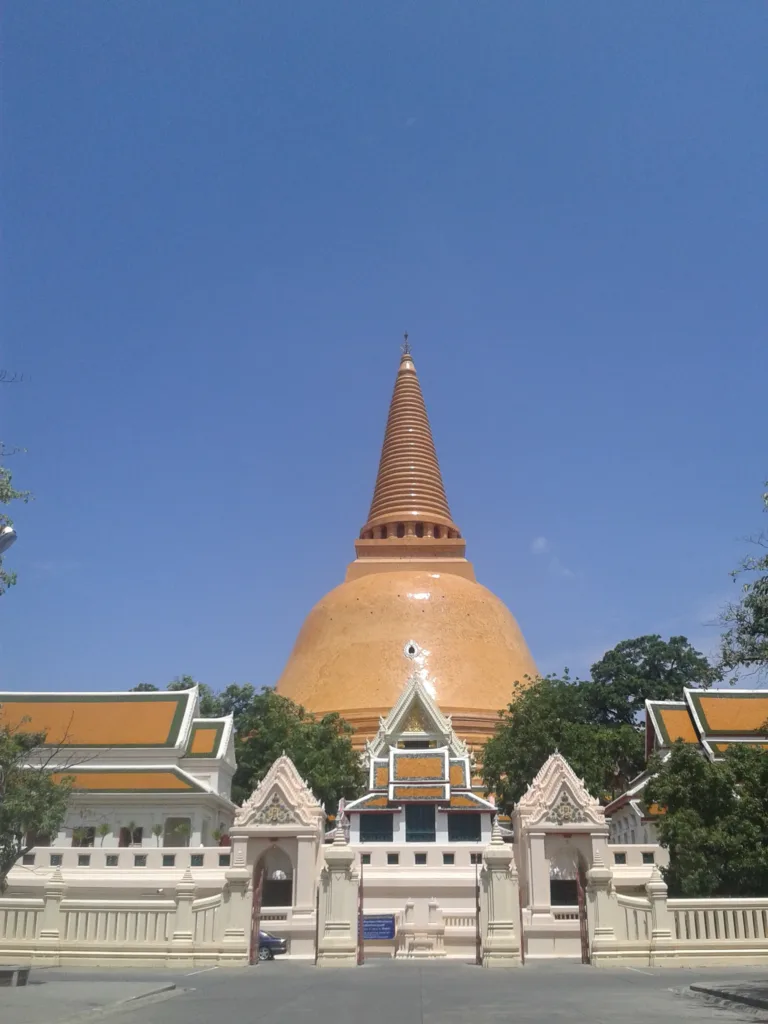
Thailand’s tallest stupa at 120.45 m, built by King Rama IV over an ancient Dvaravati-era monument, finished under Rama V and home to the Phra Ruang Rojanarit Buddha.
Holiday / event — crowded · Hot (Afternoon) feels like 41°C
Dress modestly · Walk clockwise around the chedi · Do not climb on the chedi base · Keep quiet in the viharas
Daily, about 05:00–19:00 (some sources say until 20:00)
Come before 09:00 or after 16:00 to avoid the sun
Phra Pathommachedi festival, 12th waxing to 5th waning day of the 12th lunar month (around Nov)
01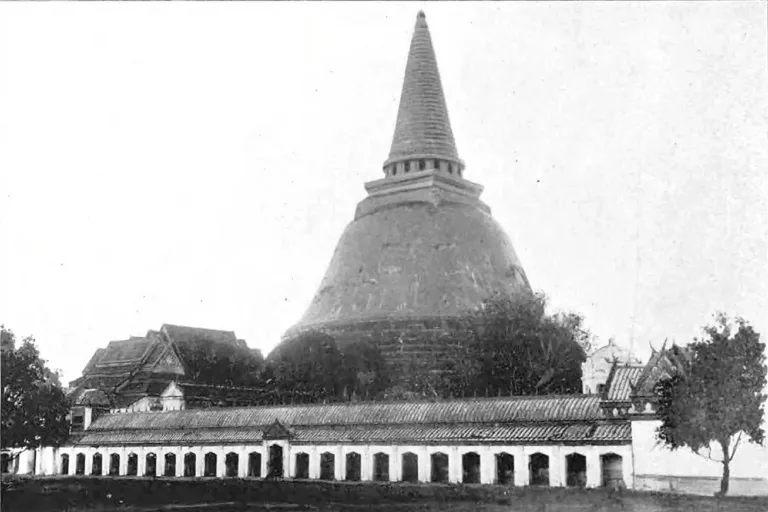 02
 03
 04
Tap a day card to see that day’s weather, rain, haze and hourly forecast
Best time to go Fine all day little rain through the day
Holiday — traffic on the way up and parking fills fast; leave early
Green band = hours used for the score
Best time to go Best window 06:00–15:00 Little rain · light drizzle possible at times
Holiday — traffic on the way up and parking fills fast; leave early
Green band = hours used for the score
Best time to go Fine all day little rain through the day
Holiday — traffic on the way up and parking fills fast; leave early
Green band = hours used for the score
Best time to go Best window 06:00–12:00 Little rain
No warnings today — normal road and weather conditions
Green band = hours used for the score
Best time to go Best window 06:00–15:00 Little rain · light drizzle possible at times
No warnings today — normal road and weather conditions
Green band = hours used for the score
Best time to go Fine all day little rain through the day · light drizzle possible at times
No warnings today — normal road and weather conditions
Green band = hours used for the score
Best time to go Fine all day little rain through the day
No warnings today — normal road and weather conditions
Green band = hours used for the score
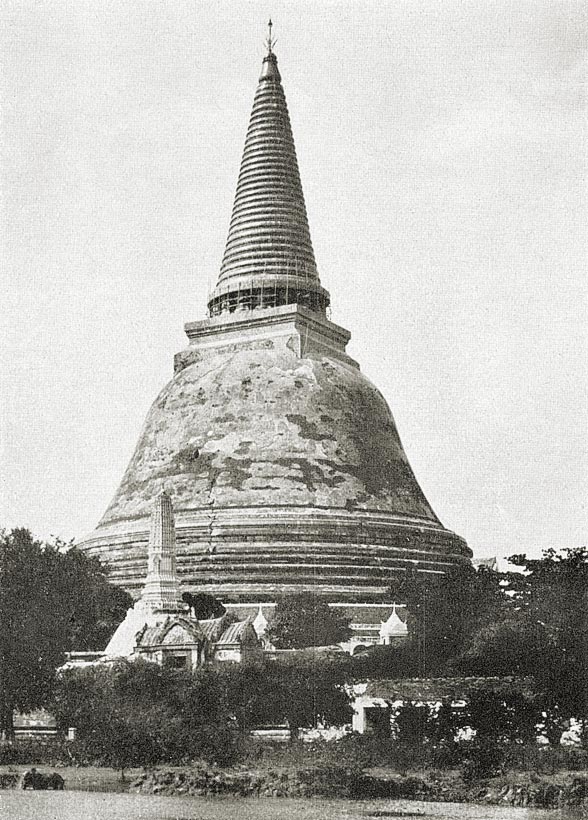
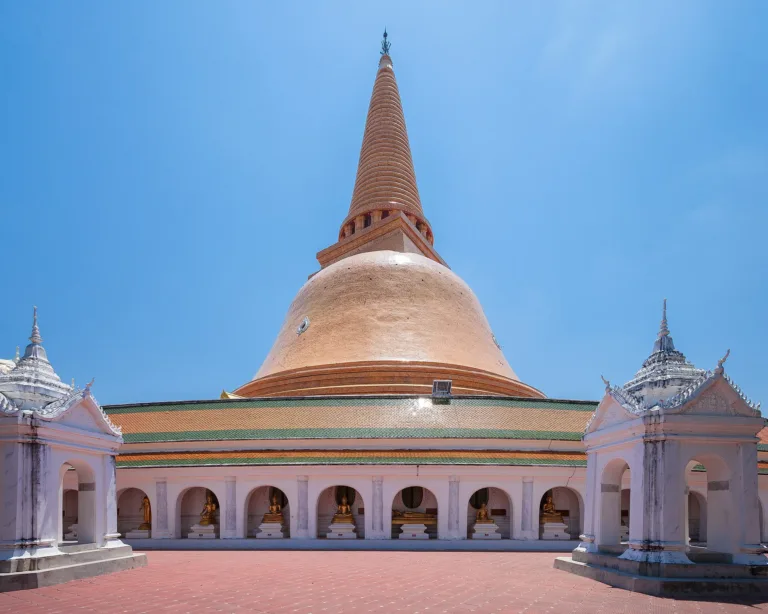
Phra Pathommachedi in Nakhon Pathom is Thailand’s tallest stupa, a 120.45-m Sri Lankan-style bell chedi that King Rama IV built over an ancient Dvaravati-era monument. Completed under Rama V, the temple also houses the Phra Ruang Rojanarit Buddha installed by Rama VI.
Arrive Come before 09:00 or after 16:00 to avoid the sun
Photos from Wikimedia Commons and contributors · full credits inClassic page
Cover shoulders and knees
The terraces around the chedi get very hot at midday
Remove shoes before entering the viharas and ordination hall
Adults 0 THB · Time needed 1–2 hours
Weekends, major Buddhist holy days and the November festival
| Temple entry (Thai visitors) | Free |
| Flowers and incense optional | 20 ฿/set |
Mostly cash · Prices may change by season — check with the venue
Phra Pathommachedi festival, 12th waxing to 5th waning day of the 12th lunar month (around Nov)
Tap a month on the wheel to see weather, rain, haze and crowds from 10 years of records
Best time · Nov – Feb is cool, and the nine-day Phra Pathommachedi festival usually falls in November
Watch out · Mar – May makes the open terraces very hot at midday
Oct by the records 24–31°C · avg rain 252 mm (23 rainy days) · clear 2 days · avg PM2.5 21
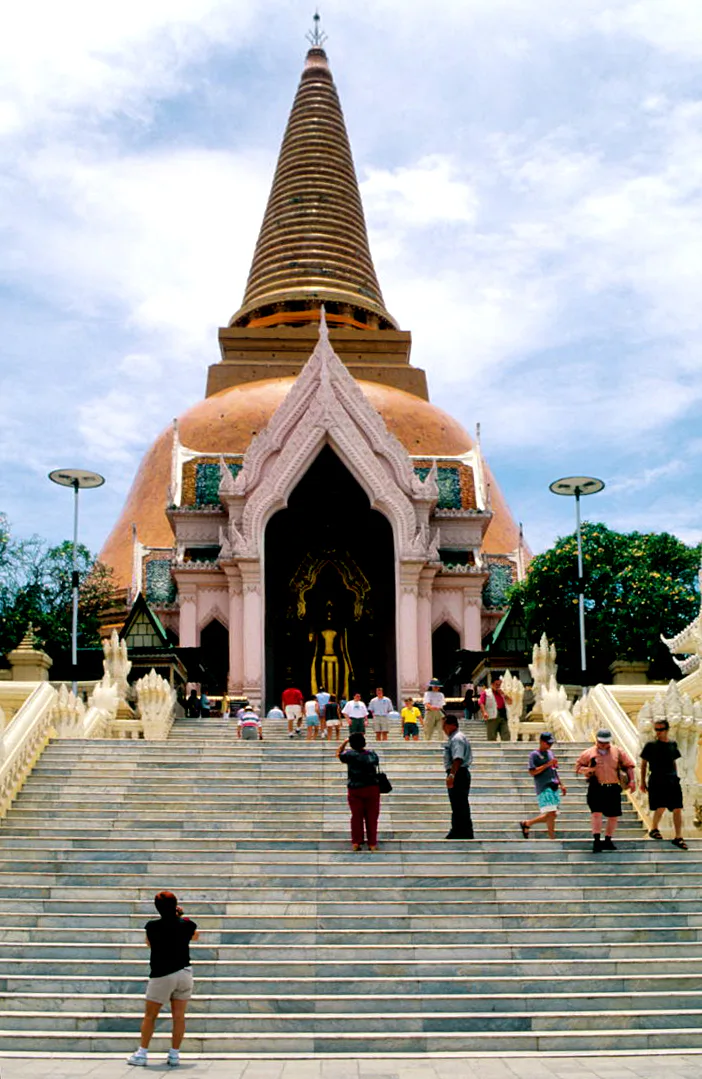
Wat Phra Pathommachedi Ratchaworamahawihan stands in the heart of Nakhon Pathom. It is a first-class royal temple of the ratchaworamahawihan grade, the highest rank of Thai royal temple, belonging to the Maha Nikaya order. The great chedi is a Sri Lankan-style bell-shaped stupa clad in golden tiles, 120.45 m from ground to tip, the tallest stupa in Thailand and, by some accounts, the second tallest in the world.
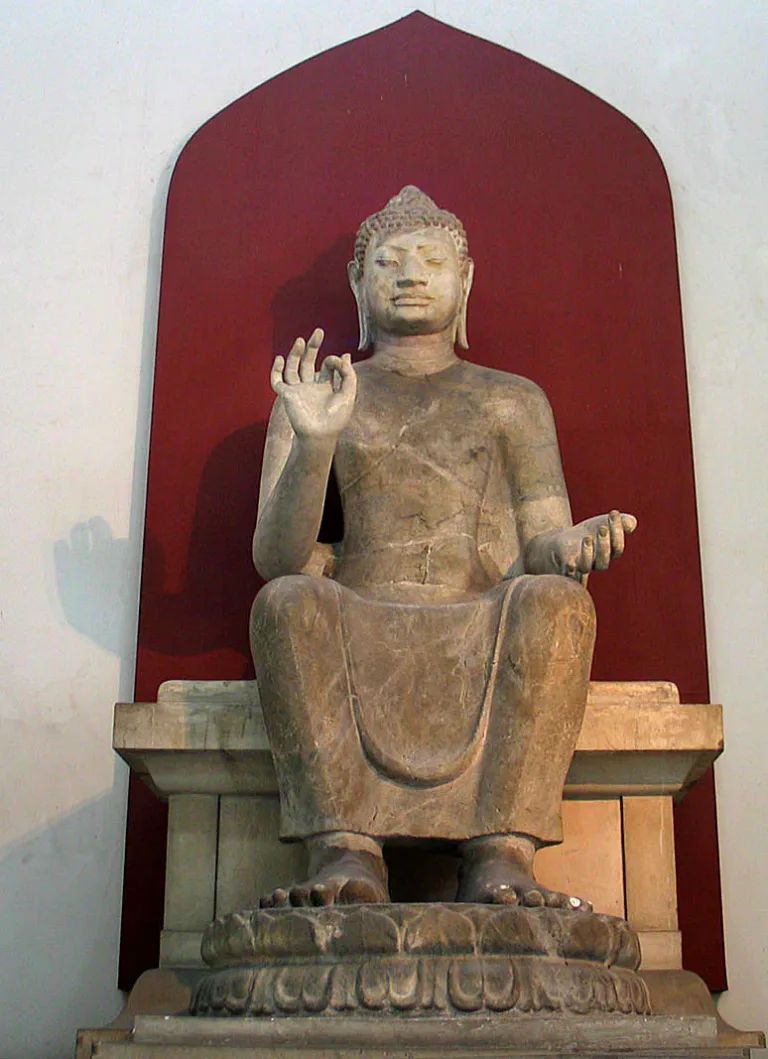
Historians regard ancient Nakhon Pathom as a major centre of Dvaravati culture around the 6th–8th centuries, and many Dvaravati objects, such as stone Wheels of the Law, have been found here. Some legends give far older dates, and Prof. M.C. Subhadradis Diskul suggested a link with missionaries of the Ashokan era, but no historical evidence confirms the origins of the first stupa.
Locals originally called it “Phra Thom” or “Phra That Luang”; thom is Khmer for “big”, and the name appears in Sukhothai Inscription No. 2 (Wat Si Chum). It later became “Phra Prathom”. Silpa Wattanatham cites Sujit Wongthes that U Thong is older than ancient Nakhon Pathom, which rose to importance after about 1100 BE (c. 557 CE) as shifting river mouths gave it a trading edge, flourished for centuries and was abandoned around 1600 BE (c. 1057 CE) as the coast receded. So, despite its name, Phra Pathommachedi is not the first stupa in Thailand.
A well-known folk legend tells of Phraya Kong and Phraya Phan: Phan unknowingly killed his father, Kong, and built a great stupa to atone. Later a king of Hongsawadi sent men to dig for treasure and the stupa collapsed, after which a Khmer-style prang was built over it. Travel sources describe the old monument as a bell-shaped base topped by a prang.
After about 1800 BE (c. 1257 CE), the Wat Si Chum inscription records that Maha Thera Si Sattha Ratcha Chulamuni, a Sukhothai prince ordained in Sri Lanka, restored this great relic stupa in Sri Lankan style and built a prang on top. Around 2100 BE (c. 1557 CE) King Maha Chakkraphat of Ayutthaya gathered people to found Nakhon Chai Si town where the Bang Kaeo and Tha Chin rivers meet.
In the reign of Rama III, around 1831, Prince Mongkut, then a monk, came upon the ruined stupa in the forest, judged it the oldest and largest, and asked to restore it, but Rama III declined. Wikipedia says that the following year (1832) the poet Sunthorn Phu came to pay homage with Prince Chutamani.
Prince Mongkut named the stupa “Phra Pathommachedi”, “the first chedi”, believing it to be the first in Siam. Before it was encased, poets recorded its state: Muen Phrom Somphatsorn in Nirat Phra Thaen Dong Rang (1836) and Sunthorn Phu in Nirat Phra Prathom, a journey literary scholars date to 7 November 1842, when he was 56. Sunthorn Phu described “a great prang towering to the sky”, like a hill, a prang spire on a Sri Lankan-style base.
When Mongkut became King Rama IV, he had a huge Sri Lankan-style stupa built over the old one. Travel sources date the start to 1853. He also built four directional viharas and the Pathom Nakhon Palace, and dug a canal linking Bangkok and Nakhon Pathom for materials and travel.
Some Silpa Wattanatham articles say Rama IV ordered the restoration as early as 1851, along with a palace called “Pathom Nakhon”, while travel sources give 1853. He regarded the Nakhon Si Thammarat relic stupa as the second-oldest monument after Phra Pathommachedi. When the new base, raised to about 10 wa, collapsed in 1860, he consulted Prince Pawaret Wariyalongkorn on a base that could carry the load, and in 1864 sent the prince to see the Nakhon Si Thammarat stupa.
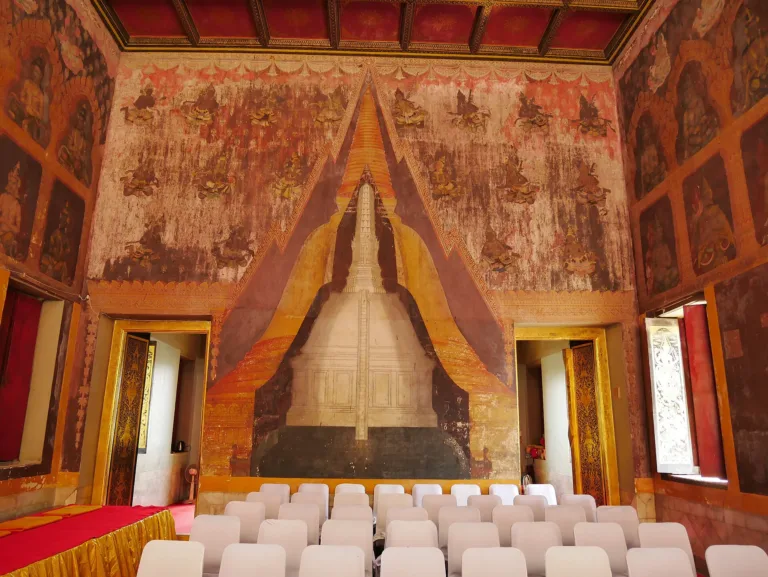
Construction did not go smoothly. Citing the royal chronicles, Silpa Wattanatham says that in mid-1860 heavy rain damaged the base and bricks slid down. The king had Prince Bowon Rangsi Suriyaphan and Prince Ratchasihawikrom redesign the work, and a new foundation was laid on 19 September 1860. He also had a replica of the Nakhon Si Thammarat great relic stupa, about 10 wa 2 sok 1 khuep high, built with a replica of the old Phra Pathom stupa, about 9 wa 1 khuep, in the south court, so people could remember the distant relic stupa he had visited in 1859. The author suggests the replica may also have served as a model for reshaping the new chedi.
The chedi was completed under King Rama V around 1870, after some 17 years. Rama V added bell towers and the golden-brown tiles seen today.
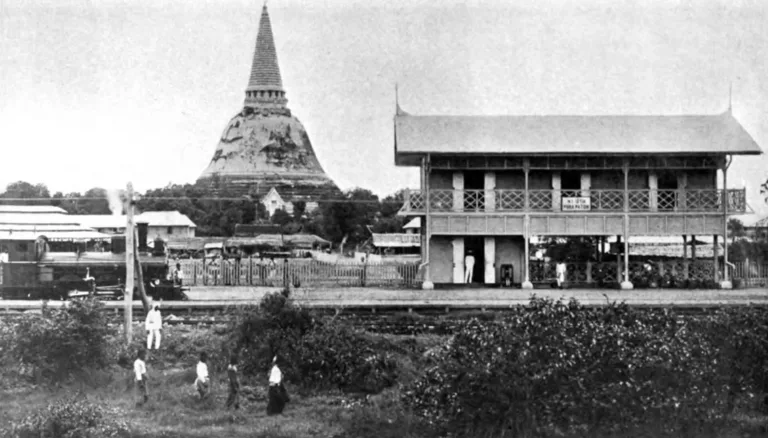
King Chulalongkorn first came to pay homage as a novice in 1866, when the chedi already had its present form. In 1895 Monthon Nakhon Chai Si was created, comprising Nakhon Chai Si, Samut Sakhon and Suphan Buri; in 1901 its offices moved near Phra Pathommachedi; and the railway reached Nakhon Pathom on 19 June 1903. King Vajiravudh renamed the town Nakhon Pathom in 1913, after Rama IV’s Pathom Nakhon palace, and it became Nakhon Pathom province in 1916.
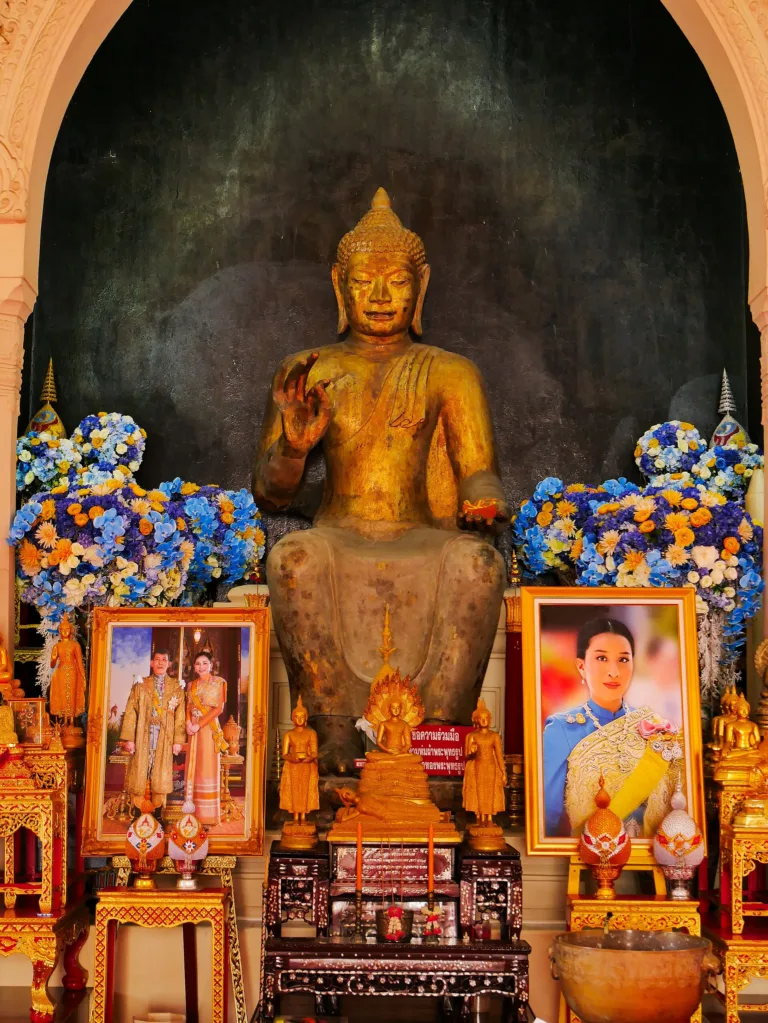
In 1907 Crown Prince Vajiravudh chose Nakhon Pathom for Sanam Chandra Palace and restored the temple. On a northern tour in 1908 he found a badly damaged bronze standing Buddha at Si Satchanalai, with only the head, one hand and the feet left, and had it brought to Bangkok and recast in full.
The image was consecrated at Wat Pho on 30 December 1913, standing 12 sok 4 nio, about 7.42 m, from feet to head. In January 1914 it was moved to the North Vihara of Phra Pathommachedi, redesigned by Prince Naris, and installation was completed on 2 November 1915. On 16 October 1923 it was named “Phra Ruang Rojanarit Si Inthrathit Thammophat Maha Vajiravudh Ratcha Buchaniya Bophit”, and, as Rama VI wished, part of his ashes were enshrined in its base at the back.
In 1932 King Prajadhipok had the ordination hall rebuilt, and in 1940 the chedi became the emblem on Nakhon Pathom’s provincial seal.
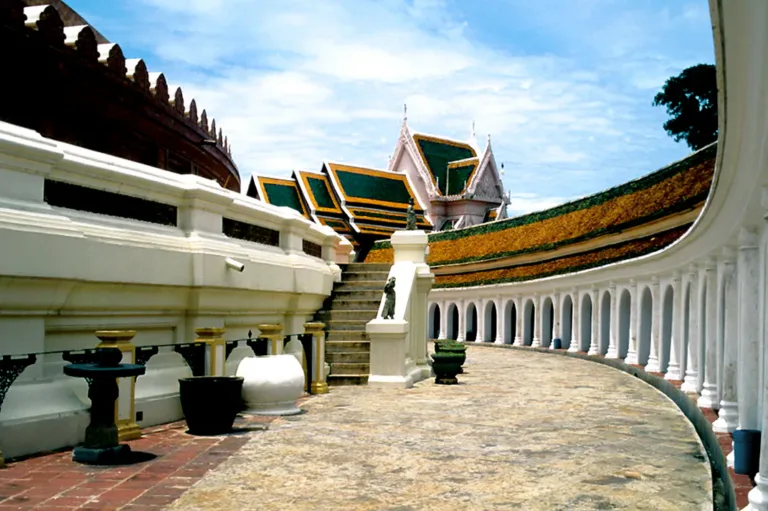
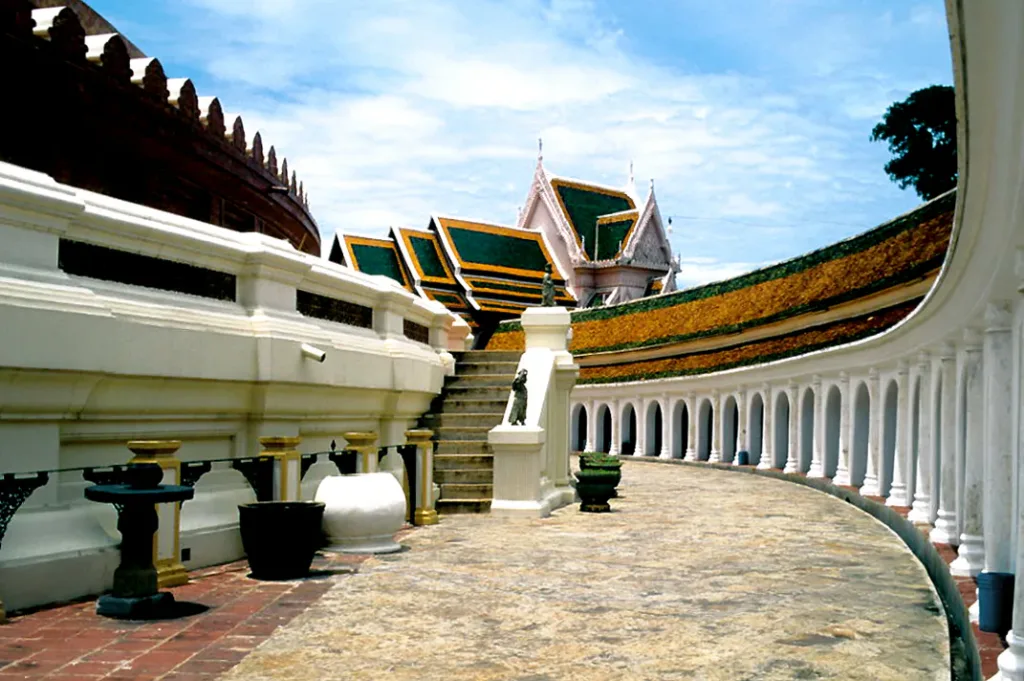
The temple is laid out as a mandala with the chedi at its centre, surrounded by four viharas, the ordination hall and a gallery about 400 m long. Silpa Wattanatham counted 107 Buddha images and bronze statues around the gallery, up from 80: 66 in postures from the Buddha’s life, one special image for Rama VI, eight birth-day Buddhas and others.
South of the chedi is the Phra Pathommachedi National Museum, showing Dvaravati antiquities. Its old building is cramped and hot, and in late 2015 the state-property committee approved about 6 rai of the former Nakhon Pathom central prison site for a new museum by the Fine Arts Department.
The great chedi needs periodic restoration. Cracks were found in 1966; after nine years of study experts called for urgent work, completed in 1981. Further work to deal with moisture ran from 2008 to 2012.
On 2 November 1998, during celebrations of the Phra Ruang image’s anniversary, giant incense sticks built for the event collapsed, killing five people and injuring 13.
In 2009 the Fine Arts Department announced plans to nominate Phra Pathommachedi as a World Heritage Site, but many residents objected over fears of relocating the market and over community management; a 2011 hearing reportedly had only 3 of 200 attendees in favour. In 2016 the culture minister revived the idea, acknowledging the need to explain the impacts to residents.
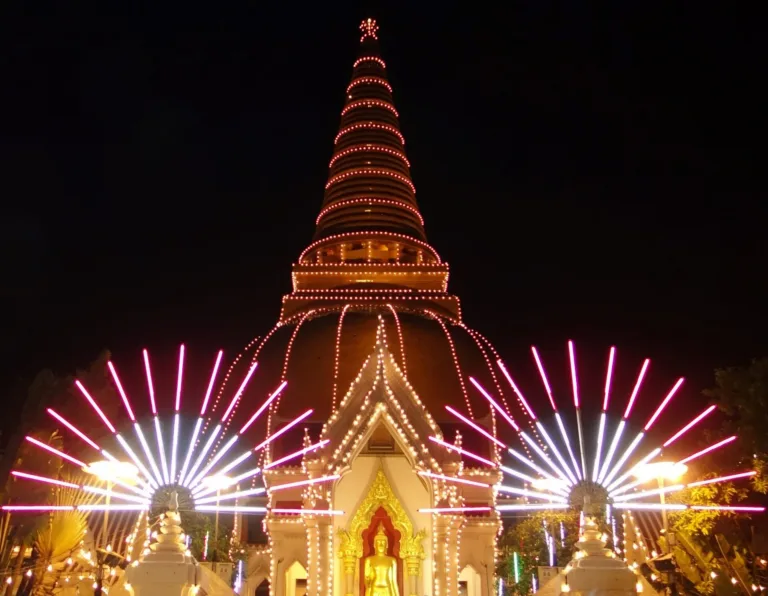
The annual Phra Pathommachedi festival runs from the 12th day of the waxing moon to the 5th day of the waning moon of the 12th lunar month, nine days and nights usually in November, with lights around the chedi, stalls and shows. Wikipedia says the festival in its present form began in 1974 to raise maintenance funds. A ceremony for the Phra Ruang image is also held on 2 November.
Other highlights include Buddha relics in the East Vihara, the Chao Pho Prasat Thong and Chao Pho Suea shrines and the replica of the old stupa, while a night market around the temple runs about 18:00–22:00.
From Bangkok, take Phetkasem Road into Nakhon Pathom, or take the train to Nakhon Pathom station, a short walk or ride away. Travel sources give opening hours as about 05:00–19:00 daily, some say until 20:00.
Dress modestly, walk clockwise around the chedi on the gallery terrace, and remove shoes before entering the viharas and ordination hall.
Arrived? Check in, collect a stamp and tell others what it is like right now
Check your location first, so you do not fill in the form for nothing
Location must be on and within 1 km · One check-in per place per day · come back on other days to check in again
Post photos from anywhere — no need to be here · Up to 20 photos at a time · JPG / PNG / WebP · GPS location data is removed automatically
From Bangkok take Phetkasem or Borommaratchachonnani Road. E…
Phetkasem/Borommaratchachonnani Road · Fuel
Southern Line to Nakhon Pathom · By class
From Bangkok take Phetkasem Road (Highway 4) or Borommaratchachonnani Road into Nakhon Pathom; the temple is in the town centre on Thesa Road.
Car parks around the temple and in town (some charge)
Petrol stations in Nakhon Pathom town
Good mobile signal
Daily, about 05:00–19:00 (some sources say until 20:00)
around 56 km fromBangkok
Wat Phra Pathommachedi Ratchaworamahawihan
Approx. nightly price for 2 adults (next week) · final price depends on your dates
Answers travellers want before they go — a one-minute read
120.45 m, the tallest stupa in Thailand
King Rama IV had it built over the old stupa; it was finished under Rama V around 1870
Rama VI found a damaged Buddha at Si Satchanalai in 1908 and had it recast
12th waxing to 5th waning day of the 12th lunar month, nine days usually in November
Daily, about 05:00–19:00
Best day this week: Thursday 29 Oct · Check in when you arrive to collect a stamp