 01
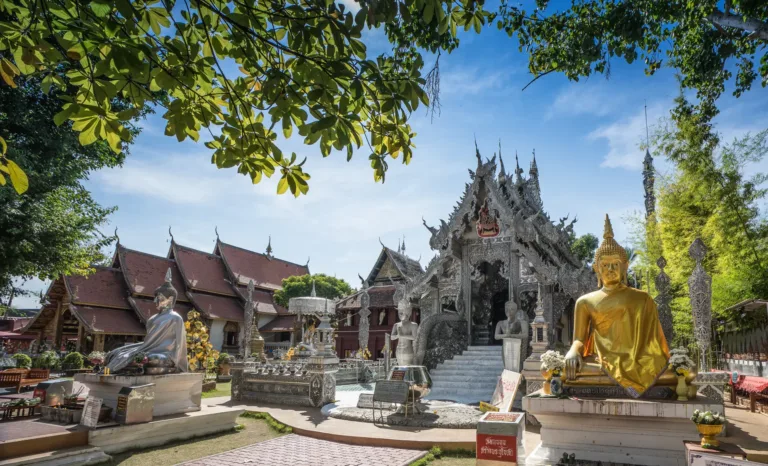
Silver ordination hallClad entirely in embossed silver and metal panels, begun in 2004
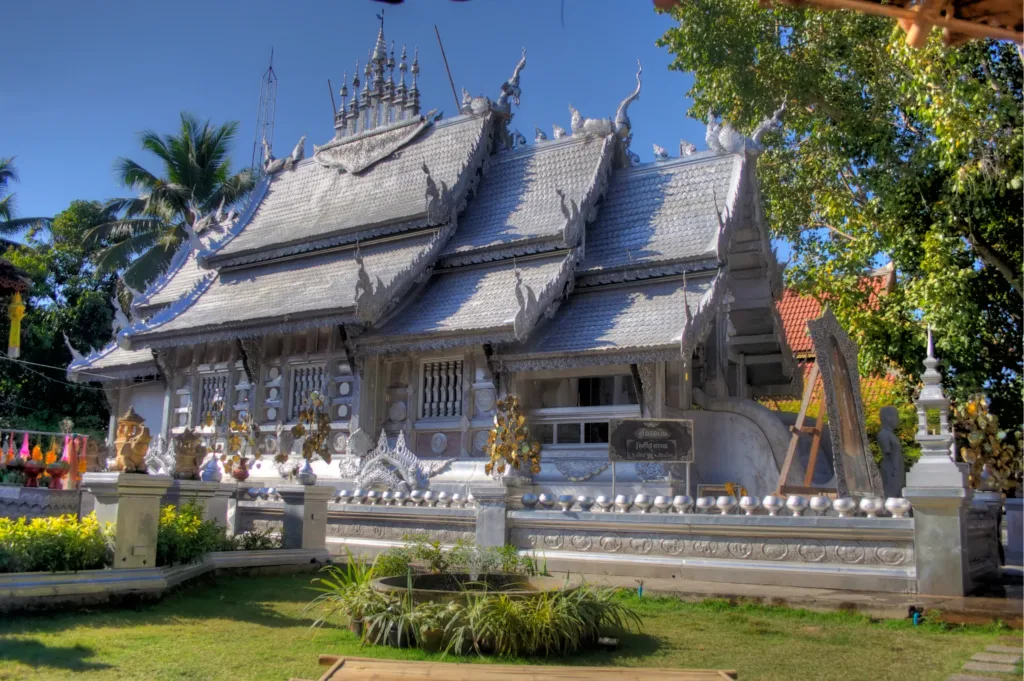
Silver ordination hall · Wua Lai Road, Chiang Mai
A roughly 500-year-old temple on Wua Lai Road, founded around 1500 under King Mueang Kaeo and famous for its silver ordination hall made by the Wua Lai silversmith community.
Good weather, little rain
Dress modestly, covering shoulders and knees · Remove shoes before entering the viharn and ordination hall · Women view the silver hall from outside · No flash inside sacred buildings
Daily, about 06:00–18:00 (Saturdays until about 23:00)
Around 16:30 on Saturday, before the walking street fills up
Wua Lai Walking Street, every Saturday evening
01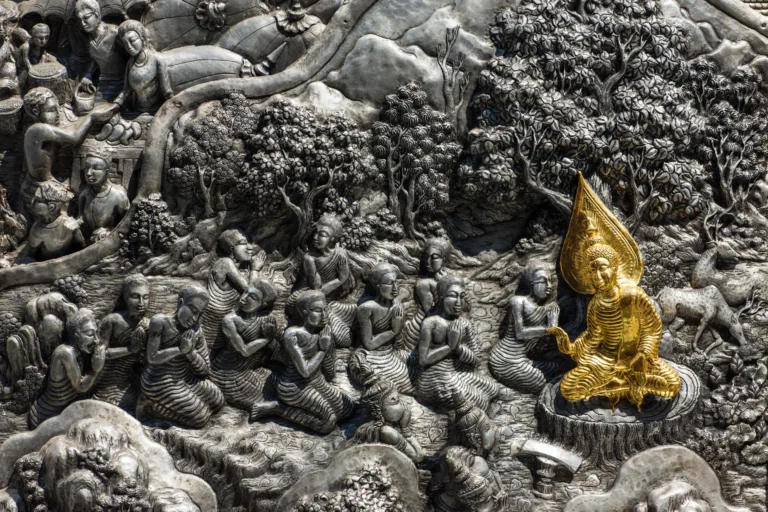 02
 03
Tap a day card to see that day’s weather, rain, haze and hourly forecast
Best time to go Daytime is over · see tomorrow
No warnings today — normal road and weather conditions
Green band = hours used for the score
Best time to go Fine all day little rain through the day
No warnings today — normal road and weather conditions
Green band = hours used for the score
Best time to go Fine all day little rain through the day
No warnings today — normal road and weather conditions
Green band = hours used for the score
Best time to go Fine all day little rain through the day
No warnings today — normal road and weather conditions
Green band = hours used for the score
Best time to go Fine all day little rain through the day
No warnings today — normal road and weather conditions
Green band = hours used for the score
Best time to go Fine all day little rain through the day
No warnings today — normal road and weather conditions
Green band = hours used for the score
Best time to go Fine all day little rain through the day
No warnings today — normal road and weather conditions
Green band = hours used for the score
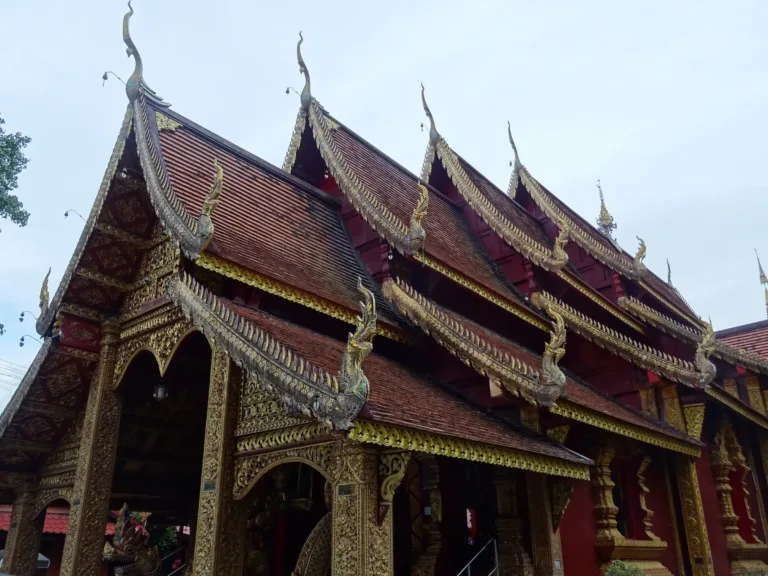
Wat Sri Suphan sits at 100 Wua Lai Road, Hai Ya, just south of the old city and less than a kilometre from Chiang Mai Gate. It was founded around 1500, during the reign of King Mueang Kaeo of the Mangrai dynasty, to house Phra Chao Chet Tue, a bronze Buddha that is still the temple's principal image. The ordination hall's boundary was consecrated in 1509.It is better known as the "Silver Temple". Its ordination hall is clad from top to bottom in panels of silver, aluminium and alloy, hand-embossed with scenes from the Buddha's life, Jataka tales and Lanna motifs. Villagers and silversmiths from Wua Lai, a craft community with more than 200 years of silverwork behind it, began building it in 2004 on the site of the old hall.Following Lanna tradition, women may not enter the silver hall, but they can walk around it, take photos and visit the rest of the temple. The temple's old chedi collapsed after heavy rain on 29 September 2022, and the Fine Arts Department has been overseeing excavation and restoration plans.The temple is open daily and stays open into the evening on Saturdays, when the Wua Lai Walking Street runs right past the gate and the lit-up metalwork looks especially striking. Foreign visitors pay an entry fee, and modest dress covering shoulders and knees is expected.
Arrive Around 16:30 on Saturday, before the walking street fills up
A Lanna tradition; women can view it from outside and visit the rest of the temple
It collapsed in 2022 and the area may be under restoration, so stay outside any barriers
No data yet check before you go · Time needed 30–60 minutes
Saturday evenings during the walking street
Wua Lai Walking Street, every Saturday evening
Wat Sri Suphan is an old temple in the heart of the Wua Lai quarter, just south of Chiang Mai's moat. It was founded around 1500 under King Mueang Kaeo of the Mangrai dynasty, and the story of its founding is still recorded on a stone inscription kept at the temple. Today it is best known as the "Silver Temple", for an ordination hall that the neighbourhood's silversmiths embossed and clad in silver-coloured metal from top to bottom — making the temple both a place of worship and a living museum of Lanna craft.
King Mueang Kaeo, also known as Phra Chao Tilok Panatdathirat, was the 11th king of the Mangrai dynasty and a great-grandson of King Tilokarat. He came to the throne at about 13 and reigned from around 1495 to 1525. Scholars describe his reign as a golden age of Buddhism in Lanna, when monks composed Pali texts and many temples were built or restored. Wat Sri Suphan was one of them.
The temple's inscription is a stone slab shaped like a boundary marker (sema), written in the Fak Kham script and made around 1509. It says the king and his mother — named by several sources as Queen Siriyasawadi — entrusted a senior official, Chao Muen Luang Cha Kham, with building "Wat Sri Suphan Aram" in 1500. The name was later shortened to Wat Sri Suphan.
The inscription also sets out the order of building. In 1502 the monk Maha Thera Yanarat of Wat Muen Lan was invited to be abbot and a great viharn was built; in 1505 a great chedi was raised to enshrine relics of the Buddha; and in 1509 the boundary of the ordination hall was consecrated, with land, offerings and about 20 households given to look after the temple. Scholars believe it probably belonged to the "new Lanka" school linked to Wat Pa Daeng, which King Mueang Kaeo supported.
The principal image in the ordination hall is Phra Chao Chet Tue, a bronze Buddha in the earth-touching posture, about three cubits across the lap and four cubits tall. It is believed to be the image the king and his mother offered when the temple was founded. Some locals also call it "the Miracle Buddha", from a story that it survived gunfire during the Second World War, and it remains deeply revered in the community. In 1857 the temple received a royal grant of its consecrated grounds (wisungkhamsima).
The neighbourhood around the temple dates back to the time of King Kawila, who rebuilt Chiang Mai after the wars with Burma and brought in people from many towns to repopulate it. According to several sources, one group of silversmiths came from the village of Ngua Lai in the Salween basin in the southern Shan State, was settled south of the city around 1799–1804, and named its new home after the old one — "Ngua Lai", or Wua Lai. Other sources say these smiths came from Chiang Tung (Kengtung) and Sipsong Panna, so accounts of their homeland still differ.
The silversmiths settled around Wat Muen San and Wat Sri Suphan. Men hammered the pieces into shape, women added the decoration, and the elderly and children polished them. Their main products were bowls, pedestal trays and platters, sold in Chiang Mai and Bangkok. Today there are two silversmith communities, Wua Lai Muen San and Wua Lai Sri Suphan, but factory goods have steadily thinned the ranks of young craftsmen.
When the old ordination hall had badly decayed, the abbot, Phra Khru Phithak Sutthikhun, decided around 1994 to rebuild it, and in 2001 he set up a group to preserve the community's crafts. Work on the silver hall began on 2 June 2004 on the original base and consecrated ground. Local artisans embossed panels of silver, aluminium and alloy with the Buddha's life, Jataka tales and auspicious motifs. The temple later set up a craft school to pass the skills on to young people. Sources give slightly different completion dates, around 2015–2016.
Following Lanna custom, women are not allowed inside this hall. The reason given by the temple and community is that sacred objects, valuables and amulets have been buried beneath its base within the consecrated boundary over hundreds of years, and it is believed that a woman entering would weaken the place's sanctity and bring "khued" (misfortune). Women can pay respect to Phra Chao Chet Tue from an area outside. When women entered the hall in late 2017 and it made the news, the temple arranged a traditional ceremony of atonement.
The temple's chedi was originally a round Lanna-style structure; its base was later remodelled as an octagon, and it was last restored in 1975, when it was gilded. On the evening of 29 September 2022, after days of continuous rain had seeped into its cracks, the chedi — about as tall as a three-storey building — collapsed completely. Fortunately no one was hurt.
Clearing the rubble, the Fine Arts Department's 7th Regional Office in Chiang Mai found that the fallen chedi was an outer shell built over an older one. Inside were Chiang Saen and Lanna-style Buddha images, relics and a "heart of the relic" in Lanna tradition, along with many old bricks around 500 years old. The department took charge of conserving the inner chedi and set out restoration guidelines together with the temple and community, aiming to stay as close as possible to the original form.
Arrived? Check in, collect a stamp and tell others what it is like right now
Check your location first, so you do not fill in the form for nothing
Location must be on and within 0.2 km · One check-in per place per day · come back on other days to check in again
Post photos from anywhere — no need to be here · Up to 20 photos at a time · JPG / PNG / WebP · GPS location data is removed automatically
The temple is at 100 Wua Lai Road, Hai Ya, just south of the old city moat.
Under 1 km from Chiang Mai Gate along Wua Lai Road
From anywhere in town to the lane entrance
Via Wua Lai Road; limited parking, road closed Saturday evenings · Fuel
City streets (a small lane off Wua Lai Road)
Limited space at the temple; Wua Lai Road closes to traffic on Saturday evenings
Daily, about 06:00–18:00 (Saturdays until about 23:00)
about 0.8 km from Chiang Mai Gate
Wat Sri Suphan
Answers travellers want before they go — a one-minute read
100 Wua Lai Road, Hai Ya, Mueang Chiang Mai, under 1 km from Chiang Mai Gate
No, under Lanna tradition, but they can walk around it and visit the rest of the temple
It uses silver, aluminium and alloy panels embossed by local craftsmen
Saturday evening, when the temple stays open late and the Wua Lai Walking Street runs outside
The old chedi collapsed on 29 September 2022; the Fine Arts Department recovered the remains and planned a restoration, so check its current state on site
About 30–60 minutes
Best day this week: Saturday 28 Nov · Check in when you arrive to collect a stamp
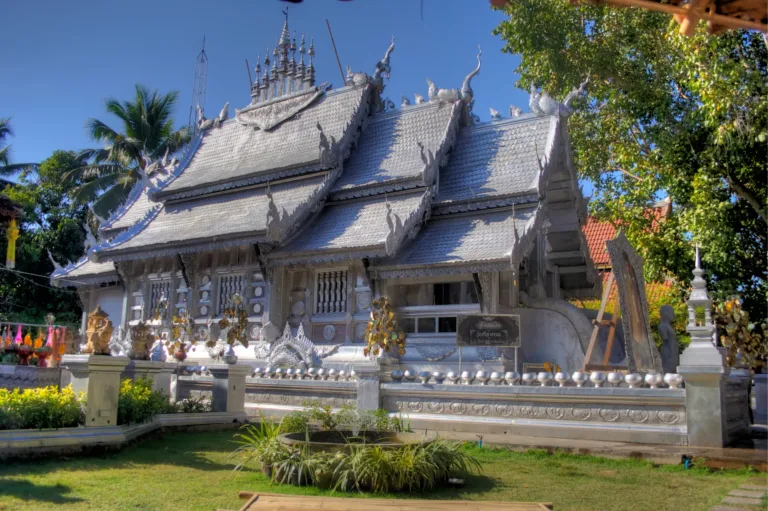 Wualai Saturday Walking Street
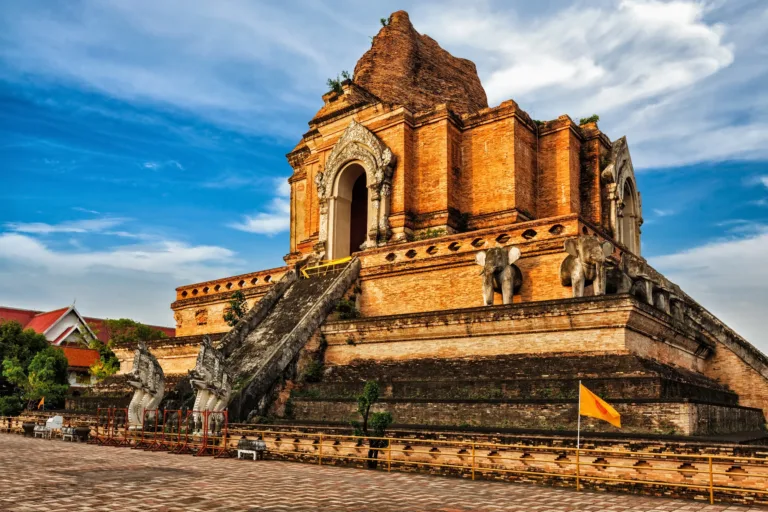 Wat Chedi Luang Varavihara
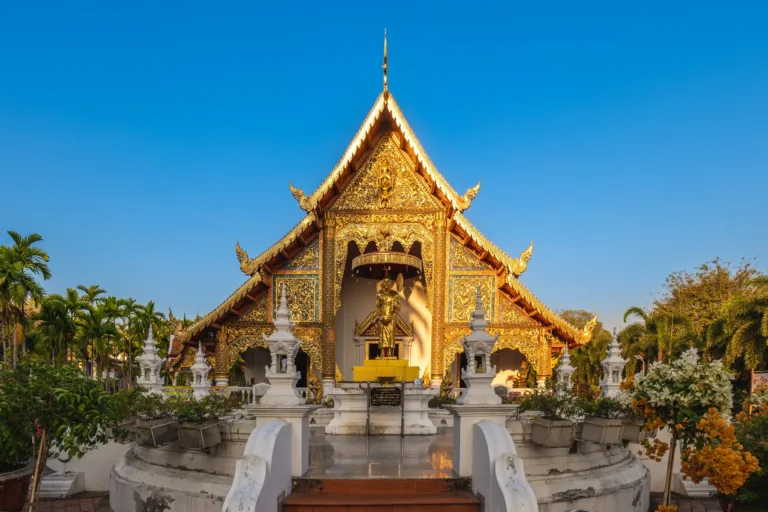 Wat Phra Singh Woramahawihan
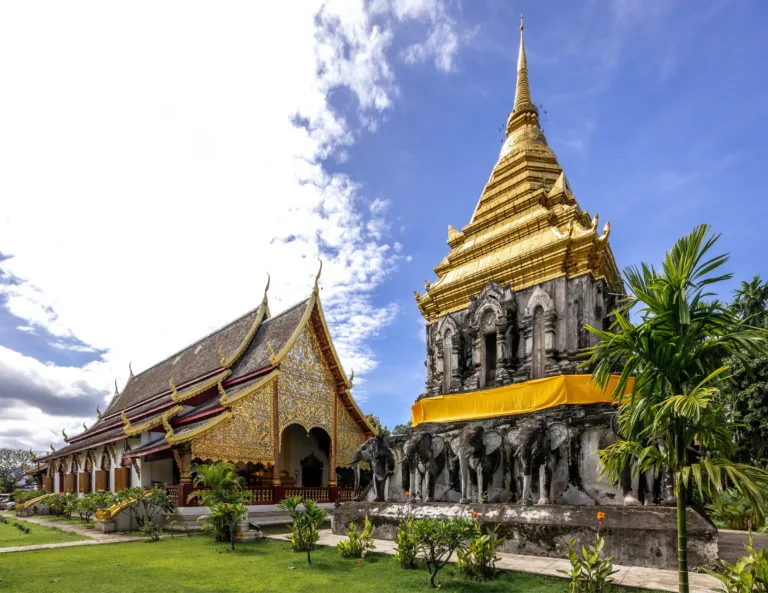 Wat Chiang Man