 01
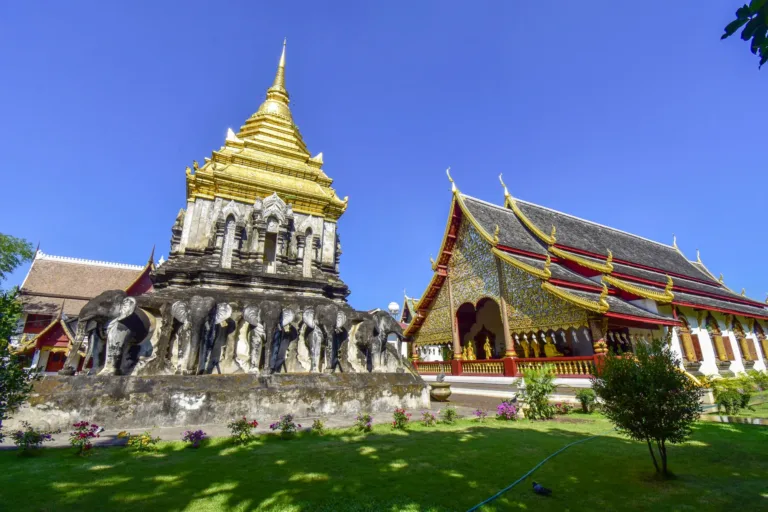
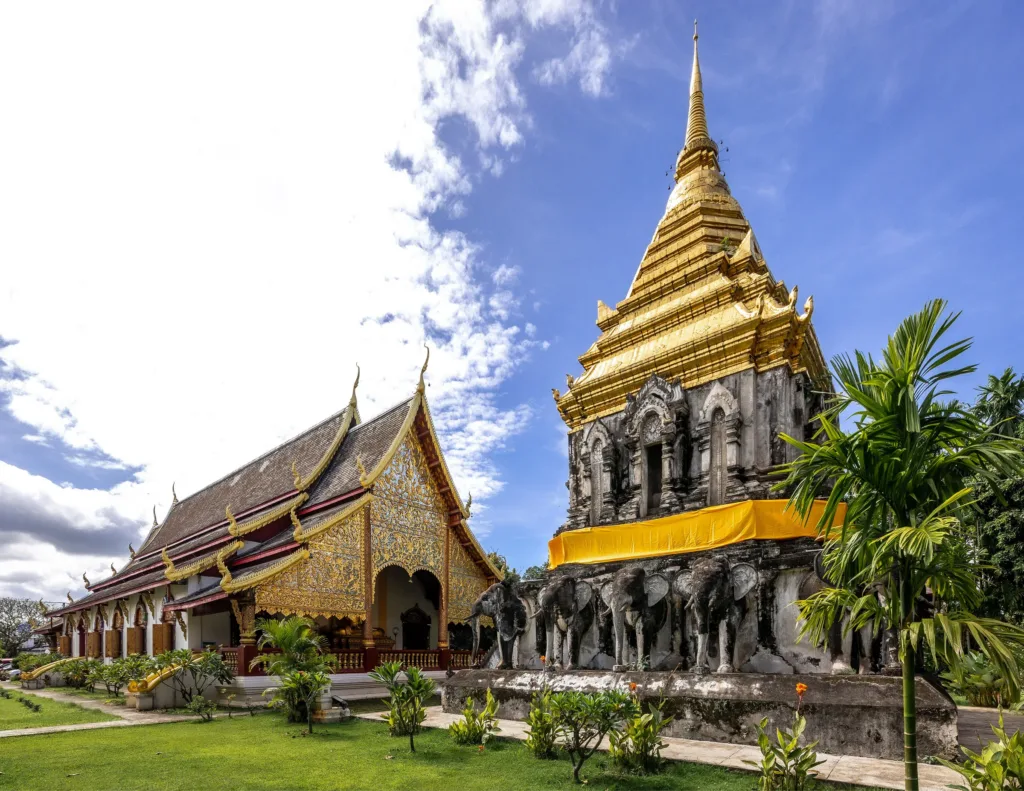
Chedi Chang LomA castle-shaped stupa ringed by 15 half-elephants
Chiang Mai's first temple · Old City
Chiang Mai's first temple, founded by King Mangrai in 1296 inside the old city moat. Known for its elephant-ringed chedi and two revered images, the Crystal Buddha and Phra Sila.
Good weather, little rain
Dress modestly, covering shoulders and knees · Remove shoes before entering the viharn · Keep noise down
Daily, about 08:00–17:00
Morning, when it's cooler and quieter
01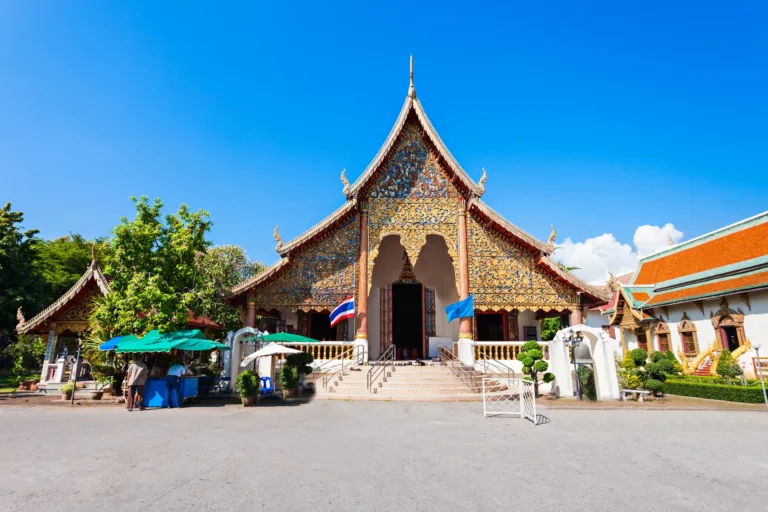 02
 03
Tap a day card to see that day’s weather, rain, haze and hourly forecast
Best time to go Daytime is over · see tomorrow
No warnings today — normal road and weather conditions
Green band = hours used for the score
Best time to go Fine all day little rain through the day
No warnings today — normal road and weather conditions
Green band = hours used for the score
Best time to go Fine all day little rain through the day
No warnings today — normal road and weather conditions
Green band = hours used for the score
Best time to go Fine all day little rain through the day
No warnings today — normal road and weather conditions
Green band = hours used for the score
Best time to go Fine all day little rain through the day
No warnings today — normal road and weather conditions
Green band = hours used for the score
Best time to go Fine all day little rain through the day
No warnings today — normal road and weather conditions
Green band = hours used for the score
Best time to go Fine all day little rain through the day
No warnings today — normal road and weather conditions
Green band = hours used for the score
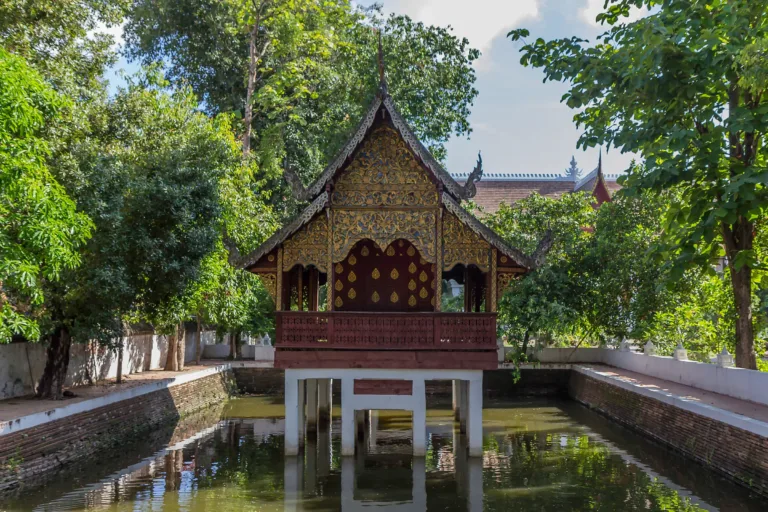
Wat Chiang Man sits on Ratchaphakhinai Road in Si Phum, inside Chiang Mai's old moat, and is regarded as the city's first and oldest temple. King Mangrai founded it in 1296 on the spot where he lived while building Chiang Mai, then gave the site over as a temple.Most visitors come for Chedi Chang Lom, a castle-shaped stupa whose base is ringed by 15 half-elephants, and for the small viharn holding two revered images: Phra Sae Tang Khamani, a tiny clear-crystal Buddha also called Phra Kaew Khao, and Phra Sila, a stone relief of the Buddha taming the elephant Nalagiri.In front of the ordination hall stands the Wat Chiang Man inscription, which records the founding of Chiang Mai, while the main viharn holds a standing Buddha with the year 1465 carved on its base. There is also a scripture hall set in a pond, and the temple is among the sites in Chiang Mai's proposed UNESCO World Heritage nomination.It's still a working monastery, so dress modestly. Wat Chedi Luang and the Three Kings Monument are a short walk away.
Arrive Morning, when it's cooler and quieter
It's an active monastery
The small viharn may be closed, so you can't always see the images
Free · Time needed 45–90 minutes
Late morning to afternoon, and weekends
Wat Chiang Man is regarded as Chiang Mai's first temple and the oldest inside the moat. King Mangrai founded it in 1296, at the same time as the city, giving over the residence he used while overseeing the building work. An inscription in front of the ordination hall still records the founding of Chiang Mai. The temple is home to the elephant-ringed Chedi Chang Lom and two images the people of Chiang Mai have revered for more than seven centuries: the Crystal Buddha (Phra Sae Tang Khamani) and Phra Sila.
Before it became a temple, the site was Mangrai's temporary camp, which some sources call "Wiang Lek", and some say it was once a Lua settlement named Nopburi. The Wat Chiang Man inscription says that Mangrai, King Ngam Mueang of Phayao and King Ruang of Sukhothai, whom scholars identify as Ramkhamhaeng, founded the city on a Thursday that works out to 12 April 1296, at about 4 a.m. Mangrai then had a chedi built on the spot where his sleeping hall stood, and the land around it became Wat Chiang Man. The name reflects the belief that a city needs a temple as its stronghold.
Lanna's chronicles don't agree on the dates of this period. The Chiang Mai Chronicle says Mangrai took Hariphunchai around 1281, while the Jinakalamali puts it around 1292, before the new capital was founded in 1296. Some scholars give the temple's founding year as 1297, which is also the year many sources give for the first chedi.
The temple's greatest treasure is Phra Sae Tang Khamani, or Phra Kaew Khao, a clear crystal Buddha about 10 cm tall, seated in the gesture of subduing Mara. Legend says it was made at Lavo by the monk Kassapa and the divine craftsman Vishnukarma, with relics of the Buddha placed in four spots, before Queen Chamadevi brought it north to Hariphunchai. The legend goes on that when Mangrai attacked Hariphunchai, the hall housing the image escaped the fire, so he took it to his palace, which later became Wat Chiang Man. Scholars still disagree about its real age; some date it on stylistic grounds to around the 15th century.
Phra Sila is a stone relief of the Buddha taming the elephant Nalagiri, with the elephant kneeling on his right and Ananda holding an alms bowl on his left. Legend says King Ajatashatru had it carved before it came to Hariphunchai. Scholars see Gupta influence in it and believe it came from India or Sri Lanka. Under King Tilokarat it was moved between several temples, including Wat Pa Daeng, Wat Muen San and Wat Suan Dok, before being installed in the palace's shrine hall. Today both images sit in the small four-gabled viharn of the temple.
Chedi Chang Lom stands where Mangrai's sleeping hall was and is the oldest structure in the temple. Around 1471, under King Tilokarat, the original chedi collapsed and was rebuilt in laterite. Its present form probably comes from a restoration by Phaya Saen Luang around 1571: a Lanna-style, single-spired prasat chedi very similar to Chedi Luang. Its base is ringed by 15 half-elephants in stucco, though some sources count 16.
In the mid-16th century Chiang Mai came under Burmese rule, and some sources say the temple was abandoned for a time. The inscription records restorations in 1558, 1571 and 1581, with Phaya Saen Luang leading the building of the chedi, viharn, ordination hall, scripture library, walls and arched gate, and Phra Maha Hinthathitchawangsa as abbot. The Wat Chiang Man inscription, known as Inscription No. 76, was carved in Fak Kham script in 1581, the year of the last events it records. It looks back on the founding of the city, tells the temple's history and lists its donors.
After long years of war the temple fell into ruin again, and it was restored on a large scale under King Kawila. Later rulers of Chiang Mai kept supporting it: King Inthawichayanon gave the Crystal Buddha its gilded wooden base and gold canopy in 1874. In the main viharn, a standing Buddha has the year 1465 carved on its base, one of the oldest dated Lanna Buddha images.
The temple played an important part in the Thammayut order's arrival in the north. Under Chao Inthawarorot, Thammayut monks spent the rains retreat at Wat Chiang Man for the first time, before moving on to Wat Ho Tham and Wat Chedi Luang. Later, Khruba Srivichai renovated the main viharn; some sources date this to the 1920s, others to about 1927–1933. Its gable shows a crown above a three-headed elephant, which scholars link to the temple's Thammayut ties, and inside are gold-on-red murals telling the story of the city's founding. A hall dedicated to Khruba Srivichai was added in 1962.
Chedi Chang Lom was registered as a historic monument in the Royal Gazette on 8 March 1936. Beyond its history, the temple is a centre of old-city tradition: at the Tan Kuay Salak merit-making festival, Wat Chiang Man holds its ceremony first and the other temples in the city follow in turn. Each year there's a celebration for the Crystal Buddha and Phra Sila, and in years of drought, people bathe Phra Sila to ask for rain.
Today Wat Chiang Man is one of the key sites of "Chiang Mai, Capital of Lanna", which has been on Thailand's World Heritage tentative list since 2015. In January 2026 the cabinet approved the formal nomination, together with Wat Chedi Luang, Wat Phra Singh, Wat Suan Dok, Wat Umong, Wat Phra That Doi Suthep, Wat Chet Yot and the city moat and walls. Experts visited to assess the site in August 2026, and a decision is expected in 2027.
Arrived? Check in, collect a stamp and tell others what it is like right now
Check your location first, so you do not fill in the form for nothing
Location must be on and within 0.4 km · One check-in per place per day · come back on other days to check in again
Post photos from anywhere — no need to be here · Up to 20 photos at a time · JPG / PNG / WebP · GPS location data is removed automatically
The temple is at 171 Ratchaphakhinai Road, Si Phum, in the northeast corner of Chiang Mai's old city.
Inside the old city on Ratchaphakhinai Road · Fuel
From anywhere in town to the temple
About 1.1 km from Tha Phae Gate
City streets
Daily, about 08:00–17:00
about 1.1 km from Tha Phae Gate
Wat Chiang Man
Answers travellers want before they go — a one-minute read
171 Ratchaphakhinai Road, Si Phum, Mueang Chiang Mai, inside the old moat, about 1.1 km from Tha Phae Gate
King Mangrai founded it in 1296 on the site where he lived while building the city
Phra Sae Tang Khamani, a tiny clear-crystal Buddha also called Phra Kaew Khao, deeply revered locally
15 half-elephants ring the base
No, it's free; donations are welcome
About 45–90 minutes
Best day this week: Saturday 28 Nov · Check in when you arrive to collect a stamp
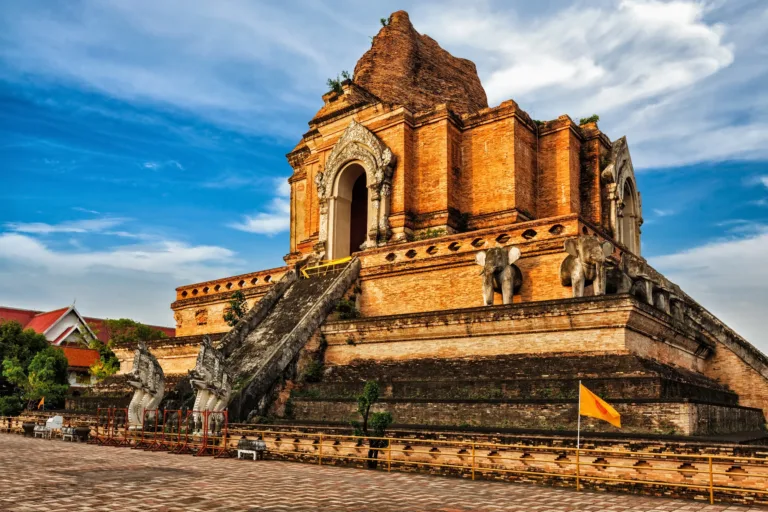 Wat Chedi Luang Varavihara
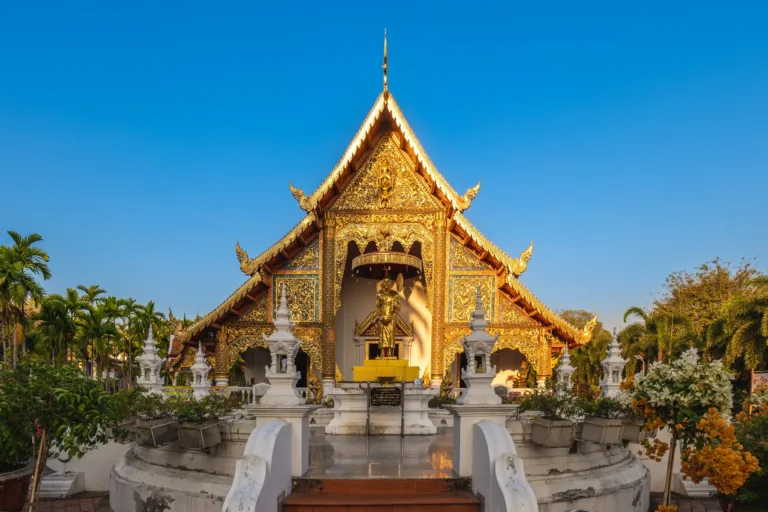 Wat Phra Singh Woramahawihan
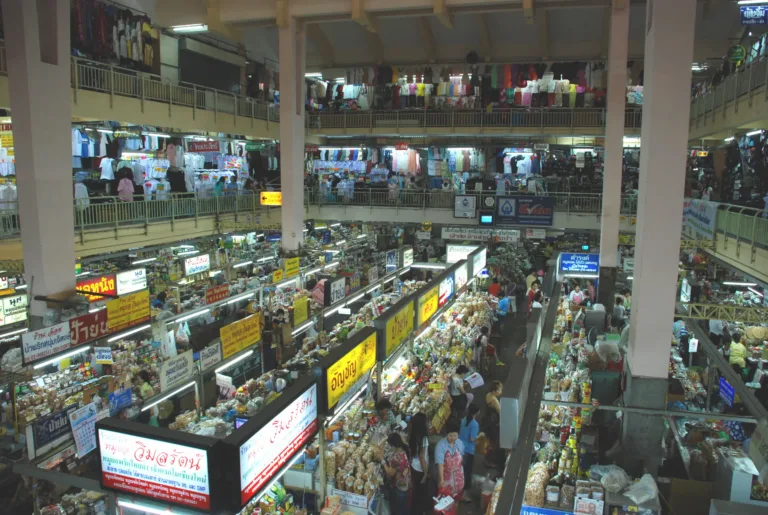 Warorot Market (Kad Luang)
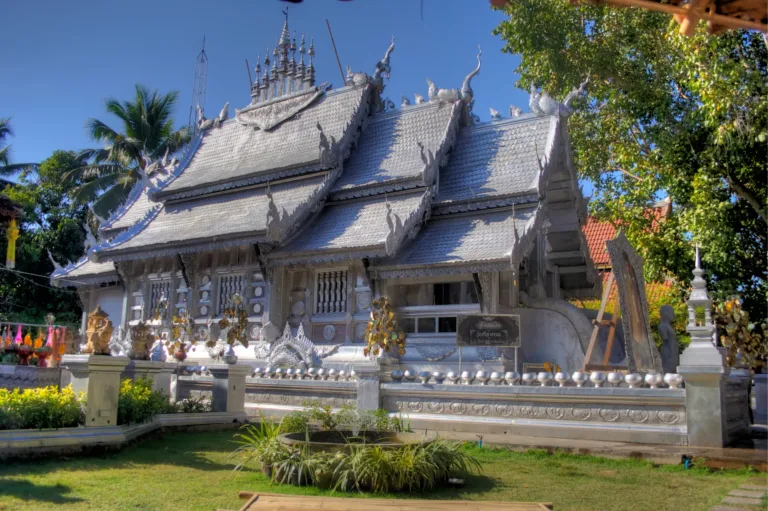 Wualai Saturday Walking Street