 01
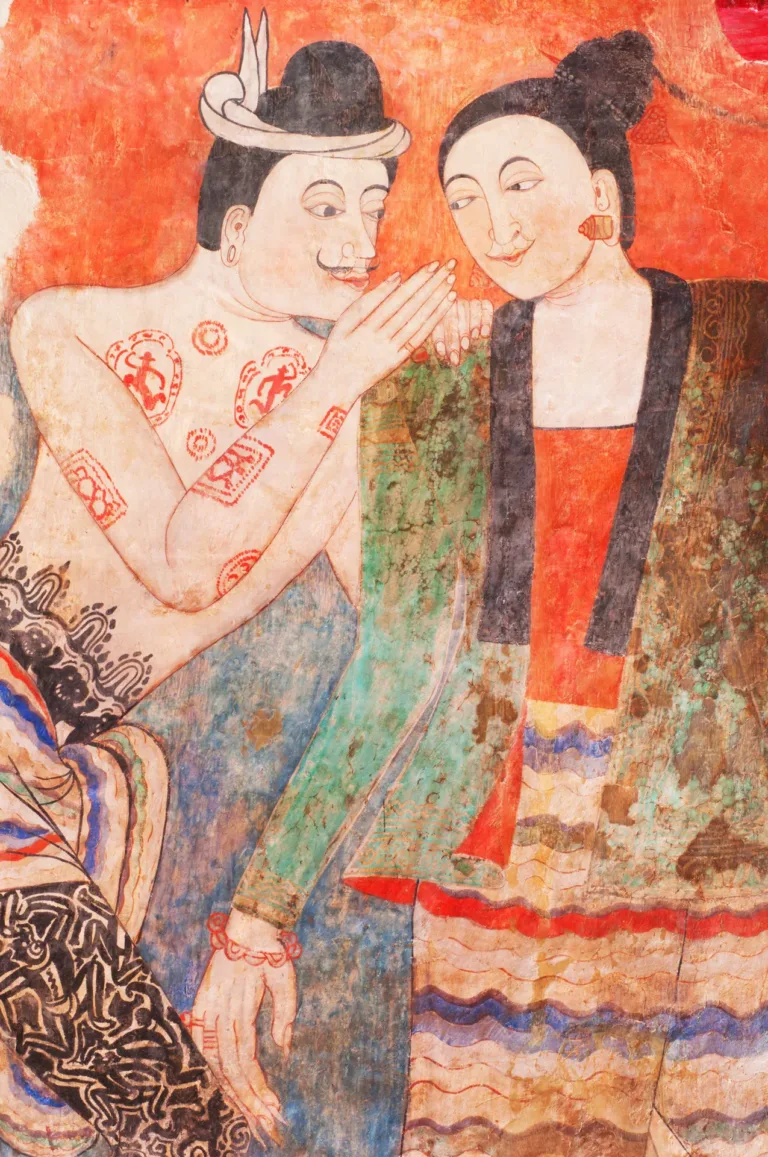
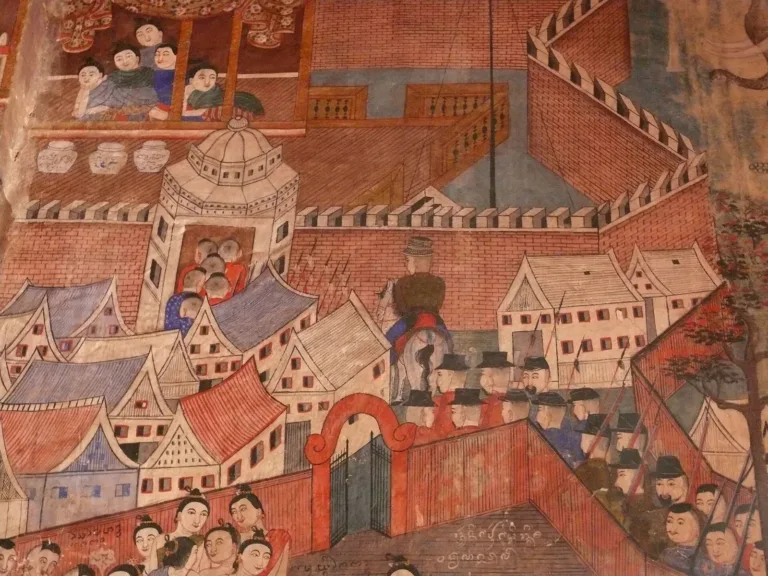
Pu Man Ya Man muralThe famous 'whispering' couple by Tai Lue artists, a symbol of Nan
Historic Lanna temple · Central Nan
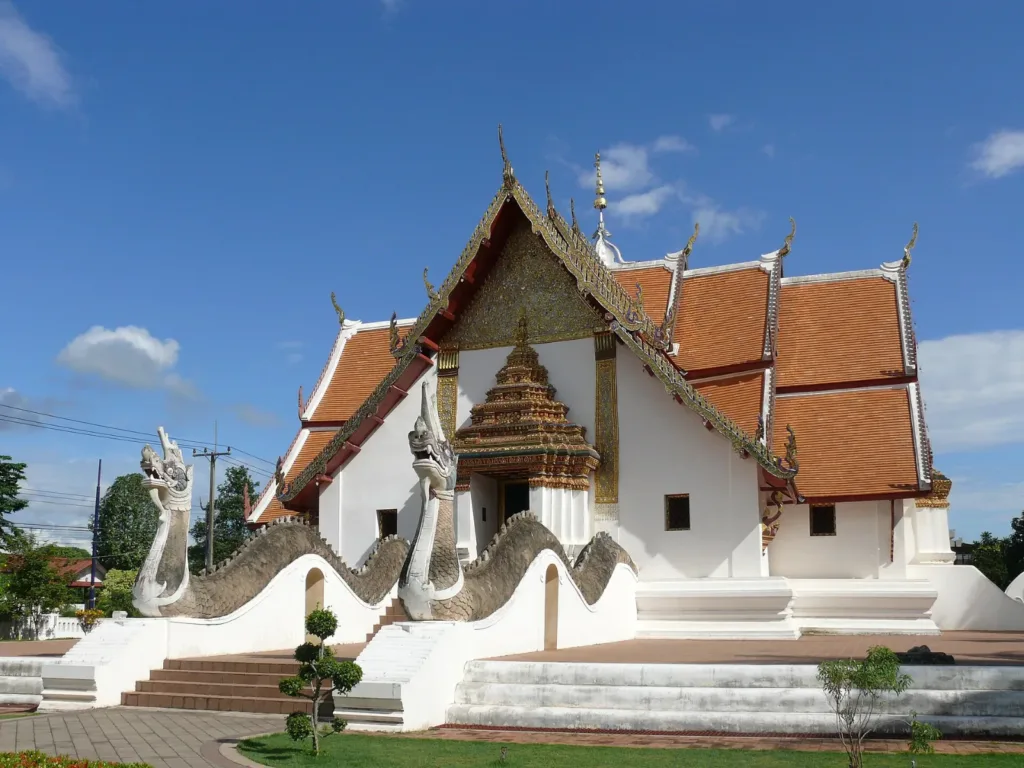
A historic temple in central Nan, founded around 1596, known for its cruciform hall on two giant nagas, four Buddhas facing the four directions and the Tai Lue 'whispering' mural of Pu Man Ya Man.
Holiday / event — crowded
Cover shoulders and knees · Remove shoes before entering the hall · No flash photography of the murals · Do not touch the wall paintings
Daily, around 07:00–20:00
09:00, ahead of tour groups
01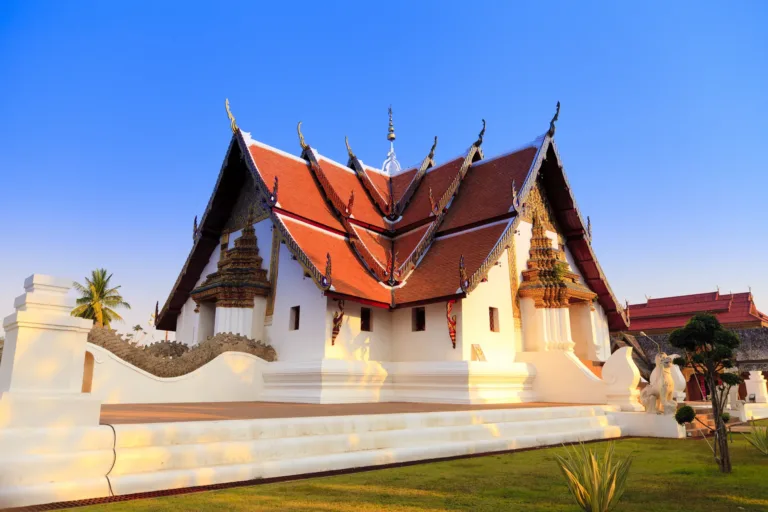 02
 03
 04
Tap a day card to see that day’s weather, rain, haze and hourly forecast
Best time to go Daytime is over · see tomorrow
Holiday — traffic on the way up and parking fills fast; leave early
Green band = hours used for the score
Best time to go Fine all day little rain through the day
Holiday — traffic on the way up and parking fills fast; leave early
Green band = hours used for the score
Best time to go Fine all day little rain through the day
No warnings today — normal road and weather conditions
Green band = hours used for the score
Best time to go Fine all day little rain through the day
No warnings today — normal road and weather conditions
Green band = hours used for the score
Best time to go Fine all day little rain through the day
No warnings today — normal road and weather conditions
Green band = hours used for the score
Best time to go Fine all day little rain through the day
No warnings today — normal road and weather conditions
Green band = hours used for the score
Best time to go Fine all day little rain through the day
No warnings today — normal road and weather conditions
Green band = hours used for the score
Wat Phumin sits on Pha Kong Road in the centre of Nan town. According to the Nan chronicle, it was founded around 1596 by Chao Chetbutra Phrommin, ruler of Nan, and was first called Wat Phrom Min after him.The ordination hall and assembly hall share a single cruciform building with carved doors on all four sides, designed to look as if it rests on the backs of two great nagas. Inside, four Buddha images in the Maravijaya pose face out in each direction.The real treasure is the Tai Lue murals painted during a major restoration around 1867–1875. They tell Jataka stories and capture daily life in old Nan, including the much-loved Pu Man Ya Man scene of a couple whispering.
Arrive 09:00, ahead of tour groups
Photos of the murals are fine, but flash is not allowed
Cover shoulders and knees, and remove shoes before entering the hall
The Nan River has spilled into the grounds in several recent rainy seasons
Free · Time needed 30–45 minutes
Weekends 10:00–15:00
Wat Phumin is the old heart-of-town temple of Nan, standing in the middle of the old city on Phakong Road. According to the Nan chronicle, it was founded around 1596 by Chao Chetbutra Phrommin, ruler of Nan, and was first called Wat Phrom Min after him before the name shifted to Wat Phumin. What you see today comes from a major restoration that began around 1867 under Chao Anantaworaritthidet: the cruciform hall that seems to rest on the backs of nagas, the four Buddha images facing the four directions, and the Tai Lue murals, home to "Pu Man Ya Man", the whispering couple that has become a symbol of Nan.
Chao Chetbutra Phrommin came to power in Nan around 1591, when Lanna, Nan included, was under Burmese rule. The chronicle says he built the temple about six years into his reign and named it after himself. Some studies also find the temple's name in documents from around 1603 describing a conflict between him and the Chiang Mai side. Even so, the Association of Siamese Architects notes that the style of the surviving building points to a later date than the chronicle gives.
The temple owes its present form to Chao Anantaworaritthidet, the 62nd ruler of Nan, who reigned from about 1852 to 1892. He ordered a major restoration starting around 1867, late in the reign of King Rama IV, which took about seven years. Most sources give 1867–1874 or 1875, though some say the work was completed in 1867. The main hall seen today is believed to have been built or rebuilt during this period.
The main building is a single cruciform hall that serves as both ordination hall and assembly hall: the east–west axis is the viharn and the north–south axis the ubosot. It has a three-tiered, two-layered roof, carved and gilded wooden gables inlaid with glass, and doors and stairways on all four sides. Along the north–south stairways, great undulating nagas run through the building, heads on one side and tails on the other, so the hall seems to float on their backs. Cruciform plans like this are rare in Lanna, and the Fine Arts Department suggests it may be the first cruciform ordination hall in Thailand.
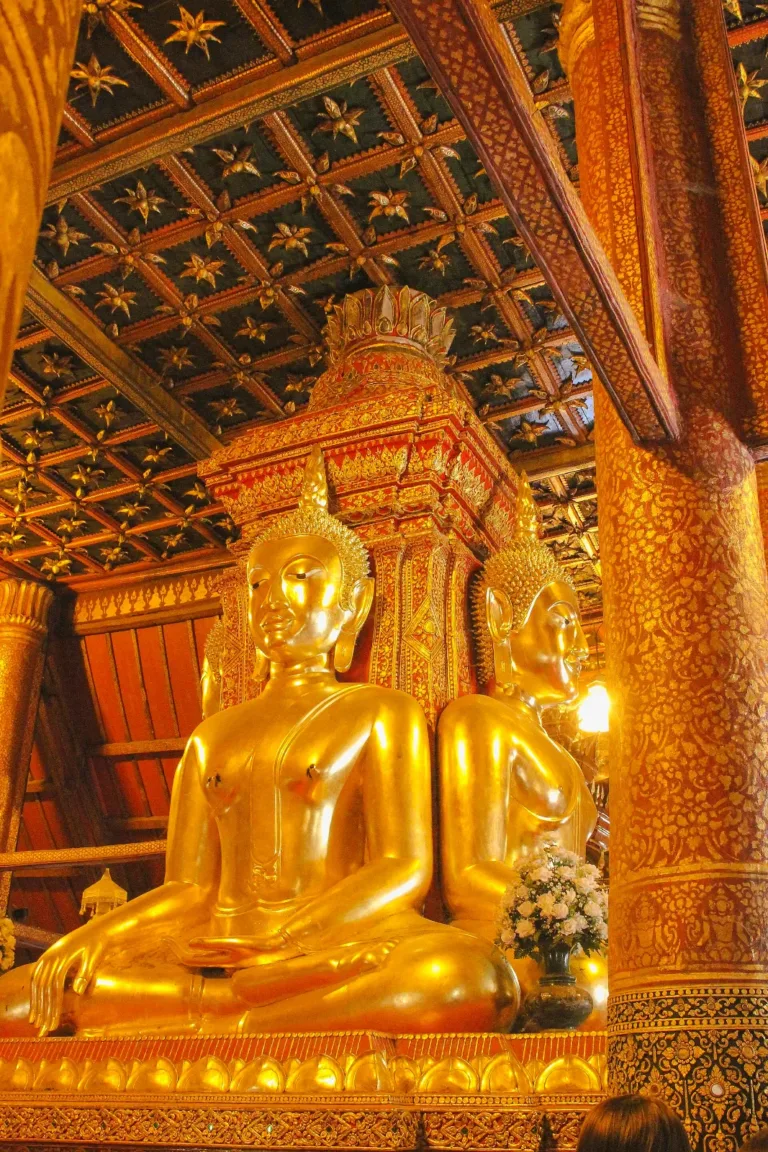
At the centre sit four Buddha images in the subduing-Mara posture, made of lacquered and gilded stucco in the Nan school of Lanna art, each about 2.70 metres across the lap. They sit back to back around a central core, each facing one of the four doors. They are believed to represent four Buddhas — Kakusandha, Konagamana, Kassapa and Gotama — but there is no firm evidence of why four main images were made.
No written record names the painter of the murals; most of what is known comes from oral tradition in the Tai Lue community and scholars' interpretations. The most widely held view is that the lead painter was Nan Bua Phan (also called Thit Bua Phan), a local Tai Lue artist believed to have painted at Wat Nong Bua in Tha Wang Pha district first. Some work by American historians, however, describes him as coming from Laos.
Scholars also disagree on when the murals were painted. Most sources place them in the 1867–1875 restoration, but Jirasak Dechwongya, drawing on the Nan chronicle and the paintings' style, proposes around 1894 under Chao Suriyaphong Pharitdet. The murals show Westerners and a sailing ship flying the French flag, which some link to the Paknam crisis of 1893, while one critic cautions that foreigners were a long-repeated motif in Thai painting and should not be used to date the murals with certainty.
The upper walls tell the life of the Buddha, while the lower walls mix Jataka tales with daily life in old Nan. The main story is the Khatthana Kumara Jataka, a non-canonical tale of an orphan searching for his father, which scholars say is not found in murals at any other temple in Thailand. There is also the Nemi Jataka, along with scenes of courtship, weaving, trading, Nan-style sarongs, tattooed men, Chinese and Western visitors, and a foreigner unloading goods from a steamboat. Some scholars read the Khatthana Kumara story as a political allegory of Nan's position as a vassal state at the time.
The best-loved image is a man and woman whispering to each other. In the local language "pu" and "ya" mean an older man and woman, and "man" means Burmese. From their clothes and hairstyles, people believe the man is Burmese and the woman Tai Lue, and some sources believe the image is a self-portrait of the painter. The scene is nicknamed "the whisper that echoes around the world", and in the tourism era it has been reinterpreted as an image of eternal love.
The temple's fame spread beyond Nan long ago. During the Second World War, the Thai government printed Wat Phumin on the 1-baht banknote, and the Ancient City (Muang Boran) in Samut Prakan later built a replica of its hall. The historian David K. Wyatt used the murals as a historical source in a study published in 1993, and in 2002 the Wat Phumin hall received a conservation award from the Association of Siamese Architects.
In recent years the century-old building has taken several knocks. Earthquakes in Laos in 2019 and 2021 left cracks in the hall, and in 2020 the Fine Arts Department found flaking paint and loose plaster on the murals and set up a conservation project. Between 2024 and 2026 the Nan River repeatedly flooded the grounds. After the August 2026 flood, the Fine Arts Department found no new damage to the hall or its murals; the visible cracks are old ones caused by uneven settling, foundation reinforcement is being designed, and the temple remains open to visitors.
Arrived? Check in, collect a stamp and tell others what it is like right now
Check your location first, so you do not fill in the form for nothing
Location must be on and within 0.2 km · One check-in per place per day · come back on other days to check in again
Post photos from anywhere — no need to be here · Up to 20 photos at a time · JPG / PNG / WebP · GPS location data is removed automatically
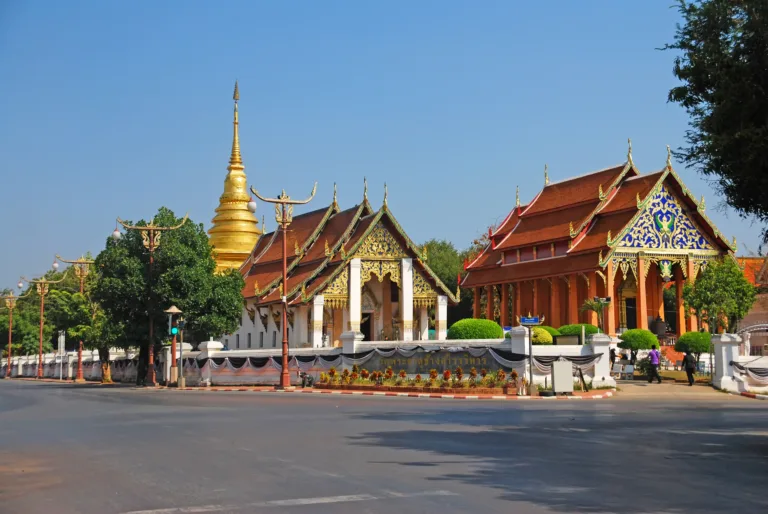
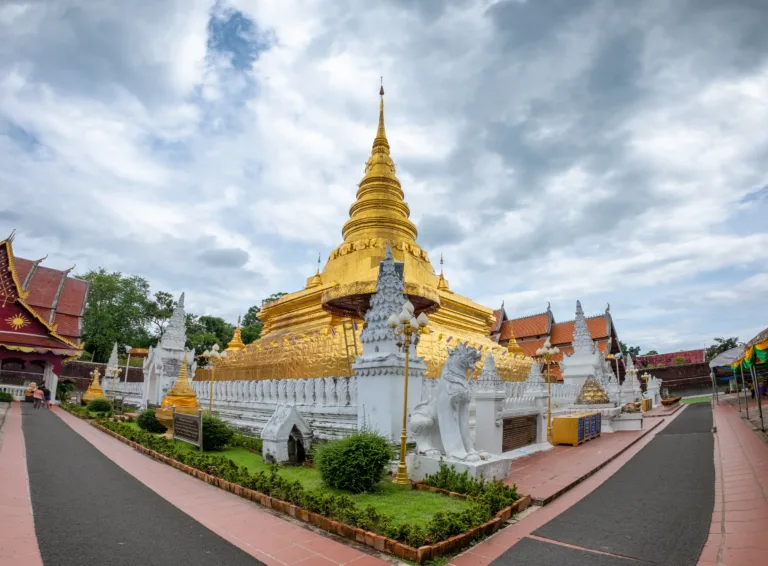
The temple is in central Nan on Pha Kong Road, right next to Wat Phra That Chang Kham.
From accommodation in central Nan · Free
Drive to Pha Kong Road in the town centre · Fuel
Town streets
Good
Daily, around 07:00–20:00
In Nan town centre
Wat Phumin
Answers travellers want before they go — a one-minute read
No, it's free; donations go in the boxes near the entrance
On the inner walls of the hall; bring a torch as it's fairly dark
Yes, but no flash
Cover shoulders and knees and take off your shoes before entering
August 2026 reports say it remains open while the Fine Arts Department monitors and plans repairs
Best day this week: Monday 30 Nov · Check in when you arrive to collect a stamp
 Wat Phra That Chang Kham Worawihan
 Wat Ming Mueang
 Wat Phra That Khao Noi
 Wat Phra That Chae Haeng