 01
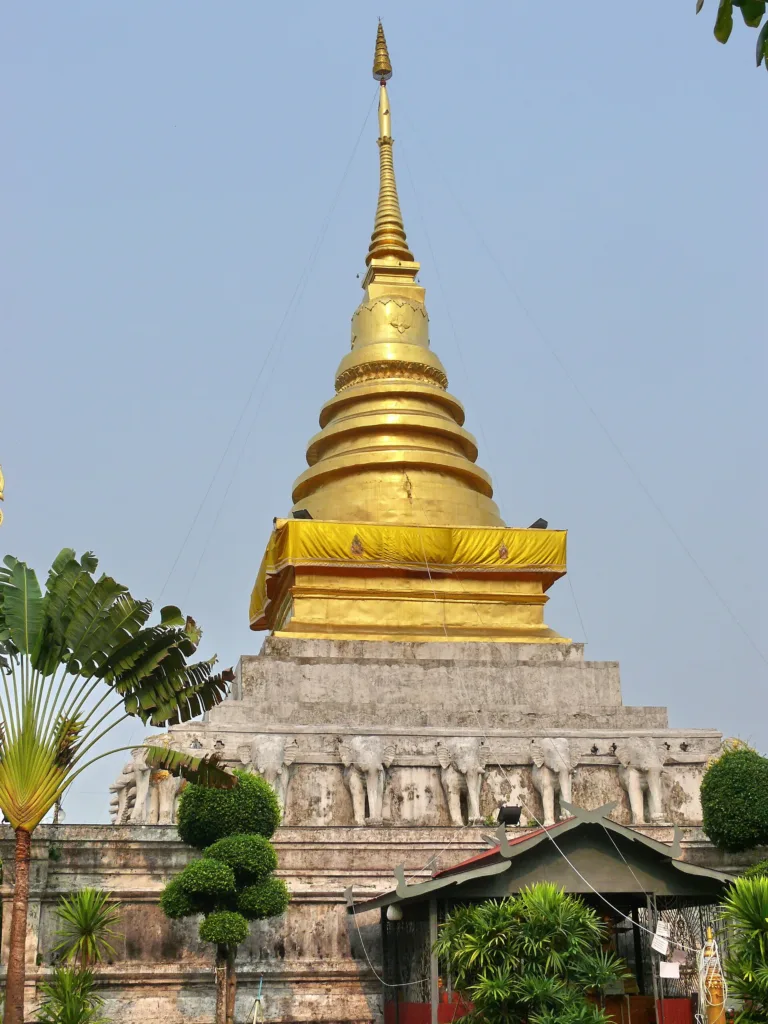
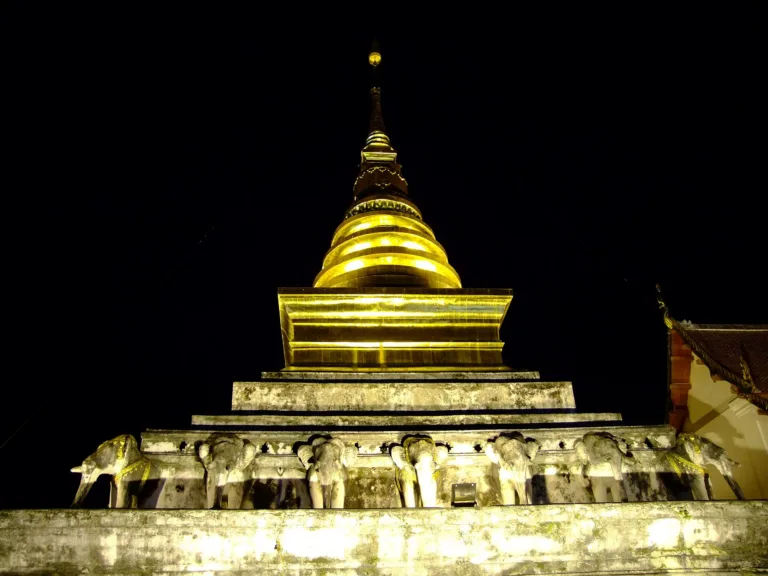
Elephant chedi24 stucco elephants
The 24-elephant chedi · Nan
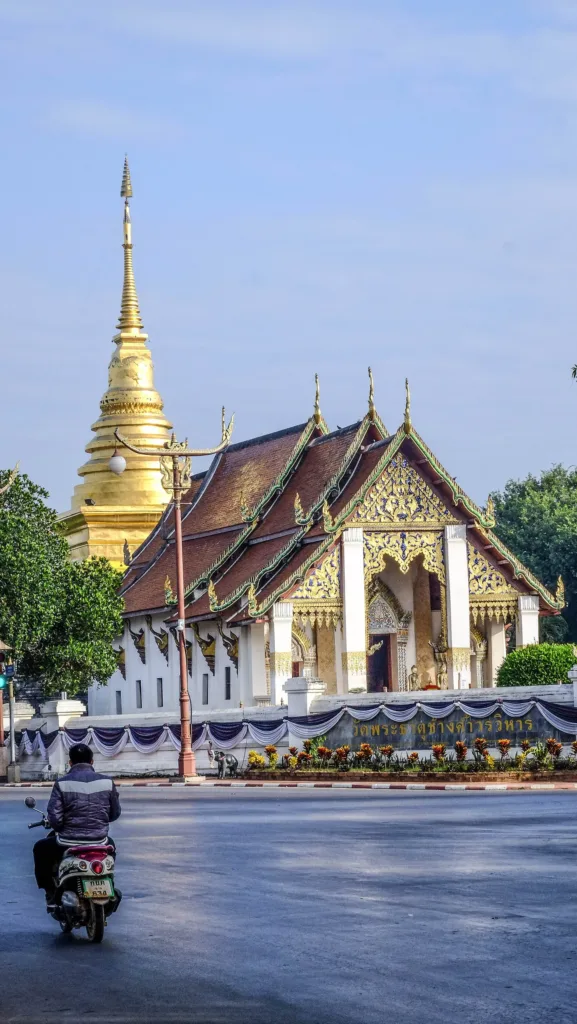
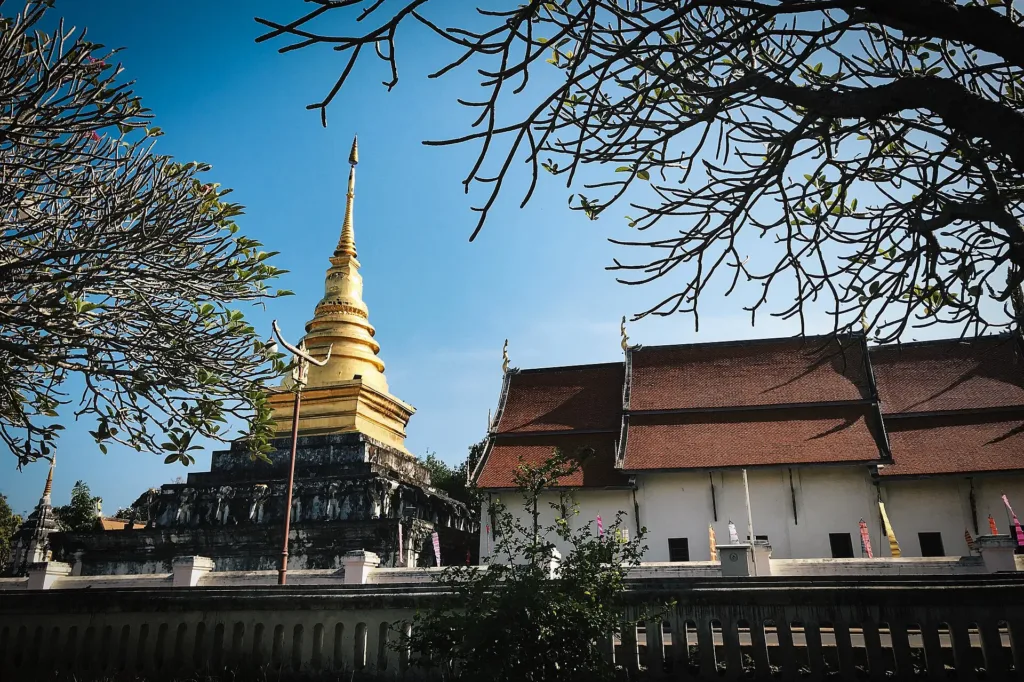
Old Nan's royal temple at the city centre, opposite the Hor Kham (Nan National Museum), founded in 1406 under Chao Pu Khaeng. Its bell chedi rests on 24 half-body stucco elephants, and it keeps Phra Phuttha Nanthaburi Si Sakkayamuni, about 65% gold. Free entry.
Holiday / event — crowded · Hot (Afternoon) feels like 38°C
Dress modestly · Shoes off in the viharn · Don't climb the chedi or elephants · Keep quiet
About 06:00–18:00 · Hor Kham Wed–Sun 09:00–16:00
Songkran and the boat-race festival
Songkran (Phra Singh Luang procession) · Nan boat races and salak merit festival (Oct–Nov)
01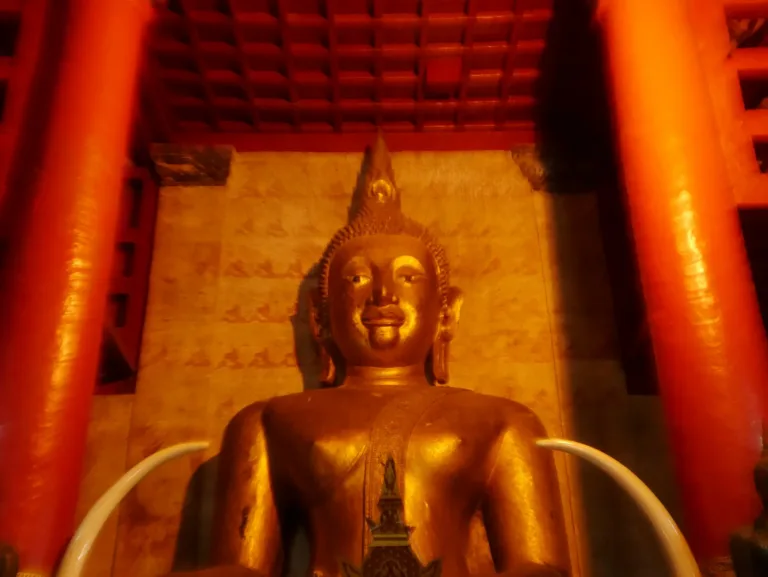 02
Tap a day card to see that day’s weather, rain, haze and hourly forecast
Best time to go Fine all day little rain through the day
Thick morning fog with visibility under 1 km — use headlights and drive slowly
Holiday — traffic on the way up and parking fills fast; leave early
Green band = hours used for the score
Best time to go Fine all day little rain through the day
Holiday — traffic on the way up and parking fills fast; leave early
Green band = hours used for the score
Best time to go Fine all day little rain through the day
Holiday — traffic on the way up and parking fills fast; leave early
Green band = hours used for the score
Best time to go Best window 06:00–15:00 Little rain · light drizzle possible at times
No warnings today — normal road and weather conditions
Green band = hours used for the score
Best time to go Fine all day little rain through the day · light drizzle possible at times
No warnings today — normal road and weather conditions
Green band = hours used for the score
Best time to go Fine all day little rain through the day
No warnings today — normal road and weather conditions
Green band = hours used for the score
Wat Phra That Chang Kham Worawihan, Suriyaphong Road, Nai Wiang, Mueang Nan.
Photos from Wikimedia Commons and contributors · full credits inClassic page
Cover shoulders and knees
Closed Mondays and Tuesdays
Adults 0 THB · Time needed 30–60 minutes
Songkran and the boat-race festival
| Merit offering / flowers and incense optional | 20 ฿/person |
| Hor Kham, Thai adult optional | 20 ฿/person |
| Hor Kham, foreign adult optional | 100 ฿/person |
Cash · Prices may change by season — check with the venue
Songkran (Phra Singh Luang procession) · Nan boat races and salak merit festival (Oct–Nov)
Tap a month on the wheel to see weather, rain, haze and crowds from 10 years of records
Best time · Nov–Feb is cool for walking the old town
Watch out · Mar–Apr is hot and hazy
Oct by the records 22–30°C · avg rain 153 mm (18 rainy days) · clear 5 days · avg PM2.5 9
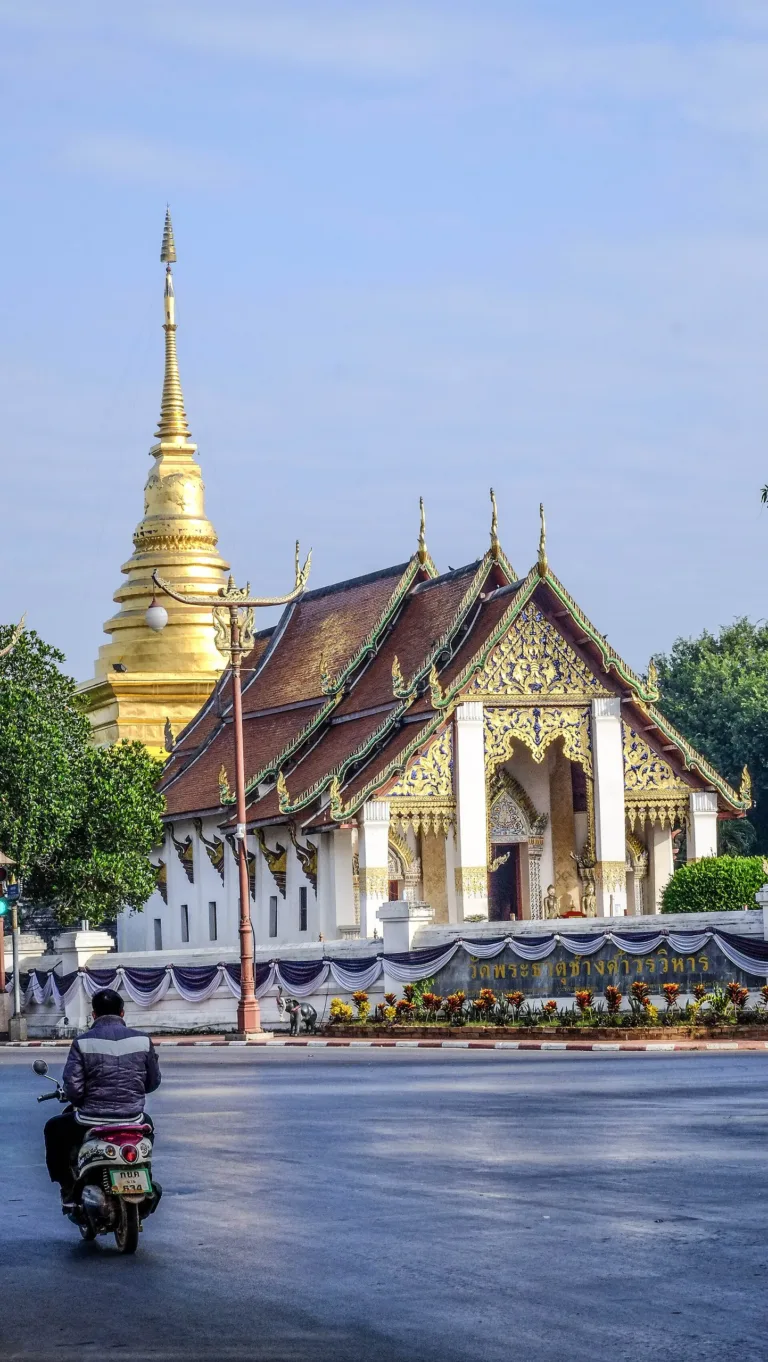
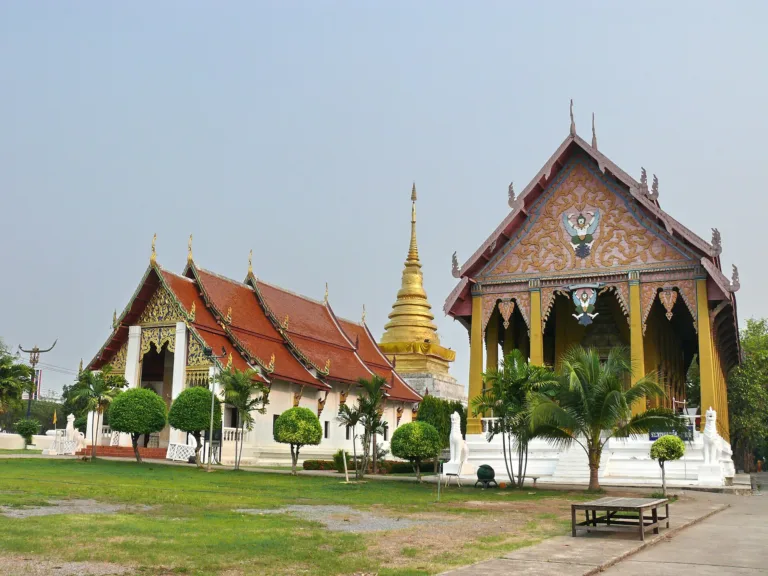
Wat Phra That Chang Kham Worawihan is on Suriyaphong Road at the corner of Phakong Road in Nai Wiang, Mueang Nan, opposite the Hor Kham, now the Nan National Museum, beside the city square and about 200 m from Wat Phumin. Formerly Wat Luang or Wat Luang Klang Wiang, it is a royal temple of the worawihan class.
Tourism and news sources agree that it was founded in 1406 under Chao Pu Khaeng (Phaya Phu Khoeng) of the Phukha dynasty, though no primary source has been found and Lonely Planet says the date is unknown.
The Dhammathai temple database lists it as a third-class royal temple of the Worawihan grade, founded in 1406 (BE 1949) and granted its consecrated boundary the same year, the source of the commonly quoted founding date. The date it became a royal temple has not been found.
As the royal temple at the heart of the city, it hosted the rulers' ceremonies, including the oath-of-allegiance rite (thue nam phiphat sattaya) for officials.
Stone Inscription No. 74, found at the temple, records that Phaya Phonthep Luechai, ruler of Nan, restored the great viharn in 1548 and also mentions the oath rite. Some sources give other years such as 1458 or 1505, probably conversion errors.
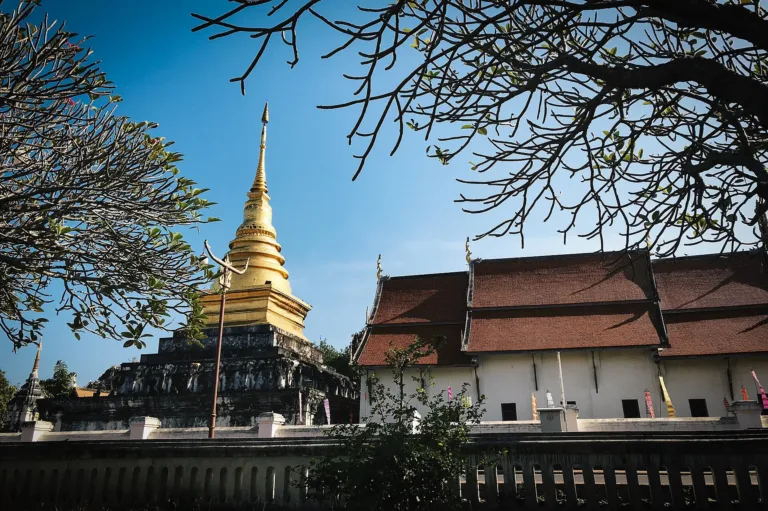
The chedi is a Sri Lankan–style bell stupa with Sukhothai influence, like Wat Chang Lom at Sukhothai and Si Satchanalai. Its base carries 24 half-body brick-and-stucco elephants — five per side plus four at the corners — that seem to hold up the chedi, hence "Chang Kham". A Sukhothai elephant base with a Lanna upper part is a pattern found elsewhere in Nan too, as at Wat Suan Tan.
Nirat Mueang Luang Phrabang, written by Luang Thuayhan Raksa in 1885, describes six elephants on each side of the base, supporting the six-per-side count over five per side plus four at the corners.
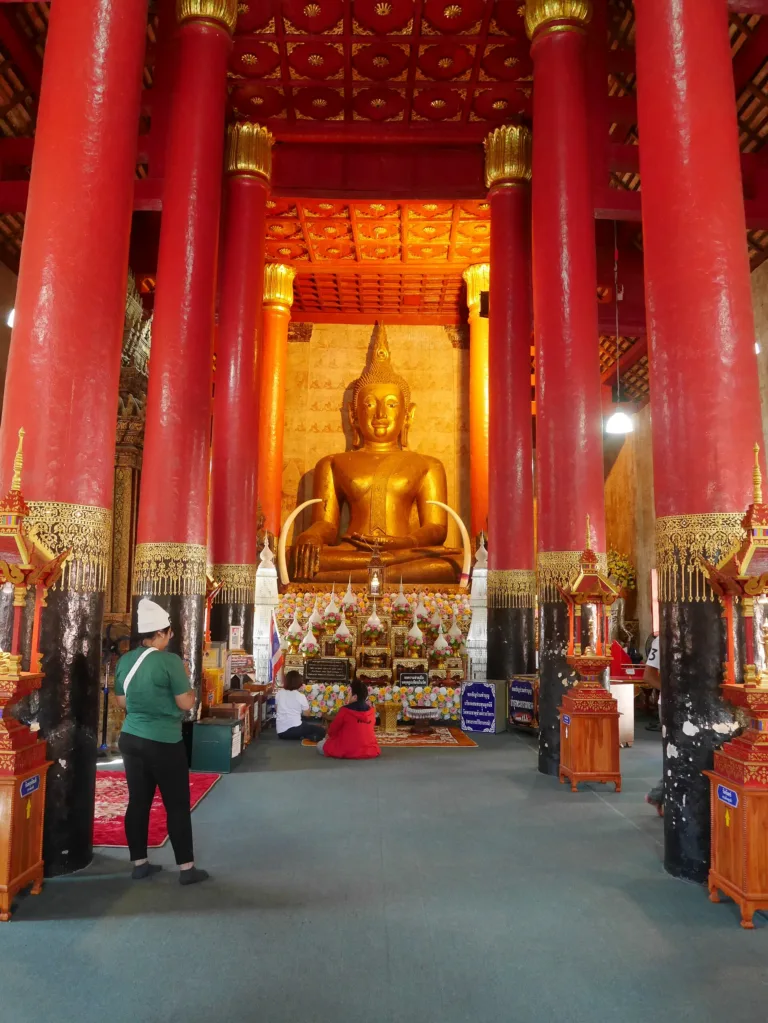
Its most important image is Phra Phuttha Nanthaburi Si Sakkayamuni, about 145 cm tall and roughly 65% gold, late Sukhothai, from around the second half of the 14th century. Some sources call it a Buddha granting protection, others a walking Buddha; a Sukhothai walking image with a raised hand is often described both ways.
Lonely Planet tells how in 1955 the art historian A.B. Griswold tried to buy a stucco Buddha from the temple, dropped it in transit, and the cracked plaster revealed gold inside. But Griswold's own Thai Images of the Buddha, first published in 1958, captions the image "Standing Buddha; Bronze; Sukhothai style, Wat Chang Kham, Nan", and Thai sources describe a 145 cm bronze standing image of about 65% gold with no mention of plaster. The tale looks borrowed from the Wat Traimit golden Buddha story, also of 1955, and is best treated as legend.
The great viharn's principal image is a lacquered and gilded stucco Lanna Buddha subduing Mara by Nan craftsmen, about 6 m tall and 4.5 m wide at the lap; it is said that if you see a green light in its chest, you have truly arrived. Phra Singh Luang, over 500 years old, is kept in a monks' residence and brought out to the viharn at Songkran.
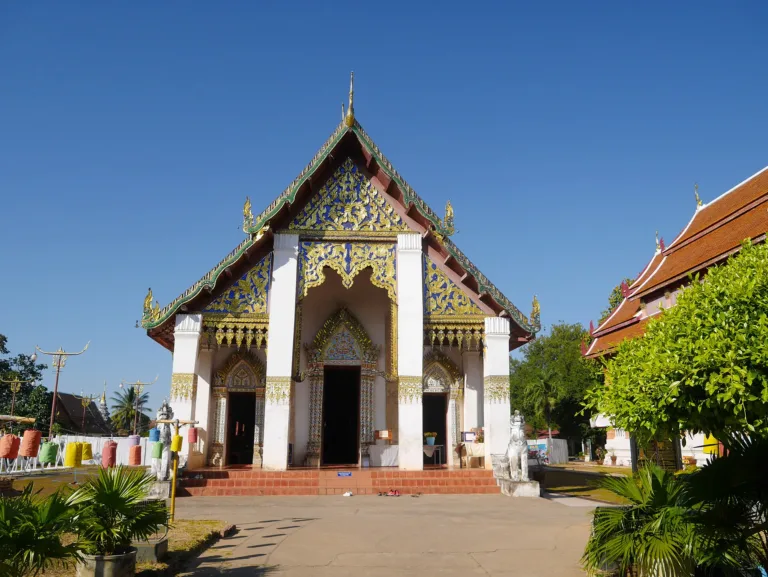
The temple's three-tiered scripture hall was later turned into a viharn for the Sukhothai walking Buddha; Lonely Planet calls it one of the largest of its kind in Thailand. The small ordination hall dates from the same era as the chedi, and a Chulalongkorn archive holds a photograph of its windows taken on 8 December 1973.
The scripture hall was built under Phra Chao Suriyaphong Pharitdet, who also built the palace opposite. Sources date it "RS 127 / BE 2453", two figures that do not match (RS 127 is 1908).
Opposite stands the Hor Kham, built in 1903 by Chao Suriyaphong Pharitdet, Nan's 63rd ruler, to replace an older wooden palace. It became the provincial hall in 1932; the Fine Arts Department took it over for a museum in 1974, restored it until 1981, opened it to visitors from 1983 and officially in 1986. Together, the temple and palace formed the heart of princely Nan.
Don't miss the museum's 94 cm black elephant tusk. In 2023 the museum renovated its ground-floor hall and five upper rooms, including a Hor Kham room displaying bricks from a 2004 excavation.
Phra Thammanantasophon was ordained here in 1952, became abbot in 1969 and died on 15 December 2020 aged 88. The temple is also one of Nan's two provincial meditation centres, with Wat Phra That Chae Haeng, following the Wat Paknam method from 1997 and the Wat Phra That Si Chom Thong method from 2011.
In May 2014, after the Chiang Rai earthquake, the Phra Chao Than Jai viharn developed a long crack, and Fine Arts Department inspectors found that unskilled workers had plastered cement over the great viharn's murals, over 100 years old, almost destroying them; Nan province asked the department for help.
In 2020 the Fine Arts Department restored and re-gilded the chedi, and planned a 2022 restoration of the viharn with 7,543,000 baht for the Buddha image, its pedestal and the pulpit; completion has not been confirmed.
The temple plays a part in city festivals: at Songkran 2025 (11–16 April), the Nan Nanthaburi celebrations included water blessings here and a procession of Phra Singh Luang, and from mid-October to early November come the Nan boat races and the tan kuay salak merit festival.
Today Wat Phra That Chang Kham is the first stop on a walk around old Nan: see the elephant chedi and viharn, cross the road to the Hor Kham, then on to Wat Phumin and the city square — all within walking distance.
Arrived? Check in, collect a stamp and tell others what it is like right now
Check your location first, so you do not fill in the form for nothing
Location must be on and within 0.2 km · One check-in per place per day · come back on other days to check in again
Post photos from anywhere — no need to be here · Up to 20 photos at a time · JPG / PNG / WebP · GPS location data is removed automatically
In the old town
Around old Nan · Free
Hire in town · Varies
In town · By arrangement
Suriyaphong Road at the corner of Phakong Road, opposite the Nan National Museum
Street parking around the city square
Good
About 06:00–18:00 · Hor Kham Wed–Sun 09:00–16:00
around 0 km fromNan town
Wat Phra That Chang Kham
0 THB
Approx. nightly price for 2 adults (next week) · final price depends on your dates
Answers travellers want before they go — a one-minute read
24 half-body stucco elephants appear to hold up the chedi
In 1406 under Chao Pu Khaeng (per tourism sources)
Phra Phuttha Nanthaburi Si Sakkayamuni, about 65% gold, in the former scripture hall
It is told by Lonely Planet; no Thai source confirms it
They face each other — the heart of princely Nan
About 06:00–18:00; free
Wat Phumin, the Hor Kham and the city square
Best day this week: Tuesday 27 Oct · Check in when you arrive to collect a stamp