 01
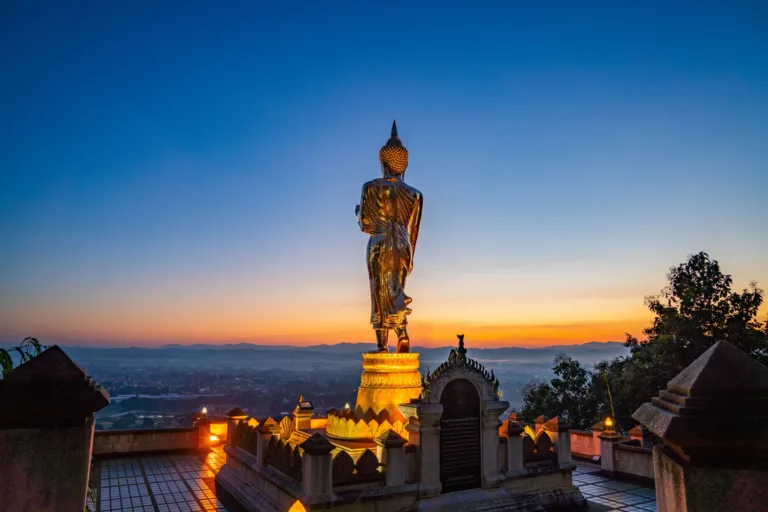
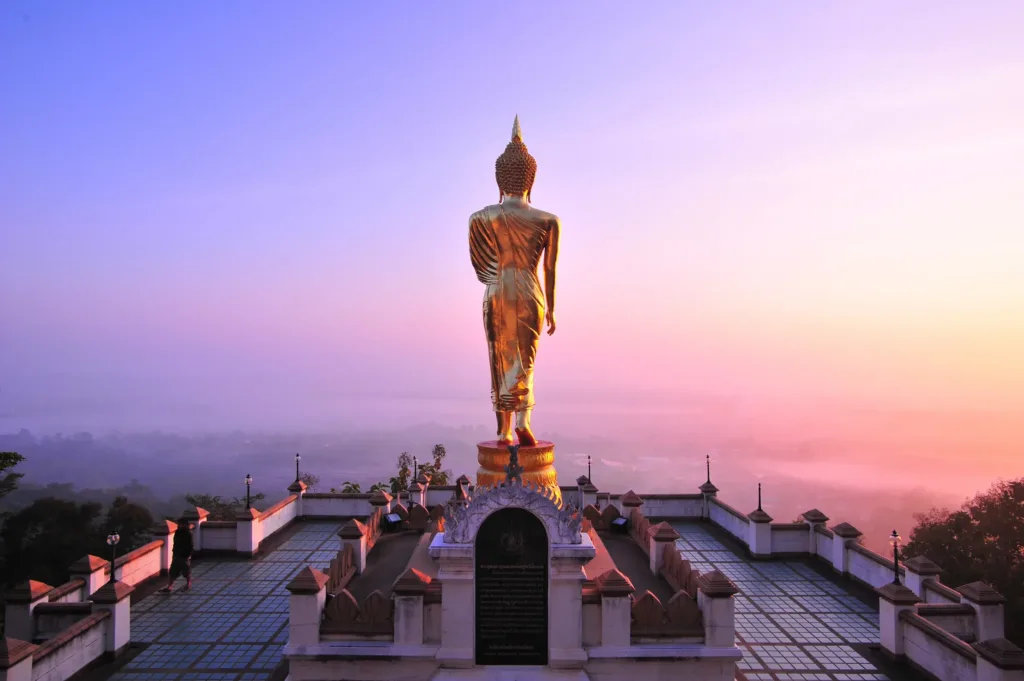
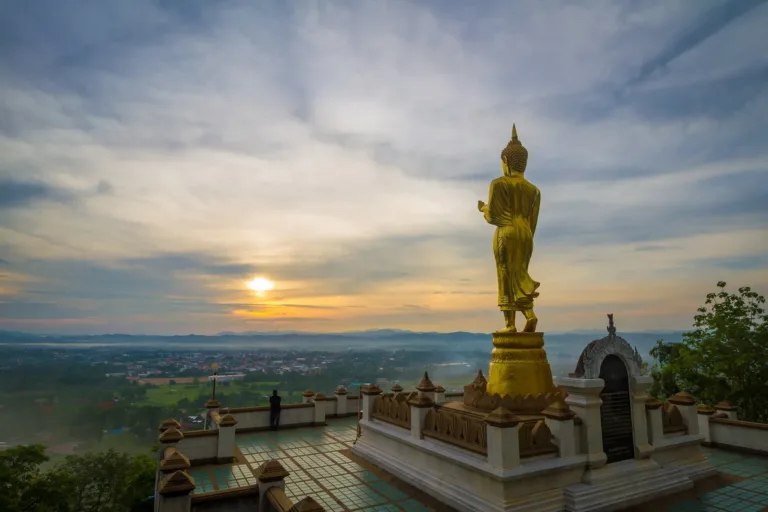
Phra Phuttha Maha Udom Mongkhon Nanthaburi Si NanA walking Buddha in blessing pose, about 9 m tall
Hilltop temple · Nan town
A hilltop temple west of Nan town with a Burmese-Lanna chedi and a tall standing Buddha at the best viewpoint over the city.
Holiday / event — crowded
Dress modestly, covering shoulders and knees · Remove shoes in the chedi area · Don't climb the Buddha's base for photos
Daily 06:00–18:00
About 30 minutes before sunset
Annual fair around May with rockets fired as an offering
01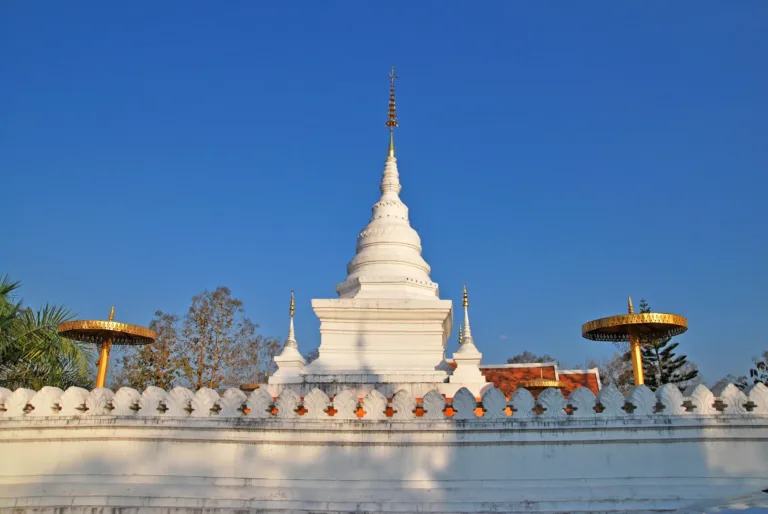 02
 03
 04
Tap a day card to see that day’s weather, rain, haze and hourly forecast
Best time to go Daytime is over · see tomorrow
Holiday — traffic on the way up and parking fills fast; leave early
Green band = hours used for the score
Best time to go Fine all day little rain through the day
Holiday — traffic on the way up and parking fills fast; leave early
Green band = hours used for the score
Best time to go Fine all day little rain through the day
No warnings today — normal road and weather conditions
Green band = hours used for the score
Best time to go Fine all day little rain through the day
No warnings today — normal road and weather conditions
Green band = hours used for the score
Best time to go Fine all day little rain through the day
No warnings today — normal road and weather conditions
Green band = hours used for the score
Best time to go Fine all day little rain through the day
No warnings today — normal road and weather conditions
Green band = hours used for the score
Best time to go Fine all day little rain through the day
No warnings today — normal road and weather conditions
Green band = hours used for the score
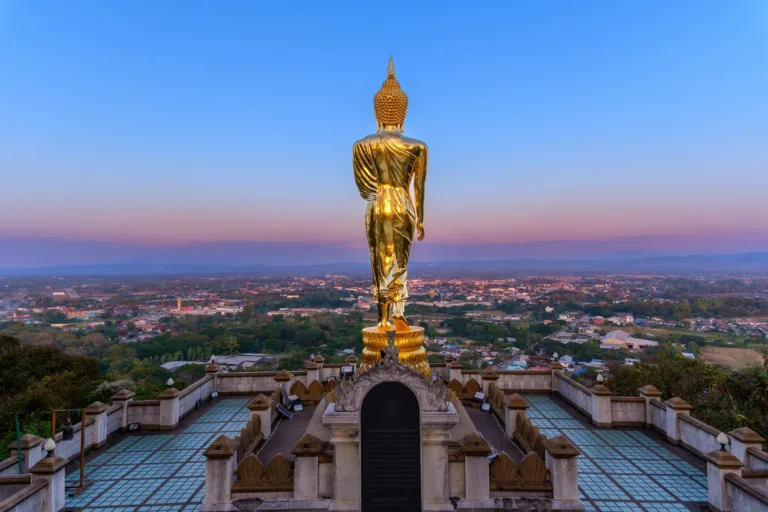
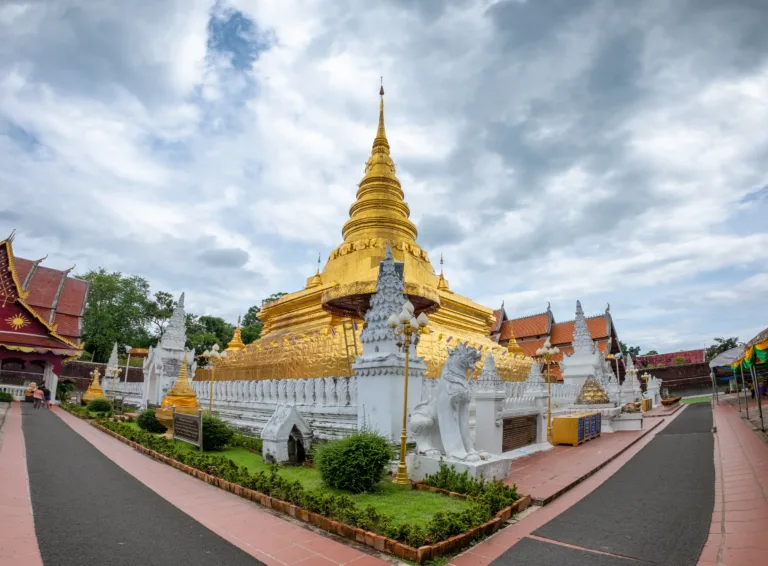
Wat Phra That Khao Noi sits on Doi Khao Noi, about 240 m above sea level, west of Nan town. You can drive right up to the temple or climb a naga staircase of about 303 steps.The chedi is brick and stucco in a mix of Burmese and Lanna styles and is believed to hold a hair relic of the Buddha. At the viewpoint stands Phra Phuttha Maha Udom Mongkhon Nanthaburi Si Nan, a walking Buddha with a hand raised in blessing, about 9 m tall and gazing down at the town.From the terrace you look out over Nan and the surrounding hills. Early mornings and evenings are the favourite times, for sunrise and sunset.
Arrive About 30 minutes before sunset
Bring water and take it slowly if you walk; otherwise drive up
No data yet check before you go · Time needed 45 minutes–1 hour
Sunset and festival holidays
Annual fair around May with rockets fired as an offering
Wat Phra That Khao Noi stands on Doi Khao Noi, a hill about 240 m above sea level in Du Tai subdistrict, just west of Nan town. Its chedi is brick and stucco in a blend of Burmese and Lanna styles and is believed to enshrine a hair relic of the Buddha, which has made it one of Nan's guardian shrines for centuries. The tall standing Buddha that gazes down at the town is much newer, built in 1999, so the hill is both an old relic site and the best-known high viewpoint over Nan.
Legend says the Buddha once rested under a tree in an old couple's field on this hill. The husband took fright, thought a giant had appeared and ran home, while his wife brought gourds as an offering; worried for her, he came back carrying a spear. The Buddha then gave them hair relics, which the couple placed in a copper casket shaped like a gourd and buried beneath the tree.
The legend goes on that the Buddha foretold the couple would be reborn in heaven, and later the husband would return as ruler of the city and the wife as his consort, and that the relic shrine would be called Phra That Khao Noi. He also prophesied that a city named Nanthaburi would rise here, where Buddhism would flourish for 5,000 years. The name Nanthaburi still appears today in the name of the great Buddha on the hill.
Historically, most sources say the chedi was built in the time of Chao Pu Khaeng, around 1487. Some describe it more broadly as built around the 15th century by one of that ruler's consorts, which echoes the legend. Many people in Nan also believe it is roughly as old as Phra That Chae Haeng, so there is no single agreed founding year.
For context, Nan's city stood at Phu Phiang Chae Haeng on the east bank of the Nan River from about 1359, under Phaya Kan Mueang. In 1368 his son Phaya Phakong moved it across to the west bank, where Nan town stands today. Doi Khao Noi, only about 3.5 km to the west, became the hill visible from the new city. In 1450 King Tilokaraj of Chiang Mai annexed Nan into the Lanna kingdom, so the traditional founding date falls in the period when Nan was part of Lanna.
Nan then went through turbulent times. From 1558, when King Bayinnaung took Chiang Mai, Nan and the rest of Lanna came under Burmese rule for more than two hundred years, with wars and several waves of forced resettlement. In 1788 Nan's ruler submitted to King Rama I, and the city has been part of Siam ever since. Through all of this, successive rulers of Nan looked after the Khao Noi relic.
The biggest restoration came under Phra Chao Suriyaphong Pharitdet, who ruled Nan from 1893 to 1918 and was raised to Prince of Nan in 1903. Between 1906 and 1911 he had Burmese craftsmen restore the chedi, and a viharn was built in the same period.
The office of hereditary ruler of Nan was abolished in 1931. About half a century later, in 1980, the Fine Arts Department surveyed Wat Phra That Khao Noi and registered it as an ancient monument, protecting one of the oldest and most important religious sites in Nan.
The modern landmark is Phra Phuttha Maha Udom Mongkhon Nanthaburi Si Nan, a walking Buddha with a hand raised in blessing, about 9 m tall on a lotus base, with a gold topknot weighing 27 baht. It was built to honour King Rama IX's sixth-cycle (72nd) birthday on 5 December 1999. The statue faces the town, and its terrace has become the place people climb to for sunrise and sunset over Nan.
On 10 September 2016 an equestrian statue of King Naresuan the Great was consecrated on the summit. The project was initiated by the then director-general of the Designated Areas for Sustainable Tourism Administration (DASTA), and the monastic rites were led by the head of Nan's provincial Sangha, the abbot of Wat Phumin, with more than 300 people attending. Locals now come here to pray for success in studies and work.
Today you can drive up or climb a naga staircase of about 300 steps from the foot of the hill; sources give slightly different counts, 303 or 307. The temple holds an annual fair around May, when rockets are fired as an offering to the relic, keeping alive the devotion that has long tied Nan to this small hill west of town.
Arrived? Check in, collect a stamp and tell others what it is like right now
Check your location first, so you do not fill in the form for nothing
Location must be on and within 1 km · One check-in per place per day · come back on other days to check in again
Post photos from anywhere — no need to be here · Up to 20 photos at a time · JPG / PNG / WebP · GPS location data is removed automatically
From Nan town take Highway 101 and turn onto the Doi Khao Noi road around km 2; it's paved to the top.
Highway 101, then the Doi Khao Noi road · Fuel
Hire a return trip from town · Agree a price with the driver
Paved hill road up to the temple
Car park at the top
Nan town
Daily 06:00–18:00
about 3.5 km from Nan town
Wat Phra That Khao Noi
Answers travellers want before they go — a one-minute read
On Doi Khao Noi, about 3.5 km west of Nan town
Yes, a paved road goes to the top
About 303
Phra Phuttha Maha Udom Mongkhon Nanthaburi Si Nan, about 9 m tall
Early morning or before sunset
Modest clothes covering shoulders and knees
Best day this week: Monday 30 Nov · Check in when you arrive to collect a stamp
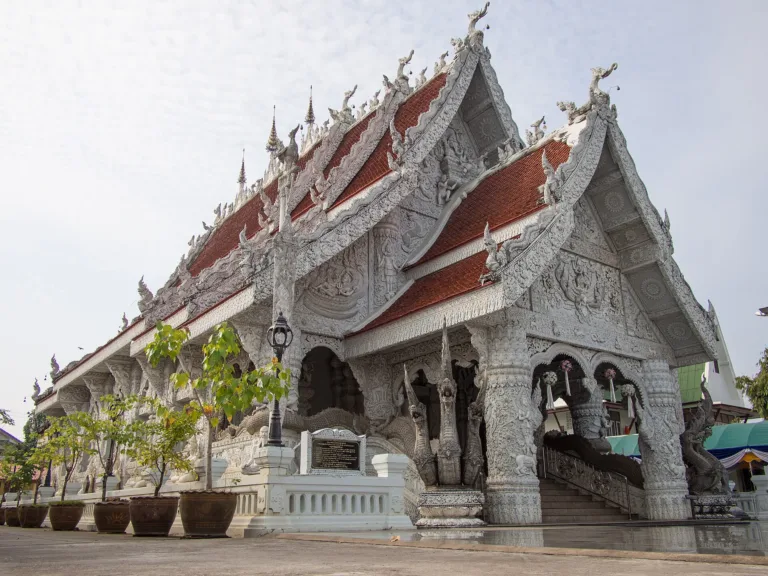 Wat Ming Mueang
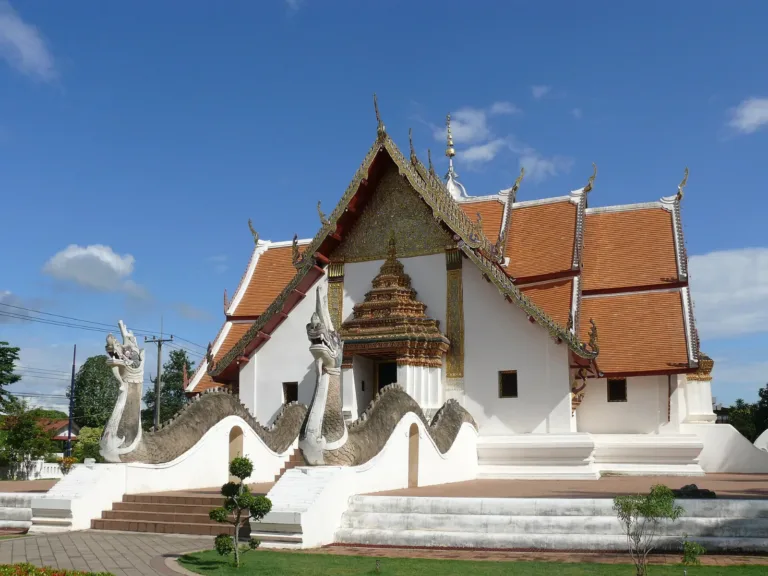 Wat Phumin
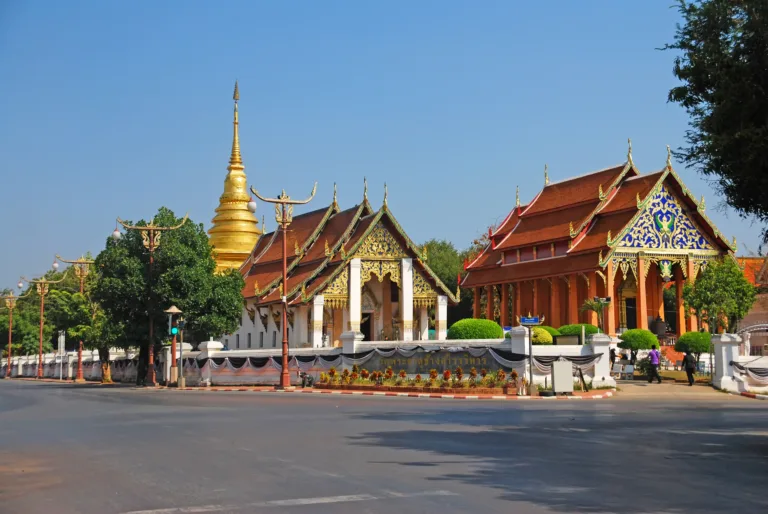 Wat Phra That Chang Kham Worawihan
 Wat Phra That Chae Haeng