 01
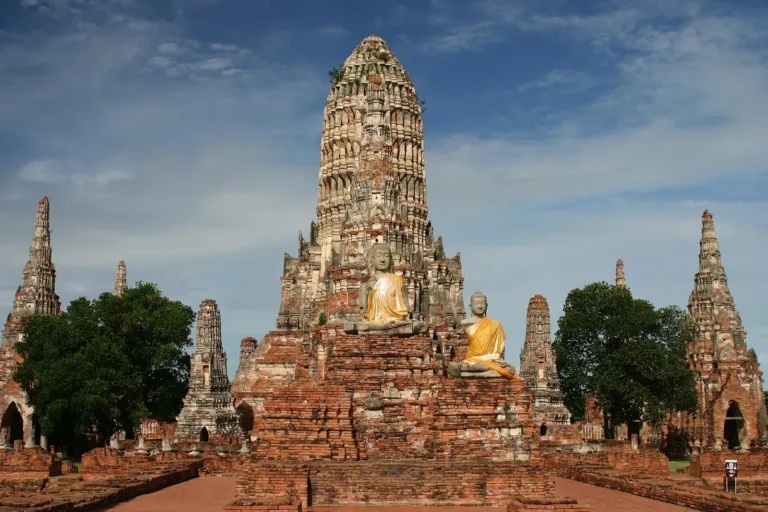
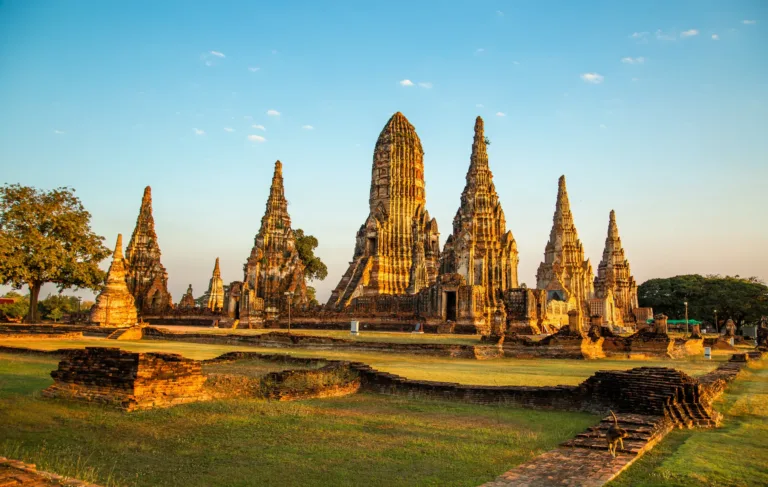
Central prangA Khmer-style prang about 35 m tall
Prasat Thong-era royal temple · Chao Phraya River, Ayutthaya
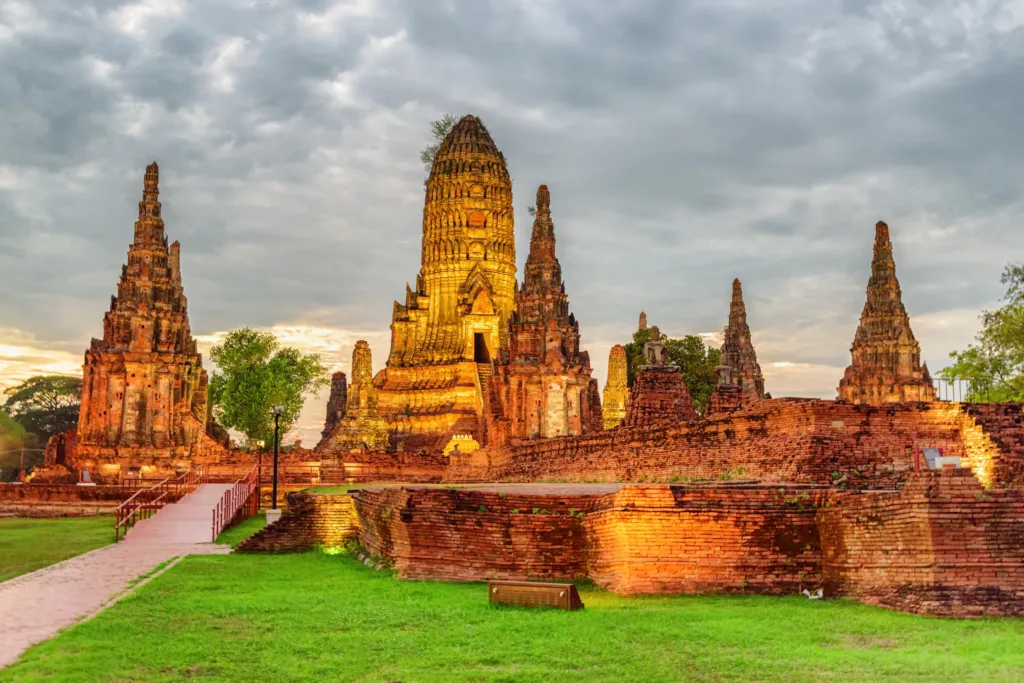
A royal temple on the west bank of the Chao Phraya in Ayutthaya, built in 1630 under King Prasat Thong. A central prang about 35 m tall ringed by smaller prangs and chapels; most beautiful at sunset.
Holiday / event — crowded
Dress modestly · Don't climb the prangs, chapels or Buddha bases
Daily 08:00–18:00
16:00 for evening light
Ratri Ni… Thi Wat Chai (Fine Arts Department night opening, some years)
01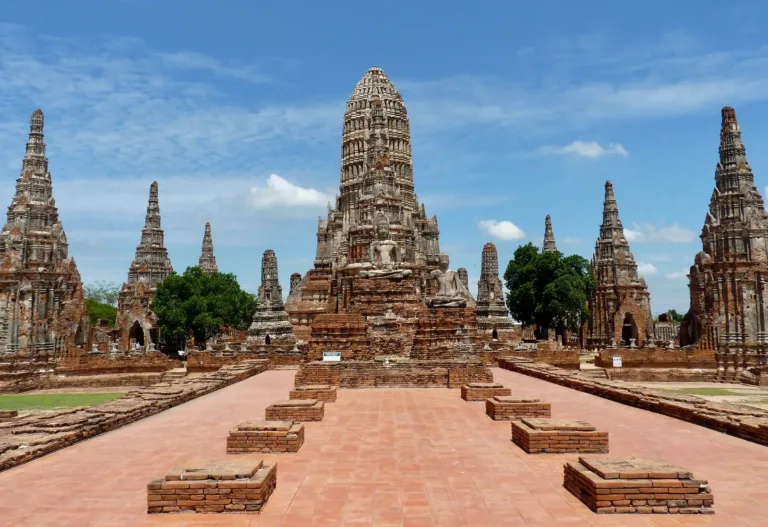 02
 03
Tap a day card to see that day’s weather, rain, haze and hourly forecast
Best time to go Daytime is over · see tomorrow
Holiday — traffic on the way up and parking fills fast; leave early
Green band = hours used for the score
Best time to go Fine all day little rain through the day
Holiday — traffic on the way up and parking fills fast; leave early
Green band = hours used for the score
Best time to go Fine all day little rain through the day
No warnings today — normal road and weather conditions
Green band = hours used for the score
Best time to go Fine all day little rain through the day
No official warnings, but watch for: Hot (Afternoon) feels like 38°C
Green band = hours used for the score
Best time to go Fine all day little rain through the day
No official warnings, but watch for: Hot (Afternoon) feels like 38°C
Green band = hours used for the score
Best time to go Fine all day little rain through the day
No warnings today — normal road and weather conditions
Green band = hours used for the score
Best time to go Fine all day little rain through the day
No warnings today — normal road and weather conditions
Green band = hours used for the score
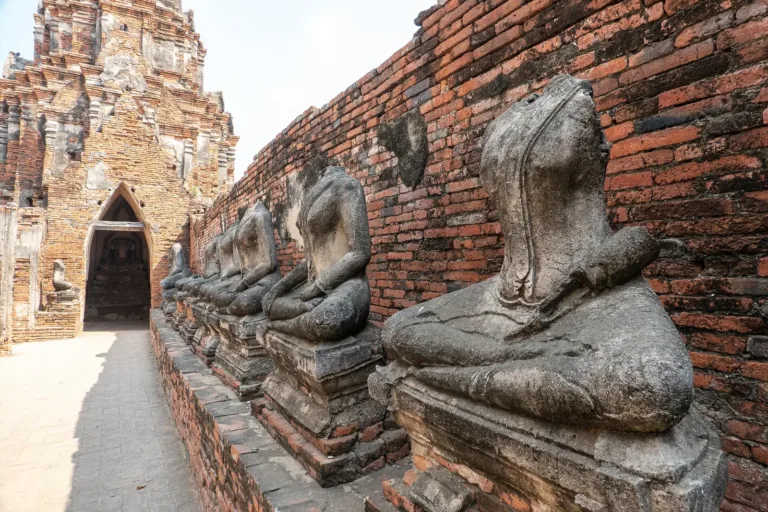
Wat Chaiwatthanaram stands on the west bank of the Chao Phraya in Ban Pom, just off Ayutthaya's island. King Prasat Thong had it built in 1630 as the first temple of his reign, with a Khmer-inspired layout centred on a prang about 35 m tall.Four corner prangs and eight spired chapels line the gallery around it, with seated Buddhas along the inner walls. Abandoned for more than 200 years after Ayutthaya fell, it was restored by the Fine Arts Department and reopened in 1992.Late afternoon to sunset gives the best light, and it's a highlight of evening boat trips around the island.
Arrive 16:00 for evening light
The prangs and chapels are restored monuments
The grounds are open; late afternoon is better
Thais 10 THB · Foreigners 80 THB · Time needed About 1 hour
16:00–18:00 and weekends
| Entry, Thai | 10 ฿/person |
| Entry, foreign | 80 ฿/person |
| 7-site combined ticket, Thai optional | 40 ฿/person |
| 7-site combined ticket, foreign optional | 300 ฿/person |
Mostly cash · Prices may change by season — check with the venue
Ratri Ni… Thi Wat Chai (Fine Arts Department night opening, some years)
Wat Chaiwatthanaram is a royal temple on the west bank of the Chao Phraya River in Ban Pom, just off Ayutthaya's island. King Prasat Thong had it built in 1630, on land that had been his mother's residence. Its plan is a model of the Buddhist universe, centred on a Khmer-style prang about 35 m tall. For more than a century it was one of the great temples of the late Ayutthaya court, before it was abandoned after the city fell in 1767 and brought back to life by the Fine Arts Department from 1987.
Several versions of the Royal Chronicles of Ayutthaya, including the Phan Chanthanumat, Phra Chakkraphatdiphong and Royal Autograph editions, agree that the temple was built in 1630 to make merit for the king's mother, who had died before he came to the throne. Some sources say the land actually belonged to his foster mother, the wife of Okya Si Thammathirat, rather than his birth mother. Prince Damrong suggested the temple may also have celebrated a victory over the Khmer.
Before work began, Prasat Thong built a pavilion just north of the site, later known as Tamnak Chao Phraya Kalahom, so he could watch the construction. Building took a long time: the Dutch merchant Van Vliet wrote in 1637–1638 that the king's temple was still under construction, and a gold tablet found behind a Buddha image in one of the spired chapels is dated to 1649 as the temple's inauguration, suggesting about 20 years of work. A 2021 study by Silpakorn University researchers, using evidence in the Three Seals Law, argues that construction may have started earlier than previously thought.
According to the chronicles, the finished temple was named Wat Chaiwatthanaram and made a forest-dwelling (Aranyawasi) monastery; its first abbot, Phra Achit Thera, was given a royal ecclesiastical rank, and land revenues were granted in memory of the king's mother. Its original name is debated: the writer No Na Paknam proposed Wat Aranyik, though this is unconfirmed, while Professor Piriya Krairiksh suggests the temple may have been renovated and enlarged again around 1730–1759.
The design reflects the revival of Khmer art under this king. The chronicles record that in 1631 Prasat Thong sent craftsmen to copy the plans of the palaces at Angkor, which he used for Prasat Nakhon Luang, and Wat Chaiwatthanaram is a key monument of the same period. Its central prang is widely regarded as the last great prang of the Ayutthaya era.
The layout is a miniature cosmos. The central prang stands for Mount Meru, with four corner prangs on the same terrace, a gallery about 55 m long on each side, and eight spired chapels about 25 m tall, which art historian Santi Leksukhum reads as the wall enclosing the universe. The chapels held crowned Buddha images and 12 stucco panels of the Buddha's life. To the east, facing the river, stands the ordination hall, flanked by two twelve-cornered chedis.
From Prasat Thong's reign on, Ayutthaya's kings came here regularly to make merit. The Dutch traveller Gijsbert Heeck, who visited in 1655, described it glittering with gold and gems like a golden mountain; European maps printed in 1724–1726 marked it as the King's Golden Pagoda; and a Sri Lankan embassy in 1750 recorded a building housing replicas of the Buddha's footprint decorated in gold, of which nothing survives.
The temple was also used for royal funerals. Records compiled by Ayutthaya historians say that under King Borommakot the bodies of Prince Senaphithak (Chaofa Kung, also known as Thammathibet), Chaofa Sangwan and Chaofa Nim were cremated here, and the bases of three chedis on the north side are linked to them. Another record says the prince's body was buried here instead, so the details remain unclear.
During the last war with Burma in 1764–1767, the temple served as a stronghold; reinforced walls and remains of cannons and cannonballs survive. After the city fell it lay abandoned for more than 200 years, overgrown by jungle, with many Buddha images beheaded and bricks taken from the ordination hall and walls. When No Na Paknam surveyed it in 1966–1967 it was still deep in the undergrowth.
Wat Chaiwatthanaram was registered as a national monument in the Royal Gazette on 8 March 1936, and first excavations began in 1958, but major restoration only started in 1987, after houses encroaching on the site were removed. The Fine Arts Department restored it in stages and opened it to the public in 1992. Flooding in 2006 weakened its walls and flood barrier, and in 2007 the government approved 49 million baht for repairs.
The great flood of October 2011 left the temple under more than 2 m of water, badly damaging its brickwork, stucco, woodwork and murals. In 2012 a 12-year conservation project began between the Fine Arts Department, the U.S. Ambassadors Fund for Cultural Preservation and the World Monuments Fund, with US$1.8 million in U.S. funding. It covered drainage, a southern flood wall, restoration of four chapels and their galleries, repairs to murals and Buddha images, and laser scanning, and it formally closed on Loy Krathong day, 15 November 2024.
In early 2018 the TV drama Love Destiny (Bupphesanniwat) raised weekend visitor numbers from about 3,300 to more than 9,000, and the historical park opened the temple at night until the end of April that year. In 2025 it was named among National Geographic's best places to visit.
Arrived? Check in, collect a stamp and tell others what it is like right now
Check your location first, so you do not fill in the form for nothing
Location must be on and within 1 km · One check-in per place per day · come back on other days to check in again
Post photos from anywhere — no need to be here · Up to 20 photos at a time · JPG / PNG / WebP · GPS location data is removed automatically
The temple is on the west bank of the Chao Phraya in Ban Pom, opposite Siriyalai Palace, off the island.
Cross the bridge from the island to the west bank · Fuel / bike about 50 baht
Evening trip stopping at the temple · About 200 baht/person
Paved road on the west side of the island
Car park in front of the temple
Good
Daily 08:00–18:00
Wat Chaiwatthanaram
80 THB
Answers travellers want before they go — a one-minute read
Daily 08:00–18:00
10 baht for Thais, 80 baht for foreigners, or a 7-site ticket for 40 / 300 baht
Late afternoon to sunset, for the light and cooler air
No, it's on the west bank of the Chao Phraya in Ban Pom
King Prasat Thong, in 1630
Not normally, but some years the Fine Arts Department runs late-year night openings
Best day this week: Monday 30 Nov · Check in when you arrive to collect a stamp
 Ayutthaya Historical Park
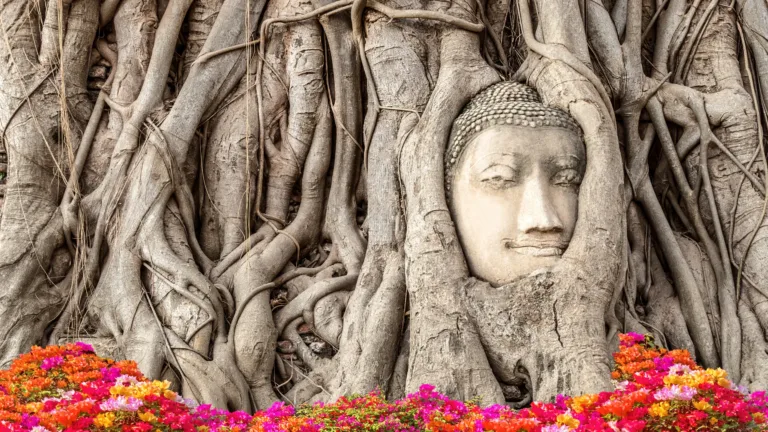 Wat Mahathat Ayutthaya
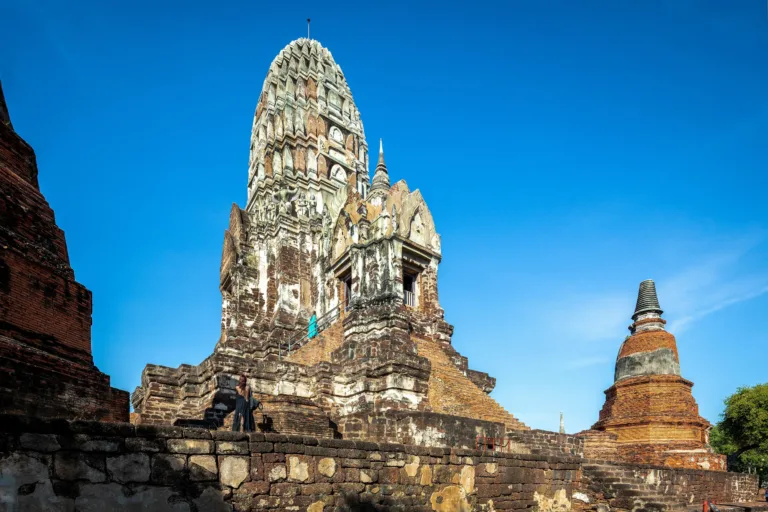 Wat Ratchaburana
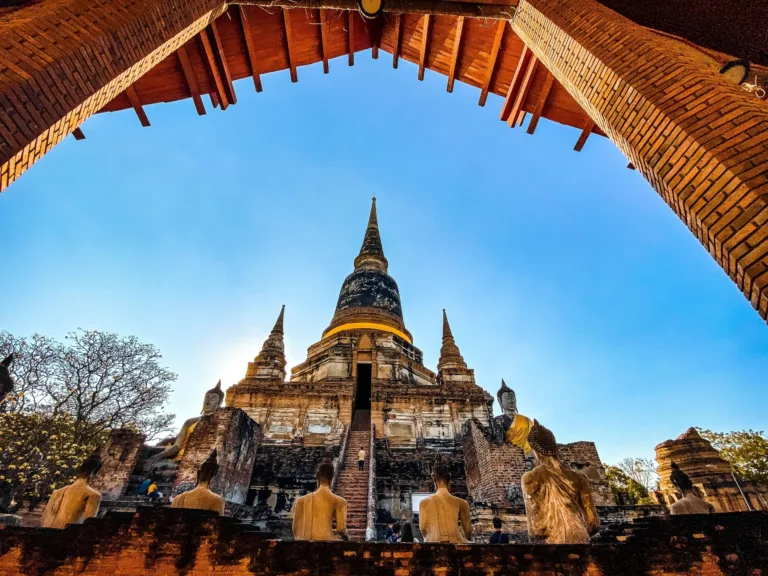 Wat Yai Chai Mongkhon