 01
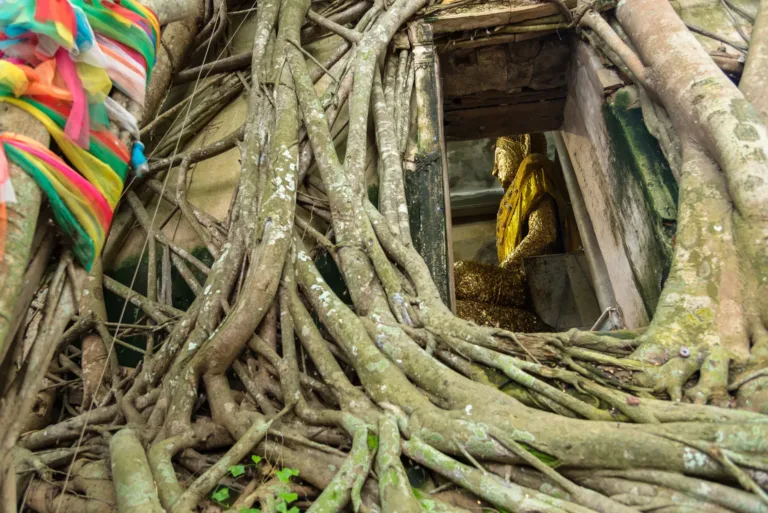
Root-covered ordination hallBodhi, banyan and fig roots wrap the whole building
Ayutthaya-era temple · Bang Khonthi, Samut Songkhram
An Ayutthaya-era temple in Bang Khonthi, Samut Songkhram, whose ordination hall is wrapped in the roots of bodhi, banyan and fig trees. Home to Luang Pho Nil Mani and the historic Bang Kung camp.
Holiday / event — crowded · Evening (16:00–19:00): rain ~9%
Dress modestly and take off shoes before entering the hall · Don't climb on or pull the roots
Daily 08:00–16:30
10:00, before tour buses arrive
01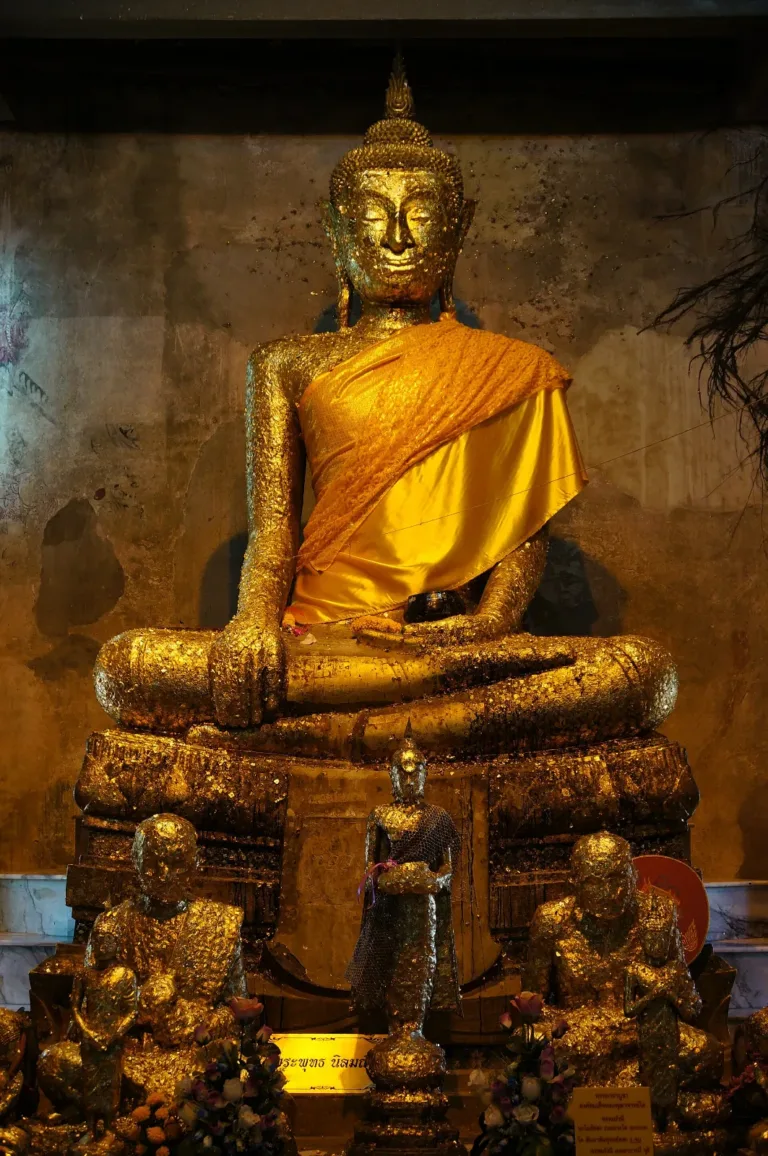 02
 03
 04
Tap a day card to see that day’s weather, rain, haze and hourly forecast
Best time to go Daytime is over · see tomorrow
Holiday — traffic on the way up and parking fills fast; leave early
Green band = hours used for the score
Best time to go Fine all day little rain through the day
Holiday — traffic on the way up and parking fills fast; leave early
Green band = hours used for the score
Best time to go Fine all day little rain through the day
No warnings today — normal road and weather conditions
Green band = hours used for the score
Best time to go Fine all day little rain through the day
No warnings today — normal road and weather conditions
Green band = hours used for the score
Best time to go Fine all day little rain through the day · light drizzle possible at times
No warnings today — normal road and weather conditions
Green band = hours used for the score
Best time to go Fine all day little rain through the day · light drizzle possible at times
No official warnings, but watch for: Hot (Afternoon) feels like 39°C
Green band = hours used for the score
Best time to go Fine all day little rain through the day · light drizzle possible at times
No official warnings, but watch for: Late morning (09:00–12:00): rain ~29%
Green band = hours used for the score
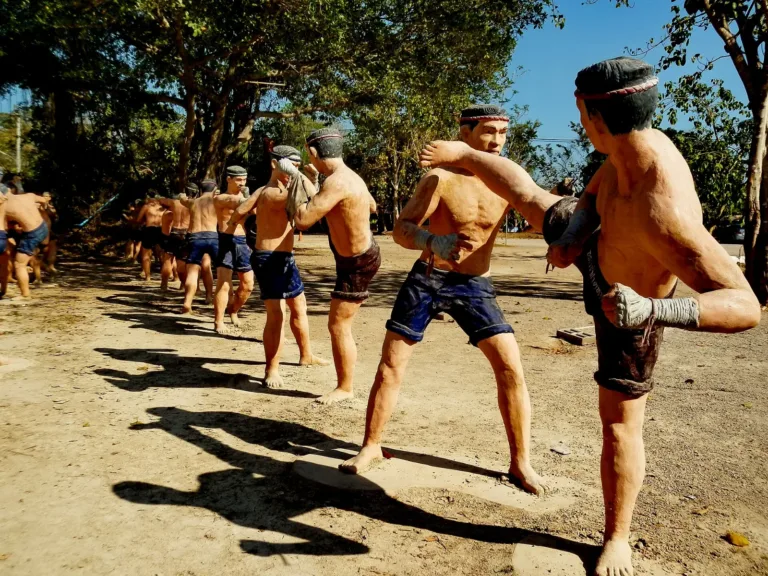
Wat Bang Kung is in Bang Kung subdistrict, Bang Khonthi, Samut Songkhram, on the Mae Klong River not far from Amphawa. It dates back to the Ayutthaya period, and its famous ordination hall is enveloped by the roots of four kinds of large tree: bodhi, banyan and two other fig species.Inside sits Luang Pho Nil Mani, a revered Buddha image, beneath murals of the Buddha's life. Around the temple is Bang Kung Camp, a military camp from the late Ayutthaya to early Thonburi era, with a reconstructed wall, a King Taksin monument and statues of Muay Thai moves.It's open daily and free, and pairs easily with Amphawa Floating Market.
Arrive 10:00, before tour buses arrive
Expect to queue to go inside when busy
They're part of the historic structure
Free · Time needed About 1 hour
Weekends 10:00–14:00
Wat Bang Kung is an old temple on the Mae Klong River in Bang Kung subdistrict, Bang Khonthi, dating back to the Ayutthaya period. It sits at the heart of Bang Kung Camp, a military camp that saw fighting against the Burmese both before and after the second fall of Ayutthaya. A victory won here by Thai and Chinese troops in the early Thonburi years helped restore people's spirits after the kingdom's collapse, while the old ordination hall, abandoned for almost two centuries, was slowly wrapped in the roots of bodhi, banyan and two other fig trees, becoming the root-covered hall where visitors now pay respect to Luang Pho Nil Mani.
No record gives an exact founding year. Most sources simply call it an Ayutthaya-era temple, and some suggest it was built around 1765. A local story told in 1978 by Phra Athikan Bunphueng, a former abbot of Wat Bot, then aged 81, says a wealthy man and his wife built Wat Bang Kung, and his second wife built Wat Bang Kung Noi right next to it. It was the small hall of Wat Bang Kung Noi that the trees later engulfed.
Around 1765, as Burmese armies marched on Ayutthaya, King Ekkathat had naval forces from the southern towns set up a camp and build a wall around Wat Bang Kung to guard the Mae Klong waterway, which is how the name Bang Kung Camp began. But Burmese troops coming down the Mae Klong overran it before pushing on towards Thonburi and Nonthaburi and laying siege to Ayutthaya. After the capital fell in 1767, the camp was abandoned.
Once King Taksin had restored the kingdom and founded Thonburi, he had Chinese settlers from Rayong, Chonburi, Ratchaburi and Kanchanaburi gathered to garrison the old camp, which became known as the Bang Kung Chinese Camp. Some accounts add that these men came from the crews of Chinese junks who had pledged loyalty to Taksin, formed into a unit called Phakdi Asa under a junk captain known as Tai Kong Chiam, who was given the title Ok Luang Sena Samut and reorganised the camp according to a Chinese military manual.
Not long after Ayutthaya's fall, the King of Ava sent the Governor of Tavoy with about 3,000 men (some sources say 3,000–4,000) through the Sai Yok pass to surround the Chinese camp by land and water. The outnumbered Chinese defenders fought hard but came close to losing it, so Samut Songkhram's officials sent word to Thonburi. Sources disagree on the year: some place the siege in late 1767, others in 1768, about eight months after the fall of the capital.
Taksin sent Phra Maha Montri (Bunma) with around 20 boats to attack the Burmese at night, and accounts say the king came in person. As the boats struck, the Chinese inside threw open the gates and attacked from the other side, and the Burmese broke and retreated through the Chao Khwao pass. Phra Maha Montri later became the Front Palace prince Maha Sura Singhanat. The Phan Chanthanumat chronicle tells it differently: a Burmese commander named Po Mang besieged the camp with about 2,000 men in 1768, and Taksin arrived with the royal barge and routed them.
The battle of Bang Kung was an important victory over the Burmese for the newly founded Thonburi kingdom. It lifted the morale of soldiers and villagers alike and helped persuade rival regional factions to accept Taksin's restoration. Tradition says the king rested at the camp after the battle and urged Thai and Chinese troops to stand together. Years later, on 28 February 1775, he passed through Bang Kung again and took his midday meal at the temple in the middle of the camp before heading to Ratchaburi to fight the Burmese at Bang Kaeo.
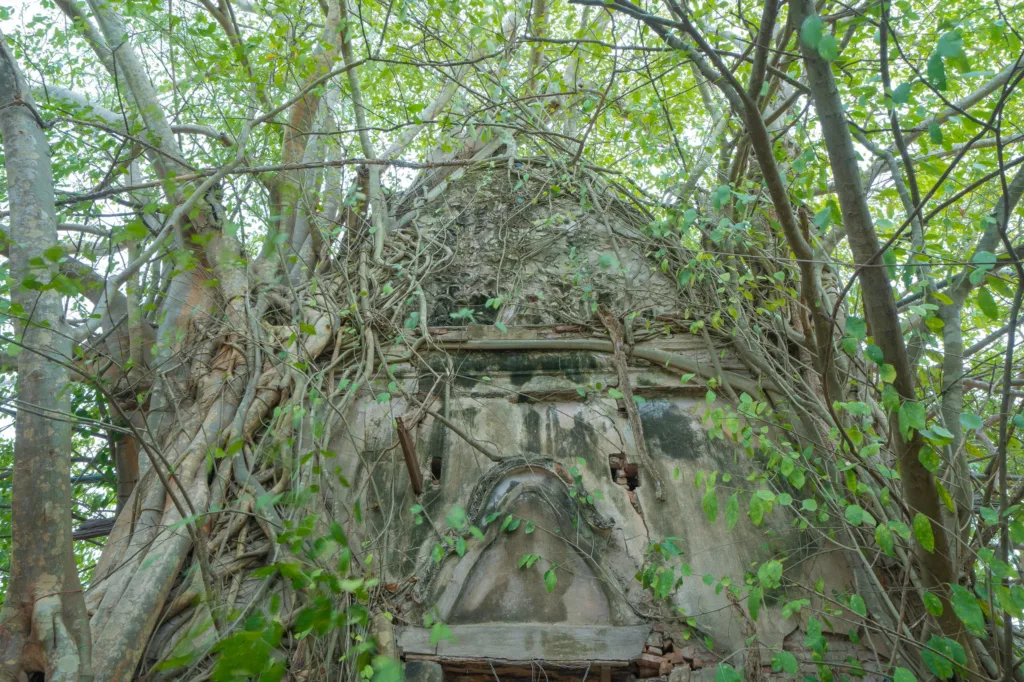
After the Thonburi era the camp lost its military role, and the hall of Wat Bang Kung Noi stood abandoned for nearly 200 years. Seeds of bodhi, banyan and other fig trees sprouted on the building, part of the roof collapsed, and the roots gradually wrapped the walls until they became the very frame holding the old hall up. It came to be called the Bot Prok Pho, the hall covered by the bodhi tree, and is now one of Thailand's famous "Unseen" sights.
The hall is built of brick and stucco, about 8 metres wide and 23 metres long, with none of the usual roof finials. Its gable carries late-Ayutthaya stucco floral patterns set with pieces of porcelain. Inside sits Luang Pho Nil Mani, a red-sandstone Buddha in the Subduing Mara posture with a lap width of about 2 metres, known locally as Luang Pho Dam or Luang Pho Bot Noi. North of the hall is an old rectangular pond, roughly 5 by 7 metres.
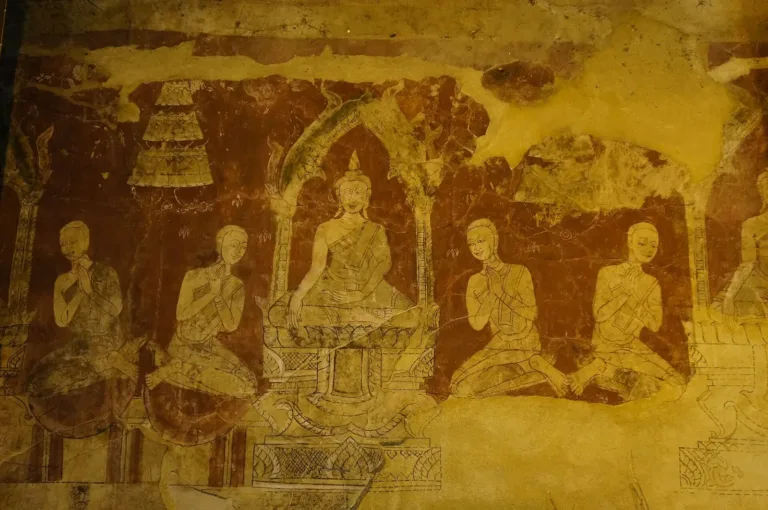
The inner walls hold late-Ayutthaya murals of the Buddha's life, such as the Buddha seated in a niche flanked by his two chief disciples with palms joined beneath a three-tiered parasol. Much has faded from rainwater, but a Silpakorn University study suggests these paintings may have inspired the stucco artists of the vihara at Wat Bang Kapom in Amphawa in the early Rattanakosin period. The murals were also documented in a 2008 album of temple murals in Samut Songkhram.
The modern chapter began in 1967, when Aphai Chanthawimon, permanent secretary of the Ministry of Education, chose the site for a royal-commemoration scout camp, and a shrine to King Taksin was set up on 20 June 1968. The scout camp later closed, Wat Bang Kung and Wat Bang Kung Noi were merged into one temple, and a royal monument, a reconstructed camp wall, a heroes' shrine and Muay Thai statues were added. The Fine Arts Department registered Wat Bang Kung as a historic site on 18 December 1996. Every 28 December, King Taksin Day, Samut Songkhram province holds a tribute ceremony at the monument, and in 2014 a Chulalongkorn University thesis proposed a new temple layout with a Bang Kung battle exhibition hall to separate monastic space from the growing number of visitors.
Arrived? Check in, collect a stamp and tell others what it is like right now
Check your location first, so you do not fill in the form for nothing
Location must be on and within 1 km · One check-in per place per day · come back on other days to check in again
Post photos from anywhere — no need to be here · Up to 20 photos at a time · JPG / PNG / WebP · GPS location data is removed automatically
Wat Bang Kung is at Ban Khai, Moo 4, Bang Kung, Bang Khonthi, Samut Songkhram, on the Mae Klong River.
From Amphawa or Samut Songkhram town · Fuel
Often part of an Amphawa trip · Package price
Paved village road
Car park in the temple grounds
Good
Daily 08:00–16:30
Wat Bang Kung
Answers travellers want before they go — a one-minute read
Bang Kung, Bang Khonthi, Samut Songkhram, on the Mae Klong River near Amphawa
Daily 08:00–16:30
No, it's free
It's an Ayutthaya-era hall entirely wrapped in tree roots
A Thai-Chinese camp under King Taksin that held off a Burmese siege in 1768
Best day this week: Monday 30 Nov · Check in when you arrive to collect a stamp
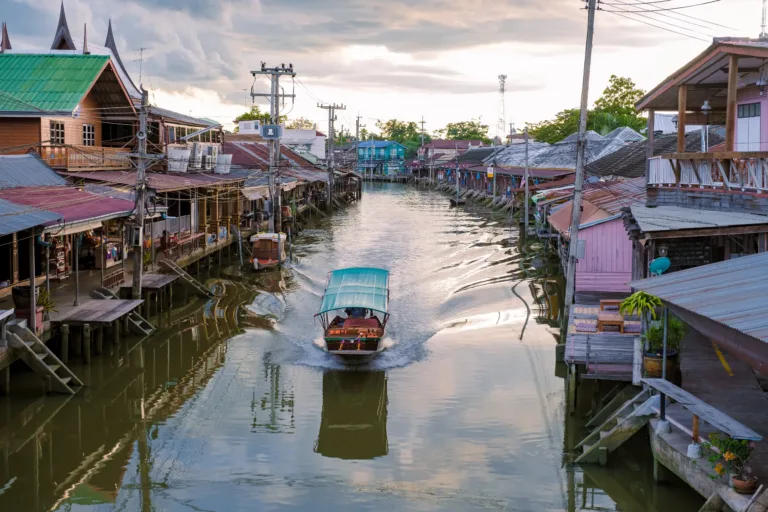 Amphawa Floating Market
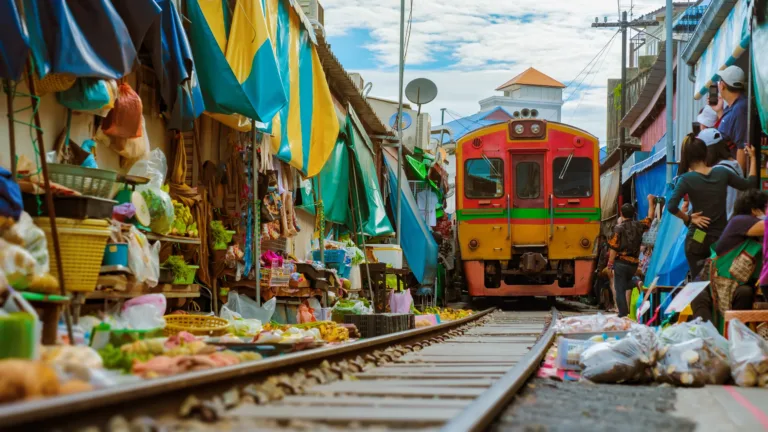 Maeklong Railway Market (Talat Rom Hup)
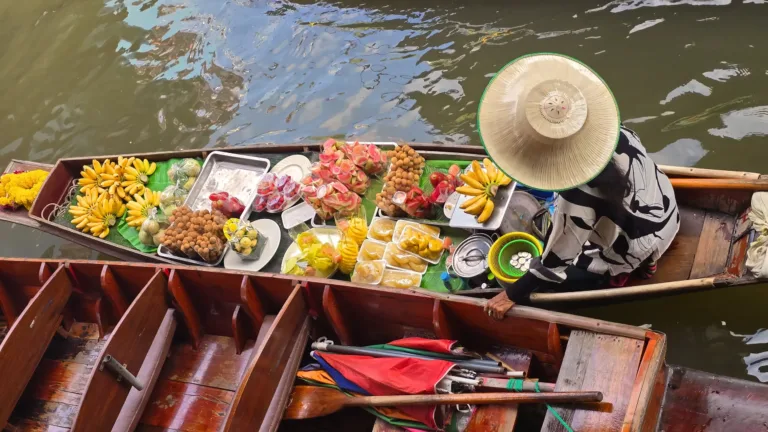 Damnoen Saduak Floating Market