What to know before visiting the temple
Dress modestly · Remove shoes before entering the ordination hall · Keep noise down
Daily 06:00–18:00
Morning, before crowds from the railway market
Luang Pho Ban Laem gold-leaf festivals at Songkran, Chinese New Year and the 11th lunar month
7 days ahead
When to go
this week
Tap a day card to see that day’s weather, rain, haze and hourly forecast
Best time to go Daytime is over · see tomorrow
Holiday — traffic on the way up and parking fills fast; leave early
Hour by hour
Green band = hours used for the score
Best time to go Fine all day little rain through the day
Holiday — traffic on the way up and parking fills fast; leave early
Hour by hour
Green band = hours used for the score
Best time to go Fine all day little rain through the day
No warnings today — normal road and weather conditions
Hour by hour
Green band = hours used for the score
Best time to go Fine all day little rain through the day
No official warnings, but watch for: Hot (Afternoon) feels like 38°C
Hour by hour
Green band = hours used for the score
Best time to go Fine all day little rain through the day · light drizzle possible at times
No official warnings, but watch for: Hot (Afternoon) feels like 38°C
Hour by hour
Green band = hours used for the score
Best time to go Fine all day little rain through the day · light drizzle possible at times
No official warnings, but watch for: Hot (Afternoon) feels like 38°C
Hour by hour
Green band = hours used for the score
Best time to go Fine all day little rain through the day · light drizzle possible at times
No warnings today — normal road and weather conditions
Hour by hour
Green band = hours used for the score
Wat Ban Laem (Wat Phet Samut Worawihan)
Wat Ban Laem, officially Wat Phet Samut Worawihan, is on Phet Samut Road in Tambon Mae Klong, central Samut Songkhram, near the Mae Klong River and Mae Klong station, under half a kilometre's walk from the railway market.The temple dates to the Ayutthaya period and was first called Wat Si Champa. Villagers from Ban Laem in Phetchaburi, fleeing a Burmese attack, later restored it, which gave it its popular name. The main image, Luang Pho Ban Laem, is a standing Buddha holding an alms bowl. Legend says it floated downriver with 'brother' images such as Luang Pho Sothon and Luang Pho To of Bang Phli.People apply gold leaf to make wishes and return to give thanks with traditional dance. Gold-leaf festivals at Songkran and Chinese New Year draw big crowds.
- Quiet and cool
- Busy with market visitors, hot
- Softer light
Arrive Morning, before crowds from the railway market
Good to know here
It's a royal temple
- Pair it with the railway market: watch the train, then walk over
- Bring gold leaf for the offering
- Dress modestly
No data yet check before you go · Time needed 45 minutes–1 hour
Weekends and gold-leaf festivals
- Kids An in-town temple, little walking
- Seniors Flat and central
- Dress modestly
- Remove shoes before entering the ordination hall
- Keep noise down
- Festivals are crowded; watch your belongings
Luang Pho Ban Laem gold-leaf festivals at Songkran, Chinese New Year and the 11th lunar month
The story of this place
Wat Ban Laem, officially Wat Phet Samut Worawihan, is a riverside temple on the Mae Klong that is at least 500 years old. It was first called Wat Si Champa and took its present popular name from villagers of Ban Laem in Phetchaburi, who fled a Burmese attack and settled here in the late Ayutthaya period. It houses Luang Pho Ban Laem, a standing Buddha holding an alms bowl that, according to legend, fishermen pulled from the river mouth in their nets, and which is counted among the "five brother" floating Buddhas revered across central Thailand. The temple is still the spiritual heart of Mae Klong, from fishermen who pray here before going to sea to people who return to dance in thanks when their wishes come true.
Read more 10 more paragraphs
No one knows for certain who built Wat Si Champa. The traditional account says it was founded in the Ayutthaya period, around the reign of King Prasat Thong (1629–1656), on the bank of the Mae Klong near the gulf. Some sources, however, give a founding date of about 1457, far earlier than that reign, so the safest thing to say is that the temple dates back to Ayutthaya times and is several centuries old.
The turning point came in 1764, when Burmese armies attacked Phetchaburi. The people of Ban Laem, mostly fishermen, fled and resettled on the south bank of the Mae Klong river mouth, close to Wat Si Champa, which by then had fallen into disrepair. Locals called the newcomers "the Ban Laem people". They restored the temple together and named it after their home village, Wat Ban Laem, the name Mae Klong people still use today.
Legend says that around the same time, Ban Laem fishermen dragging their nets at the mouth of the Mae Klong brought up two Buddha images. One, a standing image holding an alms bowl, was enshrined at Wat Si Champa and became known as Luang Pho Ban Laem. The other, a seated image in meditation, was given to relatives who took it to Wat Khao Takrao in Ban Laem district, Phetchaburi, where it is known as Luang Pho Thong.
Another version of the story says that while the image was being carried by boat, a storm struck the river in front of Wat Si Champa, the boat capsized and the image sank. Villagers from Wat Si Champa dived until they found it. When the Ban Laem people came to ask for it back, both sides agreed that it would stay at this temple, on condition that the temple be renamed Wat Ban Laem. The two versions explain the temple's name in slightly different ways.
Luang Pho Ban Laem is also tied to the legend of the floating Buddhas, in which five images drifted down from the north and came ashore on different rivers: Luang Pho Sothon on the Bang Pakong, Luang Pho of Wat Rai Khing on the Nakhon Chai Si, Luang Pho To of Wat Bang Phli Yai Nai, Luang Pho Ban Laem on the Mae Klong and Luang Pho Thong of Wat Khao Takrao on the Phetchaburi River. Some tellings mention only three brothers: Luang Pho Ban Laem, Luang Pho To of Bang Phli and Luang Pho Sothon. Some sources suggest the five-brother story may have spread from Mon workers who came to build the Phikhat Khasuek fort at the mouth of the Mae Klong.
The image itself is a standing Buddha holding an alms bowl, cast in brass and covered in gold leaf. Sources give different heights, from about 167–170 cm up to about 2.8 m. Local belief dates it to the Sukhothai to early Ayutthaya periods, but some scholars see its style as closer to late Ayutthaya or early Rattanakosin, with a lotus base that probably dates from the reign of King Rama III.
It is said that when the fishermen found the image, it had no alms bowl; the original may have been lost in the water. Later, Prince Bhanurangsi Savangwongse (Krom Phraya Bhanubandhu Vongsevoradej) had palace craftsmen make a blue glass bowl and presented it to the temple. The bowl is still kept at the temple and is brought out only for important ceremonies.
The temple received its royal consecration boundary around 1857. Temple history also tells that around 1873, during a cholera epidemic, the abbot dreamed that Luang Pho told him to make holy water from the yantras on the image's palms for villagers to drink and bathe in, after which the disease eased. In 1904 King Chulalongkorn visited Samut Songkhram. In 1911 Phra Maha Sitthikan (Thong) was appointed abbot and led the temple until 1956; the first Luang Pho Ban Laem amulet coins were made during his time, around 1916–1917.
On 1 July 1955 the temple was raised to a third-class royal temple of the Worawihan type and given the royal name Wat Phet Samut Worawihan. A line of abbots followed, including Phra Thepsamutmoli (Prayong), who led the temple from 1992 to 2020, and Phra Ratchasamutwachirasophon, the current abbot since 2020.
In recent years the old ordination hall had become dilapidated and was often flooded by high tides. In 2022 Bangkok Bank presented the royal kathin robes here for the 56th consecutive year, raising more than 15 million baht toward a new hall. The foundation stone was laid on 4 March 2023, and by late 2024 construction was about 35% complete, with a ceremony installing key Buddha images. Meanwhile, Luang Pho Ban Laem remains open for people to pay respects, apply gold leaf and perform thanksgiving dances, as they have for generations.
- 1629–1656Reign of King Prasat Thong, when Wat Si Champa is believed to have been built on the Mae Klong River
- 1764Burmese forces attack Phetchaburi; Ban Laem villagers settle near the Mae Klong river mouth, restore the temple and call it Wat Ban Laem
- 1764Legend says Ban Laem fishermen net Luang Pho Ban Laem at the mouth of the Mae Klong (approximate)
- 1857The temple receives its royal consecration boundary (approximate)
- 1873During a cholera outbreak, holy water from the yantras on the image's palms is said to have eased the epidemic (approximate)
- 1904King Chulalongkorn visits Samut Songkhram
- 1911Phra Maha Sitthikan (Thong) becomes abbot, serving until 1956
See 9 events
- 1916–1917The first Luang Pho Ban Laem amulet coins are made
- 19551 Jul — raised to a third-class royal temple and named Wat Phet Samut Worawihan
- 1957Phra Thammapidok (Sanit) becomes abbot (until 1971)
- 1972Phra Ratchasamutmethi (Prasan) becomes abbot (until 1992)
- 1992Phra Thepsamutmoli (Prayong) becomes abbot (until 2020)
- 2020Phra Ratchasamutwachirasophon becomes the current abbot
- 2022Bangkok Bank's 56th royal kathin raises over 15 million baht for a new ordination hall
- 20234 Mar — foundation stone laid for the new ordination hall, replacing the old one damaged by tidal flooding
- 2024The new hall is about 35% complete; key Buddha images are ceremonially installed
Check-ins & visitor photos
Arrived? Check in, collect a stamp and tell others what it is like right now
Check your location first, so you do not fill in the form for nothing
Location must be on and within 0.2 km · One check-in per place per day · come back on other days to check in again
Post photos from anywhere — no need to be here · Up to 20 photos at a time · JPG / PNG / WebP · GPS location data is removed automatically
How to get there
The temple is on Phet Samut Road, Tambon Mae Klong, near the river and Mae Klong station.
From Bangkok via Rama II Road · Fuel
Mae Klong line to Mae Klong station, then walk
City streets
Daily 06:00–18:00
about 0.3 km from Mae Klong Railway Market
Wat Phet Samut Worawihan (Wat Ban Laem)
FAQ
Before you go: Wat Ban Laem (Wat Phet Samut Worawihan)
Answers travellers want before they go — a one-minute read
Where is Wat Ban Laem?
Phet Samut Road, Tambon Mae Klong, Mueang Samut Songkhram, about 300 m from the railway market
What are the hours?
Daily 06:00–18:00
What is Luang Pho Ban Laem?
A standing Buddha holding an alms bowl, about 167 cm tall
What's the official name?
Wat Phet Samut Worawihan
Why 'Ban Laem'?
Villagers from Ban Laem in Phetchaburi restored the temple in 1764
Are there annual festivals?
Gold-leaf festivals at Songkran, Chinese New Year and the 11th lunar month
Nearby places
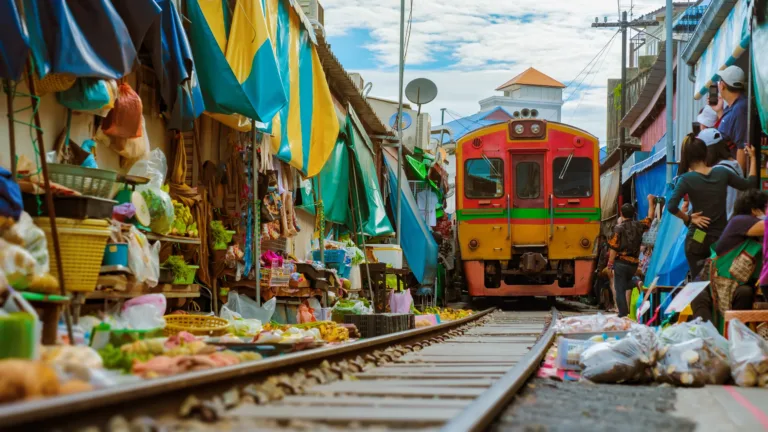 Maeklong Railway Market (Talat Rom Hup)
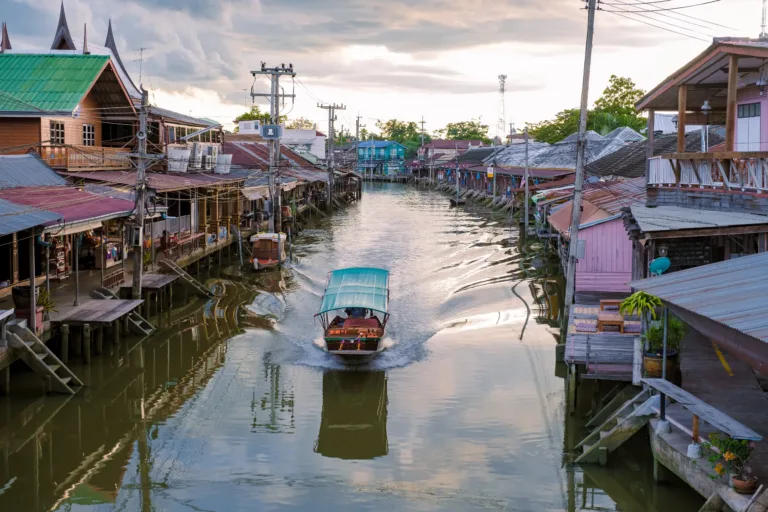 Amphawa Floating Market
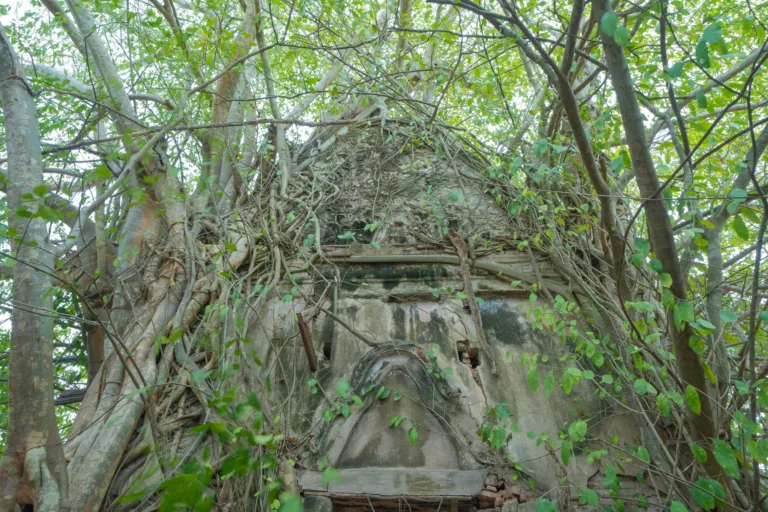 Wat Bang Kung
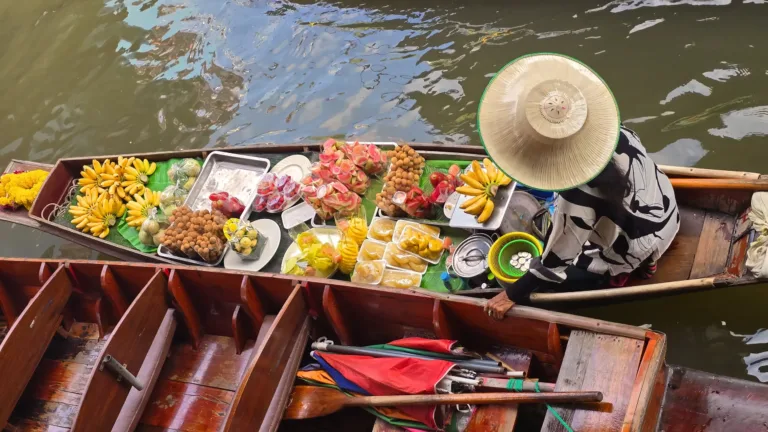 Damnoen Saduak Floating Market
Ready to go to Wat Ban Laem (Wat Phet Samut Worawihan)?
Best day this week: Monday 30 Nov · Check in when you arrive to collect a stamp