 01
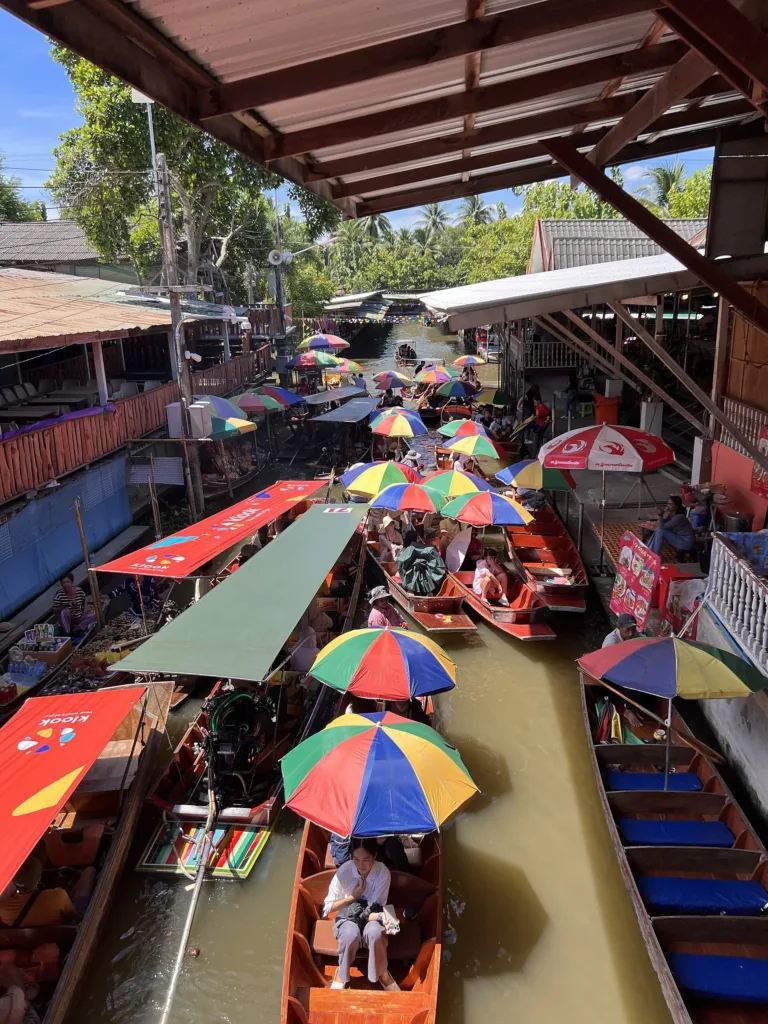
Packed canalThe classic floating-market scene
RATCHABURI · DAMNOEN SADUAK
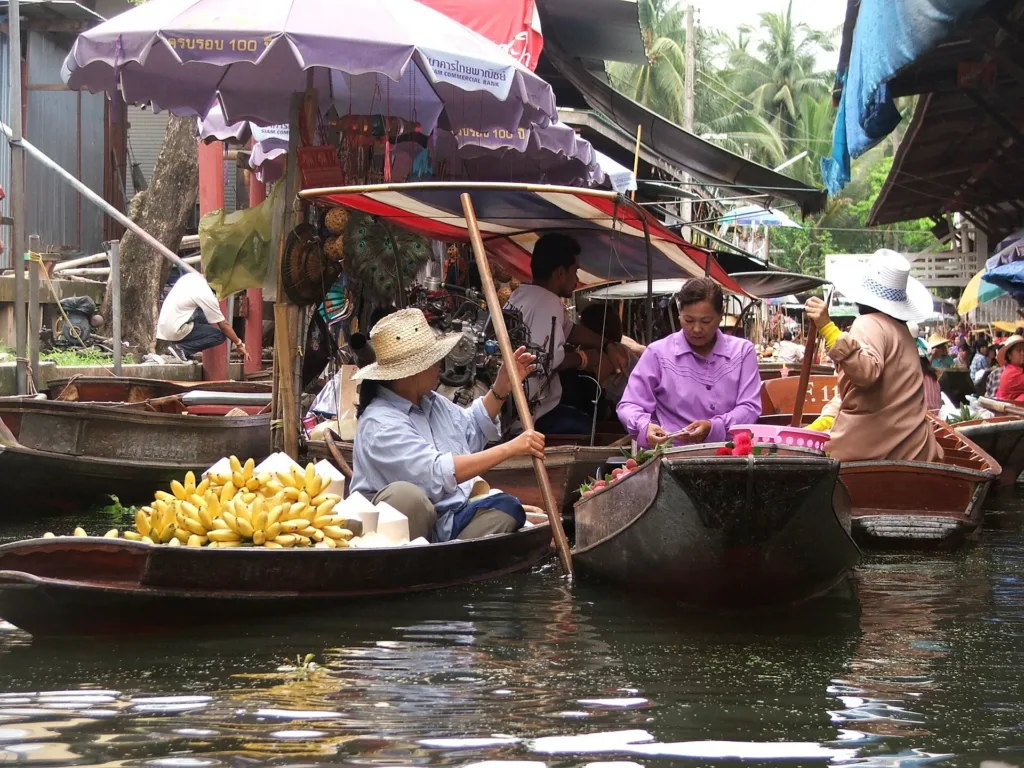
Thailand’s world-famous floating market on the canal network of Khlong Damnoen Saduak, dug under King Rama IV in 1866–68, busiest in the early morning.
Holiday / event — crowded
Daily, about 07:00–12:00 (busiest 07:00–09:00)
Free
2–3 hours
Daily 09:00–11:00 when tour groups arrive, and long holidays
01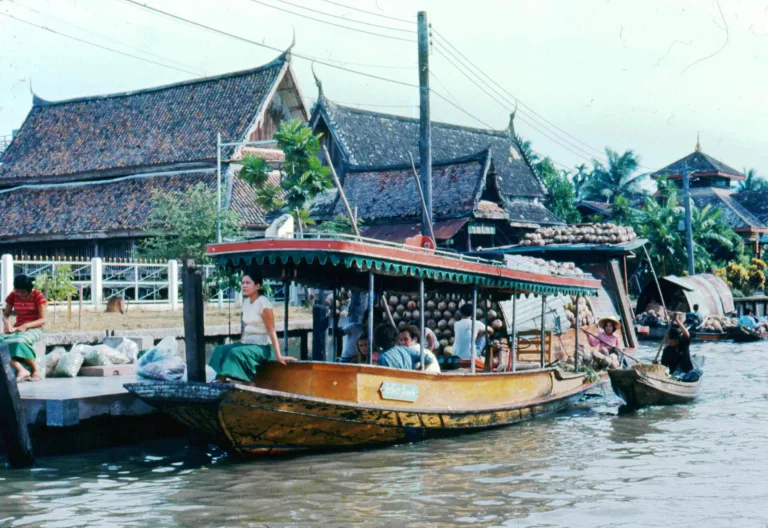 02
 03
 04
Tap a day card to see that day’s weather, rain, haze and hourly forecast
Best time to go Daytime is over · see tomorrow
Holiday — traffic on the way up and parking fills fast; leave early
Green band = hours used for the score
Best time to go Fine all day little rain through the day
Holiday — traffic on the way up and parking fills fast; leave early
Green band = hours used for the score
Best time to go Fine all day little rain through the day
No warnings today — normal road and weather conditions
Green band = hours used for the score
Best time to go Fine all day little rain through the day
No warnings today — normal road and weather conditions
Green band = hours used for the score
Best time to go Fine all day little rain through the day · light drizzle possible at times
No warnings today — normal road and weather conditions
Green band = hours used for the score
Best time to go Fine all day little rain through the day · light drizzle possible at times
No official warnings, but watch for: Hot (Afternoon) feels like 39°C
Green band = hours used for the score
Best time to go Fine all day little rain through the day · light drizzle possible at times
No warnings today — normal road and weather conditions
Green band = hours used for the score
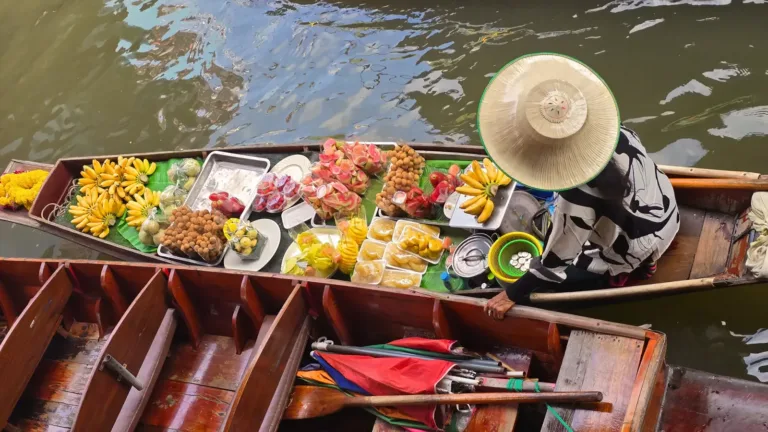
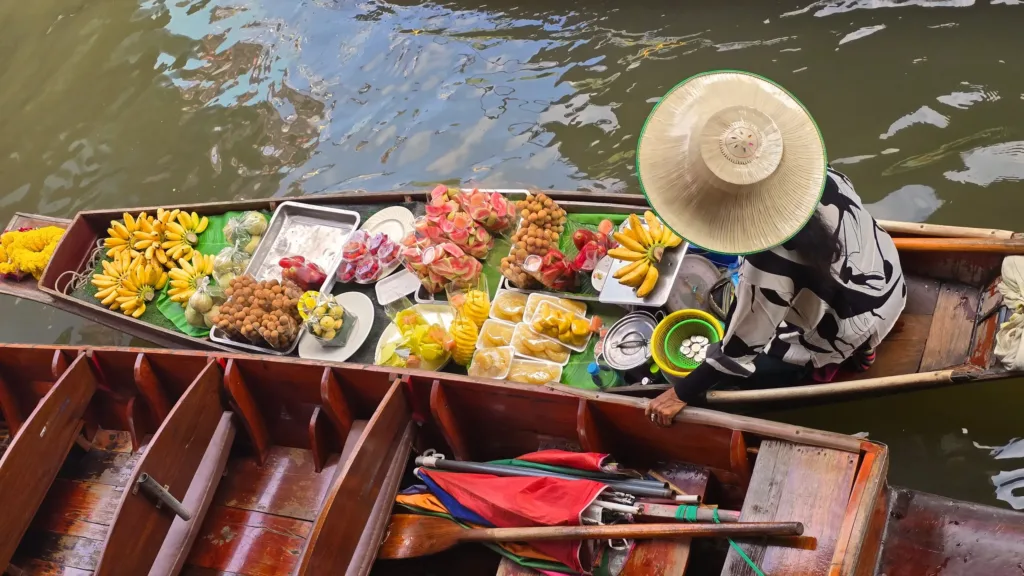
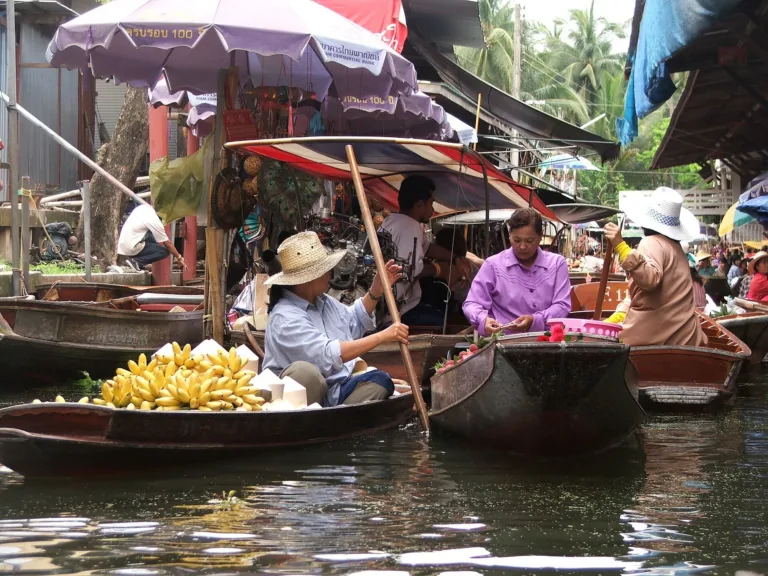
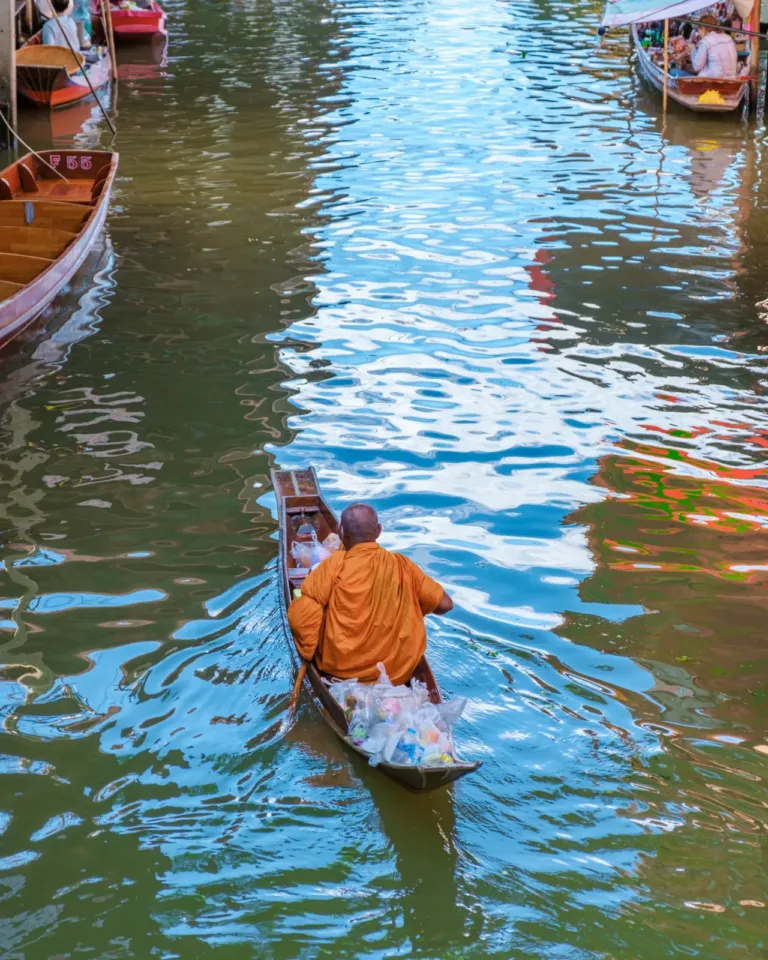
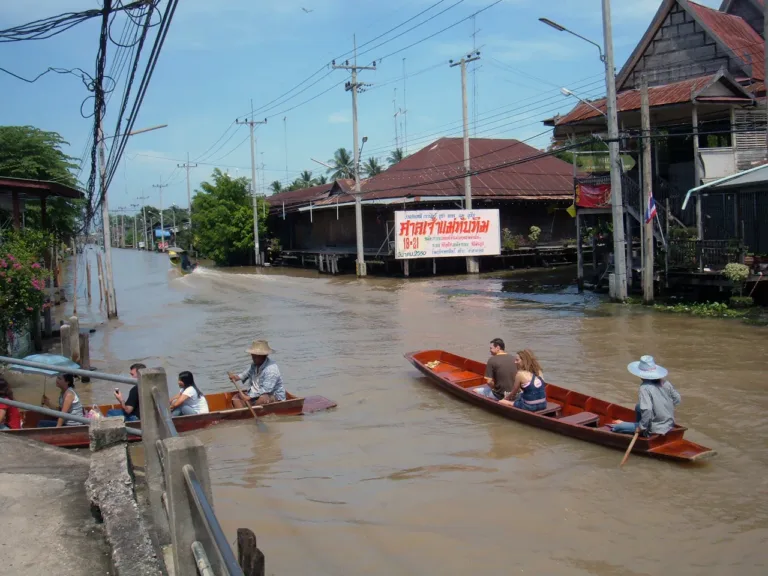
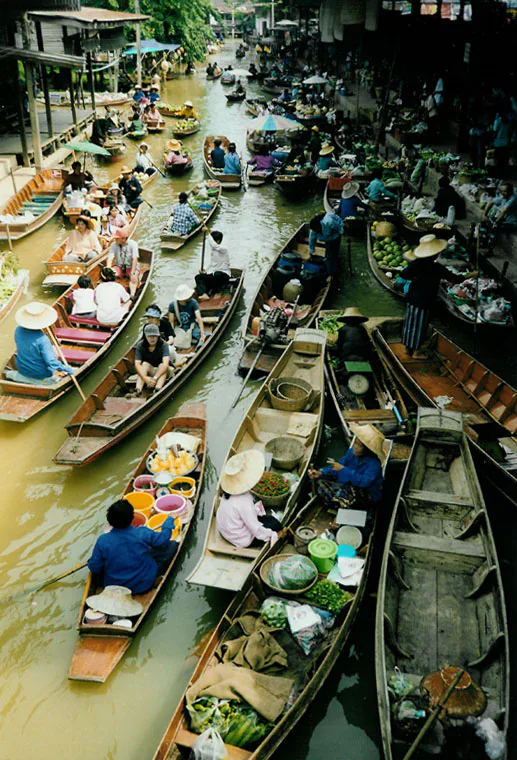
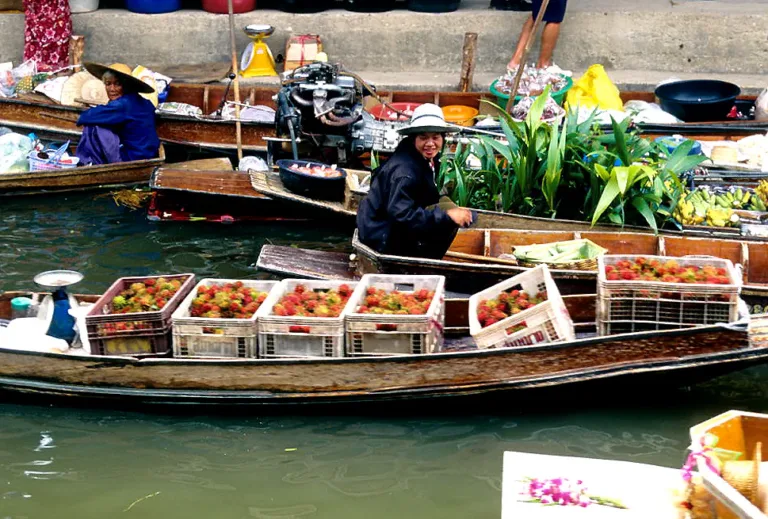
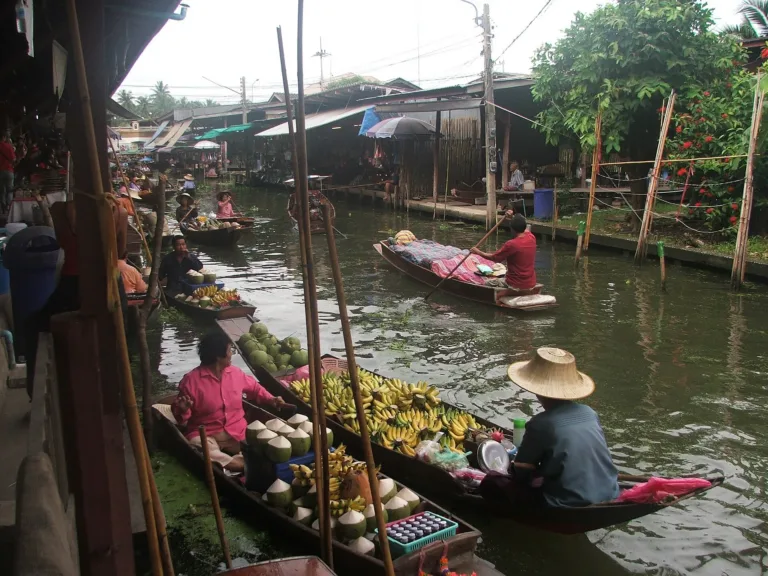
Damnoen Saduak Floating Market in Ratchaburi is Thailand’s best-known floating market, set on the canal network of Khlong Damnoen Saduak, dug under King Rama IV in 1866–68. Vendors paddle boats of fruit, food and boat noodles, and it is busiest in the early morning.
Arrive Before 08:00, when the market is busiest and before tour groups
Photos from Wikimedia Commons and contributors · tap a photo to see its credit
Agree the price before boarding; check pier signs
Beware packages that take you to pricey piers
Ask before ordering food or buying
Keep hands and bags in when boats jostle
Free · Time needed 2–3 hours
Daily 09:00–11:00 when tour groups arrive, and long holidays
| Market entry | Free |
| Paddle boat, up to 1 hr (2023 reference) optional | 400 ฿/boat |
| Motorboat, up to 1 hr (2023 reference) optional | 600 ฿/boat |
Mostly cash; some accept transfers · Prices may change by season — check with the venue
Tap a month on the wheel to see weather, rain, haze and crowds from 10 years of records
Best time · Nov – Feb is cool with plenty of fruit, ideal for early boat rides
Watch out · Mar – May is very hot at midday, and tour groups pack the market late in the morning
Nov by the records 23–31°C · avg rain 105 mm (12 rainy days) · clear 4 days · avg PM2.5 22
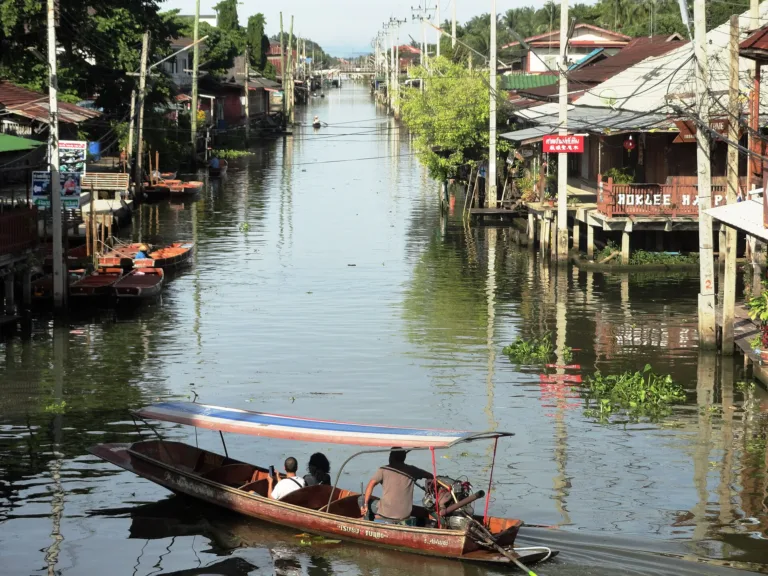
Damnoen Saduak Floating Market is in Damnoen Saduak subdistrict and district, Ratchaburi, about 100 km southwest of Bangkok. It sits on a web of channels branching off Khlong Damnoen Saduak, a major canal dug in the reign of King Rama IV.
Silpa Wattanatham explains that trade in rice and crops expanded after the 1855 Bowring Treaty. In late 1866 King Mongkut ordered a canal dug for transport and getting produce to market, directed by Somdet Chao Phraya Borommaha Si Suriyawong (Chuang Bunnag), the Minister of Defence, using soldiers, officials, villagers and hired Chinese labourers.
Digging took two years, and the canal opened in 1868. It runs from the Tha Chin River at Bang Yang, Ban Phaeo district, Samut Sakhon, to the Mae Klong at Bang Nok Khwaek, Bang Khonthi district, Samut Songkhram. It was 6 wa (about 12 m) wide, 6 sok (about 3 m) deep and 840 sen, about 33.6 km, long (Wikipedia says about 35 km). Every 100 sen a stone marker carved in Thai, Roman and Chinese numerals was set up, which is why canal communities have names like Lak Sam (Marker 3) and Lak Ha (Marker 5).
Some documents give different details. A King Mongkut’s University of Technology Thonburi knowledge document says digging began in 1860 and places the Bang Yang starting point in Krathum Baen district, while Silpa Wattanatham says digging began in late 1866 from Bang Yang in Ban Phaeo district. All sources agree the canal opened in 1868.
The canal cost 1,400 chang, or 112,000 baht: the king gave 400 chang and Chuang Bunnag paid 1,000 himself. The king named it “Damnoen Saduak” (“convenient passage”) because it ran straighter than other canals of the time, and granted the Bunnag family land along both banks. Wikipedia calls it Thailand’s longest straight man-made canal; it links to Khlong Phasi Charoen, which leads to the Chao Phraya in Bangkok.
Once the canal opened, Thai and Chinese settlers moved in to grow coconuts, fruit and vegetables. Villagers dug some 200 side canals, paddling produce to market became the norm, and floating markets sprang up where canals met.
In 1904 King Chulalongkorn travelled incognito (“prapat ton”) to visit his subjects and passed along Khlong Lat Phli. A community story publicised by TAT’s Ratchaburi office says the mother of Huat Sae Lao invited him to eat at her house without knowing who he was; Huat, then 20, recognised the king and prostrated himself. The king praised him as “clever and sharp-eyed” and took him on as a royal page, and the house is still called “the house of royal page Jek Huat”.
In 1967 King Bhumibol and Queen Sirikit came by water to present royal kathin robes at Wat Chotithayakaram, a canal-side temple over 145 years old that houses Luang Pho Lopburi Ramet, revered by Damnoen Saduak people. The kathin funds built a school building for the temple school.
The main early market was at the mouth of Khlong Lat Ratchaburi, or Khlong Lat Phli, in the area called Lao Tak Lak (the old market), beside a temple. It thrived until new roads reduced reliance on water transport, above all the 1981 road to Khlong Ton Khem that drew trade away, and many old floating markets in central Thailand faded in the same period.
Lao Tak Lak, or the Lat Phli canal-mouth market, is considered Ratchaburi’s first traditional floating market and was originally a community of Chinese migrants who farmed and traded. It declined when the road and Ton Khem market arrived but has since been revived. From 3 to 28 February 2023 it hosted a Yuan Xiao lantern festival, opened on 5 February at the Ti Liu Yi shrine, with a boat procession to Luang Pho Lopburi Ramet and thousands of lanterns along Khlong Lat Phli and Khlong Damnoen Saduak, supported by the Ratchaburi Provincial Administrative Organization.
Around 1967 Damnoen Saduak became internationally known through travel media and films, and in 1971 the Tourism Authority of Thailand promoted Lat Phli as an attraction for foreigners. Thai Post says 1971–73 was its heyday, when genuine orchard growers paddled in to sell until the canal was jammed.
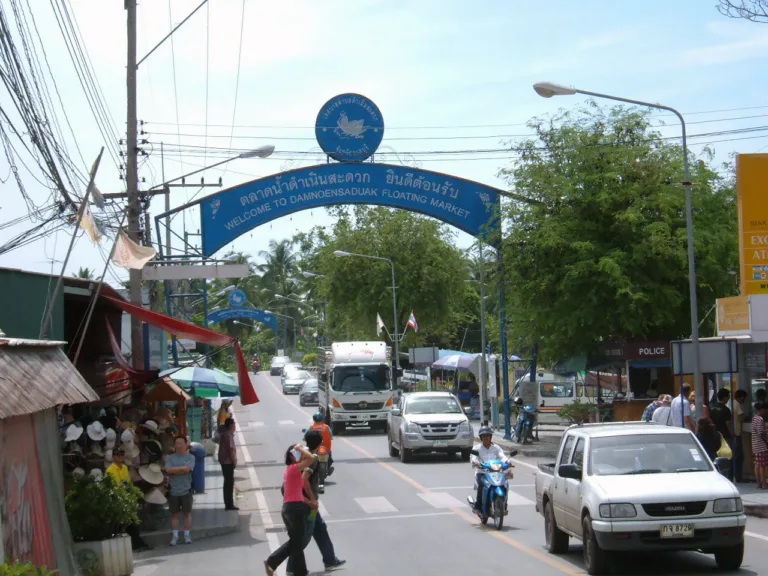
In 1981 a road was cut to Khlong Ton Khem on the other side, and private entrepreneurs opened a new floating market along it, later adding roofs so trade could run all day, every day. This became the Damnoen Saduak market known today. It has three parts: Ton Khem, the largest; Hia Kui, with souvenir shops for tour groups; and Khun Phitak, about 2 km south, the smallest and quietest.
The classic image is of vendors in blue mo hom farmers’ shirts and wide-brimmed ngop hats paddling boats of fruit, vegetables, sweets and boat noodles. The market is busiest from about 07:00 to 09:00 and winds down before noon.
The market has appeared in many productions, including the boat chase in the James Bond film The Man with the Golden Gun (1974) and a scene in Nicolas Cage’s Bangkok Dangerous (2008). Most recently, Japan’s TV Asahi recreated it for a Doraemon special in which Doraemon and Nobita visit Thailand, aired on 31 May 2025.
Its popularity brings criticism that it is crowded, touristy, overpriced and short on authenticity. TAT’s Ratchaburi office said in 2020 that about 80% of visitors are foreigners.
Boat prices have long been an issue. In early 2023 a visitor posted that a 1,200-baht taxi package from Bangkok led to a pier charging 5,000 baht for two people for two hours; the post was retweeted over 4,000 times. The district chief found other piers charging about 400–600 baht per boat, for example Yim Siam pier at 400 baht for a paddle boat and 600 for a motorboat for up to an hour, and then met piers, village heads and headmen to set clear service points and prices.
In early 2026 food prices drew complaints again, with social-media posts citing a 400-baht omelette and a 1,400-baht large fried rice. The Ratchaburi provincial public relations office said officials had warned and fined the vendors under the law.
During COVID-19 the market reopened on 30 May 2020 with 3–4 passengers per boat. TAT ran “Hot Deal Khit Thueng Damnoen” from 1 July to 15 September 2020, giving a free one-hour boat ride for 900 baht of spending in Ratchaburi. But the second wave in early 2021 emptied the market, many small vendors stopped trading, and some piers offered free parking and stall space to help.
Beyond the main market, community routes show the older way of life: Lak Ha floating market, about 150 years old, on the Ratchaburi–Samut Sakhon border; Lao Tak Lak with its old wooden houses; Damnoen Saduak aromatic-coconut orchards, registered as a Geographical Indication; Wat Chotithayakaram; and the house of royal page Jek Huat. In 2020 a community-run paddling route cost 600 baht for four, including snacks and a guide.
Several canal communities are named after the stone markers. Lak Ha (“fifth marker”) is now a subdistrict municipality in Ban Phaeo district, Samut Sakhon; it became a sanitation district in 1956 and a municipality in 1999, covering about 125.57 km² with 41 villages and about 42,000 people. Wikipedia says the canal is divided into eight markers.
Coconut orchards are the backbone of the local economy. On 18 February 2026 the European Union registered “Ratchaburi aromatic coconut” as a Geographical Indication, following Thailand’s 2023 application; it covers seven districts including Damnoen Saduak. In 2025 output was about 550 million coconuts, with 276 million baht in domestic sales and over 5,244 million baht in exports, including an average of over 300 million baht a year to Europe.
Long-running eateries are part of the community story too: TAT said in 2023 that Jae Cheng’s charcoal-fired pad thai had been selling for over 69 years and Nang Ngam noodles for over 70.
By car, take Highway 4 (Phetkasem) via Nakhon Pathom to Bang Phae junction (km 83), then turn left onto Highway 325 for about 25 km, or come via Rama II Road through Samut Sakhon and Samut Songkhram and join Highway 325. Air-conditioned Bangkok–Damnoen Saduak buses leave the Southern Bus Terminal from 05:50 to 21:00 and take about two hours.
Arrive before 08:00 to see the market at its busiest before the tour groups. Agree the boat price before boarding, check posted prices at the pier, and be wary of taxis steering you to particular piers. Entry to the market is free; boats are paid separately.
Arrived? Check in, collect a stamp and tell others what it is like right now
Check your location first, so you do not fill in the form for nothing
Location must be on and within 1 km · One check-in per place per day · come back on other days to check in again
Post photos from anywhere — no need to be here · Up to 20 photos at a time · JPG / PNG / WebP · GPS location data is removed automatically
From Bangkok take Highway 4 (Phetkasem) via Nakhon Pathom.
Highways 4 and 325 · Fuel
Southern Bus Terminal–Damnoen Saduak · As posted
From Bangkok take Highway 4 (Phetkasem) to Bang Phae junction (km 83), then turn left onto Highway 325 for about 25 km, or take Rama II Road and join Highway 325.
Pier and shop car parks (some charge)
Petrol stations on Highway 325
Good mobile signal
Daily, about 07:00–12:00 (busiest 07:00–09:00)
about 100 km from Bangkok
Damnoen Saduak Floating Market
Approx. nightly price for 2 adults (next week) · final price depends on your dates
Answers travellers want before they go — a one-minute read
Daily about 07:00–12:00, busiest 07:00–09:00
No, but boats cost extra, about 400–600 baht per boat per hour (2023 reference)
King Rama IV ordered it in late 1866; it opened in 1868
The king named it “convenient passage” because it was straighter than other canals of the time
By car on Highways 4 and 325 (1.5–2 hrs), or by bus from the Southern Bus Terminal
Best day this week: Monday 30 Nov · Check in when you arrive to collect a stamp
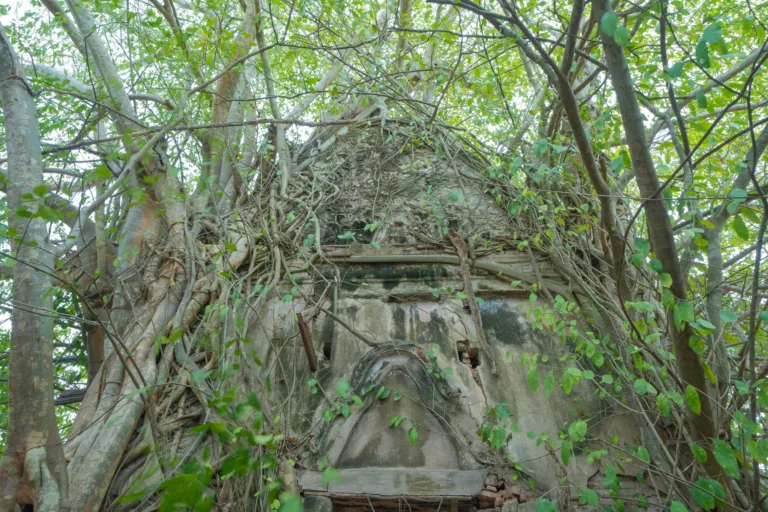 Wat Bang Kung
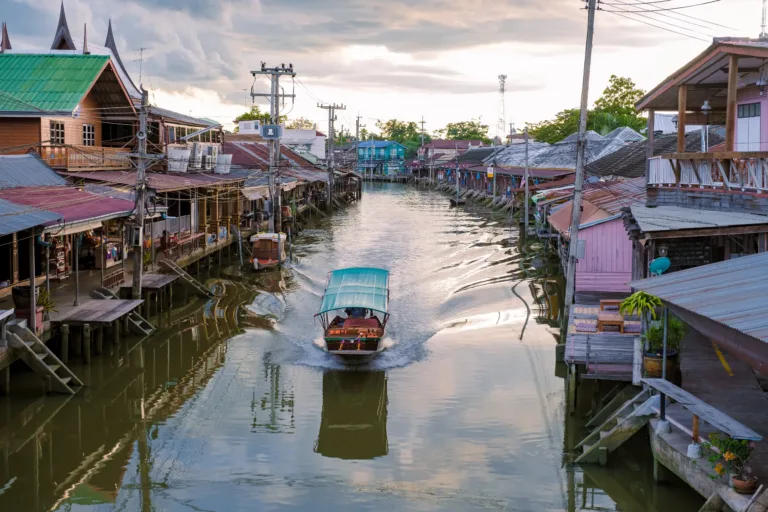 Amphawa Floating Market
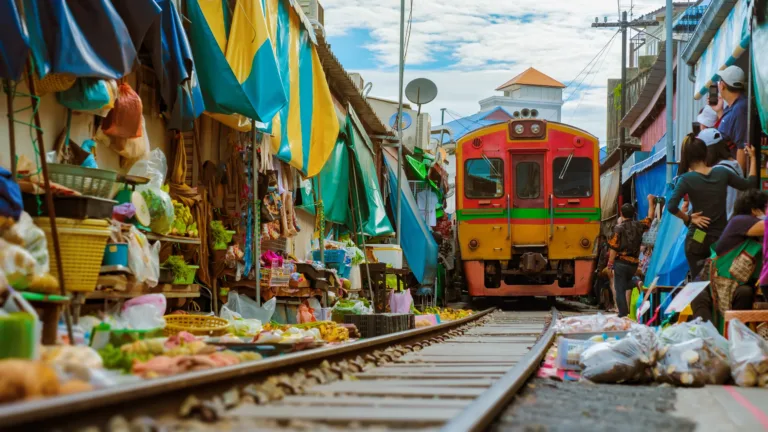 Maeklong Railway Market (Talat Rom Hup)