 01
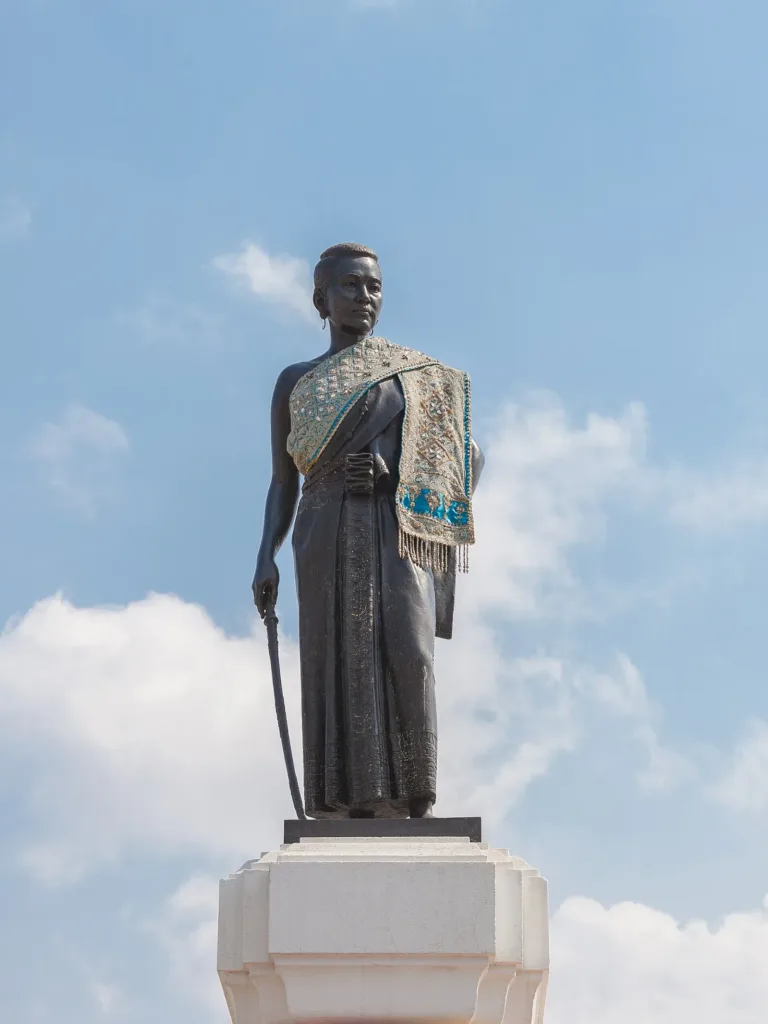
The Ya Mo statueDark bronze, 1.85 m tall, sword in hand, facing west
Monument · Central Korat
The beloved Ya Mo monument in front of Chumphon Gate in central Nakhon Ratchasima, unveiled on 15 January 1934. Open 24 hours, free; the big festival runs 23 March–3 April.
Holiday / event — crowded
Open 24 hours
30 minutes–1 hour
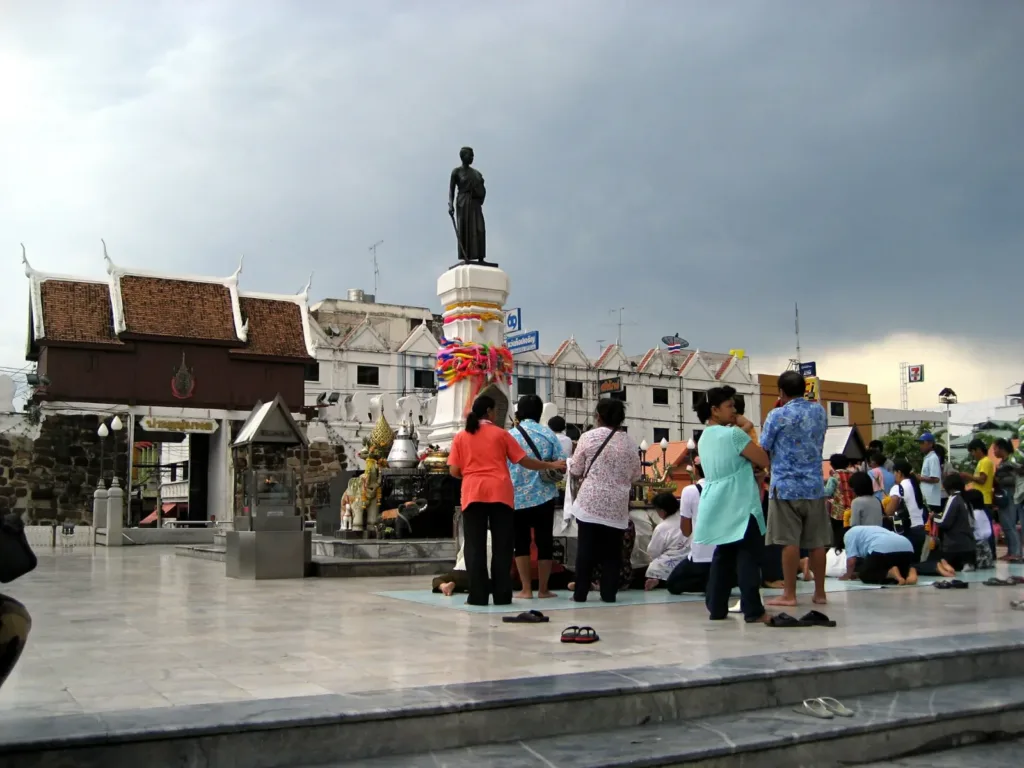
In front of the monument — Ya Mo with Chumphon Gate behind
Free
01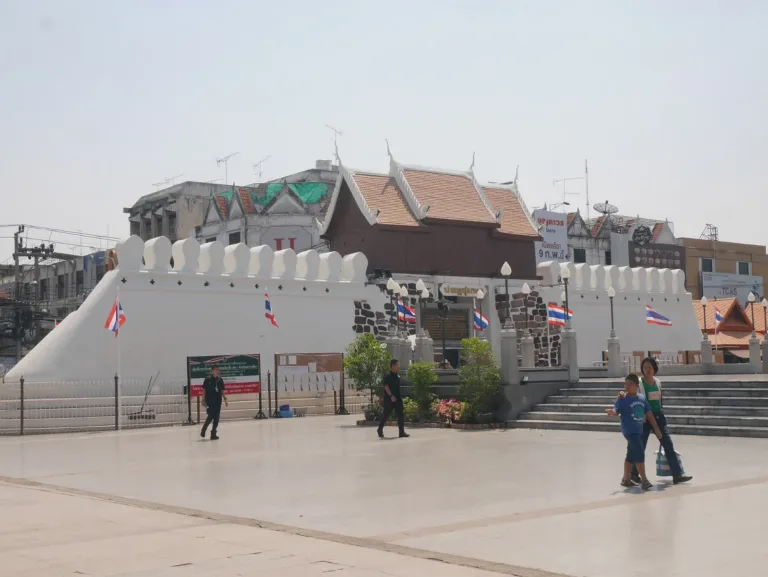 02
Tap a day card to see that day’s weather, rain, haze and hourly forecast
Best time to go Daytime is over · see tomorrow
Holiday — traffic on the way up and parking fills fast; leave early
Green band = hours used for the score
Best time to go Fine all day little rain through the day
Holiday — traffic on the way up and parking fills fast; leave early
Green band = hours used for the score
Best time to go Fine all day little rain through the day
No warnings today — normal road and weather conditions
Green band = hours used for the score
Best time to go Fine all day little rain through the day
No warnings today — normal road and weather conditions
Green band = hours used for the score
Best time to go Fine all day little rain through the day
No warnings today — normal road and weather conditions
Green band = hours used for the score
Best time to go Fine all day little rain through the day
No warnings today — normal road and weather conditions
Green band = hours used for the score
Best time to go Fine all day little rain through the day
No warnings today — normal road and weather conditions
Green band = hours used for the score
The Thao Suranari Monument, known to Korat locals as the Ya Mo ('Grandma Mo') Monument, stands in front of Chumphon Gate, the old western city gate on Ratchadamnoen Road in central Nakhon Ratchasima. It honours Lady Mo, wife of the city's deputy governor, who was given the title Thao Suranari by King Rama III after the 1826 Anouvong conflict.The dark bronze figure is 1.85 m tall and weighs 325 kg. She wears traditional Thai dress, holds a sword in her right hand with her left hand on her hip, and faces west towards Bangkok. Her ashes are enshrined in the base. It was unveiled on 15 January 1934.You can pay respects 24 hours a day, free of charge. Every year from 23 March to 3 April the city holds the Thao Suranari Victory Celebration.
Arrive Early morning or early evening, when it's less crowded and worshippers are out
The monument sits on a traffic island on Ratchadamnoen Road; cross carefully
23 March–3 April is extremely busy; allow extra time
Free · Time needed 30 minutes–1 hour
Weekend evenings and during the 23 March–3 April festival
| Flowers, incense and candles (by donation) optional | Free |
Cash · Prices may change by season — check with the venue
Thao Suranari Victory Celebration, 23 March–3 April every year
The Thao Suranari Monument, affectionately called "Ya Mo" (Grandma Mo) by the people of Korat, stands in front of Chumphon Gate, the western gate of old Nakhon Ratchasima. It honours Lady Mo, the deputy governor's wife celebrated for her role in the war with King Anouvong of Vientiane in 1827. Unveiled on 15 January 1935, it is regarded as Thailand's first monument to a commoner woman, and her ashes rest in its base. Today it is the city's emblem, a place of devotion and the heart of Korat's biggest annual festival.
The walled city you see today was built under King Narai of Ayutthaya around 1656 as a frontier stronghold facing the northeast, with a moat, walls and four gates. Chumphon Gate on the west is the only original gate left; the other three were rebuilt later. An old photograph from around 1963–64 already shows the statue standing before a reconstructed stretch of wall.
Lady Mo was born in 1771, during the Thonburi period, into an old Korat family. Stories say she learned swordsmanship and staff fighting as a girl. At about 25 she married Thongkham, the city's deputy governor, who later rose to the title Chao Phraya Mahisrathibodi.
In January 1827 (still the year 2369 in the old Thai calendar) Anouvong's army entered Nakhon Ratchasima almost unopposed, because the governor and his deputy were away on duty in Cambodia. The Lao forces stayed about five weeks, ordered the city's defences torn down and then marched large numbers of townspeople back towards Vientiane.
The popular account says that along the way Lady Mo and a young woman named Bunluea rallied the captives to rise up at Thung Samrit, winning a victory on 23 March, the date later kept as Victory Day; some sources place the main battle at Thung Samrit on 21 March. After the war, King Rama III conferred the title "Thao Suranari" on her on 30 October 1827, with insignia of rank.
A local legend says she floated a banana-leaf boat and vowed to build a temple where it came to rest, giving rise to Wat Sala Loi. She died in 1852 at the age of 81; her husband held the funeral and placed her ashes in a chedi at Wat Sala Loi. When that chedi decayed, a small chedi for her ashes was built at Wat Klang (Wat Phra Narai Maharat), completed on 7 June 1899. The first official document to mention her is a letter to King Chulalongkorn dated 29 November 1900.
The idea of a monument arose after the Boworadet rebellion of October 1933, when Korat had been the rebels' main base and many local people were detained. The new government of the People's Party sought to mend ties with the city, holding a soldiers' cremation and a public celebration on 16–17 November 1933. In December the province, led by Governor Phraya Kamthon Phayapthit with the local army commander, began collecting donations from officials, merchants and residents. Scholars see the choice of a commoner heroine as fitting the government's ideals of equality after the end of absolute monarchy.
The design came from the Fine Arts Department. Phra Thewaphinimmit, a Korat-born draughtsman, first sketched her seated with a betel set, while Silpa Bhirasri developed the standing figure with a sword. An allegorical goddess was also suggested, but the government chose a realistic woman in old-style Thai dress without insignia, to stress that she was a commoner. In September 1934 the province asked the department to finish casting by December for 1,000 baht plus 200 baht in labour, and her ashes were moved from Wat Klang into the new base.
The unveiling took place on 15 January 1935 (still 2477 in the old Thai calendar, which is why many sources print 1934); some sources give 16 or 19 January, and a commemorative coin was struck for the occasion. The dark bronze figure is 1.85 m tall, weighs about 325 kg, holds a sword in her right hand and faces west towards Bangkok. The first base was only about 2 m high, keeping her close to the people. The Fine Arts Department registered the monument on 3 January 1938. When the original base was damaged, the province rebuilt it on the same spot, finishing on 29 November 1967; this is the roughly 2.5 m indented base seen today.
Over the decades the monument shifted from a patriotic symbol to a sacred shrine. People come to make vows and give thanks with Korat folk songs or dance offerings. Records date the first Victory Celebration to the year of the unveiling, and today it runs every year from 23 March to 3 April, twelve days and twelve nights. The ritual dance offering began on 23 March 1996, started by the provincial governor with the Nakhon Ratchasima College of Dramatic Arts, and has grown from about a hundred dancers to several thousand. During COVID-19 in 2020–2021 the main festival was cancelled and only smaller dance offerings were held.
Historians note that the royal chronicles mention her role only briefly, and in 1995 an academic study argued that the heroic story had been enlarged for political purposes, prompting wide objections in Korat. The plaza remains a public space where people gather for merit-making, festivals and civic expression. In 2026, marking 200 years since her deed by the Thai count, 7,410 Korat women joined the dance offering.
Arrived? Check in, collect a stamp and tell others what it is like right now
Check your location first, so you do not fill in the form for nothing
Location must be on and within 0.3 km · One check-in per place per day · come back on other days to check in again
Post photos from anywhere — no need to be here · Up to 20 photos at a time · JPG / PNG / WebP · GPS location data is removed automatically
The monument is on a traffic island where Ratchadamnoen Road meets Chumphon Road, in front of Chumphon Gate in central Nakhon Ratchasima.
From Korat's old town · Free
Local routes along Ratchadamnoen Road · By distance
City roads; heavy traffic in the evening and at weekends
Park in nearby areas and permitted streets; spaces are limited at busy times
Good
Open 24 hours
Thao Suranari Monument
Answers travellers want before they go — a one-minute read
24 hours a day
No
23 March to 3 April every year
Construction began in 1933, and it was unveiled on 15 January 1934
In nearby areas and permitted streets; parking is scarce during the festival
Best day this week: Monday 30 Nov · Check in when you arrive to collect a stamp
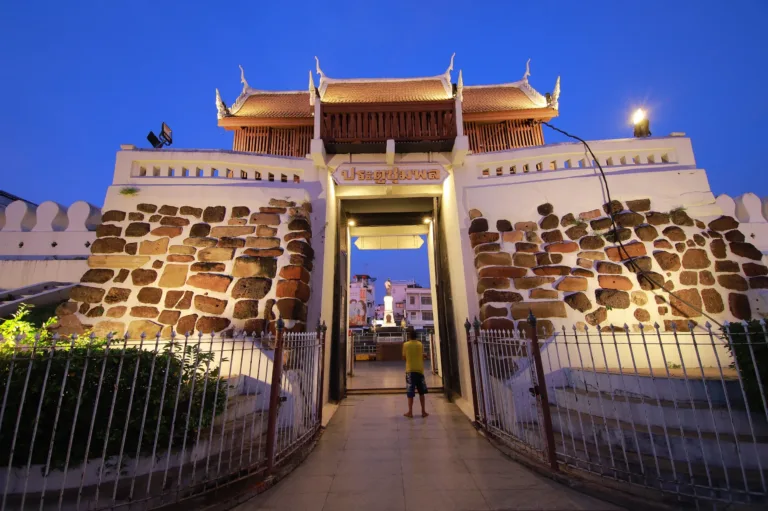 Chumphon Gate
 Phimai Historical Park
 Thap Lan National Park