 01
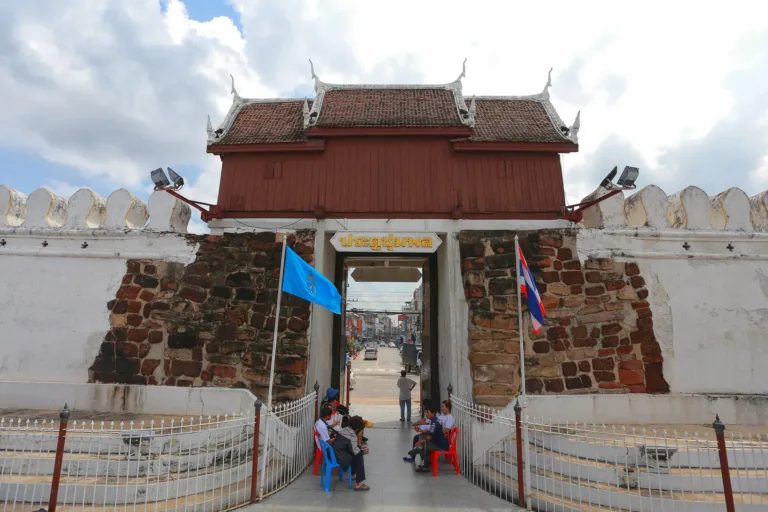
Brick gatewayA massive brick arch with the wall running off both sides
Old city gate · Korat
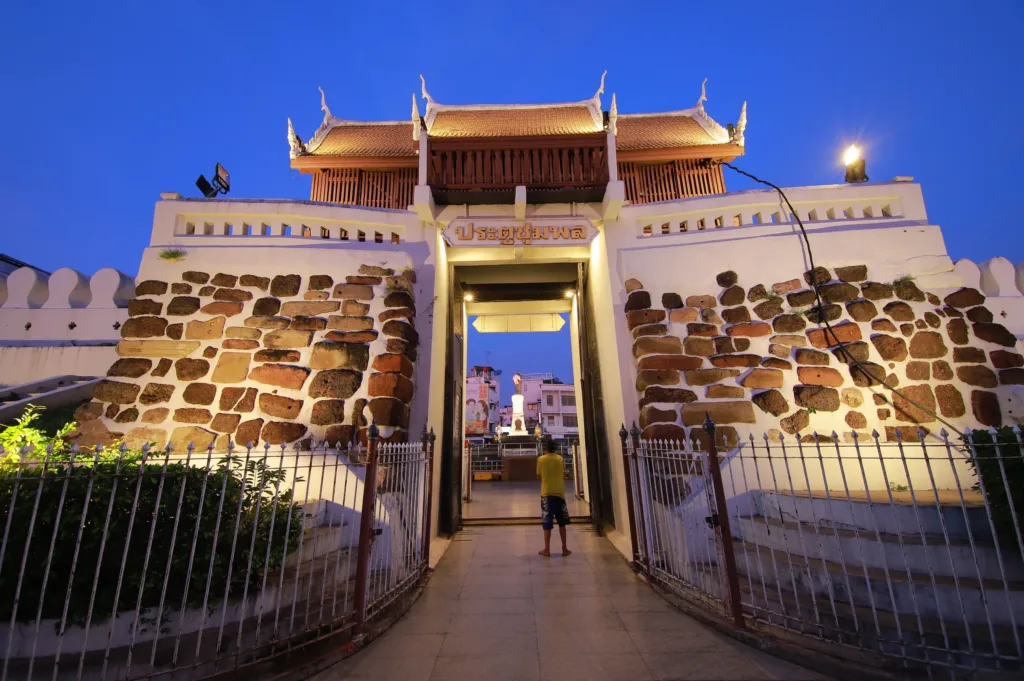
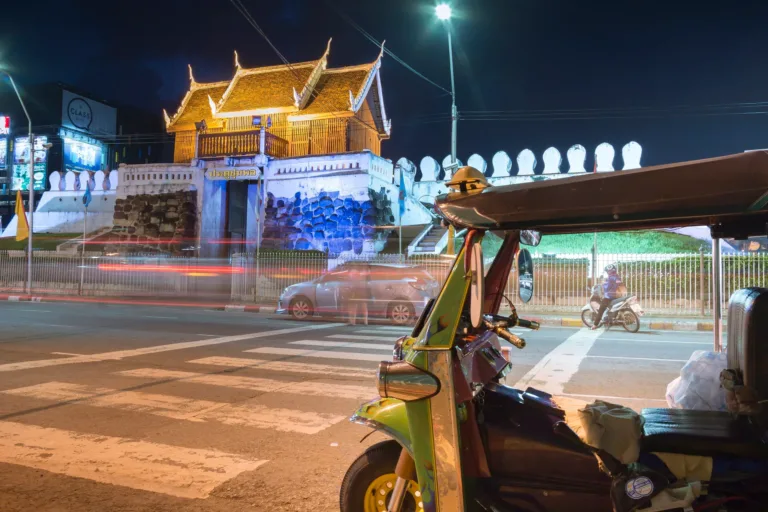
Nakhon Ratchasima's western city gate, built in King Narai's reign and the only one of the four original gates still standing with its old wall, right behind the Thao Suranari Monument.
Holiday / event — crowded
Open access, no set hours (public area)
30 minutes–1 hour
In front of Chumphon Gate — Gate and wall together
01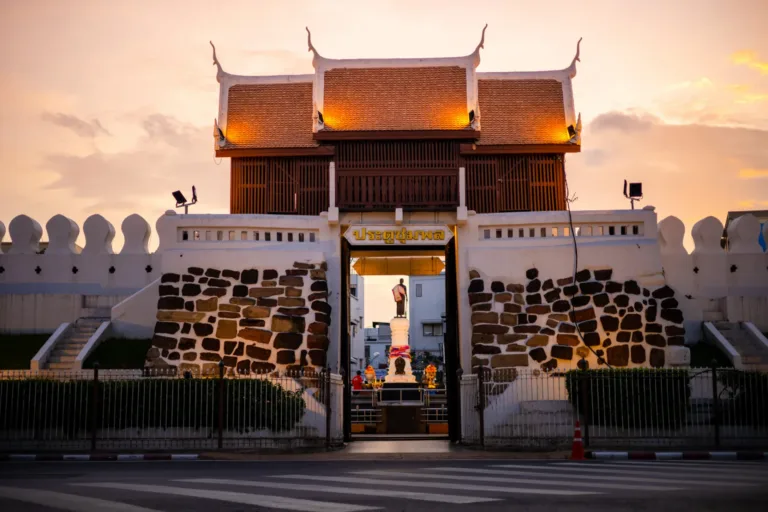 02
 03
 04
 05
Tap a day card to see that day’s weather, rain, haze and hourly forecast
Best time to go Daytime is over · see tomorrow
Holiday — traffic on the way up and parking fills fast; leave early
Green band = hours used for the score
Best time to go Fine all day little rain through the day
Holiday — traffic on the way up and parking fills fast; leave early
Green band = hours used for the score
Best time to go Fine all day little rain through the day
No warnings today — normal road and weather conditions
Green band = hours used for the score
Best time to go Fine all day little rain through the day
No warnings today — normal road and weather conditions
Green band = hours used for the score
Best time to go Fine all day little rain through the day
No warnings today — normal road and weather conditions
Green band = hours used for the score
Best time to go Fine all day little rain through the day
No warnings today — normal road and weather conditions
Green band = hours used for the score
Best time to go Fine all day little rain through the day
No warnings today — normal road and weather conditions
Green band = hours used for the score
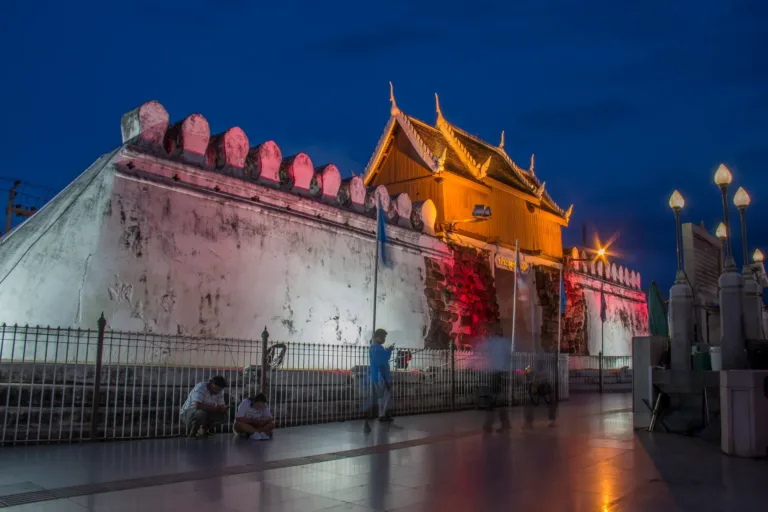
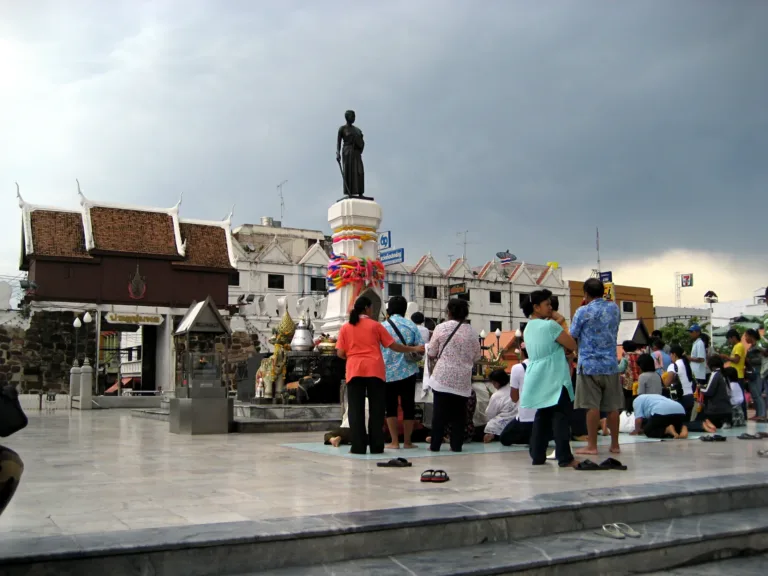
Chumphon Gate is the western gate of old Nakhon Ratchasima, standing right behind the Thao Suranari (Ya Mo) Monument in central Korat. Its name means the place where troops gathered, as soldiers assembled here before going to war.The city was built as a frontier stronghold in the reign of King Narai the Great by craftsmen from Ayutthaya, with a French engineer laying out the plan. It once had four gates, but Chumphon is the only one still in its original form with a stretch of the old city wall. On top sits a small Thai-style watchtower with a tiled roof and classic gable finials.The gate was registered as a national ancient monument on 3 January 1938. It's lit up at night, and you can see it together with the Ya Mo square in one visit.
Arrive Early morning or early evening, when it's cooler
Cross only at the crossings
No data yet check before you go · Time needed 30 minutes–1 hour
Long weekends
Chumphon Gate is the western gate of old Nakhon Ratchasima and the only one of the city's four gates still standing in its original form, together with a stretch of the old wall. Tradition dates it to the reign of King Narai the Great, when Korat was built as a frontier stronghold guarding the northeast. The gate came through the war with Chao Anouvong of Vientiane in 1827 and many rounds of repair, was registered as a national ancient monument in 1938, and since 1934 has stood as the backdrop to the Thao Suranari Monument, the heart of Korat to this day.
According to the city history used by local agencies and the Fine Arts Department, King Narai (r. 1656–1688) ordered a new city built about 32 km east of old Korat in today's Sung Noen district, using craftsmen from Ayutthaya and labour from Korat and Muang Sema, with a French engineer laying out the plan. Many sources give the year as 1656, the year of his accession, so it is best read as marking the reign rather than an exact building date. French fortification engineers such as de Lamare did design walls and forts for several Siamese cities in that era, but the research on his work does not mention Korat, so the name of the planner remains unconfirmed.
Some scholars question the story itself. A 2025 article in the Journal of Ayutthaya Studies notes that no clear evidence of a royal order to found a new city has been found, while the name Nakhon Ratchasima already appears in King Borommatrailokanat's Palace Law as one of eight major provincial cities, and in the accounts of Dutch traders before Narai's time. The walls and gates may therefore represent the building or rebuilding of an existing city.
The city was laid out as a rectangle about 1,000 m by 1,700 m, ringed by a wall around 6 m high and some 5,200 m long, with 15 bastions and a moat about 20 m wide. The four gates were built mainly of laterite: Chumphon to the west; Phon Saen to the north, nicknamed the Water Gate because it faces the Lam Takhong River; Phon Lan to the east; and Chai Narong to the south, called the Ghost Gate because the dead were carried out through it for cremation outside the walls. Some suggest part of the laterite was taken from ruined Khmer sanctuaries nearby, though this is debated.
Chumphon means a place where troops gather, as soldiers were mustered here before marching to war. Older generations believed anyone who passed through it on the way to battle would come home safely; today the belief has grown into the idea that whoever walks through Chumphon Gate will come back to live in Korat. On top sits a Thai-style watchtower with a tiled roof and gable finials. The walls saw real fighting too, reportedly being tested in the rebellions of Phraya Yommarat (Sang) and Bun Kwang under King Phetracha.
The most important war came in the reign of King Rama III. Around January 1827, Chao Anouvong of Vientiane took Nakhon Ratchasima without resistance while the governor and his deputy were away on official business. Anouvong ordered the city's defences torn down, and scholars record that the city was set on fire, badly damaging the moat, gates and walls.
According to the traditional account, Lady Mo, wife of the deputy governor, rallied the townspeople being marched away as captives to strike back at the Lao army, winning at Thung Samrit in March the same year. Details such as her asking for knives to cook with and handing them to the men are a popular story rather than contemporary evidence. After the war King Rama III conferred on her the title Thao Suranari, and her story has been bound up with Chumphon Gate ever since.
After the war, a National Archives document shows that in 1853 King Rama IV sent a royal letter to the governor of Nakhon Ratchasima ordering a new outer fort and wall, repairs to the old walls and a map of the city. Yet time and the elements wore the gates down until only Chumphon kept its original structure.
In 1933 the People's Party government began the Thao Suranari Monument, designed by Phra Thewaphinimmit and Professor Silpa Bhirasri: a blackened bronze figure about 1.85 m tall and 325 kg, standing with a sword and facing west. It was unveiled on 15 January 1934 on a base in front of Chumphon Gate, with part of the western moat filled in to make room. In 1967 the base was rebuilt to hold Thao Suranari's ashes. Every year from 23 March to 3 April the Thao Suranari Victory Celebration is held, with fireworks at all four city gates.
The Fine Arts Department registered the Korat city wall as an ancient monument on 27 September 1936 and Chumphon Gate on 3 January 1938 (3 January 2480 in the old Thai calendar). Later restorations repainted the watchtower, replaced the wooden gable finials with plaster ones, rendered the walls for strength, added a protective fence and turned the surrounding roundabout into the Thao Suranari square. The other three gates were demolished and rebuilt in 1987, modelled on Chumphon Gate but wider for traffic.
In 2014 the watchtower above Chumphon Gate was opened to visitors during the Candle Festival. In July 2026 the Fine Arts Department's Region 10 office and Nakhon Ratchasima Municipality excavated at Non Phon Lan on the east side of town and uncovered remains of the Ayutthaya-period city wall more than 2 m below ground, the most significant progress on Korat's walls in about 20 years.
Arrived? Check in, collect a stamp and tell others what it is like right now
Check your location first, so you do not fill in the form for nothing
Location must be on and within 0.3 km · One check-in per place per day · come back on other days to check in again
Post photos from anywhere — no need to be here · Up to 20 photos at a time · JPG / PNG / WebP · GPS location data is removed automatically
Chumphon Gate is on the west side of the old town, behind the Thao Suranari Monument in Nai Mueang, Mueang Nakhon Ratchasima.
Central Korat, behind the Ya Mo Monument · Fuel
From the Ya Mo square and old town · Free
Town streets
Open access, no set hours (public area)
Chumphon Gate
Answers travellers want before they go — a one-minute read
Behind the Thao Suranari Monument in Nai Mueang, Mueang Nakhon Ratchasima
In King Narai the Great's reign, when Nakhon Ratchasima was founded as a frontier city
A gathering place for troops before battle
Four: Chumphon, Phon Saen, Phon Lan and Chai Narong
Only Chumphon; the other three were rebuilt in 1987
Those who passed through on their way to war were said to return safely
Best day this week: Monday 30 Nov · Check in when you arrive to collect a stamp
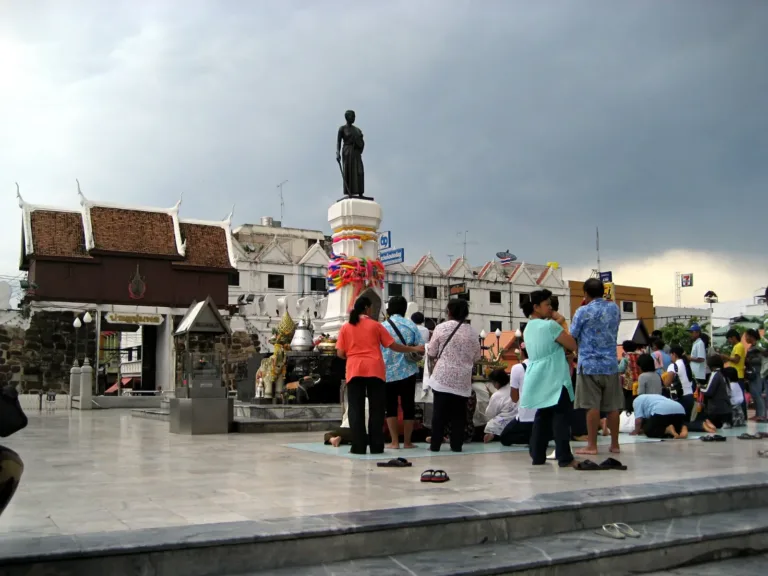 Thao Suranari Monument (Ya Mo)
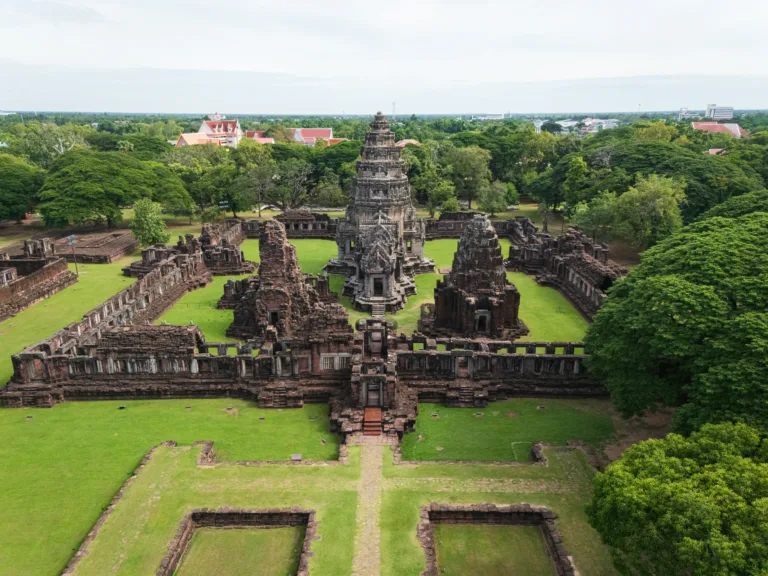 Phimai Historical Park
 Thap Lan National Park