 01
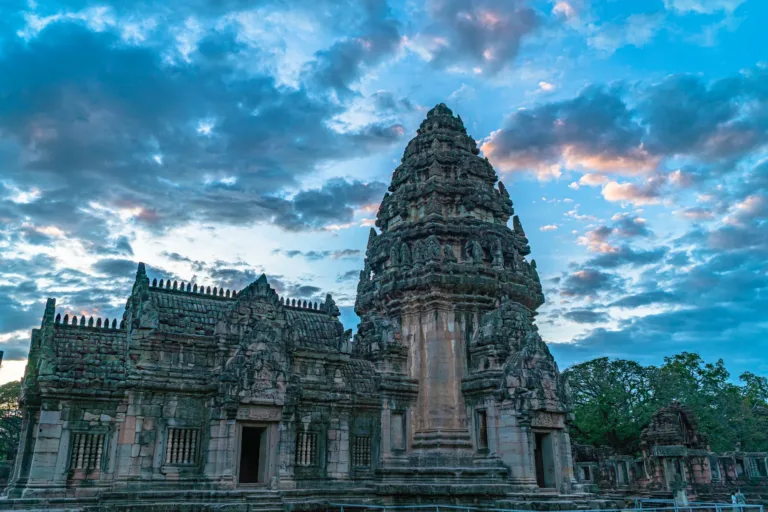
Main prangWhite sandstone tower with a lotus-bud top symbolising Mount Meru
Historical park · Phimai town
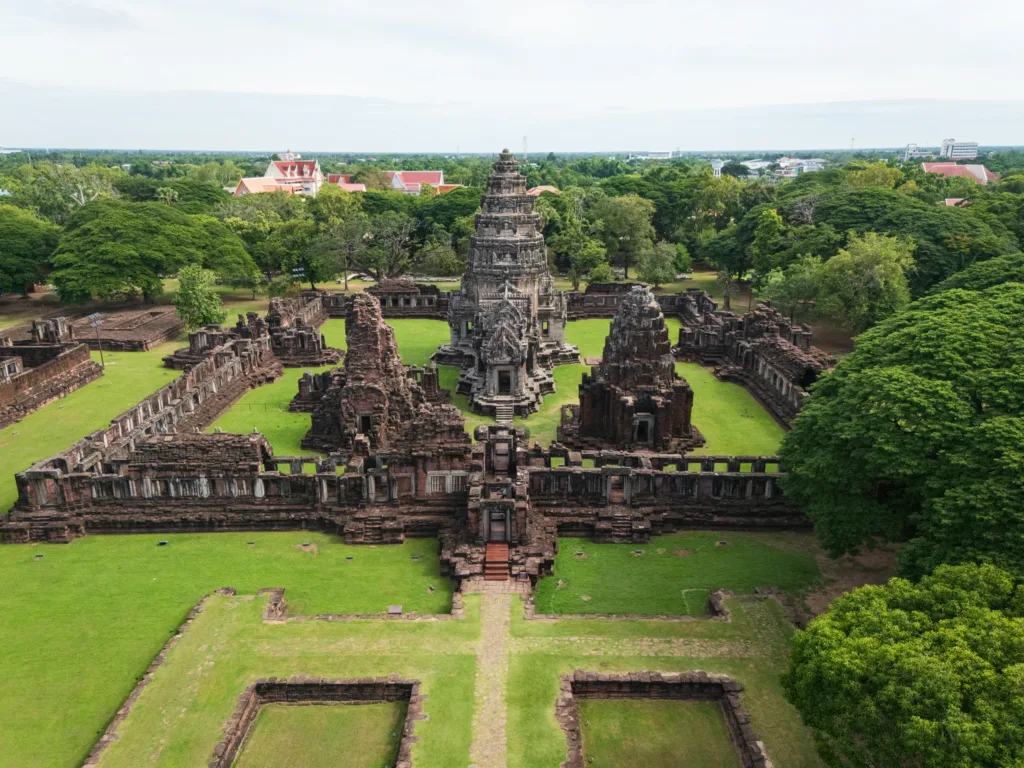
A large Khmer sandstone temple in the heart of Phimai, Nakhon Ratchasima, built mainly in the late 11th–12th centuries as a Mahayana Buddhist shrine facing Angkor. Open daily 07:00–18:00.
Holiday / event — crowded
Daily 07:00–18:00
1.5–2 hours
Naga bridge before the prang — Leading lines to the main tower
Thais 20 THB · Foreigners 200 THB
01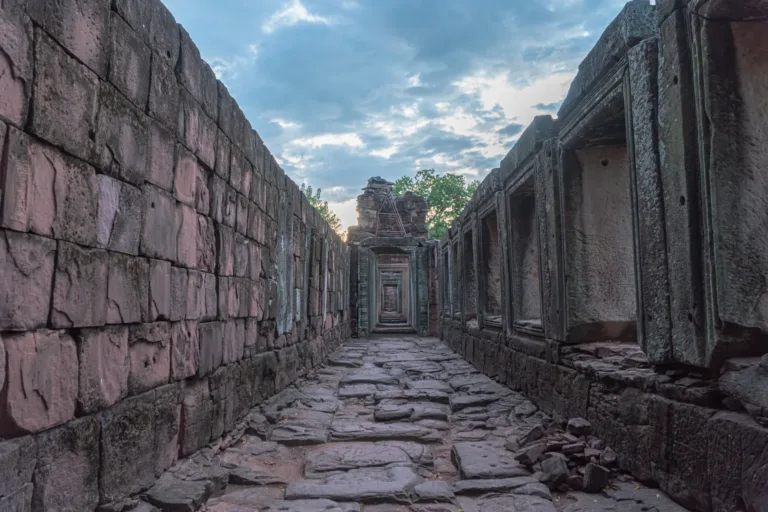 02
Tap a day card to see that day’s weather, rain, haze and hourly forecast
Best time to go Daytime is over · see tomorrow
Holiday — traffic on the way up and parking fills fast; leave early
Green band = hours used for the score
Best time to go Fine all day little rain through the day
Holiday — traffic on the way up and parking fills fast; leave early
Green band = hours used for the score
Best time to go Fine all day little rain through the day
No warnings today — normal road and weather conditions
Green band = hours used for the score
Best time to go Fine all day little rain through the day
No warnings today — normal road and weather conditions
Green band = hours used for the score
Best time to go Fine all day little rain through the day
No warnings today — normal road and weather conditions
Green band = hours used for the score
Best time to go Fine all day little rain through the day
No warnings today — normal road and weather conditions
Green band = hours used for the score
Best time to go Fine all day little rain through the day
No warnings today — normal road and weather conditions
Green band = hours used for the score
Phimai Historical Park is in the centre of Phimai town, Nakhon Ratchasima, about 60 km northeast of Korat city. Prasat Hin Phimai is a Khmer temple built for Mahayana Buddhism; most of its buildings date from the late 11th to late 12th centuries, and it faces Angkor.Its enclosure measures about 1,020 × 580 m, with a white sandstone main prang, galleries, a naga bridge and a southern victory gate. The lotus-bud tower represents Mount Meru. A joint Thai–French project restored it between 1964 and 1969.It's open daily 07:00–18:00, with entry at 20 THB for Thais and 200 THB for foreigners. The Phimai National Museum is a short walk away.
Arrive Before 09:00 for cool air and good light
The temple grounds are open-air; bring a hat and water
Phimai National Museum opens Wednesday–Sunday 09:00–16:00
Thais 20 THB · Foreigners 200 THB · Time needed 1.5–2 hours
Weekend late mornings
| Entry, Thai | 20 ฿/person |
| Entry, foreign | 200 ฿/person |
| Phimai National Museum, Thai optional | 20 ฿/person |
| Phimai National Museum, foreign optional | 200 ฿/person |
Cash · Prices may change by season — check with the venue
Prasat Hin Phimai stands in the heart of Phimai town in the upper Mun River basin of Nakhon Ratchasima. It is a large Khmer sanctuary built for Mahayana Buddhism at a time when most Khmer kings were Hindu. Its main buildings date from the late 11th to the late 12th century. The town is the "Vimayapura" of the inscriptions, the end point of an ancient road from Angkor. After a major restoration from 1964 to 1969, it opened as a historical park in 1989.
The name "Phimai" comes from "Vimaya", the town's name in Khmer inscriptions. The inscriptions also call the temple's main Buddha image "Kamraten Jagat Vimaya", known in Thai as Phra Phuttha Wimai; the original image is now in the Phimai National Museum. At its height, Phimai was a major centre of Vajrayana Mahayana Buddhism, alongside Hindu worship in the region.
Scholars still disagree about who built the temple. The most widely cited view credits Jayavarman VI (reigned c. 1080–1107), founder of the Mahidharapura dynasty, who is thought to have had his power base at Vimayapura and may have built Phimai as his state temple. Other sources place the start of construction earlier, under Suryavarman I or even in the late 10th century, so the exact founding date remains open.
The clearest dated evidence is an inscription on the door frame of the southern gate of the gallery. It records that in 1108 a local official named Virendradhipativarman installed an image of "Kamraten Jagat Senapati Trailokyavijaya", a Vajrayana deity. A sculpture pedestal also names him as the maker of that image, while Phimai Inscription 3, dated to Saka 1030–1034, lists the people, land and goods that officials offered the sanctuary every year.
The main prang is built of white sandstone and rises about 28 m, its lotus-bud top symbolising Mount Meru, while the secondary buildings use pink sandstone and laterite. The temple faces south towards Angkor. Many scholars see Phimai's tower shape as a model for the five towers of Angkor Wat.
Under Jayavarman VII (c. 1181–1218), two more towers were added beside the main prang: Prang Brahmadatta and Prang Hin Daeng. The Preah Khan inscription at Angkor says the king built 121 "houses with fire" along the empire's main roads, 17 of them on the road to Vimaya. The road had rest houses and hospitals, and Phimai itself was an important town with gates on all four sides.
Prang Brahmadatta once held a seated male statue that many scholars identify as Jayavarman VII; it is now in the Phimai National Museum. A female statue was also found, which some identify as Queen Jayarajadevi while others see the pair simply as divine figures. Locals call the male figure "Thao Phromthat" and link it to the legend of Thao Pachit and Nang Orapim, a pair of lovers who are separated and face many trials before they are united. The tale is told across Isan to explain many place names, and one Phimai chronicle recording it dates back to the Thonburi period.
As Khmer power faded after Jayavarman VII, Ayutthaya extended its influence into the upper Mun basin. Ayutthaya-style Buddha images were installed in the temple, and Ayutthaya-period structures were built in the town, such as the brick base known as Meru Phromthat. Soon after Ayutthaya fell in 1767, Prince Thepphiphit, a son of King Borommakot, set himself up in Phimai as head of the "Phimai faction" before King Taksin's army defeated him.
The French explorer Étienne Aymonier made the first systematic inventory of the ruins, published around 1901. Thailand registered the ancient town of Phimai as a historic site in the Royal Gazette on 27 September 1936, and around 1954 the Fine Arts Department began systematically clearing the fallen stones and vegetation.
The most important restoration took place from 1964 to 1969, the first joint project between the Fine Arts Department and experts from the French School of the Far East. The main prang was taken down block by block, coded, test-assembled on the ground and rebuilt in its original position using anastylosis; some blocks weighed over a tonne. Photographs from the time show the courtyard covered with stones waiting to be reassembled.
Princess Maha Chakri Sirindhorn formally opened Phimai Historical Park on 12 April 1989. The Phimai National Museum has served visitors since 1993 and, after a major renovation that began in late 2022, fully reopened on 27 May 2026. Between 2016 and 2020 a Thai–Korean research project also surveyed the condition of structures across the park to plan their conservation.
Phimai was placed on Thailand's World Heritage tentative list in 2004, but the list UNESCO currently publishes names only the Phanom Rung, Muang Tam and Plai Bat group, while the Fine Arts Department still plans to promote Phimai. A heritage land boundary around the town declared in 2017 drew objections from the community, and in 2025 the Supreme Administrative Court suspended it for the area outside the town walls only.
Arrived? Check in, collect a stamp and tell others what it is like right now
Check your location first, so you do not fill in the form for nothing
Location must be on and within 1.5 km · One check-in per place per day · come back on other days to check in again
Post photos from anywhere — no need to be here · Up to 20 photos at a time · JPG / PNG / WebP · GPS location data is removed automatically
The temple is in the centre of Phimai on Anantajinda Road, about 60 km from Nakhon Ratchasima city.
Nakhon Ratchasima–Phimai · Fuel
From Korat Bus Terminal 2, about every half hour · Varies by operator
Good paved roads
Good
Daily 07:00–18:00
about 60 km from Nakhon Ratchasima city
Phimai Historical Park
200 THB
Answers travellers want before they go — a one-minute read
Daily 07:00–18:00
Thai 20 THB, foreigners 200 THB
Mostly between the late 11th and late 12th centuries
About 60 km, roughly an hour by car, or a bus from Terminal 2
Wednesday–Sunday and public holidays, 09:00–16:00
Best day this week: Monday 30 Nov · Check in when you arrive to collect a stamp
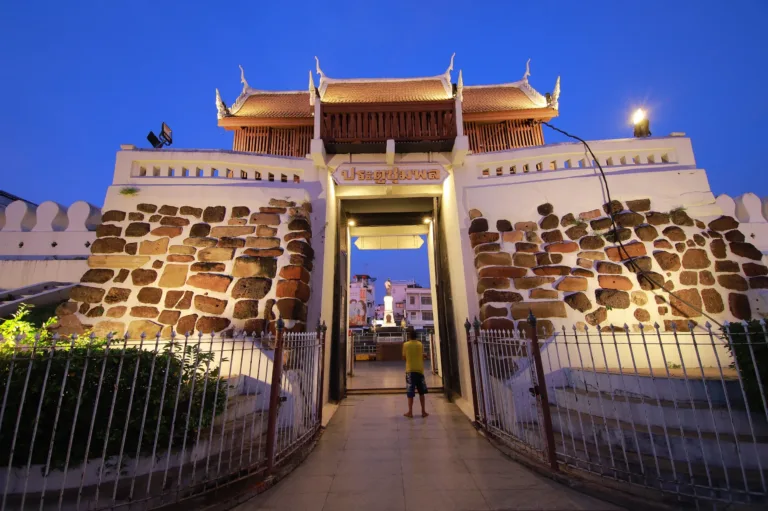 Chumphon Gate
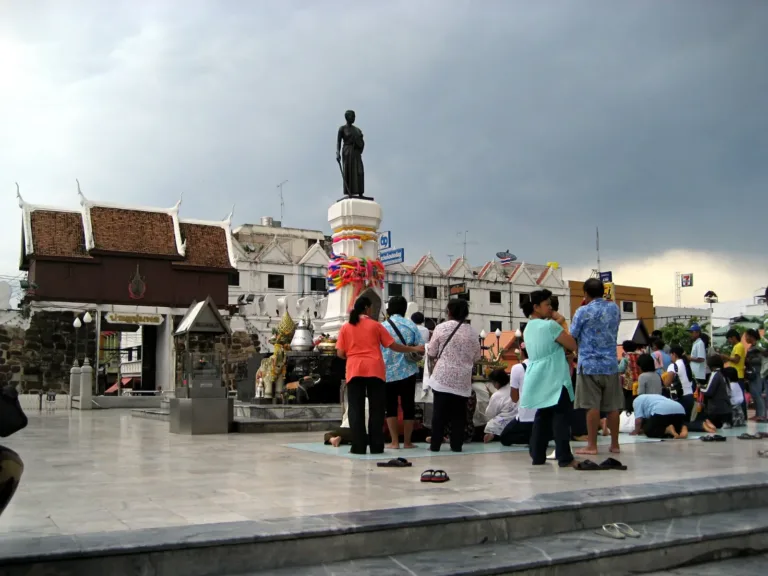 Thao Suranari Monument (Ya Mo)
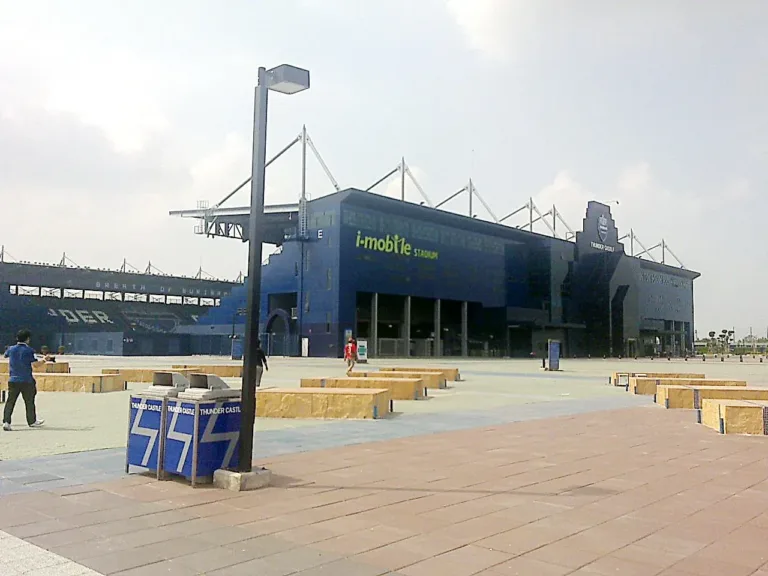 Chang Arena