 01
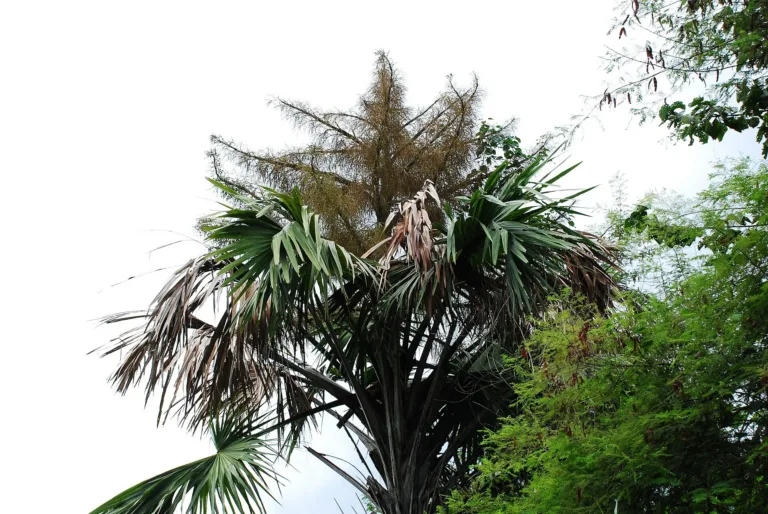
Lan palm forestThailand’s last big natural lan palm forest
PRACHIN BURI · NA DI
Thailand’s second-largest national park (about 1.4 million rai), home of the last big natural lan palm forest, part of the Dong Phayayen–Khao Yai World Heritage forests.
Warning: Strong gusts, about 59 km/h · Holiday / event — crowded
sea-of-mist places: morning matters most
Jun – Sep
Wildlife — Tigers and elephants live here; do not go deep into the forest without rangers
1–2 days
Good signal at headquarters; none in parts of the forest
01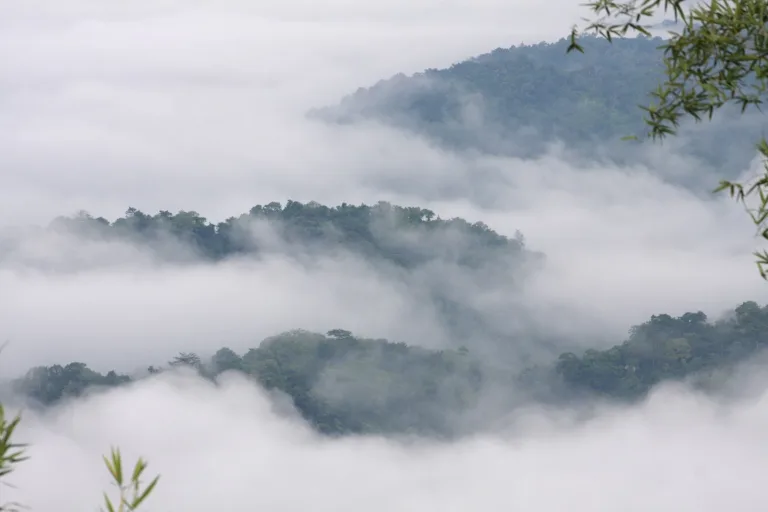 02
 03
 04
Tap a day card to see that day’s weather, rain, haze and hourly forecast
Best time to go Daytime is over · see tomorrow
Strong gusts, about 59 km/h
Holiday — traffic on the way up and parking fills fast; leave early
Green band = hours used for the score
Best time to go Fine all day little rain through the day
Strong gusts, about 61 km/h
Holiday — traffic on the way up and parking fills fast; leave early
Green band = hours used for the score
Best time to go Fine all day little rain through the day
No warnings today — normal road and weather conditions
Green band = hours used for the score
Best time to go Fine all day little rain through the day
No warnings today — normal road and weather conditions
Green band = hours used for the score
Best time to go Best window 06:00–14:00 Little rain · light drizzle possible at times
No official warnings, but watch for: Possible thunder 14:00–17:00
Green band = hours used for the score
Best time to go Fine all day little rain through the day
No warnings today — normal road and weather conditions
Green band = hours used for the score
Best time to go Fine all day little rain through the day · light drizzle possible at times
No warnings today — normal road and weather conditions
Green band = hours used for the score
Scored from cloud cover at every level and tonight’s moonlight — the darker the sky, the clearer the Milky Way · tap another night below for the next 7 nights
Thap Lan National Park in Prachin Buri and Nakhon Ratchasima protects Thailand’s last large natural lan palm forest within the Dong Phayayen–Khao Yai World Heritage forests, with waterfalls, mist-covered ridges and tigers.
Arrive Arrive before noon to check in to bungalows or campsites, and go out before dawn for the mist
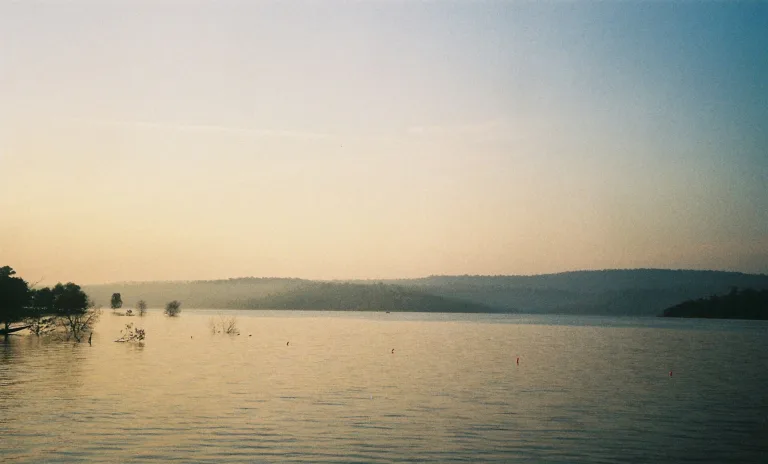
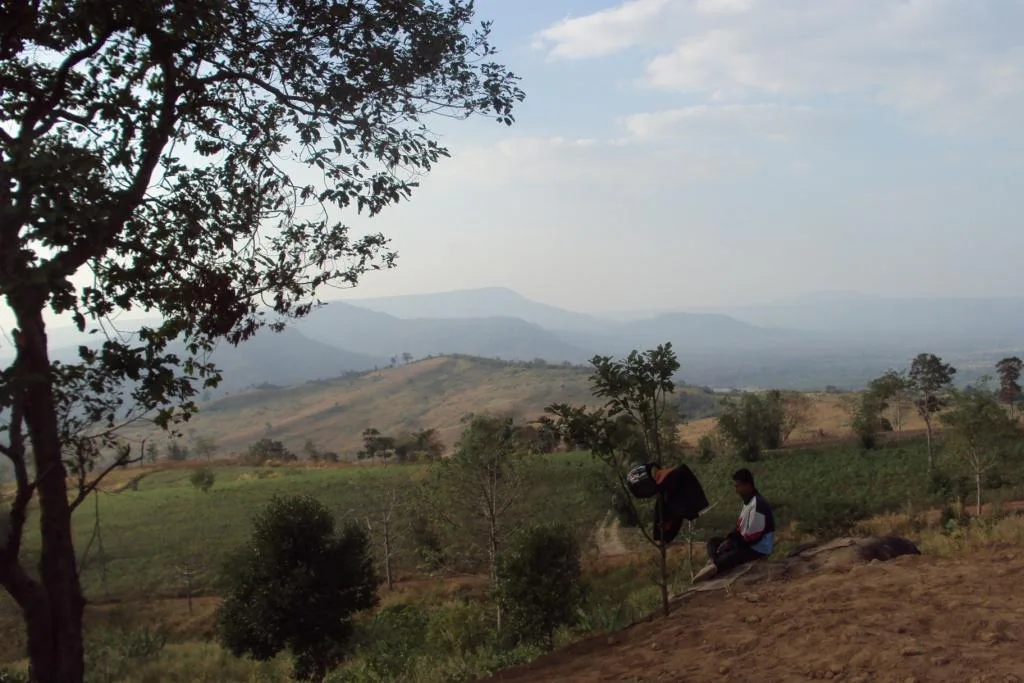
Sea of mist is usually seen at dawn at the end of the rains and start of the cool season, about Oct – Dec.
Photos from Wikimedia Commons and contributors · tap a photo to see its credit
Tigers and elephants live here; do not go deep into the forest without rangers
Slippery trails and flash floods in the wet season
Sights are far apart
Thais 20 THB · Foreigners 100 THB · Car 30 THB · Time needed 1–2 days
Long weekends in the cool season (Nov – Jan)
| Park entry (Thai adult) | 20 ฿/person |
| Park entry (foreign adult) | 100 ฿/person |
| Car optional | 30 ฿/vehicle |
| Campsite (own tent) optional | 30 ฿/person/night |
Mostly cash · Prices may change by season — check with the venue
Lan palm flowering (some years) and sea of mist in the early cool season
Tap a month on the wheel to see weather, rain, haze and crowds from 10 years of records
Best time · The end of the rains and start of the cool season (Oct – Dec) bring mist and cool air; waterfalls are best in Jul – Sep.
Watch out · Mar – Apr is hot and dry with low waterfalls; heavy rain can make trails slippery and close some areas.
Nov by the records 21–29°C · avg rain 61 mm (10 rainy days) · clear 5 days · avg PM2.5 10
Thap Lan is Thailand’s 40th national park, covering about 1,397,375 rai (about 2,236 km²). It is the country’s second-largest after Kaeng Krachan and the largest in the Northeast. Its headquarters is at Ban Thap Lan, Bu Phram, Na Di district, Prachin Buri, on Highway 304, and it spans Na Di plus Pak Thong Chai, Wang Nam Khiao, Khon Buri and Soeng Sang districts of Nakhon Ratchasima.
The name comes from its large lan palm forest, the last big natural stand in Thailand. The talipot palm (Corypha umbraculifera) supplied leaves for palm-leaf scriptures and hats. It flowers only once in its life, producing the largest inflorescence in the plant kingdom, and dies after fruiting. Thap Lan has seen mass flowering years, such as September 2009.
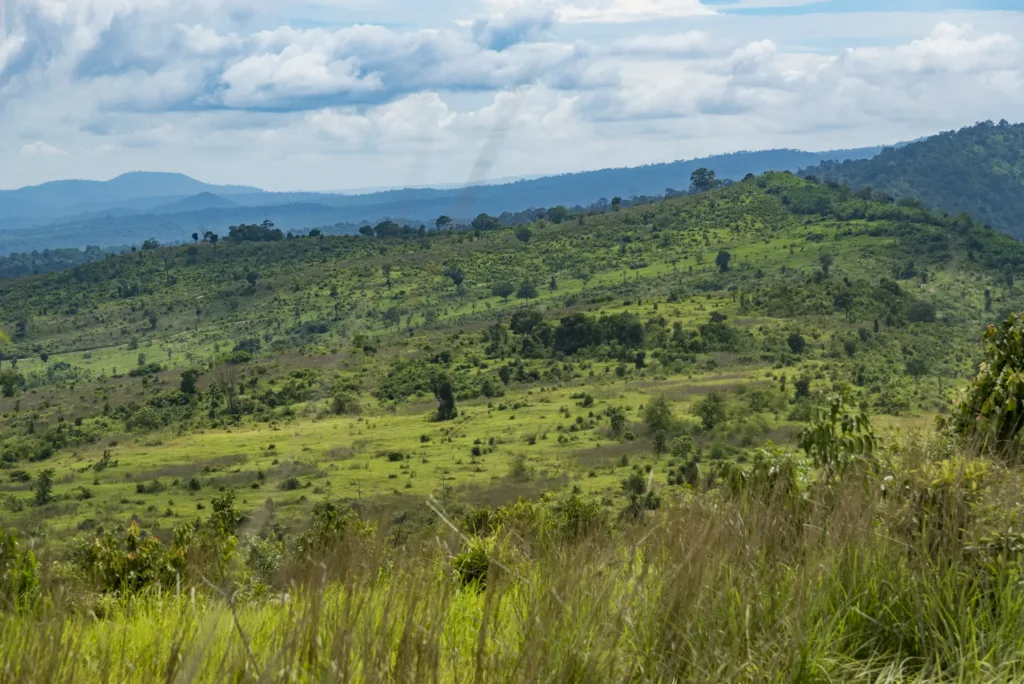
The park lies on the Sankamphaeng Range, with mountains, valleys, streams and waterfalls; the highest peak is Khao Lamang at 992 m. Most of it is dry evergreen forest, mixed with dry dipterocarp, mixed deciduous and moist evergreen forest and patches of lan palm, plus valuable timber such as Siamese rosewood. It is a source of the Bang Pakong River. The mean temperature is about 28°C; the rainy season runs May–October, wettest in October, and the cool season November–February, coolest in December.
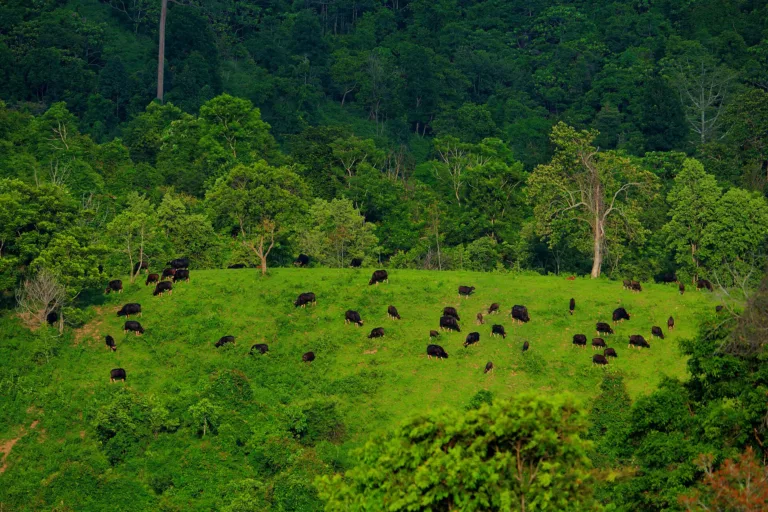
Thap Lan shelters large wildlife such as tigers, elephants, gaur, banteng, serow, Asiatic black bears, sun bears, gibbons and hornbills, with about 149 confirmed bird species. Researchers see it as a possible refuge for the kouprey, unseen in Thailand for over 30 years. It links Khao Yai, Pang Sida and Ta Phraya national parks and Dong Yai Wildlife Sanctuary, forming a vital wildlife corridor.
Before the park existed, a 1963 government resolution kept the Nakhon Ratchasima–Pak Thong Chai–Chok Chai forests and designated the Wang Nam Khiao, Khon Buri, Khao Phu Luang, Kaeng Yai, Kaeng Din So and Khao Sa Ton forests as permanent forest. Parts became national forest reserves between 1966 and 1973, and land-reform zones declared in 1975 and 1978 overlapped the Wang Nam Khiao reserve.
The royal decree establishing Thap Lan National Park was issued on 23 December 1981, but its boundaries were drawn without a ground survey. They overlapped villages, land-reform plots, state projects and forest reserves, seeding a land conflict that has lasted more than 40 years.
Thai PBS Policy Watch adds further layers. In 1977–1980 the Agriculture Ministry let the Agricultural Land Reform Office reform degraded forest, although the 1975 Land Reform Act did not allow this inside forest reserves that still held that status. Between 1982 and 1990 the Second Army Region ran security development projects, partly overlapping reserves and the park; the Seub Foundation document dates these projects to 1990–1992. In 1985 Ministerial Regulation No. 1,145 redrew the Wang Nam Khiao reserve, but the part overlapping the park stayed permanent forest. In 1991 the Royal Forest Department agreed to revise the park boundary, and in 1992 the Cabinet let the land reform office work on 17 sites totalling 12,497 rai, mostly inside the park.
In 1990–1992 the state launched a land allocation project for the poor in degraded forest reserves. A boundary revision survey began in 1994; on 22 April 1997 the Cabinet ordered a new decree drafted, but in 1998 it scrapped the surveyed line in favour of verifying rights plot by plot. In 2000 the Royal Forest Department produced the “2000 boundary line” with GPS and boundary posts, but it was never enacted.
After a Cabinet resolution of 30 June 1998 confirmed that conservation forest would not be used for land reform and that occupancy rights would be verified instead, a boundary revision committee in 2000 proposed excluding 273,310.02 rai and annexing 110,172.95 rai. The National Park Committee never approved it, so it had no legal effect and the 1981 decree line remained in force.
In 2005 UNESCO inscribed the Dong Phayayen–Khao Yai Forest Complex as a natural World Heritage Site, with Thap Lan as a core area alongside Khao Yai, Pang Sida, Ta Phraya and Dong Yai Wildlife Sanctuary.
At the World Heritage level, Committee decision 35 COM 7B.19 in 2011 voiced concern over encroachment, cattle grazing, the Huay Samong dam and Highway 304 widening that had begun before its impact assessment was complete. It encouraged Thailand to consider a boundary modification for Thap Lan to tackle encroachment and asked it to invite a joint World Heritage Centre/IUCN monitoring mission. Decision 45 COM 7B.19 in 2023 noted the possible reduction of Thap Lan and reminded Thailand that significant changes need a formal significant boundary modification; the draft had been stronger, asking that no area be excluded. The same report said no new encroachment or resort building had been found in the property since December 2014, and asked for sufficient funding to protect Siamese rosewood.
Encroachment continued, especially resorts around Wang Nam Khiao. In 2011 a complaint to the Ombudsman led to a proposal to review the boundary using the 2000 line, but in 2013 the National Park Committee kept the 1981 decree line. Wikipedia notes a 2012 raid on one resort that found three illegal buildings on 20 rai, a 2017 raid that found 18 on 34 rai, and prosecutors’ decision in November 2018 not to indict the operator.
Encroachment is tied to the tourism boom in Wang Nam Khiao. Manager Online reported in 2011 that the district covered about 700,000 rai with 41,636 people and more than 500 resorts and homestays offering over 10,000 rooms. Of that land, 220,625 rai lay in Thap Lan National Park and 241,018 rai in land-reform areas, while titled land totalled only about 9,000 rai, or about 1.3%. Since 2000 the “Return the Forest to the Land” campaign had prosecuted 105 encroachers in the park over 4,274 rai. The report also noted that local-tax receipts (Por Bor Tor 5) issued by subdistrict councils inside forest areas were being used to trade land, and that operators had pushed for Wang Nam Khiao to become a special tourism zone.
Highway 304 (Kabin Buri–Pak Thong Chai) cuts between Khao Yai and Thap Lan. When the Highways Department widened 19 km of it from two to four lanes for over 3 billion baht, it built both tunnels and a raised viaduct over 500 m long for wildlife, Thailand’s first forest link with both. It was officially opened on 9 March 2019.
Thap Lan’s tiger population has recovered enough to pose new challenges. On the morning of 30 March 2020 a 46-year-old villager from Ban Suk Somboon, Thai Samakkhi, who had entered the forest to collect forest products and bat guano, was killed by a tiger; about 20 tigers were then thought to live in the area. Between 2020 and 2025 rangers found tigers and elephants coming closer to farms, while no tiger sign had been found in Khao Yai for over 20 years. In January 2026 camera traps of WCS and the Dong Phayayen–Khao Yai wildlife research station recorded tigress TLT-106F, “Mae Thap Lan”, carrying prey back to her den, rare evidence of cub-rearing behaviour.
Tigers still appear near villages from time to time. On 5 December 2025 tourists saw a large tiger walking on the road up Khao Salat Dai at Ban Phutthachat, Thai Samakkhi; the park asked visitors to notify rangers before climbing Pha Rak Salat Dai and to avoid dawn and dusk. In July 2026 the Khao Nang Rum wildlife research station, with WCS, WWF Thailand, Panthera and the Freeland Foundation, reported that camera traps in 2025–2026 had recorded at least 12 tigers in the Dong Phayayen–Khao Yai complex, including “Balaklo”, a tiger from the Western Forest Complex now living in Thap Lan and Pang Sida.
The boundary dispute flared again on 14 March 2023, when the Cabinet approved a National Land Policy Committee proposal to use the 2000 line for the One Map boundary revision. That would remove about 265,286.58 rai, although the first proposal had covered only about 58,000 rai around Wang Nam Khiao. When the parks department held a public hearing from 28 June to 12 July 2024, the #saveทับลาน (Save Thap Lan) campaign took off. The Seub Nakhasathien Foundation objected that the change could benefit investors and harm the World Heritage site, citing 470 new occupants or investors holding about 11,083 rai.
Thai PBS reported on 3 July 2024 that the area then proposed for removal fell into three groups: 58,582 rai overlapping land-reform zones, 59,183 rai allocated under the land-for-the-poor project, and the remaining 152,072 rai, which included resorts and investors’ holdings. There were more than 400 resort encroachment cases. Earlier, at a meeting on 25 January 2024, the National Park Committee had acknowledged the proposal, with two members reserving their opinions. Chaiwat Limlikitaksorn, then director of the National Parks Office, alleged that business and political interests were involved, a claim that remains unproven. These group figures differ from those the park committee used in 2026.
The National Land Policy Committee office held another hearing from 31 July to 21 September 2025. At meeting 1/2026 on 15 June 2026 the National Park Committee approved removing 155,865.47 rai. This comprises land-reform overlaps (53,416.47 rai), the Thai Samakkhi model village (8,328 rai) and security projects (87,500 rai), handed to the Agricultural Land Reform Office, plus a 6,621-rai military training ground handed to the Treasury. Another 109,420.99 rai of villagers’ land stays in the park; about 5,200 occupants will have their rights checked under Section 64 of the 2019 National Parks Act, and about 450 cases remain pending. The parks and forest departments will survey 86,966.29 rai of intact forest for annexation, set a buffer zone and report to the World Heritage Committee.
Environment Ministry order 325/2569 of 24 June 2026 set up a 22-member committee to separate genuine residents from investors within six months. By 8 September 2026 eight resorts and holiday homes had agreed to demolish their buildings, and the park planned to restore these sites with the community as nature areas or learning centres.
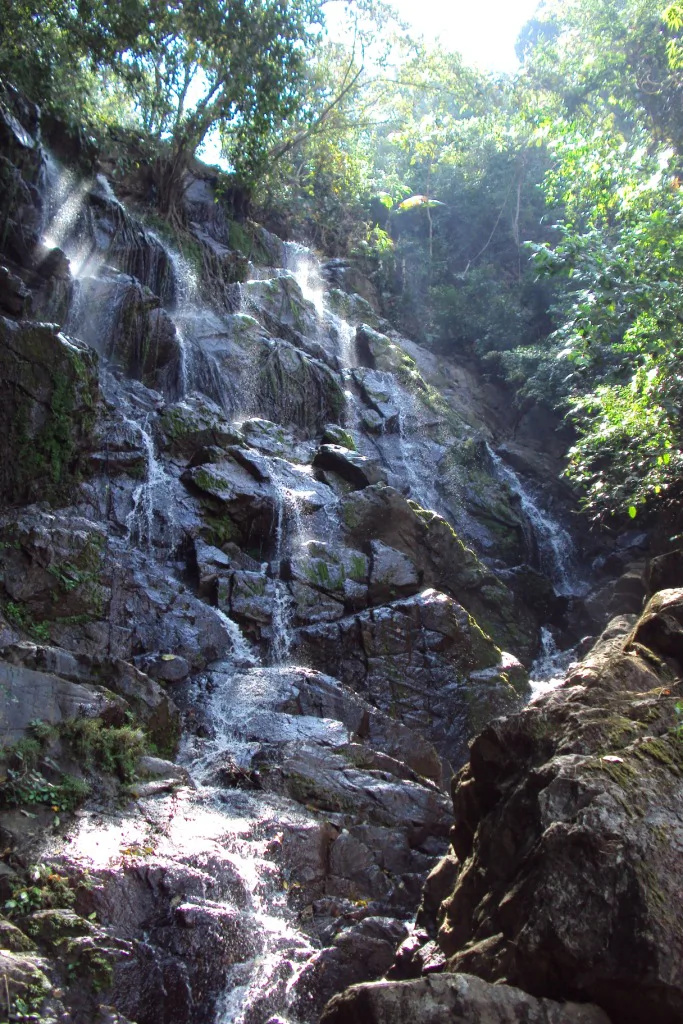
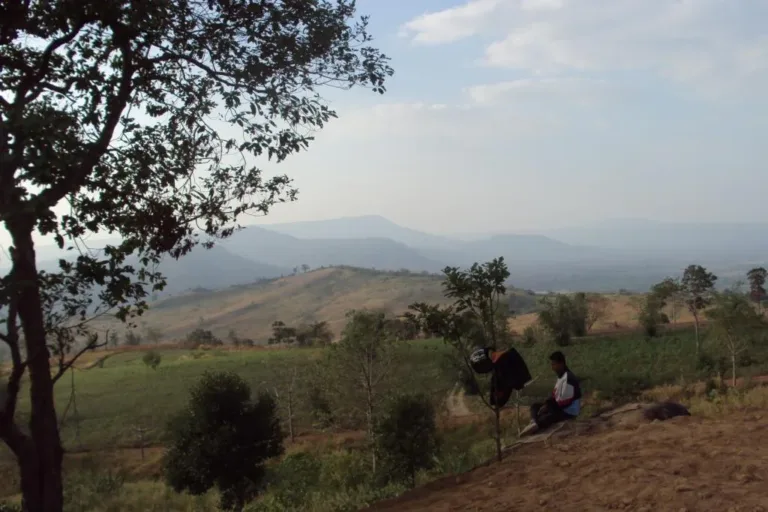
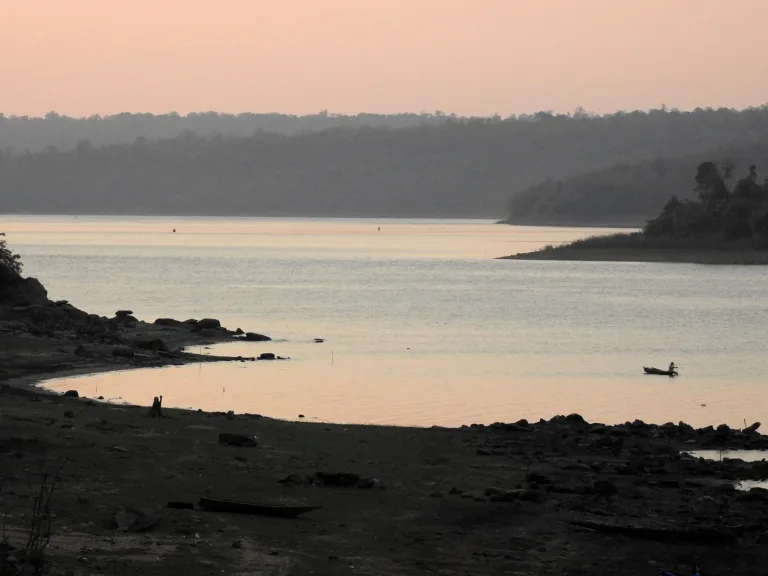
On the Prachin Buri side the main sights are the lan palm forest and garden by the headquarters, and Thap Lan (Wang Nok Kok) Waterfall, about 7 km from Ban Thap Lan plus a 1-km walk, about 20 m high and best in the rainy season. There are also Bo Thong, Huai Kham Phu and Huai Yai waterfalls, the last about 50 m high and flowing year-round. On the Nakhon Ratchasima side are Pha Kep Tawan in Wang Nam Khiao, a sunrise and sunset viewpoint where visitors fire seed-filled slingshots to reforest, Lam Mun Bon Dam, Hat Chom Tawan on the Lam Plai Mat reservoir in Soeng Sang, the Thap Lan reservoir and sea-of-mist viewpoints in the late rainy and early cool season.
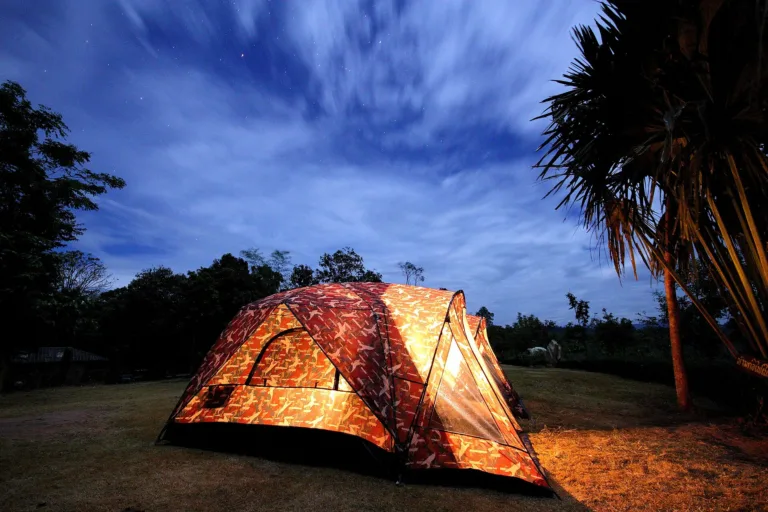
The headquarters opens about 08:00–18:00 (some sources say 06:00). Bungalows and campsites can be booked through the parks department’s system. From Bangkok it is about 197 km via Highway 304, taking 3–4 hours, or take a bus to Kabin Buri and then a Kabin Buri–Korat bus for about 32 km. Sights are far apart, so allow plenty of travel time. The park had 57,075 visitors in 2019.
Arrived? Check in, collect a stamp and tell others what it is like right now
Check your location first, so you do not fill in the form for nothing
Location must be on and within 3 km · One check-in per place per day · come back on other days to check in again
Post photos from anywhere — no need to be here · Up to 20 photos at a time · JPG / PNG / WebP · GPS location data is removed automatically
Highway 304 is a four-lane road with wildlife crossings through the forest; watch for animals.
To Kabin Buri, then Highway 304 · Fuel
Bangkok–Kabin Buri, then a Kabin Buri–Korat bus for about 32 km · Fare
From Bangkok drive to Kabin Buri, then Highway 304 (Kabin Buri–Pak Thong Chai); the headquarters is beside the road at Ban Thap Lan, Na Di.
Car parks at the headquarters and main sites
Petrol stations in Kabin Buri and along Highway 304
Good signal at headquarters; none in parts of the forest
Daily, about 08:00–18:00
about 197 km from Bangkok
Thap Lan National Park headquarters
100 THB
Approx. nightly price for 2 adults (next week) · final price depends on your dates
Answers travellers want before they go — a one-minute read
About 1.4 million rai (about 2,236 km²), Thailand’s second largest
After its large lan palm forest, the last big natural stand in Thailand
On 15 June 2026 the park committee approved removing about 155,865 rai and keeping 109,421 rai of villagers’ land in the park; the process continues
Bungalows and campsites, booked through the parks department system
Best day this week: Monday 30 Nov · Check in when you arrive to collect a stamp
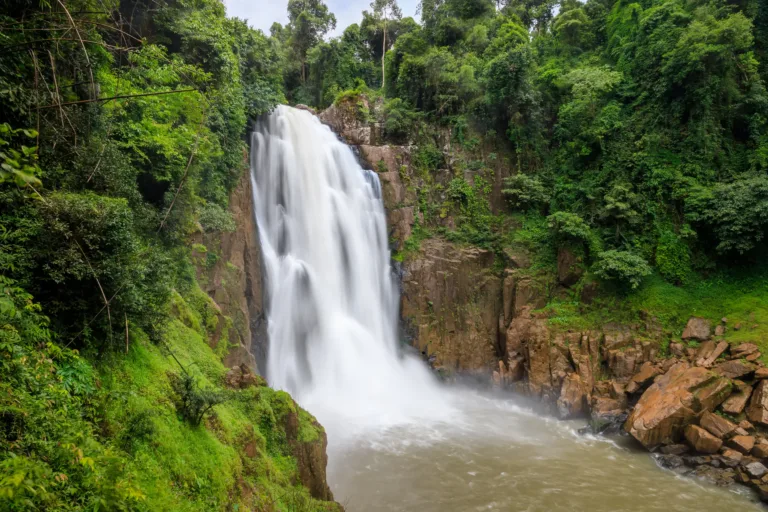 Haew Narok Waterfall