What to know before visiting the temple
Dress modestly · Remove shoes before entering buildings · Don't pick at or touch the shell work
Daily 07:00–18:00
Morning, when it's cooler and the birds are out
7 days ahead
When to go
this week
Tap a day card to see that day’s weather, rain, haze and hourly forecast
Best time to go Daytime is over · see tomorrow
No warnings today — normal road and weather conditions
Hour by hour
Green band = hours used for the score
Best time to go Fine all day little rain through the day
No warnings today — normal road and weather conditions
Hour by hour
Green band = hours used for the score
Best time to go Fine all day little rain through the day
No warnings today — normal road and weather conditions
Hour by hour
Green band = hours used for the score
Best time to go Fine all day little rain through the day
No official warnings, but watch for: Hot (Afternoon) feels like 38°C
Hour by hour
Green band = hours used for the score
Best time to go Fine all day little rain through the day
No official warnings, but watch for: Hot (Afternoon) feels like 39°C
Hour by hour
Green band = hours used for the score
Best time to go Fine all day little rain through the day
Strong gusts, about 50 km/h
No official warnings, but watch for: Warning: Strong gusts, about 50 km/h
Hour by hour
Green band = hours used for the score
Best time to go Fine all day little rain through the day
No warnings today — normal road and weather conditions
Hour by hour
Green band = hours used for the score
Wat Rattananettaram (Wat Lan Hoi)
Wat Rattananettaram, better known as Wat Lan Hoi ('million shells temple'), is at Moo 1, Tambon Sam Phan Ta, Na Di, Prachin Buri. The nickname comes from its sculptures and museum decorated with millions of seashells.The temple also has an Emerald Buddha hall, many Buddha images and sculptures, a large reclining Buddha, a takhian-wood boat over a century old, and a Thao Wessuwan figure people come to pray to.Rice fields and farm plots surround the temple, with bamboo arches for photos, and at times hundreds of Asian openbill storks feed close by.
- Cool, birds about
- Strong sun
- Soft light over the fields
Arrive Morning, when it's cooler and the birds are out
- Shell sculpturesClose-ups of the patternsMorning
- Bamboo arches in the fieldsWith green paddiesEvening
Good to know here
It's a temple; cover shoulders and knees
- Come in the morning to see openbill storks in the fields
- Look closely at the shell patterns
- Stop at the bamboo arches for field photos
No data yet check before you go · Time needed 1 hour
Festival holidays such as Songkran
- Kids Shell art and birds to look at
- Seniors Walkable temple grounds
- Dress modestly
- Remove shoes before entering buildings
- Don't pick at or touch the shell work
- Strong sun in the open grounds at midday
The story of this place
Wat Rattananettaram, better known as Wat Lan Hoi ("million shells temple"), sits at Moo 1, Tambon Sam Phan Ta, Na Di District, Prachin Buri, amid the rice fields of a rural community on more than 40 rai of land. It isn't famous for great age but for contemporary Buddhist art made by its own monks, who covered the viharn, mondop, bell tower and sculptures across the grounds with millions of seashells, work that several media outlets call the only one of its kind in Thailand. Little has been published about when the temple was founded, so its story is told mainly through the shell work and the way the temple has grown over the past ten-odd years.
Read more 8 more paragraphs
Tambon Sam Phan Ta once belonged to Kabin Buri District. On 15 July 1974 the government split off four subdistricts, Na Di, Sam Phan Ta, Saphan Hin and Thung Pho, to form the minor district of Na Di, which became a full district on 13 July 1981. The community around the temple is a farming village; a traveller who visited in 2017 wrote that people of several ethnic groups had settled here together until it grew into a large village. The temple's Thai name is spelled two ways: most media write it as Rattananettaram (with "netta"), while some sources, including this page's title, spell it with "netra".
Several media accounts agree on how the shell work began. On their alms rounds, the abbot and monks noticed large numbers of discarded blood cockle shells and found that they lasted for months or years without wearing away or crumbling, so they began collecting them to decorate the temple buildings, even though none of them had any training in art. Monks, novices and lay supporters built it all together, piece by piece, turning what was seen as rubbish into the main material that makes this temple in the rice fields look like nowhere else.
Cockle shells are laid as the scales of the naga along the staircases, while large clam shells and conch shells offered by disciples are arranged into flower patterns on ceilings, pillars and walls. Some low-relief Buddha images and bird figures keep the shells' natural colours with no paint on top. The standout building is the Ho Phra Kaeo Sam Ruedu, an orange-red mondop with shell-scaled nagas guarding the stairs. A large reclining Buddha lies on the terrace in front, a building near the entrance features a figure of Rahu, and a shady Dhamma garden displays scenes from the life of the Buddha.
Beyond the main buildings, the temple has added other features over time, such as the "Hermit's Cave" (Tham Ruesi), its walls unusually decorated with amulets, a museum of nation, religion and monarchy, and a shell-decorated museum. The ordination hall and bell tower are finished with shells in the same style, so the whole temple reads as one set.
The shell work hasn't stopped at the older buildings. In early 2022, news reports said the temple was building a new crematorium and bell tower decorated with many kinds of shells. The crematorium was then about 90% complete, with nagas on the stairs, flower shapes on top and mythical birds around it. The abbot said the work had no blueprint and was decided on site by the craftsmen; shells replaced paint to keep costs down, and the design was meant to blend with the surrounding fields so mourners would feel calm. Floor tiling and a planned surrounding hall were still to come, and the temple still owed money for the shells.
The temple also houses objects that local people revere. One is an old takhian-wood boat that villagers dug up from a canal near the temple; according to a villager quoted in news coverage at Songkran 2024, it was donated to the temple about ten years earlier. On 22 October 2022 the temple held a ceremony to install a statue of Thao Wessuwan on a base beside the ordination hall; it was brought by six-wheel truck from Tambon Nong Sano in Nakhon Ratchasima, with many monks and villagers taking part. There is also Luang Pu Sun, regarded by villagers as a guardian of the community, to whom people pray for good fortune.
The land behind the temple has been developed into "Lan Na Lan Hoi", a rice field with a bamboo walkway, photo arches and an integrated-farming demonstration plot that ties the temple to the community's farming life. At times more than a hundred Asian openbill storks come down to feed in the fields, close enough to watch.
Wat Lan Hoi's fame has spread through travel media and television, including Hom Phaendin Klin Ai Kaset on Channel 9 MCOT HD and Num Thaeng Aram Tour on Channel 7HD in 2026. At festivals such as Songkran the temple fills with people making merit, paying respects and admiring the shell work. Today it remains the religious heart of this rice-field community, and the shell decoration keeps growing with the faith of its monks and supporters.
- 197415 July: Na Di minor district formed, splitting Sam Phan Ta and three other subdistricts from Kabin Buri
- 198113 July: Na Di becomes a full district
- 2014Around this year, villagers donate a takhian-wood boat dug from a nearby canal to the temple (local account)
- 2017A traveller records the shell-decorated viharn, mondop and bell tower, with the temple still developing
- 2022February: a new shell-decorated crematorium and bell tower under construction; crematorium about 90% complete
- 202222 October: a Thao Wessuwan statue from Nakhon Ratchasima is installed beside the ordination hall
- 2022Lan Na Lan Hoi, the rice field behind the temple with a bamboo walkway and farming plots, draws visitors
See 2 events
- 2024Songkran crowds make merit, visit the shell museum and pray at the takhian boat
- 2026The temple is featured on Num Thaeng Aram Tour on Channel 7HD
Check-ins & visitor photos
Arrived? Check in, collect a stamp and tell others what it is like right now
Check your location first, so you do not fill in the form for nothing
Location must be on and within 1 km · One check-in per place per day · come back on other days to check in again
Post photos from anywhere — no need to be here · Up to 20 photos at a time · JPG / PNG / WebP · GPS location data is removed automatically
How to get there
The temple is at Moo 1, Tambon Sam Phan Ta, Na Di, Prachin Buri.
Navigate to Wat Rattananettaram, Na Di · Fuel
Paved rural roads
Daily 07:00–18:00
Wat Rattananettaram (Wat Lan Hoi)
FAQ
Before you go: Wat Rattananettaram (Wat Lan Hoi)
Answers travellers want before they go — a one-minute read
Where is Wat Lan Hoi?
Moo 1, Tambon Sam Phan Ta, Na Di, Prachin Buri
What's its official name?
Wat Rattananettaram
What are the hours?
Daily 07:00–18:00
Why 'million shells'?
Its sculptures are decorated with millions of seashells
What can I pay respects to?
A reclining Buddha, an Emerald Buddha hall, an old takhian boat, Thao Wessuwan
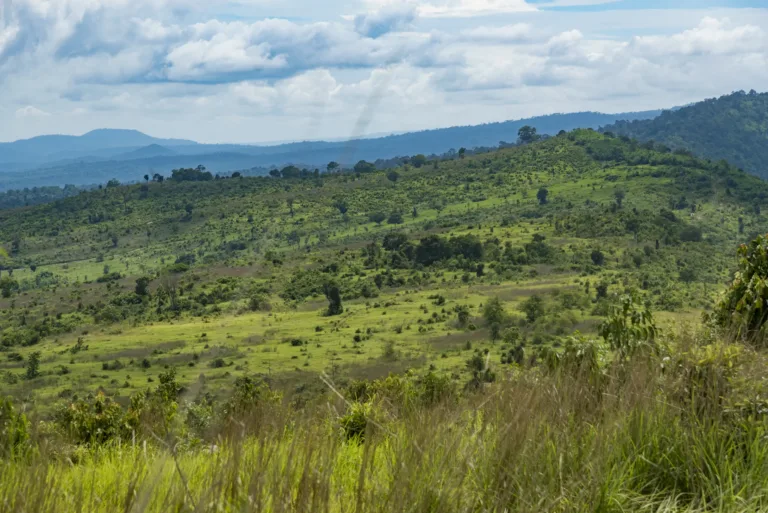 Thap Lan National Park
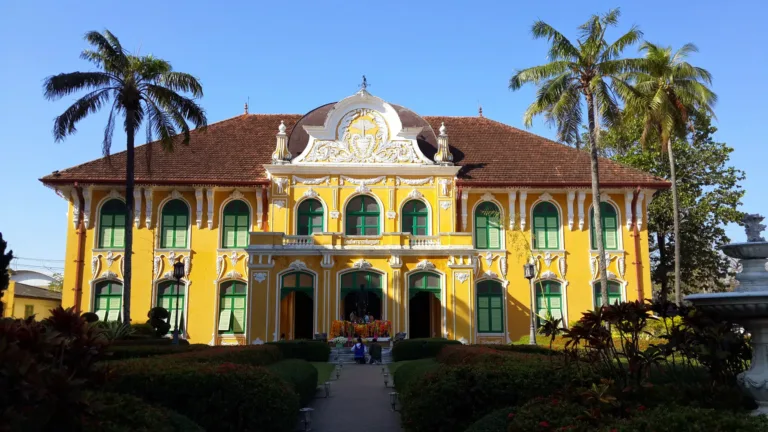 Chao Phraya Abhaibhubejhr Building
Ready to go to Wat Rattananettaram (Wat Lan Hoi)?
Best day this week: Saturday 28 Nov · Check in when you arrive to collect a stamp