 01
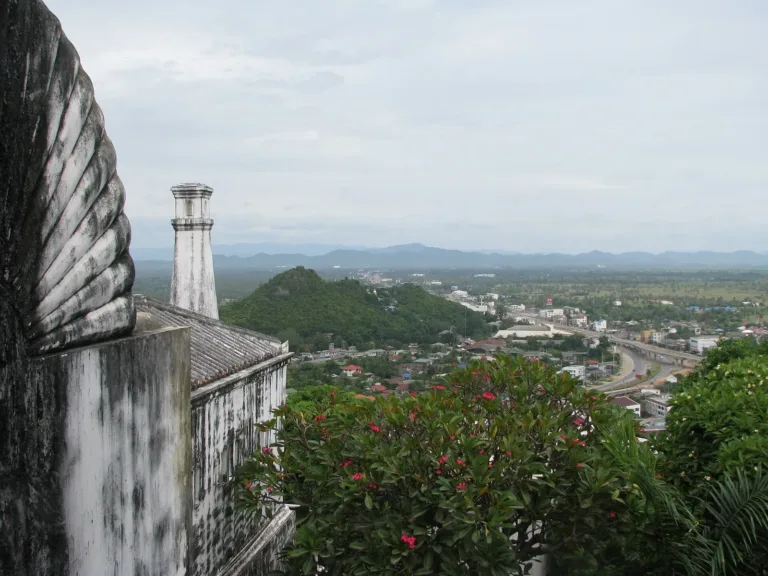
Royal halls on the western peakKing Mongkut's palace, now the Phra Nakhon Khiri National Museum
Historical park · Phetchaburi town
A hilltop palace 95 m above Phetchaburi town, built for King Mongkut and finished in 1860, with royal halls, Phra That Chom Phet and Wat Phra Kaeo. Ride the tram up or walk.
Holiday / event — crowded
Daily 08:30–16:30
About 2 hours
Western peak — Royal halls with the town below
Thais 20 THB · Foreigners 200 THB
01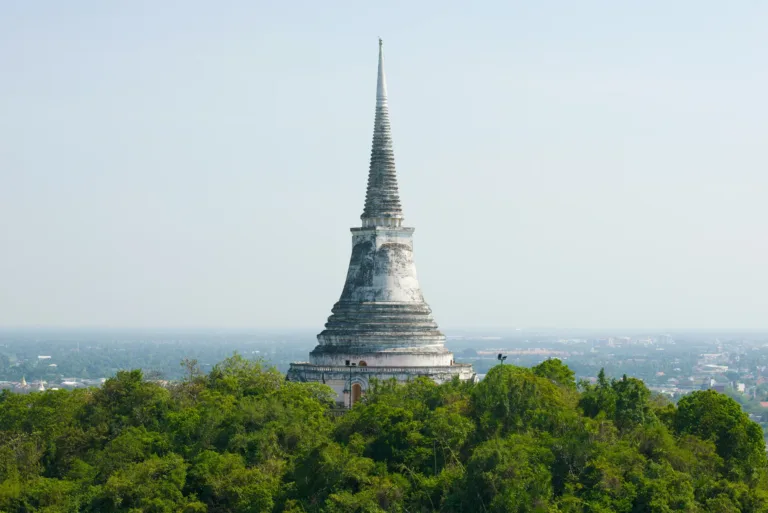 02
 03
 04
Tap a day card to see that day’s weather, rain, haze and hourly forecast
Best time to go Daytime is over · see tomorrow
Holiday — traffic on the way up and parking fills fast; leave early
Green band = hours used for the score
Best time to go Fine all day little rain through the day
Holiday — traffic on the way up and parking fills fast; leave early
Green band = hours used for the score
Best time to go Fine all day little rain through the day
No warnings today — normal road and weather conditions
Green band = hours used for the score
Best time to go Fine all day little rain through the day
No warnings today — normal road and weather conditions
Green band = hours used for the score
Best time to go Fine all day little rain through the day
No warnings today — normal road and weather conditions
Green band = hours used for the score
Best time to go Fine all day little rain through the day
No warnings today — normal road and weather conditions
Green band = hours used for the score
Best time to go Best window 13:00–19:00 Little rain · light drizzle possible at times
No official warnings, but watch for: Possible thunder 12:00–14:00
Green band = hours used for the score
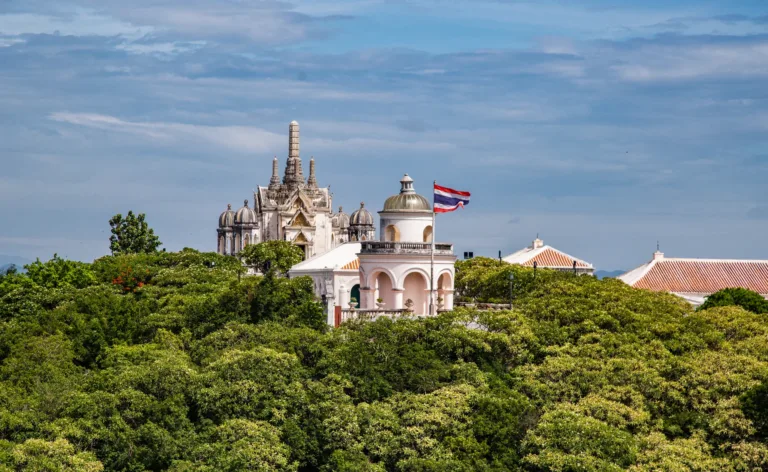
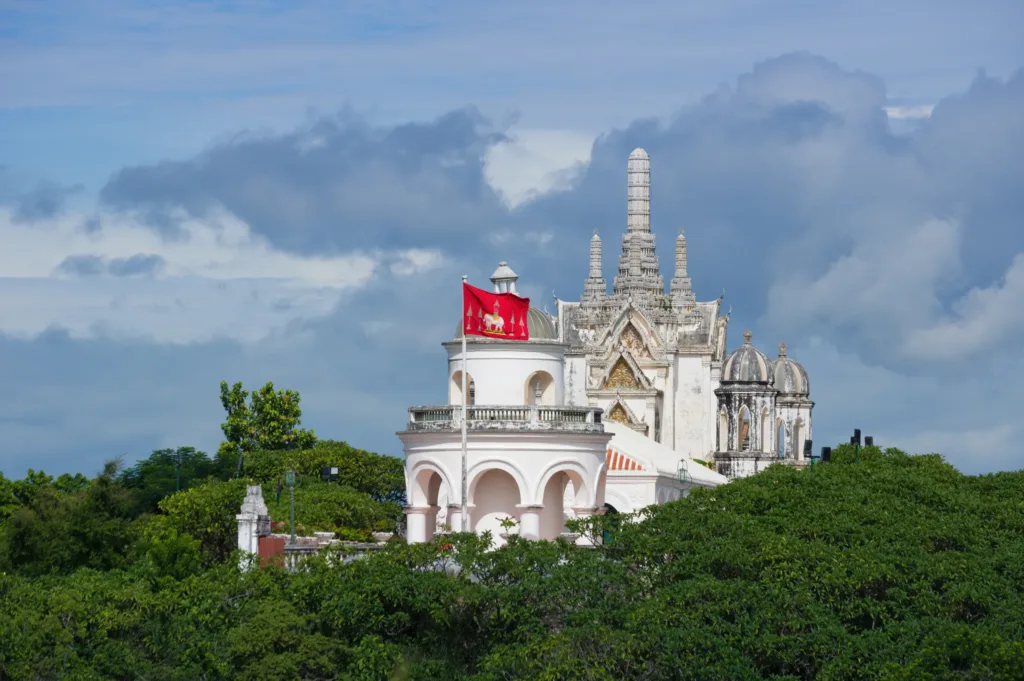
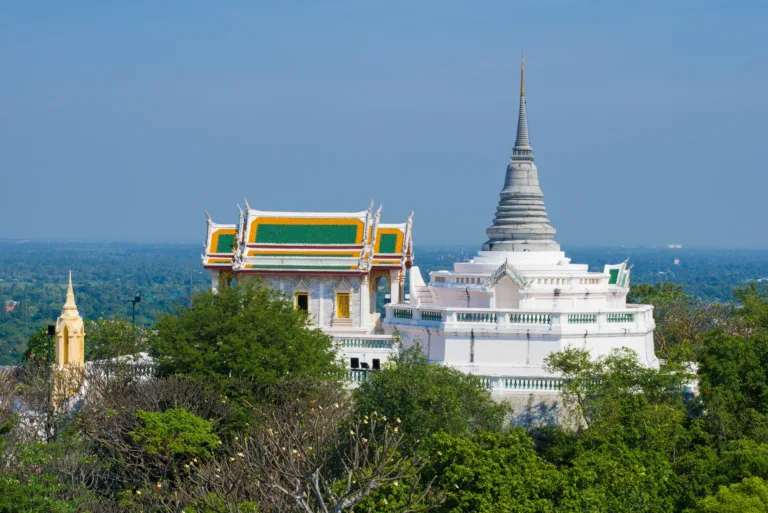
Phra Nakhon Khiri, known locally as Khao Wang ('palace hill'), is a summer palace on a hill about 95 m high in Phetchaburi town. King Mongkut (Rama IV) had it built, and it was completed in 1860. It was registered as a historical park on 27 August 1979.The hill has three peaks. The western peak holds the royal halls and palace buildings, part of which now house the Phra Nakhon Khiri National Museum. The central peak has the large chedi Phra That Chom Phet, and the eastern peak has Wat Phra Kaeo, modelled on Bangkok's Temple of the Emerald Buddha.It's open daily 08:30–16:30. Take the electric tram up or walk for about 20–30 minutes, and watch out for the macaques, which love to grab things.
Arrive Before 10:00, while it's still cool
They grab food, drinks and sunglasses; keep things zipped away and don't try to get them back
The walk up is steep and rocky in places; wear closed shoes
Thais 20 THB · Foreigners 200 THB · Time needed About 2 hours
Weekend late mornings and during the fair
| Entry, Thai adult | 20 ฿/person |
| Entry, foreign adult | 200 ฿/person |
| Electric tram up the hill, return optional | 50 ฿/person |
Cash · Prices may change by season — check with the venue
Phra Nakhon Khiri–Mueang Phet Fair (around February each year)
Phra Nakhon Khiri, better known to Phetchaburi locals as Khao Wang ("palace hill"), is the palace King Mongkut (Rama IV) had built across three hilltops in the middle of Phetchaburi as a royal retreat outside the capital. The main construction took place in 1859–1860, making it Thailand's first palace complex built on a mountain. It blends Western neoclassical architecture with Chinese and Thai art, and the hill still appears on Phetchaburi's provincial seal and flag today.
Before the palace, the hill was called Khao Samon. Mongkut knew Phetchaburi from his years as a monk and stayed at the old temple at the foot of the hill, which dates back to the Ayutthaya period. After becoming king he had it restored and named it Wat Maha Samanaram. The hill itself was renamed Khao Maha Sawan, and the palace on its summit Phra Nakhon Khiri.
Sources say the king decided to build the palace around 1858, appointing Chao Phraya Si Suriyawong (Chuang Bunnag), later Somdet Chao Phraya Borom Maha Si Suriyawong, as overseer, with Phra Phet Phisai Si Sawat (Thuam Bunnag) as works supervisor. The palace is usually said to have been completed in 1860, though research by a curator of the Phra Nakhon Khiri National Museum shows some work continued until 1862. In all there are 32 structures on the hill, including royal halls, towers, pavilions, forts, a mounting platform and gates.
The western peak is the royal residence. It includes Phet Phum Phairot Hall, used as the audience hall; Pramot Mahaisawan Hall, a two-storey Chinese-style building where the king slept; Wechayan Wichian Prasat, a pavilion crowned with five prangs; and Ratchathammasapha Hall, where the king gathered officials to hear his Buddhist teachings. Four forts guard the royal quarter, one for each direction.
The central peak holds Phra That Chom Phet, a chedi about 40 m tall enshrining relics of the Buddha. The eastern peak is the palace temple, with Phra Sutthasela Chedi, which the royal chronicle says was built from stone brought from Ko Si Chang, and the Red Prang, where a royal letter of 1860 records relics being enshrined. The building now called the Wat Phra Kaeo ordination hall is named only the "small vihara" in the king's letters; the name Wat Phra Kaeo appears only in later documents. Some say it came from a crystal Buddha once kept there, but scholars have found no evidence of it.
Another striking building is Ho Chatchawan Wiangchai, a round tower with a glass dome used as an observatory, reflecting Mongkut's interest in astronomy; its light is said to have guided fishermen home to the Ban Laem coast at night. The popular story that the king calculated the 1868 solar eclipse two years in advance is widely told, but historical research has found no contemporary document confirming it.
On 10 May 1860 King Mongkut came to inspect the works, and on 12 November 1861 he stayed at the palace. His birthday was celebrated here over three days, the American missionary Dan Beach Bradley wrote about the royal visits, and a letter of 1861 mentions arrangements for a Prussian envoy who came for an audience.
Under King Chulalongkorn (Rama V), an official record of 1876 says the whole palace was restored for his royal visits, and Ratchathammasapha Hall became a dining room. Late in his reign Phet Phum Phairot Hall was adapted to receive Duke Johann Albrecht, Regent of Brunswick in Germany, and his wife. After this reign the palace was hardly used and fell into disrepair for many years.
The site was registered as a national historic site in the Royal Gazette on 8 March 1936. In 1953 Phet Phum Phairot Hall was repaired and turned into a museum, and in 1960 large celebrations marked the palace's centenary. It was registered as a historical park on 27 August 1979, and in 1982–1987 the Fine Arts Department carried out a major restoration, furnishing the halls as in King Mongkut's day; the work won an architectural conservation award from the Association of Siamese Architects in 1993.
Phetchaburi people have long been attached to Khao Wang, once holding fairs and merit-making on the hill at the Songkran new year. The province held the first Phra Nakhon Khiri–Mueang Phet Fair on 8–10 February 1986, and it has run every year since; the 39th fair was held from 20 February to 1 March 2026. In recent years the lights that once covered the whole hill have been reduced to the path up.
Today Phra Nakhon Khiri is one of Phetchaburi's "three palaces", together with Phra Ram Ratchaniwet and Mrigadayavan Palace, and welcomes more than 200,000 visitors a year. The hill also has frangipani trees over a century old and the troops of macaques that have long shared it. In 2024 the Ministry of Culture asked the Fine Arts Department to study a UNESCO World Heritage nomination, describing the site as a remarkable blend of Eastern and Western culture set in nature.
Arrived? Check in, collect a stamp and tell others what it is like right now
Check your location first, so you do not fill in the form for nothing
Location must be on and within 1.1 km · One check-in per place per day · come back on other days to check in again
Post photos from anywhere — no need to be here · Up to 20 photos at a time · JPG / PNG / WebP · GPS location data is removed automatically
Khao Wang is in Phetchaburi town, with an electric tram and a footpath up the hill.
From the foot of the hill to the top · About 50 THB return
Steep path from the base · Free
Town roads in Phetchaburi
Good
Daily 08:30–16:30
Phra Nakhon Khiri Historical Park
200 THB
Answers travellers want before they go — a one-minute read
Thai 20 THB, foreigners 200 THB, children free
Daily 08:30–16:30
No, there's an electric tram for about 50 THB return, or walk for 20–30 minutes
Royal halls, a museum, Phra That Chom Phet and Wat Phra Kaeo
The macaques snatch things; keep food and valuables hidden and don't fight them for it
Best day this week: Monday 30 Nov · Check in when you arrive to collect a stamp
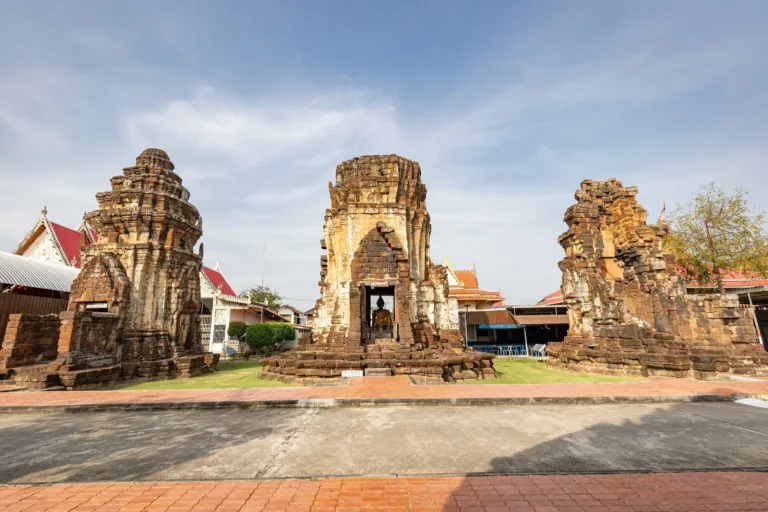 Wat Kamphaeng Laeng
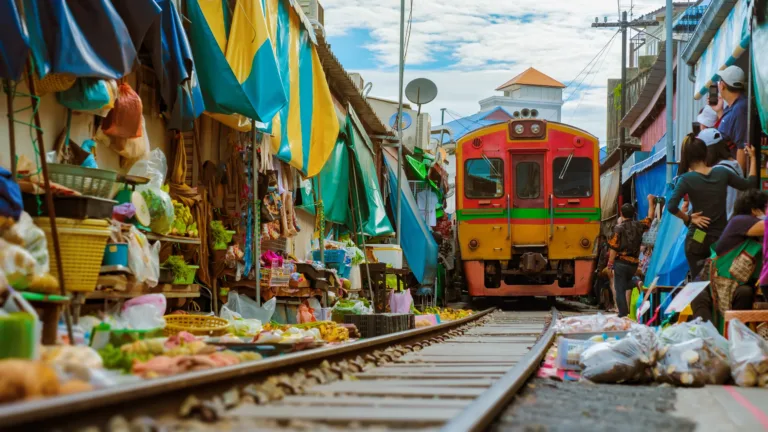 Maeklong Railway Market (Talat Rom Hup)
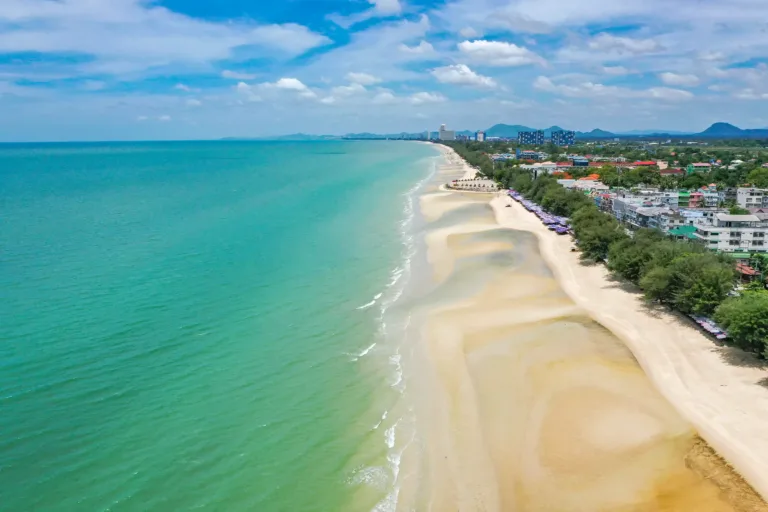 Cha-am Beach