 01
Long sandy beachWalks, horse rides, cycling
PHETCHABURI · CHA-AM
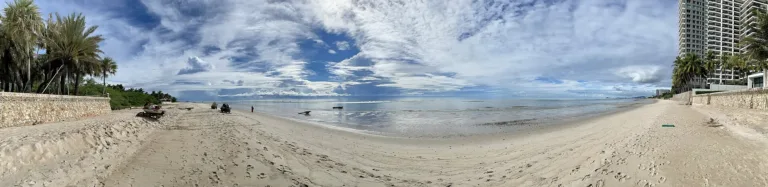
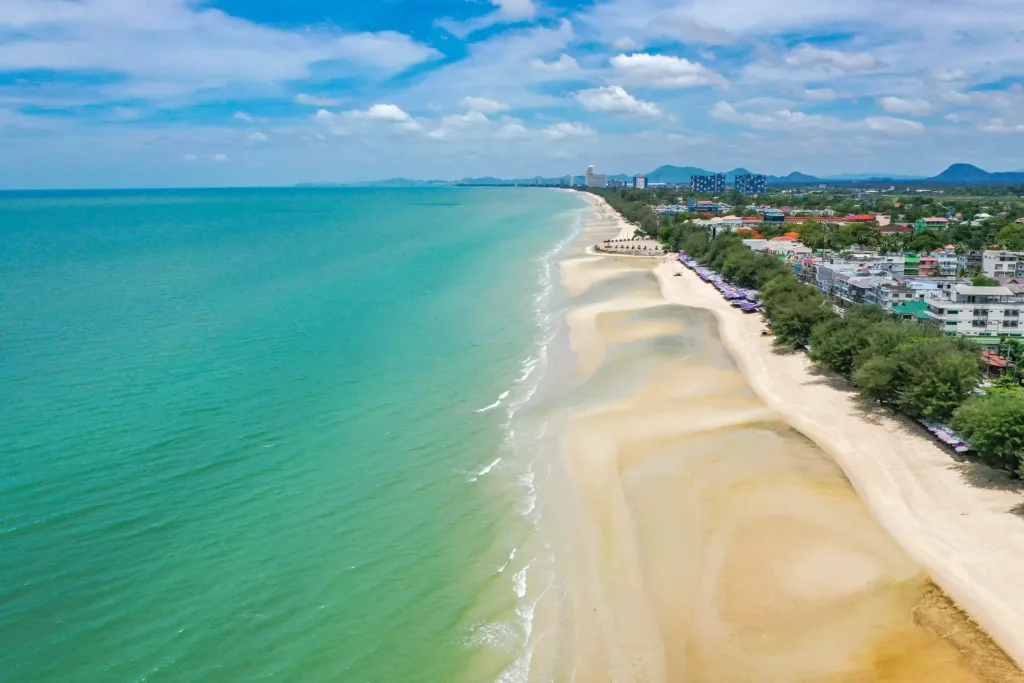
A long beach about 173 km from Bangkok, a seaside resort since the reign of King Rama VI, near Mrigadayavan Palace, with seafood, horse rides and a 6-km beach nourishment project.
Strong wind ~25 km/h · Holiday / event — crowded
Nov – Apr
May – Oct
Jellyfish — If stung, pour on vinegar; never rinse with fresh water
01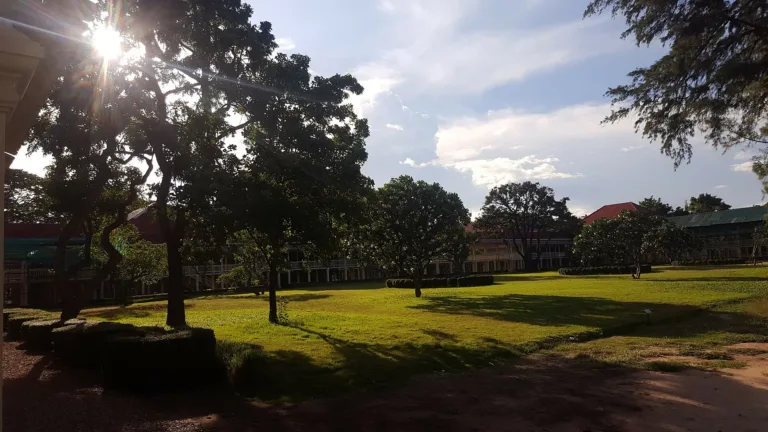 02
 03
 04
Tap a day card to see that day’s weather, rain, haze and hourly forecast
Best time to go Daytime is over · see tomorrow
Holiday — traffic on the way up and parking fills fast; leave early
Green band = hours used for the score
Best time to go Fine all day little rain through the day
Holiday — traffic on the way up and parking fills fast; leave early
Green band = hours used for the score
Best time to go Fine all day little rain through the day
No warnings today — normal road and weather conditions
Green band = hours used for the score
Best time to go Fine all day little rain through the day
No warnings today — normal road and weather conditions
Green band = hours used for the score
Best time to go Fine all day little rain through the day
No warnings today — normal road and weather conditions
Green band = hours used for the score
Best time to go Fine all day little rain through the day
No warnings today — normal road and weather conditions
Green band = hours used for the score
Best time to go Best window 13:00–19:00 Little rain · light drizzle possible at times
No warnings today — normal road and weather conditions
Green band = hours used for the score
Scored from cloud cover at every level and tonight’s moonlight — the darker the sky, the clearer the Milky Way · tap another night below for the next 7 nights
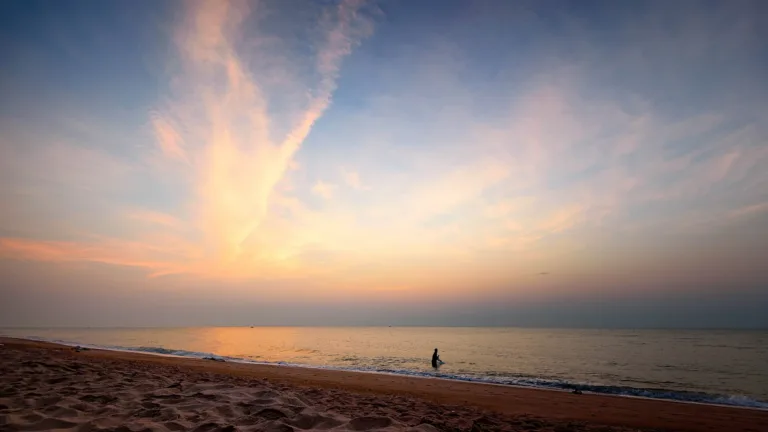
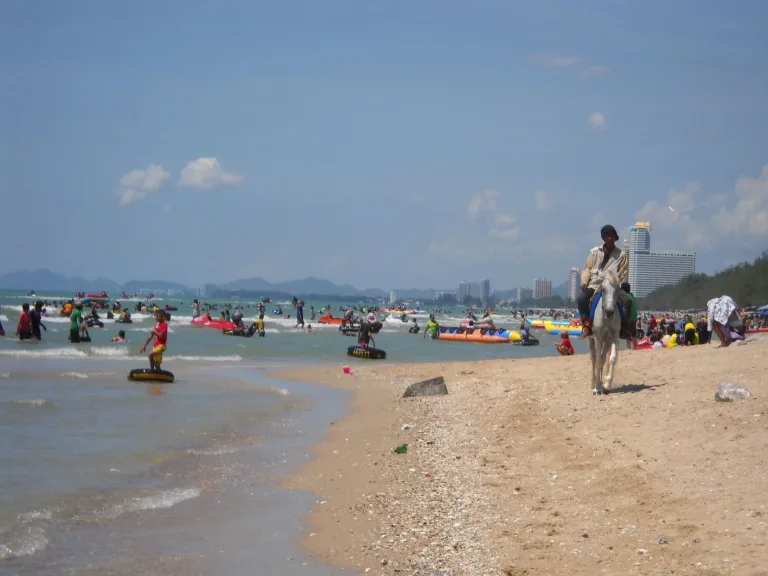
Cha-am Beach in Phetchaburi is one of the closest classic seaside resorts to Bangkok, popular since King Rama VI built his summer palaces nearby, with seafood, horse rides and a beach being restored with new sand.
Arrive Come before 10:00 or after 15:00 to avoid the strongest sun
Photos from Wikimedia Commons and contributors · tap a photo to see its credit
If stung, pour on vinegar; never rinse with fresh water
Check warning flags before swimming
Use sunscreen and drink plenty of water
Free · Time needed Half a day – 2 days
Long weekends, New Year and weekends
| Beach entry | Free |
| Umbrella / deckchair hire optional | 50 ฿/set |
| Horse ride along the beach optional | 200 ฿/ride |
Cash; larger shops take transfers and cards · Prices may change by season — check with the venue
Umbrella-free Wednesdays and municipal seafood and New Year events
Tap a month on the wheel to see weather, rain, haze and crowds from 10 years of records
Best time · Nov – Apr brings calm seas and clear skies for swimming and beach walks.
Watch out · Sep – Oct is wet and can bring jellyfish; long weekends mean crowds and traffic on Phetkasem Road.
Nov by the records 24–30°C · avg rain 104 mm (12 rainy days) · clear 4 days · avg PM2.5 17
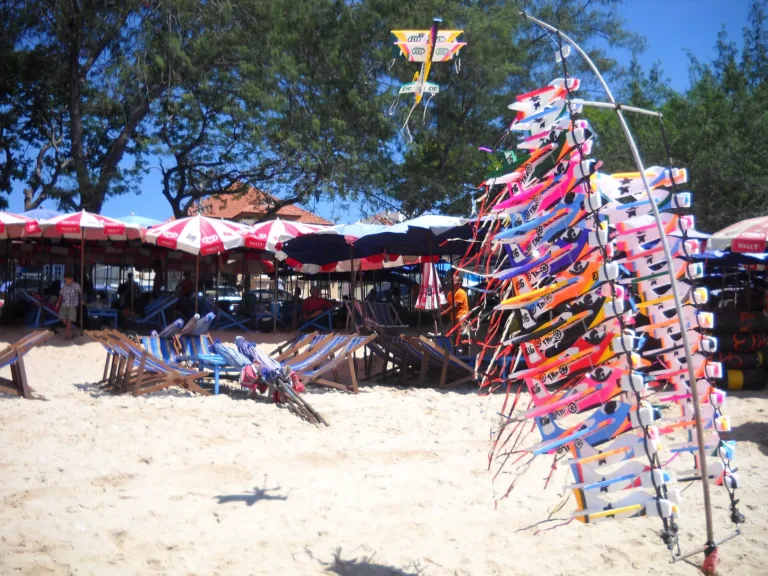
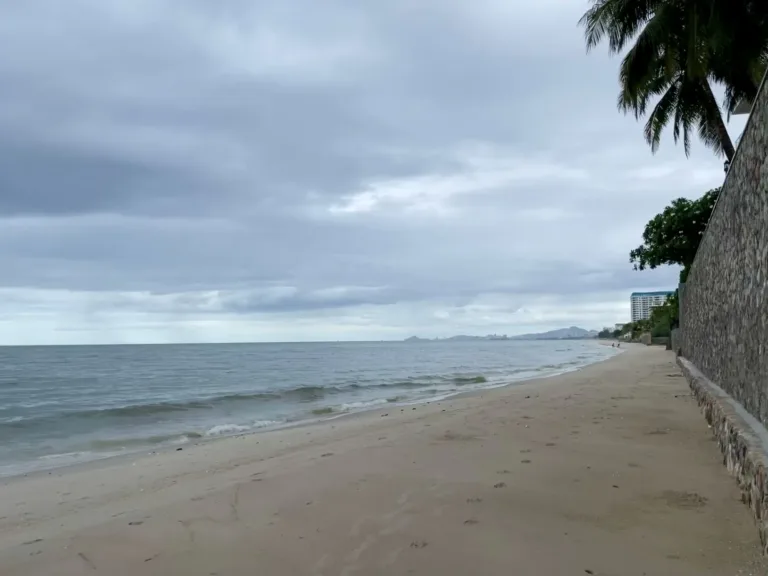
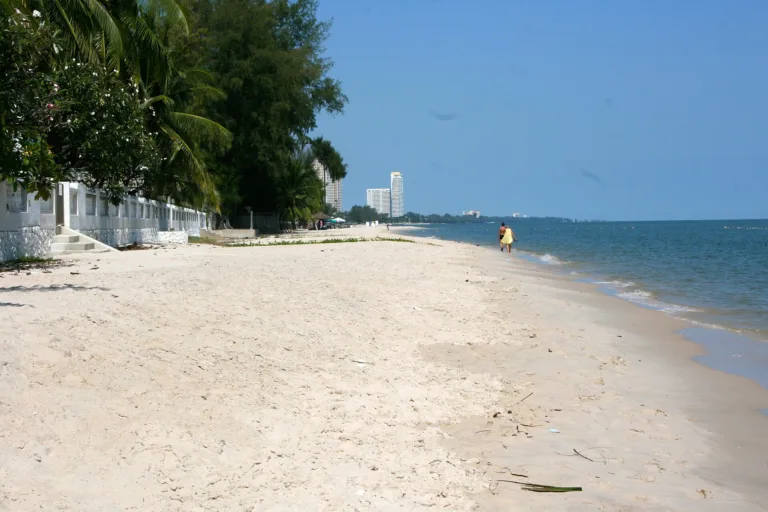
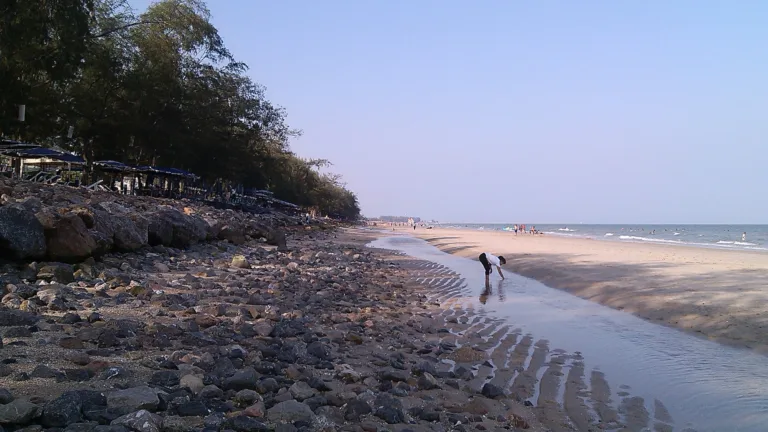
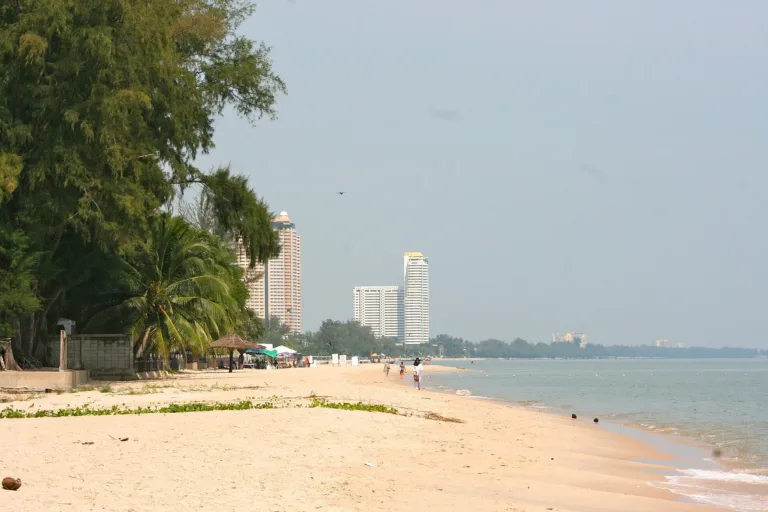
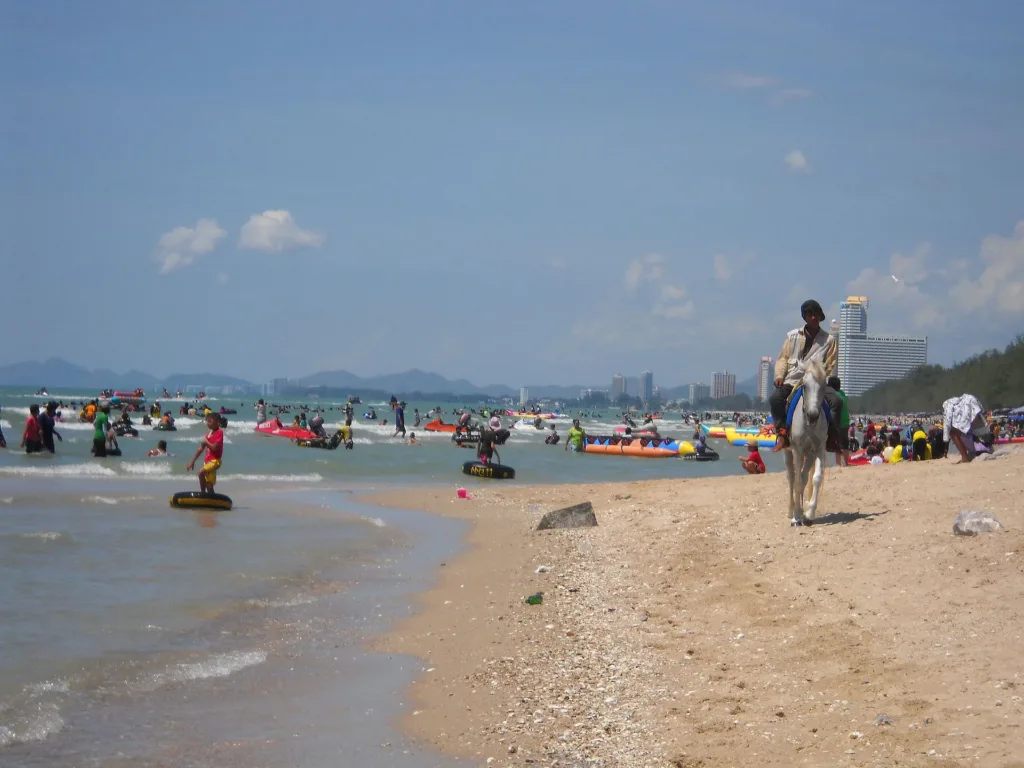
Cha-am Beach is in Cha-am subdistrict and district, Phetchaburi, about 173 km from Bangkok along Phetkasem Road and about 27 km north of Hua Hin. It is a long sandy beach with a seafront road, seafood restaurants, deckchairs under umbrellas, and activities such as horse riding, cycling and banana boats, making it one of the favourite “seaside near Bangkok” escapes for Thai holidaymakers.
Legend says the name comes from “cha-an”, meaning to wash a saddle: in the Ayutthaya period, Ekathotsarot, then viceroy, is said to have camped here with an army against the Burmese and washed his saddle, and “cha-an” later became “cha-am”. This is local folklore rather than documented history.
“Cha-am” is not a Thai dictionary word, so it is thought to be a corruption of “nong cha lang an ma”, the pond where saddles were washed. Manager Online relates the legend that King Ekathotsarot, returning in 1594 from crushing the revolt of Phraya Si Sai Narong at Tenasserim, camped at a large pond here and had his men bathe and wash their saddles; some versions credit King Naresuan instead. In 1591 both kings had visited Phetchaburi, staying at Sam Roi Yot and Tanot Luang for over two weeks, and in 1703 King Suea also stayed in the area.
People have lived along this coast since ancient times. Cha-am district contains the Thung Setthi site, the brick base of a large Dvaravati stupa over 1,000 years old. Sujit Wongthes explains that around the 6th century CE the western Gulf coast lay on trans-peninsular trade routes linking China, India and beyond, making communities here waypoints for travellers, and that legends of nearby Khao Nang Phanthurat may preserve memories of Chinese junk trade after about 1000 CE.
Thung Setthi lies at the foot of Khao Nang Phanthurat. Stucco figures of local people and Arabs found there, now in the Phra Nakhon Khiri National Museum, show that the community traded with foreign merchants as early as the Dvaravati period. Prof. Emeritus Santi Leksukhum produced a conjectural reconstruction of the stupa.
The district was founded in 1897 as Na Yang. In 1914 its office moved to Ban Nong Chok (now in Tha Yang district) and it was renamed Nong Chok. After the Second World War the office moved to Cha-am subdistrict and the district took the name Cha-am. It has nine subdistricts.
Seaside holidays were a European custom that reached Siam with Westerners in government service, beginning at Ang Sila under King Mongkut and spreading to Si Racha. In the late reign of King Chulalongkorn, the southern railway made the Phetchaburi coast popular, and fashion moved from Hat Chao Samran to Cha-am and finally to Hua Hin.
In 1917 King Vajiravudh (Rama VI) built a temporary residence at Bang Thalu, north of Cha-am, to treat his rheumatism, naming the beach Hat Chao Samran. But the site lacked fresh water and was plagued by flies, so he chose a new site at Huai Sai Nuea, between Cha-am and Hua Hin, which had plenty of water.
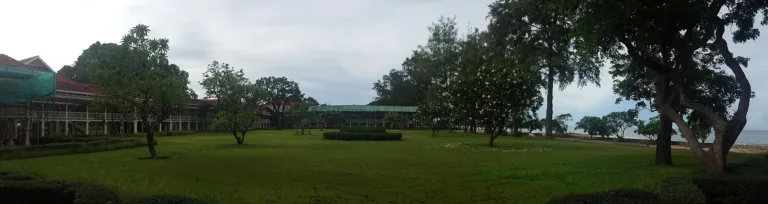
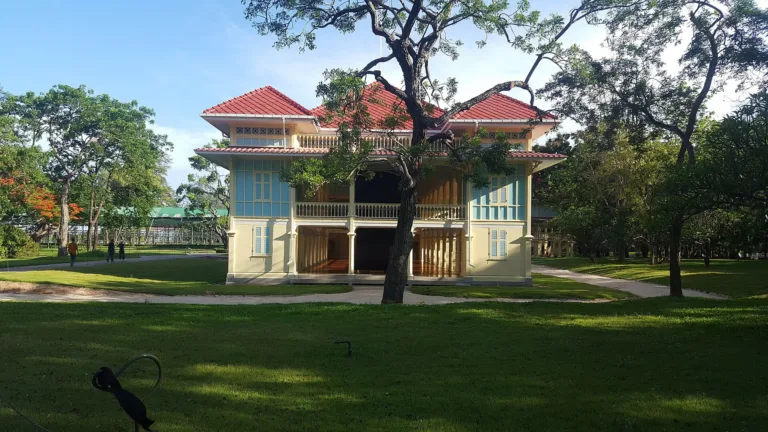
In 1923 Rama VI ordered the building of Mrigadayavan Palace (“deer park”) as a summer residence. He designed and supervised it himself; Phraya Yommarat (Pan Sukhum) directed construction, and the Italian architect Ercole Manfredi drew the plans. Built in about a year, it consists of 16 golden-teak two-storey buildings on concrete piles, in three main groups facing the sea, reusing materials from the Hat Chao Samran residence. The king stayed there in 1924 and 1925, last from 12 April to 20 June 1925, and died on 26 November 1925.
After his death the palace was abandoned; following the 1932 revolution several agencies declined to take it on because it was remote and short of water. In 1947 the government let the Border Patrol Police train there; in 1965 King Bhumibol granted it to them as a training centre, in 1980 he opened Camp Rama VI, and in 1981 the Fine Arts Department registered it as a monument. Restoration took about 13 years, using teak from the Royal Forest Department and villagers in Phrae, with support from companies such as Siam Cement Group, and the palace opened to the public on 31 March 1994.
Camp Rama VI also hosts the Sirindhorn International Environmental Park, opened by Princess Maha Chakri Sirindhorn on 19 July 2008 as a learning centre for renewable energy, energy conservation and the environment.
When Hua Hin’s seafront had been fully claimed, Prince Naradhip Prabandhabongse began developing Cha-am as a resort. Old photographs from before 1957 collected by Silpa-Mag show Bangkok visitors on Cha-am beach, with Mrigadayavan Palace visible in some shots.
Manager Online adds detail: Cha-am’s seafront was then forest with only a few small settlements. Prince Naradhip Prabandhabongse surveyed and laid out the area, naming the village “Sahakham”; Rama VI appointed him its first village headman, and he built a 7-km beach road. Rama VII later set up a committee for public utilities and enacted the 1926 Western Seaside Places Act. In Hua Hin, the railway arrived in 1911, Prince Naretworarit built the first holiday residence, and Rama VII built Klai Kangwon Palace in the same year as the Act. Cha-am today has a monument to Prince Naradhip.
Cha-am later grew into a full-scale resort town lined with hotels. In 2014 Piyaman Techapaiboon, president of the Tourism Council of Thailand and managing director of The Regent Cha-am, said Cha-am–Hua Hin ranked fourth in Thailand for tourism revenue. Every Wednesday the beach holds an umbrella-free day to give visitors back the sea view.
In 1988 King Bhumibol named the roughly 200-km coast from Laem Phak Bia to Bang Saphan the “King Naresuan the Great Coast”, and in 1998 residents built a statue of King Naresuan holding his sword and facing the sea at north Cha-am beach, on 5 rai lent by Phra Khru Kasem Watcharathon, abbot of Wat Neranchararam. Cha-am also has a local speciality, “pu chak saphan yok”: fishermen keep blue crabs in net bags hung from the lifting bridge at the river mouth and haul them up when a customer buys. A crab bank releases hundreds of thousands of young crabs each year, and the municipality and TAT hold a “Pu Chak @ Cha-am” festival, for example from 11 to 18 March 2023, as well as an international kite festival.
Coastal erosion is Cha-am’s biggest problem. In 2014 Piyaman said about 16 km of the Cha-am–Hua Hin coast had almost no beach left, blaming seawalls, fish piers and jetties possibly built without environmental studies. Wikipedia notes that erosion, much of it at Cha-am, pushed Phetchaburi from Thailand’s fourth to sixth most popular province.
Thai Post reported on 8 June 2020 that Sasin Chalermlarp, president of the Seub Nakhasathien Foundation, and Prince of Songkla University marine scientist Sakanan Plathong found the coast from the Chao Mae Thapthim shrine in Hua Hin to Laem Phak Bia lacked integrated management. They blamed a rock jetty built into the sea by the Chonprathan Cement company that traps sand, over-designed protection works after Typhoon Linda, sand dams at canal mouths, giant sandbags that divert currents, and a municipal viewpoint jutting into the sea on the south side. An earlier 1-km sand fill had cost more than 100 million baht. The experts urged rebalancing sediment, for example by moving dredged channel sand to the other side, and consulting coastal engineers before any construction.
The Marine Department therefore launched a Cha-am beach nourishment project in 2024: 6.05 km of shoreline, about 1,439,000 m³ of sand and a budget of 1,442.87 million baht, widening the beach to an average of 50–80 m. It has three phases: phase 1, about 1.7 km from Pla Thu restaurant to Yothathikan Road, 554.94 million baht; phase 2, about 3 km from Soi Ruamchit to the Cha-am viewpoint plaza, 598.61 million baht; and phase 3, about 1.35 km from the viewpoint to I Love Sweet restaurant, 289.32 million baht. Fishermen near Wat Sai Yoi also asked for the offshore breakwater to be improved.
Daily News reported on 8 November 2025 that the Marine Department held its first provincial seminar in Phetchaburi. The master plan covers 17.5 km of coast in nine sections; phase 1, part 1 starts with about 800 m at Bo Phutsa and Bang Sai Yoi, the worst-eroded communities. Chulalongkorn University’s Aquatic Resources Research Institute concluded that sand nourishment is the best option, with least impact on the environment and navigation. Italian-Thai Development is the contractor, with completion due in late 2026. These figures differ from 2024 reports of 6.05 km in three phases.
Venomous jellyfish appear from time to time. On 17 October 2017 the Department of Marine and Coastal Resources surveyed the beach after a five-year-old boy was stung, finding juvenile fire jellyfish (stinging sea nettles) and other species. Officials advise pouring vinegar over a sting for at least 30 seconds, never rinsing with fresh water, and getting to hospital quickly.
On 14 September 2026 a clip showed black wastewater flowing onto the beach near the southern sewage pumping station by the Nong Chaeng community. Investigators found a contractor repairing a pipe had pumped it out by mistake and was ordered to stop at once; Cha-am municipality issued fines, initial sea-water tests found no contamination, and swimming continued as normal.
Cha-am Beach is open all day with no entry fee. From Bangkok take Highway 35 and then Highway 4 to Phetchaburi; at Cha-am turn left for about 2 km to Ruamchit Road along the beach. Vans, buses and southern-line trains also serve the town. Watch for jellyfish late in the rainy season and check warning flags before swimming.
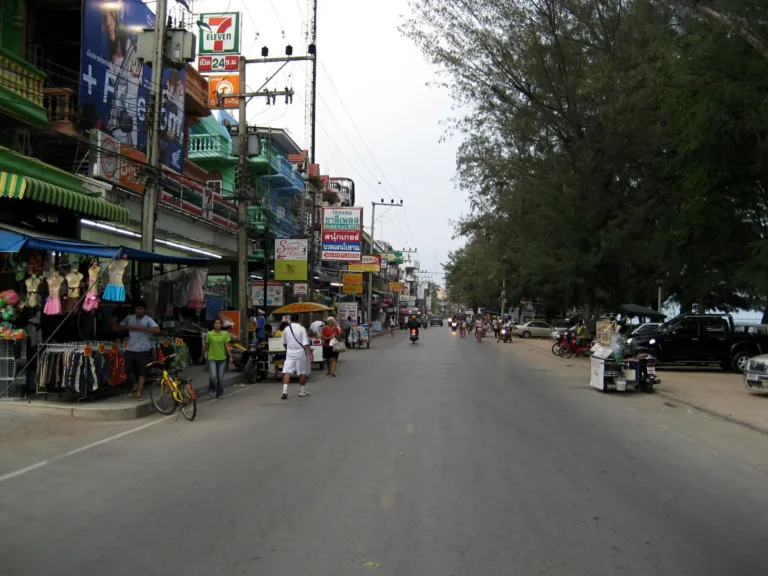
Arrived? Check in, collect a stamp and tell others what it is like right now
Check your location first, so you do not fill in the form for nothing
Location must be on and within 3 km · One check-in per place per day · come back on other days to check in again
Post photos from anywhere — no need to be here · Up to 20 photos at a time · JPG / PNG / WebP · GPS location data is removed automatically
Phetkasem Road is congested on long weekends; parts of the beach road are one-way.
Highway 35 → 4 (Phetkasem) · Fuel
Bangkok–Cha-am/Hua Hin routes · Fare
Southern line to Cha-am station (some trains stop) · By class
From Bangkok take Highway 35 and then Highway 4 (Phetkasem); at Cha-am turn left for about 2 km to Ruamchit Road on the beach.
Roadside along the beach road and municipal car parks
Petrol stations on Phetkasem Road in Cha-am town
Good mobile signal
All day
about 173 km from Bangkok
Cha-am Beach, Ruamchit Road
Approx. nightly price for 2 adults (next week) · final price depends on your dates
Answers travellers want before they go — a one-minute read
About 173 km, roughly 2.5–3 hours
Legend says from “cha-an”, washing a saddle, in the time of Ekathotsarot
Mrigadayavan Palace, Rama VI’s summer palace built in 1923
Yes, but watch for jellyfish late in the rainy season and check warning flags
Best day this week: Monday 30 Nov · Check in when you arrive to collect a stamp
 Hua Hin Night Market
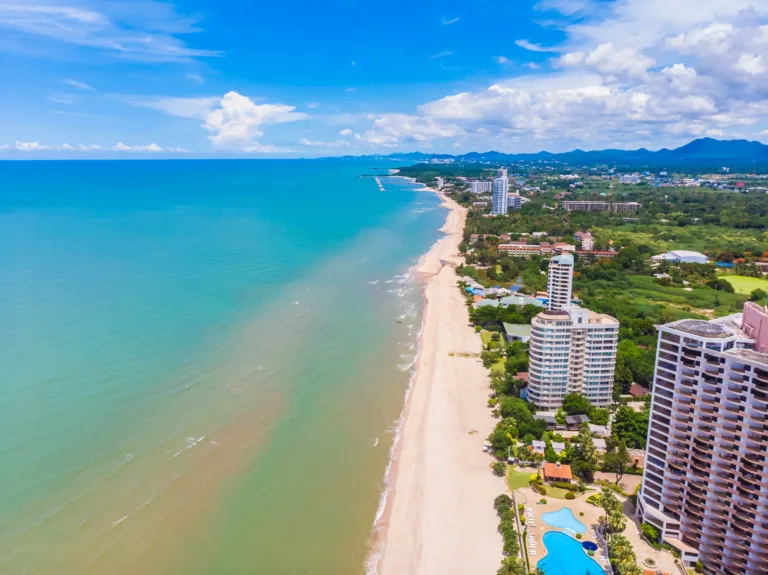 Hua Hin Beach
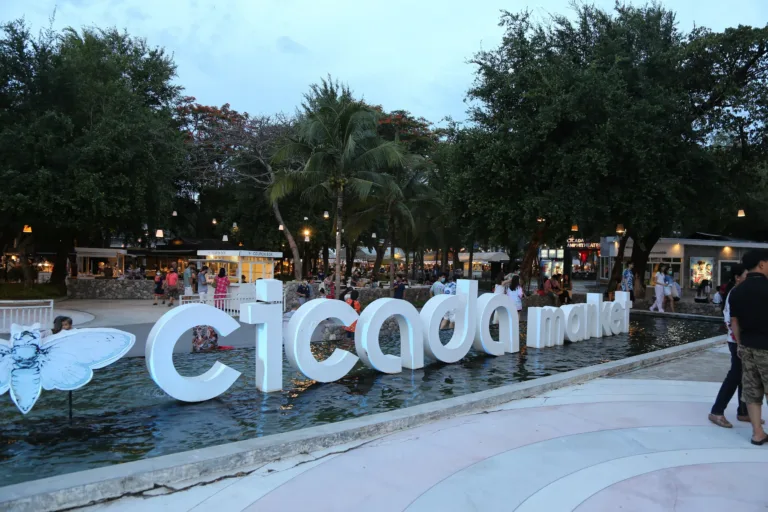 Cicada Market, Hua Hin