Hua Hin Beach
A white-sand beach about 5 km long in Thailand's first seaside resort, born when the southern railway arrived in 1911 — close to Hua Hin railway station, the old Railway Hotel, Klai Kangwon Palace and Khao Takiab.
Before you goWhich of the next 7 days is best Best dayFriday 16- Severe weatherNone · light showers
- EarthquakesNone in 48 h
- Major disastersNone
- Site noticesNone
About
Overview · highlights · who it suits
Hua Hin Beach is a white-sand beach about 5 km long on the Gulf of Thailand in Hua Hin district, Prachuap Khiri Khan, some 200 km from Bangkok. It runs from the fishing-pier quarter down to Khao Takiab and is known as Thailand's first seaside resort.
After the southern railway arrived in 1911, princes and the elite built seaside residences here, followed by the Railway Hotel, the royal golf course and Klai Kangwon Palace — so Hua Hin is both a beach to relax on and a town tied to the royal court for more than a century.
The best time is December–April, when the sea is calm and rain is scarce. Walk the beach at sunrise, then visit the railway station and Chatchai Market.
Don't-miss highlights
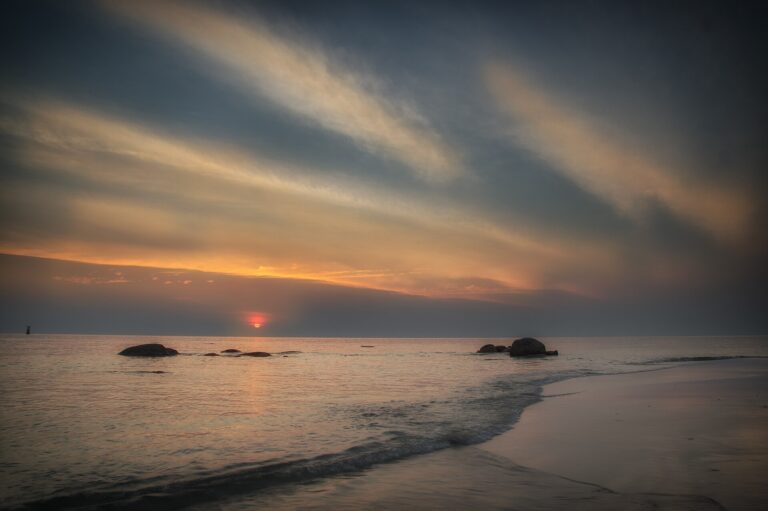
Sunrise over the Gulf
The beach faces east — dawn is the most beautiful time
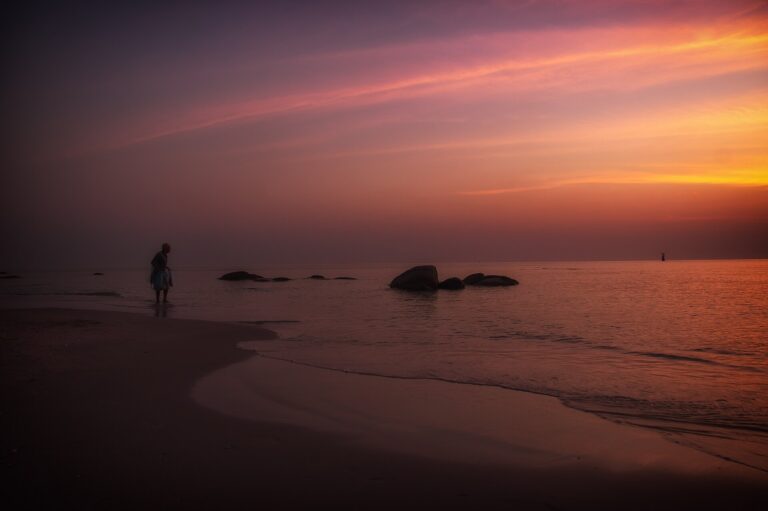
Fishermen at dawn
Fishing boats and a working fishing life every morning
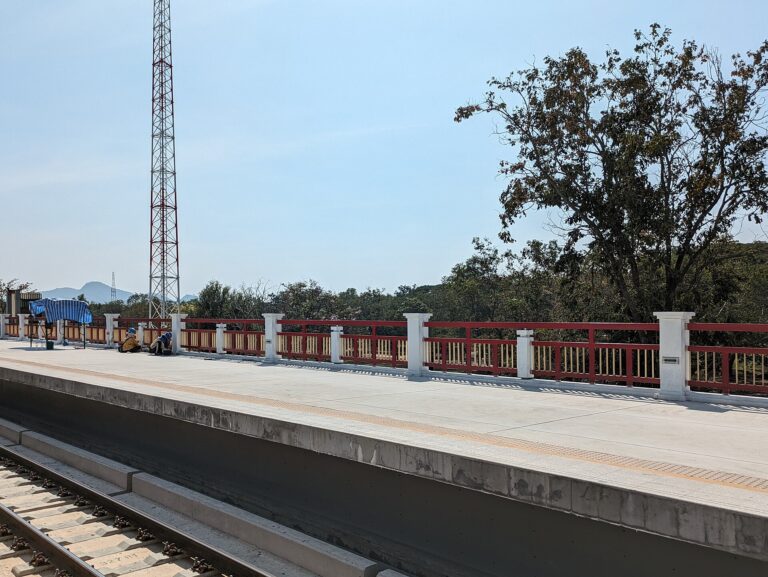
Hua Hin railway station
A historic wooden station with the Royal Waiting Room
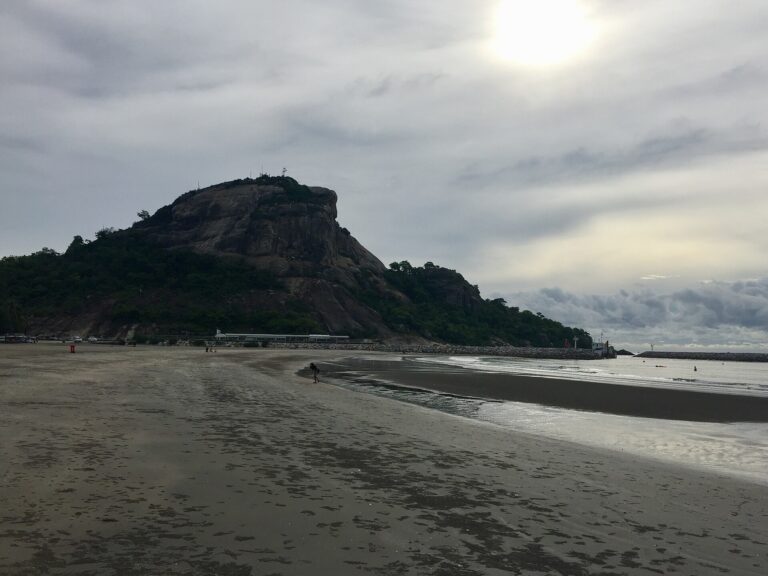
Khao Takiab
The southern end of the beach, with a hilltop temple and bay views
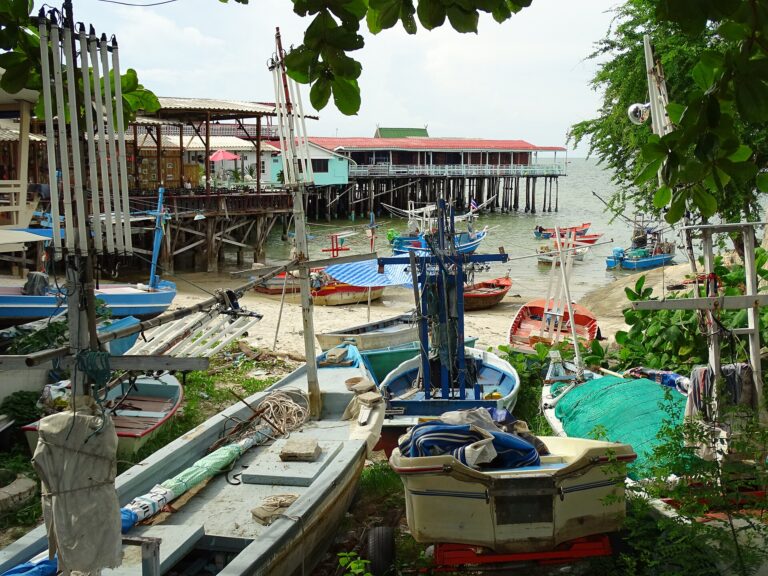
Hua Hin fishing pier
The old quarter, with seafood restaurants on the pier
Before you go
Gallery
Get a feel for the place · tap a photo to enlarge
Sunrise on Hua Hin BeachA fisherman on Hua Hin Beach at dawn · Photo: Bjørn Erik Pedersen (CC BY-SA 4.0)Fishermen at dawnHua Hin Beach at dusk · Photo: Bjørn Erik Pedersen (CC BY-SA 4.0)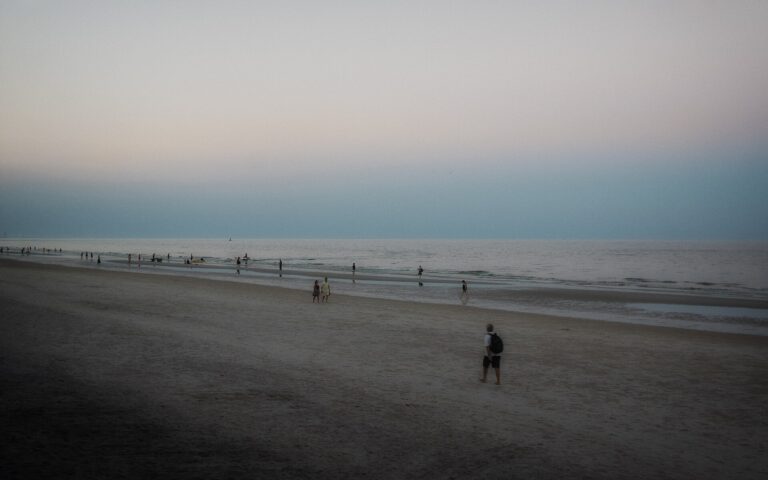 Hua Hin Beach at duskHua Hin Beach · Photo: Elmschrat (CC0)
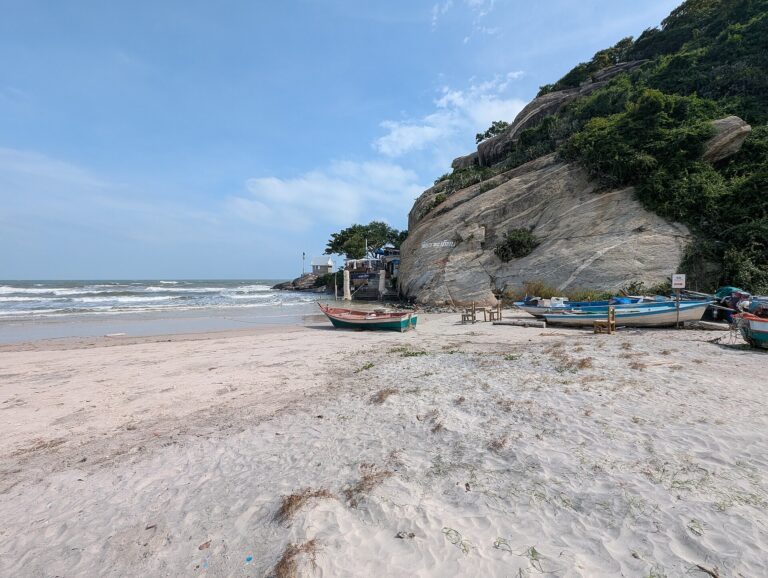 Hua Hin BeachFishing boats at Hua Hin pier · Photo: Adam Jones (CC BY-SA 2.0)Fishing boats at the pierKhao Takiab, the southern end of Hua Hin Beach · Photo: Athikhun.suw (CC BY-SA 4.0)Khao TakiabHua Hin railway station · Photo: Suikotei (CC BY 4.0)Hua Hin railway stationThe Hua Hin railway station building · Photo: Ian Gratton (CC BY 2.0)
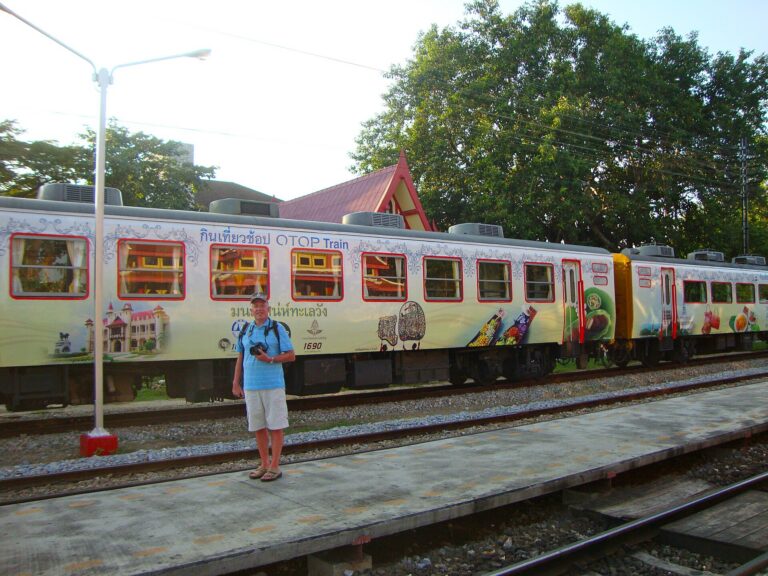 The station buildingHua Hin Beach at night · Photo: Slyronit (CC BY-SA 4.0)
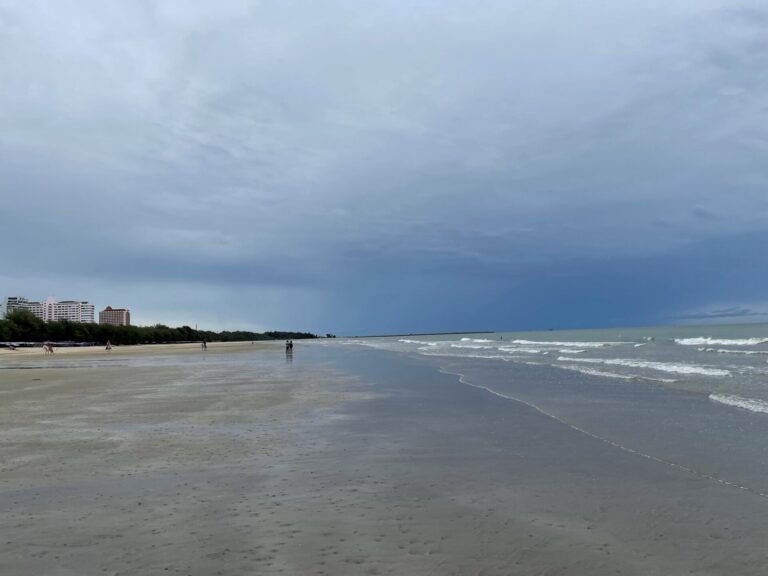 Hua Hin Beach at night
Photo credits9 photos from Wikimedia Commons
 Sunrise on Hua Hin BeachPhoto: Bjørn Erik Pedersen CC BY-SA 4.0
 A fisherman on Hua Hin Beach at dawnPhoto: Bjørn Erik Pedersen CC BY-SA 4.0
 Hua Hin Beach at duskPhoto: Bjørn Erik Pedersen CC BY-SA 4.0
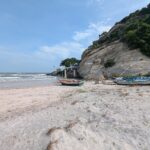 Hua Hin BeachPhoto: Elmschrat CC0
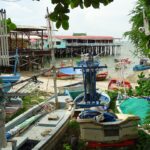 Fishing boats at Hua Hin pierPhoto: Adam Jones CC BY-SA 2.0
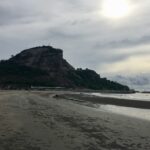 Khao Takiab, the southern end of Hua Hin BeachPhoto: Athikhun.suw CC BY-SA 4.0
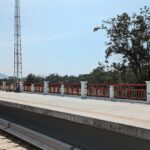 Hua Hin railway stationPhoto: Suikotei CC BY 4.0
 The Hua Hin railway station buildingPhoto: Ian Gratton CC BY 2.0
 Hua Hin Beach at nightPhoto: Slyronit CC BY-SA 4.0
Before you go
Weather, haze and crowds before you set off
Best time of day — hourly
Today in detail
Open-MeteoWhat to bring
Local cautions
- Jellyfish Venomous jellyfish appear in the Gulf at times. Stay out if there are warning signs or red flags. If stung, pour vinegar for at least 30 seconds, never rinse with fresh water, and get to hospital (1669)
- Red flags Red flags go up on rough days — no swimming
- Horse rides Agree the price and duration clearly before riding on the beach
Moreค่าใช้จ่าย · คนเยอะไหม · Travel warnings · อากาศละเอียด
What to bring —
Estimated costs
Crowds — estimate
Travel warnings
Best months
Tap a month to see weather, rain, haze and crowds
December–April brings little rain, a fairly calm sea and clear skies — ideal for morning beach walks and swimming. January–February is the coolest and most pleasant.
September–November is wet, especially October, with murky water and rough seas on some days; watch for box jellyfish at the end of the rains. Long holidays bring traffic jams on Phetkasem Road and hotels fill up fast.
- Weather
- Rain
- Haze
- Crowds
See 10 years of real weather dataMonthly temperature, rainy days, clear days and haze
Past weather records
Check-ins & visitor photos
Location must be on and within 2 km · you can check in on every visit
History & stories
Legend · history · architecture
Before it became a resort, this coast was just a small fishing settlement in Pranburi. Around 1834 farmers from Phetchaburi fleeing drought settled by a beach of white sand and rocks lying in rows, and called it "Ban Samo Riang" — the village of rocks in a row.
As the community grew, a temple became its centre: Wat Hua Hin was founded in 1896 under King Chulalongkorn (Rama V), with Luang Pu Nak Punyanako (Phra Khru Wiriyathikari) as its first abbot. Hua Hin was still a hard-to-reach village of fishermen and farmers, until the railway changed everything.
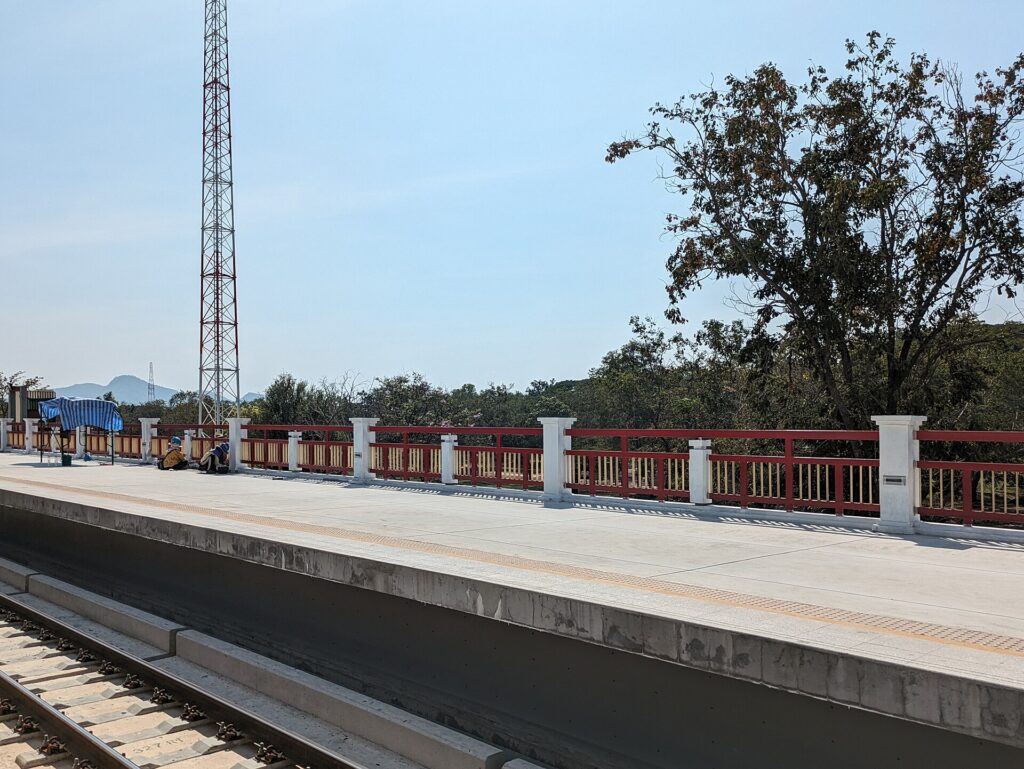 Hua Hin railway station, built when the southern line arrived in 1911 · Photo: Suikotei
The turning point was the southern railway. In 1903 the line reached Phetchaburi and surveys continued south; in 1906 the British railway engineer Henry Gittins reported finding this "clean white" beach, and in 1911 the railway reached Hua Hin, with the station built the same year. At the time the train was the only convenient way to get here.
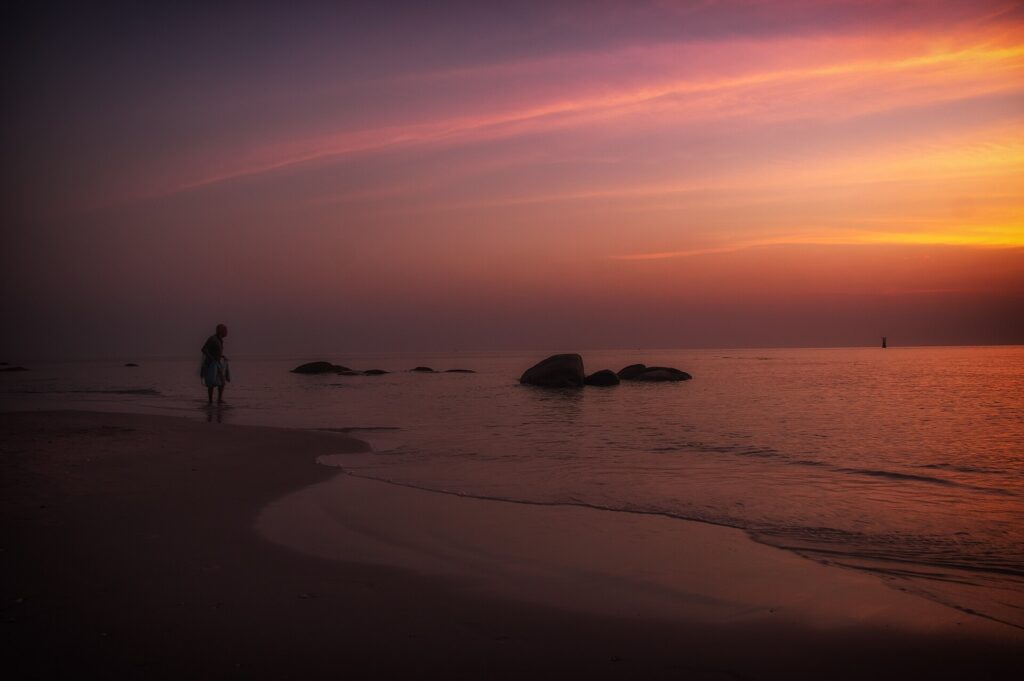 The beach where the first recorded visitors camped in tents · Photo: Bjørn Erik Pedersen
Read more history 17 more paragraphs
The first recorded visitors arrived in late 1911, barely a week after the line from Cha-am opened: Prince Wilhelm of Sweden and Grand Duchess Maria, guests at King Rama VI's coronation, travelling with Prince Chakrabongse and his wife Katya. There were no buildings yet, so they stayed in tents pitched on the beach.
The first residence was built by Prince Naresworarit, who named his house "Saen Samran Sukhawet" on the southern beach of Ban Laem Hin — later split into the Samran and Sukhawet residences — and he called the beach "Hua Hin". Queen Saovabha and Queen Savang Vadhana came to stay regularly, making Hua Hin fashionable with the elite; seaside homes followed, such as Ban Chakrabongse (now the site of the Hilton), Tamnak Diskul and Ban Phlap Pa.
The town grew along the railway. On 1 January 1913 the line opened south of Hua Hin; in 1917 the railway department laid roads and built wooden shophouses for rent in town; and once the southern line linked up with Malaya, Penang and Singapore in 1921, Hua Hin became a stopover for international travellers.
Curiously, King Rama VI never stayed in Hua Hin, even when advised to come for his rheumatism. He felt the town already belonged to the elite and the public, and that a royal residence would create a restricted zone — "I do not wish to disturb their enjoyment," he said. Instead he built a simple wooden residence at Hat Chao Samran in Phetchaburi, first staying there in April 1918; but fresh water ran short, the light railway kept breaking down and flies swarmed, and after a second visit in 1921 he never returned. He later built the Mrigadayavan Palace on the beach at Cha-am, near Hua Hin.
In 1922 King Rama VI ordered a "Hua Hin Hotel" — the Railway Hotel — overseen by Prince Purachatra, head of the railway department, and designed by the railway's Italian architect Alfredo Rigazzi: a two-storey European-style brick and timber building of 14 rooms with a wraparound veranda. It took its first guests in October 1922 and officially opened on 1 January 1923, at about 20 baht a night. Next to it lies the Royal Hua Hin Golf Course, said to be Thailand's first international-standard course; sources give opening dates from 1922 to 1928, and the original clubhouse is still preserved.
Under King Prajadhipok (Rama VII) and Queen Rambai Barni, the royal couple stayed in Hua Hin from around 1926 and built a seaside palace; the foundation stone of the main residence was laid on 21 September 1927. The name "Suan Klai Kangwon" first appears in the court diary on 3 September 1927, said to be inspired by Sans Souci ("without care") in Potsdam, Germany. Around the same time the king had Chatchai Market built under Prince Purachatra, after whom it is named; its seven continuous arches symbolise the seventh reign.
Klai Kangwon was built with King Prajadhipok's own funds as a hot-season residence and given to Queen Rambai Barni. Its first residence, "Piam Suk", is believed to have been designed by the French-trained architect Prince Itthithepsan Kridakara, and the housewarming ceremony was held on 10–11 April 1929.
On 24 June 1932, as the People's Party seized power in Bangkok, King Prajadhipok was at Klai Kangwon. When Phraya Issaradhirajsevi brought the news, the king said, "I knew there would be people plotting a revolt, but I did not think it would come so soon." He called the princes and ministers in Hua Hin to a meeting; meanwhile the warship HTMS Sukhothai arrived with a letter from the People's Party asking him to return as king under a constitution. He accepted, and left for Bangkok at 18:00 on 25 June 1932.
Hua Hin was caught up in politics again the next year. When the Boworadet Rebellion broke out on 11 October 1933, led by Prince Boworadet against the People's Party government, the king stayed neutral, but amid the confusion he left Klai Kangwon on 17 October 1933 for Songkhla, staying about a month before returning to Bangkok on 9 December to open parliament the next day.
Administratively, Hua Hin was once a minor district under Pranburi and became a full district in 1949. It is also the birthplace of Pone Kingpetch (Mana Sidokbuab), born in 1935, who beat Pascual Pérez at Lumpinee Stadium on 16 April 1960 to become Thailand's first world boxing champion; his memorial opened on Hua Hin Beach in 1992 before moving to the front of Pone Kingpetch Park.
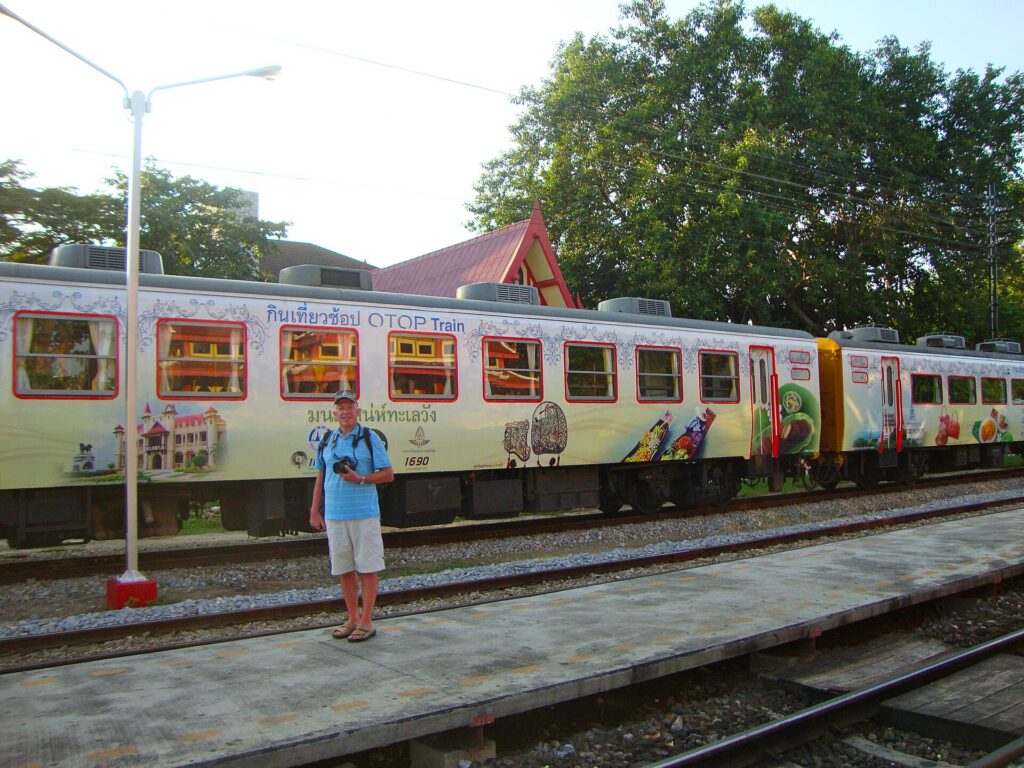 The award-winning Hua Hin station building · Photo: Ian Gratton
Hua Hin station has a special building, the Royal Waiting Room. It was originally the royal railway station at Sanam Chandra Palace in Nakhon Pathom, built around 1910 for King Rama VI; after falling out of use it was dismantled and stored. In 1968 the State Railway decided to rebuild it at Hua Hin for King Rama IX's journeys to Klai Kangwon, and it opened on 6 April 1974 under the name "Phlapphla Phra Mongkut Klao". The station itself won the Association of Siamese Architects' conservation award in 1982.
The old Hua Hin station building seen in most photos dates from 1926, when Prince Purachatra headed the railway, and shows Victorian influence; beside it stands a steam locomotive bought from Britain and used during the Second World War. With the double-track railway came a new three-level elevated station, including a basement — said to be Thailand's first elevated station with a pedestrian underpass — while the old building has been preserved.
The Railway Hotel has its own later story. After a new wing in 1928 it was renamed the Hua Hin Hotel; in the 1984 film The Killing Fields it stood in for a hotel in Phnom Penh; it became the Sofitel Central Hua Hin in 1988 and the Centara Grand Beach Resort Hua Hin in 2012. The Royal Hua Hin Golf Course has been managed by Boon Rawd Brewery since 28 February 1985.
The royal connection continued under King Bhumibol (Rama IX), who stayed often at Klai Kangwon and lived in Hua Hin full-time from 2004 to 2006 before returning to Bangkok for health reasons. On Khao Hin Lek Fai stands a 2 m statue of King Prajadhipok holding his hat, begun in 1994, installed in 2000 and officially opened by the King and Queen on 3 April 2021.
In 1958–1959 King Bhumibol and the royal family stayed at Klai Kangwon and visited many districts of Prachuap Khiri Khan. Hua Hin even has a dish born in the palace kitchen: "Khao Phat Klai Kangwon", pineapple fried rice with prawns, crab, shellfish, squid, dried shrimp, cashews and raisins, recorded in the "Banthuek Nuek Aroi" cookbook by Thanphuying Prasansuk Tantivejakul, head of the royal Thai kitchen.
At the southern end of the beach is Khao Takiab, "Chopstick Hill", whose name is tied to Prachuap's folk tale of Ta Mong Lai, in which household objects hurled during a family quarrel became hills and islands. Locals say the hilltop temple was once surrounded by sea until villagers built a causeway and road up to it. A golden standing Buddha more than 16 m tall faces the sea — locals call it "the Buddha calming the ocean" — and 128 steps lead to a Buddha footprint on top. Khao Takiab and Khao Hin Lek Fai are also home to more than 3,000 macaques; the municipality has been sterilizing them since 2017 to reduce conflict with residents.
Today Hua Hin is a major resort town: the district had about 66,000 residents in 2019, visitor numbers grew about 6% a year in 2014–2019, and in 2018 the government announced a 3.5-billion-baht upgrade of Hua Hin Airport. The town suffered several bomb blasts in August 2016 but bounced back as a favourite getaway. For all its modern hotels, the same beach where a Swedish prince once camped more than a century ago is still the heart of the town.
Location & getting there
Map · how to get there · costs
Directions use live traffic to estimate travel time
- Travel timeAbout 3 hours from Bangkok by car
- RoadPhetkasem Road (Highway 4), four lanes all the way
- ParkingRoadside and lane-end parking near beach access points; hard to find on holidays
- FuelPetrol stations all along Phetkasem Road
Suggested route
From Bangkok take Rama II Road, then Phetkasem Road (Highway 4) through Phetchaburi and Cha-am — about 200 km and 3 hours. Beach access is via lanes on the east side of Phetkasem Road in town, such as beside the Centara (the old Railway Hotel) and in the fishing-pier quarter.
Every southern-line train stops at Hua Hin station, about 4 hours from Bangkok; the beach is a 10-minute walk away. Many van and bus companies also run from Bangkok.
In town, green songthaews run along Phetkasem Road to Khao Takiab — cheap, and you can hop on and off anywhere.
4 ways to get there
Rama II then Phetkasem Road via Phetchaburi and Cha-am
Southern line from Bangkok to Hua Hin station, ~10 min walk to the beach
Many companies from Bangkok
Runs along Phetkasem Road to Khao Takiab
Prices and times are estimates and vary with season and traffic
Nearby next stops
Stops on the same route