 01
Six Thai housesOld wooden houses from Ayutthaya and Bang Khrua joined into one home
Thai house museum · Pathum Wan
A museum of traditional Thai houses on Khlong Saen Saep, Soi Kasemsan 2 off Rama I Road: the former home of Thai silk king Jim Thompson. Guided visits daily, 10:00–17:00.
Holiday / event — crowded
01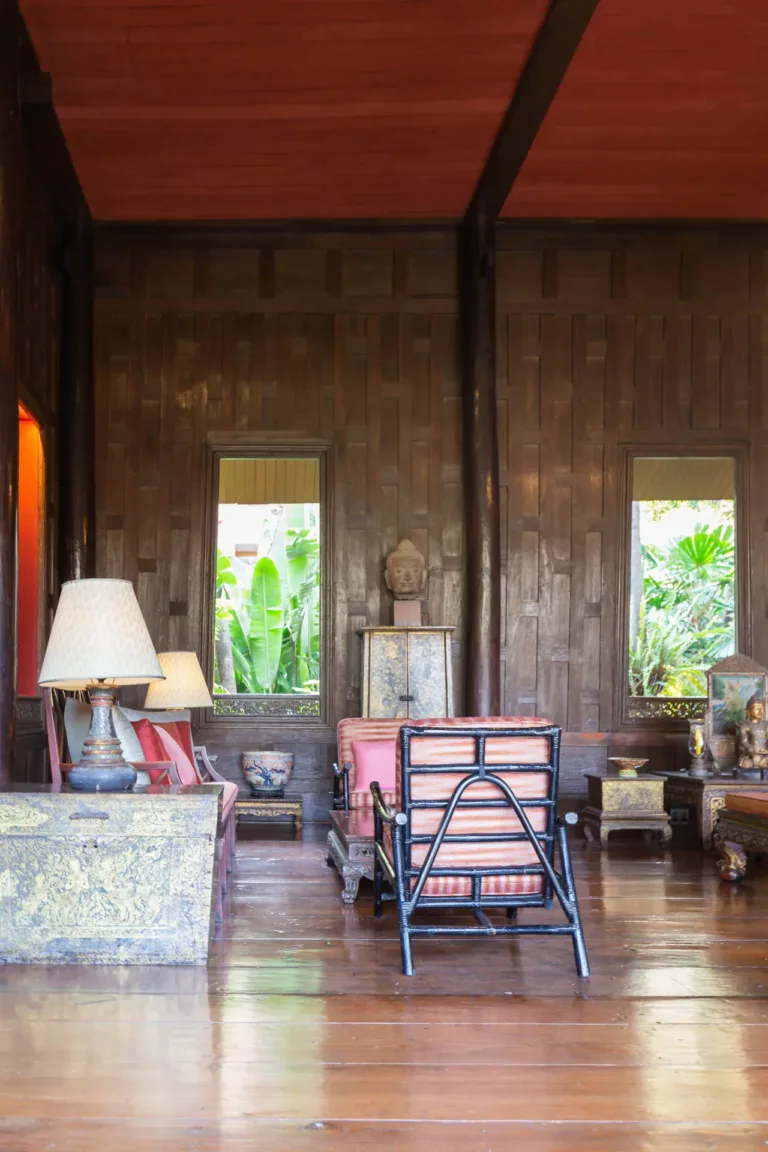 02
 03
Tap a day card to see that day’s weather, rain, haze and hourly forecast
Best time to go Daytime is over · see tomorrow
Holiday — traffic on the way up and parking fills fast; leave early
Green band = hours used for the score
Best time to go Fine all day little rain through the day
Holiday — traffic on the way up and parking fills fast; leave early
Green band = hours used for the score
Best time to go Fine all day little rain through the day · light drizzle possible at times
No warnings today — normal road and weather conditions
Green band = hours used for the score
Best time to go Fine all day little rain through the day
No warnings today — normal road and weather conditions
Green band = hours used for the score
Best time to go Fine all day little rain through the day · light drizzle possible at times
No official warnings, but watch for: PM2.5 dust 26
Green band = hours used for the score
Best time to go Fine all day little rain through the day · light drizzle possible at times
No warnings today — normal road and weather conditions
Green band = hours used for the score
Best time to go Fine all day little rain through the day · light drizzle possible at times
No warnings today — normal road and weather conditions
Green band = hours used for the score
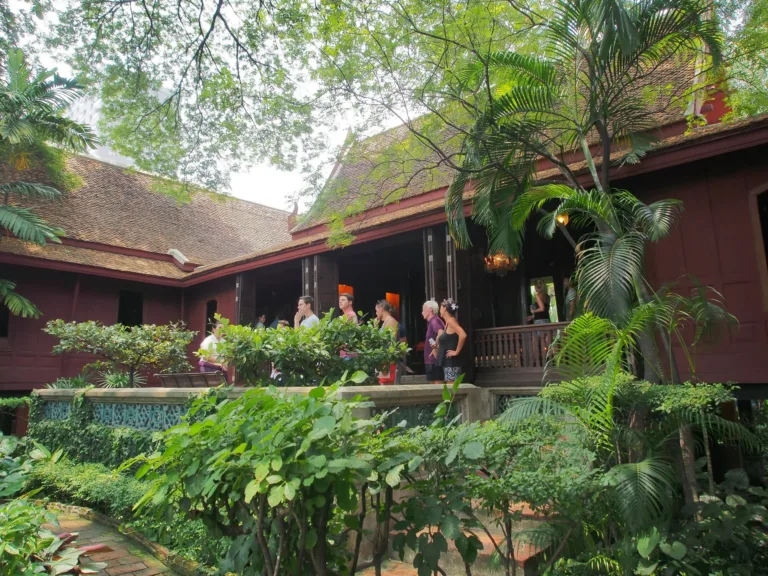
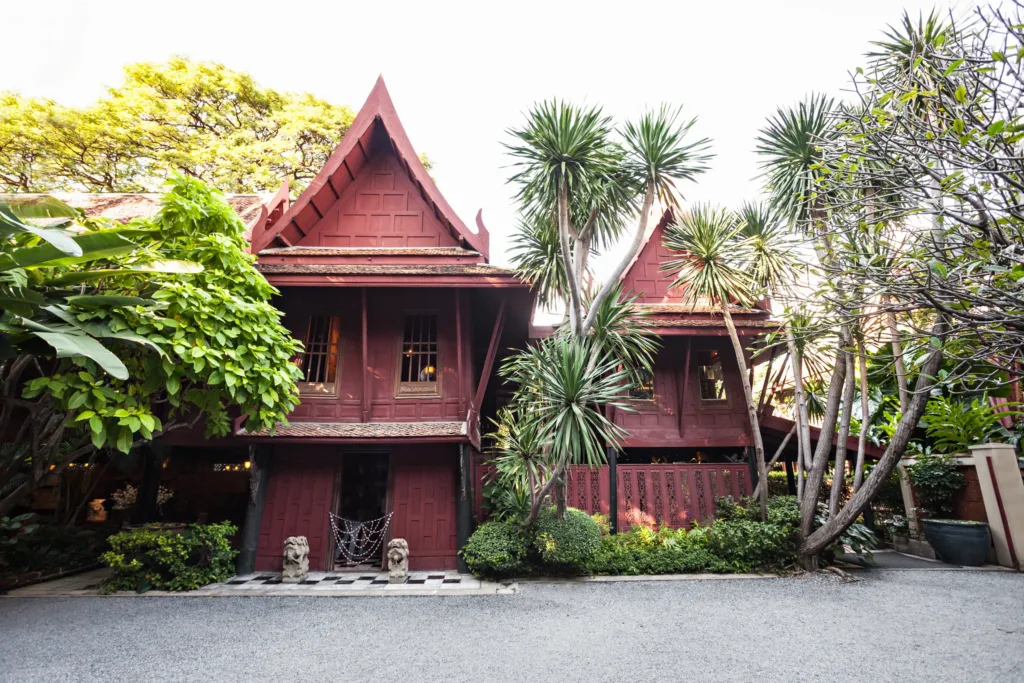
The Jim Thompson House is at 6 Soi Kasemsan 2, Rama I Road, Pathum Wan, on Khlong Saen Saep a block from the National Stadium. It's a cluster of six traditional Thai houses that Jim Thompson, the American businessman who revived Thai silk, reassembled here in 1958–59.Most of the houses came from Ayutthaya; the largest, a weaver's house, came from Bang Khrua across the canal. Inside is his collection of Southeast Asian art: Buddha images, Thai paintings and Chinese blue-and-white porcelain.It's open daily 10:00–17:00. The house can only be seen on a guided tour, offered in Thai, English, French, Chinese and Japanese; adult admission is 250 baht.
Arrive Soon after the 10:00 opening, before tours fill up
The house can only be visited with a guide; wait for a tour in your language
Adults 250 THB · Time needed 1–1.5 hours
Late morning to afternoon, and weekends
| Admission, adult | 250 ฿/person |
| Admission, ages 10–21 (student ID) | 150 ฿/person |
| Children under 10 with an adult | Free |
Prices may change by season — check with the venue
The Jim Thompson House on Khlong Saen Saep is a Thai home assembled from six old teak houses. Jim Thompson, the American businessman known as the "Thai Silk King", built it between September 1958 and April 1959 as both his residence and a home for the Asian art he collected. After he vanished mysteriously in 1967, the house passed to the James H. W. Thompson Foundation and became one of Bangkok's best-known Thai house museums. Its story ties together one man's life, the Bang Khrua weaving community across the canal, and the revival of Thai silk after the Second World War.
The ground here has a history older than the house. Khlong Saen Saep was dug in the reign of King Rama III to carry military supplies during Siam's long war with Vietnam. Across the water lies Bang Khrua, an old Muslim community of Cham descent: King Rama I granted land to Cham soldiers from Cambodia and their families about five years after Bangkok was founded. Historians believe Bang Khrua residents helped dig Khlong Maha Nak and its later extension, and the community has been known for silk weaving for generations.
James Harrison Wilson Thompson was born in 1906 in Greenville, Delaware. He graduated from Princeton and studied architecture at the University of Pennsylvania without taking a degree, yet worked designing houses in New York from 1931 to 1940. He joined the Delaware National Guard in 1941 and served with the Office of Strategic Services (OSS) during the war. He reached Thailand in August 1945 (some sources say 1944) and decided to settle in Bangkok.
He began collecting antiques in 1946, and in 1947 he found the silk weavers of Bang Khrua and took their silk to test the market in New York. In late 1948 he co-founded the Thai Silk Company with mostly Thai shareholders and a registered capital of 500,000 baht (some sources date the brand to 1951), and in 1950 he opened his first shop on Surawong Road. His silk was used for costumes in the Broadway production of The King and I, and in 1960 Queen Sirikit chose silk from his shop for outfits worn on her royal tour of the United States and Europe.
In the late 1950s he decided to build a permanent home on about one rai of land beside Khlong Saen Saep, facing Bang Khrua where his weavers lived. Rather than build from scratch, he bought six old teak houses from several owners: one from Bang Khrua and five from Ayutthaya, including the Pak Hai area. They were dismantled, floated downriver and reassembled in the traditional manner by skilled carpenters from Ayutthaya, raised a full storey on teak pillars against rainy-season floods and roofed with tiles fired in Ayutthaya the old way. Sources differ on the houses' age, some saying over a century, others that most were at least 200 years old.
The oldest house dates from around 1800; it came from the Ayutthaya region and later served as a weaver's home in Bang Khrua. Today it is the living room. Thompson designed the layout himself. Monks blessed the start of construction on 15 September 1958, traditional rites were observed throughout, and he moved in on a date chosen by astrologers, the house officially opening on 3 April 1959.
Inside is the art he collected: a 13th-century Lopburi-style sandstone Buddha, 12th-century figures of Shiva and Uma, Chinese blue-and-white porcelain including Yuan pieces, cloth paintings of the Vessantara Jataka, and four wooden Burmese nat figures given to him on an official visit to Burma. In 1963 he added an important collection of Bencharong porcelain. The house welcomed guests from around the world, from Hollywood stars and writers to the heiress Doris Duke.
According to the Association of Siamese Architects, the house began opening to outside visitors in 1964 while Thompson still lived there, making it both a home and a showcase of Thai art from that time on.
On Sunday, 26 March 1967, while on holiday in Malaysia's Cameron Highlands, the 61-year-old Thompson went for a walk in the jungle and never returned. Despite a large search, no trace of him was ever found, and he was declared dead after seven years. His disappearance remains an unsolved mystery.
In 1976 the court-appointed administrator of his estate received Thai government permission to set up the James H. W. Thompson Foundation (some sources say 1975), and the house and collection were registered as a national museum. Under the royal patronage of Princess Maha Chakri Sirindhorn, the foundation has cared for the house, bought additional land and built facilities for visitors; in 1996 the house received a conservation award from the Association of Siamese Architects.
The foundation's Jim Thompson Art Center shares the compound and opened a new four-storey building on 27 November 2021 after about three years of work, alongside a renovation of the house museum. In late 2023 the Jim Thompson company launched the Jim Thompson Heritage Quarter around the house, with a museum about his life, a textile exhibition and restaurants; the house receives more than 320,000 visitors a year, and online ticket sales began on 8 September 2026.
Arrived? Check in, collect a stamp and tell others what it is like right now
Check your location first, so you do not fill in the form for nothing
Location must be on and within 0.7 km · One check-in per place per day · come back on other days to check in again
Post photos from anywhere — no need to be here · Up to 20 photos at a time · JPG / PNG / WebP · GPS location data is removed automatically
The museum is at 6 Soi Kasemsan 2, Rama I Road, Pathum Wan, on Khlong Saen Saep.
National Stadium station, then walk into Soi Kasemsan 2 · By distance
Soi Kasemsan 2, a city lane
Daily 10:00–17:00
Jim Thompson House Museum
Answers travellers want before they go — a one-minute read
Daily 10:00–17:00
Adults 250 baht, ages 10–21 150 baht, under 10 free with an adult
Yes, the house can only be visited on a guided tour
Thai, English, French, Chinese and Japanese
No; if online slots are full you can still walk in
An American businessman who revived Thai silk and vanished in 1967
Best day this week: Tuesday 1 Dec · Check in when you arrive to collect a stamp
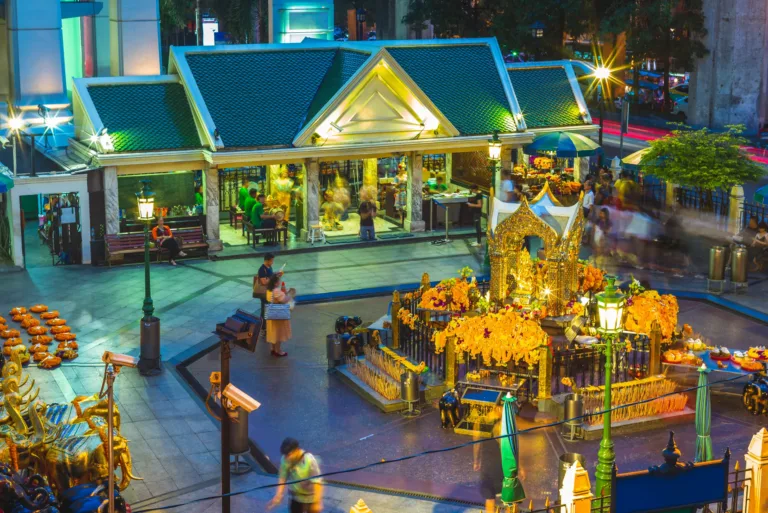 Erawan Shrine (Thao Maha Phrom Shrine)
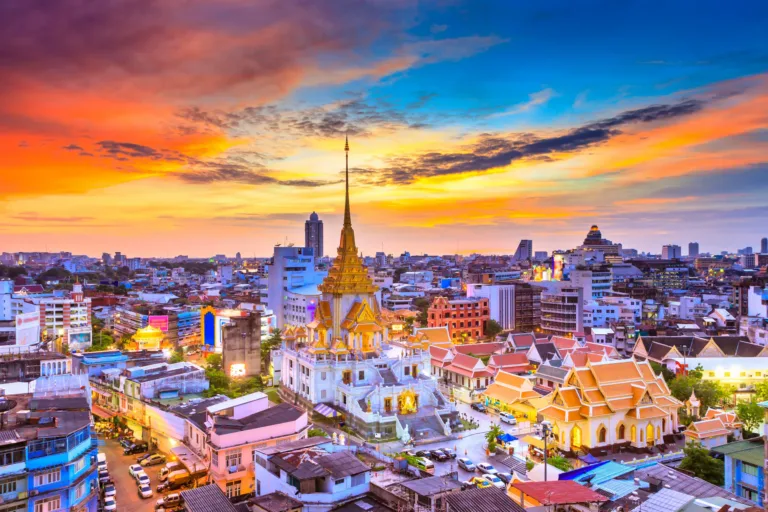 Wat Traimit (Temple of the Golden Buddha)
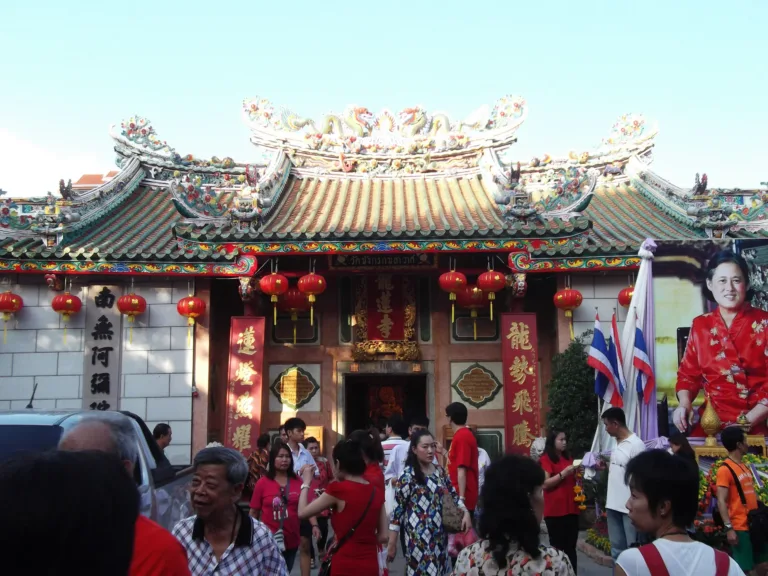 Wat Mangkon Kamalawat (Wat Leng Noei Yi)
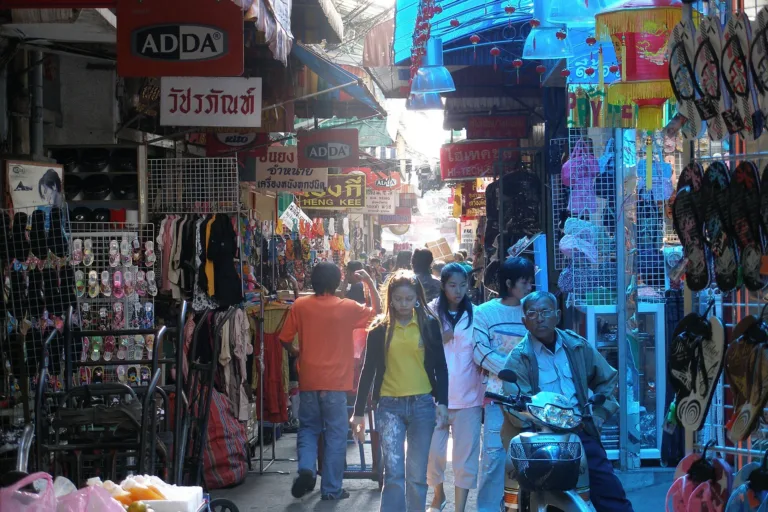 Sampheng (Sampeng Lane)