 01
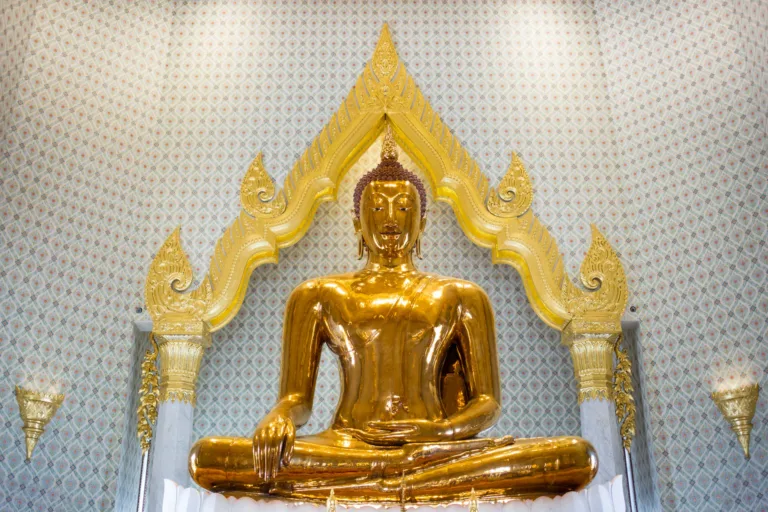
The Golden BuddhaA solid-gold Sukhothai-style image on the 4th floor
The Golden Buddha · Chinatown
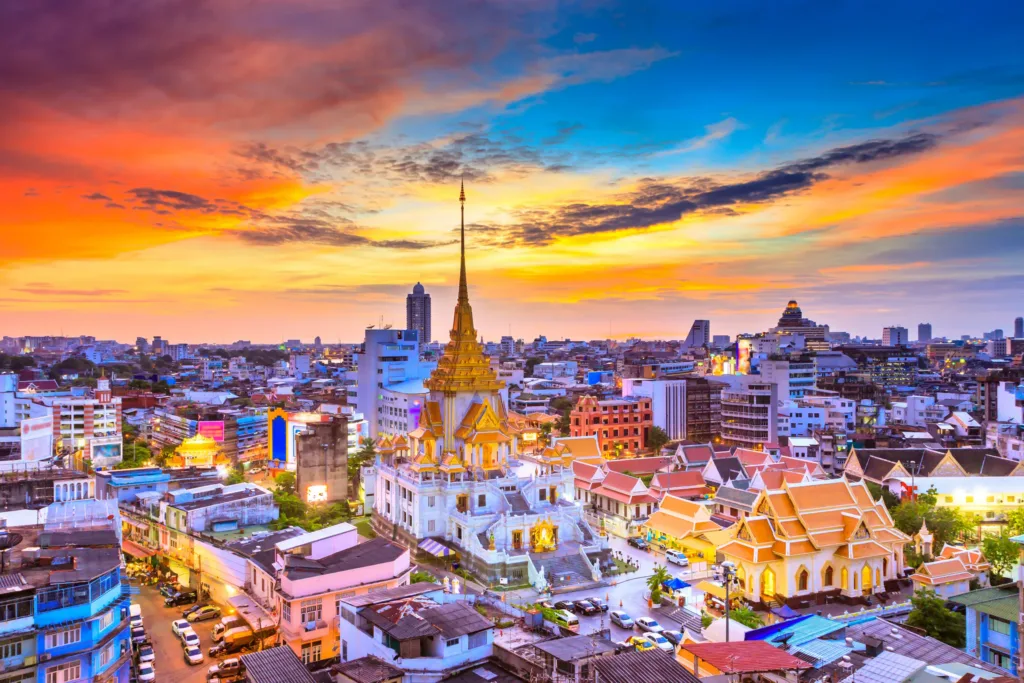
The temple at the head of Yaowarat Road, home to a great solid-gold Sukhothai Buddha atop a four-storey marble mondop, with the Yaowarat Chinatown Heritage Center inside.
Holiday / event — crowded
Dress modestly · Remove shoes before entering the shrine room · Keep your voice down near the Buddha
Mondop exhibitions: Tuesday–Sunday 08:00–17:00; check before you go
Morning, before the tour groups
01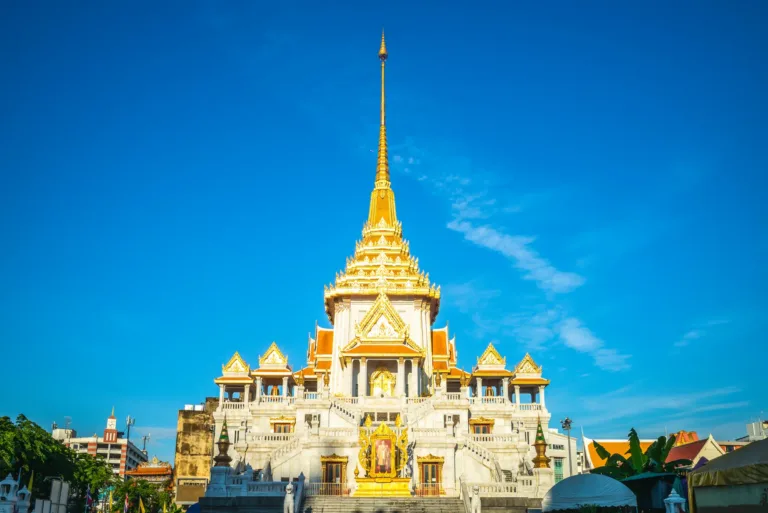 02
 03
Tap a day card to see that day’s weather, rain, haze and hourly forecast
Best time to go Daytime is over · see tomorrow
Holiday — traffic on the way up and parking fills fast; leave early
Green band = hours used for the score
Best time to go Fine all day little rain through the day
Holiday — traffic on the way up and parking fills fast; leave early
Green band = hours used for the score
Best time to go Fine all day little rain through the day · light drizzle possible at times
No warnings today — normal road and weather conditions
Green band = hours used for the score
Best time to go Fine all day little rain through the day
No official warnings, but watch for: Hot (Afternoon) feels like 38°C
Green band = hours used for the score
Best time to go Fine all day little rain through the day · light drizzle possible at times
No official warnings, but watch for: PM2.5 dust 26 · Hot (Afternoon) feels like 39°C
Green band = hours used for the score
Best time to go Fine all day little rain through the day · light drizzle possible at times
No official warnings, but watch for: Hot (Afternoon) feels like 39°C
Green band = hours used for the score
Best time to go Fine all day little rain through the day · light drizzle possible at times
No warnings today — normal road and weather conditions
Green band = hours used for the score
Wat Traimit Witthayaram Worawihan is at 666 Charoen Krung Road, Talat Noi, Samphanthawong, right where Yaowarat Road begins, about a five-minute walk from MRT Hua Lamphong.Its star is Phra Phuttha Maha Suwanna Patimakon, the Golden Buddha: a solid-gold Sukhothai-style image enshrined on the fourth floor of a marble mondop. It was long hidden under plaster, until in 1955 the plaster cracked during a move and revealed the gold beneath.The lower floors hold the Yaowarat Chinatown Heritage Center, on the story of Bangkok's Chinese community, and an exhibition on the statue. It's open Tuesday to Sunday, 08:00–17:00.
Arrive Morning, before the tour groups
The mondop and exhibitions open Tuesday to Sunday
Free · Time needed 1–1.5 hours
Late morning to afternoon, and weekends
| Exhibitions and Heritage Center, foreign visitor | 140 ฿/person |
Prices may change by season — check with the venue
Wat Traimit Witthayaram Worawihan, a second-class royal temple at the head of Yaowarat Road, began as a small community temple called Wat Sam Chin Tai, thought to date from around the reign of Rama III. What made it famous worldwide is the Golden Buddha, Phra Phuttha Maha Suwanna Patimakon: a Sukhothai-style image weighing about 5.5 tonnes whose gold lay hidden under plaster. It was brought here from a deserted riverside temple in 1935 and revealed itself only when the plaster cracked in 1955, so the temple's story is bound up both with this statue and with Bangkok's Chinese community in Yaowarat.
No record gives the year the temple was founded. The Association of Siamese Architects, judging by its Chinese-influenced architecture, places it in the reign of Rama III (1824–1851). The name "Wat Sam Chin", the temple of the three Chinese, is said to come from three Chinese men who built it together; some accounts call them three wealthy merchants. Local lore also holds that there were once several "Sam Chin" temples, and that this was the southern one.
The Golden Buddha is a Sukhothai-style image in the Maravijaya posture, about 3.10 metres across the lap. Its origins are debated. Some link it to the Ram Khamhaeng inscription, which mentions a gold Buddha image in Sukhothai, and some believe it once belonged to Wat Mahathat in Sukhothai. Writing in Silpa Watthanatham magazine, Phaitoon Banluesap noted that "thong" in inscriptions of that age meant bronze, and suggested the statue may have been cast later. Why it was plastered over is also unsettled; the most repeated theory is that it was disguised to hide it from invaders.
Before it came here, the statue was the principal image of Wat Phraya Krai, or Wat Chotanaram, on the Chao Phraya River in what is now Wat Phraya Krai subdistrict, Bang Kho Laem. The temple was founded by Phraya Krai Kosa (Roek), a nobleman of Chinese Lim descent and ancestor of the Krairiksh family, who had served close to Rama III before he became king, so it was probably built in that reign. A popular story says the statue was brought from Sukhothai to Bangkok as early as the reign of Rama I, but the Silpa Watthanatham article finds no evidence for it.
Wat Phraya Krai later fell into ruin; some sources say it was deserted around 1931, and its land was leased to the East Asiatic Company for a sawmill. Its images were sent to other temples, including Wat Phai Ngoen Chotanaram. The story goes that the Wat Phai Ngoen party arrived first and chose a bronze image, leaving the big plaster one behind. In 1935 that plaster Buddha was brought to Wat Sam Chin, but with no building large enough to hold it, it sat under a tin-roofed shed beside the ordination hall for about 20 years.
The temple itself changed a great deal in those years. After the 1932 change of government it was restored and new buildings went up, including fourteen two-storey concrete monks' residences in 1937. In early 1940 (B.E. 2482), merchants, residents, teachers and students joined to restore the temple and renamed it Wat Traimit Witthayaram; "Traimit", three friends, echoes the story of its founders. On 16 April 1947 Prince Chainat Narenthon laid the foundation stone of the present ordination hall, designed by Luang Wisansilapakam.
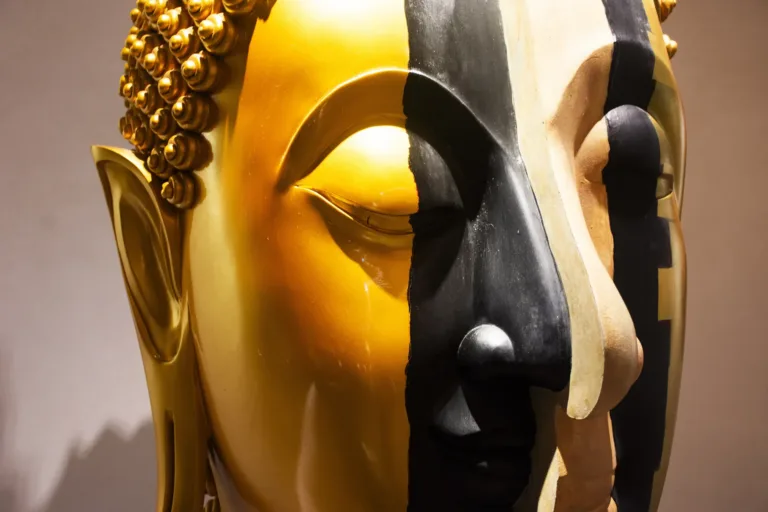
In 1955, while the statue was being lifted into a new hall, the hoisting rope snapped and it crashed to the ground. Plaster on the chest broke away to show gold beneath, so the abbot had all the plaster removed, and the image proved to be gold throughout. Under the base was a key that let it be taken apart into nine pieces (some sources say ten). A few sources give the year as 1954, but most say 1955. Coming just before the 2,500th year of the Buddhist era, the discovery struck many people as a miracle.
Recognition followed quickly. On 27 February 1956 the Fine Arts Department registered the statue as an antiquity, on 13 March it registered the temple as a historic monument, and on 22 September 1956 the temple was raised by royal permission to a second-class royal temple of the Worawihan type. King Bhumibol (Rama IX) later bestowed the name Phra Phuttha Maha Suwanna Patimakon, in official use from around 1992; some also call it Phra Sukhothai Traimit.
After an official valuation of its gold in April 1990, the 1991 Guinness Book of Records listed it as the sacred object of highest intrinsic value, at about £21.1 million (some sources cite the 1992 edition). Guinness now lists it as the world's largest solid-gold sculpture. Its height is given differently from source to source, from about 3 to almost 4 metres.
In 2007 the Samphanthawong business community and the temple began building the four-storey, marble-clad Phra Maha Mondop to honour Rama IX's 60th year on the throne and 80th birthday, designed by National Artist Arvuth Ngoenchuklin. Late in 2008 the Golden Buddha was moved from its old hall to the top floor. In January 2009 the exhibitions on floors 2 and 3 opened temporarily over Chinese New Year, and the mondop officially opened on 14 February 2010.
Today the second floor holds the Yaowarat Chinatown Heritage Center, which traces the Chinese community from the early Rattanakosin era (1782–1851) to Yaowarat's heyday around 1957, while the third floor tells the story of the Golden Buddha. The ordination hall and old monks' residences of the 1930s–40s won the Association of Siamese Architects' conservation award in 2011. A visit now shows both the great golden image and the traces of a community temple that grew up with Bangkok's Chinese.
Arrived? Check in, collect a stamp and tell others what it is like right now
Check your location first, so you do not fill in the form for nothing
Location must be on and within 0.4 km · One check-in per place per day · come back on other days to check in again
Post photos from anywhere — no need to be here · Up to 20 photos at a time · JPG / PNG / WebP · GPS location data is removed automatically
The temple is at 666 Charoen Krung Road, Talat Noi, Samphanthawong, at the head of Yaowarat Road.
Hua Lamphong station exit 1, about a 5-minute walk · By distance
Charoen Krung Road; park beneath the mondop · By distance
Charoen Krung Road, city streets
Car park beneath the mondop
Mondop exhibitions: Tuesday–Sunday 08:00–17:00; check before you go
Wat Traimit Withayaram Worawihan
Answers travellers want before they go — a one-minute read
Tuesday–Sunday 08:00–17:00
Free for Thais; the exhibitions cost foreign visitors 140 baht
The 4th, top floor of the mondop
Yes, Hua Lamphong exit 1, about a 5-minute walk
The gold was hidden under plaster until it cracked in 1955
Yes, beneath the mondop
Best day this week: Tuesday 1 Dec · Check in when you arrive to collect a stamp
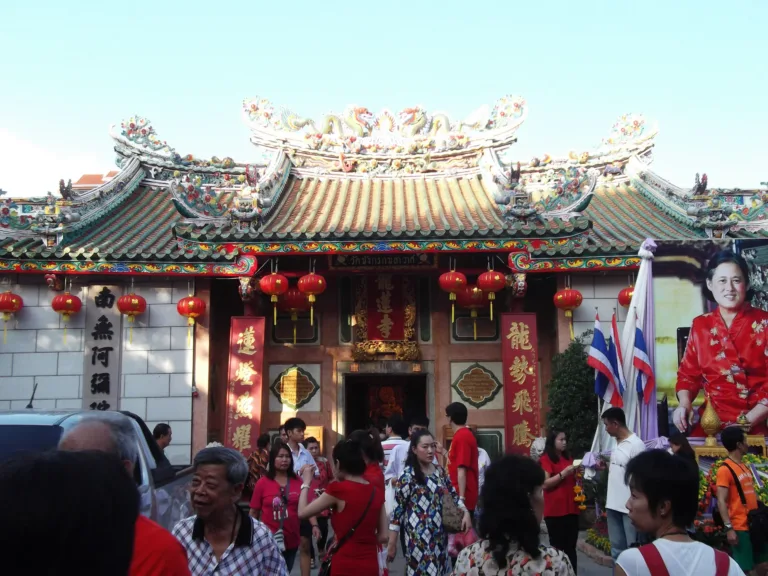 Wat Mangkon Kamalawat (Wat Leng Noei Yi)
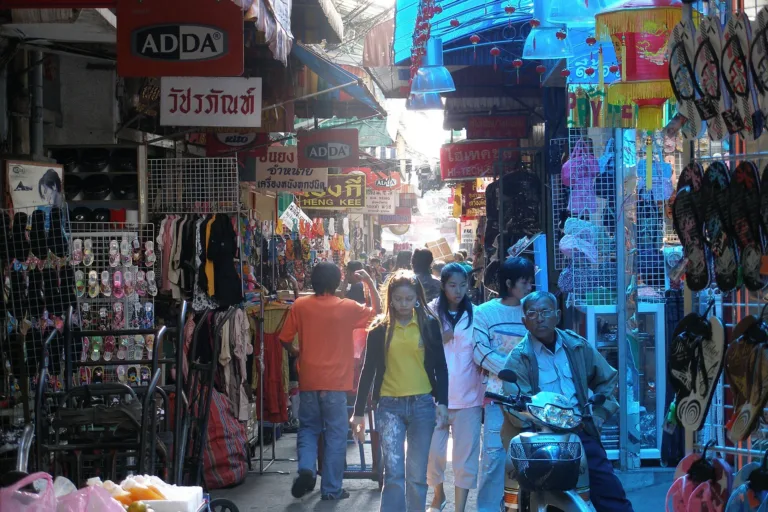 Sampheng (Sampeng Lane)
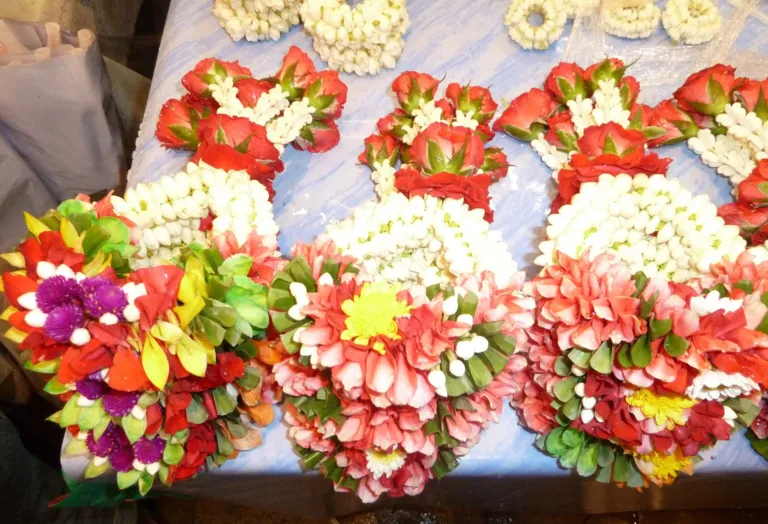 Pak Khlong Talat (Bangkok Flower Market)
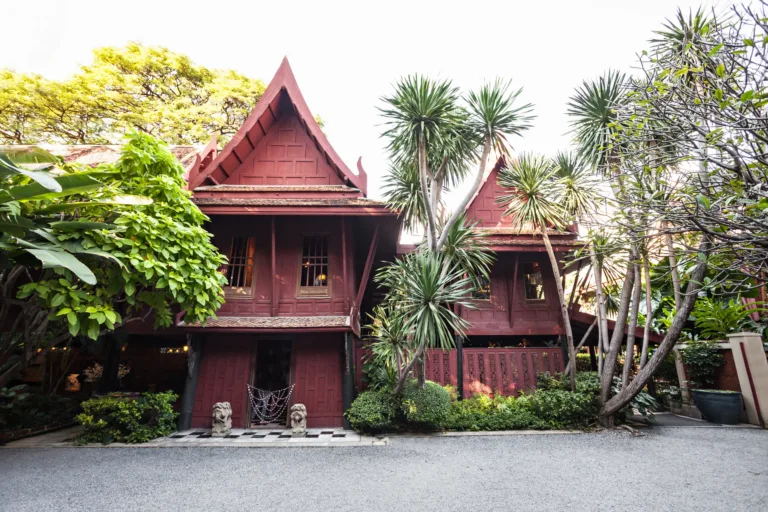 Jim Thompson House Museum