 01
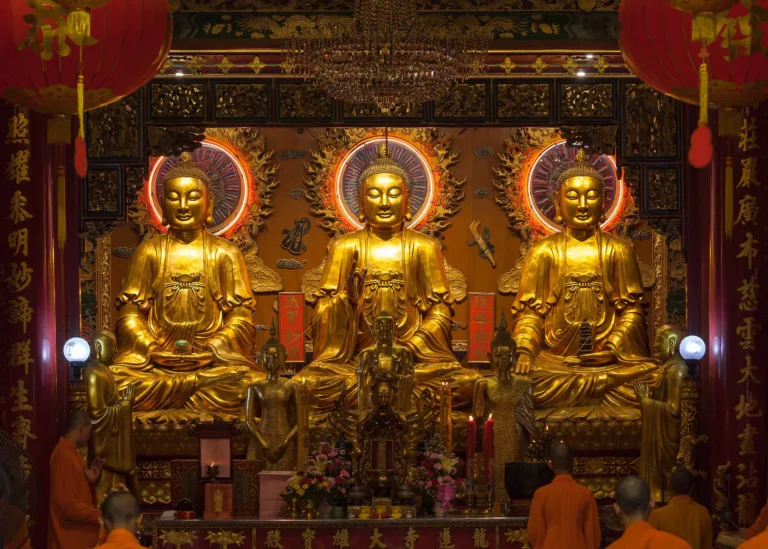
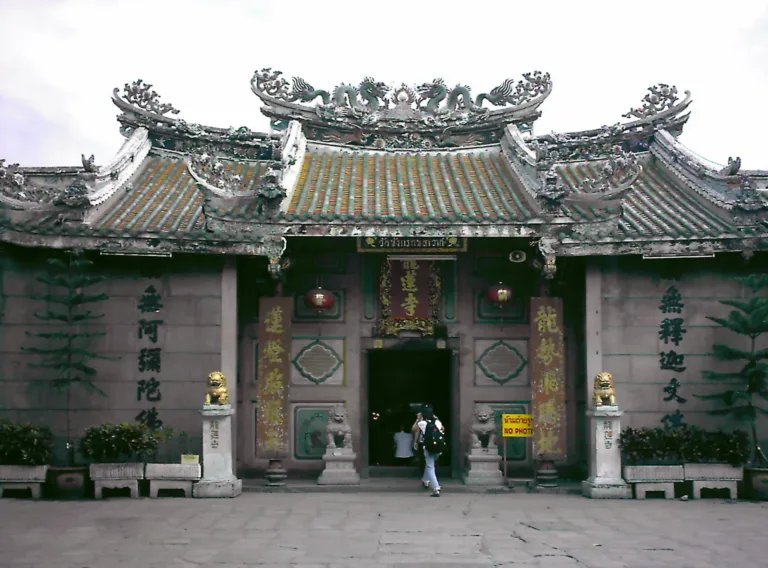
Ordination hallThree Buddha images in a Thai–Chinese style
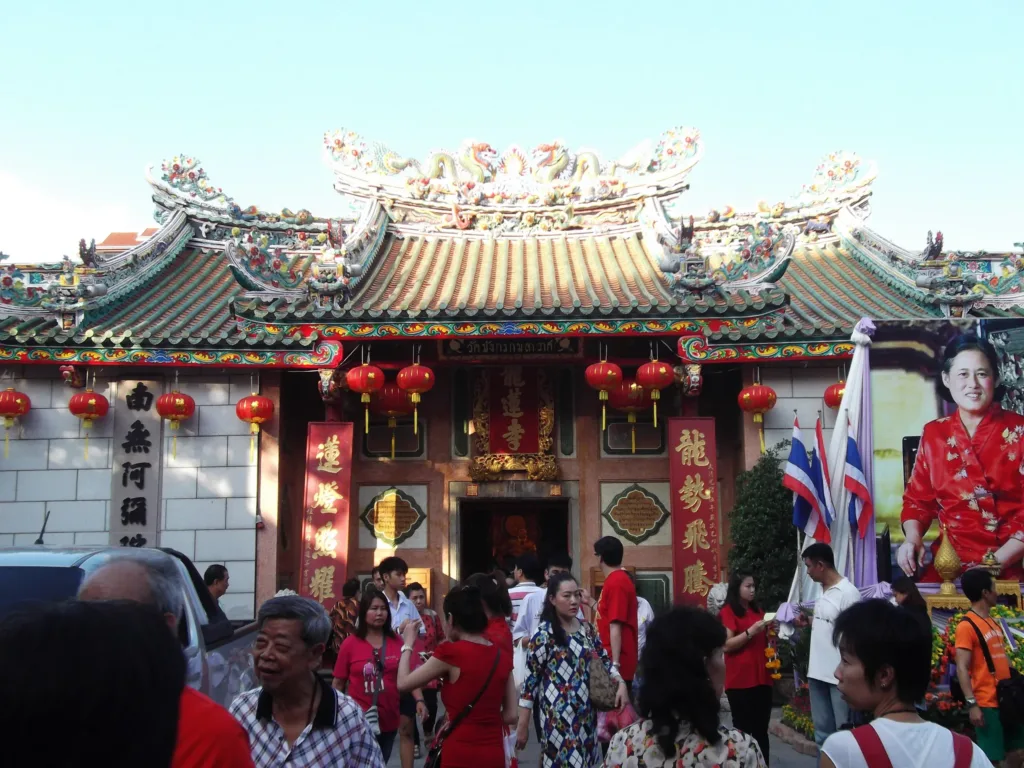
Mahayana Chinese temple · Chinatown
Chinatown's great Mahayana Chinese temple, founded in 1871 and named by King Rama V, popular for prayers, zodiac-clash rites and Chinese New Year. Near MRT Wat Mangkon.
Holiday / event — crowded
Dress modestly · Follow the temple's prayer points and incense stands · Don't be loud or block people who are praying
07:00–18:00 (longer hours during Chinese New Year)
Morning, before the crowds and heat
Chinese New Year and the Vegetarian Festival
01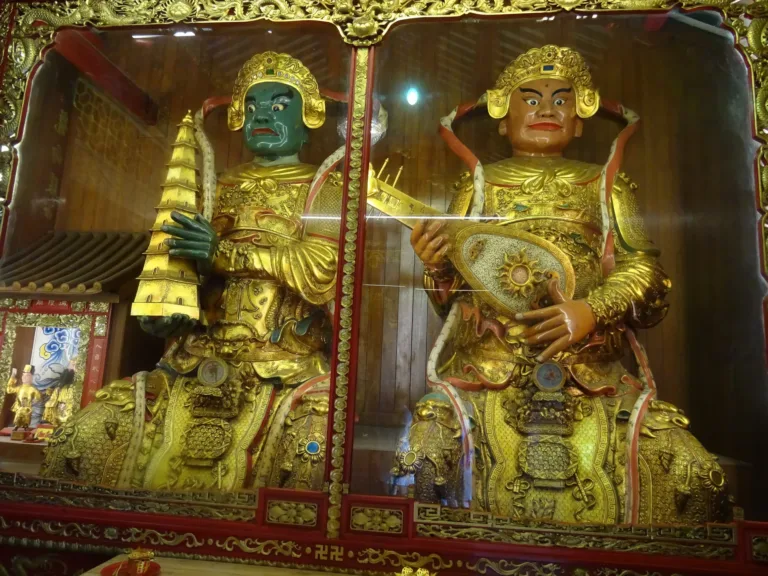 02
 03
 04
Tap a day card to see that day’s weather, rain, haze and hourly forecast
Best time to go Daytime is over · see tomorrow
Holiday — traffic on the way up and parking fills fast; leave early
Green band = hours used for the score
Best time to go Fine all day little rain through the day
Holiday — traffic on the way up and parking fills fast; leave early
Green band = hours used for the score
Best time to go Fine all day little rain through the day · light drizzle possible at times
No warnings today — normal road and weather conditions
Green band = hours used for the score
Best time to go Fine all day little rain through the day
No official warnings, but watch for: Hot (Afternoon) feels like 38°C
Green band = hours used for the score
Best time to go Fine all day little rain through the day · light drizzle possible at times
No official warnings, but watch for: PM2.5 dust 26 · Hot (Afternoon) feels like 39°C
Green band = hours used for the score
Best time to go Fine all day little rain through the day · light drizzle possible at times
No official warnings, but watch for: Hot (Afternoon) feels like 39°C
Green band = hours used for the score
Best time to go Fine all day little rain through the day · light drizzle possible at times
No warnings today — normal road and weather conditions
Green band = hours used for the score
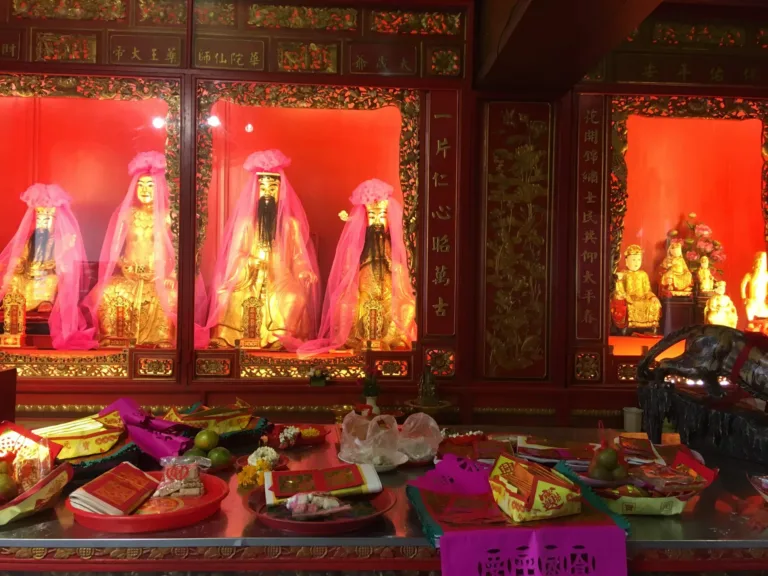
Wat Mangkon Kamalawat, widely known by its Chinese name Wat Leng Noei Yi, is at 423 Charoen Krung Road in Pom Prap, Pom Prap Sattru Phai District, between Charoen Krung Sois 19 and 21 in the heart of Chinatown. It's a Mahayana Chinese temple founded in 1871.Its Thai name, meaning 'Dragon Lotus Temple', was given by King Rama V. The buildings are in southern Chinese style, with sweeping tiled roofs and dragons; the ordination hall holds three Buddha images and shrines to many Chinese deities surround it.It's one of the most popular places to pray for luck and perform rites for a zodiac clash, especially around Chinese New Year and the Vegetarian Festival. Entry is free and it's a short walk from MRT Wat Mangkon.
Arrive Morning, before the crowds and heat
At festival time the temple is packed and smoky; take care if smoke bothers you
Free · Time needed 30–60 minutes
Chinese New Year, the Vegetarian Festival and weekends
Chinese New Year and the Vegetarian Festival
Wat Mangkon Kamalawat, better known by its Chinese name Wat Leng Noei Yi, is one of Thailand's most important Chinese Mahayana temples. Work began in 1871, in the reign of King Chulalongkorn (Rama V), when the Chinese monk Sok Heng led the Chinese of Sampheng in building it. Rama V later gave it a Thai name, and for more than 150 years it has been the centre of the Chinese Buddhist order in Thailand and a spiritual home for Thai-Chinese in the heart of Chinatown.
The Chinese community here goes back to the founding of Bangkok: in 1782, under Rama I, Chinese residents moved to settle at Sampheng, and migrants kept arriving from the reigns of Rama III to Rama V. Research from Chulalongkorn University notes that until Rama V's time most Chinese Buddhists in Bangkok still made merit at Thai temples.
Sok Heng reached Bangkok from China around 1862, at a time of turmoil in China after the Opium Wars. He stayed in a pavilion beside Wat Kusolsamakhorn and began teaching Mahayana Buddhism, steadily gathering followers. He was also linked to Wat Yong Hok Yi (Wat Bamphen Chin Phrot), which some studies regard as Bangkok's first Chinese-order temple, while other sources call Leng Noei Yi the first Chinese Mahayana temple in Thailand, so the popular claim that it was the first remains debated.
Local Chinese pooled donations to build a temple for him, and some sources say Rama V granted the land and assigned a helper to oversee the work. Construction began in 1871 and took about eight years, though one source dates its completion to that same year. When finished it was the largest Mahayana monastery in the country. The old name Leng Noei Yi is Teochew: leng means dragon, noei lotus and yi temple, so "Dragon Lotus Temple".
Rama V named it Wat Mangkon Kamalawat, a Thai rendering of the Chinese name, and gave Sok Heng the title Phra Archan Chin Wang Samathiwat, making him the first head of the Chinese order in Thailand; two other Chinese monks received lower titles at the same time, the start of the Chinese order's ranking system. A story is told that his chanting helped find the body of a drowned royal consort, which earned him that royal name. He is said to have died seated in meditation.
The temple flourished under its first two abbots; the second built an extra hall on the left side, and its monks received robes from the royal court. On 13 August 1899 Phraya Phaskarawong petitioned Rama V to recognise the Annamese and Chinese orders officially, and the king agreed, securing the place of Chinese monks in Siam.
Under Rama VI, Chinese temples lost ground amid rising nationalism, and new Chinese associations gradually replaced them as community centres. In 1953 a committee was set up to oversee Chinese temples, and the following year the monk Pho Chaeng moved here and began restoring the buildings: replastering, repainting, gilding the Buddha images and extending the fronts of the ordination hall and halls. He later received the rank of Phra Maha Khanachan.
Restoration continued. In 1966 the walls inside and out were faced with mosaic tiles and the floors laid in terrazzo. In 1969 the Supreme Patriarch appointed a nine-member committee for the Chinese order, dividing its work into seven sections. In 1973 work began on a nine-storey Dhamma museum building, which took two years and four months and cost about 9 million baht.
The plan is Teochew, modelled on a palace layout, with halls set symmetrically along one axis around three courtyards: the Hall of the Four Heavenly Kings at the front, the ordination hall in the middle with three Buddhas, Sakyamuni, Amitabha and Bhaisajyaguru, and 18 arhats, and the hall of patriarchs and deities behind. There are about 58 deities in all. A 2013 Silpakorn University study counted 10 halls, 328 paintings, 607 sculptures and 73 Buddha images.
The dragon name ties into Chinatown's feng shui. Many sources say the temple sits at the dragon's head, while others, including Tourism Authority of Thailand material cited in academic research, place it at the dragon's belly. The temple also houses Tai Sui, the deity people visit to ward off a zodiac clash, which keeps it packed at Chinese New Year and during the Vegetarian Festival.
Today the temple is a centre of learning for the Chinese order. In 1990 it opened Mangkon Kamalawat Witthayalai, the first Pali school for Chinese-order monks in Thailand, and in 1996 the order began building Wat Borommaracha Kanchanaphisek Anusorn, or Wat Leng Noei Yi 2, at Bang Bua Thong in Nonthaburi to honour Rama IX, a 12-year project. It is credited to Luang Pho Yen Chiao, abbot and deputy head of the Chinese order, who died in October 2015 aged 76.
Getting here became much easier when the MRT Blue Line extension opened Wat Mangkon station for trial service on 29 July 2019; its wave-shaped ceiling evokes a dragon's belly and its walls use dragon and lotus motifs after the temple. The temple still hosts major ceremonies of the Chinese order, such as the celebration of the Supreme Patriarch's 99th birthday on 26 June 2026.
Arrived? Check in, collect a stamp and tell others what it is like right now
Check your location first, so you do not fill in the form for nothing
Location must be on and within 0.2 km · One check-in per place per day · come back on other days to check in again
Post photos from anywhere — no need to be here · Up to 20 photos at a time · JPG / PNG / WebP · GPS location data is removed automatically
The temple is at 423 Charoen Krung Road, Pom Prap, Pom Prap Sattru Phai, between Charoen Krung Sois 19 and 21.
Blue Line, Wat Mangkon station, then walk · By distance
Many routes along Charoen Krung and Yaowarat · By distance
Charoen Krung Road, heavy traffic
07:00–18:00 (longer hours during Chinese New Year)
Wat Mangkon Kamalawat
Answers travellers want before they go — a one-minute read
423 Charoen Krung Road, Pom Prap, Pom Prap Sattru Phai, in Chinatown
No, it's free
Yes, Wat Mangkon station, then a short walk
In 1871, under King Rama V
'Dragon Lotus Temple', after its Chinese name Leng Noei Yi
Chinese New Year and the Vegetarian Festival
Best day this week: Tuesday 1 Dec · Check in when you arrive to collect a stamp
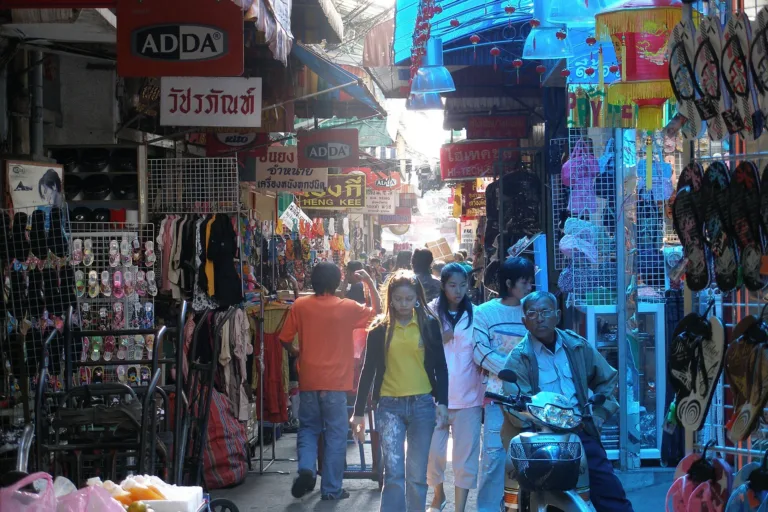 Sampheng (Sampeng Lane)
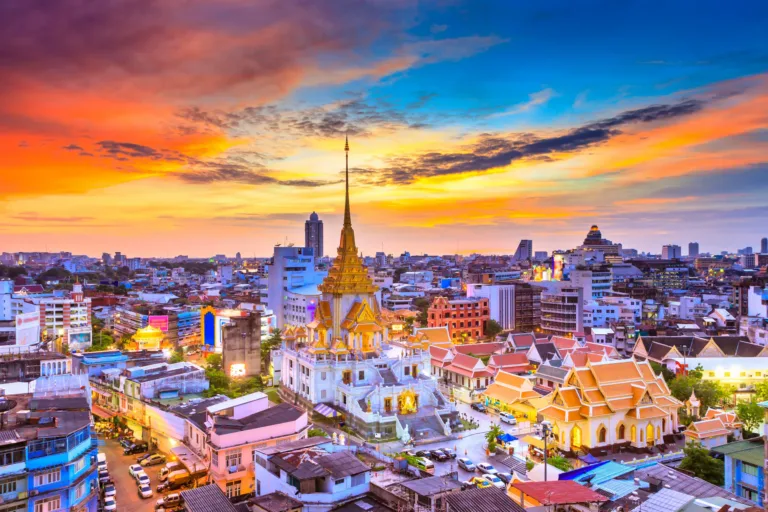 Wat Traimit (Temple of the Golden Buddha)
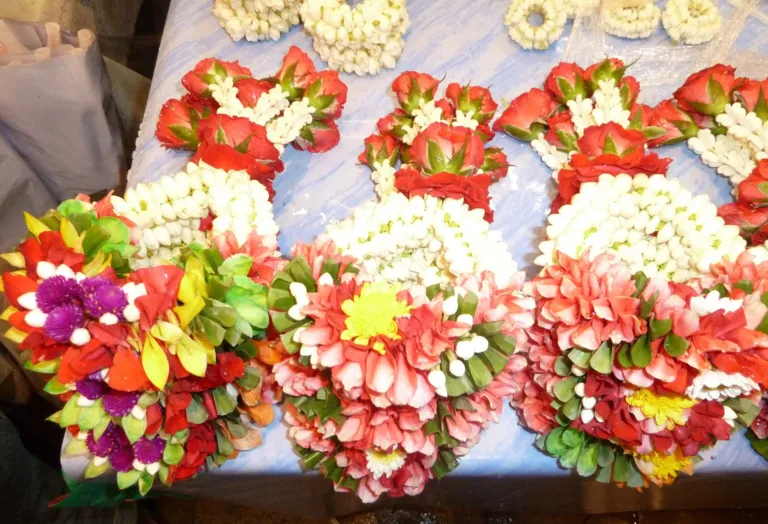 Pak Khlong Talat (Bangkok Flower Market)
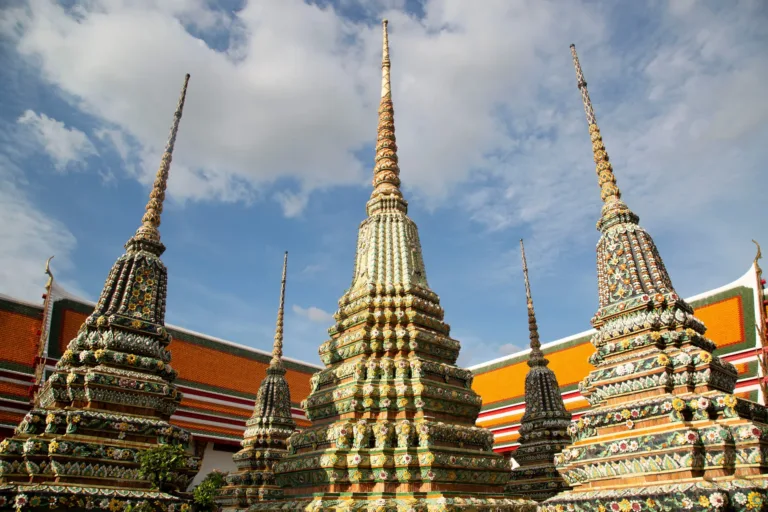 Wat Pho (Wat Phra Chetuphon)