 01
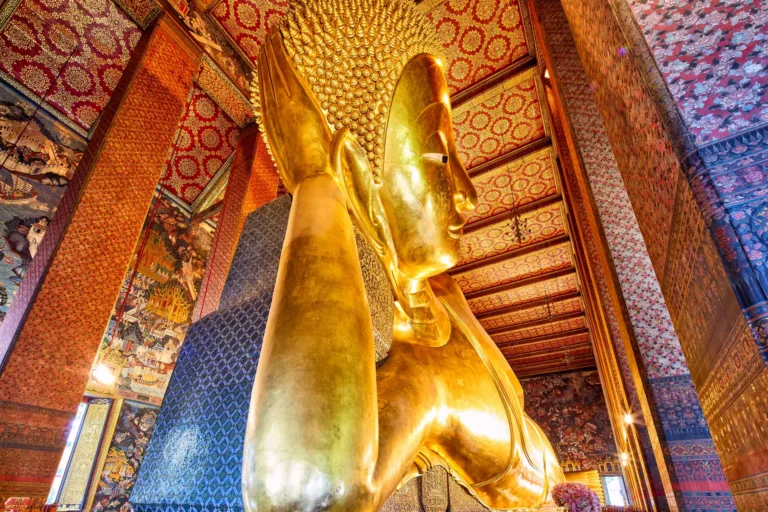
Reclining Buddha46 m long and 15 m high, with mother-of-pearl soles in 108 panels
First-class royal temple · Rattanakosin Island
A first-class royal temple beside the Grand Palace, home to the 46 m Reclining Buddha, the four great chedis of the first Chakri kings, UNESCO-listed inscriptions and Thailand's famous massage school.
Holiday / event — crowded
Dress modestly with knees covered · Remove shoes before entering halls · No shorts
Daily 08:00–19:30
08:30, ahead of tour groups
New Year's Eve chanting and events
01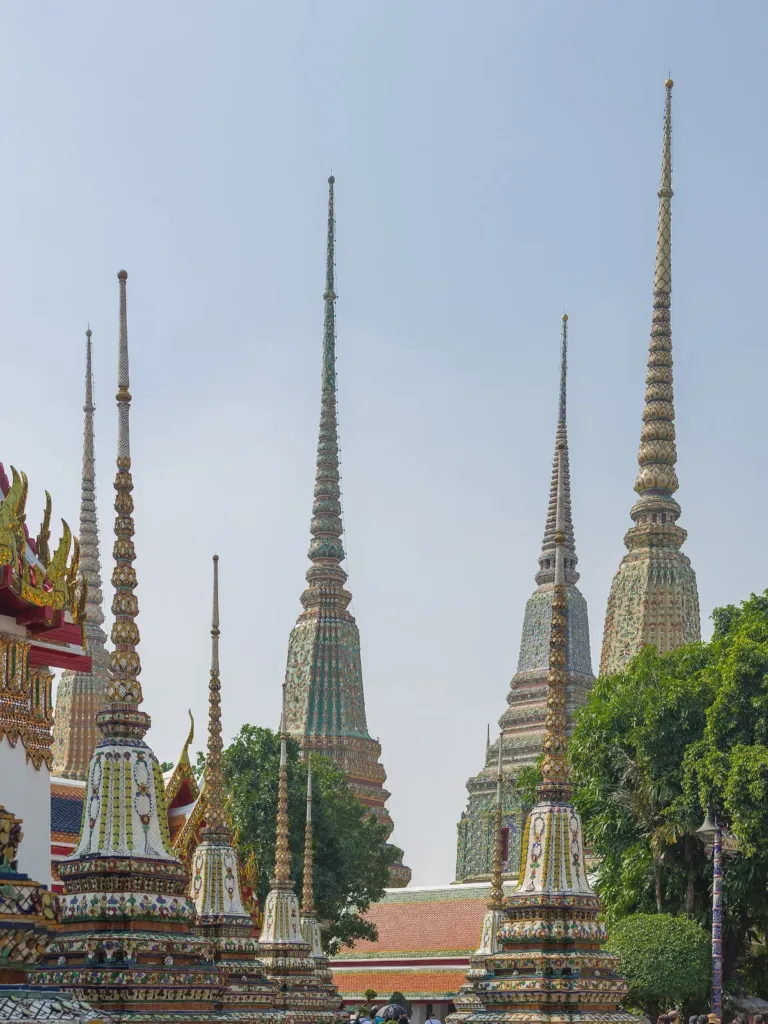 02
 03
Tap a day card to see that day’s weather, rain, haze and hourly forecast
Best time to go Daytime is over · see tomorrow
Holiday — traffic on the way up and parking fills fast; leave early
Green band = hours used for the score
Best time to go Fine all day little rain through the day
Holiday — traffic on the way up and parking fills fast; leave early
Green band = hours used for the score
Best time to go Fine all day little rain through the day · light drizzle possible at times
No warnings today — normal road and weather conditions
Green band = hours used for the score
Best time to go Fine all day little rain through the day
No official warnings, but watch for: Hot (Afternoon) feels like 38°C
Green band = hours used for the score
Best time to go Fine all day little rain through the day · light drizzle possible at times
No official warnings, but watch for: PM2.5 dust 26 · Hot (Afternoon) feels like 39°C
Green band = hours used for the score
Best time to go Fine all day little rain through the day · light drizzle possible at times
No official warnings, but watch for: Hot (Afternoon) feels like 39°C
Green band = hours used for the score
Best time to go Fine all day little rain through the day · light drizzle possible at times
No warnings today — normal road and weather conditions
Green band = hours used for the score
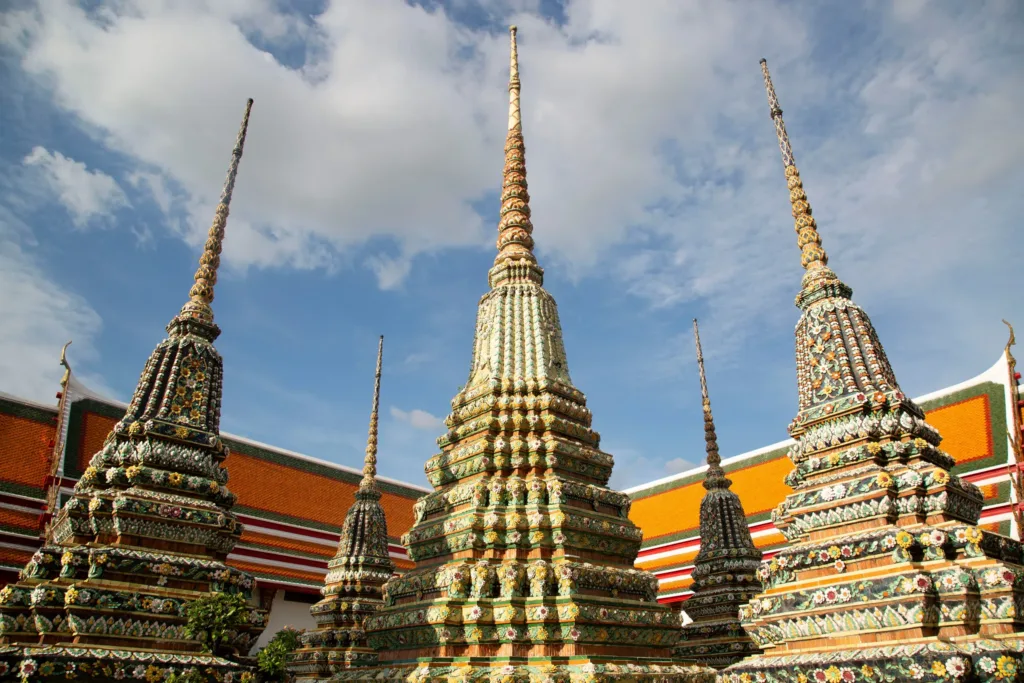
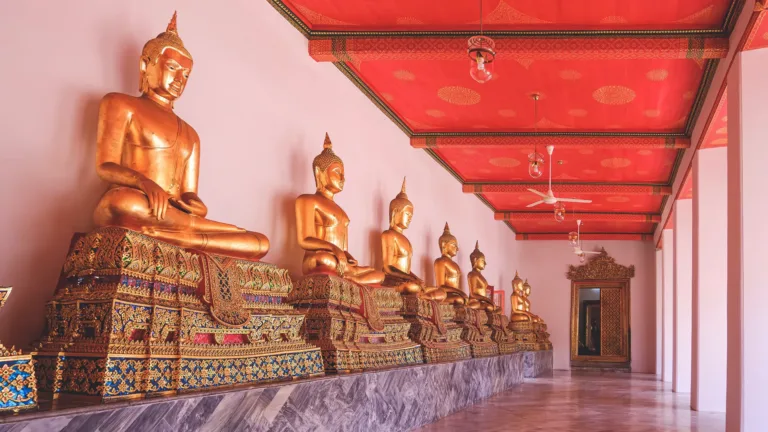
Wat Pho, officially Wat Phra Chetuphon Wimon Mangkhalaram, sits on Rattanakosin Island in Phra Nakhon, just south of the Grand Palace. It is a first-class royal temple and the temple of King Rama I.The star is the Reclining Buddha, 46 m long and 15 m high, with soles inlaid in mother-of-pearl showing 108 auspicious symbols. The grounds also hold the four great chedis of the first four Chakri kings, each 42 m tall, and more than 1,000 Buddha images.Wat Pho is often called Thailand's first university, thanks to its stone inscriptions of traditional knowledge, now listed in UNESCO's Memory of the World Register. It remains the home of Thai traditional medicine and massage, which you can still try on site.
Arrive 08:30, ahead of tour groups
No shorts; women's skirts or trousers must reach the knee; remove shoes inside halls
The courtyards are wide and open, so bring a hat and water
No data yet check before you go · Time needed 1–2 hours
10:00–15:00
| Entry, foreign visitors | 300 ฿/person |
| Children under 120 cm optional | Free |
| Thai or foot massage, 30 min optional | 340 ฿/person |
| Thai or foot massage, 60 min optional | 520 ฿/person |
Prices may change by season — check with the venue
New Year's Eve chanting and events
Wat Pho is older than Bangkok itself. Originally called Wat Photharam, it dates back to the Ayutthaya period. When King Rama I built the Grand Palace right next door, he had the whole temple rebuilt and made it the principal temple of his reign. Under King Rama III it was greatly enlarged, gaining its huge Reclining Buddha and more than a thousand stone tablets of knowledge, which earned it the name of Thailand's first university. It remains the home of Thai massage to this day.
No record tells exactly who founded Wat Photharam or when. Scholars and the temple's own materials believe it was built or expanded during the reign of King Phetracha of Ayutthaya, around 1688–1703, probably as a temple founded by ordinary people on the east bank of the Chao Phraya River. The everyday name "Wat Pho" comes from this original name.
After Ayutthaya fell in 1767, King Taksin moved the capital to Thonburi, with his palace beside Wat Arun on the opposite bank. Because Wat Photharam lay inside the city's eastern walls, it was raised to the status of a royal temple.
When King Rama I founded Rattanakosin in 1782 and built the Grand Palace, he found two old temples flanking it: Wat Salak (Wat Mahathat) to the north and Wat Photharam to the south, which had fallen into disrepair. In 1788 he ordered the royal craftsmen of the Ten Crafts to rebuild Wat Photharam, adding an ordination hall, cloisters and an assembly hall and repairing the older buildings.
Rama I's restoration also gathered Buddha images. Research published in the Damrong Journal records that around 1794, 1,248 images were brought from old provincial towns, including Sukhothai, Sawankhalok, Phichit, Ayutthaya and Lopburi, to be enshrined here. The king also built a chedi faced with green tiles, Phra Maha Chedi Si Sanphetdayan, to hold the remains of Phra Si Sanphet, a great standing Buddha from Ayutthaya that had been damaged beyond repair.
This first restoration took 7 years, 5 months and 28 days. When it was finished in 1801, a celebration was held and the temple was given the new name Wat Phra Chetuphon Wimon Mangkhalawat, becoming the temple of Rama I's reign. Later, King Rama IV had part of Rama I's ashes placed beneath the pedestal of Phra Phuttha Thewa Patimakon, the principal Buddha image in the ordination hall.
Under King Rama III the temple underwent a major restoration and expansion. Most sources date its start to 1832, though some give 1830 or 1836. The work lasted 16 years and 7 months and extended the grounds to the south and west. The Reclining Buddha hall and its 46-metre-long, 15-metre-high image were built at this time, along with the Missakawan garden, the mondop, the sermon hall and the crocodile pond. Chinese influence is clear in this era's work, from the glazed tiles on the chedis to the Chinese stone figures of officials, animals and ordinary people placed all around the grounds.
What sets Wat Pho apart is Rama III's wish that it be a source of knowledge for people of every class. He gathered about 50 learned men, including princes, nobles and monks led by Prince-Patriarch Paramanuchit Chinorot, to inscribe many fields of knowledge on stone tablets around 1831–1841: Buddhism, history, literature, medicine and massage. There are about 1,440 tablets in six categories (some sources count 1,431), along with around 80 statues of hermits in stretching poses, each with a verse explaining its benefits.
The court of the four great chedis also took shape in this period. Rama III built the yellow chedi for King Rama II and the orange one for himself, while Rama IV added the fourth, blue chedi and the low wall around them. In 1851 Rama IV also renamed the temple Wat Phra Chetuphon Wimon Mangkhalaram, the name still used today. Altogether the temple has close to a hundred chedis; some sources count 91, others 99.
The medical knowledge in the inscriptions lived on as an institution. In 1955 the Wat Pho traditional medicine school was founded at the initiative of the abbot of the time, who later became the 17th Supreme Patriarch. It was the first Thai traditional medicine school certified by the Ministry of Education and began teaching Thai massage in 1962. More than 200,000 people from 145 countries have since completed its courses. On 12 December 2019 UNESCO inscribed Nuad Thai, traditional Thai massage, on its Intangible Cultural Heritage list, with Wat Pho regarded as a key source of the tradition.
In modern times the temple was extensively restored in 1982 ahead of the Rattanakosin Bicentennial. The Wat Pho inscriptions were listed on UNESCO's Asia-Pacific Memory of the World Register in 2008 and on the international register on 27 May 2011. The Fine Arts Department restored the soles of the Reclining Buddha in 2015, and the temple celebrated its 230th anniversary in 2018. After the 2025 Myanmar earthquake, experts found no new damage, but older cracks on the Buddha's face, first recorded in 2023, led the Ministry of Culture to order a restoration plan.
Arrived? Check in, collect a stamp and tell others what it is like right now
Check your location first, so you do not fill in the form for nothing
Location must be on and within 0.3 km · One check-in per place per day · come back on other days to check in again
Post photos from anywhere — no need to be here · Up to 20 photos at a time · JPG / PNG / WebP · GPS location data is removed automatically
The temple is on Rattanakosin Island between Sanam Chai and Maharaj roads, right next to the south side of the Grand Palace.
Right next door to the south · Free
To Sanam Chai Road · Meter / app fare
Sanam Chai and Maharaj roads, Phra Nakhon
Good
Daily 08:00–19:30
Wat Pho
300 THB
Answers travellers want before they go — a one-minute read
Daily 08:00–19:30
300 THB for foreign visitors; children under 120 cm enter free
46 m long and 15 m high
No shorts; women's skirts or trousers must reach the knee; remove shoes inside halls
Thai or foot massage costs 340 THB for 30 minutes and 520 THB for 60 minutes
Best day this week: Tuesday 1 Dec · Check in when you arrive to collect a stamp
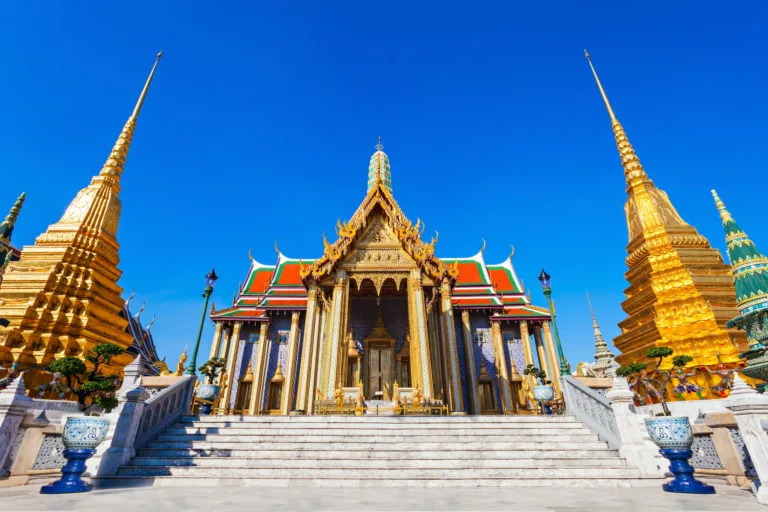 Wat Phra Kaew (Temple of the Emerald Buddha)
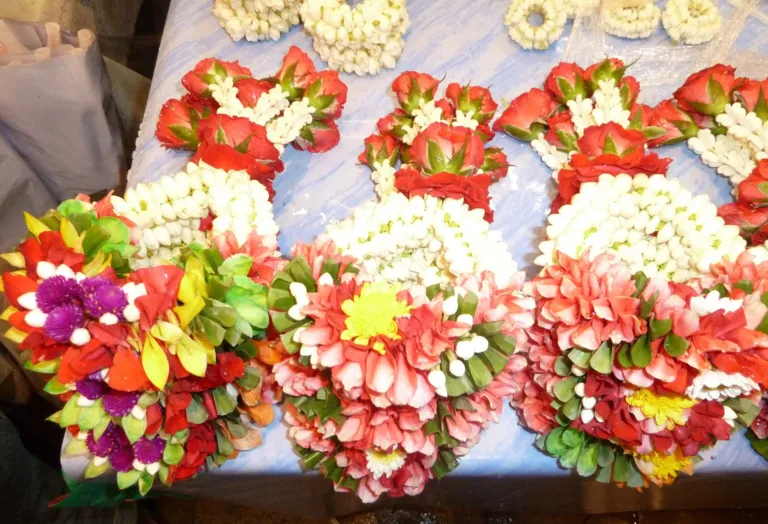 Pak Khlong Talat (Bangkok Flower Market)
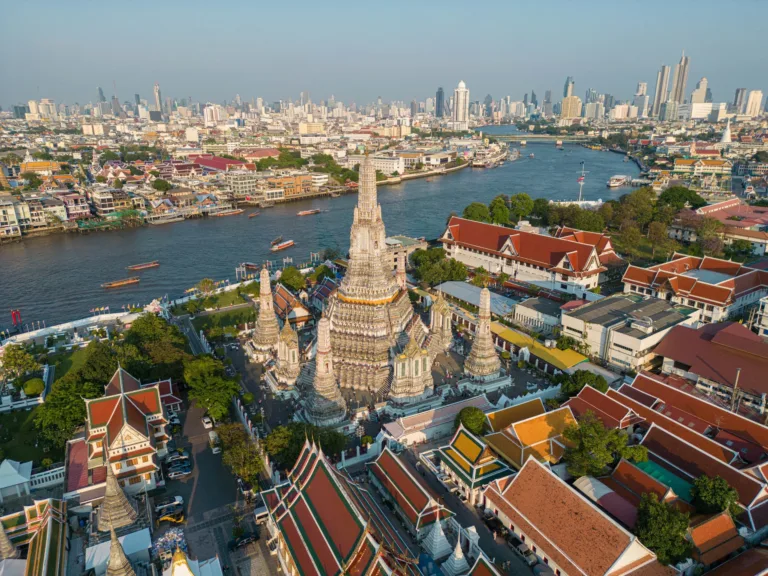 Wat Arun (Temple of Dawn)
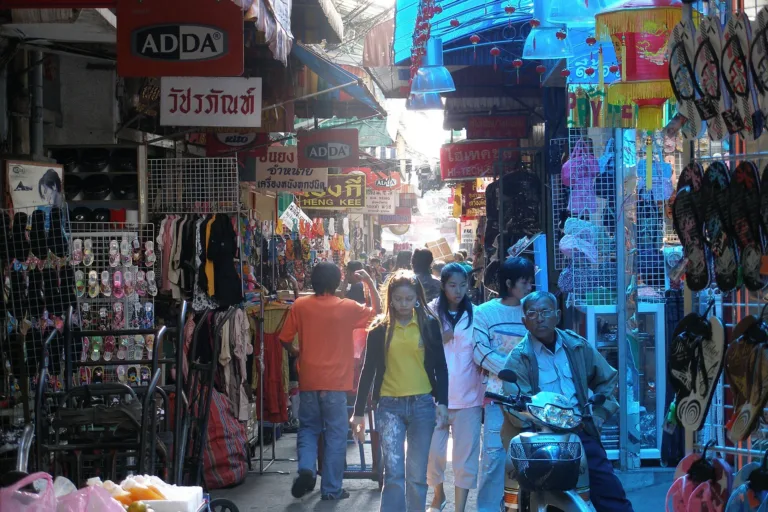 Sampheng (Sampeng Lane)