 01
Central prangAbout 81.85 m tall, clad in porcelain and shells
Royal temple of Rama II · Chao Phraya riverside
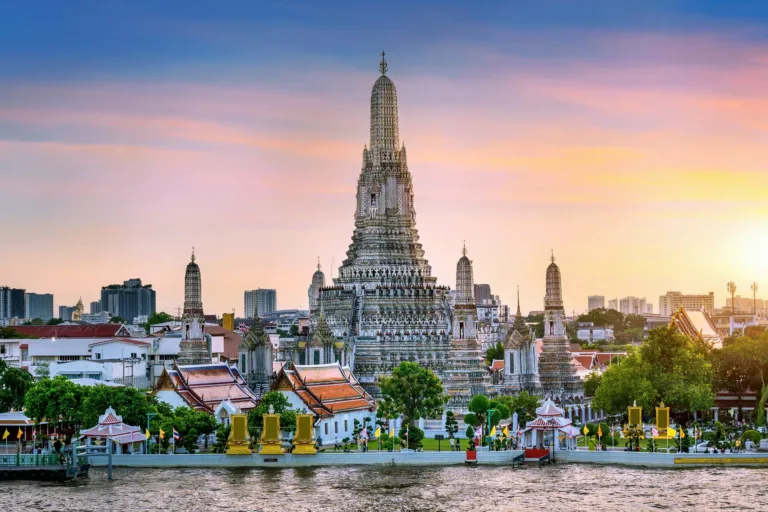
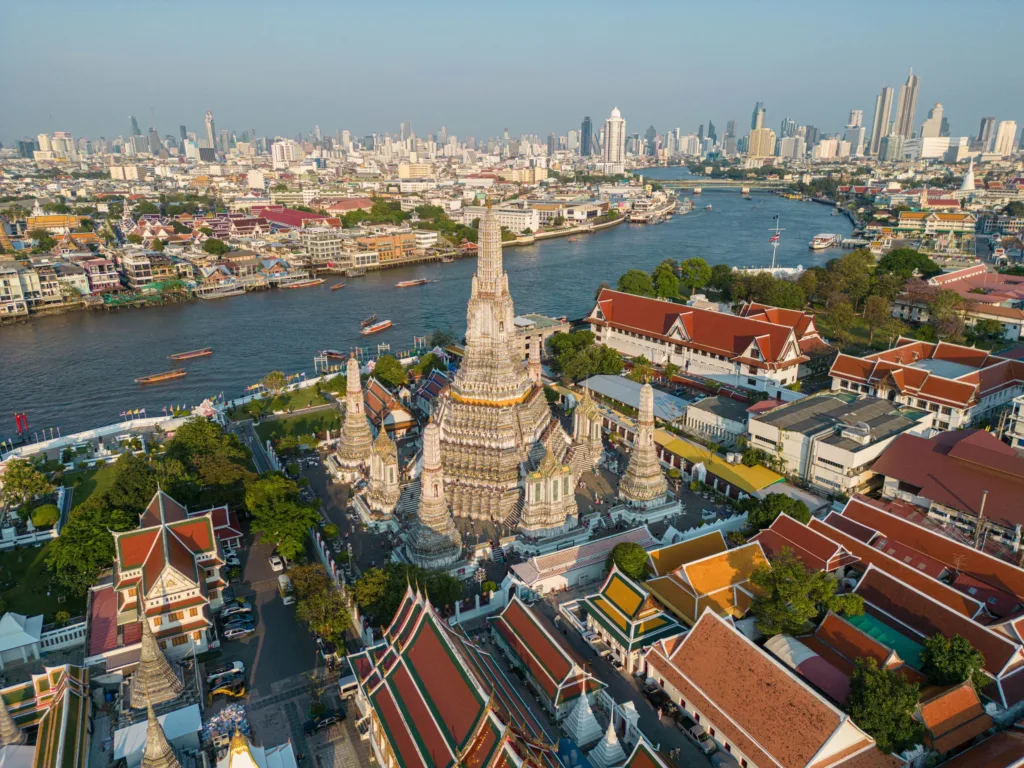
The Temple of Dawn on the Thonburi bank of the Chao Phraya, famed for its 81.85 m central prang clad in porcelain and shells. The royal temple of King Rama II and a former home of the Emerald Buddha.
Holiday / event — crowded
Cover shoulders and knees · Remove shoes before entering the ordination hall · Don't climb beyond the permitted areas of the prang
Daily 08:00–18:00 (last entry around 17:30)
08:30, before the crowds and heat
01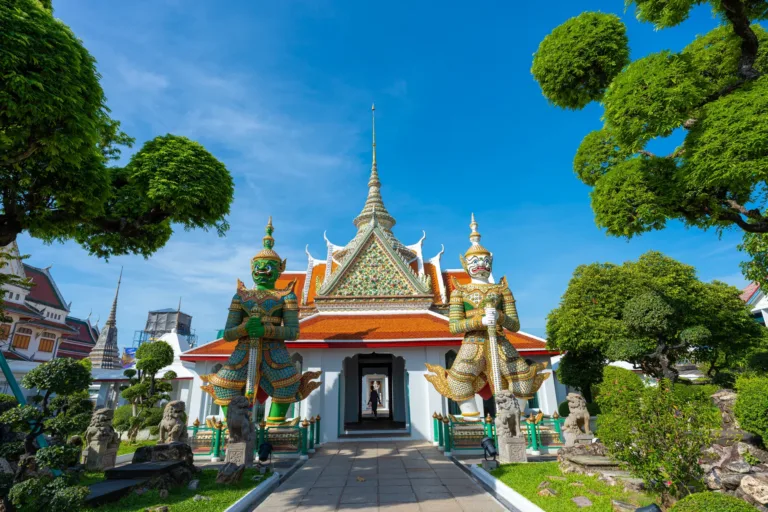 02
 03
Tap a day card to see that day’s weather, rain, haze and hourly forecast
Best time to go Daytime is over · see tomorrow
Holiday — traffic on the way up and parking fills fast; leave early
Green band = hours used for the score
Best time to go Fine all day little rain through the day
Holiday — traffic on the way up and parking fills fast; leave early
Green band = hours used for the score
Best time to go Fine all day little rain through the day · light drizzle possible at times
No warnings today — normal road and weather conditions
Green band = hours used for the score
Best time to go Fine all day little rain through the day
No official warnings, but watch for: Hot (Afternoon) feels like 38°C
Green band = hours used for the score
Best time to go Fine all day little rain through the day · light drizzle possible at times
No official warnings, but watch for: PM2.5 dust 26 · Hot (Afternoon) feels like 39°C
Green band = hours used for the score
Best time to go Fine all day little rain through the day · light drizzle possible at times
No official warnings, but watch for: Hot (Afternoon) feels like 39°C
Green band = hours used for the score
Best time to go Fine all day little rain through the day · light drizzle possible at times
No warnings today — normal road and weather conditions
Green band = hours used for the score
Wat Arun Ratchawararam, the Temple of Dawn, stands on the Thonburi bank of the Chao Phraya in Bangkok Yai, opposite Tha Tien and Wat Pho. It is the royal temple of King Rama II and one of Bangkok's best-known landmarks.The highlight is the central prang, about 81.85 m tall and studded with coloured porcelain and shells, some of it ballast from Chinese trading junks. You can climb part of the way up its steep outer stairs. At the gate stand two giant guardians, the white Sahatsadecha and the green Thotsakan.It's easy to reach by the cross-river ferry from Tha Tien. Mornings bring soft light and fewer people, while the classic sunset view of Wat Arun is shot from the opposite bank.
Arrive 08:30, before the crowds and heat
Narrow, very steep steps; hold the rail, go down slowly and wear shoes with a heel strap
Shoulders and knees covered; sarongs for rent near the entrance
No shade on the prang terraces
No data yet check before you go · Time needed 1–1.5 hours
10:00–15:00 and weekend evenings
| Entry, foreign visitors | 200 ฿/person |
| Tha Tien–Wat Arun ferry optional | 5 ฿/person |
Prices may change by season — check with the venue
Wat Arun Ratchawararam is an old temple on the Thonburi bank of the Chao Phraya that dates back to the Ayutthaya period. In the Thonburi era it stood inside the royal palace and housed the Emerald Buddha for about five years; it later became the royal temple of King Rama II. The great central prang that has become an emblem of Bangkok was built under King Rama III between 1842 and 1851 and has been restored in every era since. In 2025 UNESCO added the Phra Prang of Wat Arun to Thailand's World Heritage Tentative List.
The temple was first called Wat Makok, after the riverside community of Bang Makok in Ayutthaya times. It later became Wat Makok Nok, to distinguish it from Wat Makok Nai, a newer temple in the same district (today Wat Nuannoradit). The Fine Arts Department also suggests that "Makok" may be a corruption of "Bangkok". Its founder is unknown, but the temple already existed in King Narai's reign, when it appeared on maps drawn by the French, and it had an earlier prang about 8 wa, or roughly 16 m, tall.
The best-known story says that in 1767, after the fall of Ayutthaya, King Taksin sailed down the river and reached the temple at dawn, so he had it restored and renamed Wat Chaeng, the Temple of Dawn. Some sources point out, however, that the name Wat Chaeng already appears in an Ayutthaya-era poem, Phleng Yao Nai Phimsen, so the name may be older than the legend.
When Thonburi became the capital, the palace grounds were extended around the temple. Wat Chaeng became a palace temple with no resident monks and the most important temple of the period. In 1779 Siamese forces took Vientiane and brought back the Emerald Buddha and the Phra Bang, which were both enshrined in a mondop at Wat Chaeng with a seven-day celebration.
Under King Rama I the capital moved across the river to Bangkok. Wat Chaeng was no longer inside the palace, and monks returned to live there. The Emerald Buddha was moved to Wat Phra Kaew in 1784 (some sources say 1785), and the Phra Bang was returned to Vientiane. Prince Isarasundhorn, the future Rama II, took charge of restoring the temple, but when Rama I died in 1809 only the monks' quarters had been finished.
As king, Rama II completed the restoration and had the principal Buddha image of the ordination hall modelled and cast; he is said to have sculpted its face himself. The temple was celebrated in 1820 and renamed Wat Arun Ratchatharam. Around 1819 he also planned a new, much taller prang enclosing the old one as the great relic stupa of the capital and had the foundations prepared, but he died in 1824 before work began.
Rama III carried the plan forward and laid the foundation stone of the prang on 2 September 1842. Construction took more than nine years and was finished in 1851, raising the prang from 8 wa to 1 sen 13 wa 1 sok 1 khuep 1 niu. A crown originally made for the Buddha image of Wat Nang Nong was placed at the top of the spire. Modern sources give different heights, from about 67 m to 81.85 m, depending on how it is measured. Rama III died in the year the prang was completed, before it could be celebrated.
King Rama IV held a royal celebration for the prang and carried out further restoration. He had the ashes of Rama II placed in the base of the principal Buddha image, named the image Phra Phuttha Thammisaratchalokathatdilok, and renamed the temple Wat Arun Ratchawararam, the name it still bears. This is why it is regarded as the royal temple of Rama II.
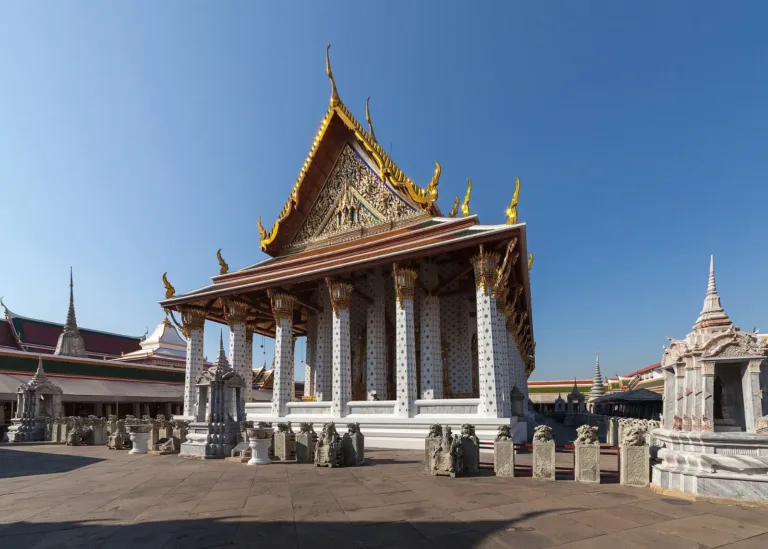
In the reign of King Rama V a fire broke out in the ordination hall. King Chulalongkorn went in person to direct the firefighting and then had the hall rebuilt almost entirely, so the murals seen today date from after the fire. The prang was extensively restored around 1901, and archival records cited by the Fine Arts Department show that in 1908–1909 the mondops around the prang were repaired, with Buddha images brought from the cloister to replace ones that had been lost.
In modern times the Fine Arts Department has restored and cleaned the prang roughly every 20–25 years. A major campaign began with an offering ceremony on 27 December 1967, followed by a large restoration in 1982 for Rattanakosin's bicentenary and another in 1997–1999 that also covered the ordination hall, viharn and cloister. The great flood of 2011 loosened some decoration and caused the ground to subside.
From 2013 to 2017 the central prang and all its satellite prangs were restored in what the project's leaders called the largest work in a hundred years. Broken tiles were replaced and lime plaster used instead of the cement of earlier repairs. The brighter, whiter result drew criticism, with around 5,000 people signing a protest, but the Fine Arts Department maintained the work followed academic standards and the original lime wash. The temple celebrated the restoration from 27 December 2017 to 5 January 2018.
Today Wat Arun remains a setting for major royal ceremonies, such as the Royal Barge Procession for the Kathin robe offering on 27 October 2024, with 52 boats and about 2,200 oarsmen. After the earthquake of 28 March 2025 the prang's structure was inspected, and at the 47th session of the World Heritage Committee in July 2025 the Phra Prang of Wat Arun was placed on the Tentative List as the masterpiece of Krung Rattanakosin, with the Fine Arts Department preparing the next stage of the nomination.
Arrived? Check in, collect a stamp and tell others what it is like right now
Check your location first, so you do not fill in the form for nothing
Location must be on and within 0.3 km · One check-in per place per day · come back on other days to check in again
Post photos from anywhere — no need to be here · Up to 20 photos at a time · JPG / PNG / WebP · GPS location data is removed automatically
The temple is on the Thonburi bank of the Chao Phraya in Bangkok Yai, opposite Tha Tien.
From Tha Tien to Wat Arun · 5 THB/person
To Tha Tien, then the ferry · About 20 THB
Arun Amarin Road on the Thonburi side, or the ferry from Tha Tien
Good
Daily 08:00–18:00 (last entry around 17:30)
Wat Arun
200 THB
Answers travellers want before they go — a one-minute read
Daily 08:00–18:00, last entry around 17:30
200 THB for foreign visitors
Take the ferry from Tha Tien, 5 THB per person, about 2 minutes
About 81.85 m from base to tip
Partway up the outer stairs; they're very steep, so hold the rail
From the Tha Tien side, such as riverside rooftop restaurants and bars
Best day this week: Tuesday 1 Dec · Check in when you arrive to collect a stamp
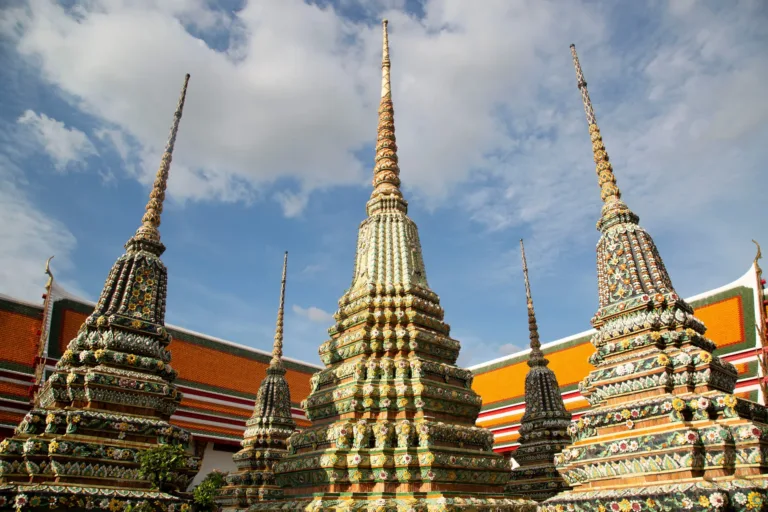 Wat Pho (Wat Phra Chetuphon)
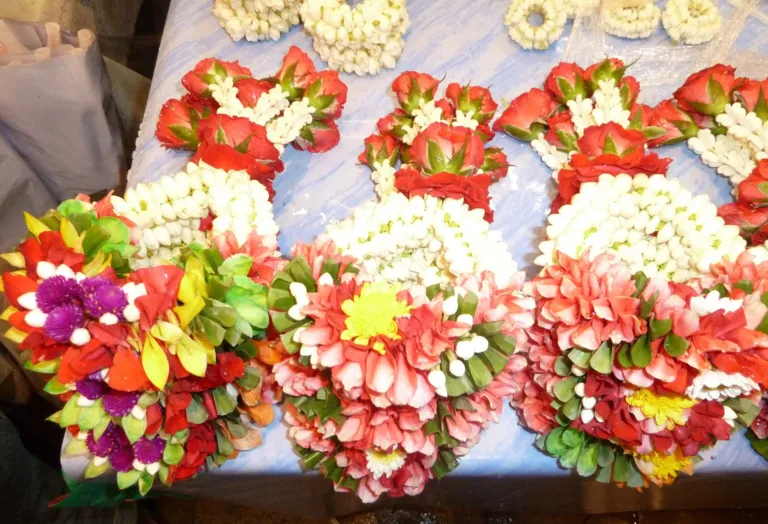 Pak Khlong Talat (Bangkok Flower Market)
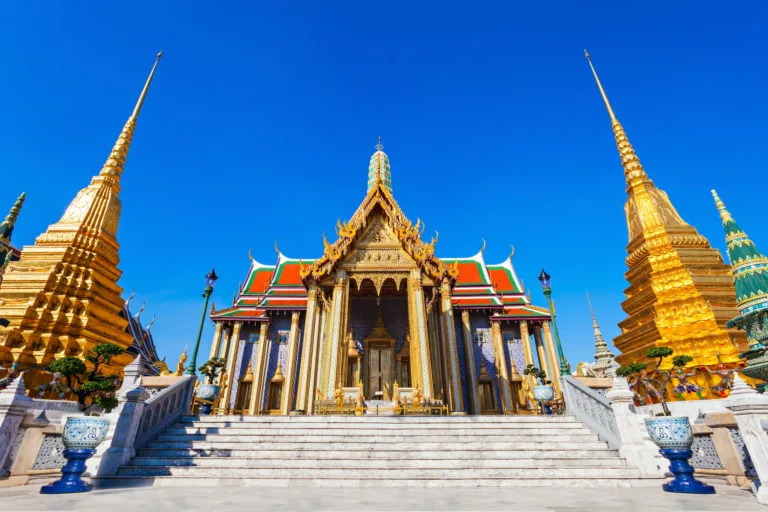 Wat Phra Kaew (Temple of the Emerald Buddha)
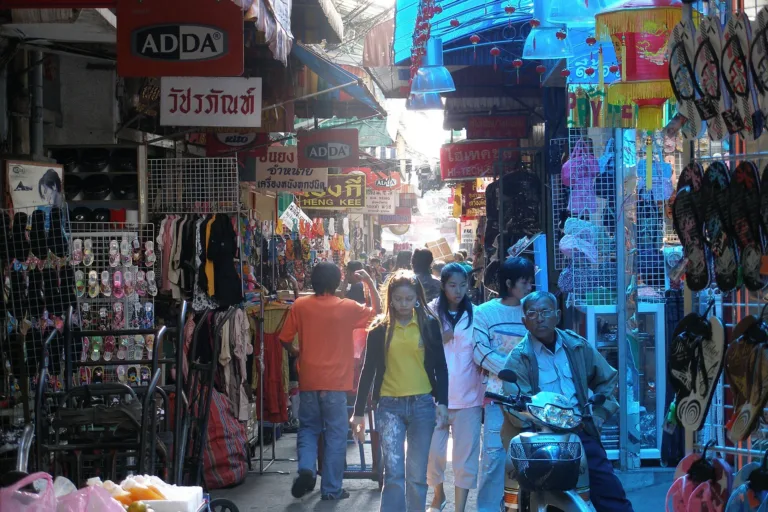 Sampheng (Sampeng Lane)