 01
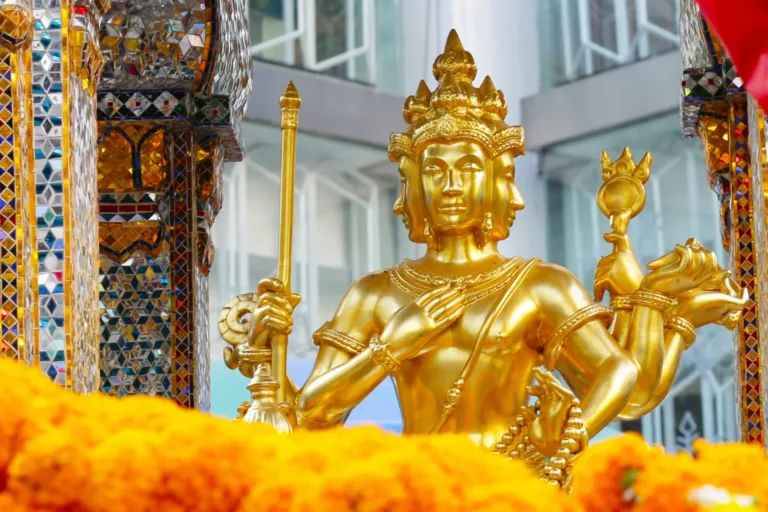
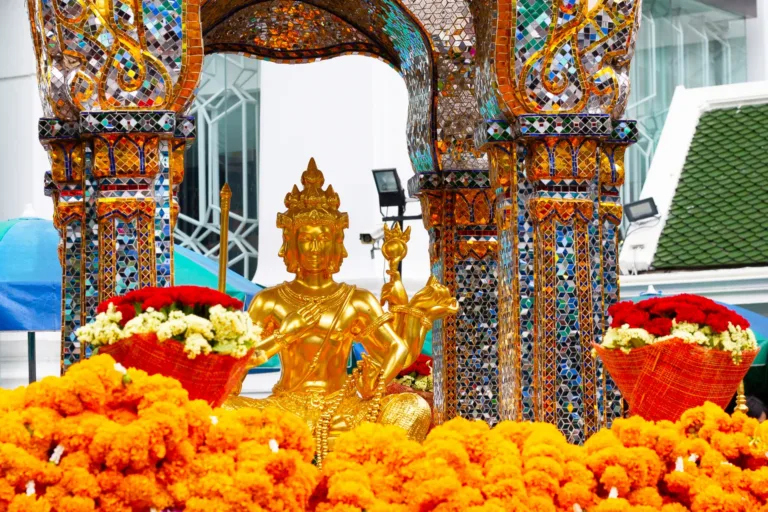
Four-faced BrahmaThe gilded statue at the heart of the intersection
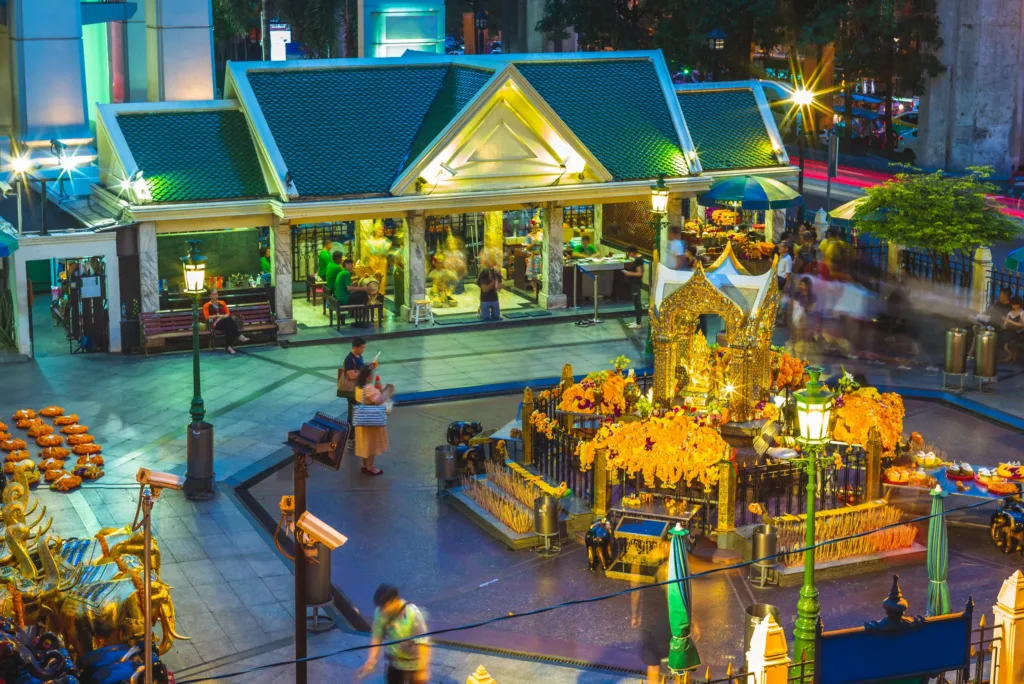
Brahma shrine · Ratchaprasong
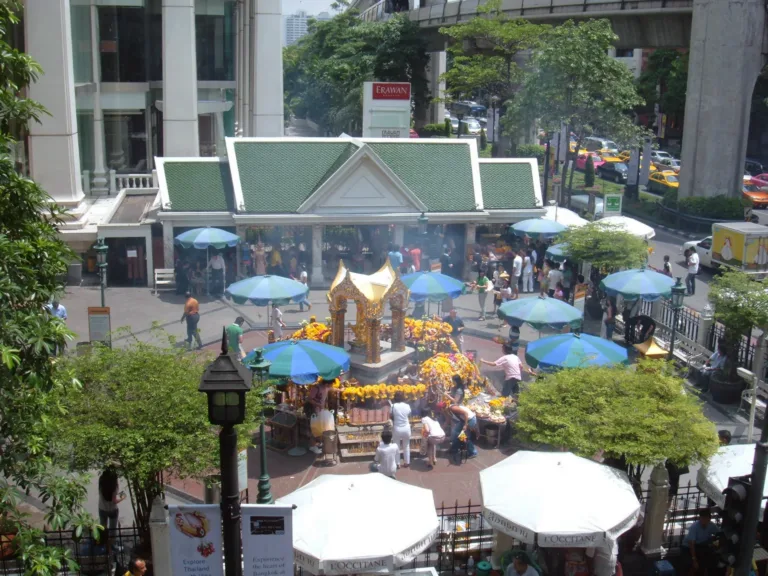
The 1956 Brahma shrine at Ratchaprasong, in front of the Grand Hyatt Erawan, where Thais and visitors pray daily and dancers perform in thanks. Near BTS Chit Lom.
Holiday / event — crowded
Dress modestly · Follow the path around the statue · Don't stand in front of people praying or the dancers
Daily 06:00–22:00
Before 09:00, while it's quiet
Annual ceremony on 9 November, the anniversary of the statue's enshrinement
01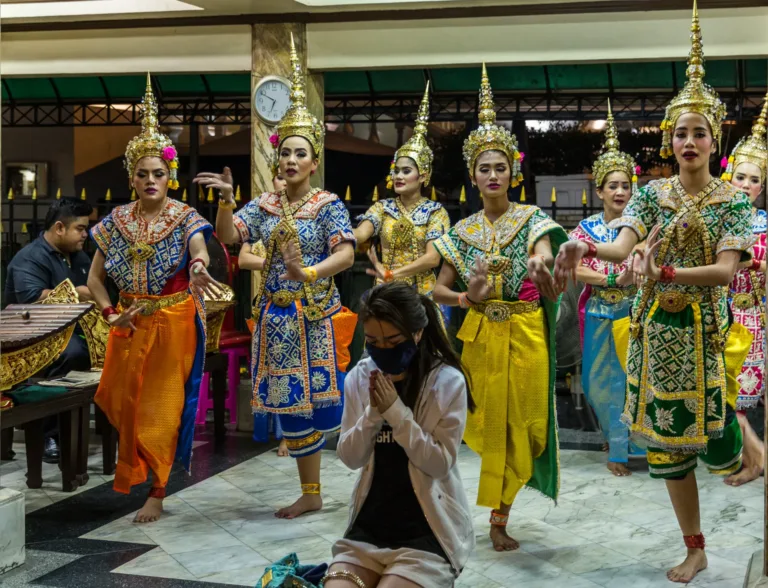 02
 03
 04
Tap a day card to see that day’s weather, rain, haze and hourly forecast
Best time to go Daytime is over · see tomorrow
Holiday — traffic on the way up and parking fills fast; leave early
Green band = hours used for the score
Best time to go Fine all day little rain through the day
Holiday — traffic on the way up and parking fills fast; leave early
Green band = hours used for the score
Best time to go Fine all day little rain through the day · light drizzle possible at times
No warnings today — normal road and weather conditions
Green band = hours used for the score
Best time to go Fine all day little rain through the day
No official warnings, but watch for: Hot (Afternoon) feels like 38°C
Green band = hours used for the score
Best time to go Fine all day little rain through the day · light drizzle possible at times
No official warnings, but watch for: PM2.5 dust 26 · Hot (Afternoon) feels like 39°C
Green band = hours used for the score
Best time to go Fine all day little rain through the day · light drizzle possible at times
No official warnings, but watch for: Hot (Afternoon) feels like 39°C
Green band = hours used for the score
Best time to go Fine all day little rain through the day · light drizzle possible at times
No warnings today — normal road and weather conditions
Green band = hours used for the score
Thao Maha Phrom Shrine, better known as the Erawan Shrine, sits on the corner of Ratchaprasong intersection on Ratchadamri Road, in front of the Grand Hyatt Erawan in Pathum Wan. BTS Chit Lom is next door, and its elevated walkway looks right down on the shrine.It was built in 1956 during construction of the government-owned Erawan Hotel, after a string of building mishaps. The four-faced Brahma statue was made by Fine Arts Department craftsmen. Every day Thais and visitors come to pray, and dance troupes perform for worshippers whose wishes have come true.Entry is free and it's open daily. Pray at all four faces, starting at the first and moving round to your right.
Arrive Before 09:00, while it's quiet
The shrine is small and busy; mind your bag and follow the path around the statue
Free · Time needed 20–40 minutes
After-work evenings, holidays and 9 November
Annual ceremony on 9 November, the anniversary of the statue's enshrinement
The Thao Maha Phrom Shrine, better known as the Erawan Shrine, is one of Bangkok's most famous places of worship. It was created in 1956 alongside the government-owned Erawan Hotel on the corner of Ratchaprasong intersection, to ward off the bad luck that kept hitting the hotel's construction. What began as a hotel's shrine slowly became a focus of devotion for Thais and for worshippers from across Asia. It has outlived the original hotel, a vandal's hammer and a bombing, and the four-faced Brahma still stands on the same corner today.
The story starts in the era of Field Marshal Plaek Phibunsongkhram's government, which wanted a modern hotel for foreign guests. Several Thai media reports say that around 1951 Police General Phao Sriyanond pushed for the Erawan Hotel to be built at Ratchaprasong, run by a state hotel enterprise. The immediate goal was to open in time for delegates to the 45th Inter-Parliamentary Union conference, which Bangkok hosted from 15 to 22 November 1956.
Construction did not go smoothly. Costs overran, workers were injured (some accounts say killed), and a shipment of Italian marble meant for the hotel was lost at sea. Some sources also say the Ratchaprasong intersection had once been used to put criminals on public display, leading some to believe the land was unlucky. In late 1956, with the building nearly finished, the hotel company asked Rear Admiral Luang Suwichanphaet, the Navy's chief physician and a well-known expert in auspicious timing, to choose an opening date.
According to tradition and the history plaque at the shrine, Luang Suwichanphaet said no rites had been held to inform the spirits of the site before building began, the foundation stone had been laid at the wrong time, and the name "Erawan", the elephant mount of the god Indra, also called for proper rites. His remedy was to seek the protection of Brahma (Thao Maha Phrom), the Hindu creator god, by building a Brahma shrine in front of the hotel and a spirit house within the grounds.
The shrine was designed by Rawi Chomseri and M.L. Pum Malakul. The four-faced statue, made of gilded plaster, was sculpted by Chit Phimkowit, a craftsman from the Fine Arts Department's Hatthasin division. It was enshrined in front of the hotel on 9 November 1956. As the story goes, the hotel was then finished without further mishap, and every 9 November is marked with a ceremony that people call "Brahma's birthday".
From a hotel's good-luck shrine, it became one of Thailand's first large Brahma shrines and the model for many more around the country. A doctoral study of the Brahma cult argues that stories of the shrine's power spread through modern media until Brahma worship became popular among city people. The shrine gained a reputation for granting wishes for children and business success. Devotees from Hong Kong, Taiwan and Singapore began to visit, followed later by travellers from mainland China.
The scene most visitors remember is the thanksgiving dance. Worshippers whose wishes come true hire the resident dance troupes to perform for Brahma. A study of these performances traces them to old forms of Thai dance-drama such as lakhon chatri, with between two and eight performers and a small Thai ensemble. In early 2023 a clip of Chinese devotees offering a dance by around 168 dancers at once went viral.
The shrine's fame travelled far. On 9 September 1999, about 2,000 Chinese worshippers from Taiwan, Hong Kong, Singapore and Macau gathered here for the eye-opening ceremony of a replica statue bound for Taipei. Earlier, around the 1980s, Thai Rath newspaper founder Kamphol Vacharaphol, his wife and a Hong Kong businessman gave a replica to a well-known Las Vegas casino hotel, reported to be the only one of its kind in the Western world.
As the shrine grew, the old Erawan Hotel reached its end. Most sources say it was demolished in 1987, while others say it closed on 2 January 1988 and was pulled down that year. Construction of the Grand Hyatt Erawan began in 1988 and it opened in late 1991. The shrine stayed on its corner, looked after by the Thao Maha Phrom Foundation and free to visit.
Before dawn on 21 March 2006, a 27-year-old man with a mental illness smashed the statue with a hammer, leaving only the base, and was beaten to death by people nearby. It happened during a political crisis, and many astrologers read it as a bad omen. The Fine Arts Department quickly made a new statue to the original design, incorporating fragments of the old one, and it was enshrined on 21 May 2006 at the auspicious time of 11:39. A twin was also made and kept at the National Museum.
At about 18:55 on 17 August 2015, a bomb exploded at the shrine, killing 20 people, most of them tourists, and injuring more than a hundred. The statue was damaged in about ten places, worst of all at the chin. The shrine reopened to worshippers within about two days, and craftsmen from the Fine Arts Department's Office of Traditional Arts began repairs on 24 August. In 2020 the shrine closed for over a month during the COVID-19 pandemic and reopened on 1 May, and on 9 November 2022 it marked 66 years since the statue was enshrined.
Arrived? Check in, collect a stamp and tell others what it is like right now
Check your location first, so you do not fill in the form for nothing
Location must be on and within 0.7 km · One check-in per place per day · come back on other days to check in again
Post photos from anywhere — no need to be here · Up to 20 photos at a time · JPG / PNG / WebP · GPS location data is removed automatically
The shrine is on the corner of Ratchaprasong intersection, on Ratchadamri Road in front of the Grand Hyatt Erawan, Pathum Wan.
Chit Lom station, then the elevated walkway · By distance
Many routes along Ratchadamri and Phloen Chit roads · By distance
City streets, heavy traffic at rush hour
Daily 06:00–22:00
Erawan Shrine
Answers travellers want before they go — a one-minute read
Daily 06:00–22:00
No, it's free
Start at the first face and move round to your right until you've visited all four
Yes, Chit Lom station, then the elevated walkway to Ratchaprasong
The Brahma statue was enshrined on 9 November 1956
Worshippers whose wishes came true hire them as thanks
Best day this week: Monday 30 Nov · Check in when you arrive to collect a stamp
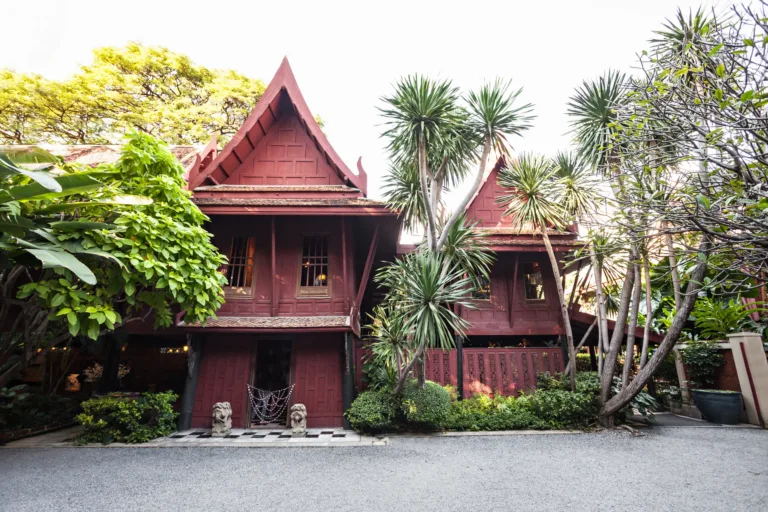 Jim Thompson House Museum
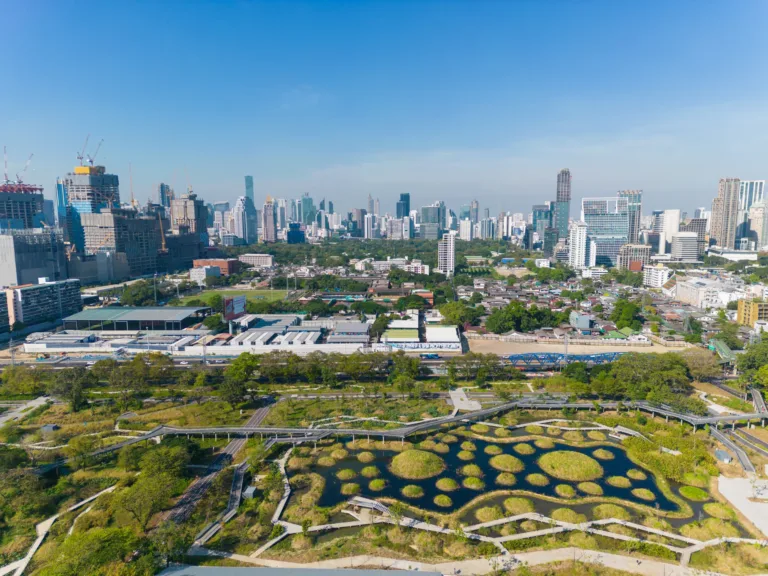 Benchakitti Park
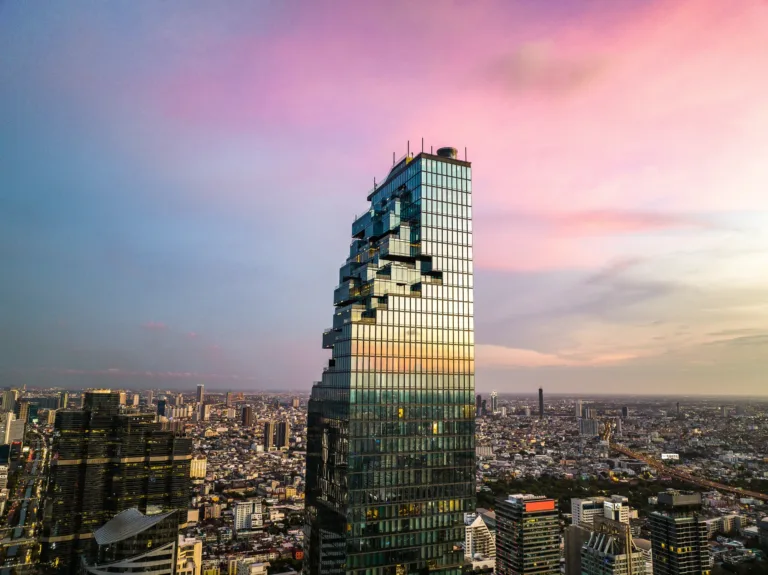 Mahanakhon SkyWalk (King Power Mahanakhon)
 Wat Traimit (Temple of the Golden Buddha)