 01
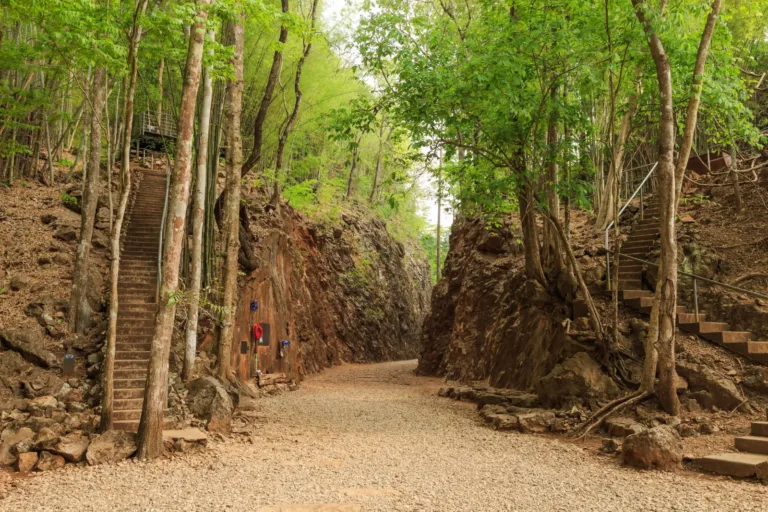
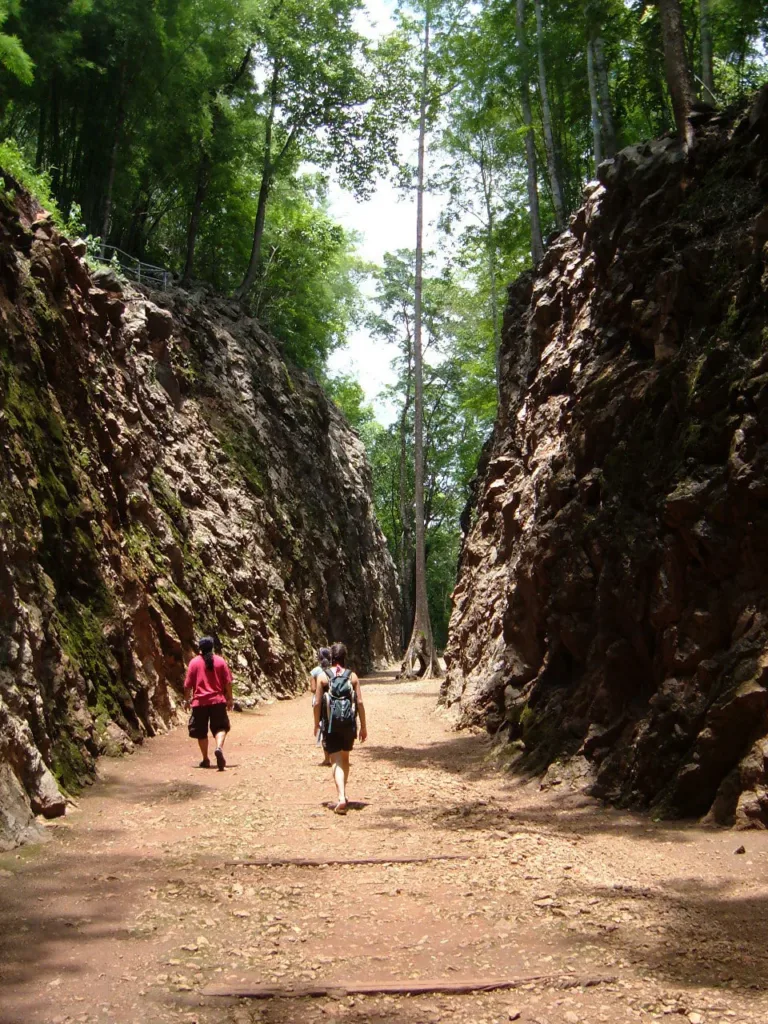
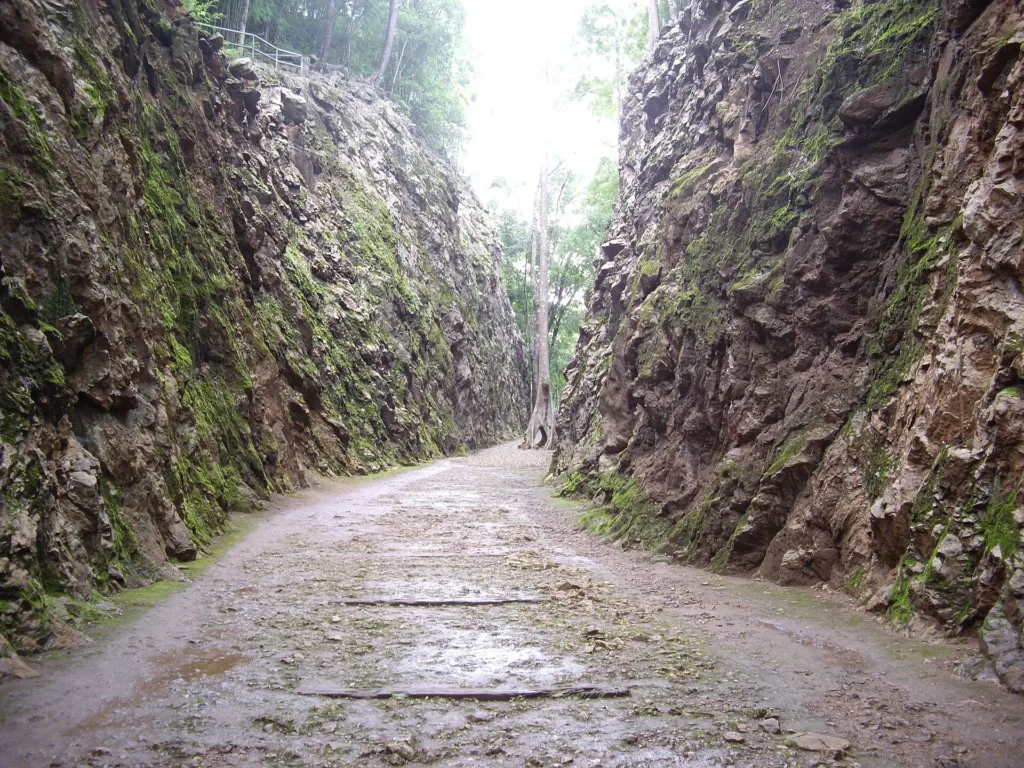
The cutting75 m long, up to 25 m deep
The Death Railway · Hellfire Pass
Hellfire Pass in Sai Yok, Kanchanaburi, is the rock cutting POWs hacked out by hand in 1943 on the Death Railway, with an Australian Government museum and memorial trail. Free, open 09:00–16:00, with an Anzac Day dawn service on 25 April.
Holiday / event — crowded
09:00–16:00 (audio guides until 15:00)
Free
1.5–3 hours
25 Apr and late morning tours
01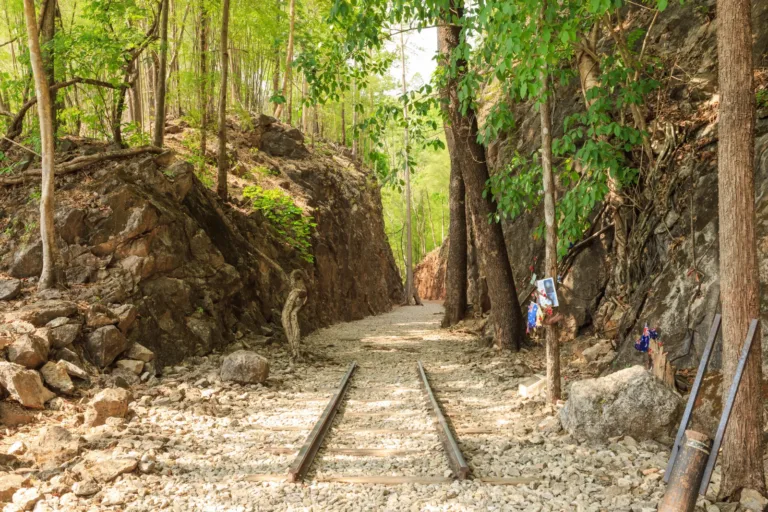 02
 03
Tap a day card to see that day’s weather, rain, haze and hourly forecast
Best time to go Daytime is over · see tomorrow
Thick morning fog with visibility under 1 km — use headlights and drive slowly
Holiday — traffic on the way up and parking fills fast; leave early
Green band = hours used for the score
Best time to go Fine all day little rain through the day
Holiday — traffic on the way up and parking fills fast; leave early
Green band = hours used for the score
Best time to go Fine all day little rain through the day
No warnings today — normal road and weather conditions
Green band = hours used for the score
Best time to go Fine all day little rain through the day
No warnings today — normal road and weather conditions
Green band = hours used for the score
Best time to go Fine all day little rain through the day
No warnings today — normal road and weather conditions
Green band = hours used for the score
Best time to go Fine all day little rain through the day
No warnings today — normal road and weather conditions
Green band = hours used for the score
Best time to go Fine all day little rain through the day
No warnings today — normal road and weather conditions
Green band = hours used for the score
Hellfire Pass Interpretive Centre, 207 Moo 11, Tha Sao, Sai Yok, Kanchanaburi.
Arrive 15:00
Photos from Wikimedia Commons and contributors · tap a photo to see its credit
Steep, gravel
1 Jan, 13–15 Apr, first 3 weeks of May, 5 Dec, 24–27 Dec and 31 Dec
Free · Time needed 1.5–3 hours
25 Apr and late morning tours
| Audio guide, radio, golf buggy | Free |
Prices may change by season — check with the venue
Anzac Day dawn service 25 Apr, about 05:30
Tap a month on the wheel to see weather, rain, haze and crowds from 10 years of records
Best time · Nov–Feb cool · 25 Apr Anzac Day service
Watch out · First three weeks of May closed · April very hot
Nov by the records 21–29°C · avg rain 65 mm (11 rainy days) · clear 6 days · avg PM2.5 10
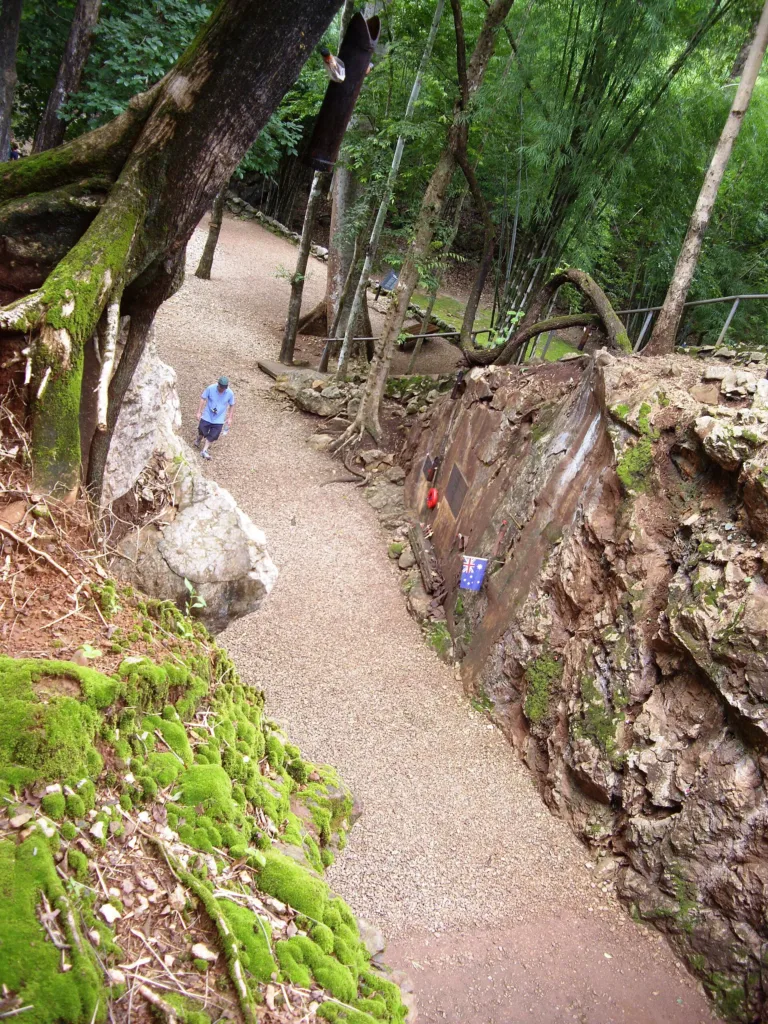
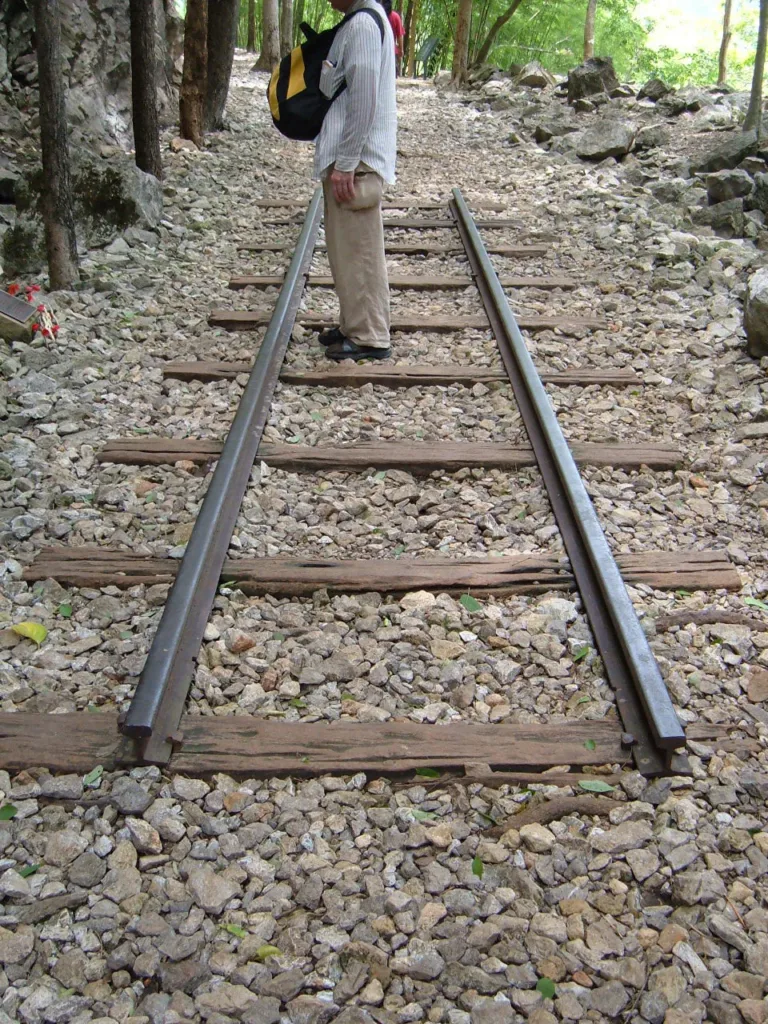
Hellfire Pass, known in Thai as Chong Khao Khat and also called Konyu Cutting, is a rock cutting that Allied prisoners of war and Asian labourers carved through a mountainside by hand to carry the Thailand–Burma Railway that Japan built during the Second World War. The main work took place between April and August 1943. It was the deepest and longest cutting on the line and one of its harshest work sites. Today it is a memorial on land of the Royal Thai Armed Forces Development Command in Tha Sao, Sai Yok District, Kanchanaburi, with an interpretive centre and memorial walking trail run by Australia's Department of Veterans' Affairs, and a dawn Anzac Day service every 25 April.
Before the war, the British colonial government had considered a railway across the Tenasserim Hills but judged it too difficult and costly. After occupying Burma and finding sea transport too risky, Japan decided in June 1942 to build the line, about 415 km from Nong Pladuk to Thanbyuzayat. Construction began in October 1942 with more than 60,000 Allied prisoners, about 13,000 of them Australian, and around 200,000 Asian labourers known as romusha.
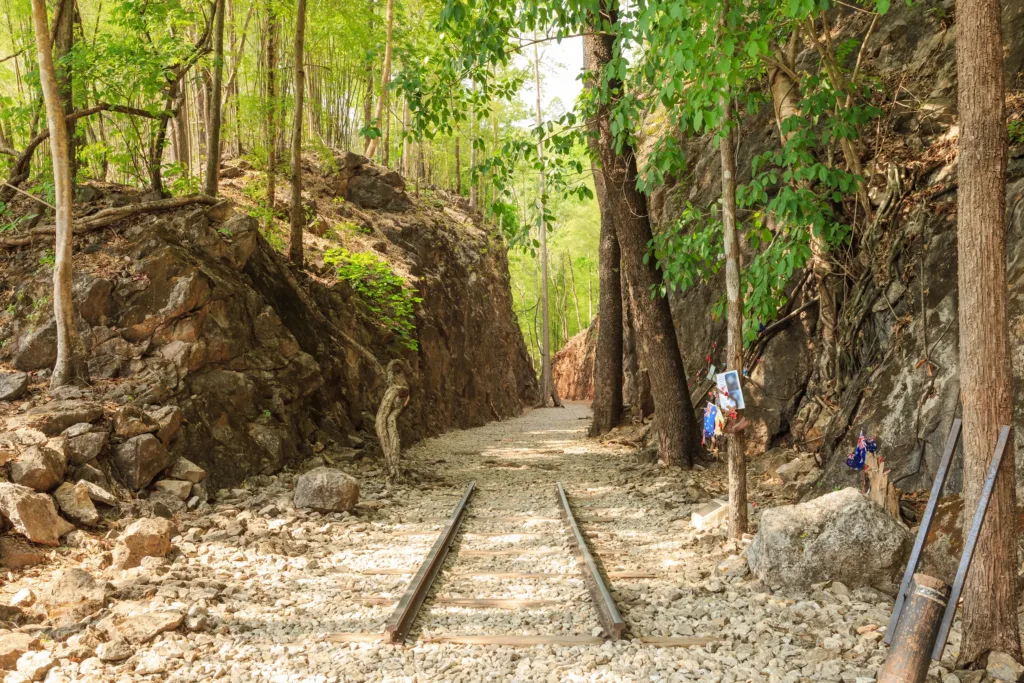
The pass lies about 150 km from Nong Pladuk, in the Konyu–Hintok hills above the Khwae Noi valley. The rock is semi-marbleised limestone with quartz. The cutting has two sections: the first about 450 m long and 7 m deep, the main one about 75 m long and up to 25 m deep.
Work on the Konyu section began in November 1942 with about 1,500 British and 2,000 Tamil workers. Early in 1943 many labour camps sprang up in the area, and on 25 April 1943, Anzac Day, about 400 Australians of T Battalion, D Force, began cutting the pass. They had to build their own camp, Konyu 3, beside what is now Highway 323. Nearby Malay Hamlet camp housed prisoners of H Force.
The tools were mostly 8 lb hammers, steel drills, crowbars, picks, shovels and explosives; an air compressor and jackhammers were used only briefly. Waste rock was carried out by hand in cane baskets and rice sacks slung on poles. Drill marks can still be seen on the rock walls today.
When the work fell behind schedule in June 1943, the Japanese sent about 600 more prisoners and some 1,000 Asian labourers, and raised the drilling quota from about 1 m to 2–3 m per man per day. During this rush, known as the "Speedo", prisoners worked 12–18-hour shifts with no rest days. Some sources date the Speedo from April, others to July–August. The cutting was finished around mid-August 1943.
The name Hellfire Pass came from the night shifts worked by the light of oil lamps and bamboo fires: the flickering shadows of emaciated prisoners and guards on the rock walls looked like a living image of hell.
The human cost was terrible. Already weakened by disease, hunger and overwork, the men were hit by cholera in nearby camps in June 1943; by mid-June only about 60 of the 600 men at Konyu were fit to work. The Australian War Memorial records that at least 700 Allied prisoners died on the Konyu section, 69 of them beaten to death by Japanese engineers or Korean guards. For the whole line, the Allied War Graves Registration Unit concluded in 1946 that about 12,500 prisoners had died, along with tens of thousands of Asian labourers; some sources estimate around 102,000 deaths in total.
Further along the old railway lie other notable sites, including the site of the Three-Tier Bridge, the "Pack of Cards" Bridge, which collapsed three times during construction, and Compressor Cutting about 4 km away. The two halves of the railway met at Konkuita on 17 October 1943 (some sources say 16 October), and the line ran until mid-1945 despite Allied bombing. After the war this section was dismantled, and Hellfire Pass was swallowed by jungle for decades.
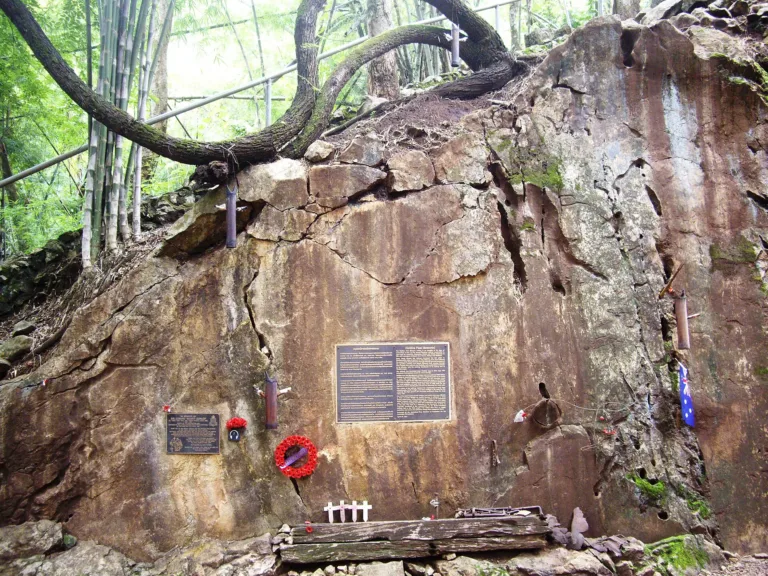
In the 1980s, former Australian prisoners returned and found the overgrown cutting. In 1983 ex-POW Tom Morris committed himself to turning it into a memorial; the Australian–Thai Chamber of Commerce formed a committee, Thailand's Ministry of Foreign Affairs gave permission in March 1985, and the Australian government funded a survey of the old line that year. Volunteers cleared the jungle and built steps down from the road. On 25 April 1987 the pass was dedicated as a memorial, Sir Edward "Weary" Dunlop, a surgeon and former POW, unveiled a plaque, and the first Anzac Day service was held here.
The memorial grew over the following decade. A monument with a time capsule was dedicated in February 1992. On Anzac Day 1994 part of the ashes of Dunlop, who had died the year before, was interred at the pass, and the visiting Australian prime minister committed to building a museum. From May 1995 to April 1996 about 4.5 km of the old railway was cleared as the memorial walking trail. The building went up in 1997–98, and Prime Minister John Howard opened the Hellfire Pass Memorial Museum on 24 April 1998 (some sources say 25 April).
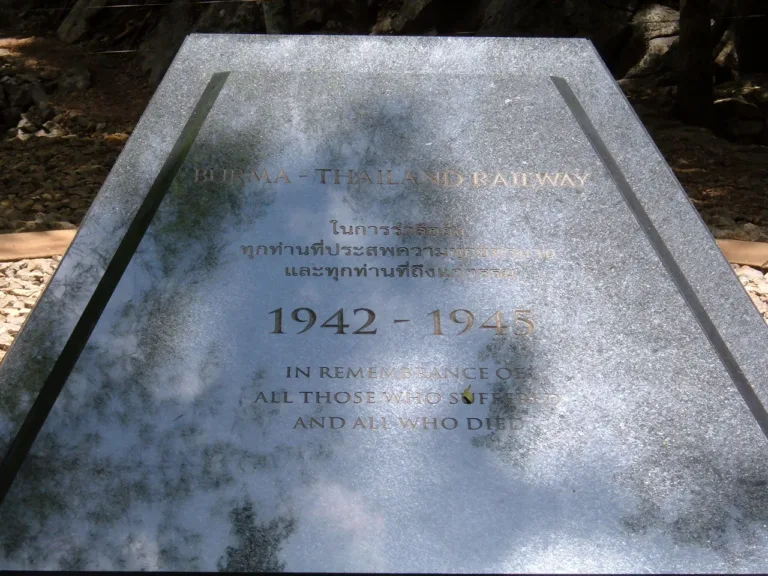
A black stone memorial was placed at the start of the trail in 2005. The interpretive centre was extensively refurbished and reopened on 12 December 2018. It closed during COVID-19 from March 2020 and reopened on 25 September 2020. More than 166,000 people visited in 2025, and 1,041 attended the 2026 Anzac Day dawn service.
Arrived? Check in, collect a stamp and tell others what it is like right now
Check your location first, so you do not fill in the form for nothing
Location must be on and within 1 km · One check-in per place per day · come back on other days to check in again
Post photos from anywhere — no need to be here · Up to 20 photos at a time · JPG / PNG / WebP · GPS location data is removed automatically
Paved highway
Highway 323 · Fuel
Kanchanaburi–Thong Pha Phum/Sangkhla · Fare
Highway 323
Three free car parks
Highway 323
Fair
09:00–16:00 (audio guides until 15:00)
about 80 km from Kanchanaburi town
Hellfire Pass Interpretive Centre
Approx. nightly price for 2 adults (next week) · final price depends on your dates
Answers travellers want before they go — a one-minute read
Yes
09:00–16:00; closed 1 Jan, 13–15 Apr, first 3 weeks of May, 5 Dec, 24–27 Dec and 31 Dec
Short trail 40–60 min; long trail about 3 h return
Night work by firelight looked like hell
Yes, free, in Thai, English and Dutch
About 05:30 on 25 April
Best day this week: Monday 30 Nov · Check in when you arrive to collect a stamp
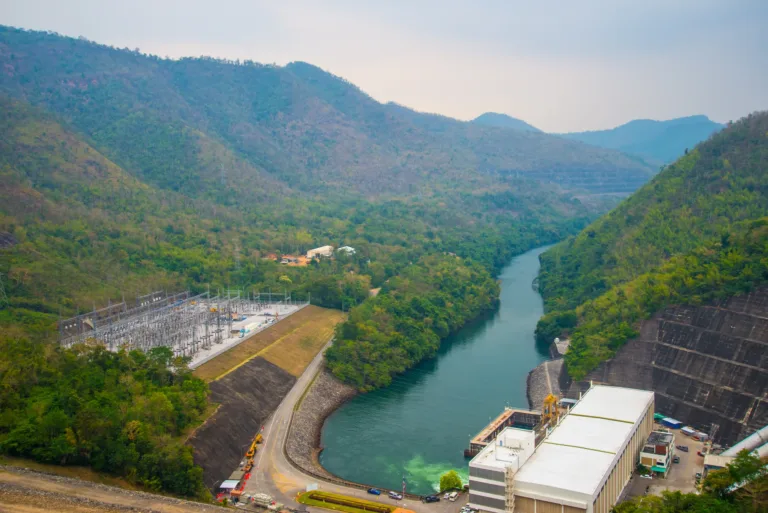 Srinagarind Dam
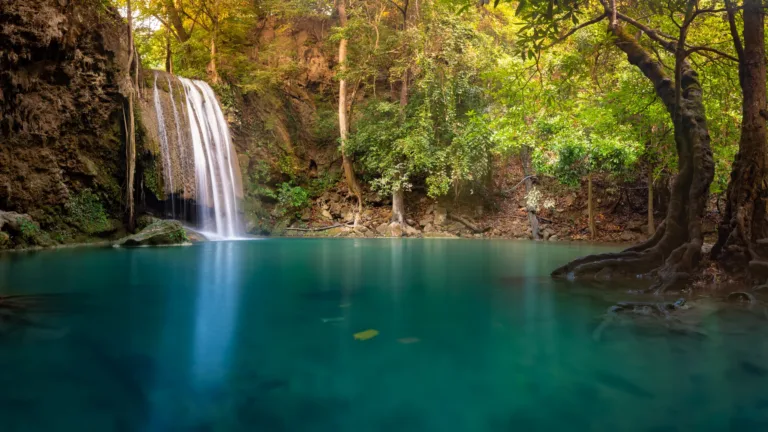 Erawan National Park
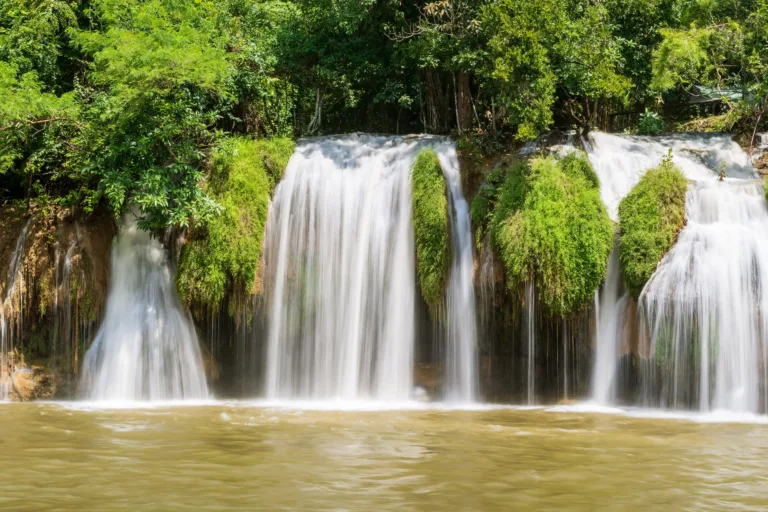 Sai Yok National Park
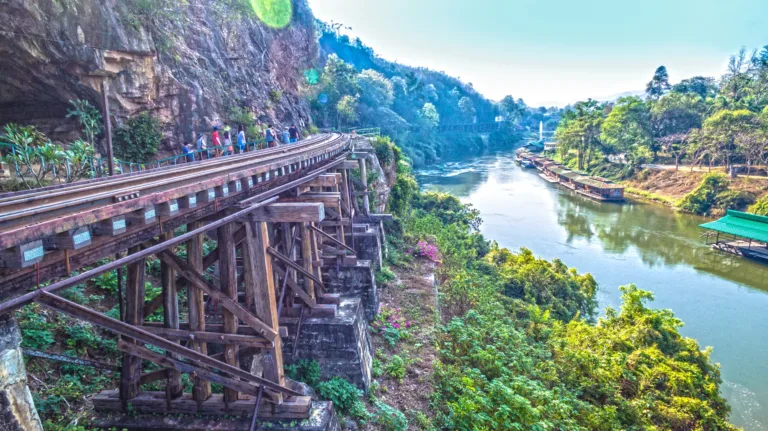 Tham Krasae, Death Railway