 01
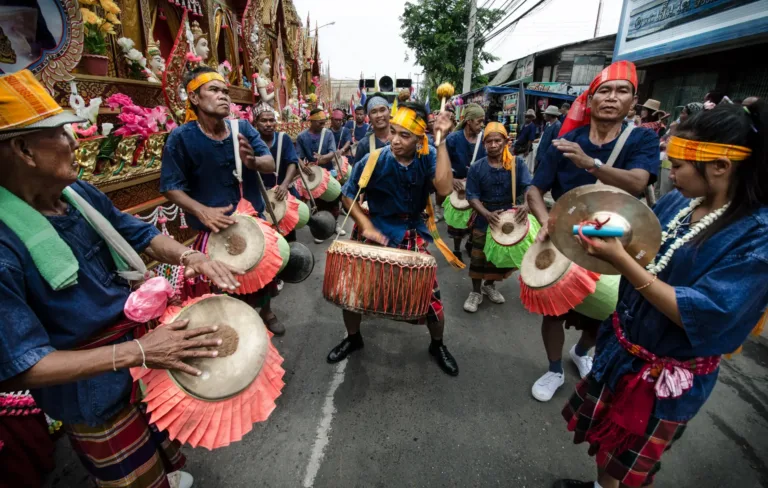
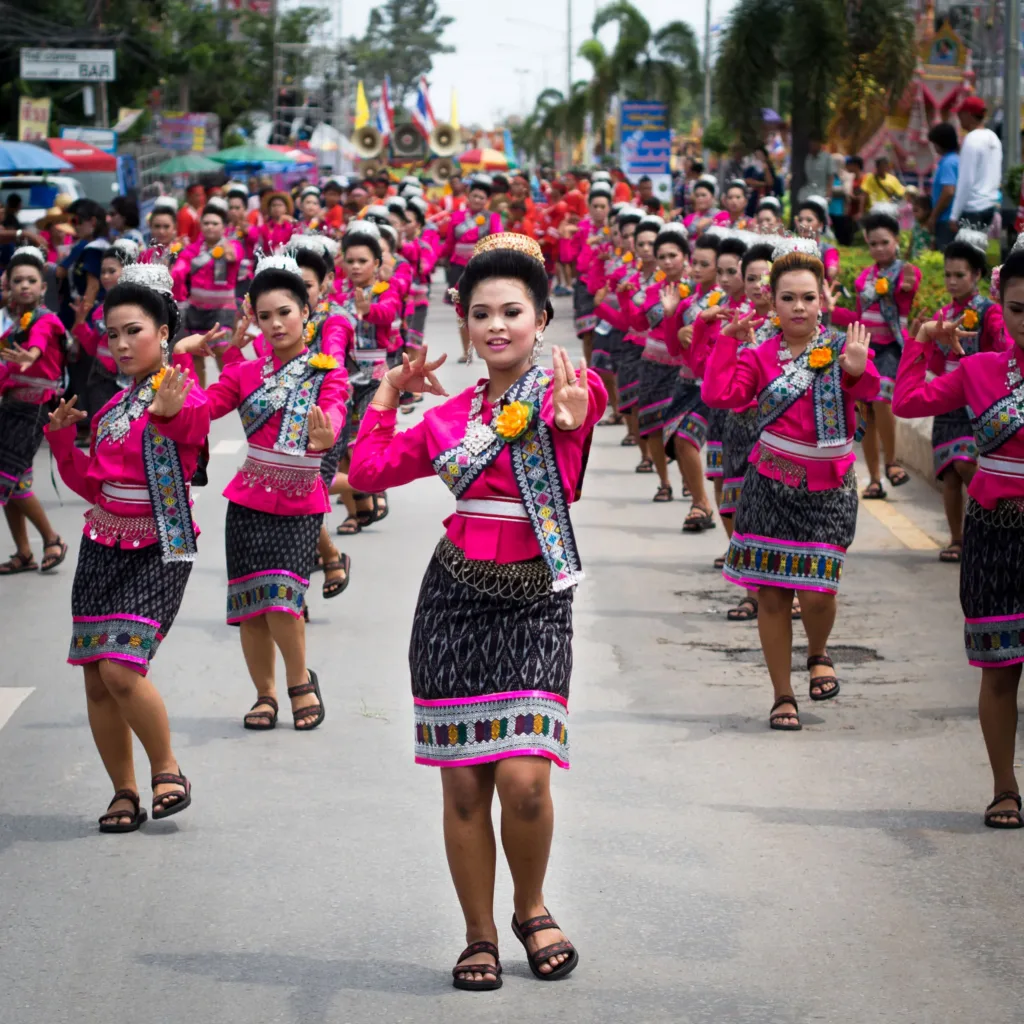
Rocket paradeOrnate rocket floats with seng dancers
Rain-calling festival · Yasothon town
Isan's biggest rain-calling rocket festival, held each mid-May in Yasothon town, with rocket parades on Chaeng Sanit Road and high-flying rocket contests at Phaya Thaen Park.
Holiday / event — crowded
Per each year's festival schedule
1–3 days
Saturday's parade and Sunday at Phaya Thaen Park
01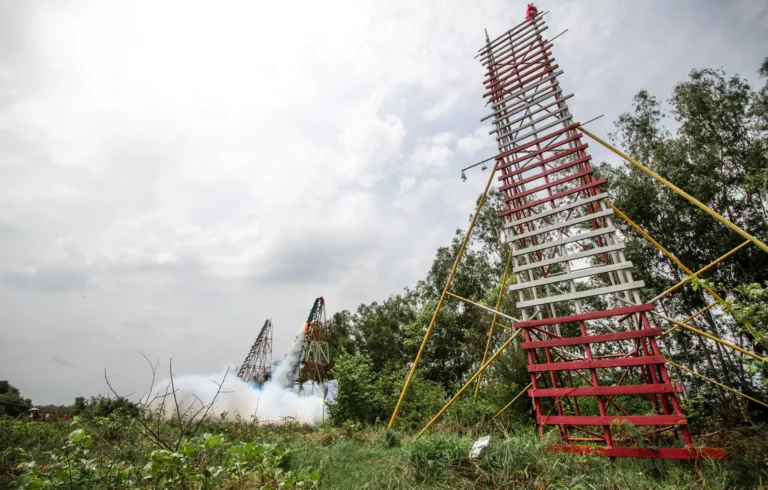 02
 03
Tap a day card to see that day’s weather, rain, haze and hourly forecast
Best time to go Daytime is over · see tomorrow
Holiday — traffic on the way up and parking fills fast; leave early
Green band = hours used for the score
Best time to go Fine all day little rain through the day
Strong gusts, about 53 km/h
Holiday — traffic on the way up and parking fills fast; leave early
Green band = hours used for the score
Best time to go Fine all day little rain through the day
No warnings today — normal road and weather conditions
Green band = hours used for the score
Best time to go Fine all day little rain through the day
No warnings today — normal road and weather conditions
Green band = hours used for the score
Best time to go Fine all day little rain through the day
No warnings today — normal road and weather conditions
Green band = hours used for the score
Best time to go Fine all day little rain through the day
No warnings today — normal road and weather conditions
Green band = hours used for the score
Best time to go Fine all day little rain through the day
No warnings today — normal road and weather conditions
Green band = hours used for the score
Bun Bang Fai in Yasothon is a rain-calling festival held before the rice-planting season, a big three-day Friday–Sunday event around mid-May. It follows the legend of the Toad King Phaya Khan Khak, who defeated Phaya Thaen, the god who sends the rain.On day one decorated rockets line up on Chaeng Sanit Road. Day two brings the opening ceremony and the rocket parade with seng dancing. On the last day everything moves to Phaya Thaen Park for fancy rockets with parachutes and coloured smoke, plus the high-altitude contest.Dates change each year; in 2025 it ran 16–18 May. Check the province's schedule and book a room early, as the whole town fills up.
Arrive Saturday morning, before the parade, to claim a spot on Chaeng Sanit Road
Stay at least 100 m from launch pads when fuses are lit
Not allowed over the launch area
Book rooms early and watch your valuables
No data yet check before you go · Time needed 1–3 days
Saturday's parade and Sunday at Phaya Thaen Park
Yasothon Bun Bang Fai, three days Fri–Sun around mid-May (2025: 16–18 May)
The Yasothon Rocket Festival grew out of the sixth-month merit festival in Isan's Heet Sip Song calendar, when villagers fire home-made rockets into the sky to honour Phaya Thaen, the sky god, and ask for rain before rice planting. What began as a village rite became the province's signature tradition, promoted by the Tourism Authority of Thailand for decades. Today the naga-decorated rocket floats on Chaeng Sanit Road and the launches at Phaya Thaen Park still tell the same story: the legend of the Toad King, Phaya Khan Khak, who brought the seasonal rains back.
Scholars explain that before Buddhism and Brahmanism spread, the people of Isan worshipped many spirits, with Thaen as their chief, and believed rain, wind and sky were in Thaen's power. Rockets were both an offering and a signal sent up to him, and some villages believed that if they skipped the festival the rain might not come on time. The sixth month also coincides with Visakha Bucha, so the festival blends spirit belief with Buddhist merit-making.
According to legend, Phaya Thaen grew angry with humans and held back the rain, for seven months in some versions and seven years, seven months and seven days in others. The nagas and an army of wasps went to fight him and lost, until Phaya Khan Khak, the Bodhisattva born as a toad, led termites, weevils, scorpions and centipedes into battle. Thaen agreed to send rain whenever people fired rockets into the sky; croaking frogs would show that rain had reached the earth, and the hum of a kite's bamboo whistle would tell him to stop for the harvest. The tale is an Isan folk Jataka not found in the Pali Canon, and the naga heads on the rockets come from it.
Another tale tied to the festival is Pha Daeng and Nang Ai. In the legend, King Khom held a rocket contest on the full moon of the sixth month with his daughter Nang Ai Kham as the prize, but it ended with no winner. Later the naga prince Thao Phangkhi, disguised as a white squirrel, came to see Nang Ai and was shot, and the whole city sank to become Nong Han lake. Scholars see the story as fixing the festival in mid-sixth month and reflecting the rocket contests that continue today.
Foreign visitors have described rocket launches in the Mekong region for a long time. The French explorer Louis de Carné wrote about a celebration in southern Laos in 1866, and Étienne Aymonier, visiting in 1883, recorded a powder mix of ten parts saltpetre to three parts charcoal. Traditional rockets were bamboo tubes packed with propellant made from saltpetre and finely ground charcoal from soft, porous wood.
The town of Yasothon has its own long story. In 1814 King Rama II raised Ban Sing Tha on the Chi River to a town named Mueang Yot Sunthon; the name was shortened over time into Yasothon, and in 1957 the district asked for the official spelling "Yasothon". Ban Sing Tha still has craftsmen who build rockets for the rain ritual. In 1972 Yasothon was split from Ubon Ratchathani to become a province, and the Rocket Festival became the tradition people most associate with it.
Sources disagree on when it became a tourism festival. One says TAT pushed it as a national tourism event from 1974, while a research article dates TAT's promotion to Thai and foreign visitors from 1980. Researchers note that as the event grew, it leaned more towards tourism and business, and many neighbourhoods now hire outside rocket makers or dance troupes.
The festival has its own vocabulary. The lao is the body packed with powder and the hang is the long tail that keeps it straight. Decorating, or ae, is done on the khrueang lang, the base now carried on a float, with nang ae dancers and seng singers leading the parade, and wan hom is the day each group displays its rocket before launch day. Rockets are named by powder weight: a Bang Fai Muen holds about 12 kg or more and a Bang Fai Saen about 120 kg. Some sources say a Bang Fai Lan can hold around 1,200 kg, while others give no fixed standard.
The modern festival is run as a cultural-management system: the province chairs it, Yasothon Municipality leads, the provincial culture office runs the kap seng contest, and districts and neighbourhoods handle the parades. Safety has always been an issue, as past rockets have exploded or landed outside the field, causing injuries and deaths. The municipality limits the number and size of rockets at Phaya Thaen Park, sets spectator zones and requires parachutes, and in 2011 it set up bunkers for photographers. Research also notes Yasothon was among the first provinces to use event insurance.
Phaya Thaen Park, the province's first public park, has long been the main launch site. In 2009 the province began a master plan to create city landmarks and a learning centre on the rocket legend; in 2013 the plan added the giant-toad Phaya Khan Khak building, in 2016 a visitor centre and riverside landscaping followed, and in 2017 a permanent exhibition was installed inside. Visitor numbers rose quickly, though some critics questioned its suitability.
In recent years the festival has been held around mid-May, for example on 7–13 May 2018 at Lan Wiman Phaya Thaen and Phaya Thaen Park. It was cancelled in 2020–2021 because of COVID-19. TAT says it returned on 13–15 May 2022, while some media described 2023 as the full return after a three-year break. In 2025 it ran on 16–18 May with the parade on Chaeng Sanit Road and launches on the final day, and in 2026 it was held on 8–10 May.
Arrived? Check in, collect a stamp and tell others what it is like right now
Check your location first, so you do not fill in the form for nothing
Location must be on and within 0.5 km · One check-in per place per day · come back on other days to check in again
Post photos from anywhere — no need to be here · Up to 20 photos at a time · JPG / PNG / WebP · GPS location data is removed automatically
The festival is in Yasothon town: the parade on Chaeng Sanit Road by the provincial court, the launches at Phaya Thaen Public Park.
Fly to Roi Et, then drive to Yasothon · Airline fares
Bangkok–Yasothon · Per operator
Town roads, with closures during the parade
Heavy traffic and scarce parking; park further out and walk
Huge crowds; data can be slow
Per each year's festival schedule
Phaya Thaen Public Park
Answers travellers want before they go — a one-minute read
Around mid-May, Friday–Sunday; dates change each year
Chaeng Sanit Road, by the Yasothon provincial court
Phaya Thaen Public Park, on the final day
Keep at least 100 m from launch pads, and no drones over the launch area
Fly to Roi Et and drive about 1 hour, or take a coach from Bangkok, about 8 hours
Calling the rains before planting, following the Toad King legend
Best day this week: Monday 30 Nov · Check in when you arrive to collect a stamp
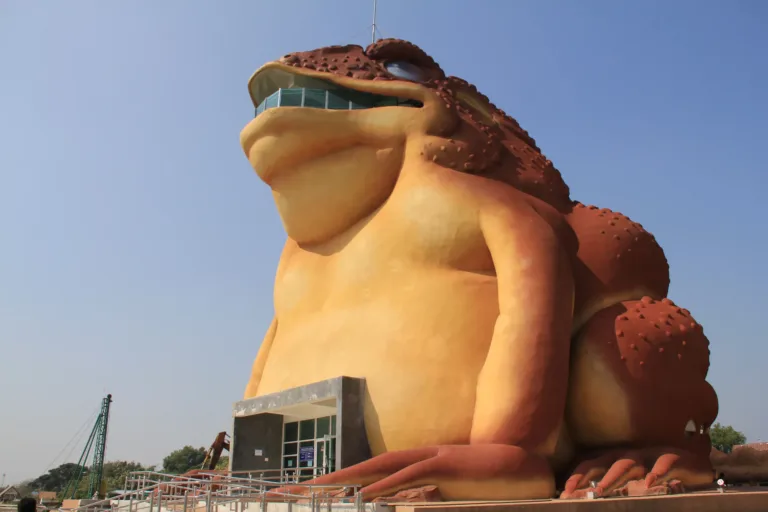 Phaya Khan Khak Museum (Giant Toad Museum)
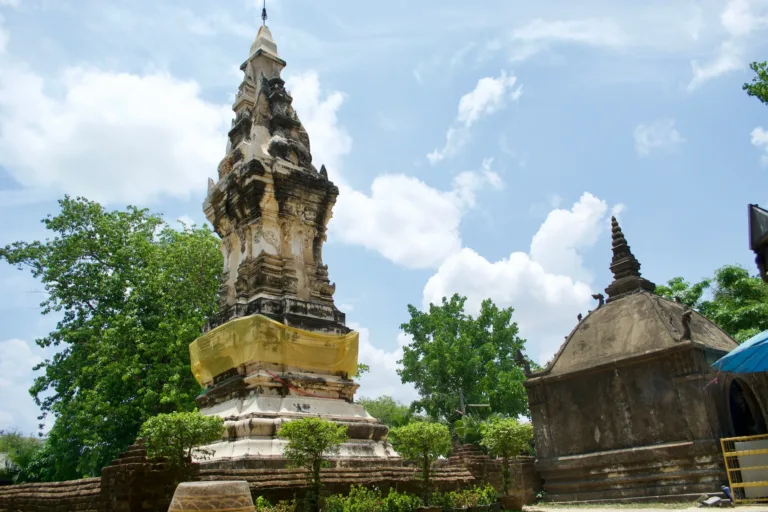 That Kong Khao Noi