7 days ahead
When to go
this week
Tap a day card to see that day’s weather, rain, haze and hourly forecast
Best time to go Daytime is over · see tomorrow
No warnings today — normal road and weather conditions
Hour by hour
Green band = hours used for the score
Best time to go Fine all day little rain through the day
Strong gusts, about 53 km/h
No official warnings, but watch for: Warning: Strong gusts, about 53 km/h
Hour by hour
Green band = hours used for the score
Best time to go Fine all day little rain through the day
No warnings today — normal road and weather conditions
Hour by hour
Green band = hours used for the score
Best time to go Fine all day little rain through the day
No warnings today — normal road and weather conditions
Hour by hour
Green band = hours used for the score
Best time to go Fine all day little rain through the day
No warnings today — normal road and weather conditions
Hour by hour
Green band = hours used for the score
Best time to go Fine all day little rain through the day
No warnings today — normal road and weather conditions
Hour by hour
Green band = hours used for the score
Best time to go Fine all day little rain through the day
No warnings today — normal road and weather conditions
Hour by hour
Green band = hours used for the score
Ban Singha Tha Old Town
Ban Singha Tha was the original name of Yasothon. The old quarter sits in Nai Mueang, between Si Sunthon, Nakhon Tham, Uthai Rammarit and Witthaya Thamrong roads, and has more than 200 years of history as a busy riverside trading district.Wander past pastel Sino-European shophouses with folding wooden doors, arches and stucco details, mud houses over two centuries old and wooden row houses that people still live in. The City Pillar Shrine, Wat Sing Tha and Wat Mahathat are all close by.The Singha Tha Museum on Uthai Rammarit Road tells the story of the area's settlement and trade. It opens Tue–Fri 09:00–16:00 and Sat–Sun 09:30–16:30, closed Mondays, with entry at 20 THB for Thais and 40 THB for foreigners.
- Morning light, easy walking
- Harsh sun; duck into the museum
- Evening light on the facades
Arrive Before 09:30 or after 15:30, when the sun is softer
- Uthai Rammarit Road shophousesFolding doors and pastel archesmorning
- Yasothon City Pillar ShrineChinese–Thai–Lao architectureevening
Good to know here
Photograph politely and don't step into private homes
The streets are open, the museum isn't
- Park once and walk; the quarter is small enough to cover in an hour
- Start at the Singha Tha Museum to understand what you're looking at
- Morning and evening light suit the pastel shophouses
- The Phaya Khan Khak toad museum is about 2.6 km away
Thais 20 THB · Foreigners 40 THB · Time needed 1–2 hours (half a day with the museum)
Holidays and the rocket festival
| Singha Tha Museum, Thai optional | 20 ฿/person |
| Singha Tha Museum, foreigner optional | 40 ฿/person |
Prices may change by season — check with the venue
- Kids Short town walk; fine for kids
- Seniors Flat; go at your own pace
- Wheelchair Narrow, uneven pavements in places
- Pets Fine on the streets, but not inside temples or the museum
- Old-town eateriesCafés and local food
- Rice soup in Yasothon townRestaurants near the quarter
- Ask before photographing people or inside shops
- Dress modestly at temples and the pillar shrine
- Don't wander into private homes
- Watch for traffic while taking photos
- Strong midday sun; carry water
Yasothon Municipality
The story of this place
Ban Singha Tha is where Yasothon began: a riverside settlement on the Chi founded by migrants from the Lao side in the Thonburi era, raised by King Rama II to the town of Yot Sunthon in 1814. It then grew into a river trading quarter where Chinese and Vietnamese merchants set up shop, leaving mud houses, wooden row houses and French colonial-style shophouses that people still live in today. Architectural research describes the commercial quarter as more than 200 years in the making.
Read more 11 more paragraphs
People lived in the Chi basin around Yasothon long before Ban Singha Tha. A Chenla-period inscription was found at Ban Tat Thong in Mueang district, and traces of other ancient settlements turn up across the province. The community you see today, though, began with a migration from Vientiane in the 18th century.
Around the Thonburi period, a conflict broke out between the nobles Phra Wo and Phra Ta and King Siribunyasan of Vientiane. Phra Wo and Phra Ta led their families and followers away to found a town at Nong Bua Lamphu. Later their relatives Thao Kham Su and Thao Kham Sing brought people down the Chi River and founded Ban Sing Khok and Ban Singha Tha. A Mahasarakham University study dates the earliest evidence of settlement to around 1771, while sources disagree on the exact year the village was founded.
Legend says that when the pioneers reached the forest on the Chi bank, they saw a lion and a large Buddha image and took it as a good omen to settle. The name "Singha Tha" joins the lion of that vision with the river landing, "tha". According to the Fine Arts Department, Wat Singha Tha was built around 1781 on the site of an abandoned temple where a large brick-and-stucco Buddha was found. It was first called Wat Phra Chao Yai and renamed Wat Singha Tha after a stone lion was found nearby.
In the early Rattanakosin period, Ban Singha Tha's leader marched to help put down a revolt in Champasak and was made its ruler, leaving his younger brother Thao Kham Muang in charge at home. When King Rama II later appointed another line to rule Champasak, his son Chao Ratchawong Sing returned and expanded Ban Singha Tha.
In 1814 Rama II raised Ban Singha Tha to the town of Yot Sunthon and named Chao Ratchawong Sing its first ruler, with the title Phra Sunthon Ratchawongsa; some sources give the year as 1812. The first ruler also brought his father's ashes back from Champasak to a chedi at Wat Mahathat. Under Rama IV the town's name began to be written "Yot Sothon", which in time became today's "Yasothon".
Its position on the Chi made Ban Singha Tha a hub for travel and trade. After the town was founded, more people passed through; Chinese merchants brought boats of goods from Korat, and a number of Chinese and Vietnamese families settled and opened shops. The quarter gained a theatre, entertainment venues, hotels and factories. The City Pillar Shrine at its heart is revered by Thai-Chinese merchants; it blends Chinese, Thai and Lao art and, unusually, has three pillars.
The most striking legacy is the architecture. Research records the community's first mud house as built in 1902 from clay mixed with straw and animal dung, a technique brought by Chinese settlers; some accounts say certain mud houses are over 200 years old. The stucco-decorated shophouses show the influence of French colonial design from the left bank of the Mekong during the reigns of Rama VI and VII, and many sources say Vietnamese craftsmen who crossed the Mekong built them, pairing Chinese shophouse proportions with Western facades.
Public buildings show what town life was like in its heyday. Yasothon Phapphayon was the town's first cinema with live narrators dubbing the films. Near the City Pillar Shrine stands an old Chinese opera house still used by Thai-Chinese residents for the annual opera festival. Six old temples surround the community, including Wat Singha Tha, as old as the village itself, and Wat Mahathat, home of Phra That Anon.
The big change came around 1972, when roads replaced the river as the main route, and on 1 March that year Yasothon split from Ubon Ratchathani to become a province. The authorities moved the market to a new site to the north, and the commercial centre shifted across Chaeng Sanit Road. Many shophouses in the old quarter closed or fell into neglect, some were pulled down and rebuilt, and the once busy streets grew steadily quieter.
From the early 2000s the old quarter drew attention again. The Fine Arts Department registered the Singha Tha chedi as a national historic site on 28 December 2002 and restored it the following year. Yasothon Municipality documented the community's history in 2003 and drew up a conservation master plan in 2010. Residents formed the Yasothon Heritage Conservation Club and opened three homes as homestays the same year. In 2011 the community celebrated 200 years with a walking street, later followed by a Wednesday walking street and retro alms-giving in front of Wat Singha Tha.
Most recently, the municipality turned an old building in the quarter into the Singha Tha Museum. The project began in 2017, the building was finished in 2018, it was handed to the municipality in 2020, and it opened to the public on 19 March 2025 at a cost of almost 3.9 million baht, telling the story of the area's settlement, trade and daily life. Today Ban Singha Tha is both a lived-in neighbourhood and an open-air classroom for Yasothon's history.
- 1771Earliest evidence of settlement at Ban Singha Tha on the Chi River
- 1781A temple is built on an abandoned temple site, first called Wat Phra Chao Yai and later Wat Singha Tha
- 1814Rama II raises Ban Singha Tha to the town of Yot Sunthon under its first ruler, Phra Sunthon Ratchawongsa (some sources say 1812)
- 1902The community's first mud house is built
- 1910–1935Shophouses with French colonial-style ornament go up (reigns of Rama VI–VII)
- 1965Wat Singha Tha's ordination hall and great Buddha image are restored
- 1972Roads replace the river; Yasothon becomes a province on 1 Mar; the market moves north and the old quarter declines
See 8 events
- 200228 Dec — the Singha Tha chedi is registered as a national historic site
- 2003The chedi is restored; the municipality documents the community's history
- 2010The municipality draws up a conservation master plan and homestays open in the community
- 2011The community marks 200 years with a Ban Singha Tha walking street
- 2017Singha Tha Museum project begins
- 2018Museum building completed
- 2020Museum handed to Yasothon Municipality
- 202519 Mar — the Singha Tha Museum opens to the public
Check-ins & visitor photos
Arrived? Check in, collect a stamp and tell others what it is like right now
Check your location first, so you do not fill in the form for nothing
Location must be on and within 0.5 km · One check-in per place per day · come back on other days to check in again
Post photos from anywhere — no need to be here · Up to 20 photos at a time · JPG / PNG / WebP · GPS location data is removed automatically
How to get there
The old quarter is in central Yasothon, Nai Mueang, between Si Sunthon, Nakhon Tham, Uthai Rammarit and Witthaya Thamrong roads.
Drive into central Yasothon, park and walk · Fuel
From Yasothon bus terminal to the centre · Varies
Paved town roads
Park near the City Pillar Shrine, Wat Sing Tha or other permitted spots, then walk
Good; it's in town
Old-town streets open daily · Singha Tha Museum Tue–Fri 09:00–16:00, Sat–Sun 09:30–16:30, closed Mondays
Ban Singha Tha Old Town
40 THB
FAQ
Before you go: Ban Singha Tha Old Town
Answers travellers want before they go — a one-minute read
Where is Ban Singha Tha?
Central Yasothon, between Si Sunthon, Nakhon Tham, Uthai Rammarit and Witthaya Thamrong roads
Does it cost anything?
Walking the streets is free; the Singha Tha Museum is 20 THB for Thais, 40 THB for foreigners
When is the museum open?
Tue–Fri 09:00–16:00, Sat–Sun 09:30–16:30, closed Mondays
How long should I allow?
1–2 hours, or half a day with the museum and temples
Why the name Ban Singha Tha?
It was Yasothon's original name before it became a town
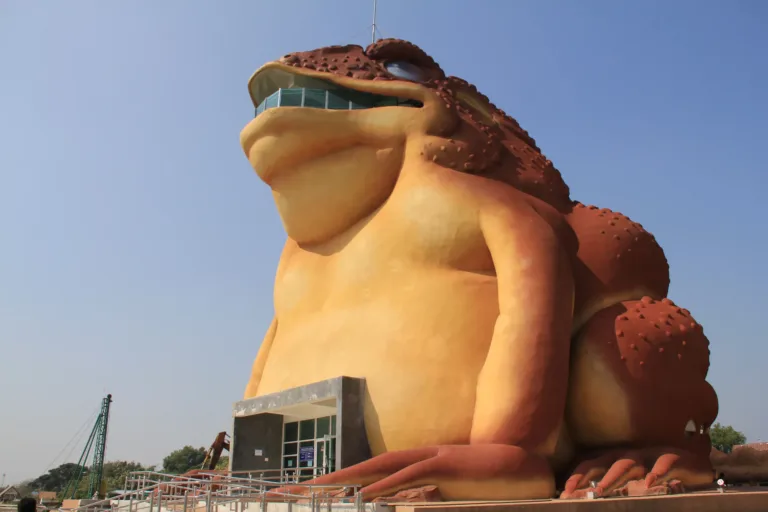 Phaya Khan Khak Museum (Giant Toad Museum)
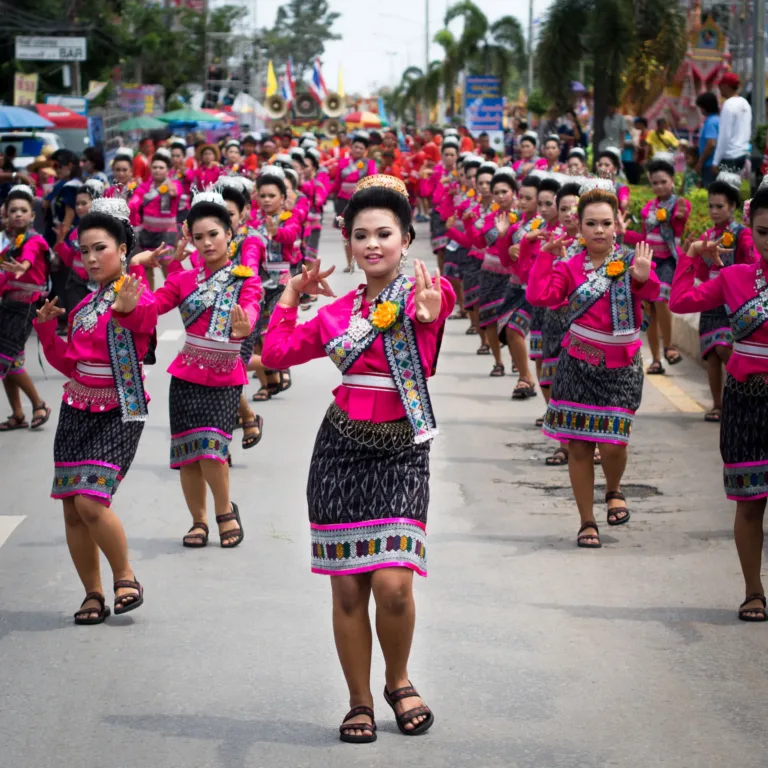 Yasothon Rocket Festival (Bun Bang Fai)
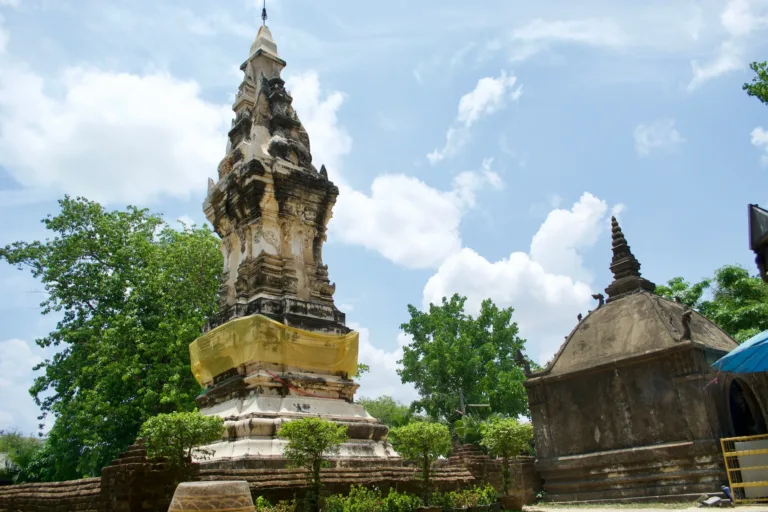 That Kong Khao Noi
Ready to go to Ban Singha Tha Old Town?
Best day this week: Saturday 28 Nov · Check in when you arrive to collect a stamp