What to know before visiting the temple
Dress modestly · Keep quiet; it's a meditation centre · Don't touch Buddha images · Don't climb rocks where it's forbidden
Daily 07:30–17:00
Before 10:00, before the rock heats up
7 days ahead
When to go
this week
Tap a day card to see that day’s weather, rain, haze and hourly forecast
Best time to go Daytime is over · see tomorrow
Strong gusts, about 54 km/h
No official warnings, but watch for: Warning: Strong gusts, about 54 km/h
Hour by hour
Green band = hours used for the score
Best time to go Fine all day little rain through the day
Strong gusts, about 54 km/h
No official warnings, but watch for: Warning: Strong gusts, about 54 km/h
Hour by hour
Green band = hours used for the score
Best time to go Fine all day little rain through the day
No warnings today — normal road and weather conditions
Hour by hour
Green band = hours used for the score
Best time to go Fine all day little rain through the day
No warnings today — normal road and weather conditions
Hour by hour
Green band = hours used for the score
Best time to go Fine all day little rain through the day
No warnings today — normal road and weather conditions
Hour by hour
Green band = hours used for the score
Best time to go Fine all day little rain through the day
No warnings today — normal road and weather conditions
Hour by hour
Green band = hours used for the score
Best time to go Fine all day little rain through the day
No warnings today — normal road and weather conditions
Hour by hour
Green band = hours used for the score
Wat Tham Saeng Phet
Wat Tham Saeng Phet sits on a hill in the Phu Sing–Phu Pha Phueng forest park, Nong Ma Saeo, Mueang Amnat Charoen, about 18 km from town along the Amnat Charoen–Khemarat road and then 2 km uphill. It's a forest monastery in the Ajahn Chah tradition and the fifth branch of Wat Nong Pah Pong.The name comes from a large cave whose walls are flecked with minerals that glitter like diamonds; Buddha images are enshrined inside. Up top you'll also find a golden chedi with a likeness of Ajahn Chah and murals of his life, a large reclining Buddha, sandstone terraces and shady bamboo groves.It's open daily 07:30–17:00. Come in the morning, since much of the site is open rock, dress modestly and keep your voice down: this is a meditation centre.
- Cool, easy walking on the rock
- Hot rock terraces
- Softer sun
Arrive Before 10:00, before the rock heats up
- Sandstone terracesRock, bamboo and the golden chedimorning
- Cave mouthLight on the cave wallslate morning
Good to know here
Keep quiet and don't disturb monks or practitioners
On rocks where signs say so
- Come in the morning, before the rock gets hot
- Wear comfortable shoes; it's rock and slopes
- Phra Mongkhon Mingmueang is about 16 km away
- Kids Fine, but keep kids quiet at a meditation centre
- Seniors Slopes and rock terraces; manageable slowly
- Wheelchair Rock and a cave; not suitable
- Pets Forest monastery; leave pets at home
- Dress modestly
- Keep quiet; it's a meditation centre
- Don't touch Buddha images
- Don't climb rocks where it's forbidden
- Wet rock is slippery
- Strong midday sun
The story of this place
Wat Tham Saeng Phet sits on Phu Khao Kham, a low sandstone hill east of Amnat Charoen town. It is a forest monastery in the meditation lineage of Ajahn Chah (Luang Pu Chah Subhaddo, Phra Bodhinyana Thera) and counts as the fifth branch of Wat Nong Pah Pong. Villagers were already worshipping in its cave when, around 1968, Ajahn Chah came here on tudong (wandering retreat) to meditate, and the following year he sent disciples to build a monastery. What began as a rock shelter in the forest grew into one of Isan's important meditation centres, with the great hall known as Sala Phan Hong, a chedi holding a likeness of Ajahn Chah and a large reclining Buddha on the rock terrace.
Read more 10 more paragraphs
Phu Khao Kham is a low ridge that slopes down to the east. Its name comes from a large tamarind tree (makham) growing out of the cliff on the northeast side. The sandstone has weathered into overhangs and caves, the most important being Tham Phra Yai, the "big Buddha cave" better known as Tham Saeng Phet, and Tham Phra Noi, or Tham Kho Non. There are also a hermit's cave, a snake cave and a bat cave. Many sources place the temple within the Phu Sing–Phu Pha Phueng forest park, which the Royal Forest Department set up on 26 August 1996 over about 10,000 rai. Most sources give the location as Nong Ma Saeo subdistrict, though some place it near Ban Dong Charoen in Sang Nok Tha subdistrict.
The hill's stories are much older than the forest monastery. Old people say a hermit once lived in the caves here; the hermit's cave, about 50 metres from the big cave and some 20 metres deep, still holds a seated hermit statue. Villagers also believe the big cave runs right through the hill and comes out at Tham Kham on the other side. Tham Kho Non at the foot of the hill is said to have sheltered herds of wild cattle, which is why villagers modelled a reclining cow at its mouth.
The best-known legend concerns the big cave. It tells of a Khmer king and his queen who fled an invasion from the Lao side and hid here with a great treasure, only to die soon after of jungle fever. Villagers never dared touch the treasure, believing unseen guardians watched over it. Another tale says a wandering monk who meditated in the cave grew greedy, and the cave shook as if it would collapse. Some sources say the name "Saeng Phet" (diamond light) comes from this treasure story, while most explain it by the mineral flecks in the rock walls that sparkle like diamonds when the light catches them.
Before the monastery, the mouth of the big cave was only about a metre wide. Inside were a Buddha image and figures of the Buddha's first five disciples, roughly modelled in plaster and damaged. They are thought to have been made by villagers out of faith rather than skill, so they did not follow the classic iconography closely. Later, donors paid for the main image and the five disciples to be remade. The cave was thus revered locally long before the Wat Nong Pah Pong monks arrived.
Ajahn Chah was born on 17 June 1918 at Ban Chik Ko in Warin Chamrap, Ubon Ratchathani, and ordained as a monk on 26 April 1939. In 1954 he settled in the Pah Pong forest, which became Wat Nong Pah Pong, and from 1958 branch monasteries began to appear. Around 1968 he reached Phu Khao Kham and stayed in a rock shelter beneath the cliff to meditate. At the time the area was still part of Ubon Ratchathani; Amnat Charoen only became a separate province in 1993.
In 1969 Ajahn Chah sent Luang Por Thun Chattasallo, one of his first-generation disciples from Warin Chamrap, who had been ordained at Wat Nong Pah Pong in 1964 and had wandered on tudong with him, to live at Wat Tham Saeng Phet with two other monks, with the task of developing it into a meditation centre for the Northeast. Disciples went on donating to build and restore the temple over the years, and the English biography of Ajahn Chah also records the shared work of building the road up to the monastery in that period.
The building that made the temple widely known is the great hall on the rocky summit, 28 metres wide and 60 metres long on a plot of about 1,780 square wa. Its lower level is a tank that stores rainwater for the dry season. Construction took 1 year, 8 months and 12 days and was completed on 16 February 1972, which is why the temple holds its annual fair on that date. Inside sits a principal Buddha in the subduing-Mara posture with a lap width of 2.50 metres. People call the hall "Sala Phan Hong" (the thousand-room hall) and often call the temple Wat Sala Phan Hong or Wat Si Yaek Saeng Phet.
Wat Tham Saeng Phet has also long been a place of practice for foreign monks, and several of Ajahn Chah's early Western disciples stayed here. In 1981 Ajahn Chah spent the rains retreat at the temple, partly for a change of air because his health was poor, and from here he recorded a Dhamma message to his disciples in England. Soon afterwards diabetes left his health badly failing; an operation in Bangkok did not help, and after a long illness he died on 16 January 1992, aged 74.
On the rock terrace beside the great hall stands the Si Bodhinyana chedi, 26 metres wide at the base and 26 metres high, with gateways on four sides, modelled on a chedi at Nong Khae in Saraburi. Inside is a wax likeness of Ajahn Chah with paintings of his daily practice (some sources call it the Si Maha Pho chedi). Nearby lies a 19-metre reclining Buddha clad in white mosaic tiles, named Phra Phuttha Bodhinyana Phat Maharat, which is on the province's multi-temple merit-making route. Today Phu Khao Kham has two temples: Wat Tham Saeng Phet on the summit and Wat Tham Saeng Phet Lang at the foot of the hill, covering about 100 rai.
Luang Por Thun, later given the ecclesiastical title Phra Khru Wachirathammarangsi, looked after the temple for more than 56 years until he died peacefully there on 29 September 2025, aged 83, after 61 years as a monk. His body lay in state at Sala Phan Hong, with seven days of merit-making rites from 1 to 7 October 2025. Wat Tham Saeng Phet remains a forest monastery that carries on Ajahn Chah's way of practice today.
- 191817 Jun — Ajahn Chah is born at Ban Chik Ko, Warin Chamrap, Ubon Ratchathani
- 193926 Apr — Ajahn Chah is ordained as a monk
- 1954Ajahn Chah settles in the Pah Pong forest, the start of Wat Nong Pah Pong
- 1958Wat Nong Pah Pong begins to found branch monasteries
- 1964Luang Por Thun Chattasallo is ordained at Wat Nong Pah Pong
- 1968Ajahn Chah stays to meditate in a rock shelter on Phu Khao Kham (approximate)
- 1969Ajahn Chah sends Luang Por Thun and two other monks to develop Wat Tham Saeng Phet
See 8 events
- 197216 Feb — the Sala Phan Hong great hall is completed; the date becomes the annual fair
- 1981Ajahn Chah spends the rains retreat here and records a Dhamma message to his disciples in England
- 1981Ajahn Chah's health fails badly from diabetes; after an operation in Bangkok he remains ill for years
- 199216 Jan — Ajahn Chah dies, aged 74
- 1993Amnat Charoen is separated from Ubon Ratchathani as a new province
- 199626 Aug — the Royal Forest Department establishes Phu Sing–Phu Pha Phueng forest park
- 202529 Sep — Luang Por Thun (Phra Khru Wachirathammarangsi) dies, aged 83, after 61 years as a monk
- 20251–7 Oct — seven days of merit-making rites for Luang Por Thun at Sala Phan Hong
Check-ins & visitor photos
Arrived? Check in, collect a stamp and tell others what it is like right now
Check your location first, so you do not fill in the form for nothing
Location must be on and within 1 km · One check-in per place per day · come back on other days to check in again
Post photos from anywhere — no need to be here · Up to 20 photos at a time · JPG / PNG / WebP · GPS location data is removed automatically
How to get there
The temple is in Nong Ma Saeo, Mueang Amnat Charoen, within the Phu Sing–Phu Pha Phueng forest park.
Amnat Charoen town–Amnat Charoen–Khemarat road–temple road · Fuel
Paved Amnat Charoen–Khemarat road, then about 2 km uphill
Daily 07:30–17:00
about 20 km from Amnat Charoen town
Wat Tham Saeng Phet
FAQ
Before you go: Wat Tham Saeng Phet
Answers travellers want before they go — a one-minute read
Where is Wat Tham Saeng Phet?
Nong Ma Saeo, Mueang Amnat Charoen, in the Phu Sing–Phu Pha Phueng forest park
What are the hours?
Daily 07:30–17:00
How far is it from town?
About 18 km on the Amnat Charoen–Khemarat road, then about 2 km uphill
Why 'Saeng Phet'?
The cave walls glitter with mineral flecks, like diamonds
What's the link to Ajahn Chah?
It's the fifth branch of Wat Nong Pah Pong and has a chedi with his likeness
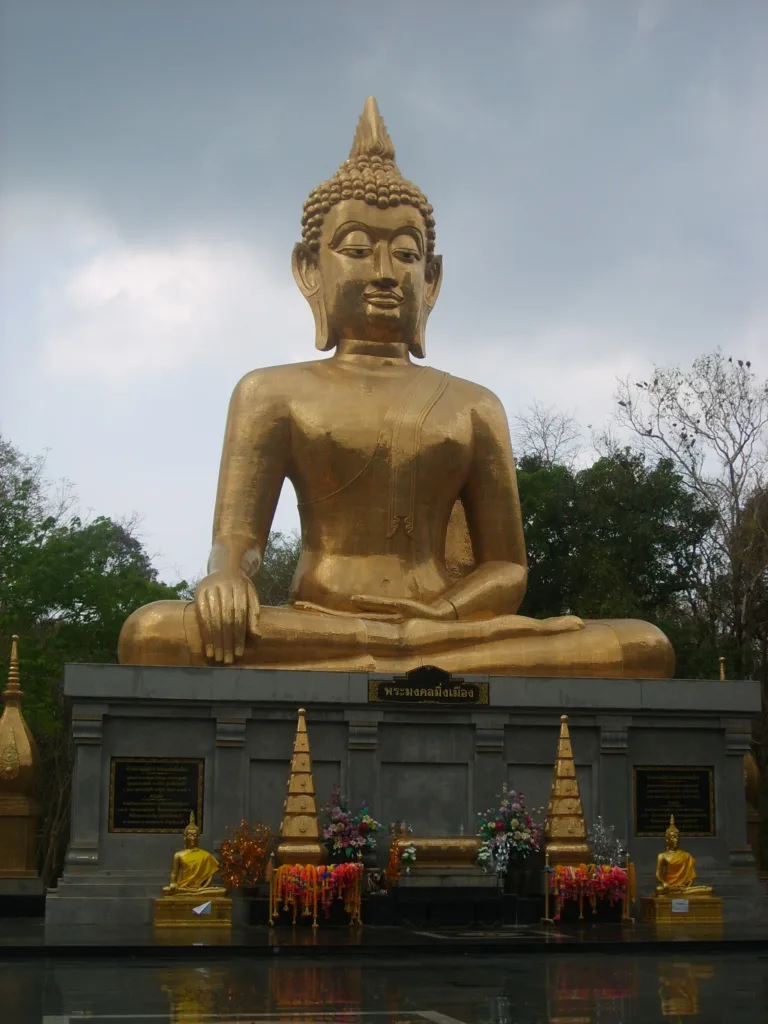 Phra Mongkhon Ming Mueang, Amnat Charoen Buddha Park
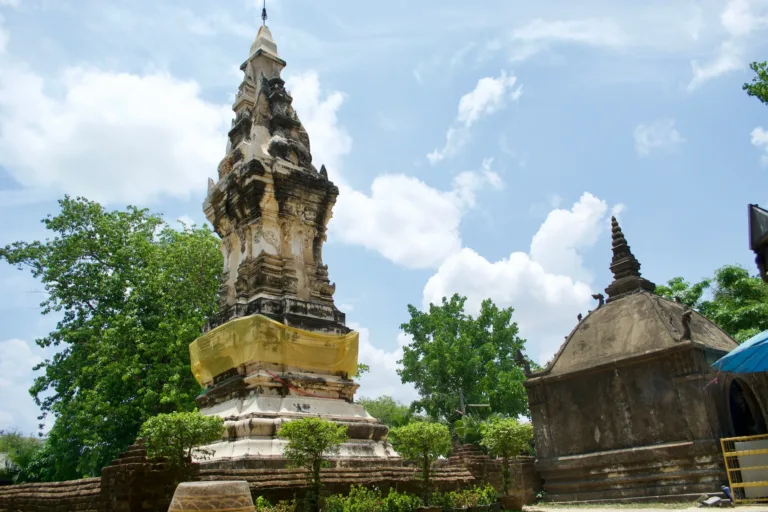 That Kong Khao Noi
Ready to go to Wat Tham Saeng Phet?
Best day this week: Monday 30 Nov · Check in when you arrive to collect a stamp