 01
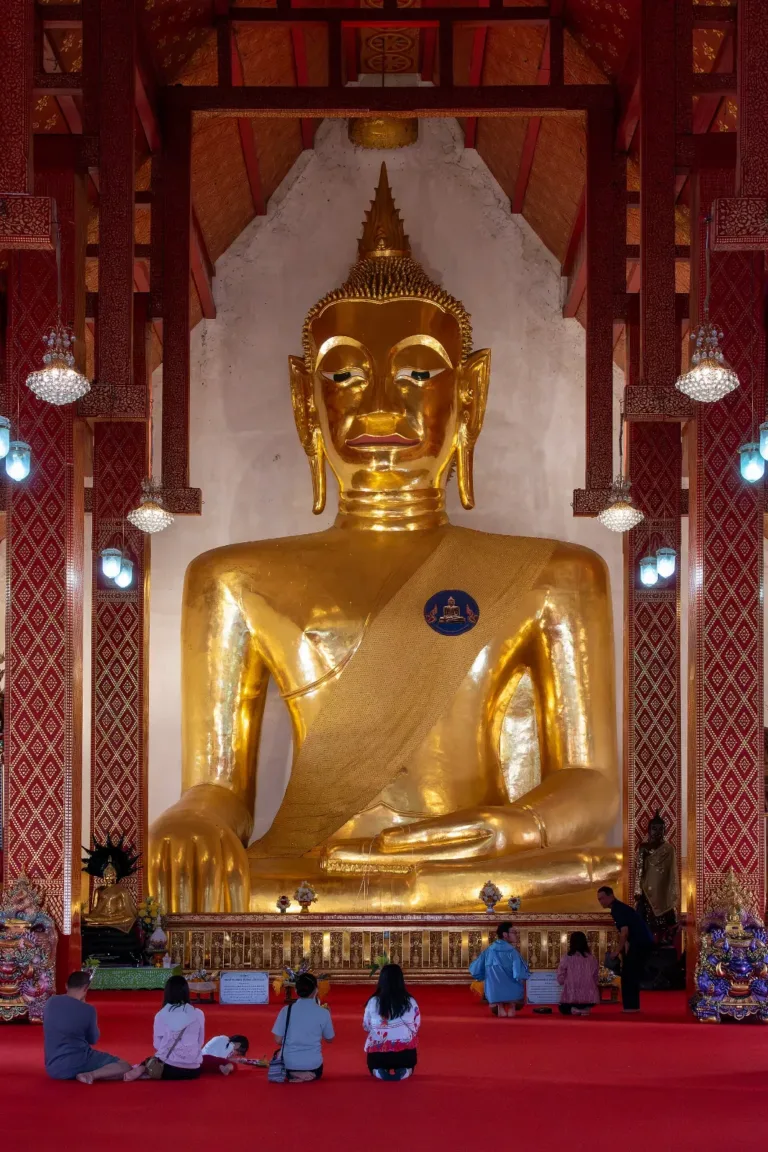
Phra Chao Ton LuangA seated Chiang Saen-style Buddha, about 14 m across the lap and 16 m tall
Royal temple · Kwan Phayao lakeshore
A royal temple on Kwan Phayao, home to Phra Chao Ton Luang, a huge Chiang Saen-style Buddha about 14 m across the lap and 16 m tall, plus a lakeside ordination hall painted by Angkarn Kalayanapong.
Holiday / event — crowded
Dress modestly · Sit with your head lower than the Buddha image · Don't point your feet at Buddha images or monks
Daily, around 06:00–18:30
17:00, to look around before sunset over the lake
Paet Peng festival honouring Phra Chao Ton Luang (around Visakha Bucha)
01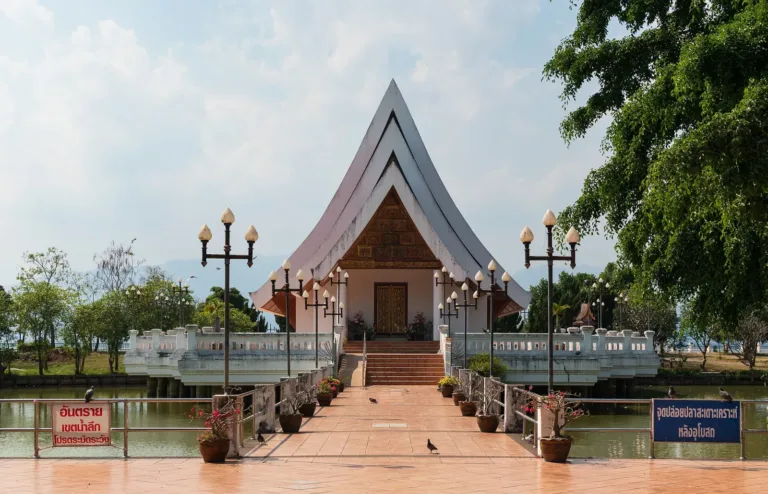 02
 03
 04
Tap a day card to see that day’s weather, rain, haze and hourly forecast
Best time to go Daytime is over · see tomorrow
Holiday — traffic on the way up and parking fills fast; leave early
Green band = hours used for the score
Best time to go Fine all day little rain through the day
Holiday — traffic on the way up and parking fills fast; leave early
Green band = hours used for the score
Best time to go Fine all day little rain through the day
Thick morning fog with visibility under 1 km — use headlights and drive slowly
Green band = hours used for the score
Best time to go Fine all day little rain through the day
No warnings today — normal road and weather conditions
Green band = hours used for the score
Best time to go Fine all day little rain through the day
No warnings today — normal road and weather conditions
Green band = hours used for the score
Best time to go Fine all day little rain through the day
No warnings today — normal road and weather conditions
Green band = hours used for the score
Best time to go Fine all day little rain through the day
No warnings today — normal road and weather conditions
Green band = hours used for the score
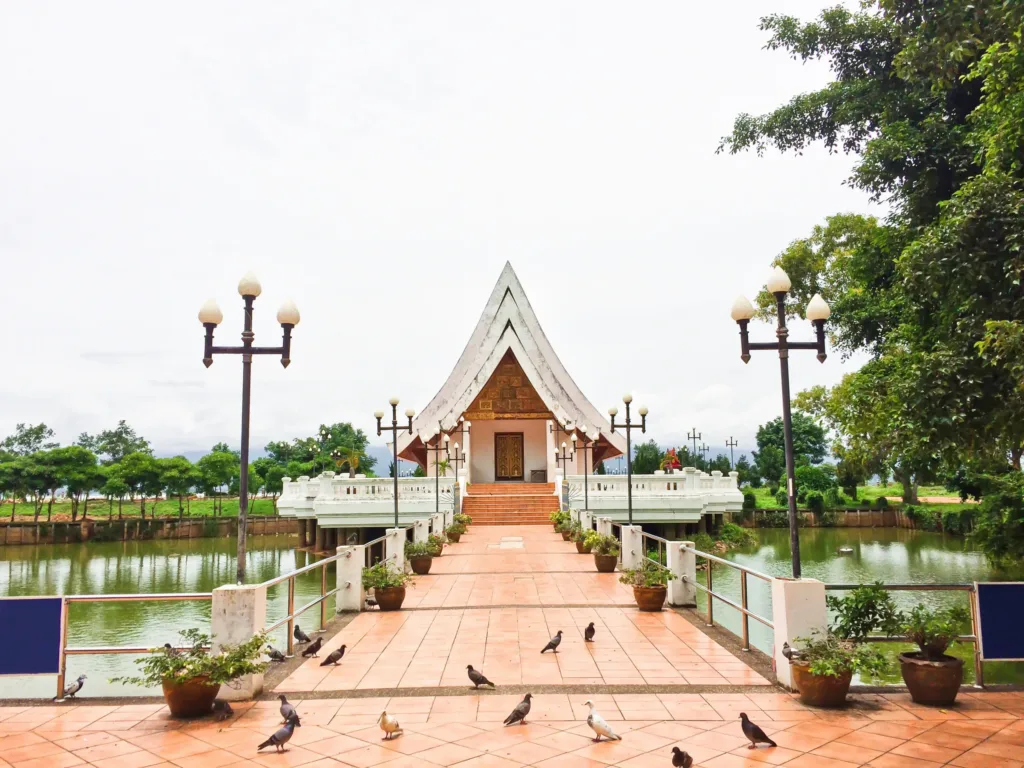
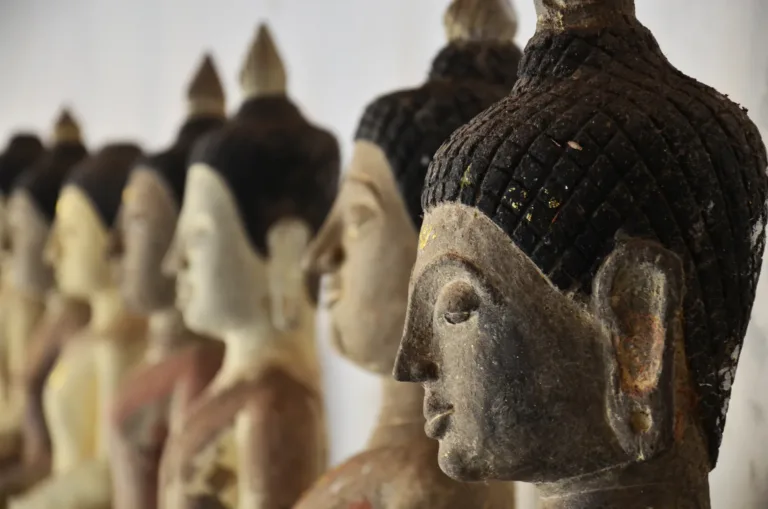
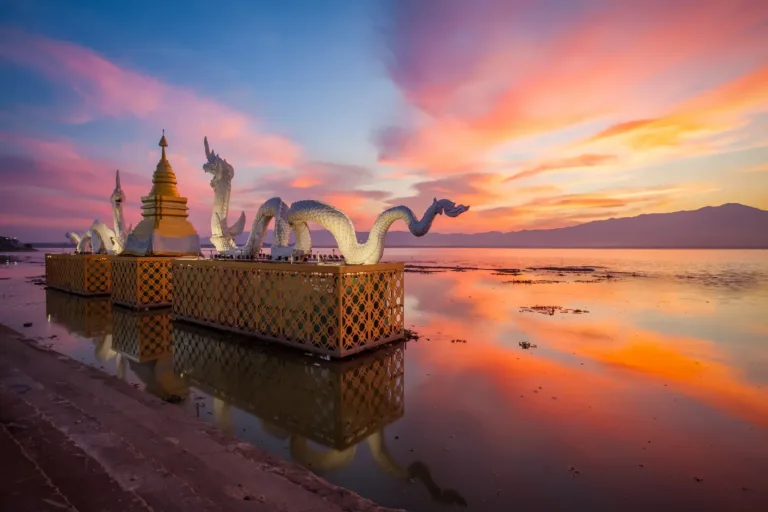
Wat Si Khom Kham, known locally as Wat Phra Chao Ton Luang, stands on the shore of Kwan Phayao lake along Phahonyothin Road in Mueang Phayao. It is a third-class royal temple and home to Phra Chao Ton Luang, Phayao's most revered Buddha image.Phra Chao Ton Luang is a seated Chiang Saen-style Buddha about 14 m wide at the lap and 16 m tall, cast between 1491 and 1524. Dozens of old Buddha heads surround the wihan, some carved from Phayao's pink sandstone.Don't miss the ordination hall built out over the lake, with Lanna-inspired contemporary murals by National Artist Angkarn Kalayanapong. Come late in the day and you can stay for sunset over the water.
Arrive 17:00, to look around before sunset over the lake
The Visakha Bucha festival brings big crowds and traffic around the temple
Keep your head lower than the Buddha image and never point your feet at it
Free · Time needed 1 hour
Visakha Bucha festival and long weekends
Paet Peng festival honouring Phra Chao Ton Luang (around Visakha Bucha)
Wat Si Khom Kham, known locally as Wat Thung Iang or Wat Phra Chao Ton Luang, has been Phayao's guardian temple for around 500 years. Its heart is Phra Chao Ton Luang, the largest seated Buddha image in Lanna, built between 1491 and 1524. The temple has lived through a golden age, a long period when the town lay deserted, the town's revival and a major rebuilding led by Khruba Srivichai, before becoming the royal temple on the shore of Kwan Phayao that you see today.
Legend says the Buddha came to the town of Phu Kam Yao and rested on a hill near Nong Iang pond. A goldsmith offered him food and received a hair relic in return, but brought no water. When Ananda went to fetch water from Nong Iang, the naga who ruled the pond refused him, so the Buddha went himself and won the naga over, then asked it to make a Buddha image. The naga brought gold from its underwater realm and gave it to an elderly couple who kept geese by the pond, and they built the image. Scholars note that the story follows the same pattern as the "Phra Chao Liap Lok" legends of the Buddha's travels found all over Lanna.
Historically, no firm evidence shows when the temple was founded. An article by the temple's own abbot suggests it arose together with the great image. Some sources date it to the reign of King Yot Chiang Rai, while others reach back as far as the 12th century. Phra Thammapala, the first abbot named in the chronicle, is credited with writing down the legend of Phra Chao Ton Luang.
Work on Phra Chao Ton Luang began around 1491 and took about 33 years, ending in 1524. Sources differ on its patrons. Some say it was begun under Phaya Mueang Yi of Phayao and continued by Phaya Hua Khian and Phra Mueang Tu. Others say it began in the reign of King Yot Chiang Rai and was finished under Phra Mueang Tu of Phayao and King Mueang Kaeo of Chiang Mai. According to the legend, Mueang Kaeo gave gold for the viharn, named the image and granted 20 households of temple servants to look after it. A stone inscription, Lp. 29, also carries a date equal to 1524 and describes the image's proportions.
The Buddha sits in the posture of subduing Mara, directly on the floor with no tall base. It is built of brick and lime plaster and covered in gold, about 14 m across the lap and 16 m high, though some sources give 16 and 18 m. Its features belong to the Phayao school of Lanna art. Around the viharn sit some 38 old Buddha heads, some carved from Phayao's pink sandstone. Locals traditionally make vows to Phra Chao Ton Luang with offerings of duck, chicken or goose eggs.
Around 1557, Burmese armies attacked the cities of Lanna, which then stayed under Burmese rule for more than 200 years. Later, the people of Phayao fled the wars and the town lay empty for about 56 years while the temple and its image crumbled. Around 1844, King Rama III ordered Phayao to be resettled and appointed Noi Phutthawong as its ruler with the title Phraya Prathet Udonthit. Some sources give the year as 1843.
The new ruler and Chao Mahayot began restoring Phra Chao Ton Luang and built a new viharn over it, and later rulers kept up the repairs. The last ruler of Phayao pulled down the old viharn to build a new one, but work stopped when the master builder died. When Phayao was later absorbed into the monthon and then the provincial system, the post of ruler came to an end.
In 1922, Phayao's monks and leaders invited Khruba Srivichai from Lamphun to lead the restoration. He agreed on condition that the materials be gathered first, so monks and novices made about 200,000 bricks and villagers donated the rest. The foundation was laid in 1923, and the main viharn, ordination hall, footprint hall and pavilions were finished in about a year at a cost of 113,000 rupees, followed by a month-long celebration in 1924. The main viharn's gable, filled with floral patterns and featuring a garuda and a tiger, is a signature of Khruba Srivichai's craftsmen.
The temple also holds a pair of Sukhothai-style Buddha footprints, found in 1903 inside the chedi of the abandoned Wat Suan Chan Nai and moved via Wat Hua Khuang Kaeo, and the Khruba Srivichai viharn, built in 1948 with a reliquary holding his remains. The water in front of the temple changed too. The area was once low-lying ground around Nong Iang pond until a weir on the Ing River created Kwan Phayao; some sources date this to 1939, others to 1941.
In the modern era, the Fine Arts Department restored Phra Chao Ton Luang in 1976, leaving some details different from other Phayao images of the same period. The temple became a royal temple on 17 April 1980. In 1985 the ordination hall over the lake was built, designed by Boonniyom Sitthihan, with a Bodhi tree mural by Angkarn Kalayanapong and Ten Jataka scenes by Phaptawan and Kabkaew Suwannakut. It received its royal boundary grant on 4 July 1986. Later, Phra Ubali Khunupamachan (Luang Pu Puang) started the Ho Watthanatham Nithat museum, which opened on 18 January 1996.
After the earthquake of 24 March 2011, a crack at least 60 cm long was found on the image's right arm, and the temple drilled more than 50 holes in its back to let moisture out. Luang Pu Puang died at the age of 101, and his royal cremation was held at the temple in February 2020. Every year around Visakha Bucha, Phayao still holds the Paet Peng festival honouring Phra Chao Ton Luang; the 2022 festival marked the image's 531st year.
Arrived? Check in, collect a stamp and tell others what it is like right now
Check your location first, so you do not fill in the form for nothing
Location must be on and within 1 km · One check-in per place per day · come back on other days to check in again
Post photos from anywhere — no need to be here · Up to 20 photos at a time · JPG / PNG / WebP · GPS location data is removed automatically
The temple is on the shore of Kwan Phayao, on Phahonyothin Road in Mueang Phayao.
Phahonyothin Road in Phayao town · Fuel
From around Phayao town · Negotiable
Phahonyothin Road in town
Good
Daily, around 06:00–18:30
Wat Si Khom Kham
Answers travellers want before they go — a one-minute read
About 14 m across the lap and 16 m tall
No, it's free
Inside the ordination hall built out over Kwan Phayao
The Paet Peng festival honouring Phra Chao Ton Luang, around Visakha Bucha (about May)
Late afternoon into evening, then sunset on the lakeshore
Best day this week: Monday 30 Nov · Check in when you arrive to collect a stamp
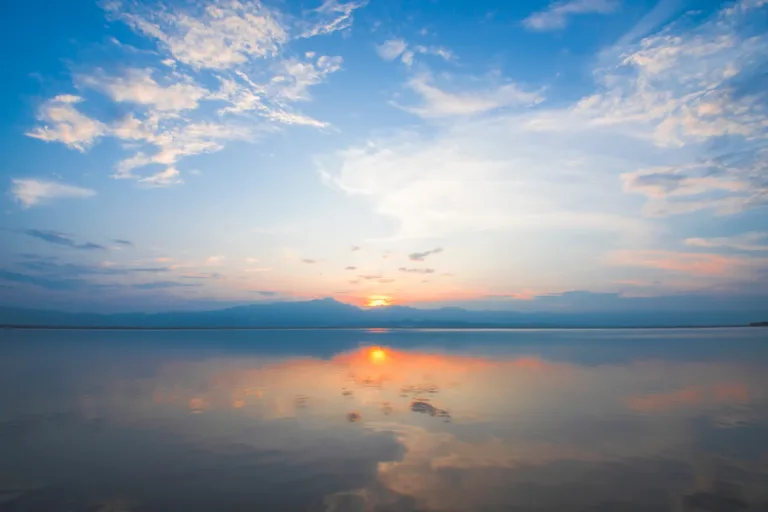 Kwan Phayao
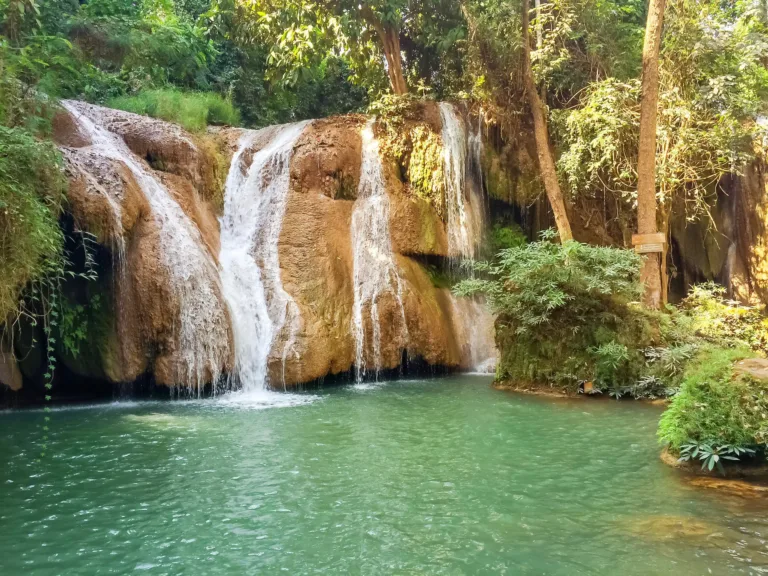 Doi Phu Nang National Park
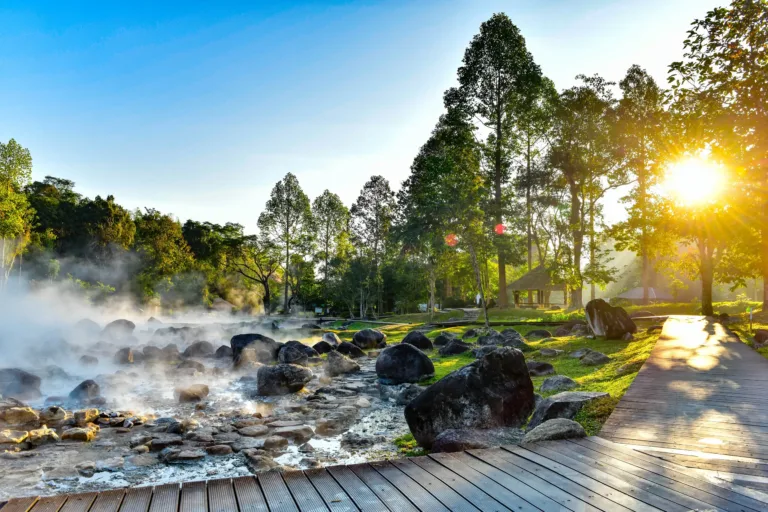 Chae Son National Park