 01
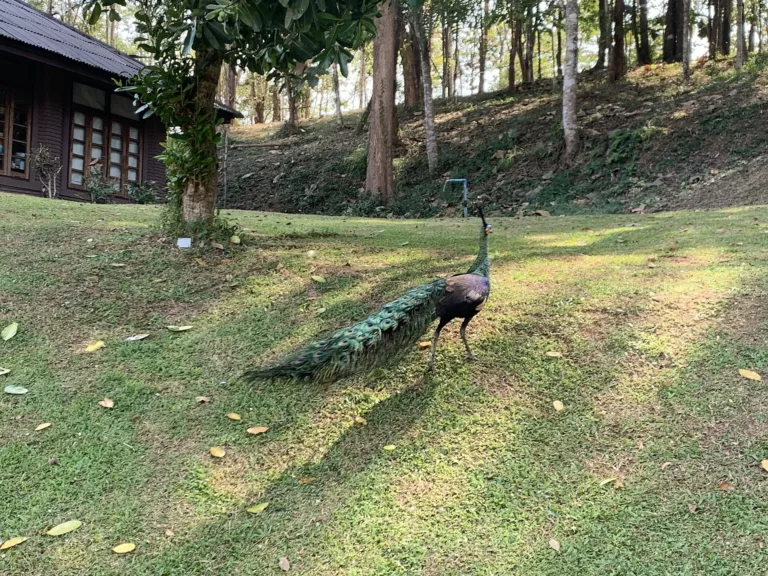
Green peafowlOne of the region's densest populations
Home of the green peafowl · Phayao
Thailand's 127th national park, covering Dok Khamtai, Chiang Muan and Pong in Phayao, declared in 2012 — one of the densest green peafowl strongholds in mainland Southeast Asia, with more than 2,600 birds counted in 2020. Than Sawan waterfall is 300 m from headquarters.
Just outside the best season
May – Sep
Fires — The park may close Feb–Apr
Half a day to one night
Patchy
01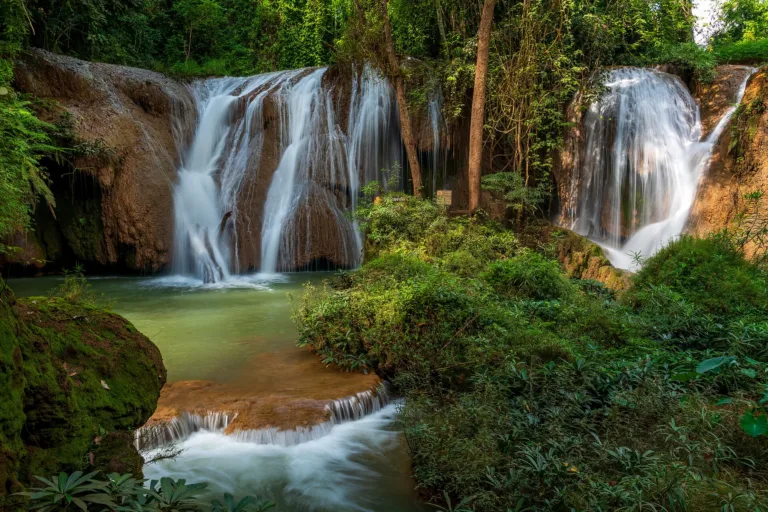 02
 03
 04
Tap a day card to see that day’s weather, rain, haze and hourly forecast
Best time to go Daytime is over · see tomorrow
No warnings today — normal road and weather conditions
Green band = hours used for the score
Best time to go Fine all day little rain through the day
No warnings today — normal road and weather conditions
Green band = hours used for the score
Best time to go Fine all day little rain through the day
No warnings today — normal road and weather conditions
Green band = hours used for the score
Best time to go Fine all day little rain through the day
No warnings today — normal road and weather conditions
Green band = hours used for the score
Best time to go Fine all day little rain through the day
No warnings today — normal road and weather conditions
Green band = hours used for the score
Best time to go Fine all day little rain through the day
No warnings today — normal road and weather conditions
Green band = hours used for the score
Best time to go Fine all day little rain through the day
No warnings today — normal road and weather conditions
Green band = hours used for the score
Scored from cloud cover at every level and tonight’s moonlight — the darker the sky, the clearer the Milky Way · tap another night below for the next 7 nights
Doi Phu Nang National Park, Ban Mang, Chiang Muan, Phayao.
Arrive 06:00 for peafowl
Photos from Wikimedia Commons and contributors · tap a photo to see its credit
The park may close Feb–Apr
No flash, no feeding
Take care at the falls in heavy rain
Thais 20 THB · Foreigners 100 THB · Time needed Half a day to one night
Long weekends in the cool season
| Thai adult entry | 20 ฿/person |
| Thai child entry | 10 ฿/person |
| Foreign adult entry | 100 ฿/person |
| Foreign child entry | 50 ฿/person |
Cash · Prices may change by season — check with the venue
Tap a month on the wheel to see weather, rain, haze and crowds from 10 years of records
Best time · Dec–Mar is the peafowl breeding season; watch in the early morning
Watch out · Mar–Apr fire season — the park has closed · slippery paths in the rains
Nov by the records 21–29°C · avg rain 48 mm (8 rainy days) · clear 16 days · avg PM2.5 8
Doi Phu Nang National Park spans Dok Khamtai, Chiang Muan and Pong districts in Phayao, with headquarters at Moo 6, Ban Bo Bia, Ban Mang subdistrict, Chiang Muan, about an hour from Phayao town. It covers about 537,424 rai per 2020 parks department data, rising from about 300 m to Doi Phu Nang's summit at about 1,200 m (sources give 1,202, 1,211 and 1,222 m).
The park lies on the Phi Pan Nam range, with two main ridges — the Mae Yom and Nam Pi — feeding tributaries of the Yom River. It brings together the Mae Yom, Mae Tam and Mae Rong Khui forests, bordered by Wiang Lo Wildlife Sanctuary to the north, Doi Pha Chang Wildlife Sanctuary to the east and Mae Yom National Park in Phrae to the south.
The Royal Forest Department surveyed the area for a park in 1988 and set it up as a park in preparation in 1990, but full declaration took more than 20 years.
Green peafowl here first came to notice through research for the Kaeng Suea Ten dam around 1992. A 1998–99 survey found about 270 birds in the Yom and Ing basins, at least 136 in the Doi Phu Nang area, about 86% of them in the south-west near the headquarters along the Yom.
From October 1999 to May 2001 Chulalongkorn master's student Sirirak Aratrakorn studied the peafowl's breeding ecology, finding a breeding season of about November to May, nesting from December, chicks from March, and birds feeding in harvested rice fields; she also recorded deaths from farm chemicals.
In 2001 the area was listed in BirdLife's Red Data Book, and in 2011 it was confirmed as a Key Biodiversity Area, described as perhaps the most important site for green peafowl conservation.
On 13 June 2012 Doi Phu Nang was declared Thailand's 127th national park, according to Wikipedia's list of parks. OpenStreetMap's protected-area index cites the Royal Gazette, vol. 129, part 51 Kor, p. 22; the date still needs checking against the original.
The Bangkok Post reported around 2015 that about 10,300 rai inside the park were planted with corn and that the park was reclaiming the land — a problem many newer northern parks face.
From January to April 2018 researchers surveyed peafowl across Doi Phu Nang, Thap Phaya Lo, Wiang Lo and Mae Yom, about 1,500 km², logging 1,615 detections and an average of 15.82 calling males per km². Published in Global Ecology and Conservation in 2021, the study found the densest population recorded in mainland Southeast Asia.
In 2020 a survey by the University of Phayao and the Bird Conservation Society of Thailand counted about 6,644 peafowl in Phayao province, more than 2,600 of them in Doi Phu Nang — about 5.4 per km² and over a third of the provincial total.
The recovery owes something to Buddhist taboos against harming peafowl, ranger patrols, feeding stations on former farmland and community viewing areas that earn villagers income. Threats remain: conflict when birds raid crops, poisoning, dogs that killed 16–20 birds in one year, forest fires and hybridisation with Indian peafowl.
The Mae Mo stream and its tributaries in Pong district are key peafowl habitat. In March 2022 a proposal to revoke 397 rai for a royally initiated Mae Mo reservoir, to irrigate about 4,000–5,000 rai of farmland, met a two-year camera-trap study that found peafowl of all ages there, and in March 2022 (sources give 10, 11 or 17 March) the National Park Committee refused the revocation.
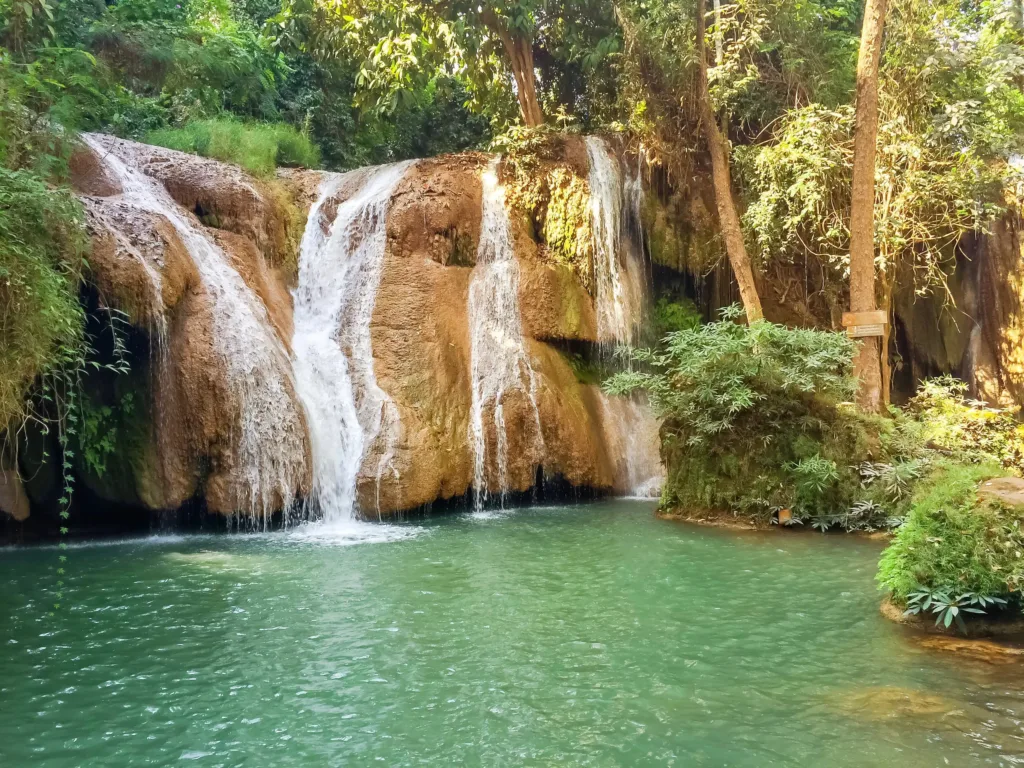
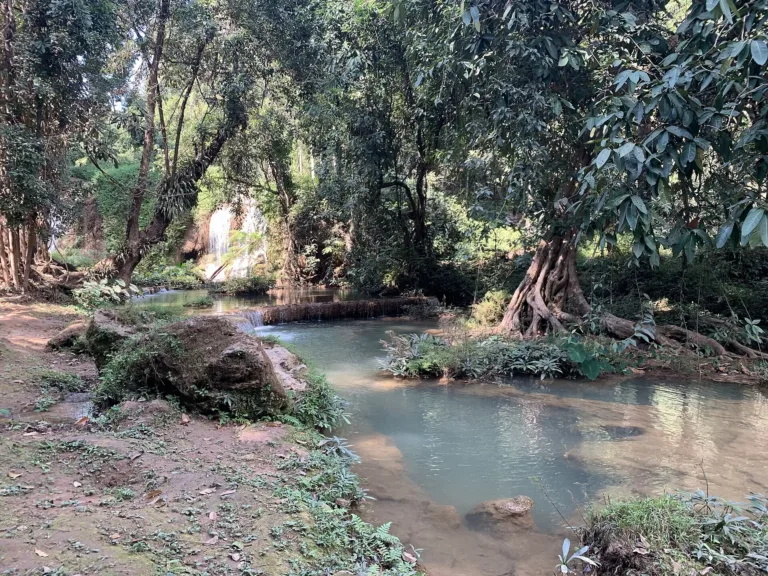
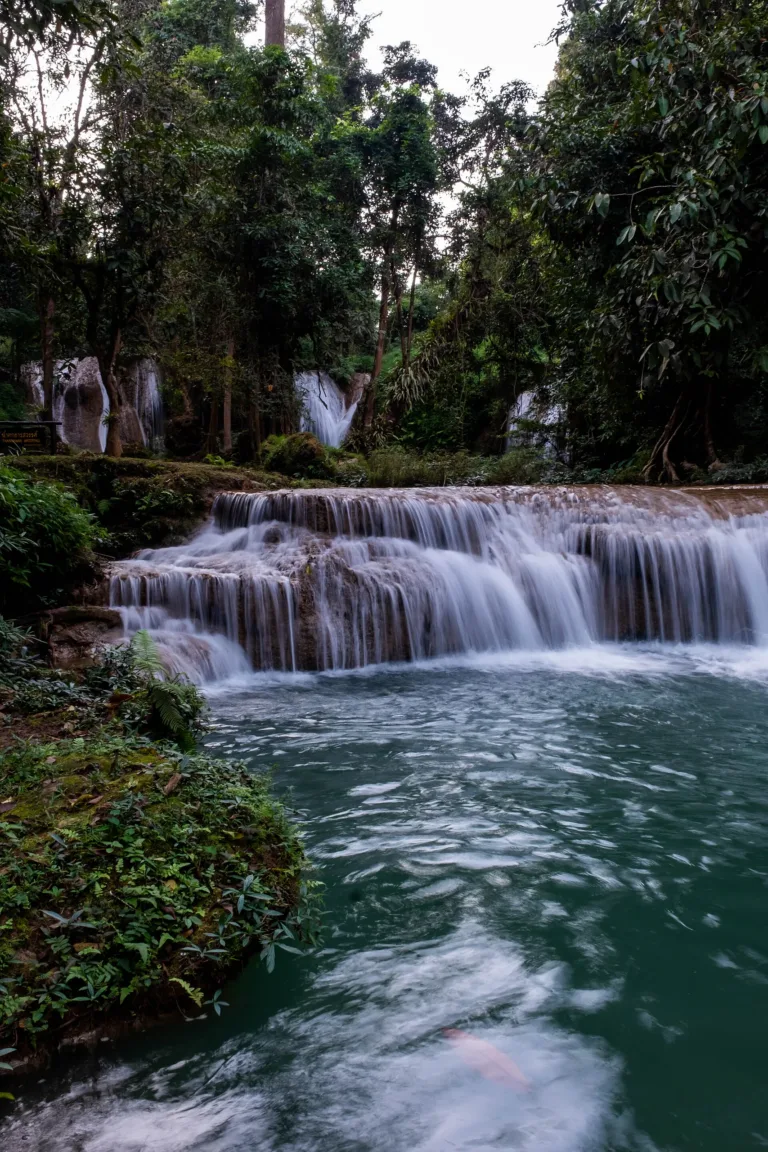
The main attraction is Than Sawan waterfall, a four-tier emerald limestone fall you can swim in, about 300 m from the headquarters, fed by the Huai Song Sop, Huai Pong, Huai Un and the Bo Bia spring. There are also Tat Pu Keng and Huai Ton Phueng waterfalls, Pang Ngun Cave, which holds about 400 people, Pha Tang Cave and Kaeng Luang rapids on the Yom.
Chiang Muan also has deep-time stories nearby: in 2000 the Chiang Muan coal mine yielded a fossil great-ape tooth about 10–12 million years old, the first of its kind in Southeast Asia, and between 2002 and 2009 the Department of Mineral Resources dug up 104 sauropod bones in Ban Mang subdistrict, now a dinosaur forest park run by the parks department separately from the national park.
On peafowl conservation, the University of Phayao has run a peafowl project since 2017 and released nine green peafowl into the wild on 31 January 2025. In August 2026 two men got lost in the park near Ban Pin and were found alive after six days — anyone hiking should always notify the rangers first.
Forest fires are a major problem. On 25 March 2025 the parks department director-general closed the park indefinitely because of severe fires: 557 hotspots between 1 October 2024 and 25 March 2025, up 38.9%, with 63 cases, 21 suspects and about 2,700 rai burned. No clear reopening announcement was found.
The park had 35,181 visitors in 2019, far quieter than the north's famous parks. To see peafowl, come from December to March around dawn and early morning, when males display on open ground and birds feed in harvested fields — and never use flash or feed them.
Arrived? Check in, collect a stamp and tell others what it is like right now
Check your location first, so you do not fill in the form for nothing
Location must be on and within 3 km · One check-in per place per day · come back on other days to check in again
Post photos from anywhere — no need to be here · Up to 20 photos at a time · JPG / PNG / WebP · GPS location data is removed automatically
Highway 1251 is good; some park tracks are dirt
From Phayao on Highway 1251 · Fuel
From Nan or Phrae via Chiang Muan · Fuel
Highway 1251 Dok Khamtai–Chiang Muan; at the Ban Bo Bia junction turn right for about 3 km, then about 1 km on the park road
Car park at headquarters
Dok Khamtai or Chiang Muan
Patchy
About 08:00–16:30
about 70 km from Phayao town
Doi Phu Nang National Park
100 THB
Approx. nightly price for 2 adults (next week) · final price depends on your dates
Answers travellers want before they go — a one-minute read
It spans Dok Khamtai, Chiang Muan and Pong; HQ is at Ban Bo Bia, Chiang Muan
2012, Thailand's 127th national park
Dec–Mar, from dawn into the early morning
Over 2,600 were counted in 2020
Thai 20/10, foreign 100/50 baht
Yes, in designated areas; there are also bungalows
No; Phu Langka is a separate forest park in Pong
It closed for fires in 2025; phone before going
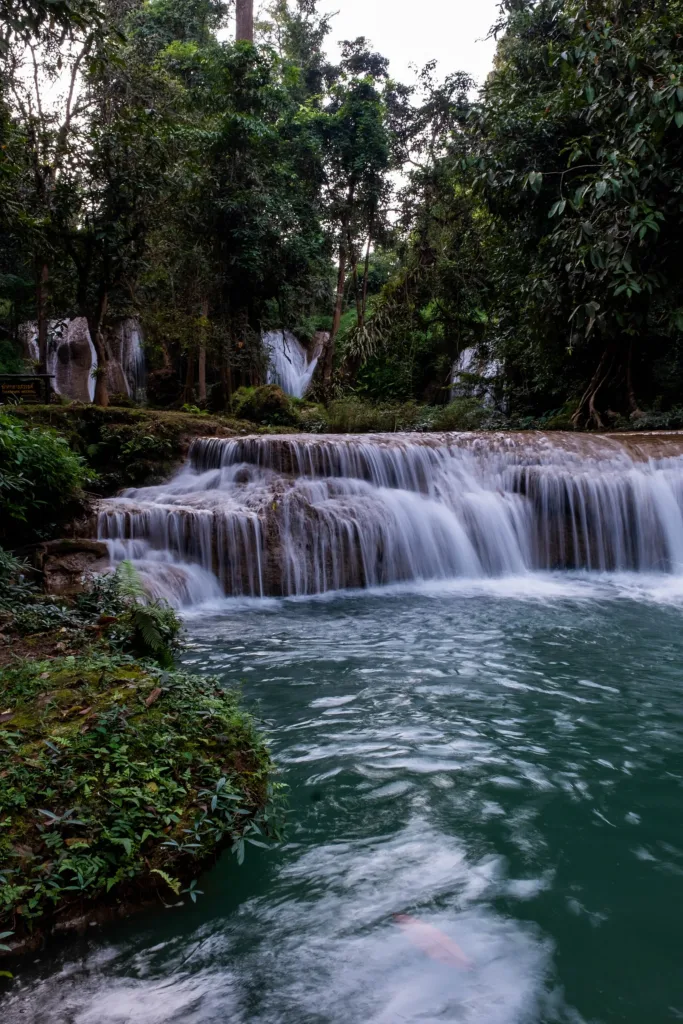
Best day this week: Tuesday 1 Dec · Check in when you arrive to collect a stamp
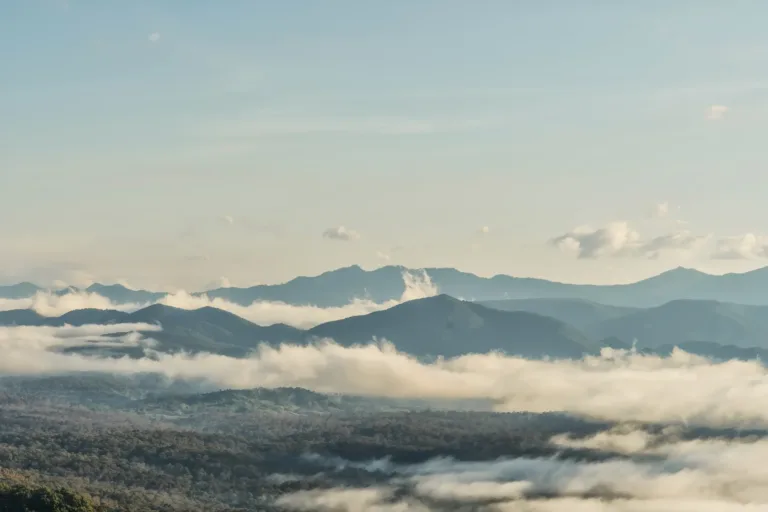 Mae Yom National Park
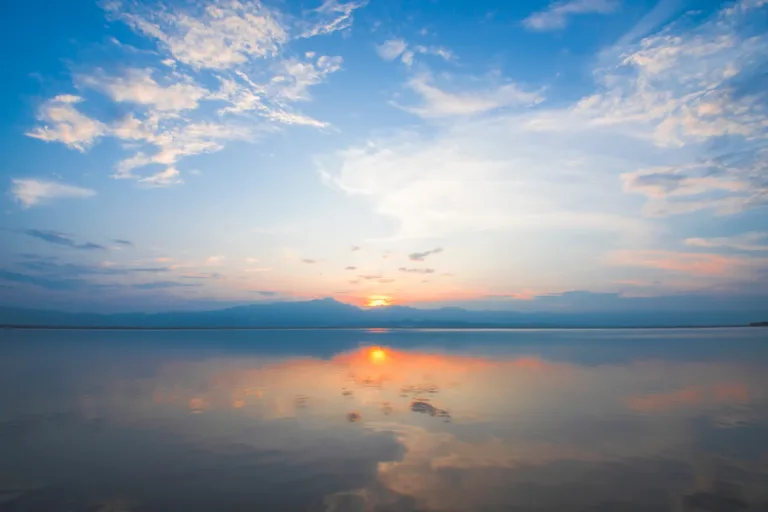 Kwan Phayao
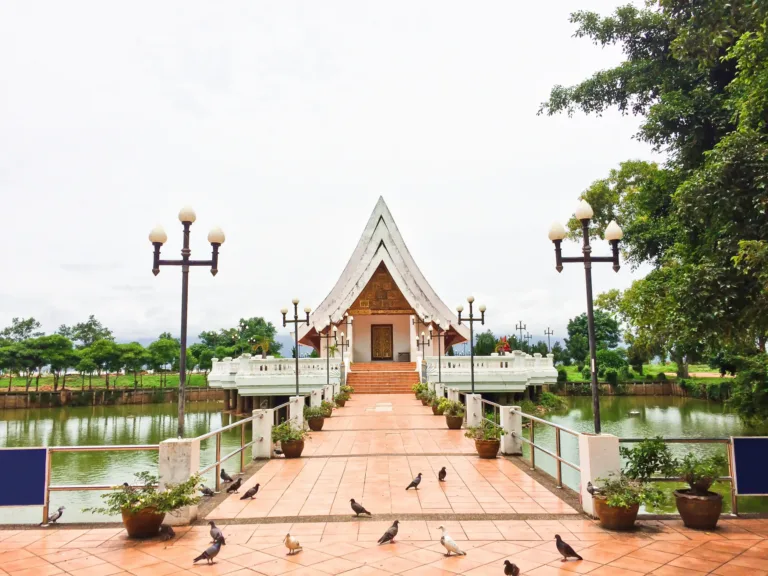 Wat Si Khom Kham (Phra Chao Ton Luang)