What to know before visiting the temple
Dress modestly, long trousers and sleeves · Keep your voice down in meditation areas · Don't leave the wooden walkways
Daily, around 06:30–17:00 (some sources say from 08:30) · reportedly closed 10–16 April
Morning, before the sun gets strong
7 days ahead
When to go
this week
Tap a day card to see that day’s weather, rain, haze and hourly forecast
Best time to go Daytime is over · see tomorrow
Holiday — traffic on the way up and parking fills fast; leave early
Hour by hour
Green band = hours used for the score
Best time to go Fine all day little rain through the day
Holiday — traffic on the way up and parking fills fast; leave early
Hour by hour
Green band = hours used for the score
Best time to go Fine all day little rain through the day
No warnings today — normal road and weather conditions
Hour by hour
Green band = hours used for the score
Best time to go Fine all day little rain through the day
No warnings today — normal road and weather conditions
Hour by hour
Green band = hours used for the score
Best time to go Fine all day little rain through the day
No warnings today — normal road and weather conditions
Hour by hour
Green band = hours used for the score
Best time to go Fine all day little rain through the day
No warnings today — normal road and weather conditions
Hour by hour
Green band = hours used for the score
Best time to go Fine all day little rain through the day
No warnings today — normal road and weather conditions
Hour by hour
Green band = hours used for the score
Wat Chetiyakhiri Wihan (Wat Phu Tok)
Wat Chetiyakhiri Wihan, better known as Wat Phu Tok, sits on Phu Tok hill in Na Sabaeng, Si Wilai District, Bueng Kan. Phu Tok is an isolated sandstone hill about 359 m high; its Isan name means 'lonely mountain', and it appears on the provincial seal.The temple was pioneered by Luang Pu Juan Kulachettho, a forest-tradition meditation monk. Stairs and wooden walkways bolted to the cliffs climb through seven levels. Level 5 holds halls and Luang Pu Juan's hut, and level 6 is the cliff-side boardwalk with views over the Bueng Kan plain towards the Mekong.It is still a working meditation centre, so dress modestly, wear good shoes and allow about two hours up and down.
- Cool, comfortable climbing
- Very hot on the cliffs
- Softer sun
Arrive Morning, before the sun gets strong
- Level 6 boardwalkThe walkway curving round the cliff above the plainmorning
Good to know here
Level 6 is planking bolted to the cliff; some boards tilt and flex, so go slowly and hold the rail
The upper stairs are almost ladder-like; not for anyone afraid of heights
- Go in the morning to avoid the heat on the cliffs
- Wear trainers with good grip; some stairs are very steep
- Carry water; there are no shops on the way up
- Keep quiet and respectful, as people are meditating
No data yet check before you go · Time needed 2–3 hours
Cool-season weekends, late morning
- Kids Older kids who walk well are fine; supervise closely on the boardwalks
- Seniors Long, steep stairs; not for older visitors with bad knees
- Wheelchair Access is all stairs
- Pets A meditation temple; don't bring pets
- Dress modestly, long trousers and sleeves
- Keep your voice down in meditation areas
- Don't leave the wooden walkways
- Walkways and stairs are slippery when wet
- Some sections are very steep; not for anyone afraid of heights
- The level 7 summit is forest; watch for snakes
The story of this place
Phu Tok is an isolated sandstone hill rising from the plain in Na Sabaeng, Si Wilai District, Bueng Kan, about 359 metres high; its Isan name means "lonely mountain". From 1969, Ajahn Juan Kulachettho, a disciple of Ajahn Mun Bhuridatta, turned it into a meditation retreat and led villagers in building stairs and wooden walkways pinned to the cliffs, rising in seven levels around the hill. The result is Wat Chetiyakhiri Wihan as it is known today, and Phu Tok also appears on the Bueng Kan provincial seal.
Read more 10 more paragraphs
Long before the temple, Phu Tok took nature millions of years to shape. The Department of Mineral Resources places its rock in the "Phu Thok Formation", named after this very hill: fine-grained reddish-brown sandstone about 75 million years old, laid down as wind-blown sand dunes alternating with sediment from lakes between the dunes, which is why the cliffs show large slanting cross-beds. At Phu Tok Noi the formation is about 205 metres thick. The hill sits at the south-eastern end of the Phu Sing range and is counted as a key geological site with potential to become part of a geopark.
Phu Tok has two peaks, Phu Tok Yai and Phu Tok Noi. In the past it was dense, silent forest full of wild animals and snakes, and that very remoteness is what made forest monks see it as ideal for meditation.
Ajahn Juan was born on 10 July 1920 at Ban Lao Man Kaeo in Amnat Charoen, then part of Ubon Ratchathani. Before becoming a monk he worked for the Highways Department for about four years. He was first ordained at 21, then disrobed to take up the wandering life, and was re-ordained in the Dhammayut order on 24 March 1943 at Wat Pa Samran Niwet in Amnat Charoen, receiving the name "Kulachettho". In his fourth rains retreat he studied under Ajahn Mun at Wat Pa Ban Nong Phue in Sakon Nakhon, and he later wandered as far as the North, spending the 1947–1948 retreats at Wat Chedi Luang in Chiang Mai.
Before Phu Tok he stayed on nearby Phu Sing Noi, where villagers from Na Sabaeng and neighbouring villages built him small huts. In January 1969 he moved up to Phu Tok at the invitation of the people of Ban Na Kham Kaen and nearby villages, who asked him to stay and teach them; some sources date the temple's beginnings to 1968. At first just three monks built four huts, food was scarce and they relied on the villagers below, and Ajahn Juan reached his sleeping place on level 5 by climbing vines and tree roots.
In the 1969 rains retreat, Ajahn Juan encouraged villagers to build a spiral staircase up to levels 5 and 6. The work took about two months and ten days, with people giving mostly their labour rather than money. The work then grew step by step: around 1970 a pavilion and principal Buddha image were installed on level 5, around 1971 the wooden walkway around the level-5 cliff was completed, and around 1974 cliff walkways were added on levels 4 and 6. Several sources sum it up as about five years of work on the main stairs and walkways, done by hand by monks, novices and villagers without machinery.
The seven levels are likened to the stages of Dhamma practice — some sources compare them to the seven factors of enlightenment — with the highest standing for liberation. The lower levels pass through forest and rock slabs. Level 5 is the heart of the temple, with halls, monks' huts, several caves and a viharn holding relics on a rock reached by a natural stone bridge. Level 6 is the cliff walkway with views far across the plain, and level 7 is the still-forested summit.
Like other sacred hills of Isan, Phu Tok has its stories. It is told that the first novices to live there fell ill, which villagers believed was because the spirit of the hill was displeased. It is also said that Ajahn Juan had a vision of a deity who gave him the mountain, asking only that those who come behave with restraint and leave no rubbish. There is also a belief that a naga guards Phu Tok, and that a cave on level 6 is a naga's home.
On 27 April 1980, Ajahn Juan was on board Thai Airways flight TG231 when it ran into a violent rainstorm on approach to Don Mueang and crashed in the Rangsit fields, Khlong Luang District, Pathum Thani. He died aged 59, together with four other monks of Ajahn Mun's lineage: Ajahn Wan Uttamo, Ajahn Sing Thong Dhammavaro, Ajahn Bunma Thitapemo and Ajahn Suphat Sukhakamo. Sources differ on the flight's origin, some saying Khon Kaen and others Udon Thani, and give the death toll as about 40–44 of the 53 people on board.
Ajahn Juan's royally sponsored cremation was held at Wat Chetiyakhiri Wihan on 18 April 1981. Today a chedi-museum at the foot of the hill keeps his relics, a lifelike image and his personal requisites. After his death, the temple's monks have continued to look after the stairs and walkways.
When Bueng Kan was separated from Nong Khai to become Thailand's 76th province on 23 March 2011, Phu Tok was chosen for the provincial seal, and the provincial motto honours it as a source of Dhamma. Today Wat Phu Tok remains a quiet meditation centre while also being one of Bueng Kan's most important religious attractions.
- 192010 Jul — Ajahn Juan Kulachettho is born at Ban Lao Man Kaeo, Amnat Charoen
- 1941First ordained at 21; he later disrobes to become a wandering monk
- 194324 Mar — re-ordained in the Dhammayut order at Wat Pa Samran Niwet, taking the name "Kulachettho"
- 1945Builds Wat Pa Ban Na Chik, his first monastery
- 1946Studies under Ajahn Mun Bhuridatta at Wat Pa Ban Nong Phue, Sakon Nakhon
- 1947–1948Spends the rains retreats at Wat Chedi Luang, Chiang Mai
- 1949Returns to his home village to care for his mother
See 9 events
- 1969Jan — settles on Phu Tok at the villagers' invitation (some sources date the temple to 1968)
- 1969Rainy season — villagers build the spiral stairs to levels 5 and 6 in about two months and ten days
- 1970A pavilion and principal Buddha image are installed on level 5
- 1971The wooden cliff walkway around level 5 is completed
- 1974Cliff walkways added on levels 4 and 6; the main work is finished in about five years
- 19805 Apr — Ajahn Juan gives his last recorded teaching
- 198027 Apr — he and four other monks of Ajahn Mun's lineage die when Thai Airways TG231 crashes at Rangsit
- 198118 Apr — royally sponsored cremation of Ajahn Juan at Wat Chetiyakhiri Wihan
- 201123 Mar — Bueng Kan province is created, with Phu Tok on its seal
Check-ins & visitor photos
Arrived? Check in, collect a stamp and tell others what it is like right now
Check your location first, so you do not fill in the form for nothing
Location must be on and within 1 km · One check-in per place per day · come back on other days to check in again
Post photos from anywhere — no need to be here · Up to 20 photos at a time · JPG / PNG / WebP · GPS location data is removed automatically
How to get there
The temple is on Phu Tok in Na Sabaeng, Si Wilai, in the middle of Bueng Kan province.
Bueng Kan town to Si Wilai · Fuel
Hire from Bueng Kan town · Negotiable
Paved road to the car park at the foot of the hill
Large car park at the foot of the hill
Daily, around 06:30–17:00 (some sources say from 08:30) · reportedly closed 10–16 April
Wat Phu Tok
FAQ
Before you go: Wat Chetiyakhiri Wihan (Wat Phu Tok)
Answers travellers want before they go — a one-minute read
How many levels does Wat Phu Tok have?
Seven, matching the stages of meditation
How high is Phu Tok?
About 359 metres
How long does the climb take?
About 2 hours up and down with photos
Which level is the best?
Level 6, the cliff-side boardwalk
What should I wear?
Modest clothes, long trousers, sleeves and good shoes
Who founded the temple?
Luang Pu Juan Kulachettho, a forest-tradition meditation monk
Nearby places
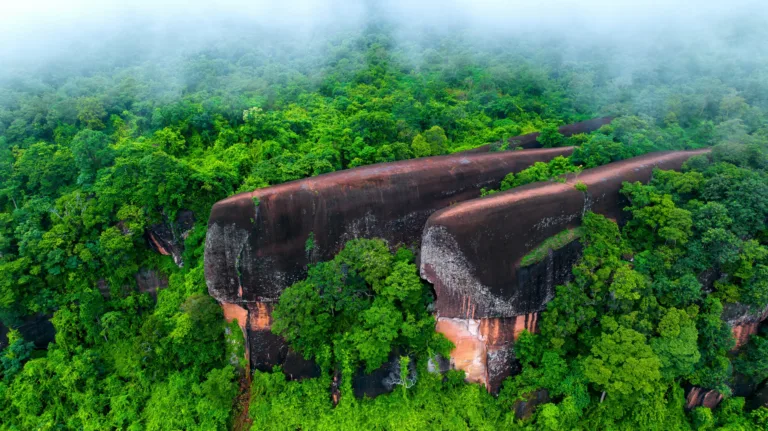 Hin Sam Wan (Three Whale Rock)
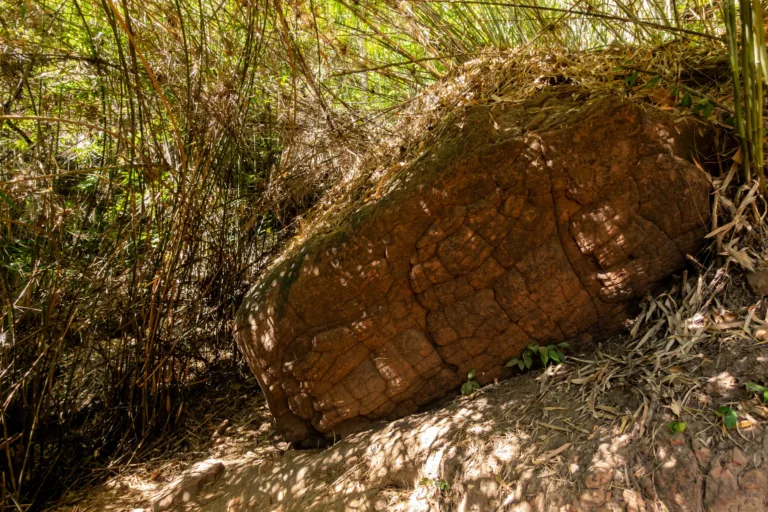 Naga Cave
 Kham Chanot
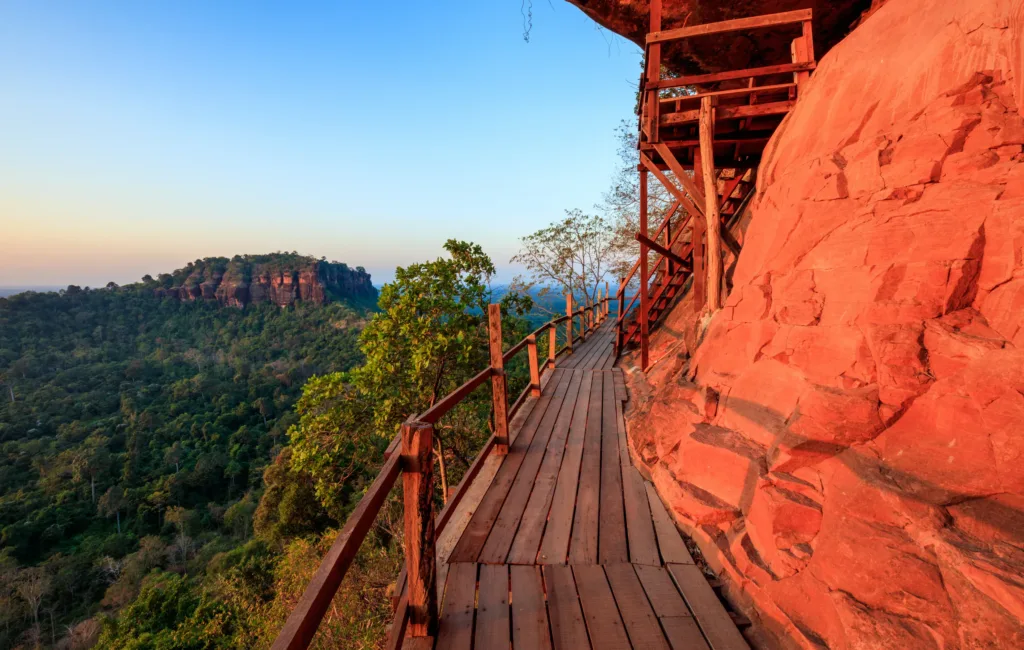
Ready to go to Wat Chetiyakhiri Wihan (Wat Phu Tok)?
Best day this week: Monday 30 Nov · Check in when you arrive to collect a stamp